Zazzle Shop

Screen printing

Tuesday, April 26, 2011

45 McDonald’s Meals Not Available In The USA

From: http://perezsolomon.com/

1. Cheese Fondue Chicken (Japan)

Chicken breast dipped in cheese sauce, bacon, more cheese and lettuce.

2. Carbonara Chicken (Japan)

Chicken breast dipped in white cream sauce, scrambled eggs, bacon and mozzarella.

3. German Sausage Chicken (Japan)

Fried chicken thigh patty, slice of grilled pork sausage, cheese, sauerkraut and mustard.

4. Mega Sausage (Japan)

Hot dog with relish and ketchup, only served for breakfast.

Click to see

5. Korokke Burger (Japan)

Fried potato patty, cabbage and teriyaki sauce.

6. McPork (Japan)

Sausage patty, lettuce and sweet/sour sauce.

7. Ebi Filet-O (Japan)

Fried shrimp patty, Thousand Island dressing and lettuce.

8. Bacon and Potato Pie (Japan)

Deep fried pie filled with mashed potatoes, bacon and cheese.

9. Cheese Katsu Burger (Japan)

Fried pork filled with cheese, served with tonkatsu sauce.

10. Mega Tomago (McDonald’s, Japan)

Double Big Mac with with an egg patty and bacon.

11. Chocolate and Orange Pie (Asia)

Deep fried pie filled with orange flavored chocolate.

12. McD Chicken Porridge (Malaysia)

Chicken and onions in porridge.

13. Prosperity Burger (Malaysia)

Beef or chicken patty, black pepper sauce and onions.

14. McSpaghetti (Phillipines)

Spaghetti with tomato sauce and cheese.

15. McRice Burger (Philippines)

Beef or chicken on sticky rice patties.

16. Samurai Pork Burger (Thailand)

Pork patty, teriyaki sauce and pickles.

17. Seaweed Shaker Fries (Asia)

A packet of seaweed seasoning to spice up your fries.

18. Chicken Maharaja Mac (India)

Big Mac with spicy grilled chicken instead of beef.

19. McAloo Tikki Buger (India)

Potato and chickpea patty, tomatoes, onions, and tomato mayonnaise.

20. McPaneer Wrap (India)

Paneer cheese and vegetables in flat bread, fried.

21. McCurry Pan (India)

Rectangular bread bowl filled with chicken and vegetables in a tomato curry sauce.

22. Brie Nuggets (Russia)

Fried brie.

23. McTurco (Turkey)

Two beef patties, vegetables and cayenne pepper sauce on pita.

24. Greek Mac (Greece)

Beef or chicken, tzatziki sauce, lettuce and tomato on pita.

25. McKebab (Israel)

Kebab on flatbread.

26. Deluxe Brekkie Roll (Australia)

Bacon, sausage, egg, cheese and spicy tomato sauce on a french roll.

27. Pasta Zoo (Australia, New Zealand)

Animal shaped ravioli stuffed with cheese and vegetables.

28. Kiwi Burger (New Zealand)

Beef, tomato, fried egg, lettuce, tomato and beetroot.

29. McLobster Roll (Canada)

Lobster salad on a bun. Also available in certain U.S. markets.

30. Poutine (Canada)

French fries and cheese curds smothered in gravy.

31. Croque McDo (France)

Ham and Emmental cheese on toasted sweet bread.

32. Camembert Premiere (France)

Fried French cheese nuggets.

33. McArabia (Morocco)

Two grilled Kofta patties, tahini sauce, lettuce and tomatoes in flatbread.

34. Pizza McPuff (Morocco)

Pastry pocket filled with cheese, tomato sauce and vegetables.

35. Laksewrap (Norway)

Fried salmon filet wrapped in a tortilla.

36. Cordon Bleu Burger (Poland)

Burger topped with ham-stuffed fried chicken patty and bacon.

37. Gazpacho (Spain)

Cold tomato soup.

38. McKroket (Hungary)

Fried pastry filled with beef stew on a bun.

39. McPollo Jr. (Chile)

Fried chicken patty, lettuce, tomato and guacamole.

40. McMolettes (Mexico)

Refried beans, cheese and pico de gallo on an English Muffin.

41. McPumpkin Omelet Sandwich (Hungary)

Vegetable hash brown, egg, cheese, lettuce, tomato and mayonnaise on a pumpkin seed roll.

42. Little Chorizo Melt (England)

Beef patty, sliced chorizo, cheese, Emmental cheese, lettuce and tomato sauce.

43. Bacon Roll (England)

British back bacon and ketchup on a hard roll.

44. Das Nürnburger (Germany)

Triple bratwurst sandwich with mustard.

45. McBeer (Cool countries)


Delicious, delicious beer.

Anthony Garcia, Dumbest Killer Ever, Got Murder Scene Tattooed on His Chest

anthony_garcia_rivera.jpg
Cholos aren't exactly the brightest bulbs in the criminal marquee, but the actions of the pendejo at right take the tamale for sheer stupidity.

Anthony Garcia was a seeming run-of-the-mill hood when Los Angeles County's sheriffs arrested him for a routine traffic stop and took the snapshot at right. In 2008, an investigator randomly saw Garcia's photo and recognized the elaborate scene depicted as the exact scene of a 2004 murder in Pico Rivera that had long been declared a cold case--until the investigator saw Garcia's tattoo and figured it out.

The Los Angeles Times has the rest of this incredible story, with the local angle being detectives eventually tracked Garcia to La Habra, where he lived with relatives. He bragged about the murder to someone wearing a wire, and just got convicted of first-degree murder--all of this avoidable if he hadn't tattooed the damn murder scene on his pinche chest. HILARIOUS...

'Wonder Woman' Gets New Costume After Outcry


from: http://www.hollywoodreporter.com/


Wonder Woman

On-set photos from the NBC pilot reveal Adrianne Palicki’s new look.

NBC came under fire when it released the first photo of Adrianne Palicki as Wonder Woman earlier this month.

As THR.com Heat Vision blogger Borys Kit pointed out, fanboys said she looked "too trashy, too bad-porn-y," Fox said her look wasn't patriotic enough and even Lynda Carter, who played her in the '70s TV series, weighed in. PHOTOS: The next generation of superheroes.

Palicki's blue vinyl pants and blue boots were said to resemble footed pajamas, according to online commenters, and her patent-vinyl outfit "looks cheap" and "probably squeaks every time she moves" wrote blogs.

Now, photos have been surfacing from the set of of David E. Kelly's pilot showing Palicki in what appear to be cotton or spandex pants instead of vinyl and bright red contrasting boots. PHOTOS: A makeup line inspired by Wonder Woman.

A DC Comics spokesperson spoke out in support of the look earlier this month: "The latest evolution of Wonder Woman’s iconic costume is a central part of the latest comic book storyline. All of the classic symbols – patriotic (stars, eagle) and heroic (lasso, bracelets) – are ever-present."

Marvel's Little 'Thor' Commercial

by David Simpsom
from http://www.hollywoodreporter.com/


The company spoofs VW's popular Super Bowl commercial to plug latest feature film.

Marvel is looking to duplicate the success of Volkswagen's Darth Vader Super Bowl ad with a commercial of its own.

Follow little Thor as he goes through the same scenes as Darth Vader. Also keep an eye out for Easter eggs like what is written on the dog's bowl, the doll on the bed and the license plate on the vehicle.

Photo Gallery: Thor: Behind the Scenes

Thor was recently featured on the cover of THR, with director Kenneth Branagh opening up about the $150 million movie.

Uploaded by on Apr 19, 2011

See what happens when the "mite-iest" of mortals wields Thor's hammer...

Visit http://thor.marvel.com/ for all things "Thor"!


In 'Bottom Of The 33rd,' A Look At Baseball's Longest Game


The cover of "Bottom Of The 33rd."
Harper

The cover of "Bottom Of The 33rd."

This Sunday on Weekend Edition, Liane Hansen talks to Dan Barry, author of the new book Bottom Of The 33rd: Hope, Redemption And Baseball's Longest Game. The book is all about a minor-league game that took place — or, rather, began — on April 18, 1981. It was suspended after 32 innings, tied at 2-2, at four in the morning on April 19, Easter Sunday. It resumed two months later, when the Pawtucket Red Sox finally beat the Rochester Red Wings 3-2 in the bottom of the 33rd inning.

Now, when you hear "minor league," you might assume this game involved a bunch of nobodies you've never heard of, but as Barry notes, not only was superstar-to-be Wade Boggs responsible for tying the game back up at 2:00 in the morning at the one point where it threatened to actually end, but among those who played all 33 innings was Cal Ripken, Jr., who went 2-for-13.

Barry talks in the interview about the fact that when the game was suspended, there were roughly 19 people still in the stands, who had spent eight hours in the cold. When it resumed for what became the final inning, it had become a well-known game and Major League Baseball was on strike besides. So it attracted a lot of attention, meaning that 6000 people showed up, all of whom could claim to have attended baseball's longest game, but few of whom had stuck it out on Easter morning, 1981, until just after four.

The game, he notes, is only more compelling as a story because minor league baseball doesn't carry the assumption that a major league game does that everyone involved has already, in a sense, "made it." Barry says that there's "an undercurrent of aspiration" and "a touch of the tragic" in a league in which many of the players will, in fact, never become the successes they dream of being. But because they won't, he says, "we learn at a minor league game that it is the journey to cherish, not necessarily the conclusion."

Monday, April 25, 2011

Flying Car For Sale: Buy Chitty Chitty Bang Bang. No Kidding!

The flying car Chitty Chitty Bang Bang from the famous Dick Van Dyke film (eBay).

A car alleging to be the original hero car from Ian Fleming's Chitty Chitty Bang Bang has wound up on eBay, apparently in running condition. According to the seller, the film's production manager insisted that the hero car be a fully-functional road car, not just a mock up.

To that end, Chitty Chitty Bang Bang sports a 3.0-liter Ford V6 and automatic transmission, mounted in a one-off ladder frame. The body features a handmade aluminum hood and red and white cedar boattail rear. Unfortunately, none of Chitty's magical powers made it to the road car, meaning this thing won't fly.

The seller claims that all the brasswork on the car came from actual Edwardian-era cars, to make sure Chitty Chitty Bang Bang looked as true-to-life as possible. That sounds like a lot of work to go into a car for Hollywood, even a hero car.

The seller provides a convincing back story on the car, but there's no official documentation shown or offered. This is no-doubt a well-built car, and very well could be the original from the movie, but at a starting bid of $1,000,000, we'd need a lot of confirmation before pulling the trigger. Not that we could afford it anyway...

Razy Gogonea - Britain's Got Talent 2011 Audition - itv.com/talent

From : itv.com/talent
http://youtu.be/z62zrqaqVbY

Uploaded by on Apr 23, 2011

Britain's Got Talent: 28-year-old dancer Razy, originally from Romania, is trying out for Britain's Got Talent with quite a unique act, taking queues from the film The Matrix. With breakdancers being notorious on this show - from Tobias Mead and Aiden Davis to winner George Sampson - has Razy got something special that makes him different? See more at http://itv.com/talent

Watch Video here: http://youtu.be/z62zrqaqVbY

One man, 100,000 toothpicks, and 35 years: An incredible sculpture of San Francisco

flickr.com — The elaborate sculpture is comprised of multiple “tours” that move pingpong balls through neighborhoods, historical locations, and iconic symbols of San Francisco, all recreated with a little glue, some toothpicks, and an incredible amount of ingenuity.

CLICK HERE FOR SLIDESHOW: http://www.flickr.com/photos/tinkering_studio/sets/72157626359200567/show/

Scott Weaver's Rolling through the Bay from Learning Studio on Vimeo.


Scott Weaver's amazing piece, made with over 100,000 toothpicks over the course of 35 years, is a depiction of San Francisco, with multiple ball runs that allow you to go on "tours" of different parts of the city. It will be on display in the Tinkering Studio until the end of June!

tinkering.exploratorium.edu

Dutch To Build Solar Panels Into Their Roads, Starting With Bike Lanes

by Alex Davies

from http://www.treehugger.com/
solar-road-design.jpg

Copyright TNO 2011

The Dutch are well known for their ubiquitous bike lanes, to the point where Amsterdam is neck and neck with Copenhagen for the title of most bike-loving capital in Europe. Now, Denmark will have to come up with something big to match the latest plan from the Netherlands - the installation of solar panels in roads, starting with bike lanes.

Talk about the efficient use of space: if you're going to have roads (and hopefully you'll have bike lanes), why not put that space to work producing energy? Called the Solaroad, the project is the brainchild of Dutch research firm TNO. The idea is pretty straightforward: a layer of concrete forms the road itself. A centimeter thick layer of crystalline silicon solar cells is laid on top, and covered by a layer of toughened glass. The energy potential: 50kWh per square meter per year, which can then be used to power street lighting, traffic systems and households.

But it's still an idea in development, which is why TNO, working with the Province of North Holland, the consulting firm Ooms Averhorn Group and the tech firm Intech, is starting with a small-scale pilot program in the town of Krommenie, outside of Amsterdam. Scheduled for installation next year, the first Solaroad will hopefully allow its developers better implement many more throughout the country.

Maybe it'll even make it to the US one day- though in today's political climate, this probably costly project is unlikely to get much support in Congress. Well, we can dream.

Sunday, April 24, 2011

Niko x Brandoe - One Night - ThePlanesgotit

Niko x Brandoe - One Night

Click Photo Above To DL:
Niko ft. Brandoe - One Night
New leak by our homie Niko, off his up coming project.


Call in your local radio stations and tell them you want to hear this.

Saturday, April 23, 2011

A Passover Toast to a Rabbi Known for Social Activism, and for Kosher Coca-Cola

By SAMUEL G. FREEDMAN

Rabbi Tuvia Geffen, of blessed memory, was born in Lithuania in 1870 and educated in the renowned Slobodka yeshiva. In the wake of a pogrom, he immigrated to New York in 1903, and seven years later he moved to Atlanta to become the rabbi of Shearith Israel, a tiny and struggling Orthodox congregation meeting in the battered remnant of a Methodist church.

During his early decades at Shearith Israel, Rabbi Geffen established Atlanta’s first Hebrew school and oversaw its ritual bath. He stood by Leo Frank, the Jewish man falsely accused of murdering a young Christian girl, and after Frank’s lynching in 1915, the rabbi urged his congregants not to flee the South in fear.

At Passover in 1925, he spoke eloquently and presciently against Congress for passing immigration restrictions that “have slammed shut the gates of the country before the wanderers, the strangers, and those who walk in darkness from place to place.” As early as 1933, he warned about the Nazi regime in Germany. Long before feminism, he advocated for Orthodox women who were being denied religious divorce decrees by vindictive husbands.

But all those achievements are not why we invoke the name and memory of Rabbi Geffen today, more than 40 years after his death. No, we come to honor his least likely yet most enduring contribution to the Jewish people and his adopted nation: kosher-for-Passover Coca-Cola.

Yes, observant Jews of today, searching supermarket counters for those bottles with the telltale yellow cap bearing the Orthodox Union’s certification, and yes, Coke die-hards of any or no religion who seek out those same bottles for the throwback flavor of cane-sugar Coke, you owe it all to Rabbi Tuvia Geffen.

He of the long beard and wire-rim glasses and Yiddish-inflected English, a man by all outward appearances belonging to the Old World, he was the person who by geographical coincidence and unexpected perspicacity adapted Coca-Cola’s secret formula to make the iconic soft drink kosher in one version for Passover and in another for the rest of the year. To this day, his 1935 rabbinical ruling, known in Hebrew as a teshuva, remains the standard.

That ruling, in turn, did much more than solve a dietary problem. A generation after Frank’s lynching, a decade after Congress barred the Golden Door, amid the early stages of Hitler’s genocide, kosher Coke formed a powerful symbol of American Jewry’s place in the mainstream.

“Rabbi Geffen really got the importance of it,” said Marcie Cohen Ferris, a professor of American studies at the University of North Carolina, who specializes in Jewish life in the South. “You couldn’t live in any better place than the South to get it. To not drink Coca-Cola was certainly to be considered un-American.”

Or look at the interplay of Jews and America from another angle. Rabbi Geffen’s solution to the Coke problem was not to forget the kosher rules and melt into the melting pot. But neither was it to decry the spiritual pollution of modernity in the form of a fizzy drink. A half-century before the era of cultural pluralism, his answer was to have the majority address the distinct needs of a minority.

As a contemporary Orthodox rabbi, Adam Mintz, has written in an essay on Geffen and Coke: “Struggling to find their place in a land that was often hostile to their religion, American Jews respected and appreciated rabbis who sought to include them within the Orthodox camp rather than simply condemn them as sinners. Of course his approach would not have been possible had he not felt confident in his powers of persuasion.”

We can safely say, however, that this issue chose Rabbi Geffen rather than the other way around. As early as 1925, as the Orthodox authority in Coke’s home city, he was receiving inquiries from other rabbis about the drink’s kosher status. A few other rabbis had already given certification, without knowing the secret formula. And multitudes of American Jews were drinking Coke regardless.

“Because it has become an insurmountable problem to induce the great majority of Jews to refrain from partaking of this drink,” Rabbi Geffen wrote in his teshuva, “I have tried earnestly to find a method of permitting its usage. With the help of God, I have been able to uncover a pragmatic solution.”

Putting aside God’s props for a moment, we should note that Rabbi Geffen had some significant earthly help in the person of Harold Hirsch, a Jewish Atlantan who was Coca-Cola’s corporate lawyer. Through Hirsch, Rabbi Geffen was permitted to enter that industry’s Holy of Holies and receive Coke’s secret formula.

With it, the rabbi was able to identify the elements that rendered Coke nonkosher during the bulk of the year (oil of glycerine derived from beef tallow) and specifically during Passover (a corn derivative). Hiding the exact ingredients behind Hebrew euphemisms in his teshuva, Rabbi Geffen explained the needed corrections. Glycerine could be replaced by coconut or cottonseed oils, and the corn derivative by cane or beet sugars.

Kosher-for-Passover Coke is now produced under rabbinic supervision at bottling plants serving Jewish population centers in New York, Florida, Southern California and Houston, among other areas. A number of other major brands have followed Coke into the Passover market: Dannon, Lipton, Pepsi and Tropicana. There are tequila and blintzes made without forbidden grains.

“It used to be that for Pesach you were limited to matza and hard-boiled eggs,” said Rabbi Menachem Genack, the head of the Orthodox Union’s kosher-certification program. “Now, I’ve got to tell you, I love those cheese blintzes.”

And, whether devout or debauched, Coke fans anticipate Passover for their own cultish reason: the usual sweetener, high-fructose corn syrup, is replaced by cane or beet sugar.

Moshe Feder, an editor of science-fiction and fantasy books, traveled to six supermarkets from his home in Queens before finding four two-liter bottles of Passover Coke. The subject of his quest happened to come up at a seder the other night. The host, a Jewish man, had never heard about the difference between Coke and Passover Coke. But two Roman Catholic guests, Mr. Feder reported, “knew all about it.”

Rabbi Geffen, of blessed memory, who’d have guessed you were so ecumenical?

E-mail: sgf1@columbia.edu

Friday, April 22, 2011

New elastic polymer self-heals in just one minute

Self-healing polymers are extremely sought after by scientists, as they have many useful—not to mention lucrative—applications. Back in 2009, we reported a polyurethane-based polymeric material that heals itself in roughly an hour when exposed to UV light. That particular polymer, made by Biswajit Ghosh and Marek W. Urban, would be useful as a protective coating for phones, cars, etc. It worked based on the principle of having a reactive chemical component that would split open when physically damaged to create two reactive ends that can then covalently link together under UV light to repair itself.

In a recent issue of Nature, Mark Burnworth and his colleagues report a different type of self-healing material, one that can repair itself in about a minute under UV light. Burnworth’s polymeric material also doesn’t function on the basis of forming chemical bonds between organic compounds for repair. Instead, it relies on localized heating and metal-ligand interactions.

Burnworth and his team used rubbery oligomers, poly(ethylene-co-butylene), as the core of their material. They attached ligands, 2,6-bis(1’-methylbenzimidazolyl)pyridine (Mebip), that can bind to metals at the ends of the oligomers. To form long polymers, the researchers added either zinc (Zn2+) or lanthanum (La3+) ions to the solution of oligomers. The metal ions form metal-ligand complexes with the Mebip, linking the oligomers with one another.

For their self-healing tests, Burnworth and his team shaped the polymers into films that were 350 to 400 µM thick. They purposefully cut the polymer to about 50 to 70 percent of the overall thickness of the film. When the cuts were exposed to two consecutive 30-second rounds of UV light (320 to 390 nm wavelength at an intensity of 950 mW cm-2), the cuts sealed up. The healed material was comparable in toughness to the original polymeric film, and images from atomic force spectroscopy show that the cuts essentially disappeared.

This process works because complexes of Mebip with metals are chromophoric, so they can absorb light of a specific wavelength, such as light in the UV range. Once they absorb light, they get into a higher energetic state and then lose that energy by giving off heat. Thus, when the researchers exposed the cuts to UV light, there was heating at the surface of the polymeric film—enough heating to reach over 220°C in 30 seconds. The heat quickly depolymerizes the area around the cut. Once the UV light is turned off, the liquidized area cools, reforms the ligand-metal complexes, and seals up the cut.

The healing process can be localized, as you only need to hit damaged areas with UV light. The researchers also show that the healing process would still work if the polymer was under a load of about 8 kPa. They suggest that different ligands could be used to cover a range of absorbable wavelengths. Thus, you could selectively tailor the wavelength of light to heal different types of damaged materials.

Burnworth and his colleagues have made a significant step in getting us closer to having self-healing polymers on the market. Their approach is quite different than that of Ghosh and Urban, which we described previously. While Burnworth’s method certainly heals quicker, it also produces a dramatic increase in surface temperature during healing. Such a huge temperature surge could be disadvantageous for certain applications.

Nature, 2011. DOI: 10.1038/nature09963 (About DOIs)

Police arrest man INSIDE his house for taking cell phone video of traffic stop

"There are police who use the badge to bully, and I believe that's who I met."
Chris | InformationLiberation


Wow, this video is scary. The man is recording some police officers from his own garage and some thug cop out of nowhere walks up to him and tries to steal his phone under the obvious lie it's "evidence."

"I'ma take the phone... 'cuz that's gonna be evidence... (Man refuses)... You want to go to jail?... Withholding evidence."

It's clear from the way he's acting it's pure brazen intimidation and thuggery.

CBS reports:


VALLEJO (CBS 5) — The Vallejo Police Department is under scrutiny after a man was handcuffed and cited for recording four people being arrested near his home. [...]


While Duchine was recording, Officer Scott Yates approached and asked for his cell phone, saying it was evidence. After Duchine refused, he was handcuffed and issued a ticket for obstructing justice. Video of the incident was then posted on YouTube.


The article claims police "may be backing down."

But police may be backing down. Duchine said he was recently contacted by Internal Affairs, asking that he may be interviewed for their investigation.
They don't cite any evidence to support the claim they "may backing down." Instead, it sounds like they're trying to lure him into some sort of scam to have him talk without a lawyer, that's hugely problematic, no way in hell should he talk with these criminals.

Spare Room Holds Million-Dollar Comic Book Collection

A retired Minneapolis bus driver who died in a fire last year had a passion for comic books. The fire that took his life started in the kitchen, but a back bedroom filled with more than 20,000 comics was spared. It was just recently that the surviving family members realized the collection was worth about $1 million.

Philipp Lenssen/Flickr

According to the Star Tribune, Gary Dahlberg started collecting comic books in the 1960s and would spend lots of time in comic stores or at comic book conventions. He also collected Star Trek–related items of all sorts, and liked having some of his figurines in the refrigerator to have something to look at when he opened the door.

Living a humble life, he sold two comics before his death — one to buy a computer so he could catalog his collection, and one to help pay off his home. Some family members questioned the value of his hobby, but now that the collection has been appraised, the Star Tribune says the hobby is more valuable than they ever could have imagined:

2,500 to 3,000 of Dahlberg’s 20,000 comic-book collection would end up “easily” worth more than $1 million. “Maybe closer to $2 million,” said Ed Jaster, senior vice president of Heritage Auctions.

Some of the comics of note in the collection are from 1963 : The Amazing Spider-Man No. 1 and No. 2. The No. 2 issue is one of only five known copies. The company hired to appraise and certify the collection will sell the comics in the coming year. While 3,000 of the comics are valuable, the majority will only be worth around twice the cover price.

So, collectors, look for comics from the Gary Dahlberg Collection.

Toast The Royal Wedding With...Viagra Beer?


Royal Virility.jpg
Celebrate Big Willy style....

While all eyes will be on William and Kate next week in a wedding of epic proportions, Brits will toast the newlyweds with all sorts of bubbly, including one named Royal Virility Performance. This isn't the only commemorative beverage made for the special day, but it's the only one containing herbal Viagra. The limited edition brew is only for sale in England, with shipping starting the morning before the April 29th wedding date.

The thousand-bottle, small-batch India Pale Ale reportedly contains 7.5 percent alcohol, and includes cultivated ingredients Horny Goat Weed and chocolate. How classy! To show the guys at BrewDog are not in it for the money, 20% of profits will be donated to the William-approved charity, Centrepoint.

Adorned with a crude caricature of the couple, and encouraging phrases like 'Arise Prince Willy', the brewmasters at BrewDog claim that three of their bottles are the equivalent of one Viagra pill. Naturally, they've already shipped off a bottle to the groom, per James Watt, director of stuff (his real title). "We put a bottle in a jiffy bag marked 'Prince Willy, Buckingham Palace,'" he told Fleet Street. "We sent it by Royal Mail as we presume they are most likely to know where he lives. As the bottle says, this is about consummation, not commemoration, so we hope he gets it."

Nothing like a thoughtful gift to kick start the wedding night. I'm sure the queen would approve. Brings new meaning to the term stiff drink.

Over or Under? The Great Toilet Paper Debate (Infographic)

brainz.org — Unfortunately, the brilliant engineers who came up with toilet paper left one problem unsolved: the problem of orientation.

Toilet Paper Rules
Via: Engineering Degree

Kindle readers can now borrow ebooks from libraries

Amazon has sanctioned the use of its e-reader – complete with note-taking facility – for ebook library loans in the US

  • From: http://www.guardian.co.uk/
  • Kindle
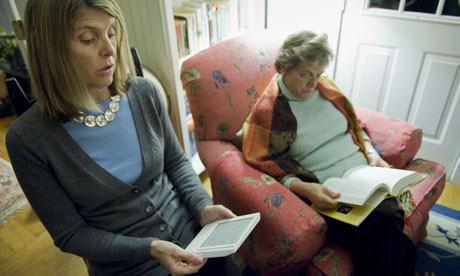
    Kindle users in the US, like these Massachusetts book club members, can now borrow ebooks from public libraries. Photograph: Mary Knox Merrill/Getty

    Scribbling in the margins of library books will soon be permitted, after Amazon.com announced yesterday that it would allow Kindle users to borrow ebooks from more than 11,000 American libraries.

    The deal follows similar agreements from the Kindle's rivals, the Sony Reader and Barnes & Noble's Nook, and will enable Kindle users to check out and read ebooks from their local libraries. "We're doing a little something extra here," said Jay Marine, director of Amazon Kindle. "Normally, making margin notes in library books is a big no-no. But we're extending our Whispersync technology so that you can highlight and add margin notes to Kindle books you check out from your local library. Your notes will not show up when the next patron checks out the book. But if you check out the book again, or subsequently buy it, your notes will be there just as you left them."

    The move was welcomed by American librarians. "Anyone who works with the public has encountered the discouragement people feel when you have to tell them that Amazon does not allow library ebooks on the Kindle," blogged librarian Bobbi L Newman, a manager at the Richland County Public Library in Columbia SC. "It's SO exciting to see that Kindle users will now have access to library ebooks (especially when we know that library books usage actually drives sales up). Plus that note-taking ability they mentioned is a big reason I bought my Kindle! Very excited to see it on library books."

    Roberta A Stevens, the president of the American Library Association, told the New York Times that Amazon's move into library lending was "all but inevitable". "I can't say that I'm surprised," she said. "They were just shutting off a whole part of the marketplace. It's just logical that this would happen."

    A recent report from the American Library Association revealed research showing that 72% of public libraries offer ebooks and 5% of American adults own an ebook reader. The ALA said that ebooks account for only a small percentage of borrowed items from most libraries, but they are the fastest-growing segment: the Chicago Public Library, it said, doubled its circulation of ebooks from 17,000 in 2009 to more than 36,000 in 2010.

    Librarians are currently grappling with an announcement last month from HarperCollins stating that the publisher will not allow any single copy of one of its ebooks to be checked out from a library more than 26 times. The ALA said that librarians fear other publishers could adopt a similar model. "When we purchase a print copy, we get to keep it for as long as we want," said Audra Caplan, president of the Public Library Association. "It may eventually wear out or not circulate, but that's our choice."

    The Kindle Library Lending programme launches later this year, but Amazon.com did not give a precise date.

Richard Branson Gives Island To Lemurs

From: http://www.visualnews.com/

Not many animals can say their new best friend is a British billionaire but lemurs are proud to announce such extraordinary news. Sir Richard Branson has taken an interest in the cute, furry little primates and has decided to turn one of his private Caribbean Islands into a lemur paradise. Lemurs are native to the island of Madagascar, located in the Indian Ocean off the southeastern coast of Africa, and is the only place in the world where lemurs live in the wild. A coup in 2009, and the rise of illegal logging in Madagascar’s rainforests, threaten to destroy the endangered animals habitat and push them further towards extinction. Sir Richard looks to create a preserve to help the lemur step back from the brink; but his aim at cultivating lemurs in an environment — which isn’t their own natural habitat — has garnered criticisms as to how the lemurs will affect the islands natural habitat and ecosystem.

The idea of transporting species from place to place for the sake of conservation has scientists questioning his methods — moving species from one continent to another for conservation purposes is relatively unheard of — and pointing out that other previous species’ introductions have proven disastrous to native wildlife. Sir Richard’s team maintains that both the lemurs — coming from zoos — and native animals will be fine. “We’ve been helping to try and preserve lemurs, and sadly in Madagascar because of the government being overthrown the space for lemurs is getting less and less,” Sir Richard told BBC News. “Here on Moskito Island we’ve got a beautiful rainforest – we brought in experts from South Africa, and they say it would be an absolutely perfect place where lemurs can be protected and breed.” Sir Richard is known for being responsible when it comes to his many philanthropic endeavors, and has told The Guardian that local species would be protected if it ever became clear that the lemurs were posing a threat.

via: CNN

10 Things You Probably Didn’t Know About Easter Candy

by chrisilluminati
from http://egotvonline.com/

Candy is probably the only bright spot of Easter. Getting dressed up sucks. Church is a bore. The food is passable. It’s all about the candy; jelly beans, Peeps, fudge and anything that will send a person into a sugar coma.

Here are ten facts you probably didn’t know about Easter candy. Dazzle the family this holiday will all your Easter knowledge because there will be nothing else to do.

  • The first chocolate eggs were made in Europe in the early 19th century and remain among the most popular treats associated with Easter.

  • 90 million chocolate Easter bunnies are made for Easter each year.

  • 16 billion jelly beans are made for Easter.

Ronald Reagan eating jelly beans

  • In the old days pretzels were associated with Easter because the twists of the pretzel were thought to resemble arms crossing in prayer.

  • Easter is the second top-selling confectionery holiday behind only Halloween.

  • On October 15, 1999, the world’s largest jar of jelly beans was unveiled. It weighed 6,050 pounds

  • 76 percent of people eat the ears on chocolate bunnies first.

  • According to the Guinness Book of World Records the largest Easter egg ever made was just over 25-ft high and made of chocolate and marshmallow. The egg weighed 8,968 lbs. and was supported by an internal steel frame.

  • The exact origins of the jelly bean are lost in time, and only a part of its history is known. Most experts believe the jelly center is a descendent of a Mid-Eastern confection known as Turkish Delight that dates back to Biblical times.

  • Kids prefer red jelly beans and 75% are willing to do extra chores for more Easter candy.

Source

Van Damme Friday - 2011 His Comeback


Thursday, April 21, 2011

Mortal Kombat Video Showcases Every Fatality

Posted by James Hawkins

FROM: http://www.joystickdivision.com/

MKII (250 x 188).jpg
One of the facets of Mortal Kombat that makes it so great, so memorable, and so controversial, is the fatality kill moves that dot the end of matches. As a boy of nigh a quarter century, I love to see spines ripped out of still breathing bodies and heads removed from necks. That's just kind of my thing right now.

And, if you and I are of the same breed, then you're going to enjoy this next montage I am scooping onto your plate. It is a 20-minute video featuring all of Mortal Kombat's fatalities from every single game (except Mortal Kombat vs. DC Universe and the 2011 MK). I had to pop a bag of popcorn. T'was glorious.

Not only is this a brilliant montage of the most violent proportions, it is a fantastic little trip down nostalgia boulevard. I particularly like watching Baraka puncture the shit out of an unwitting foe. Or when Jax uses his inhuman strength to manually amputate a few arms. Which brings you the grins?