Zazzle Shop

Screen printing
Showing posts with label Holland. Show all posts

Wednesday, August 10, 2011

The Dutch Way: Bicycles and Fresh Bread

Robin Utrecht/Agence France-Presse — Getty Images

In the Netherlands, respect for bicycles is hard-wired into the culture.

From http://www.nytimes.com/

Russell Shorto is the author of “The Island at the Center of the World” and a contributing writer at The New York Times Magazine. He is working on a book about Amsterdam.

Amsterdam

AS an American who has been living here for several years, I am struck, every time I go home, by the way American cities remain manacled to the car. While Europe is dealing with congestion and greenhouse gas buildup by turning urban centers into pedestrian zones and finding innovative ways to combine driving with public transportation, many American cities are carving out more parking spaces. It’s all the more bewildering because America’s collapsing infrastructure would seem to cry out for new solutions.

Geography partly explains the difference: America is spread out, while European cities predate the car. But Boston and Philadelphia have old centers too, while the peripheral sprawl in London and Barcelona mirrors that of American cities.

More important, I think, is mind-set. Take bicycles. The advent of bike lanes in some American cities may seem like a big step, but merely marking a strip of the road for recreational cycling spectacularly misses the point. In Amsterdam, nearly everyone cycles, and cars, bikes and trams coexist in a complex flow, with dedicated bicycle lanes, traffic lights and parking garages. But this is thanks to a different way of thinking about transportation.

To give a small but telling example, pointed out to me by my friend Ruth Oldenziel, an expert on the history of technology at Eindhoven University, Dutch drivers are taught that when you are about to get out of the car, you reach for the door handle with your right hand — bringing your arm across your body to the door. This forces a driver to swivel shoulders and head, so that before opening the door you can see if there is a bike coming from behind. Likewise, every Dutch child has to pass a bicycle safety exam at school. The coexistence of different modes of travel is hard-wired into the culture.

This in turn relates to lots of other things — such as bread. How? Cyclists can’t carry six bags of groceries; bulk buying is almost nonexistent. Instead of shopping for a week, people stop at the market daily. So the need for processed loaves that will last for days is gone. A result: good bread.

There are also in the United States certain perceptions associated with both cycling and public transportation that are not the case here. In Holland, public buses aren’t considered last-resort forms of transportation. And cycling isn’t seen as eco-friendly exercise; it’s a way to get around. C.E.O.’s cycle to work, and kids cycle to school.

It’s true that public policy reinforces the egalitarianism. With mandatory lessons and other fees, getting a driver’s license costs more than $1,000. And taxi fares are kept deliberately high: a trip from the airport may cost $80, while a 20-minute bus ride sets you back about $3.50. But the egalitarianism — or maybe better said a preference for simplicity — is also rooted in the culture. A 17th-century French naval commander was shocked to see a Dutch captain sweeping out his own quarters. Likewise, I used to run into the mayor of Amsterdam at the supermarket, and he wasn’t engaged in a populist stunt (mayors aren’t elected here but are government appointees); he was shopping.

For American cities to think outside the car would seem to require a mental sea change. Then again, Americans, too, are practical, no-nonsense people. And Zef Hemel, the chief planner for the city of Amsterdam, reminded me that sea changes do happen. “Back in the 1960s, we were doing the same thing as America, making cities car-friendly,” he said. Funnily enough, it was an American, Jane Jacobs, who changed the minds of European urban designers. Her book “The Death and Life of Great American Cities” got European planners to shift their focus from car-friendliness to overall livability.

When I noted that Manhattan’s bike lanes seem to be used more for recreation than transport — cyclists in Amsterdam are dressed in everything from jeans to cocktail dresses, while those in Manhattan often look like spandex cyborgs — Mr. Hemel told me to give it time. “Those are the pioneers," he said. “You have to start somewhere.”

What he meant was, “You start with bike lanes” — that is, with the conviction that urban planning can bring about beneficial cultural changes. But that points up another mental difference: the willingness of Europeans to follow top-down social planning. America’s famed individualism breeds an often healthy distrust of the elite. I’m as quick as any other red-blooded American to bristle at European technocrats telling me how to live. (Try buying a light bulb or a magazine after 6 p.m. in Amsterdam, where the political elite have decreed that workers’ well-being requires that shops be open only during standard office hours, precisely when most people can’t shop.)

But while many Americans see their cars as an extension of their individual freedom, to some of us owning a car is a burden, and in a city a double burden. I find the recrafting of the city in order to lessen — or eliminate — the need for cars to be not just grudgingly acceptable, but, yes, an expansion of my individual freedom. So I say (in this case, at least): Go, social-planning technocrats! If only America’s cities could be so free.

Monday, August 8, 2011

Fun With Subway Commuting: Riders Zip Down Playground Slide to Enter Dutch Metro Station

by

from http://www.treehugger.com/

overvecht metro station playground slide utrecht netherlands photo

Screenshot from NOS Nieuws video.

Let's face it: Even on the nicest, newest subway or bus system, commuting is typically a bit of a grind. One metro station in the Netherlands, though, has sought to liven up the experience -- by installing a slide that riders can zip down instead of taking the stairs. Sounds silly? It is. But it also looks awfully fun.

The slide -- officially called a "transfer accelerator" -- is part of an overall renovation of the aging Overvecht Station in Utrecht, and the brainchild of the local design firm HIK Ontwerpers. According to the U.K. commuter paper Metro:

The designers explained the slide is a gift to the rail commuters and hope it will create a playful urban area that could generate positive energy in a disadvantaged neighborhood.


Video: NOS Nieuws.

It's not the first whimsical addition HIK Ontwerpers has made to Overvecht Station: Previous projects included an installation of poetry written out in lights and a fully equipped outdoor kitchen with seating area that people were encouraged to use for picnics and other social gatherings.

Dutch blogger Simon de Wilde, who has posted an image gallery and a video of the slide, gives it a thumbs up: "The slide is in use for a few days now and so far I think it is a great success. It makes people smile."

Thursday, July 28, 2011

Got a Long Layover at Amsterdam Airport? Hop on a Floating Canal Bus. Yes, Really.

Where: Amsterdam-Schiphol Airport, Amsterdam, Netherlands


Of all the airports in the world, there are a select handful that really stick out for their unique, traveler-friendly amenities. JFK's Terminal 5 comes to mind for its restaurants and Singapore's Changi for its giant flume slides and more, but over the past year, Amsterdam-Schiphol has been blowing travelers away.


AMS now not only offers a library, new technology down at baggage claim and an entire alfresco picnic park, but they've also introduced a link-up for flyers on layover to take a floating bus tour of Amsterdam's canals.


Yes, really. A floating bus.


Now for some fine print: you've got be on a layover of at least four hours, and prepare to spend some 45 minutes of the 2.5-hour tour out on the water in something that floats but totally looks like it shouldn't. Prices are 39 Euro per adult or 19.50 per child.


Now just one question. What were they smoking when they came up with this (brilliant) idea?!


[Photos: Schiphol, AirlineTrends]

Monday, June 27, 2011

Amsterdam fights for your right to smoke pot

The proposed ban on allowing foreigners to purchase cannabis will increase crime, Amsterdam officials say.


Amsterdam coffee shop marijuana 06 23 2011
A Spanish tourist smokes a joint in front of the Bulldog coffee shop in the red light district of Amsterdam on Dec. 8, 2008. (Anoek de Groot/AFP/Getty Images)

AMSTERDAM, The Netherlands — The city of Amsterdam is preparing to fight for tourists' right to party.

The capital's town council, backed by the tourist board and local campaigners, is opposing a new law proposed by the Dutch government that would ban foreigners from frequenting the city's cannabis-serving coffee shops by 2012.

(Read: Genetically modified pot fetches 10x regular price)

“If tourists are denied access to coffee shops, illegal sales and drug dealing on the streets of Amsterdam will increase,” warned Mayor Eberhard van der Laan. “Amsterdam does not want to facilitate soft drug use by tourists, but to help those who wish to use drugs to do so as responsibly as possible.”

(Watch: Legalizing pot in Mexico to combat violence & Front lines of Mexico's drug war)

Van der Laan is consulting with the center-right national government to convince it, “that these measures will be counter-productive for Amsterdam,” said City Hall spokeswoman Iris Resheef.

In May, the lower house of parliament voted to back a bill that will oblige The Netherlands' 400 coffee shops to become member-only clubs. Only Dutch citizens will be able to obtain a so-called “weed pass” allowing them to enter.

The measure came after appeals from smaller towns along the country's southern and eastern frontiers that have complained about an influx of rowdy, drug-seeking youths from Belgium, Germany and France.

The bill still needs to pass the upper house of the Dutch parliament and may face a legal challenge from campaigners who say it infringes on the country's constitution by discriminating against foreigners.

“We recognize that there are problems in cities on the border with drug trafficking and so on, but we don't have that here,” said Machteld Ligtvoet, head of communications at the Amsterdam tourist board. “It offers a solution to a problem that we do not have.”

Amsterdam, a city of about 700,000 people, welcomes 4 million tourists every year. About one quarter of them visit one of the city's 223 coffee shops. For many, kicking back with a joint has become an integral part of any visit to Amsterdam, alongside the canals, flower market and art treasures.

“We didn't come here specifically for the coffee shops, but it was definitely a factor,” said Aaron, 27, from Austin, Texas. “We've done the Rembrandts and the Van Goghs, we've done all the hot spots, but its just fun to smoke a joint.”

“Honestly you can only see so many museums and this is a nice alternative,” added his companion Elizabeth, 22, as the pair emerged from a downtown coffee shop called The Jungle. “It's not the only thing here, but it's certainly a draw.”

The coffee shops' clientele are a mixed bag. There are cannabis connoisseurs who know their Acapulco Gold from their White Widow, respectable middle-aged travelers reliving a youthful flirtation with the weed or indulging in some giggly experimentation, and boozed-up bachelor parties taking a toke before resuming their wide-eyed tour of the red-light district.

“I love my place,” said coffee shop owner Marc Jacobs. “We have people from all around the world, they drop in for a joint, to have a laugh and a nice time. Everybody gets along and we've never have any trouble.”

Jacobs opened his coffee shop, The Rookies, in 1992 among the theaters and cafes of the Liedseplein district of central Amsterdam.

Now a board member of the nationwide Cannabis Retailers Association, he warns that the new law will have a disastrous impact on a sector that, he says, directly contributes 110 million euro ($155 million) to the tax authorities in addition to attracting tourists to the city.

However, Jacobs said the economic consequences are a secondary concern. The real fear is that the new law will push the trade of cannabis back onto the streets.

“I think the Dutch politicians have forgotten why we have coffee shops in the first place. That was for health care first of all to keep the cannabis away from hard drugs and the safety on the streets,” he said.

City officials agree. Mayor Van der Laan has warned that Amsterdam does not have the resources to cope with the expected increase in street crime and health problems that could stem from the marijuana trade going underground.

“The moment it is sold illegally you'll have the danger that people will be cheated and robbed. They will start to offer hard drugs with it. We are really worried that it will lead to an increase in crime,” said Ligtvoet, from the tourist board.

The government, however, seems to be standing firm. While Amsterdam's coffee shops, legalized prostitution and thriving gay scene are viewed abroad as symbols of Dutch permissiveness, the capital's liberal attitudes are often out of step with more conservative thinking in the wider country.

Recent elections have shifted Dutch politics to the right and the government is targeting the coffee shops as part of a law and order campaign that's particularly tough on crime associated with foreigners.

“The current open-door policy of coffee shops should be terminated and that the fight against organised drugs-related crime is intensified,” said a recent statement from the Ministry of Security and Justice. “The cabinet expects that closure of coffee shops to foreign drugs tourists will ensure that they no longer travel to the Netherlands to purchase and consume cannabis. After all, many of them can use the illegal markets available in their immediate surroundings."

(More: Morocco: Cannabis fields torched)

Monday, June 20, 2011

The Dutch are Making QR-Coded Coins. Seriously.


From: http://gizmodo.com/

Avatar for Max Behrman When did you last scan a QR code? Was it during last week's Republican debate? Or maybe that ad for a free Coke at Wendy's. It probably wasn't on a coin. But the Dutch are changing that with QR-coded currency.

The Royal Dutch Mint is celebrating its 100th anniversary, so they're producing these 5 and 10 euro QR coins in both silver and gold. Scanning the code directs you to this website (though as of now, it's not formatted for mobile devices). At the moment it's unclear what will be on the site when the coins are released June 22nd. Maybe it'll be information about how the coin was made or the person whose face is printed on it. Maybe it'll just be an ad for a free Coke from Wendy's. Whatever it is, coin collectors will probably be overjoyed to get their hands on these shiny 21st century doubloons. Assuming their love for Wendy's doesn't outdo their love for collecting currencies. [2d code and The Rich Times via DVICE]

Monday, April 25, 2011

Dutch To Build Solar Panels Into Their Roads, Starting With Bike Lanes

by Alex Davies

from http://www.treehugger.com/
solar-road-design.jpg

Copyright TNO 2011

The Dutch are well known for their ubiquitous bike lanes, to the point where Amsterdam is neck and neck with Copenhagen for the title of most bike-loving capital in Europe. Now, Denmark will have to come up with something big to match the latest plan from the Netherlands - the installation of solar panels in roads, starting with bike lanes.

Talk about the efficient use of space: if you're going to have roads (and hopefully you'll have bike lanes), why not put that space to work producing energy? Called the Solaroad, the project is the brainchild of Dutch research firm TNO. The idea is pretty straightforward: a layer of concrete forms the road itself. A centimeter thick layer of crystalline silicon solar cells is laid on top, and covered by a layer of toughened glass. The energy potential: 50kWh per square meter per year, which can then be used to power street lighting, traffic systems and households.

But it's still an idea in development, which is why TNO, working with the Province of North Holland, the consulting firm Ooms Averhorn Group and the tech firm Intech, is starting with a small-scale pilot program in the town of Krommenie, outside of Amsterdam. Scheduled for installation next year, the first Solaroad will hopefully allow its developers better implement many more throughout the country.

Maybe it'll even make it to the US one day- though in today's political climate, this probably costly project is unlikely to get much support in Congress. Well, we can dream.

Wednesday, April 20, 2011

Dutch traffic lights show a couple having sex, make crossing the road more fun


By Ali Plumb
From: http://www.asylum.co.uk/

We love a good prank here at Asylum.co.uk. Whether they work or they don't, there's something undeniably amusing about seeing someone pull a fast one on some unsuspecting members of the general public. This time around... it's a copulating couple. On some traffic lights. Of course.

The traffic-stopping lights were changed by some ingenious and ever-so-slightly perverted prankster in a town in Nimwegen, Holland, which means that the video news report we have for you below is in Dutch. Just so you know.

To be honest, it makes it somehow more amusing for us as the intonation of the newsreader's voice varies depending on just what salaciousness he's talking about.

But despite its ingeniousness, there was one genuine problem with the prank – in order to keep seeing the green man and green woman, passers-by kept hitting the road-crossing button... making the traffic stop and start more and more.

"People kept pressing the button to see the couple having sex and of course every time they did, the traffic had to stop suddenly," one local police officer said. "We had quite a lot of rear end shunts from drivers who were too distracted."

Almost as distracting as these naked women showering on the side of the road, you might say...


Wednesday, October 27, 2010

The Tallest Rock Climbing Wall in the World


Located in Groningen, Holland, this climbing wall is considered the tallest in the world. Photos courtesy of Eric Kieboom.

It's lonely at the top

The photographer used a custom-rigged kite with a camera attached to achieve the aerial shots.

Tallest_rock_climbing_wall_5
click image to expand


Located in Groningen, Holland, this climbing wall is considered the tallest in the world. Photos courtesy of Eric Kieboom.

The Excalibur Awaits

This monstrous climbing wall called Excalibur towers at over 121 feet.

Tallest_rock_climbing_wall_4
click image to expand


Located in Groningen, Holland, this climbing wall is considered the tallest in the world. Photos courtesy of Eric Kieboom.

Aerial photo trick

Another angle from the kite photo rig.

Tallest_rock_climbing_wall_3
click image to expand


Located in Groningen, Holland, this climbing wall is considered the tallest in the world. Photos courtesy of Eric Kieboom.

It's a long way up ... and a longer way down

Many beginner climbing paths are available as well as more treacherous expert routes.

Breedland01
click image to expand


Located in Groningen, Holland, this climbing wall is considered the tallest in the world. Photos courtesy of Eric Kieboom.

Flat as Kansas

The Excalibur is hard to miss in a country as flat as Holland.

Thursday, August 5, 2010

14-year-old girl begins attempt to sail around the world

By the CNN Wire Staff

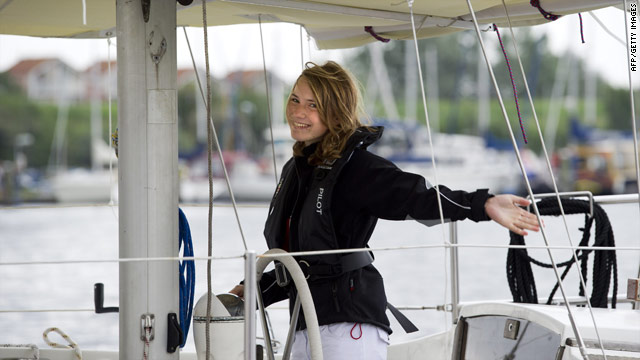
Laura Dekker, 14, waves goodbye as she leaves the harbor in Den Osse on August 4, 2010.

(CNN) -- A 14-year-old Dutch girl set sail Wednesday morning on a journey to travel around the world.

Laura Dekker left her home port of Den Osse at 9:10 a.m., her spokesman Peter de Lange confirmed.

"She will arrive in Portugal, near Lisbon, in two or three weeks," de Lange said. "She is traveling in her yacht, Guppy, with her father until Lisbon where she will start the official solo sailing trip around the world."

Dekker's attempt to circle the globe hasn't always been smooth sailing.

Last August, Dutch authorities placed Dekker under state care for two months after her parents refused to prevent her from undertaking the potentially dangerous voyage.

Last October, a Dutch court ruled against letting Dekker sail solo around the world, saying she is not experienced enough to make the trip on her own. However, she would be allowed to travel this year if she fulfilled certain requirements the court established for her to sail.

Dekker is seeking to become the youngest person to sail solo around the world.

Tuesday, April 27, 2010

Dutch Propose Using Dikes to Generate Power

netherlands, dikes, dutch, estuary, natural habitat, tidal power, 
renewable energy, energy, power, electricity
Though the Dutch are known for their windmills, they may be looking to underwater turbines for energy in the near future. In 1953 a massive flood decimated a large part of The Netherlands, killing 1,800 people on the south-west coast of the country. Dikes were devised and installed along the coastline to prevent future flooding. In their wake they left a host of man-made freshwater lakes — now stagnant and home to unpleasant algae — and shut the tides out of the large estuaries. A group of engineers is now proposing a plan to cut a few holes in the structures to allow the saltwater to return. The revised dikes would reinstate natural habitat and could create a network of tidal power plants that would provide electricity to the region.
netherlands, dikes, dutch, estuary, natural habitat, tidal power, 
renewable energy, energy, power, electricity
Following the 1953 flood much of The Netherlands followed the south-west region, installing dikes to prevent future catastrophes. The natural Dutch estuaries have been all but destroyed because of what has been referred to as one of the seven wonders of the modern world — along with the Panama Canal and the Chunnel. Without the constant rush of saltwater tides the estuaries have become stagnant and much of the wildlife once present has died off. They are home to smelly algae and the regions have lost much of their prior natural glory.

The Dutch government believes that with new technology the country’s dikes could be used to generate power while keeping the safety of the citizens and the welfare of nature in mind. The government’s committee is hoping that their plan to restore beauty to the region, tap the tides for energy and keep the populous safe will tempt other parts of the country to crack a small hole in their dikes and dams as well. Sounds like the Dutch are going underwater with their mills and we think it’s a great plan.

Via NRChandelsblad

Monday, March 1, 2010

Netherlands: Woman tunnels out of jail - using spoon

By Toby Green


A female prisoner at a jail in the Netherlands has escaped after using a spoon to tunnel her way out. File photo / Hawke's Bay Today

A female prisoner at a jail in the Netherlands has escaped after using a spoon to tunnel her way out. File photo / Hawke's Bay Today

Tunnelling under the prison walls has long been a favourite method of breaking out of jail, but now one female convict in the Netherlands has managed to gain her freedom by digging herself out with a spoon.

The 35-year-old prisoner displayed her resourcefulness with cutlery to escape from a prison in the Dutch city of Breda, in the south of the country.

"She used a spoon to make the tunnel to escape on Sunday morning," Wim de Bruin, a spokesman for the Dutch Public Prosecution Service, said yesterday.

According to the Dutch public broadcaster NOS, the tunnel was dug not in the prisoner's room but in a cellar under the building's kitchen. A hatch was used to keep the escape route hidden.

It is also believed that the fugitive was abetted by one or more collaborators. They are thought to have helped the prisoner by working loose parts of the pavement outside the jail where the tunnel emerged.

At the time, the prisoner was reportedly being held in a special building where long-term inmates are kept in the run-up to their release.

The prisoner - who has not been named - "was sentenced because of a violent crime", Mr de Bruin added, although he would not confirm local media reports that she had been convicted of murder and still had 22 months of her sentence to serve.

Dutch police are still searching for her.

- INDEPENDENT

By Toby Green

Tuesday, February 16, 2010

The Dutch Love Speed Skating

Sven Kramer won an Olympic gold medal for the Netherlands today — and his ecstatic fans are celebrating


Looking for edge, Dutch sport high-tech suits

RICHMOND, British Columbia (AP) — Aerospace engineering doesn't immediately come to mind when a Dutch speedskater wins gold at the Winter Games. Yet with Olympic lore depending on a fraction of a second, some people will stop at nothing to get the all-important edge.
Hence the role of Nando Timmer, an assistant professor of aerodynamics at the Dutch TU Delft faculty of Aerospace Engineering who has created something to give his country a boost at the Vancouver Games.
When Sven Kramer lines up Saturday in the 5,000 meters, his muscle-packed torso will be wrapped in an orange-and-black body suit which is claimed to be as revolutionary as it is shrouded in secrecy.
To the naked eye, it looks like any of the colorful patchwork of specialized materials that fit skaters like a second skin. Part of the fabric, though, is said to have special features that make it easier to glide through the air at speeds sometimes approaching 30 mph. Less resistance means more speed.
The suits are said to be so good that the Dutch switched from the Nike Swift skin suits that their speedskaters wore with considerable success over the past eight years.
"The KNSB Dutch federation has ended the contract with Nike," Timmer said, bent on maintaining secrecy. "That is all I am saying."
From now on, the clock will have to do the talking.
The speedskaters, as finicky as they are with their skates as with their suits, have fallen in love.
"Tested the new Olympic suit. Feels fast," team pursuit skater Mart Tuitert wrote as fast as he could on Twitter.
"Oh, but this Olympic suit feels sweet," added sprinter Ronald Mulder.
Science or science fiction? Depends who wears the suits. One thing is sure. A little bit of psychological warfare ahead of the biggest event in four years never hurts.
"Yeah for sure," Canadian veteran Jeremy Wotherspoon said with a dismissive chuckle. "It is good to try stuff. But there is a limit to how much stuff is positive for you. Sometime you just got to skate, too."
At 33, he has the benefit of hindsight, since he was already there at the 1988 Nagano Games, when Timmer helped the Dutch produce their "Nagano strips," a zigzag concoction of materials that wind tunnel tests showed reduced drag.
The Dutch won five gold medals at those Olympics so there certainly were no complaints there. Now the new technology builds further on that.
Because the suit development is overseen by the Dutch federation, the suit can be better adapted to the size and even the style of any individual skater. If one hangs lower over the ice, the back of the suit can be adapted to let him hold the position better. If another skates more upright, the back can be stretched tighter to accommodate that position.
And the Dutch plan to monopolize the technology as long as possible.
"We have an agreement not to release any information until 2014, making sure we do not endanger our competitive advantage," KNSB director Arie Koops said.
That would make for an edge lasting until the next Winter Games in Sochi, Russia.
 
APTOPIX Vancouver Olympics Speed Skating
Dutch speed skaters train at the Richmond Olympic Oval at the Vancouver 2010 Olympics in Vancouver, British Columbia, Friday, Feb. 12, 2010. (AP Photo/Chris Carlson)
 
APTOPIX Vancouver Olympics Speed Skating 
Speed skaters of the Netherlands train at the Richmond Olympic Oval at the Vancouver 2010 Olympics in Vancouver, British Columbia, Friday, Feb. 12, 2010. (AP Photo/Kevin Frayer)
 
Sven Kramer
Sven Kramer of the Netherlands trains at the Richmond Olympic Oval at the Vancouver 2010 Olympics in Vancouver, British Columbia, Friday, Feb. 12, 2010. (AP Photo/Kevin Frayer)
 
Sven Kramer
Sven Kramer of the Netherlands, left, trains with teammates at the Richmond Olympic Oval at the Vancouver 2010 Olympics in Vancouver, British Columbia, Friday, Feb. 12, 2010. (AP Photo/Kevin Frayer)
Sven Kramer
Sven Kramer of the Netherlands, center, trains with teammates at the Richmond Olympic Oval at the Vancouver 2010 Olympics in Vancouver, British Columbia, Friday, Feb. 12, 2010. (AP Photo/Kevin Frayer)
 
Sven Kramer
Sven Kramer of the Netherlands, left, trains with teammates at the Richmond Olympic Oval at the Vancouver 2010 Olympics in Vancouver, British Columbia, Friday, Feb. 12, 2010. (AP Photo/Kevin Frayer)
 
Vancouver Olympics Speed Skating
Speed skaters train at the Richmond Olympic Oval at the Vancouver 2010 Olympics in Vancouver, British Columbia, Friday, Feb. 12, 2010. (AP Photo/Kevin Frayer)
Irene Wust
Irene Wust of the Netherlands ties the laces of her skates during training at the Richmond Olympic Oval at the Vancouver 2010 Olympics in Vancouver, British Columbia, Friday, Feb. 12, 2010. (AP Photo/Kevin Frayer)

Thursday, February 4, 2010

Dutch crack down on marijuana tourism

And what's more, Dutch youth aren't even interested in smoking weed.
By Paul Ames - GlobalPost

AMSTERDAM, The Netherlands — In the back street cannabis den, a French-speaking Arab youth with a pierced lower lip and a rhinestone encrusted baseball cap leans across the bar to order his fix of choice.

"Hot chocolate, please," he intones in heavily accentuated English.

"With whipped cream?" asks the fresh-faced young barrista in the 420 Cafe.

"Yes, please.”

A group of teenage English boys, their polite manners contrasting with the hair-raising heavy metal designs on their T-shirts, is also drinking the warm, frothy brew. Above them a large flat screen TV is showing a documentary about Antarctic bird life.

A penguin protects her chicks from a hungry gull as two Spanish girls debate whether to get high on "White Widow," “Blueberry” — brands from the marijuana menu — or to take a slice of the peanut butter and white chocolate weed-laced "space cake."

From inside this cozy, 100-year-old-bar-turned-hash-house it appears the Amsterdam drug scene has mellowed since the Dutch government began to "decriminalize" cannabis in the late 1970s.

"Some specimens of my tribe, and I think I can include myself, are considered to be respectable citizens," said Michael Veling, owner of the 420 Cafe.

“We even have a working relationship with the tax office,” added Veling, a spokesman for the Cannabis Retailers Association which represents many of the more than 700 “coffee shops” that openly serve the drug in the Netherlands.

After 30 years of high times, Amsterdam continues to attract waves of youthful tourists eager to smoke a reefer or two without having to look over their shoulder for the cops. However Dutch attitudes are changing. Successive conservative-led governments have tightened restrictions on cannabis sales, while local youngsters seem increasingly indifferent to the coffee shops’ charms.

A report from European Union’s drug monitoring center made headlines in November when it showed young Dutch people lagged well behind many of their European neighbors when it came to smoking weed.

According to the survey, 11.4 percent of Dutch people aged 15 to 24 had consumed cannabis over the previous year, down from 14.3 percent eight years earlier. The Netherlands was ranked 13th out of 23 nations — way behind countries such as Spain, Italy and the Czech Republic, which register more than double the Dutch rate.

In the 420 Cafe, the only locals in view were a group of 50-something friends of the owner nodding contentedly to the Frank Zappa and Jimi Hendrix tunes coming from the sound system.

“It’s not as exciting [for Dutch kids] as it is in other countries and we had education together with the tolerant attitude, so our kids know about drugs,” said Veling.

“Our customers are mainly from England and the United States, but because of the economic crisis the percentage of continental Europeans has risen,” he said. “Last summer we saw the first wave of Chinese middle class, that’s a very promising market.”

Veling is perhaps unique among coffee shop owners in that he is also an active member and one-time city councilor with the conservative Christian Democratic Appeal party of Prime Minister Jan Peter Balkenende, which has done much to clamp down on the Dutch dope trade in recent years.

Coffee shops have seen the maximum amount they can sell customers reduced from 30 grams to 5 grams. In 2007 a ban on cannabis outlets serving alcohol was enforced, meaning coffee shop owners had to choose between booze or pot — which explains why the strongest drinks at Cafe 420 are coffee, tea and chocolate. Moreover, advertising for cannabis is banned, so while souvenir shops selling T-shirts festooned with marijuana-leaf designs abound, coffee shops are not allowed to use the image.

Many city councils prohibit the opening of new coffee shops and are quick to shut down any that break the rules. A ban on smoking tobacco in all Dutch cafes and bars hit the coffee shops hard when it was introduced in July 2008, since cannabis cigarettes are often mixed with tobacco. Now the rule is widely ignored.

"There are all kinds of ridiculous regulations,” said Fredrick Polak, a veteran campaigner for more liberal drug laws. “It does not work, it is counterproductive … the state has no business interfering with individual grown-up citizens and what they want to put in their bodies."

Polak, a white-haired, 67-year-old psychiatrist who works at Amsterdam’s drug dependency unit, said Dutch authorities have caved into pressure from neighboring nations concerned that so many young people were buying cannabis in the Netherlands to take back home.

French, Belgian and German authorities have been particularly worried about a proliferation of outlets in border cities, so the Dutch government has sought to crack down on “drug tourism.”

The cities of Bergen op Zoom and Rosendaal near the Belgian border closed down six of their eight coffee shops last year after residents complained about rowdy behavior from an estimated 25,000 drug tourists passing through every week.

In the southeastern city of Maastricht, authorities have proposed making coffee shops members-only clubs, effectively banning foreign day-trippers. The country’s largest coffee shop, Checkpoint in the southern border town of Terneuzen, was closed down in 2008 at a time when it was reportedly serving 3,000 customers a day.

Polak complains that criminal elements continue to play a leading role in the cannabis trade due to an anomaly in the laws: While the retailing is tolerated, wholesale trade remains illegal, meaning coffee shop owners often have to get their supplies from criminal networks, which are also involved in illegal exports of the drug and violent turf wars.

“With our system, for people who want to smoke marijuana it’s very pleasant, but on the supply side here there is no control, it’s still completely illegal, so the wrong people make very much money," Polak said.

Thursday, December 31, 2009

Dutch, Nigerians to use full body scans for air travelers

From: http://us.cnn.com/

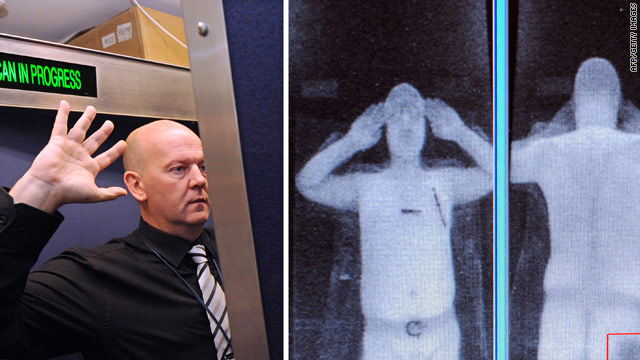
A staff member demonstrates a full body scan at Manchester Airport in the UK.

(CNN) -- The Netherlands and Nigeria will begin using body scanners on airline passengers following the attempted terrorist attack on a U.S.-bound flight on Christmas Day, authorities in both nations said Wednesday.

The millimeter-wave body scanners will be in place at Amsterdam's Schiphol Airport in about three weeks and will be used on all passengers traveling to the United States, Dutch Interior Minister Guusje ter Horst told a news conference at The Hague.

"We've escaped a very serious attack with serious consequences, but unfortunately in this world there are individuals who do not shy away from attacks on innocent people," she said.

Nigeria did not say when it would begin the new scans. "In combating the new threat of terrorism as unfolded recently, Nigeria will be upgrading its security screening system to 3D Total Body Imaging Scanner," the country's airport authority said in a statement. It gave no further details.

Do new rules make you feel safer? Share your airport experiences.

Nigerian suspect Umar Farouk AbdulMutallab, 23, is accused of trying to blow up a Northwest Airlines plane going from Amsterdam to Detroit, Michigan, with explosives that had been concealed in his underwear. He is charged with attempting to destroy an aircraft.

The militant group al Qaeda in the Arabian Peninsula has claimed responsibility for the December 25 plot.

Dutch authorities have already said they were confident in the security measures that were carried out when AbdulMutallab transferred to the Detroit flight from an earlier flight from Nigeria.

A source in Lagos, Nigeria, with connections to the aviation industry told CNN that AbdulMullatab arrived in Nigeria from Accra, Ghana, on December 24. He flew in on a Virgin Nigeria flight, arriving in Lagos about 7:30 p.m. local time (1:30 p.m. ET), about an hour before he checked in for a KLM flight to Amsterdam. He checked one bag, the source said.

Video: Dutch to use body scanners
Video: Netherlands now uses body scan
Video: Inside the X-ray

Ter Horst said that security measures in place in Amsterdam were metal detectors and X-ray machines, and admitted they could not have picked up the explosive material that AbdulMullatab was allegedly carrying.

"The introduction of these body scanners would certainly have helped in detecting that he was carrying something on his body," she said. "We know that metal detection does not help to detect non-metal explosives, and these millimeter-wave scanners can do this, which would mean that this would be an improvement."

One passenger on same plane as AbdulMutallab told CNN's "Larry King Live" that the security checks at Schiphol were not as stringent as those she is used to in the United States.

"We walked through and did not have to take our shoes off," said Wisconsin native Richelle Keepman. "Also, my mother had a water bottle in her bag that she'd completely forgotten about. And it went right through and we didn't realize it until we were on the plane."

Ter Horst acknowledged that the systems currently in place are "not watertight," which is why the body scanners are being introduced.

As to privacy concerns -- namely that the scanners could pick up private features of a person's body -- ter Horst said the scan results would first go through a computer, which would then flag any suspicious items to a human.

The scanners will be permanent at Schiphol, and any passengers bound for the United States who do not go through them will be body-searched, ter Horst said.

Erik Akerboom, the Dutch national coordinator for counterterrorism, said part of the investigation is looking at whether the explosives were brought into Schiphol by someone else for AbdulMutallab to pick up later.

Dutch authorities are also looking into whom he was in touch with while at Schiphol awaiting his connecting flight. They are combing surveillance camera footage from the connections hall, Akerboom said.

Asked about reports that AbdulMutallab paid for his ticket in cash and was flying only with hand luggage, Akerboom said neither would have necessarily raised any alarms.

"There are several travelers who do this," he said.

AbdulMutallab's name had come to the attention of U.S. authorities before the attack, sources have told CNN in recent days.

His father talked twice about his son's extremist views with at least one CIA representative at the U.S. Embassy in Nigeria and a report was prepared, but the report was not circulated outside the agency, a reliable source told CNN's Jeanne Meserve on Tuesday.

Had that critical information been shared, the man might have been denied passage on the flight, the source said.

A U.S. intelligence official said AbdulMutallab's name, passport number and possible connection to extremists were indeed disseminated. But the official added, "I'm not aware of a magic piece of intelligence -- somehow withheld -- that would have put AbdulMutallab on the no-fly list."

CIA spokesman George Little defended the agency's actions regarding AbdulMutallab, but also said the agency is reviewing data to ascertain whether more could have been done.

State Department spokesman Ian Kelly said department staff did what they were supposed to by sending a cable to the National Counterterrorism Center in Washington about the matter. Kelly said any decision to revoke the suspect's visa would have been an interagency decision.

Ter Horst said Dutch authorities did not know that AbdulMutallab had raised any security flags, and she called for a global watch list for all suspect travelers in the future.

Friday, February 13, 2009

Dutch Company One Step Closer to Private Moon Mission

Odyssey Moon secures Dutch payload.

A spectrometer meant to fly to Mars on a European mission in 2016 will get to the Moon first. The Dutch team that is building the instrument last week announced it would send a scaled-up version, dubbed MoonShot, to the lunar surface by 2011 with Odyssey Moon, a company headquartered in the Isle of Man, UK.

The MoonOne lander aims to fly cargo to the Moon for cash.The MoonOne lander aims to fly cargo to the Moon for cash.Odyssey Moon

If it works, the private MoonOne lander and its successors could serve scientists much as a commercial trucking company serves wholesalers, providing a platform to ferry science instruments and other payloads to the lunar surface.

"The intention is to bring on a new age," says Alan Stern, science mission director for Odyssey Moon and former science chief at NASA. That could mean new opportunities for scientists whose instruments were cut or scaled back in government missions, or whose nations do not have their own lunar spacecraft. "It's an ongoing business that will make sense many years in the future," Stern says.

MoonShot was originally designed to look for organic compounds in the Martian soil using two different types of laser-based spectrometry. The version that will go to Mars on the European Space Agency's ExoMars mission has been cut back to include only a Raman spectrometer, which uses a laser beam to detect chemical signatures, including organic compounds, in surface samples. The version flying privately to the Moon, however, will also have a laser-induced breakdown spectrometer, which will scan the lunar soil and can detect heavy metals. "You shine the laser and just find out what's there," says Erik Laan, an engineer who helped build the instrument at TNO Science and Industry in Delft, the Netherlands.

MoonShot would be the first Dutch instrument on the lunar surface. A consortium of European companies, including Philips Applied Technologies, Dutch consultants Space Horizon, the Free University in Amsterdam and the Delft University of Technology, will pitch in to pay Odyssey Moon an unspecified amount — although less than US$10 million — to transport the instrument.

The MoonOne lander is already slated to carry two other commercial payloads. These include a precursor to the International Lunar Observatory, a communications dish at the lunar south pole envisioned by a Hawaii-based non-profit organization, and packages from Texas-based company Celestis, which acts as a broker for ferrying cremated remains and other relics to the Moon.

Odyssey Moon has also signed up Paul Spudis, a geologist at the Lunar and Planetary Institute in Houston, Texas, who serves as the company's chief scientist. And it has partnered with NASA to model its lunar lander after the US space agency's common spacecraft bus, which uses a modular design that can be manipulated into either a lander or an orbiter.

Robert Richards, Odyssey Moon's founder, describes it as a logistics company with a business model similar to that of FedEx. "We want to get customer packages to the Moon," he says, "and we don't really care what we use to do it as long as it gets there reliably and cost-effectively." Eventually, such private craft might end up helping to resupply government-initiated efforts, such as the proposed International Lunar Network, a series of stations containing scientific instruments that will be positioned at different places across the lunar surface.

Odyssey Moon and 15 other teams are also vying for the Google Lunar X Prize, a US$20-million race to be the first privately funded spacecraft to relay high-definition video, images and data from a lunar lander back to Earth. The teams vary in their backgrounds, interests and long-term goals. A team named Next Giant Leap, in partnership with the Massachusetts Institute of Technology's Space Systems Laboratory and MicroSat Systems of Littleton, Colorado, among others, is focusing on meeting the prize's minimum criteria and has no plans yet to develop a commercial craft of its own. Astrobotic Technology, founded by robotics specialist William Whittaker of Carnegie Mellon University in Pittsburgh, Pennsylvania, plans to launch exploratory missions, first to the Apollo 11 site and then to the lunar poles.

Competitors for the Google Lunar X Prize have until 31 December 2014 to stake their claim on the cash awards and the Moon.

Wednesday, December 10, 2008

Amsterdam to close many brothels, marijuana cafes

By TOBY STERLING

Associated Press Writer= AMSTERDAM, Netherlands (AP) — Amsterdam unveiled plans Saturday to close up to half of the famed brothels and marijuana cafes in its ancient city center as part of a major cleanup operation.

The city says it wants to drive organized crime out of the district, and is targeting businesses that "generate criminality," including prostitution, gambling parlors, "smart shops" that sell herbal treatments, head shops and "coffee shops" where marijuana is sold openly.

"I think that the new reality will be more in line with our image as a tolerant and crazy place, rather than a free zone for criminals" said alderman Lodewijk Asscher, one of the main proponents of the plan.

The city said it would also reduce the number of business it sees as related to the "decay" of the center, including peep shows, sex theaters, sex shops, mini supermarkets, massage parlors and souvenir shops.

The city said there were too many of these and it believes some are used for money-laundering by drug dealers and the human traffickers who supply many of the city's prostitutes.

Asscher underlined that the city will remain true to its freewheeling reputation.

"It'll be a place with 200 windows (for prostitutes) and 30 coffee shops, which you can't find anywhere else in the world — very exciting, but also with cultural attractions and you won't have to be embarrassed to say you came," he said.

Under the plan announced Saturday, Amsterdam will spend €30-€40 million ($38-$51 million) to bring hotels, restaurants, art galleries and boutiques to the center. It will also build new underground parking areas for cars and bikes and may use some of the vacated buildings to ease a housing shortage.

Amsterdam already had plans to close many brothels and said last month it might close some coffee shops throughout the city, but the plans announced Saturday go much further.

Asscher said the city would use various techniques to reshape the area, including rezoning, buying out some businesses and offering others assistance in "upgrading" their stores. In the past, the city has shut a number of brothels and sex clubs, relying primarily on a law that allows the closure of businesses with bookkeeping irregularities.

He said the city will also offer help for prostitutes and coffee shop employees who lose their jobs as a result of the plan.

Prostitution, which has spread into several areas of the center, will be allowed only in two areas — notably De Wallen ("The Walls"), a web of streets and alleys around the city's medieval retaining dam walls. The area has been a center of prostitution since before the city's golden shipping age in the 1600s.

Prostitution was legalized in the Netherlands in 2000, formalizing a long-standing tolerance policy.

Marijuana is technically illegal in the Netherlands, but prosecutors won't press charges for possession of small amounts and the coffee shops are able to sell it openly.

Tuesday, December 9, 2008

Dutchman aims to break record in freezing bath

A Dutchman who is able to withstand freezing temperatures that would kill most people will submerge himself in icy water for almost two hours in a world record bid.


Wim Hof sits on a block of ice for over an hour in a freezer in Utrecht, The Netherlands
Wim Hof sits on a block of ice for over an hour in a freezer in Utrecht, The Netherlands Photo: BARCROFT

Wim Hof, known as "The Ice Man", has spent the last 20 years testing his talent in the most extreme conditions from scaling mountain tops wearing nothing but a pair of shorts to swimming under sheets of ice in the north pole.

Now he is set to break his own world record by submerging himself in a Plexiglas container filled with ice at temperatures as low as -20 degrees for more than 1 hour 45 minutes.

Mr Hof discovered his unusual talent over 20 years ago during a stroll in the park in his native Holland.

"I had a stroll like this in the park with somebody and I saw the ice and I thought, what would happen if I go in there," reveals the 48-year-old Dutchman.

"I was really attracted to it. I went in, got rid of my clothes. Thirty seconds I was in and a tremendous good feeling when I came out and since then, I repeated it every day."

It was the moment that Mr Hof knew that his body was different somehow: he was able to withstand fatally freezing temperatures.

Mr Hof began a lifelong quest to see just how far his abilities would take him.

In 2000, dressed only in a swimsuit, he dove under the ice at the North Pole and earned a Guinness World Record for the longest amount of time swimming under the ice.

Braving temperatures of minus three degrees in the water the temperature dropped to as low as minus 30 degrees when he exited the water.

"The first big challenge was to swim a distance of 60 metres under an ice-deck of a metre thick beyond the Polar Circle," he recalls.

"My goggles froze and I lost the track and so I went off course a little. I probably did the best record ever - around 80 m.

"I missed the 60 metre hole and must have swam finally the double distance before a diver gripped my almost unconscious body, and drew me back to the 60 metre hole.

"I know I went further but I am happy with the 60 metre record."

In 2002 Mr Hof travelled 100 miles north of the Arctic Circle to run a half-marathon in his bare feet.

In the same year, Mr Hof completed four additional half marathons as he travelled across Europe.

"I completed five half marathons in 2002," he says.

"The first was a the base of Mount Everest at 5,000m, then two in Finland, the Alps at 3,500 m, and here in Holland.

"I can tell you it was cold the floor temperature was minus thirty degrees and the air temperature was as low as minus 15-20 degrees."

In April 2007, Mr Hof returned to mount Everest where he became the first man scale 7,400 metres wearing nothing but shorts.

"I stayed in the area for a few weeks to acclimatise," he said.

"But the walk its self was very quick - only a few hours."

Whilst many scientists around the world find Mr Hof's ability an anomaly, Mr Hof says it is merely a case of mind over matter.

Practising an ancient Himalayan meditation called "Tummo," or Inner Fire, Mr Hof says he can generate his own heat.

Mr Hof now travels the world teaching the technique through his record attempts, lectures and talks.

"As one can solve maths by concentrating do I focus on certain places in my body and generate heat because of it," he says.

"Every body has mind power, I have learned to direct it toward my body and thus influence the cold and heating-system of my metabolism.

"Mind power is like electricity, it is an potential (current) which I have learned to use toward different places in my body, that is the real yoga."

However during a recent world record attempt in New York, Dr. Ken Kamler, author of "Surviving the Extremes," attempted to explain Mr Hof's unusual ability.

Studying him as he sat in a container of ice for one hour 12 minutes Dr Kamler noted: "He's not moving, he's not generating heat, he's not dressed for it, and he's immersed in ice water."

And water will transmit heat 30 times faster than air. It literally sucks the life right out of you. And yet, despite all those negative factors, "Wim Hof was very calm, very comfortable the entire time that he was immersed in that water."

On December 20, Mr Hof will travel to Cologne, Germany, where he will attempt to break the world record he set in New York earlier this year by sitting in a container filled with ice for one hour and 45 minutes.

Friday, December 5, 2008

Holland Puts a New Spin on Old Technology to Combat Climate Change

A cafe in the Dutch town of Zeist has installed a revolving door which generates electricity as you pass through.


Holland has led the way in wind power for centuries. With a quarter of the country lying below sea level they have traditionally used windmills to pump out the water. They currently have the world’s largest offshore wind farm, generating enough power to supply more than 100,000 homes. They are also famous in harnessing human power for transport. Anyone who has been to Amsterdam has seen the millions of bicycles on the streets. So what are they up to now?

Well, it would seem that this forward thinking country is ahead of the game once again. A new restaurant situated at the train station in the town of Zeist has been working with the design company Rau in order to reduce their carbon footprint. They’ve come up with an innovative idea in the form of a power generation system fuelled by their own customers - They have installed a generator in their revolving door which converts the energy of people passing through into electricity. Each time you pass through the door you generate enough power to make a cup of coffee. The owners estimate that the door will generate approximately 4600 KWH per year. They are also investing in other ways to reduce their energy requirements such as a special low energy cooling system, a sun collector, and of course the obligatory Dutch windmill.

As a low lying country, the Netherlands is potentially one of the countries to be most affected by sea level rise. As usual they are leading the way in developing ingenious means to reduce their need for fossil fuels. Imagine how much power we could produce if every revolving door or turnstile was equipped with this kind of energy capture technology? One small cafe in Holland may not produce much of an impact on its own, but just think how much power could be generated by such a system in a busy subway station in London or New York?

Image credit: Frank Za’atar at Flickr under a Creative Commons license

Tuesday, November 11, 2008

Hydroelectric island to supply Dutch power when wind drops

Group of wind tubines

A man-made island housing a hydroelectric plant and generating enough electricity to supply two million Dutch homes is planned for the North Sea by 2020.

It would act as back-up to wind farms by ensuring that electricity is still generated when the wind drops and would provide extra peak-time capacity. If successful, similar islands could be be built to supply other countries, especially those such as Britain that will increasingly come to depend on wind energy. The proposed site, called energy island, is expected to be built 15-20 miles (24-32km) off the Dutch coast, in waters about 20m (65ft) deep, and will be 3.7 miles (6km) long and up to 2.5 miles (4km) across.

Huge dykes would be constructed to hold back the sea and the centre of the island would be dug down to 40 metres (130ft) below sea level. Pipes in dykes would allow sea water to pour in, generating electricity in the same way as some dams. The water would then be pumped out. The electricity generated by the water pouring in is matched or exceeded by that needed to pump it out. The island should make a profit because it consumes electricity at a cheaper rate than it generates it.

Kema, the Dutch company behind the €3-3.5 billion (£2.5 billion) plan, is carrying out a feasibility study to pinpoint the best location. The Dutch Government is among potential investors. The project with a capacity of 1,500MW - similar to two large power plants - should help the Netherlands to reach its renewable energy target and its aim of reducing carbon dioxide emissions by 30 per cent by 2020.