Zazzle Shop

Screen printing
Showing posts with label Currency. Show all posts

Monday, August 15, 2011

Pay with The Force? Tiny Island Nation Mints 'Star Wars' Currency

By:
From: http://newsfeed.time.com/

New Zealand Mint

New Zealand Mint

Four words you'd never expect to hear: "Use the coin, Luke."

And you thought you were Star Wars die-hard. Apparently not as die-hard as the Pacific nation of Niue, a roughly 100-square-mile island located 1,500 miles northeast of New Zealand, sometimes called the "Rock of Polynesia," or just "The Rock" for short. These folks just opted to print coins adorned with color images of Luke Skywalker, Princess Leia, Darth Vader and other Star Wars fan favorites. We're not kidding: actual, usable, carry-in-your-coin-purse change.

The catch: the coins will be worth too much to justify spending. That, and you'll have to be one of Niue's 2,000 residents to actually use them, probably making this the world's most exclusive sci-fi-themed currency.

But still, honest-to-goodness, financially legitimate Star Wars coins? Who'd-'a-thunk.

Niue—whose name means "behold the coconut"—uses New Zealand's currency, the "Kiwi dollar," and the Star Wars coins are valued at NZ$2 each (or directly converted, about US$1.66). But their actual value, according to AAP New Zealand (via The Sydney Morning Herald), is upwards of AUD$100 (Australian dollars). The coins are apparently made of silver that's worth AUD$40 alone—the set includes eight one-ounce solid silver coins and 10 silver-plated base metal ones, and retails for about AUD$450, or about US$465 if you're looking to collect a set to ship stateside.

"You wouldn't want to go and spend them because they're only worth $2 [officially] but the value is much more than that," said New Zealand Mint Vice President of USA Operations Chris Kirkness (speaking to Fairfax New Zealand), quipping "No one is going to go buy an ice cream with them."

If you want a set, you'll have to be quick: They're only printing 50,000 of each coin, with some offered in special collectors' boxes (limited to 7,500). There's one modeled after Darth Vader (opening it triggers Vader's trademark mask-breathing sound) and another after the Millennium Falcon (opening it triggers a launch-engine sound).

Will the force be with your checkbook? You'll have to find out November 1st, when they're due to go on sale.

Monday, June 20, 2011

The Dutch are Making QR-Coded Coins. Seriously.


From: http://gizmodo.com/

Avatar for Max Behrman When did you last scan a QR code? Was it during last week's Republican debate? Or maybe that ad for a free Coke at Wendy's. It probably wasn't on a coin. But the Dutch are changing that with QR-coded currency.

The Royal Dutch Mint is celebrating its 100th anniversary, so they're producing these 5 and 10 euro QR coins in both silver and gold. Scanning the code directs you to this website (though as of now, it's not formatted for mobile devices). At the moment it's unclear what will be on the site when the coins are released June 22nd. Maybe it'll be information about how the coin was made or the person whose face is printed on it. Maybe it'll just be an ad for a free Coke from Wendy's. Whatever it is, coin collectors will probably be overjoyed to get their hands on these shiny 21st century doubloons. Assuming their love for Wendy's doesn't outdo their love for collecting currencies. [2d code and The Rich Times via DVICE]

Friday, June 17, 2011

22 Very rare and old banknotes of U.S. dollars

From: http://wahfunny.com/

Very interesting collection of old and rare banknotes of U.S. dollars.

Wednesday, January 26, 2011

Apple Plans Service That Lets iPhone Users Pay With Handsets

from http://www.bloomberg.com/
Apple Plans Service That Lets IPhone Users Pay With Handsets
Apple Inc. plans to introduce services that would let customers use its iPhone to make purchases. Photographer Rupert Hartley/Bloomberg 

Apple Plans Service That Lets IPhone Users Pay With Handsets
Apple Inc. plans to introduce services that would let customers use its iPhone and iPad computer to make purchases, said Richard Doherty , director of consulting firm Envisioneering Group. 
Photographer: Tony Avelar/Bloomberg 


Apple Inc. plans to introduce services that would let customers use its iPhone and iPad computer to make purchases, said Richard Doherty, director of consulting firm Envisioneering Group.

The services are based on “Near-Field Communication,” a technology that can beam and receive information at a distance of up to 4 inches, due to be embedded in the next iteration of the iPhone for AT&T Inc. and the iPad 2, Doherty said. Both products are likely to be introduced this year, he said, citing engineers who are working on hardware for the Apple project.

Apple’s service may be able to tap into user information already on file, including credit-card numbers, iTunes gift-card balance and bank data, said Richard Crone, who leads financial industry adviser Crone Consulting LLC in San Carlos, California. That could make it an alternative to programs offered by such companies as Visa Inc., MasterCard Inc. and EBay Inc.’s PayPal, said Taylor Hamilton, an analyst at consultant IBISWorld Inc.

“It would make a lot of sense for Apple to include NFC functionality in its products,” Crone said.
The main goal for Apple would be to get a piece of the $6.2 trillion Americans spend each year on goods and services, Crone said. Today, the company pays credit-card processing fees on every purchase from iTunes. By encouraging consumers to use cheaper methods -- such as tapping their bank accounts directly, which is how many purchases are made via PayPal -- Apple could cut its own costs and those of retailers selling Apple products.

Apple's plans could change, and the new products may be delayed or not come to fruition. Natalie Harrison, a spokeswoman for Apple, declined to comment.

Adding Features to Phones

“NFC is definitely one of the technologies that’s getting a lot of attention, but ultimately the consumer is going to choose,” said Charlotte Hill, a spokeswoman for PayPal, owned by San Jose, California-based EBay. Elvira Swanson, a spokeswoman for San Francisco-based Visa, said the company is “excited to see NFC mobile devices coming into the market.”

Ed McLaughlin, chief emerging payments officer at MasterCard, said the company is “running the world’s fastest payment network, and that doesn’t need to be re-created.” MasterCard sees NFC “as an opportunity to partner with organizations” and already has run NFC payment trials around the world.


The recently passed Durbin Amendment makes the timing right for a push by Apple, Crone said. The regulation, which will go into effect this summer, may limit debit-card fees paid by retailers and lets them encourage consumers to use one payment method over another.

Competing With Android 

Under Apple Chief Operating Officer Tim Cook, who’s handling day-to-day operations as Chief Executive Officer Steve Jobs takes medical leave, the iPhone is adding features that will help it compete with phones that use Google Inc.’s Android software. Samsung Electronics Co.’s Nexus S phone, which runs Android, can read information from NFC tags. Nokia Oyj, the world’s largest maker of mobile phones, has pushed NFC adoption for years, though the technology has been slow to take off.
“Apple could be the game-changer,” Doherty said.
Apple, based in Cupertino, California, is considering starting a mobile payment service as early as mid-2011, Doherty said. It would revamp iTunes, a service that lets consumers buy digital movies and music, so it would hold not only users’ credit-card account information but also loyalty credits and points, Doherty said.
Using the service, customers could walk into a store or restaurant and make payments straight from an iPad or iPhone. They could also receive loyalty rewards and credits for purchases, such as when referring a friend, Doherty said.

Targeted Advertising 

Apple also could use NFC to improve how it delivers mobile ads to customers’ handsets and charge higher fees for those ads, Crone said. NFC would let Apple’s iAd advertising network personalize ads to the places where a customer is spending money. That could double or triple the ad rates that Apple charges, Crone said.
Apple has created a prototype of a payment terminal that small businesses, such as hairdressers and mom-and-pop stores, could use to scan NFC-enabled iPhones and iPads, Doherty said. The company is considering heavily subsidizing the terminal, or even giving it away to retailers, to encourage fast, nationwide adoption of NFC technology and rev up sales of NFC-enabled iPhones and iPads, he said.

To help get ready for NFC, Apple last year hired Benjamin Vigier, who worked on the technology at mobile-payment provider MFoundry. It also has applied for a patent on a system that uses NFC to share information between applications running on various Apple devices.


Wednesday, January 19, 2011

Starbucks Starts Accepting Mobile Payments Nationwide


Nearly 6,800 company-operated Starbucks stores in the U.S. will begin accepting mobile payments Wednesday. Customers using the Starbucks Card Mobile app on their iPhone, iPod touch or BlackBerry will now be able to use those devices as tender.

The nationwide rollout marks the official launch of the Starbucks Card Mobile payment program, which has been piloted at Target stores and select San Francisco, Seattle and New York Starbucks locations.

Starbucks Card Mobile [iTunes link] lets users add their Starbucks Cards, track rewards and reload cards as needed via PayPal or credit card. To pay with their phone, app users simply select “touch to pay” and hold up the barcode on their mobile device screen to the 2-D scanner at the register.

An Android application is also said to be in the works, but the company has yet to disclose a release date.


Starbucks is using its own custom-built technology to enable the 2-D mobile barcode scans. The coffee retailer opted for barcode scanning over near field communication technology — which Google (Google) is exploring — because of its limited availability. The coffee retailer was reluctant to wait for a NFC ecosystem to develop when its customers have expressed interest in mobile payments now, according to Chuck Davidson, the category manager of innovation on the Starbucks Card team. “Once there are more users, we will adapt,” he says.

In testing, Starbucks assessed the mobile payment option by measuring application speed, transaction speed and total customer wait time, says Brady Brewer, vice president of Starbucks Card and brand loyalty. In all instances, Starbucks Card Mobile was the fastest way for customers to pay.

Starbucks is investing in mobile payments, an investment Davidson describes as modest in relation to expectations, because customers have requested the option and have shown a propensity to not only pay with Starbucks Cards — one in five transactions are made using a Starbucks Card — but frequently use their smartphones while waiting in line.

The company also believes that its customers carry their mobile phones more often than a wallet or purse, and sees Starbucks Card Mobile and the mobile payment program as an opportunity to reach these consumers and build stronger relationships.

Starbucks seems confident that its customers will appreciate the new, faster way to pay. Both Davidson and Brewer believe that adoption will spread as customers tell their friends about the new mobile payment option.
Image courtesy of gumption, Flickr

Stimulus Writ Small: Tiny California Town Prints Its Own Currency

Written by: Keith Wagstaff
currency

Josh Freeman of North Fork, CA sure took President Obama’s talk about providing help to “Main Street, not Wall Street” seriously. The tiny town of 2,400 people, located near Yosemite National Park, sits in a county with a staggering 15.7 percent unemployment rate. Seeing his town struggle, Freeman did what any red-blooded American would do: create his own currency. North Fork Shares, emblazoned with pictures of a butterflies and hummingbirds, are worth $12 per share, and are available in half and quarter shares.

This idea actually isn’t new; Ithaca, NY has its own currency, Ithaca Hours, which it launched way back in 1991. There are plenty of other local currencies around the United States: BerkShares in Massachusetts, the Plenty in Pittsboro, N.C., etc. The idea is to keep money in the community by encouraging spending only at local vendors who accept the money, like Disney Dollars, except less evil. Freeman explains his motivations to the L.A. Times, stating that ”In a small town, you tend to look out for each other …. With the changes in economy, the more we support each other in positive ways, the better the quality of life is for everyone.”


It’s not exactly a revolutionary idea, but it’s definitely a smart way to keep things local. If you had, say, a wallet full of $6 North Fork half-shares and you were trying to decide between the local coffee shop and Starbucks, chances are you would head over to the local coffee shop to spend your cash. Each bill is legal and printed on washable, synthetic paper called yupo.

Will North Fork Shares help revive the local economy? Only time will tell; if anything, the residents of North Fork will have undertaken a community building exercise and in this economy, hey, anything is worth a shot.

Monday, November 8, 2010

The Life and Death of a $1 Bill

Posted by: Dutch Mechanic
From: http://topcultured.com/

Nothing gets around more than your average dollar bill! Here are some interesting facts brought to you by Online Finance Degree on the typical life span each one holds, and the illegal powdery substances it comes in contact with every day. What is this piece of green paper actually worth?

Life and Death of a Dollar Bill
Via: Online Finance Degree

Friday, August 13, 2010

Rare 2,200-year-old gold coin found in Israel

By Les Neuhaus, CNN
From: http://edition.cnn.com/2010/

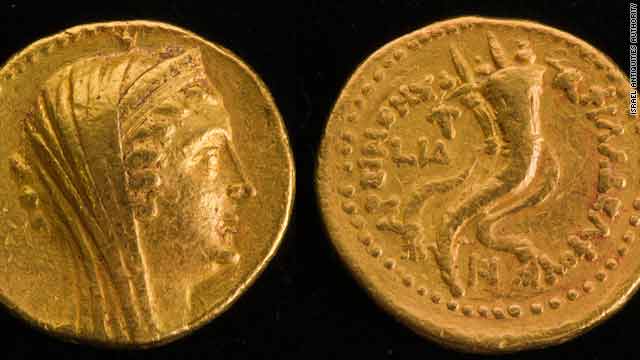
The obverse, or 'head' of the coin, portrays Queen Arsinoe II Philadelphus.
STORY HIGHLIGHTS
  • The coin dates back to 191 BCE
  • It is only the second gold Ptolemaic coin found in Israel
RELATED TOPICS
  • Egypt
  • Archaeology

(CNN) -- A rare gold coin dating back 2,200 years was discovered by a combined university research team in Israel, a top Israeli antiquities official said Thursday.

Dr. Donald T. Ariel, head of the Coin Department of the Israel Antiquities Authority (IAA), said the coin ranked in the top five of the rarest finds in that country's history.

"Intrinsically, for coin research, it's a very exciting find," Ariel told CNN. "This is an amazing numismatic find. The coin is beautiful and in excellent preservation. It is the heaviest gold coin with the highest contemporary value of any coin ever found in an excavation in Israel."

Ariel said the coin weighs almost one ounce (27.71 grams), while most ancient gold coins weighed about 4.5 grams. It was minted in Alexandria, Egypt, by Ptolemy V and dates to 191 BCE. It is only the second gold Ptolemaic coin ever found in Israel.

The obverse, or 'head' of the coin, portrays Queen Arsinoe II Philadelphus.

The reverse, or 'tail,' illustrates two "overlapping cornucopias decorated with fillets," according to the IAA.

In the parlance of antiquities experts, the coin's denomination is referred to as a "mnaieion," meaning a one-mina coin, and is equivalent to 100 silver drachms, or a mina of silver.

The meaning of the word Philadelphus is "brotherly love" and in this context relates to the fact that Queen Arsinoe II Philadelphus was married to her brother, Ptolemy II, who was her second husband. She was first married at age 15 to Lysimachus, king of Thrace, who was one of Alexander the Great's generals.

Ariel said it was not uncommon in that period of history for siblings to intermarry.

The coin was found by U.S. researchers working for the University of Michigan and the University of Minnesota on June 26. It was embedded in a stone wall "separating the northwest storeroom of the Hellenistic administrative building from a room currently identified as a kitchen," according to Ariel.

Ariel speculated it was possible the coin had been secretly hidden and the owner, or the person who possessed the coin at the time, may not have been able to retrieve it for unknown reasons.

Friday, May 28, 2010

10 Artworks Made of Money

See the masterpieces these artists created from currency

By Brynn Mannino

from WomansDay.com

We all know the image of the poor, starving artist, but the reality is, it can be costly to create art. Whether for supplies, workspace or even classes, most artists are constantly throwing money

into their passion—but there are a select few who do it literally. These creative minds take cold, hard cash and turn it into art. So read on for 10 masterpieces made of money.

“Money Dress” by Dave Cole

Made of 1,000 unused single dollar bills, which Cole cut into raw materials, this 66" x 30" x 14" dress was displayed in the 2007 Radical Lace & Subversive Knitting exhibit at New York City’s Museum of Arts and Design, which was devoted to “using fiber in unexpected and unorthodox ways.” Photo courtesy of Clayton Parker via Flickr.com.

“Money Boat” by Qinyi “Raymond” Yu

This 3’-long x 4’-tall boat—currently on display at Yu’s Mandarin Island Chinese Restaurant in Mission Hill, California—showcases traditional Chinese paper art. According to Bob Nienhuis’ website dedicated to Traditional Chinese Paper Arts, Yu used over 20,000 modular units to create the structure, which took approximately six months to complete. Photo courtesy of WestWorld.com.

“Absolute Power” by Justine Smith

The London-based artist built this 7.5" x 5" x 1.5" handgun sculpture out of U.S. dollar bills and plastic in 2005. She says her work “examines our relationship with money in a political, moral and social sense, while also taking advantage of the physical beauty of the notes.” Photo courtesy of Justine Smith.

“Washington” by Justine Smith

Smith, whose work is currently featured in the collections of the British Council and the UK Government Art Collection, created this 3.5" x 15" x 9" model of a dog in 2005 using multiple U.S. dollars along with resin and leather. Photo courtesy of Justine Smith.

“Obama vs. McCain” by Theodore Stanke

Brooklyn-based Stanke created this mosaic in the month leading up to 2008 presidential election. Created from adhesives and chopped-up American coins—Obama from pennies and nickels, McCain from quarters, dimes and dollars—the mosaic was intended to depict the distribution of wealth backing each candidate. The piece took 10 days to create and is currently for sale at Bunga’s Den in Manhattan. Photo courtesy of Ted Stanke.

“One Dollar Koi” by Won Park

Famed Japanese origami artist Won Park is known for using the U.S. dollar bill to create his detailed designs. Won even shares the secrets of his trade in a step-by-step video tutorial on his blog “Have Paper, Will Travel.” Photo courtesy of Won Park.

“One Dollar Camera” by Won Park

Park also created this tiny camera out of a “Won” dollar bill, as he refers to it, using the same unbroken folding technique showcased above. Photo courtesy of Won Park.

“Carpenter’s Tools” by Stacey Lee Webber

These three tools, constructed out of pre-1992 copper pennies, are part of Webber’s “The Craftsmen Series.” The artist hand-cut the pennies and soldered them together to create hollow, 3-D replicas of existing hand tools. She has said that they are synonymous with house construction and money is the reward for hours of labor and sweat. Photo courtesy of Stacey Lee Webber.

“Queen Elizabeth II” by Unknown

This paper portrait of the Supreme Governor of the Church of England displays “money-gami” at its best. Though a simple concept, constructing a leader out of his/her region’s currency produces impressive results. Photo courtesy of Close the World via Flickr.

“Paris Skyline” by Unknown

Each bill in this artist’s collection depicts a cut-out of a skyline or famous landmark, all instantly recognizable. In this example, we love the jutting Eiffel Tower beside the famous Arc de Triomphe. Photo courtesy of Spluch via Flickr.com.

Wednesday, April 21, 2010

New $100 Bill Released Today by U.S. Treasury

From: http://techvert.com/
The U.S. Treasury refreshes its currency every once in a while to stay a step ahead of counterfeiters, and this time they’re refreshing the new $100 bill. The new bill will contain a security feature called Motion, where each bill will contain up to 650,000 microlenses embedded in the printing which will allow for an underlying image to shift when the bill is moved. Yep, good old Benjamin Franklin is getting a facelift and here it is (we’ll add more pics as they become available):


Highlights of the new bill:
- 3-D Security Ribbon
- Bell in the inkwell. When you move the note, the bell changes color from copper to green.
- Portrait watermark
- Security Thread
- Color-shifting “100″
- The new note will be issued on February 10, 2011

Maybe George Washington can use some of these to pay for his overdue library books.

Some facts about the U.S. $100 bill:
- There are about 6.5 billion in circulation. That’s $650,000,000,000
- The average $100 bill is replaced every 5 years due to wear
- It is one of only two banknotes that do not feature a president
- The first $100 bill was issued in 1862
- The time on the clock on Independence Hall on the back side of the bill reads 4:10