Zazzle Shop

Screen printing
Showing posts with label Netherlands. Show all posts

Friday, August 19, 2011

Marblehead startup seeks to unlock secrets of cannabis

By Carolyn Y. Johnson
from: http://articles.boston.com/

It’s a plant more commonly associated with lava lamps and Pink Floyd than cutting-edge science. But today, a small Marblehead company plans to post online the hundreds of millions of letters of DNA that make up Cannabis sativa in a first step toward truly understanding and enhancing marijuana’s therapeutic potential.
For years, Kevin McKernan built genome sequencing technologies - powerful tools designed to provide insights into cancer and potential treatments.

But when desperate friends with cancer forwarded studies of medical marijuana’s use, he became intrigued. Earlier this summer, he founded Medicinal Genomics, a small firm that will partner with pharmaceutical companies to explore compounds made by the plant.

It’s not what most people would think - or what most stoners might hope. Medicinal Genomics might, for example, use insights from the plant’s genetic blueprint to create a plant that produces more of certain compounds, such as cannabidiol, which shows promise in early cancer studies - and even look at reducing the amount of THC, which gives the plant its psychoactive effects.

“The genetics were poorly understood,’’ McKernan said.

The company ultimately plans to sequence more than a dozen Cannabis species. This fall, Medicinal Genomics will launch an iPad app providing access to the data.

McKernan acknowledged that by making the information public, someone might try to use the genetic code to brew more potent pot. But not him, he swears. He’s only interested in marijuana for its medicinal value.

“Our goal is to help people,’’ he said.

Carolyn Y. Johnson

Wednesday, August 10, 2011

The Dutch Way: Bicycles and Fresh Bread

Robin Utrecht/Agence France-Presse — Getty Images

In the Netherlands, respect for bicycles is hard-wired into the culture.

From http://www.nytimes.com/

Russell Shorto is the author of “The Island at the Center of the World” and a contributing writer at The New York Times Magazine. He is working on a book about Amsterdam.

Amsterdam

AS an American who has been living here for several years, I am struck, every time I go home, by the way American cities remain manacled to the car. While Europe is dealing with congestion and greenhouse gas buildup by turning urban centers into pedestrian zones and finding innovative ways to combine driving with public transportation, many American cities are carving out more parking spaces. It’s all the more bewildering because America’s collapsing infrastructure would seem to cry out for new solutions.

Geography partly explains the difference: America is spread out, while European cities predate the car. But Boston and Philadelphia have old centers too, while the peripheral sprawl in London and Barcelona mirrors that of American cities.

More important, I think, is mind-set. Take bicycles. The advent of bike lanes in some American cities may seem like a big step, but merely marking a strip of the road for recreational cycling spectacularly misses the point. In Amsterdam, nearly everyone cycles, and cars, bikes and trams coexist in a complex flow, with dedicated bicycle lanes, traffic lights and parking garages. But this is thanks to a different way of thinking about transportation.

To give a small but telling example, pointed out to me by my friend Ruth Oldenziel, an expert on the history of technology at Eindhoven University, Dutch drivers are taught that when you are about to get out of the car, you reach for the door handle with your right hand — bringing your arm across your body to the door. This forces a driver to swivel shoulders and head, so that before opening the door you can see if there is a bike coming from behind. Likewise, every Dutch child has to pass a bicycle safety exam at school. The coexistence of different modes of travel is hard-wired into the culture.

This in turn relates to lots of other things — such as bread. How? Cyclists can’t carry six bags of groceries; bulk buying is almost nonexistent. Instead of shopping for a week, people stop at the market daily. So the need for processed loaves that will last for days is gone. A result: good bread.

There are also in the United States certain perceptions associated with both cycling and public transportation that are not the case here. In Holland, public buses aren’t considered last-resort forms of transportation. And cycling isn’t seen as eco-friendly exercise; it’s a way to get around. C.E.O.’s cycle to work, and kids cycle to school.

It’s true that public policy reinforces the egalitarianism. With mandatory lessons and other fees, getting a driver’s license costs more than $1,000. And taxi fares are kept deliberately high: a trip from the airport may cost $80, while a 20-minute bus ride sets you back about $3.50. But the egalitarianism — or maybe better said a preference for simplicity — is also rooted in the culture. A 17th-century French naval commander was shocked to see a Dutch captain sweeping out his own quarters. Likewise, I used to run into the mayor of Amsterdam at the supermarket, and he wasn’t engaged in a populist stunt (mayors aren’t elected here but are government appointees); he was shopping.

For American cities to think outside the car would seem to require a mental sea change. Then again, Americans, too, are practical, no-nonsense people. And Zef Hemel, the chief planner for the city of Amsterdam, reminded me that sea changes do happen. “Back in the 1960s, we were doing the same thing as America, making cities car-friendly,” he said. Funnily enough, it was an American, Jane Jacobs, who changed the minds of European urban designers. Her book “The Death and Life of Great American Cities” got European planners to shift their focus from car-friendliness to overall livability.

When I noted that Manhattan’s bike lanes seem to be used more for recreation than transport — cyclists in Amsterdam are dressed in everything from jeans to cocktail dresses, while those in Manhattan often look like spandex cyborgs — Mr. Hemel told me to give it time. “Those are the pioneers," he said. “You have to start somewhere.”

What he meant was, “You start with bike lanes” — that is, with the conviction that urban planning can bring about beneficial cultural changes. But that points up another mental difference: the willingness of Europeans to follow top-down social planning. America’s famed individualism breeds an often healthy distrust of the elite. I’m as quick as any other red-blooded American to bristle at European technocrats telling me how to live. (Try buying a light bulb or a magazine after 6 p.m. in Amsterdam, where the political elite have decreed that workers’ well-being requires that shops be open only during standard office hours, precisely when most people can’t shop.)

But while many Americans see their cars as an extension of their individual freedom, to some of us owning a car is a burden, and in a city a double burden. I find the recrafting of the city in order to lessen — or eliminate — the need for cars to be not just grudgingly acceptable, but, yes, an expansion of my individual freedom. So I say (in this case, at least): Go, social-planning technocrats! If only America’s cities could be so free.

Tuesday, September 7, 2010

New Fabric-Dyeing Technique Uses Fluid-State CO2, Not Water

Refinity, DyeCoo, carbon dioxide, water, eco-friendly dyes, eco-fashion, sustainable fashion, green fashion, sustainable style

Photos by Amber Isabel

A Dutch company has unveiled what it believes to be the first commercial dyeing machine to replace water with supercritical carbon dioxide—a pressurized form of the gas with unusual liquid-like properties. Heated up to 31 degrees Celsius (88 degrees Fahrenheit) and pressurized to 74 bar, CO2 takes on the characteristics of both a liquid and a gas, allowing for the dissolution of compounds such as dyes. For DyeCoo Textile System’s purposes, scCO2 is heated to 120 degrees Celsius (248 degrees Fahrenheit) and pressurized to 250 bar. Behaving as both a solvent and a solute, the supercharged carbon dioxide penetrates textile fibers and disperses the preloaded dyes without extra chemical agents.

Refinity, DyeCoo, carbon dioxide, water, eco-friendly dyes, eco-fashion, sustainable fashion, green fashion, sustainable style

LOAD OF GAS

Once the dyeing cycle is complete, the CO2 is gasified to recover the excess dye. Unburdened, the clean CO2 cycles back into the dyeing vessel for reuse, a maneuver that saves energy, water, and the heavy metals that comprise much of the toxic runoff into our planet’s polluted waterways, according to DyeCoo.

Once the excess dye is recovered, the clean CO2 cycles back into the vessel for reuse.

DyeCoo’s waterless innovation, which the company has branded DryDye, took 11 years to develop. Its parent company, FeyeCon, previously engineered scCO2 systems for industrial applications, including chemical extraction in pharmaceutical production.

The process isn’t without its limitations, however. DyeCoo is currently only able to dye scoured (or prewashed) polyester fabric, although the company notes that it’s working on a version that will dye unscoured fabric, as well as reactive dyes for cellulosic textiles made from plants.

Refinity, DyeCoo, carbon dioxide, water, eco-friendly dyes, eco-fashion, sustainable fashion, green fashion, sustainable style

NO H2O

Netherlands-based designer Fioen van Balgooi, for one, was inspired. Determined to show her fellow designers the potential that this new dyeing technique holds, van Balgooi conceived of the “No H2O,” a drapey, cowl-neck blouse that eludes to the rippling effect of water.

Fioen van Balgooi’s “No H2O” is a drapey, cowl-neck blouse that eludes to the rippling effect of water.

The garment, along with photos of the DryDye process, will be on view at the Audax Textile Museum in Tilburg from September 25, 2010 to January 30, 2011.

+ No H2O

+ Refinity

+ DyeCoo Textile Systems


Monday, August 30, 2010

Netherlands to Close Prisons: Not Enough Criminals

by Bruce Mirken
from: http://blog.mpp.org/

images-11

For years prohibitionists, including our own Drug Enforcement Administration, have claimed — falsely — that the tolerant marijuana policies of the Netherlands have made that nation a nest of crime and drug abuse. They may have trouble wrapping their little brains around this:

The Dutch government is getting ready to close eight prisons because they don’t have enough criminals to fill them. Officials attribute the shortage of prisoners to a declining crime rate.

Just for fun, let’s compare the Netherlands to California. With a population of 16.6 million, the Dutch prison population is about 12,000. With its population of 36.7 million, California should have a bit more than double the Dutch prison population. California’s actual prison population is 171,000.

So, whose drug policies are keeping the streets safer?

Thursday, August 5, 2010

14-year-old girl begins attempt to sail around the world

By the CNN Wire Staff

Laura Dekker, 14, waves goodbye as she leaves the harbor in Den Osse on August 4, 2010.

(CNN) -- A 14-year-old Dutch girl set sail Wednesday morning on a journey to travel around the world.

Laura Dekker left her home port of Den Osse at 9:10 a.m., her spokesman Peter de Lange confirmed.

"She will arrive in Portugal, near Lisbon, in two or three weeks," de Lange said. "She is traveling in her yacht, Guppy, with her father until Lisbon where she will start the official solo sailing trip around the world."

Dekker's attempt to circle the globe hasn't always been smooth sailing.

Last August, Dutch authorities placed Dekker under state care for two months after her parents refused to prevent her from undertaking the potentially dangerous voyage.

Last October, a Dutch court ruled against letting Dekker sail solo around the world, saying she is not experienced enough to make the trip on her own. However, she would be allowed to travel this year if she fulfilled certain requirements the court established for her to sail.

Dekker is seeking to become the youngest person to sail solo around the world.

Thursday, June 24, 2010

Dutch police use 'decoy Jews' to stop anti-Semitic attacks

Dutch police are to use "decoy Jews", by dressing law enforcers in Jewish religious dress such as skullcaps, in an effort to catch anti-Semitic attackers.

Dutch police use 'decoy Jews' to stop anti-Semitic attacks
Photo: GETTY IMAGES

Lodewijk Asscher, Amsterdam's mayor, has ordered the new decoy strategy to cut the number of verbal and physical attacks on Jews, amid fears that anti-Semitic "hate crime" is on the rise.

"Jews in at least six Amsterdam neighbourhoods often cannot cross the street wearing a skullcap without being insulted, spat at or even attacked," according to local reports.

Amsterdam police already disguise officers as "decoy prostitutes, decoy gays and decoy grannies" in operations to deter street muggings and attacks on homosexuals or the city's red light district.

Police in the Dutch city of Gouda have claimed the use of officers disguised as apparently frail old age pensioners has helped cut street crime.

"If we receive several reports of street robbery in a certain location, we send out the granny. That soon quietens things down," said a spokesman.

Secret television recordings by the Jewish broadcasting company, Joodse Omroep, broadcast at the weekend, have shocked Amsterdam, a city which prides itself on liberalism and which is home to the Anne Frank museum.

The footage showed young men, often of immigrant origin, shouting and making Nazi salutes at a rabbi when he visited different areas of the Dutch capital.

Friday, April 30, 2010

Happy Queens Day - Koninginnedag!

Happy Queen's Day! Today is all about ORANGE and the QUEEN and ORANGE and DRINKING and ORANGE


Bright Orange Happy: Queens Day in Amsterdam, 2009 from Oliver Hagan on Vimeo.

On the 30th of April, 2009 and 2007, I had the pleasure of attending Queen's Day celebrations in Amsterdam with some friends. For those who are unfamiliar with Queen's Day, it is a Dutch national holiday that celebrates the birthday of the Dutch Queen, Beatrix (though her actual birthday is on the 31st of January). All across Holland, the Dutch wear orange clothing, sell their old clothing and goods in the streets, and blast music from makeshift sound systems. The country pulsates with life. Queen's Day celebrations in Amsterdam always attract the largest crowds and more than a million people were rumored to take part in the festivities this year.

Every imaginable street in downtown Amsterdam was filled with people and throughout the day, walking on the streets felt like wading through a giant sea of orange. Festivities get going in the morning and by early evening it's quite difficult to find many sober people on the streets. The beauty of Queen's Day was the atmosphere and the music!


Tiësto @ Queensday Amsterdam 2009


More info:
http://www.etsy.com/storque/handmade-life/celebrate-orange-koninginnedag-dutch-queens-day-april-30-3829/
Live Stream from Queensday NOW:
http://www.radio538.nl/livestream/livestream.html


Tuesday, April 27, 2010

Dutch Propose Using Dikes to Generate Power

netherlands, dikes, dutch, estuary, natural habitat, tidal power, 
renewable energy, energy, power, electricity
Though the Dutch are known for their windmills, they may be looking to underwater turbines for energy in the near future. In 1953 a massive flood decimated a large part of The Netherlands, killing 1,800 people on the south-west coast of the country. Dikes were devised and installed along the coastline to prevent future flooding. In their wake they left a host of man-made freshwater lakes — now stagnant and home to unpleasant algae — and shut the tides out of the large estuaries. A group of engineers is now proposing a plan to cut a few holes in the structures to allow the saltwater to return. The revised dikes would reinstate natural habitat and could create a network of tidal power plants that would provide electricity to the region.
netherlands, dikes, dutch, estuary, natural habitat, tidal power, 
renewable energy, energy, power, electricity
Following the 1953 flood much of The Netherlands followed the south-west region, installing dikes to prevent future catastrophes. The natural Dutch estuaries have been all but destroyed because of what has been referred to as one of the seven wonders of the modern world — along with the Panama Canal and the Chunnel. Without the constant rush of saltwater tides the estuaries have become stagnant and much of the wildlife once present has died off. They are home to smelly algae and the regions have lost much of their prior natural glory.

The Dutch government believes that with new technology the country’s dikes could be used to generate power while keeping the safety of the citizens and the welfare of nature in mind. The government’s committee is hoping that their plan to restore beauty to the region, tap the tides for energy and keep the populous safe will tempt other parts of the country to crack a small hole in their dikes and dams as well. Sounds like the Dutch are going underwater with their mills and we think it’s a great plan.

Via NRChandelsblad

Monday, March 1, 2010

Netherlands: Woman tunnels out of jail - using spoon

By Toby Green


A female prisoner at a jail in the Netherlands has escaped after using a spoon to tunnel her way out. File photo / Hawke's Bay Today

A female prisoner at a jail in the Netherlands has escaped after using a spoon to tunnel her way out. File photo / Hawke's Bay Today

Tunnelling under the prison walls has long been a favourite method of breaking out of jail, but now one female convict in the Netherlands has managed to gain her freedom by digging herself out with a spoon.

The 35-year-old prisoner displayed her resourcefulness with cutlery to escape from a prison in the Dutch city of Breda, in the south of the country.

"She used a spoon to make the tunnel to escape on Sunday morning," Wim de Bruin, a spokesman for the Dutch Public Prosecution Service, said yesterday.

According to the Dutch public broadcaster NOS, the tunnel was dug not in the prisoner's room but in a cellar under the building's kitchen. A hatch was used to keep the escape route hidden.

It is also believed that the fugitive was abetted by one or more collaborators. They are thought to have helped the prisoner by working loose parts of the pavement outside the jail where the tunnel emerged.

At the time, the prisoner was reportedly being held in a special building where long-term inmates are kept in the run-up to their release.

The prisoner - who has not been named - "was sentenced because of a violent crime", Mr de Bruin added, although he would not confirm local media reports that she had been convicted of murder and still had 22 months of her sentence to serve.

Dutch police are still searching for her.

- INDEPENDENT

By Toby Green

Tuesday, January 26, 2010

Barnidge: If government doesn't control marijuana, criminals will

WHEN THE Assembly's Public Safety Committee voted 12 days ago to approve the legalization and regulation of marijuana in California, knee-jerk reactions were sure to follow.

This was only a first step toward legislation, but San Mateo police Chief Susan Manheimer quickly described the looming possibility as "mind-boggling."

John Lovell, speaking for the California Peace Officers Association, said it was "the last thing our society needs."

It wasn't hard to envision lawmen up and down the state nodding in agreement.

The viewpoint is understandable. It is part of the internal wiring of police agencies. The War on Drugs declared by President Nixon in 1971 has spanned four decades and seven administrations.

The thing is, it has failed. A far better idea is to legalize and regulate marijuana sales.

There are at least 1,500 current and former law enforcement professionals who agree. They are members of LEAP (Law Enforcement Against Prohibition), who base their opinions on years of experience.

Jack Cole, co-founder of the 8-year-old organization, is a retired New Jersey State Police lieutenant who served 12 of his 26 years on the job as an undercover narcotics cop. He describes the War on Drugs as "not only a dismal failure but a terribly destructive policy."

Norm Stamper, former Seattle police chief, used to kick in drug dealers' doors early in his 34-year career. His opinion: "It has cost the national treasury obscene amounts of money. And for what?"

James Gray, an Orange County Superior Court judge for 20 years, remembers sentencing one dealer after another to no perceptible end. "The closer you get to the issue," he said, "the more you see we couldn't do worse if we tried."

They liken the ban on recreational drugs to Prohibition, when the government's ill-fated attempt to end the sale of liquor created a lucrative industry for criminals. Sound familiar?

LEAP has packaged its argument in a convincing 12-minute video (www.leap.cc/cms/index.php?name=Content&pid=28), in which Cole explains that an estimated 1.3 percent of the U.S. population was addicted to drugs when the Harrison Act, a national anti-drug law, was enacted in 1914.

And 1.3 percent was believed to be addicted when the War on Drugs was unveiled. And 1.3 percent was addicted when a study was conducted in 2006.

So to sum up the 95-year battle against drugs: Nothing's changed.

The bootleggers and speak-easies that circumvented Prohibition have been replaced by drug cartels and street dealers. Far smarter than banning drugs would be government regulation.

"It's easier for teenagers to get marijuana than alcohol," Gray said. "That's because alcohol is regulated and controlled by the government, and illegal drugs are controlled by drug dealers. They don't ask for IDs."

In addition, dealers often recruit teenagers to sell. And when they do, they sell to other teens. "I've seen this too many times in juvenile court," he said. "I am determined to put an end to it."

James Anthony, a former Oakland prosecutor and member of LEAP, said the government errs in using a criminal justice approach to remedy a public health problem. Police should focus on public safety — stopping major crimes — not chasing bags of marijuana.

"I've worked closely with a lot of police officers who will admit, off the record, that the approach we're taking is not working and never will," Anthony said.

Among the obvious benefits to the proposed Assembly bill:

  • Law enforcement resources allocated more wisely and a decline in the prison population.
  • State revenues from sales taxes estimated at $1.4 billion.
  • An end to the wrangling over medical marijuana.
  • Revitalization of the hemp farming industry.
  • Deglamorization of marijuana for recreation.

    Gray calls the last bullet point the "Holland effect," noting that legalizing marijuana in The Netherlands has lessened its appeal: Per-capita consumption is only half what it is in the United States.

    "They have succeeded in making marijuana boring," he said.

    It would be foolhardy to suggest that change will come without cost. Even advocates concede there will be an initial uptick in users. The curious will inhale this opportunity.

    Anthony said there might also be a knee-jerk reaction from drug dealers deprived of income.

    "If people can't make a living selling marijuana in the underground market," he said, "you may see a spike in other crimes of economic opportunity — muggings, car burglaries, that kind of thing. We have to look at society as a total system."

    Legalization represents a major reversal in policy, but that doesn't make it bad. When you find out you've been going in the wrong direction, the smart thing is to turn around.

    Contact Tom Barnidge at tbarnidge@bayareanewsgroup.com.

  • Wednesday, January 13, 2010

    Anne Frank diary guardian Miep Gies dies aged 100

    Speaking in 1995, Miep Gies shares her memories of Anne Frank

    Miep Gies, the last surviving member of the group who helped protect Anne Frank and her family from the Nazis, has died in the Netherlands aged 100.

    She and other employees of Anne Frank's father Otto supplied food to the family as they hid in a secret annex above the business premises in Amsterdam.
    Anne's diary of their life in hiding, which ended in betrayal, is one of the most famous records of the Holocaust.
    It was rescued by Mrs Gies, who kept it safe until after the war.
    Miep Gies died in a nursing home after suffering a fall just before Christmas.
    Speaking last year as she celebrated her 100th birthday, Mrs Gies played down her role, saying others had done far more to protect Jews in the Netherlands.
    She and her fellow employees kept Anne and the seven others supplied for two years, from 1942 to 1944.
    Anne Frank
    Anne Frank died of typhus in a Nazi concentration camp in 1945
    When the family were found by the authorities, they were deported, and Anne died of typhus in the German concentration camp of Bergen-Belsen.
    It was Mrs Gies who collected up Anne's papers and locked them away, hoping that one day she would be able to give them back to the girl.
    In the event, she returned them to Otto Frank, who survived the war, and helped him compile them into a diary that was published in 1947.
    It went on to sell tens of millions of copies in dozens of languages.
    Mrs Gies became a kind of ambassador for the diary, travelling to talk about Anne Frank and her experiences, campaigning against Holocaust denial and refuting allegations that the diary was a forgery.
    For her efforts to protect the Franks and to preserve their memory, Mrs Gies won many accolades.
    Memories of Anne
    In an interview from 1998, published on the annefrank website, Miep Gies says she thought it "perfectly natural" to help Anne and the seven others despite the penalties she could have suffered under the Nazi occupation.
    (AP Photo/Anne Frank House/AFF)
    Mrs Gies, bottom left, and Otto Frank, next to her, were reunited after the war
    "They were powerless, they didn't know where to turn..." she says. "We did our duty as human beings: helping people in need."
    Her role was, she recalls, to fetch vegetables and meat while others supplied bread or books.
    Her memory of Anne is of having the feeling she was "speaking to an adult".
    "I'd say to myself, 'My goodness, child, so young and talking like that already'," she says in the interview.
    She believes that she once came across Anne writing the diary.
    "It was a very uncomfortable situation," she says.
    FROM THE TODAY PROGRAMME

    "I tried to decide what to do. Should I walk away or go to her? At that moment she glanced at me, with a look that I'll never forget.
    "This wasn't the Anne I knew, that friendly, charming child. She looked at me with anger, rage. Then Anne stood up, slammed her diary shut and glared at me with great condescension. 'Yes,' she said, 'I'm writing about you, too.'
    "I didn't know what to say. The only thing I could manage was: 'That ought to be interesting.'"
    Mrs Gies also remembers the day the Franks were taken away and how she went up into the empty annex to find the pages of the diary lying on the floor.
    Removing the pages, she did not read them immediately, telling herself at the time: "These may belong to a child, but even children have a right to privacy."

    Thursday, September 10, 2009

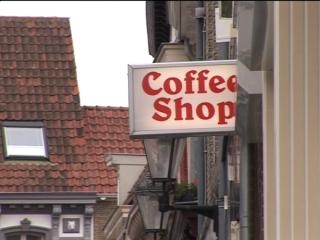
    Tourists no longer welcome in cannabis-selling coffee shops

    http://www.nrc.nl/

    Only registered members will be able to buy soft drugs from coffee shops.   Photo Rien Zilvold
    Under proposal, Only registered members will be able to buy soft drugs from coffee shops.
    Photo Rien Zilvold

    By our news staff

    The Dutch government wants to maintain its tolerant policy towards cannabis and keep so-called coffee shops open, but they should no longer be tourist attractions, Dutch ministers wrote in a letter that was leaked to the press on Tuesday.

    The ministers of justice, home affairs and health wrote that reducing the number of coffee shops and keeping foreigners out should make it easier to reduce crime and other nuisances the coffee shops are now causing.

    A government memorandum on altering the coffee shop policy and other drug-related issues is expected this fall, but the letter already shows where the ministers now stand. They want to implement a members-only system to keep tourists out.

    Herds of tourist who buy their drugs in border towns near Belgium and Germany have become a pest in several places and neighbouring countries have expressed their dissatisfaction with the Dutch system.
    Share/Save/Bookmark

    The Netherlands has been tolerant about the use and sale of weed and hash for three decades. Cultivation and wholesale of the drug are prohibited however. This discrepancy has become known as the 'gedoogbeleid' (tolerance policy).

    An advisory committee said in July that the policy has gotten out of control in the past 15 years and needs to go back to small, private shops for local users. It advised against legalising soft drugs altogether.

    The ministers want municipalities to implement a members-only system, where members can by up to three grammes of hash or weed each with their (Dutch) bank card. This should make it less appealing for tourists to travel to the Netherlands to buy cannabis. The ministers will also allow experiments where coffeeshops can have larger quantities of drugs stocked. Currently, a coffeeshop can have 500 grammes in store and an alternative supply system via drugs runners is a source of nuisance.

    The three coalition parties in the government have long disagreed about the overhaul of the drug policy. Christian democrat CDA had called for an end to the tolerance policy and the orthodox Christian ChristenUnie agreed, but the Labour party PvdA believes banning coffeeshops will not solve the problems of crime, nuisance and health and wants to legalise the whole chain of supply.

    Friday, August 14, 2009

    Americans pay 5 times more than the Dutch for wireless

    A new OECD survey highlights the massive disparity in wireless service costs across countries. Americans pay significantly more than their counterparts in Sweden and the Netherlands for mobile broadband.

    Americans pay 5 times more than the Dutch for wireless

    If you think that your mobile phone bill is out of control, that's apparently because it is. A new Organization for Economic Cooperation and Development (OECD) survey has found that mobile users in the US, Canada, and Spain pay almost five times more for wireless service than their counterparts in the Netherlands, Finland, and Sweden, who pay the least.

    More generally, the report nicely ties together a few trends in the telecom industry: texting services have become significant profit centers, and service providers have cut back on equipment spending during the downturn. The striking thing is that, by doing so, they've managed to actually grow profits despite the economic turmoil.

    The portions of the report that are available to the public indicate that, across countries, prices ranged from $11 to $53 for a medium usage plan of 780 voice calls, 600 SMS messages, and eight multimedia (MMS) messages. That's a pretty wide range, and North American users are at the top end of it.

    As for the reason behind the disparity between US rates and those abroad, the CTIA, a wireless industry trade group, has already released a rebuttal to the report that attributes the disparity to differences in calling patterns.

    Since the average US calling profile is nearly three times greater than the OECD's "high usage" basket (and, in fact, the average US calling profile is nearly six times greater than the OECD's "average" usage basket), it is no surprise that most other sources show the price per-call (or price per-MOU) in the United States is the lowest among the OECD countries.

    In other words, Americans use way more minutes than customers in other countries, so if you look at the actual per-minute cost, they're lower because the US is buying in bulk, so to speak.

    In addition to calls, SMS "continues to be a particularly lucrative market for operators." This news won't come as a shock to governments in either the US or Europe, which have been looking into how wireless carriers price SMS messages for over a year now.

    Both AT&T and Verizon recently testified before Congress about their text messaging charges, and the two companies' representatives denied that they colluded to double text messaging prices over the past five years. The reps indicated that their companies were merely responding to Sprint's decision to raise SMS prices, and they also pointed out that the doubling in message pricing only applies to plans that don't include a fixed number of messages for a fee.

    The text messaging trend stands in sharp contrast to the cost of voice calls, which the OECD study says have declined by an average of 21 percent for low usage customers, 28 percent for medium usage, and 32 percent for high usage.

    The combination of declining voice prices and rising SMS fees fits with the generational change in mobile usage patterns, as younger users prefer text-based forms of communication like SMS and IM. The study notes that many of the carriers are aiming their text messaging packages specifically at younger users.

    The report also takes note of a phenomenon that was starkly evident in this latest round of quarterly earnings releases: bandwidth providers across the industry, from Comcast to AT&T, saw profits jump, while network infrastructure makers from Cisco to D-Link saw huge revenue declines.

    Clearly, service providers are extracting more money from the use of existing equipment. It's good news for them, but equipment makers are getting whacked for the second time in a decade as infrastructure spending slows dramatically after a period of frenzied investment.

    In any case, the report makes it clear that North American carriers have become extremely adept at keeping their income streams growing regardless of what's happening with the larger economy. There may be national differences in usage habits, but the data suggests that service providers would figure out a way to work around them.

    Monday, April 13, 2009

    Augmented reality on hand at museum in the Netherlands, threatens to make learning cool


    This is not the most prurient example of augmented reality we've seen, and it may not have an obvious movie tie-in, but we will give it bonus points for being educational. Visitors to an exhibit titled "A Future for the Past," currently at the Allard Pierson Museum in Amsterdam, can peep context specific info and virtual reconstructions of Satricum and the Forum Romanum, superimposed on large scale photographs of each respective site. There are two types of hardware on hand -- both the MovableScreen-packin' iMac stationary display and the UMPC devices allow the user to seemingly view through the photos, exploring specific points of interest. There's no telling how much a setup like this would run you if you wanted to, for example, let your friends and neighbors virtually peruse that massive Lego city you built in the garage, but make sure you let us know when you get it up and running. That would be so sweet. Video after the break.


    Sunday, January 4, 2009

    Don't mess with the Dutch and their Darts!!!


    WOW!! Barney made the first ever 9 Dart Finish at the PDC World Darts Championships in 2009 in the quarter-final against Jelle klaasen!!

    Wednesday, December 10, 2008

    Amsterdam to close many brothels, marijuana cafes

    By TOBY STERLING

    Associated Press Writer= AMSTERDAM, Netherlands (AP) — Amsterdam unveiled plans Saturday to close up to half of the famed brothels and marijuana cafes in its ancient city center as part of a major cleanup operation.

    The city says it wants to drive organized crime out of the district, and is targeting businesses that "generate criminality," including prostitution, gambling parlors, "smart shops" that sell herbal treatments, head shops and "coffee shops" where marijuana is sold openly.

    "I think that the new reality will be more in line with our image as a tolerant and crazy place, rather than a free zone for criminals" said alderman Lodewijk Asscher, one of the main proponents of the plan.

    The city said it would also reduce the number of business it sees as related to the "decay" of the center, including peep shows, sex theaters, sex shops, mini supermarkets, massage parlors and souvenir shops.

    The city said there were too many of these and it believes some are used for money-laundering by drug dealers and the human traffickers who supply many of the city's prostitutes.

    Asscher underlined that the city will remain true to its freewheeling reputation.

    "It'll be a place with 200 windows (for prostitutes) and 30 coffee shops, which you can't find anywhere else in the world — very exciting, but also with cultural attractions and you won't have to be embarrassed to say you came," he said.

    Under the plan announced Saturday, Amsterdam will spend €30-€40 million ($38-$51 million) to bring hotels, restaurants, art galleries and boutiques to the center. It will also build new underground parking areas for cars and bikes and may use some of the vacated buildings to ease a housing shortage.

    Amsterdam already had plans to close many brothels and said last month it might close some coffee shops throughout the city, but the plans announced Saturday go much further.

    Asscher said the city would use various techniques to reshape the area, including rezoning, buying out some businesses and offering others assistance in "upgrading" their stores. In the past, the city has shut a number of brothels and sex clubs, relying primarily on a law that allows the closure of businesses with bookkeeping irregularities.

    He said the city will also offer help for prostitutes and coffee shop employees who lose their jobs as a result of the plan.

    Prostitution, which has spread into several areas of the center, will be allowed only in two areas — notably De Wallen ("The Walls"), a web of streets and alleys around the city's medieval retaining dam walls. The area has been a center of prostitution since before the city's golden shipping age in the 1600s.

    Prostitution was legalized in the Netherlands in 2000, formalizing a long-standing tolerance policy.

    Marijuana is technically illegal in the Netherlands, but prosecutors won't press charges for possession of small amounts and the coffee shops are able to sell it openly.

    Friday, November 21, 2008

    Amsterdam moves to close a fifth of 'coffee shops'

    Holland gets tough on cannabis Play Video Reuters – Holland gets tough on cannabis

    In this Sept. 24, 2004 file photo, a tourist smokes marijuana at a coffeeshop AP – In this Sept. 24, 2004 file photo, a tourist smokes marijuana at a coffeeshop called 'de Dampkring' or …

    AMSTERDAM, Netherlands – Amsterdam will close almost a fifth of its marijuana cafes to comply with a national ban on having them near schools, the mayor said Friday.

    Another city, Eindhoven, said it would start issuing permits to marijuana growers in order to better regulate the trade — if the national government approves.

    The plans were announced as 33 major Dutch cities held a "weed summit" to discuss the nation's long-standing policy of tolerating marijuana use while routinely arresting growers.

    Marijuana is technically illegal in the Netherlands, but can be sold in small amounts in designated cafes — euphemistically known as "coffee shops" — without fear of prosecution. More than a quarter of the country's cafes are in Amsterdam, where they are a major tourist attraction.

    But Mayor Job Cohen said the city would close about 20 percent of its cafes.

    Those included some landmarks, such as The Bulldog — a high-traffic shop operating since 1985 in a former police station on one of the city's main squares.

    Letters have been sent to 43 shops located within 250 meters (yards) of a high school informing them they will have to close by the end of 2011 if they cannot successfully appeal the decision, Amsterdam spokeswoman Iris Reshef said. Though she added that the city did not have any major problems with the cafes.

    But other cities closer to the Netherlands' borders have expressed frustration at being bombarded by "drug tourists" from Germany, France or Belgium seeking to stock up on marijuana — an often finding ways to bypass a 5 gram (1/5 ounce) purchase limit.

    "If the border areas shut down tomorrow, then (inland cities) Den Helder and Almere will soon be suffering," said Mayor Geert Leers of the southern border city Maastricht.

    Representatives at the summit Friday in Almere, 20 kilometers (12 miles) east of Amsterdam, also discussed the policy of arresting growers, which left cafes with no way to legally source their most lucrative product.

    Eindhoven Mayor Rob van Gijzel said his city wanted to set up a pilot scheme of issuing permits to growers.

    "People will be able to ask for a permit to grow for fixed prices," he said after the summit. "It'll be regulated in terms of produce and revenues, but also movement, in transports to the coffee shops."

    Amsterdam backed the idea of expanding the tolerance policy to growers, the city spokeswoman said, noting it could help keep organized crime out.

    "We don't have any insight to what goes on behind the back door," Reshef said. "What we need is a closed supply chain."

    But the national government must approve the scheme, and it was unclear how long that could take or if it was even likely. Polls suggest most voters support decriminalizing marijuana cultivation, but the coalition government is led by the conservative Christian Democrats, which opposes it.

    Justice Minister Ernst Hirsch Ballin said Thursday he had "no intention" of changing national marijuana policy.

    The Dutch Parliament voted to regulate growers once before in 2005, but the government refused, saying it would lead to a confrontation with the European Union.

    According to data compiled by the Netherlands' Trimbos Institute for Mental Health and Addiction, after 30 years of the Dutch tolerance policy, usage rates here are somewhere in the middle of international norms — above those in Germany and the Scandinavian countries, but below those of France, Britain and the United States.

    Ganja Tours: The Amsterdam Coffeeshop Experience


    "THE DUTCH COFFEESHOP EXPERIENCE" Adventure Traveler Big D Travels to Amsterdam for an Inside look at the unique Dutch Coffeeshop and Cannabis Culture. See Amsterdam's famous Coffeeshops Where Cannabis and Hashish are sold. Visit Amsterdam's Hash, Hemp and Marijuana Museum. Get an exclusive tour of the Cannabis College. Learn about Industrial Hemp with Ben Dronkers.

    Tuesday, November 18, 2008

    Heineken: 5 Types of Transformation at the Bar