Zazzle Shop

Screen printing

Wednesday, March 16, 2011

Would You Rent Your Car Out While Not Driving It? Car Sharing Explained


(photo: richardmasoner)

Since its launch in 2000, Zipcar has shaken up the car rental market and grown to include more than 550,000 members in the United States, Canada, and the United Kingdom. Its main selling points? The ability to reserve vehicles by the hour instead of by the day and the convenience of pickup locations all over major metropolitan areas. Similar services now include the nonprofits CityCarShare, I-Go Carsharing, and e-Go Carshare.
Now, new services are taking this model a step further. Instead of using a fleet of Zipcars, RelayRides, WhipCar, Spride Share, and Getaround allow car owners to rent out their vehicles to their neighbors when they’re not in use.

“Economically, it makes a ton of sense for both sides,” says Shelby Clark, the chief executive officer of RelayRides, which currently operates in Boston and San Francisco. “People underestimate how much it costs to own and maintain a vehicle.” AAA’s 2010 “Your Driving Costs” study revealed that that the owners of average-sized sedans spend more than $8,000 a year to own and operate their vehicle. Minivan owners spend more than $9,000 a year!

These sites allow car owners to offset some of these costs through rental fees. Owners get pricing guidelines based on their car’s year, condition, location, and other factors, but they ultimately set the hourly rate themselves.

For car renters, those rates can sometimes be lower than services like Zipcar. Tom Wright, cofounder of the UK-based WhipCar, says borrowers are motivated by cost and environmental factors. “Since they can use cars that are affordable and close to them, it doesn’t require extra cars and allows them to make better use of existing assets,” he says.

Many borrowers also appreciate that their money is going to a neighbor instead of a company, says Clark. Many of RelayRides’ car owners also offer special features like GPS, bike racks, CD collections, or even homemade cookies left in their vehicles.

But do the savings outweigh the safety and insurance risks?

As you can imagine, screening drivers and vehicles is a high priority for all of these sites. Wright says WhipCar conducts three-way conference calls with driving applicants and the DVLA (Driver and Vehicle Licensing Agency, the UK equivalent of the RMV) to ensure that the person has a spotless driving record. WhipCar also requires that vehicles be no older than eight years and checks if the vehicle has been stolen or involved in accident. Other sites have similar policies, and some allow the owner and the driver to rate the experience afterwards based on the caliber of the vehicle and the driver.

Like Zipcar, peer-to-peer car sharing sites bear the cost of gas and auto insurance. In the case of RelayRides, drivers over the age of 21 are insured by RelayRides’ $1 million liability insurance policy but are liable for a $500 deductible (Clark says this ensures that they treat vehicles as their own). Drivers are also responsible for paying any parking or traffic tickets issued during their rental period. Getaround has very similar insurance policies.

Though car owners are not liable for accidents that occur while their car is being rented, some auto insurance companies are squeamish about personal car sharing. But state legislatures are, in some cases, taking the side of the consumer: California recently passed a bill on car sharing that makes it illegal for auto insurance companies to void the policies of car owners who rent out their vehicles. The state of Oregon is considering a similar bill.
Car owners outside of California and Oregon would be wise to check their auto insurance policy before renting out their vehicle. However, with growing environmental and cost concerns associated with cars, other states may pass car sharing legislation in the future.

Clark sees this as just one example of the sharing economy. “Society is increasing rejecting traditional forms for ownership,” he says, pointing to Netflix as an example. “In the nineties, everyone had these giant bookcases of VHS tapes. But at the end of the day, I didn’t really want to own all these movies, I just wanted to watch them. It makes sense to access that movie whenever you need it. The global economic crisis has forced people to take a step back, and realize that ownership might not make sense.”


This Breathtaking Saturn Video Is Exactly What Everyone’s Soul Needs Right Now


After all the horror we are seeing these days, after the continuous bad news, I think it's time for some mind- and spirit-cleansing beauty. Something to remind us that humans and nature can sometimes produce awe-inspiring things. Like this video.

The Cassini spacecraft reached Saturn in 2004, sending the clearest images of the most striking planet in the Solar System. Working at home, Stephen Van Vuuren used those photos to create the most hypnotizing space film I've seen. There is no CGI and no 3D models in these images. Just images from NASA. Jump to 0:56 for the final result of his work, so far.

Stephen took the approach and orbit photos, painstakingly cropping, scaling, and putting them together in an IMAX-quality film. Tens of thousands 5,600,000-pixel video frames in full 32-bit natural color. He is still working on it. When he's done, I want to see this big. [Thanks Karl!]

iPad 2 shows off its HDTV gaming prowess

Posts by Kelly
From http://www.intomobile.com/
Infinity Blade 15 314 iPad 2 shows off its HDTV gaming prowess
With the launch of the iPad 2, Apple unveiled a new Digital AV adapter that takes content from your tablet device and lets you send it to your HDTV via HDMI. The dongle is compatible both the iPad and the iPad 2, but its functionality is boosted by Imagination Technologies’ PowerVR SGX 543MP2 GPU on Apple’s second generation tablet device. While the original Apple iPad lets you stream videos and photos from your tablet to your HDTV, the iPad 2 lets you mirror content. Mirroring lets you send anything displayed on your tablet over to your HDTV. Mirrored content can include presentations, documents, photos and even games.
The folks over at TouchGen took a closer look at this mirroring functionality and were impressed with its capability. Games optimized for the second generation Apple iPad, like Infinity Blade and Real Racing 2, were ported to a 50-inch HDTV with surprising clarity and speed. They claim it is console quality and people would not know the game was coming from an Apple tablet instead of an Xbox 360 or PS 3. The only drawback is the 4:3 ratio of the tablet output that is letter-boxed on the large screen TV.
Thanks to some video work from TouchGen, you can check out these games in action below. With the souped up graphics and dual-core processor of this latest tablet offering, is Apple narrowing the gap between mobile gaming and console gaming?
[Via TouchGen]

Pepsi Ups Ante on Plant-Based Bottles with 100% Non-Plastic Bottle

Pepsi Ups Ante on Plant-Based Bottles with 100% Non-Plastic Bottle
PURCHASE, NY — PepsiCo announced a response to Coca-Cola's PlantBottle, but unlike Coke's bottle, which is only 30 percent plant-based at the time, Pepsi says its will be completely derived from plants.
Pepsi will make its bottles out of switch grass, pine bark and corn husks, and like with Coke's PlantBottle, they're using natural materials to make PET plastic, so it can be recycled along with their current petroleum-based plastic bottles.

The beverage giant hopes to also use orange and potato peels, oat hulls and other agricultural byproducts from its Tropicana, Quaker and other operations in the future to make the bottles.
Pepsi will do a pilot run of the plant-based bottles in 2012, followed by commercialization based on the results of the test run.

While Coca-Cola beat Pepsi to putting out drinks in bottles made from plants first, Pepsi has the chance to put out the first recyclable bottle derived entirely from plants by a major company.
Coca-Cola's PlantBottles, which are also being used for Heinz ketchup and Odwalla juices, are still 70 percent petroleum-based. Scott Vitters, the company's global director of sustainable packaging, wrote in a GreenBiz.com post last year:
Our PlantBottle packaging is made by converting natural sugars found in plants into a key ingredient for making PET plastic. For those who want the technical specifics, we've innovated a way to develop plant-based MEG, a key component in PET plastic. PlantBottle is up to 30 percent plant-based because MEG is 30 percent of the total composition of PET plastic by weight. We still have more work to do to crack the code on a plant-based TA, which is the other 70 percent of PET plastic, but we know it is feasible.
Pepsi bottles - CC license by Clean Wal-Mart (Flickr)

9 Wondrous Water Caves

From: http://www.mnn.com/

Sea cave off the coast of Italy.
Photo: Jupiterimages

 Watery wonders

Many of the most awe-inspiring caves formed along the shores of oceans and lakes. Also known as littoral caves, these geological wonders are carved into rocky coastal cliffs through long-term wave action along weakened fault lines in cliffs.
In addition to spelunking, sea caves provide ample recreational opportunities for kayaking, swimming, free diving, scuba diving and more. While many of these caves are found in the craggy coastlines of Europe, some of the largest sea caves in the world — such as California's Painted Cave and Oregon's Sea Lion Cave — can be found on the rocky Pacific coast of the United States.
Here are just 9 of these extraordinary watery wonders. :
Click Here:
http://www.mnn.com/earth-matters/wilderness-resources/photos/9-wondrous-water-caves/watery-wonders

Junkyard Jumbotron Turns Many Screens Into One

by Dylan Schenker
Smartphones and iPads, while providing an overall immersive experience, can still seem pretty alienating because most of us pore over them without any consideration for the world around us. They can foster a very isolated media experience, as our attention is focused specifically on a device that, at its core, was never designed to accommodate more than one user at a time. Conversely, they also provide great multimedia and interactive access to digital film and images. Could these small devices be somehow brought together to not only enhance their display capabilities, but also offer a more shared experience? The folks over at the MIT Labs have offered a quirky solution to this problem.

Using simple browser-based technology they have created the Junkyard Jumbotron, which allows users to cluster a group of screen-based devices (including smartphones, tablets, and laptops) to form a larger screen. After bringing up a unique URL on each device, one takes a photograph of all the screens, which is then analyzed by special software that maps out the location of each screen in relation to the others. Then the image can be transmitted to multiple devices at once, creating a fragmented, mosaic-like effect.

Not only does the Junkyard Jumbotron increase the size of a photograph, it also allows for zooming and panning, which subsequently moves the images on all the screens at once. Although the technology is only used for images so far, we can’t help but think about what it would be like to view video in the same way. While the boundaries of each display don’t make for the most unified experience, the effect could be appropriated for aesthetic purposes by an enterprising artist. It would also make for a neat party trick with a group of smartphone-toting friends.

New Technology Creates a More Eco-Friendly Head on Your Guinness


As St. Patrick's Day draws near, many of you may be anticipating a nice chilled glass of Guinness, complete with a creamy foam head. But if you're not propping up a bar in Ireland, and are instead pouring your beer out of a can at home, that long-lasting head can only be produced with the help of a plastic widget.
Simply pouring a carbonated beer, such as a lager, from the can into a glass is enough to generate a head. But this is not the case for stouts, which are infused with nitrogen bubbles, rather than carbon dioxide, in order to create their uniquely smooth texture. The small plastic widgets in each can of stout contain pressurized nitrogen, which is released once the can is opened, triggering some of the dissolved nitrogen in the beer to bubble up into a head.

Using applied mathematics, including the ideal gas equation and a fourth-order Runge-Kutta scheme with a timestep of 10-3, however, a team from the University of Limerick in Ireland recently discovered that microscopic plant fibers made of cellulose, such as cotton, can also froth up a stout.
In a paper publishing their findings earlier this month, the Limerick mathematicians conclude:
A typical pouring time for a stout beer is 30 seconds. In this time about 108 postcritical nuclei must be released. A single fibre produces one bubble every 1.28 seconds. Therefore about 4.3 × 10⁶ fibres are needed. If each fibre occupies a surface of area λ2 then the total area that must be occupied by fibres is 8.3 × 10⁻⁴ m2.
Or, in plain English, embedding a 1 inch square of food-safe biodegradable cellulose fibers in a Guinness can would produce a perfect creamy head, doing away with the need for plastic widgets altogether. And although the technology is a long away from the shelves yet, removing plastic from our food chain is certainly something to drink to.
Images: (1) Courtesy of Michael Devereux/Mathematics Applications Consortium for Science and Industry, via Wired, still showing how pockets of air trapped in tiny cellulose fibers, each between 10 and 50 microns wide, help nitrogen and carbon dioxide bubble out; (2) the Guinness widget (cc) by Flickr user slworking2, via Wired.

Guy Hacks Times Square Video Screens With Iphone


Guy Hacks Times Square Video Screens With Iphone - Watch more Funny Videos

Tuesday, March 15, 2011

The Most Terrifying Japan Tsunami Videos I’ve Seen

Destructive Japan tsunami caught on film


Fresh footage of huge tsunami waves smashing town in Japan


New dramatic video: Tsunami wave spills over seawall, smashes boats, cars

Could The iPad Be A Cure For Autism?

Could The iPad Be A Cure For Autism?

The iPad is definitely a well-liked gadget, and now parents with autistic children have one more reason to like this handy little tablet: it may help reduce the number of violent meltdowns their children experience each day. According to experts, the iPad actually can reduce the symptoms of the disorder by helping kids deal with life's sensory overload.

The Holmquist family can tell you first-hand what the iPad has done for their autistic 3-year-old son Hudson. After a school therapist suggested the family buy an iPad, the Holmquists decided it was worth a try. Now that the family has been using the iPad for a little while, they'll tell you it is a miracle device.

Hudson was diagnosed with autism in 2010. Before the iPad, he had several violent meltdowns a day. Now, after using the iPad, he has fewer violent meltdowns. According to mother Laura Holmquist, "The iPad has given us our family back." She continued saying, "It's unlocked a new part of our son that we hadn't seen before, and given us insight into the way he connects with his world."

You may be surprised to learn that autism experts aren't surprised by this. In fact, the iPad has been gaining recognition for helping autistic children since it first came out in 2010. Certainly part of the attraction is the number of child-friendly educational apps available. Another key reason why the iPad works so well for autistic children: it lacks a keyboard and mouse. Without these peripherals, there is less distraction for the children.
Given the fact that other tablets have similar functionalities (and lack of peripherals), we have to think other tablets could help autistic children as well. Could it be that we'll see more tablets in schools and other educational environments? Time will tell.

Tiny Endangered Kittens Born From Frozen Embryos

by Stephen Messenger
from http://www.treehugger.com/
black footed kitten photo
Photo: Susan Poag via The Times-Picayune
 
Scientists at the Audubon Nature Institute in New Orleans have made a genetic-breakthrough of the most adorable proportions -- successfully producing two endangered kittens via in vitro fertilization. With sperm taken from a male African black-footed cat in 2003, the team inseminated an egg in 2005. The embryo remained frozen until last December, when it was finally transferred to a surrogate female named Bijou. Less than three months later, the tiny, fluffy duo were born.

In addition to being one of the world's most threatened species of feline, African black-footed cats are also among the smallest. A fully grown adult will typically be just a fraction of the size of a regular house-cat. Less than 50 specimens are known to exist on the planet -- and 19 of those are housed at facilities in the United States. Experts say that they face threats from weary farmers who try to poison them and from human expansion in their native habitat.

This first successful birth from frozen embryos, however, offers hope for conservationists that the diminutive cats will avoid extinction.

"They haven't reproduced well in captivity at all. This is really prevention, for the future, keeping species from going extinct," says Betsy Dresser of the Audubon Nature Institute. "They're so low in number. If we don't do something, we're going to lose them."

black footed kittens photo  
Photo: Susan Poag via The Times-Picayune
 
A report from The Times-Picayune provides more details on how advances in genetics can help save species like the African black-footed cat:

A goal of the research is to learn how to use much more plentiful domestic cats as surrogate mothers and then spread the technique to other institutions and zoos so the population of the compact, wild cats can be rebuilt and reintroduced in conservation areas, Dresser said.
"We don't know what the future holds for many of these species," said the facility in a news release. "But we do know that by preserving DNA and working on protocol for creating pregnancies and producing babies through cryo-preservation and surrogate mothers, we are giving these species a shot at survival even when their numbers dip to dangerously low levels."

Coming Soon: 7Up Retro

by Steve

As hinted at via our tweet on February 28, we've got confirmation that 7Up Retro will be arriving in May.
Real Sugar 7Up is coming!
(Source: Flickr, used via CC BY-NC 2.0 license)
 
The launch will be tied to a promotion done in conjunction with NBC's Celebrity Apprentice reality show. You may recall that last year, Dr Pepper Snapple Group, the parent of 7Up, used the same show to launch limited runs of Diet Snapple Trop-a-Rocka Tea and Snapple Compassionberry Tea. Apparently the folks at DPSG found that platform successful enough to continue with rollouts.

We've also heard that Snapple's sponsorship of one of BevReview's favorite reality shows, The Amazing Race, will be used to introduce new flavors Papaya Mango Tea and Diet Papaya Mango Tea later this month.

The introduction of a limited time lemon-lime product that uses "real sugar" should provide a nice comparison product to Pepsi's Sierra Mist Natural. While we like the sugar Sierra Mist, we do agree that something in the taste just seems a bit… off.

Dr Pepper Snapple Group experimented with the current limited release "real sugar" trend in soft drinks via Heritage Dr Pepper (bottled by Pepsi) and Dr Pepper with Real Sugar (bottled by Coke). Of course what got this whole thing started was the rollout of PepsiCo's Pepsi Throwback and Mountain Dew Throwback, which after 4 limited edition rereleases, are now permanent parts of the Pepsi lineup. With the recent reboot of 7Up's normal formula, we're looking forward to tasting this sugar-infused version.

We couldn't turn up any trademark filings or early packaging art on 7Up Retro, but keep your eyes open! Remember we're just an e-mail, tweet, or Facebook post away!

Secret URL Discovered in Super 8 Trailer


by reelz
from http://www.reelzchannel.com/

Remember that awesome trailer for J.J. Abrams' upcoming secretive project Super 8? The movie has been so under wraps that we don't even really know what it is about yet. Well, the investigative team at ReelzChannel found a clue hidden within the trailer for the summer flick.
A url is hidden in the camera lens in the trailer, s8editingroom.com, a website apart from the official website for the movie — www.super8-movie.com.

The website reveals some seemingly "lost" footage of scientists talking about an (alien?) experiment.
For fans of Abrams, the secrecy around the movie can be frustrating but in an era where leaked pics, scripts, and video hit the net long before a movie's release, it is kind of refreshing to be completely in the dark about one of the most highly anticipated movies of the summer.

What we do know about the movie is that it takes place in the summer of 1979 in a small Ohio town where a group of kids witness a train crash. Shortly after, unusual disappearances and inexplicable events begin to take place in town. Abrams has called Super 8 his homage to the Steven Spielberg, who is a producer, movies of the 1970s.

We still have a long way to go until the movie's June 10 opening. We can only wait and see what other breadcrumbs Abrams leaves for us.


Next Showing: Super 8 opens June 10

10 best biking cities in Europe


While biking is becoming more popular in U.S. cities — L.A. is adding 1,600 bike lanes, Chicago has a new bike plan, and Portland has 17,000 daily commuters — Europe has some amazing biking cities of their own.
The Ecologist has come up with the 10 best biking cities in Europe (in no particular order):

-Lyon, France
  • “With its charming twisty lanes and dedicated bike routes, Lyon is a cyclists’ paradise.”
  • The city’s bike sharing program, Velo’v has over 300 stations throughout the city.
-Rome, Italy
  • “Cycling is by far the best bet for seeing the sights close to the Tiber, where a picturesque route runs from the Ponte Sublicio to the Ponte della Magliana.”
-Basel, Switzerland
  • “Featuring street lanes geared to cyclists and dedicated left hand turns to make crossing the road safer, Basel tops the list of cities to cycle in Switzerland.”
-Berlin, Germany
  • Thanks to the combined efforts of Allied air raids and the Communist predilection for destroying picturesque old buildings and replacing them with big, brash new ones, Berlin’s streets are wonderfully wide, which makes it easy to get around by bike.”
-Trondheim, Norway
  • “With its picturesque setting on the shores of the cerulean Trondheimsfjord, Norway’s fourth largest city has built a reputation for bicycling brilliance thanks to innovations such as the Trampe bicycle lift which takes the effort out of pedaling uphill.”
-Paris, France
  • While the many hazards of the Place de la Concorde aren’t the greatest advertisement for cycling in Paris, once you’re a safe distance from the city’s infamously crazy drivers – on the pavement in other words – then cycling in Paris can be a real pleasure.”
-Barcelona, Spain
  • “Surprisingly, given Spain’s reputation for endangering the lives and limbs of cyclists thanks to its motorists’ penchant for going everywhere at top speed, Barcelona has 50,000 regular cyclists and that figure is increasing daily.”
-Copenhagen, Denmark
  • 37 percent of all Copenhageners bike a total of 1.2 million kilometers each day.
  • “The Danish capital has been quietly turning itself into one of the best biking cities in the world; a fact revealed when the International Cycling Union gave it the first ‘Bike City’ award last year.”
-London, England
  • The city is working to build 12 biking “superhighways” — there are already two — and increase biking by 400 percent from 2000.
  • “Cycling in London used to be pretty dreadful thanks to an unfortunate combination of rain and aggressive drivers but since the first two Barclays Cycle Superhighways launched last summer, things have become a little easier.”
-Amsterdam, Netherlands
  • There are 600,000 bikes in a city of 750,000.
  • Thanks in part to the narrow streets in the medieval city center, cycling is by far the most efficient way to get around.”
Watch this inspiring video of Amsterdam’s biking community:

Kinect 'Evil Genius Simulator' Hack is the Most Dangerous To Date


If there’s one thing the Kinect is good for, it’s facilitating interesting and downright clever hacks. Obviously. If you thought I was going to say ‘gaming’, you’re not a gamer.
In any case, check this out. London Hackspace has developed what they’ve dubbed the Evil Genius Simulator – a device which uses a Kinect to monitor the motions of the aspiring genius’ hands. The higher they’re raised (ideally accompanied by maniacal laughter) the more lightning that jumps between two Tesla coils set up behind it all. This is nothing if not a lesson in basdassery.
I dunno how comfortable I’d feel turning my back to two operating Tesla coils, but the dramatic effect is anything but un-awesome. Imagine this thing weaponized. Exo-skeleton-clad supersoldiers of the future shooting lightning from their hands.
All thanks to Microsoft.

Japan Earthquake: Robots Help Search For Survivors

POSTED BY: Erico Guizzo
Editor's Note: This is part of our ongoing news coverage of Japan's earthquake and nuclear emergency.
quince japan earthquake rescue robot
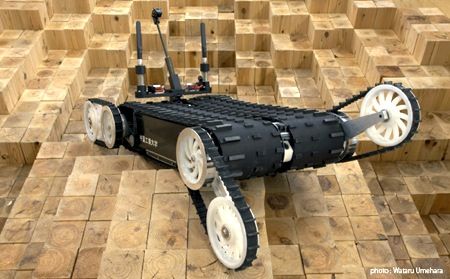
Japan's earthquake will be a major test for search-and-rescue robots like Quince, developed by Chiba Institute of Technology roboticists, shown here during a demonstration.

Japan's leading experts in rescue robotics are deploying wheeled and snake-like robots to assist emergency responders in the search for survivors of the devastating earthquake and tsunami that struck the country last Friday.

Details are still scarce, but I've gotten word that at least two teams plan to use their search and rescue robots, one team in Tokyo and another in or around Sendai, the city that suffered the most damage in the 8.9 magnitude earthquake and ensuing tsunami. I'm waiting confirmation about a third team, also in Tokyo. (There is no information about the presence of robots at Japan's troubled Fukushima nuclear power plants, though that would be an ideal application for teleoperated repair and inspection robots.)

Dr. Robin Murphy, director of the Center for Robot-Assisted Search and Rescue (CRASAR) at Texas A&M University, in College Station, and one of the world's top experts in rescue robotics, confirms that a team led by Satoshi Tadokoro of Tohoku University, in Sendai, and a team led by Eiji Koyanagi from Chiba Institute of Technology's Future Robotics Technology Center, have deployed, or are about to deploy, their robots.

She reports that Dr. Tadokoro is "en route" to Sendai, where he lives, with the Active Scope Camera, a remote operated 8-meter-long snake-like robot that carries a scope camera and can slither through small spaces. According to Dr. Murphy, it's "possibly the most capable robot for tight spaces." At the same time, Dr. Koyanagi will use an agile robot called Quince, which has tank-like tracks and is capable of driving over rubble and climbing stairs, around his home area in Tokyo.

Here's a video of the Active Scope Camera:


Here's a video of Quince:


Dr. Murphy, an IEEE Fellow whose team has taken robots to disaster sites like the World Trade Center after the September 11, 2001 attacks and New Orleans after hurricane Katrina, tells me that robots have been used in at least one previous earthquake, the 2010 Haiti disaster. The U.S. Army Corps of Engineers, she says, used a SeaBotix underwater remotely operated vehicle, or ROV, to investigate bridge and seawall damage as part of the U.S. assistance to the Haitian government.

For a disaster like the Japan quake, she says several types of robots could prove useful, including:
• small unmanned aerial vehicles like robotic helicopters and quadrotors for inspection of upper levels of buildings and lower altitude checks
• snake robots capable of entering collapsed buildings and slithering through rubble
• small underwater ROVs for bridge inspection and underwater recovery
• tether-based unmanned ground vehicles like sensor-packed wheeled robots that operators can drive remotely to search for survivors

As it happened, Japan's leading rescue robotics experts, a cadre led by Dr. Tadokoro, who heads the International Rescue Systems Institute, were actually in the United States when the earthquake hit! The 21 faculty and students and their rescue robots were in Texas participating in an exercise and workshop that CRASAR organized. The group headed back to Japan on Friday as soon as they heard the news.

Dr. Murphy, who leads the volunteer search-and-rescue robotics group Roboticists Without Borders, part of CRASAR, says the Japanese welcomed her group's assistance; she's now on standby awaiting a formal request. CRASAR's robotic arsenal includes the AirRobot and iSensys helicopters, a VideoRay ROV for underwater inspection, a AEOS water vehicle with a sonar suited for bridge inspection, and several ground robots like the Inuktun VGTV, a tracked vehicle that can change its shape.
Active Scope Camera japan earthquake robotLike most search and rescue robots, the systems the Japanese are deploying are designed to go where humans can't easily reach. According to a 2007 paper, the Active Scope Camera is a snake-type of robot whose body is covered by "cilia," small filaments that vibrate, allowing the robot to crawl at a speed of 4.7 centimeters per second, climb over obstacles, follow walls, and make turns in tight spaces.

Quince is a mobile robot equipped with four sets of tracked wheels, some of which can move up and down to allow the robot to negotiate obstacles. It carries cameras as well as infrared and carbon-dioxide sensors for detecting the presence of survivors trapped under rubble.

Our thoughts go to the Japanese people affected by this tragedy. We hope emergency personnel can locate all survivors as fast as possible -- and if robots can help, great.

Image: Chiba Institute of Technology; videos: DigInfo and Chiba Institute of Technology

Monday, March 14, 2011

Cuttino Mobley Wants to Open a Medical Marijuana Dispensary in Rhode Island


from: http://www.brobible.com/


Cuttino Mobley retired from the NBA as a New York Knick in 2008 because of a chronic heart condition. Now he wants to open a medical marijuana dispensary in Rhode Island, where he starred for the University of Rhode Island before being drafted by Houston in 1998. In a profile by the Providence Journal-Bulletin, Mobley stated that he wants to open a "wellness center" in Warwick, RI, because he "wants to help people." He is one of the 18 applications under consideration for opening a dispensary in Rhode Island, which legalized medicinal marijuana for chronic pain in 2009. The state will license three of the 18 applicants. More about why the ex-baller wants to become a greenepreuer and open a dispensary below, via the Providence Journal


It was about what he wants to do with the rest of his life. “I want to help people,” he said.

He knows that innumerable people have helped him along the way, from Max Good at Maine Central, to Jim Harrick at URI, who gave him confidence, assistant coach Bill Coen, who made him start to believe in his talent. It’s also the way he was raised, his version of spirituality, the sense that you help others when you can. So he helps fund an AAU team in Philadelphia. He built a basketball court in Africa. He helps out his old high school. He has a foundation in Philadelphia that helps single mothers and homeless kids.

“You get it after a while,” Mobley said. “You know what you’re supposed to do.” One of the things he wants to do now is start a wellness center in Warwick, one that will be allowed to dispense medical marijuana. He says he got interested in the field of wellness both through his own medical condition and those of other people close to him, and adds that the health field is one of the fastest growing in the country.

The plan also is to get more involved in Rhode Island, this state that helped him at a vulnerable time in his life, this state that saw him go from a young, unstructured kid to someone who grabbed the basketball dream and has made the most of it. This state that he feels has tremendous potential, a future he wants to be part of.

“I’ve done well,” he said, “and I want everyone to do well. Let’s all do well together.”

Sublime Releasing First New Album Since Singer Bradley Nowell Died

From: http://www.rollingstone.com/

The reformed group - now called Sublime With Rome - has signed to Fueled By Ramen


By Andy Greene

Legendary Los Angeles ska punk band Sublime have signed to Fueled by Ramen, and this summer will release their first LP since original frontman Bradley Nowell died in 1996. The group - now billed as Sublime With Rome - features surviving members Bud Gaugh and Eric Wilson alongside twenty-two year old Rome Ramirez, who joined the reformed group in 2009.

The band is currently cutting the disc at Sonic Ranch studio in El Paso, Texas with producer Paul Leary, who worked with the band on their self-titled 1996 LP. “Everything’s been going amazing in the studio," Ramirez said in a statement.  "The music has been coming along great, and we’re confident that we’re making a record that will stand the test of time.  We can’t wait for the fans to hear it, and are already planning a world tour to bring it to them live.” Details of the tour will be announced shortly.

After Nowell's death in 1996, Wilson and Gaugh carried on for five years as Long Beach Dub Allstars. Meanwhile, Sublime's legacy grew as teenagers across the country discovered the band's music. Sublime tribute bands began attracting gigantic crowds, and in 2009 Wilson and Gaugh recruited Ramirez began performing as Sublime until Nowell's estate filed a laswuit claiming they didn't own the rights to that name. The matter was quietly settled last year, and Sublime began performing again - only this time under the moniker Sublime with Rome.

The Nowell estate bears no grudge. “Sublime with Rome earned the fans' approval with their live performances by showing it was never about replacing or forgetting Brad - it was about celebrating the music," Nowell's widow Troy Nowell-Holmes said in a statement.  "And now the next chapter begins.  Rome is such a great songwriter and with Bud and Eric's amazing talent to back him up, Sublime with Rome will thrive and shine in its own right.  I can't wait to hear the new material because I know how talented they all are.”

Five Excellent (Yet Free) Video Converters For Your iPhone And iPod

By Umar Anjum

From: http://www.smashingapps.com/

Smashing Apps has been featured at Wordpress Showcase. If you like Smashing Apps and would like to share your love with us so you can click here to rate us.

  Advertisement
As entertaining as they are, unfortunately portable media players cannot handle all media types you throw at them. Unless there comes an all-format-accepting portable media player, we have to use video conversion software to transform our media type before our iPhones and iPods can play them.
For my fellow iPhone and iPod owners who are looking for a competent yet free software solution for video conversion, here are 5 of the best options available online. I am sure that you will find them as useful as I did.

FreeStudio

clip_image002
FreeStudio is DVDVideoSoft’s handy video conversion freeware that will excellently suit iPhone and iPod video conversions. The application is compatible with Windows computers and facilitates various video format conversions. While its download size is quite high – 58MB – the features surely justify it.

Daniusoft Video Converter Free

clip_image004
In addition to iPods and iPhones, Daniusoft Video Converter Free also supports video conversions for PSP, Zune, and other cell-phones and portable media players. The download is 12MB, much smaller than the abovementioned program. Supported media formats include AVI, MP4, WMV, MOV, MPEG1, MPEG2, FLV, MP3, WAV, and WMA. You can install Daniusoft Video Converter Free on your Windows computer.

Any Video Converter Free

clip_image006
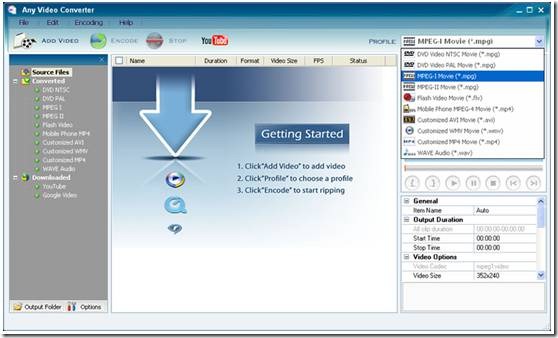
Any Video Converter Free is a personal favorite of mine because it excellently blends functionality with an appealing user interface. A wide variety of media formats are supported and converting video for your iOS device will be very easy. You can control advanced conversions options as well such as video and audio bitrates.

Quick Media Converter

clip_image008
Quick Media Converter comes in the setup size of 28MB. Along with supporting video conversions between various file formats, it provides a progress bar with each conversion process so you know how much of the process has completed and how much is left.

Format Factory

clip_image010
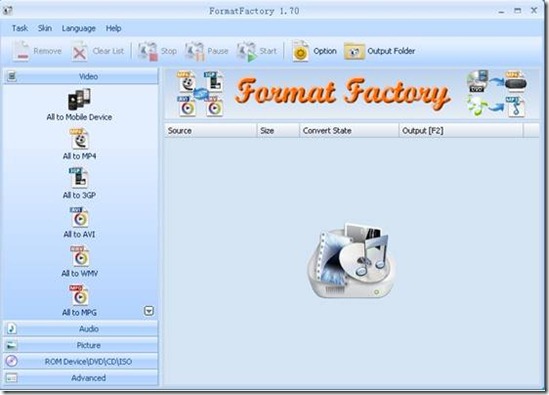
Although Format Factory does not offer the prettiest user interface, it does offer the most functionality out of the other entries in this list. Supporting media conversions between various video, audio, and image formats, Format Factory can quite easily become your default media conversion application. The program has a setup file size of 38MB.

Got Your iPad 2? Three Tips For Selling The Old One

From: http://www.mint.com/


photo: iPad_2
The usual frenzy broke loose as soon as Apple (AAPL) CEO Steve Jobs announced the iPad 2 — and on March 11, the first day it went on sale, lines at Apple stores were epic as usual.

If you’re one of the 15 million people who bought an iPad last year — and are among the early adopters who patiently waited for hours yesterday to get the new one — you may be wondering how to swap your old tablet out for the shiny new iPad 2 without taking a huge loss. Here are some tips for finding good trade-in deals:

Compare Buyback Sites

Depending on the condition of your iPad, various websites offer different buyback values. With a few minutes of research, you could squeeze an extra $50 or more out of your old gear, so our first tip is to make sure to compare options.

NextWorth.com, a consumer electronics upgrade and trade-in company, is one of several sites offering cash for first generation iPads with light wear, and competitive deals for heavier wear. At NextWorth.com, you can see exactly what cash amount you’re going to get for your iPad, and what percentage of the original retail value. NextWorth’s trade-in prices as of 2/23/11 for light wear were:

iPad 16GB Wifi: $255
iPad 32GB Wifi: $285
iPad 64GB Wifi: $310
iPad 16GB Wifi + 3G: $298
iPad 32GB Wifi + 3G: $350
iPad 64GB Wifi + 3G: $390

NextWorth partners with Target, so you can walk in to your local Target store and receive cash back for your first generation iPad rather than through the website. If you aren’t looking to upgrade to the iPad 2 with the cash you get back, you can instead receive a prepaid Target gift card for in-store credit.

If your iPad is in near-perfect condition, you can get $300 for a 16GB Wifi model at Gazelle.com. For slight wear and tear, such as light scratches, however, NextWorth’s $255 trade-in beats Gazelle’s cash offer of $240.

CExchange.com and BestBuy.com are also offering trade-ins at various prices.

Don’t write off eBay or Amazon

Ebay, the world’s most popular online auction website, is definitely a viable option for selling your iPad and getting an aggressive deal. Thousands have already put their first generation iPads up for bid, and even with the new overload of inventory, some are selling for as high as 80% of their original price. Your success will depend both on the condition of your iPad and how lucky you are with bidders. The outcome of an auction is hard to judge, so Ebay lets you set a minimum amount you will accept.

If you haven’t bought or sold through the e-commerce company Amazon, here’s a little tid-bit on why the site is so popular: Amazon carries its own inventory, but also offers new, used and refurbished products sold through private owners. Buyers can look up all the details they need on the product’s capabilities and condition, and then buy the item through private sellers at lower-than-retail prices. You can piggyback off of Amazon’s reputation and sell your iPad by undercutting Amazon’s price when you list your iPad there.
If you’re thinking about selling your iPad at either eBay or Amazon, it helps to have positive reviews to gain customer credibility and therefore get the most cash for your used gadget. But even if you’re new to the sites, you can still get great deals.

Consider selling locally

The flood of iPad supply in online secondary markets has pushed resale prices down already, even just a day after the iPad 2 announcement. If you wait too long to sell, you may not get the deal you want, due to continued price drops. However, many consumers prefer to buy used electronics locally, where they can test them out for themselves before handing over cash. An excellent alternative to selling your iPad on eBay, Amazon, NextWorth, or other sites is to list it on Craigslist or other local classifieds in your area. You’ll be able to set your own price and possibly squeeze a little extra out of your old tablet. Consider marking up the price a bit to compensate for shipping no longer being a factor.

If all else fails, iPad 1 is still as capable as it was when you bought it (assuming you haven’t been using it as a frisbee). Even if you do nab iPad 2, your original tablet can be used in a variety of clever ways, such as a secondary screen for a laptop. Shoot, velcro it to a treadmill or the back of a car seat. But if sell you must, be strategic about comparing the going rates at different marketplaces, and do it fast before your tablet is worth only as much as the apps you’ve bought!

Shane Snow is Editor-in-chief and cofounder of Contently.com, which contributed this post exclusively for Mint.

35' Wave crashes into Miyako, Japan

Either scripts and active content are not permitted to run or Adobe Flash Player version10.0.0 or greater is not installed.

Get Adobe Flash Player


Dramatic Amateur Video of the tsunami crashing over the seawall into the Japanese town of Miyako.

Friday, March 11, 2011

New Spider-Man movie first to use ultra-mobile 3D cameras

By Electronista Staff

From: http://www.electronista.com/


3ality TS-5, 3D camera of choice


The Spider-Man franchise re-boot The Amazing Spider-Man is the first movie to use the TS-5 Handheld Beamsplitter Rig from 3ality Digital. 3ality Digital’s camera platforms and stereo image processors were developed to enable both scripted and live entertainment. The camera systems automatically align and correct mechanical and optical imperfections, using artificial intelligence and image processing. The systems feature semi-automatic setup and alignment, as well as S3D metadata output.

"We tested virtually every product on the market and chose 3ality Digital because we were impressed by the compact size of the TS-5," said Spider-Man director of photography John Schwartzman. "You don't get the unwanted shadowing effects during shots that sometimes appear using other 3D rigs, and the lens changes only take a few minutes," he added. "We wanted a rig that would not only deliver the best quality and performance but also one that wouldn't delay the production, so we have all the benefits of a 3D picture and we're shooting to a 2D schedule."

The CEO and founder of 3ality Digital, Steve Schklair, explains that the advantage of 3ality’s TS-5 cameras is that the business case for shooting in 3D works when studios can film on the same timing schedule as when shooting in regular 2D. As a result, 3ality is now attracting interest from the television industry for shooting episodic TV shows in 3D. A one-hour TV show can be shot in the usual 2D schedule of nine days with a 3ality Digital rig, giving it a significant advantage over its competitors.

The Amazing Spider-Man is due for release in 2012. [via The Hollywood Reporter]


First Full Trailer For Super 8 Finally Lands Online

By: Eric Eisenberg
From: http://www.cinemablend.com/


First Full Trailer For Super 8 Finally Lands Online


Earlier this week we posted a rumor that the first full trailer for J.J. Abrams' Super 8 would be attached to prints of Battle: Los Angeles, being released this weekend. While we didn't know if it would come in the form of a pirated video or official release, we knew that one way or the other the trailer was going to hit online quickly. Lucky for us it was the latter.

Paramount has released the first trailer for the sci-fi film, due out on June 10th. As per the official synopsis released earlier tonight, the film is about a group of kids who, while making a movie with a super 8 camera, witness a train crash. Suddenly, weird occurrences begin to spread around the small town and the answer may rest in what escaped from that cargo train.

Check out the trailer below. For more of the latest on Super 8, keep up to date with the Blend Film Database.


Maccabeats Sing the Story of Purim to the Tune of Pink's 'Raise Your Glass'

From: http://www.urlesque.com/

maccabeats sing purim song to the tune of pink's raise your glass
With the Jewish festival of Purim coming up later this month, Yeshiva University a cappella group The Maccabeats have released a Purim song to the tune of Pink's pop hit "Raise Your Glass." Unlike many other spoof video creators, these guys can actually sing.

Sure, it's a bit of edu-tainment, because you'll learn the story of Esther foiling Haman from exterminating the Jews, but it's also totally catchy and well-produced. If the Maccabeats look familiar, it might be because you know them from their Hanukkah-themed version of Taio Cruz's "Dynamite."


Buy this song on iTunes http://itunes.apple.com/us/album/the-purim-song-single/id423668845

Based on "Raise Your Glass" by P!nk

Filmed, Directed and Edited by Uri Westrich
Uri@UriFilms.com
http://www.youtube.com/user/westdawg63
Production assistant - Rivie Shalev

http://www.maccabeats.com/
Follow us on Facebook: http://www.facebook.com/pages/The-Maccabeats/160715497348

The music in this and all Maccabeats songs are made entirely from their voices and mouths

The Crayola ColorStudio HD – iMarker and iPad App for Kids

By:
From: http://www.geekwithlaptop.com/
Images: http://www.griffintechnology.com/


Griffin have produced a very original looking product, with their custom-built digital stylus and Crayola ColorStudio HD.  This new digital play experience is made especially for the Apple iPad, and is aimed squarely at young kids who either have an iPad of their own or parents kind enough to share theirs.

Crayola ColorStudio HD is a combination of the Crayola iMarker and the ColorStudio HD App.  The iMarker is a specially made digital stylus that can act like a marker, a crayon, a pen, or a paintbrush, allowing kids to paint, draw, and color in a variety of ways.

The application can distinguish between pen and finger input, and automatically changes the way it works depending on the input method.  Along with the multiple drawing features, the Crayola ColorStudio HD also combines with animations, music, sound effects, and visual special effects.


The application that comes with the stylus is aimed at young kids, with a large built-in library of art that comes in a number of themed environments.  Some of the themes include undersea, jungle, and playtime activities, with various activities available in each setting.  Some examples of the kids of activities on offer include Musical Dot 2 Dot, Color By Numbers, and many other immersive games.


Completed drawings and artworks can be saved in many ways once they have been completed, with printing, email, and Facebook posting all available directly from the app.  Apple iOS 4.2 or later is required to run Crayola ColorStudio HD, as – of course – is access to an Apple iPad device.


The Crayola ColorStudio HD looks like a fun way for young kids to spend some time, and may become an absolute lifesaver for many parents on long car journeys or plane trips.  There is no release date or price announced just yet.
 

Wingsuit skydivers create incredible 25-person flock

From: http://www.geek.com/

Exploring the Sky - Wingsuit Flying 2011 from Richard Schneider on Vimeo.


Last year we here at Geek.com had a short obsession with wingsuit skydiving.The extreme activity pairs two awesome pastimes–jumping out of planes and wearing multicolored jumpsuits–into one incredible experience. Make sure to go back and check out that video if you want to be amazed by the jumpers’ accuracy and willingness to spit in the face of death.

The wingsuit fliers have continued working on their craft since then. In a recently posted video we can see that production values are up, the fliers are jumping in teams, and making they are even making formations. Jeb Corliss’ video makes this one look downright relaxing, but we still get a glimpse at the awesome control the wingsuits give the divers; their stability in the air is really fantastic.

The video’s maker, Richard Schneider told me the video above was filmed almost entirely with a Contour HD helmet cam. He recommends the Contour HD for its shape which he considers safer, thanks to less possible “snag points” where a parachute or cord could catch while being deployed. (The other popular camera with this sort of activity is the Go Pro.)

Side note: check out the propeller blades at 0:40. Their super fast motion combined with the sensor on the camera makes them look like they were made of rubber. They appear to be flopping sideways as they spin around. It’s probably the least cool thing in the whole video, but I do appreciate how the tech interacts with activities like this one.


From Vimeo: Helmet cam footage from wingsuit flights at the edges of the United States, including California (Lake Elsinore), Florida (Zephyrhills), Nevada (Mesquite), and Puerto Rico (Vega Baja). The last scene was from a vertical formation record organized by Flock University, 25 expert wingsuit fliers exiting from two airplanes.

See more footage of the 25 wingsuit vertical diamond record: vimeo.com/​19552772

Wingsuit Pilots: Justin Shorb, Douglas Spotted Eagle, Matt Santa Maria, Joel Hindman, Joshua Sheppard, Abe Sheppard, James Raimar, Brian Voils, Tim Hedderich, John Kallend, Zach Schroedel, Alex Scheidt, Jason Carter, Kyle O’Donohue, Scott Callantine, Brian Snarr, Andreea Olea, Simon Repton, Ralph Kubicsek, Ben Lowe, Savage Sac, Cate Flies, Rick Hough, Greg Drogaline, Scott Bland, Michael Swearingen, Ryan Maher, Mike Masheff, Nick Wright, Dennis Sattler, Scotty Burns, Jt Valente, Jeff Donohue

Primary footage captured and edited by Richard Schneider, Lake Elsinore parachute deployment scene captured by Douglas Spotted Eagle.

Music: Undenied by Portishead & The Funeral by Band of Horses.

Brazil, putting the penis in passion fruit

Brazilian gardener discovers phallus-shaped fruit in backyard
Passion fruit
Brazilian gardener Maria Rodrigues de Aguiar Farias, 53, shows off penis-shaped passion fruit growing in her backyard.
 
A vine producing penis-shaped passion fruit has been discovered by a gardener in the Brazilian city of San Jose de Ribamar, in the country’s north. Normally round, the fruit is native to South America and its tart pulp can be found flavoring everything from sweet desserts to caipirinhas, the Brazilian national cocktail.
Although none of the penis-shaped variety are ripe yet, the woman who grew them, Maria Rodrigues de Aguiar Farias, 53, told the news site G1 so many visitors want to see the plants that she’s started charging admission.

"I charge two reals to look, 15 for taking photographs, and 20 to shoot video," she said. (That's a little over $1 to see, $9 for a snapshot and $12 for video).

A local government plant expert has examined the fruit and pronounced it healthy, G1 reported. While it remains to be seen how good the plant’s pulp tastes, the shape itself shouldn’t be a reason to shy away, said Marcelo Cavallari, with the Brazilian Agricultural Research Corporation.

On the contrary.
“It's pretty big, it's pretty thick,” Cavallari said. “It may even reach 15 to 20 cm in length.”

Robotic Kit Lets You Control c**kroaches, WTF!

treehugger.com
by Jaymi Heimbuch, San Francisco, California

roboroach kit image
Image via YouTube video


Um, PETA? You might have a problem with this. It's a DIY kit that turns the average cockroach into a remote controlled toy. No kidding. Remember that whole flying cyborg beetle thing we told you about a couple years ago? Well, apparently the technology (er, sort of) is making its way into bug-infested living rooms.


roboroach kit image
I don't have anything against cockroaches -- I think they're amazing creatures. So to see one being remote controlled like this was actually a bit disturbing. So you can only imagine how the most serious animal activists among us might feel.


The kit comes from Backyard Brains, and it's a fairly simple set-up. The armor you put on the bug sends electrical pulses to the antennae nerves of the roach, which tells it to turn either left of right.
Apparently it only works on about 25% of roaches -- they must be smarter than we think. Once Backyard Brains get this kink worked out, they'll launch the device into beta mode. That is, unless PETA says something about it first.

Rescued Baby Hummingbird


Uploaded by
This is a baby hummingbird I rescued after it was attacked. The song is "Better Together" by Jack Johnson.

The First Laptop To Be Controlled With The Eye

By:
From: http://www.geekwithlaptop.com/

Lenovo, the world’s fourth largest manufacturer of personal computers, a multinational corporation with principal operations based in China and Head Quarters in USA, has built the world’s first eye-controlled laptop, using eye tracking technology from Tobii. Tobii Technology is a manufacturer of hardware and software solutions for eye tracking.

The company was founded by three Swedish entrepreneurs; John Elvesjo, Henrik Eskilsson and Marten Skogo, in 2001 and has continuously shown very rapid year-to-year revenue growth -- in 2007, Tobii was awarded a prize as Sweden’s fastest growing technology company by Deloitte.

What exactly does this technology mean, in plain English? Tobii’s eye-control tech allows users to do things like select, point and scroll, these are things you’d traditionally do with a mouse or track pad. Even more, the developers say that there are already games that are available and which can be played with the eyes only.
Nonetheless, Lenovo and Tobii are on the edge of revolutionizing the notebooks market with this unthinkable product. As the company states: “The laptop is a fully functional conceptual prototype and an important breakthrough for Tobii in its mission to bring its eye tracking technology to serial production and consumer products.” Watch the video below to get a better understanding of what exactly an eye-control laptop really means.


Also, texts can be made to automatically scroll upwards or return downwards as the user reads them by using their eye movement. This is possible due to small infrared camera incorporated in the laptop that track eye’s positioning. But, there’s a fear that this technology will put our eyes to a higher stress. Will the Lenovo-Tobii partnership manage to pass over this issue?

The official representatives of the companies affirm that this technology isn’t very hard to understand and use, as it may seem at first sight. Even if the eye-tracking technology gives the user the chance to do with his eyes things he’d normally do with a mouse, this doesn’t mean that it totally replaces those devices.

“More than anything else, the Tobii laptop prototype is proof that our eye tracking technology is mature enough to be used in standard computer interfaces. To reach a state where the technology is part of the average computer, we need to make it smaller and cheaper. We believe that this can be realized in a couple of years by partnering with the right manufacturer,” comments Henrik Eskilsson, CEO of Tobii Technology.
“On the one hand, we have Lenovo, a great partner, representing industry-leading expertise in computer manufacturing and hardware development. Tobii, on the other hand, has the world’s leading eye tracking technology and unique expertise in eye tracking and eye control interfaces. We are very happy with the outcome of this collaboration,” Henrik Eskilsson concluded.

Van Damme Friday - Still #1 after all these years