Zazzle Shop

Screen printing
Showing posts with label Medical Marijuana Dispensary. Show all posts

Wednesday, July 20, 2011

Billy Breathes Bud For A Job

Published by Rib
From:
dispensary 
Image via
Astronaut, Playboy photographer, editor at Vogue: whatever vocations are on your personal list of dream jobs, make room, because "pot critic" just became a real thing. Westword, an alt-weekly newspaper out in Denver, has hired one "William Breathes" to judge the quality of the city's medical cannabis and the dispensaries which sell it.

Breathes (it's not his real name, and is almost certainly a Phish reference) examines the grow quality of different bud he finds at dispensaries in the area, as well as the atmosphere and staff he encounters on his trips. He has been self-medicating for a stomach ailment for some time and seems to be young-ish, but many of the 100,000+ Colorado residents with medical marijuana cards are geriatric and may feel uncomfortable walking into a place in a bad neighborhood wallpapered with velvet posters and blasting the Disco Biscuits in its waiting room. The 300 dispensaries in Denver should offer something for everyone though, and Breathes describes the location, layout, pricing and of course the MM products from the ones he selects for review.

The weed reviews themselves are accompanied by photos of the buds, wax, etc. the author has purchased that week, along with pricing and info on how it looked, smelled, felt and smoked. It's a standardized system throughout his columns, and as clear and concise as any largely subjective review process can be.

Friday, June 24, 2011

New Cannabis Comedy 'Wilfred' Debuts Tonight On FX

Thursday, June 23, 2011, at 12:07 pm
By Steve Elliott
From http://www.tokeofthetown.com/

Wilfred KUSH Magazine Set Cheryl Shuman small_0158-2.jpg
Photo: Cheryl Shuman
From left, Jason Gann (Wilfred), medical marijuana consultant Cheryl Shuman, Elijah Wood (Ryan) and David Zuckerman (executive producer)

​ Ever noticed how often TV shows get it wrong when it comes to the telling little details of marijuana culture? Inaccuracies, large and small, can diminish our enjoyment of a show because they call our attention to artifice rather than art.

Well, I can assure you those kinds of details are going to be correct in "Wilfred," a new pot-based comedy debuting tonight on the FX television network. How am I so sure? Because, in what appears to be a first, the producers had the good sense to hire Cheryl Shuman (yes, the well-known cannabis activist and Kush Magazine media director) as medical marijuana consultant.

Wilfred-KUSH Magazine Set Elijah Wood Best Shots-0205small.jpeg
Photo: Cheryl Shuman
The accuracy of "Wilfred's" dispensary scenes like this one is due to the expertise of the show's medical marijuana consultant, Cheryl Shuman
​This show has "hit" written all over it, and I'm not just talking about the bong kind. Shuman told Toke of the Town that "Wilfred" is breaking new ground when it comes to the public perception of cannabis use, both medicinal and recreational.

Mega-star Elijah Wood (of Lord of the Rings fame) plays Ryan, a suicidally depressed medical marijuana patient whose life is saved by an unexpected bond with a -- get this -- talking, pot-smoking dog, the titular Wilfred.

You see, Wilfred looks like a regular ol' dog to everyone else, but to Ryan, he's a six-foot-tall, anthropomorphic, recreational pot smoker.

See what they did there? We have a medicinal cannabis user and his dog, a recreational marijuana smoker. Bada-bing! Both ends of the weed spectrum covered, with plenty of low-hanging funny fruit just waiting to be harvested.

"This show will be edgy; I guarantee you it's going to offend a few people," Shuman -- a 20-year veteran of Hollywood, medical marijuana patient, and cancer survivor -- told me. "But it's also really, really funny."

Written and produced by David Zuckerman of Family Guy fame, "Wilfred" is a great opportunity for the medical marijuana community to rebrand itself to the mass American public. As such, it features authentic dispensary interiors, overseen by pot consultant Shuman.

Hey, if it a takes a few off-color jokes and a pot-smoking dog to get America to talk (and laugh) openly about cannabis, I'm all for it!

Don't miss "Wilfred," premiering Thursday, June 23, at 10 p.m. Pacific on FX.

Wednesday, June 15, 2011

Montel Williams Opens High-End Marijuana Dispensary

By Steve Elliott
From http://www.tokeofthetown.com/

Montel Pot Shop.jpg
Photo: CBS Sacramento
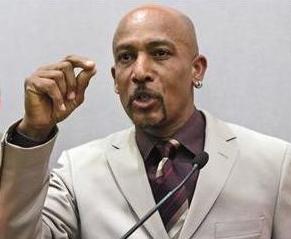
Montel Williams: "Why are we treating patients who seek out this medication like they're some lesser member of society?"

Former talk show host Montel Williams lent his star power to the grand opening of a high-end medical marijuana dispensary in Sacramento, California, that aims to "set a new standard" for patients who choose to use cannabis.

Williams, a daytime TV host for 17 years, said he uses medical marijuana to relieve the pain of multiple sclerosis but has seen the need for more professional distribution of the herb, reports CBS Sacramento.

"You see people standing around, sticking their nose into things," Williams unfortunately said. "I don't go to CVS to pick up an individual Vicodin."


inside montel's dispensary.jpg
Photo: CBS Sacramento
Inside Montel's new dispensary in Sacramento
​It's sad that Montel felt the need to say such a silly thing about medical marijuana consumers, since there isn't just one "medical marijuana" but many strains with various medicinal uses -- and, of course, as any experienced cannabis shopper knows, "sticking your nose" up to individual buds is one way of assessing exactly what you're dealing with.


Of course, if knowledgeable cannabis consumers are prevented from inspecting the marijuana they're about to buy at Montel's place, they'll just go down the street to the next dispensary.

But Montel's a smart guy -- my guess is he'll figure it out before he runs his customers off. And I'm guessing he'll also figure out that "high end" means having the most potent strains, not the highest prices. We'll see!

In any event, Montel's new dispensary, Abatin (I think "Montel's" would have been a much better name, but not nearly as French), is in a sleek location that, according to CBS Sacramento, "looks more like an office for a high end plastic surgeon," and Williams hopes that professional appearance will "help change perceptions" about medical marijuana patients.

"Why are we treating patients who seek out this medication like they're some lesser member of society?" Williams asked. "We could set a new standard, not just for Sacramento, not just for California, not just for the other 16 states that allow it now and the District of Columbia, but also for the world."

Williams said he chose Sacramento for the venture because of its history at the front of medical marijuana advocacy.

"Why not come to where the home of the movement began?" he said, undoubtedly raising a lot of questions up in San Francisco.

Williams is serving as a "consultant" for Abatin and said he hopes to open several similar dispensaries across the country.

Let's hope he at least lays off insulting medical marijuana shoppers if he plans to stay in the business.


Monday, March 14, 2011

Cuttino Mobley Wants to Open a Medical Marijuana Dispensary in Rhode Island


from: http://www.brobible.com/


Cuttino Mobley retired from the NBA as a New York Knick in 2008 because of a chronic heart condition. Now he wants to open a medical marijuana dispensary in Rhode Island, where he starred for the University of Rhode Island before being drafted by Houston in 1998. In a profile by the Providence Journal-Bulletin, Mobley stated that he wants to open a "wellness center" in Warwick, RI, because he "wants to help people." He is one of the 18 applications under consideration for opening a dispensary in Rhode Island, which legalized medicinal marijuana for chronic pain in 2009. The state will license three of the 18 applicants. More about why the ex-baller wants to become a greenepreuer and open a dispensary below, via the Providence Journal


It was about what he wants to do with the rest of his life. “I want to help people,” he said.

He knows that innumerable people have helped him along the way, from Max Good at Maine Central, to Jim Harrick at URI, who gave him confidence, assistant coach Bill Coen, who made him start to believe in his talent. It’s also the way he was raised, his version of spirituality, the sense that you help others when you can. So he helps fund an AAU team in Philadelphia. He built a basketball court in Africa. He helps out his old high school. He has a foundation in Philadelphia that helps single mothers and homeless kids.

“You get it after a while,” Mobley said. “You know what you’re supposed to do.” One of the things he wants to do now is start a wellness center in Warwick, one that will be allowed to dispense medical marijuana. He says he got interested in the field of wellness both through his own medical condition and those of other people close to him, and adds that the health field is one of the fastest growing in the country.

The plan also is to get more involved in Rhode Island, this state that helped him at a vulnerable time in his life, this state that saw him go from a young, unstructured kid to someone who grabbed the basketball dream and has made the most of it. This state that he feels has tremendous potential, a future he wants to be part of.

“I’ve done well,” he said, “and I want everyone to do well. Let’s all do well together.”

Thursday, February 10, 2011

Anti-energy drinks: Relaxation in a can

By Madison Park

A growing number of sodas and concoctions are doing the opposite of Four Lokos and Red Bulls -- they're slowing things down.


(CNN) -- It's not enough to fizz with carbonation and taste sweet.

For years, drinks have been infused with promises of electrolytes, caffeine and instant energy. But now, some sodas and other concoctions are offering the opposite of Red Bulls and Four Lokos -- they slow things down.
Energy drinks linked to alcohol abuse

As more sedating sodas enter the market, some beverage makers have taken relaxation to another level by producing sodas laced with marijuana or ingredients to mimic that drug.

"Everyone is looking for some effect somewhere," said Dr. Matthew Seamon, assistant professor in the College of Pharmacy at Nova Southeastern University.

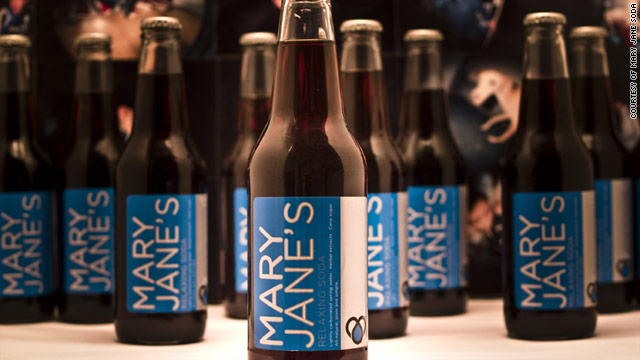
Beverages such as Malava Novocaine, Drank, Unwind, Mary Jane's Relaxing Soda and Slow Cow (sold in Canada) are marketed as helping people unwind.

"When you are stressed out, normally you'd have a drink," said Matt Moody, founder of Mary Jane's Relaxing Soda. "You can't walk around smelling like vodka all day. I wanted to try to make something you can have to mellow you out. It's not going to make you stumble, fall down and slur your speech. It's a quick fix to slow things down when things get hectic."

Critics question the safety of such anti-energy drinks, which are sold in locations including college campuses and convenience stores. Not many scientific studies about anti-energy drinks have been done, as they are just emerging in the market.

Ronald Peters, associate professor at the University of Texas Health Science Center at Houston, points to similarities between street drug concoctions and the anti-energy drinks.

Urban youths, especially in the South, started mixing codeine cough syrup with Sprite or candies such as Jolly Ranchers in the 1990s to make what's been called "purple drank" and "sip and syrup," Peters said.
He called the marketing of commercialized anti-energy drinks "one of the worst things I've ever seen with corporate immorality," accusing the companies of profiting off a higher-end version of a street drug. And a lot of parents aren't aware what these soda-like drinks do, he said.

"The modeling of this drug is worse than candy cigarettes," Peters said of the widely available anti-energy drinks. "It actually has sedatives in it. They didn't have quasi-nicotine in candy cigarettes, but this one has it in it. It makes it an unethical product."

Some anti-energy drinks carry warning labels of possible drowsiness and discourage driving after use.
Peters likened the drinks to a gateway drug -- kids who buy the commercialized products are more likely to try the candied codeine cough syrup mix.

Beverage makers say that their products are safe, and more so, that they help people. One company called the product"a positive alternative" to drugs and alcohol.

Tim Barham, president of Frontier Beverage, which produces Unwind, said his company's drink is not "associated in the same realm at all" with the cough syrup mixtures.

He said Unwind appeals to "high school and college students, soccer moms and Wall Street executives" to promote relaxation after a stressful day. Unwind and other drinks contain melatonin, a neurohormone used to treat sleep-related disorders that can be purchased as a supplement. Some studies found that melatonin can interfere with testosterone, so some sleep doctors don't recommend using the supplement until boys reach college age.
Melatonin is not approved as a food additive because it is not "generally recognized as safe" by the U.S. Food and Drug Administration. So a company that uses the ingredient can be subject to a challenge by the FDA.
Last year, the FDA warned the makers of the relaxation drink Drank about its use of melatonin, calling it "an unapproved food additive." Drank sells its product now as a dietary supplement, rather than as a beverage, in order to contain melatonin, according to a company spokesman. The FDA had no further comment regarding the matter.
Many of the anti-energy drinks contain exotic but innocuous-sounding ingredients like kava, melatonin, valerian root, rose hips and passionflower. Seamon said such supplements could have risks.

Recalling how the original colas more than a century ago contained cocaine and lithium, when they were considered benign, Seamon said today, the companies are "a step above regulators. Maybe the science and risks haven't been documented."

The latest relaxation drink to capture headlines is Canna Cola, a marijuana-infused soft drink.
The product contains the chemical THC and is scheduled to go on sale in medical marijuana dispensaries in Colorado this month and expand to California. The drinks will be available only in medical marijuana dispensaries to people who are legally permitted to buy them.

It is not available to the general public.

Despite its colorful and cartoonish branding and flavors like lemon-lime, grape and orange, the product is not marketed toward children, said Clay Butler, co-founder of Canna Cola.

He acknowledged that some critics "are nervous about products like this. I think they're incorrect and there's misguided fear."

"This is medicine, and you should take it as you would with any prescription drug," Butler said.
Canna Cola's ambitions extend beyond medicinal drinks into producing more widely available relaxation drinks that don't include marijuana, Butler said.

Wednesday, January 19, 2011

Company Offers Training To AZ Medical Marijuana Dispensaries

By Steve Elliott
gI_0_GreenwayLOGO.jpeg
Graphic: PRWeb
Gus Escamilla, the founder and CEO of Greenway University in Denver, plans to offer fledgling Arizona dispensaries an education in the business of medicinal cannabis.

His team helped open more than 225 dispensaries in California, Colorado and the western United States, according to Escamilla, reports John Yantis at The Arizona Republic.

"The demographic that we recognized, it's not the 21- to 28-year-olds," Escamilla said of prospective dispensary owners. "It's the 35- to 65-year-olds, the displaced professionals, the people that want to get into this industry in total and complete compliance with the state laws or jurisdiction that they live in."

Later this month, Greenway University, which says its curriculum is provisionally approved by a division of the Colorado Department of Higher Education, plans a two-day, $295 seminar in Scottsdale. Students can learn about the political and legal issues surrounding marijuana, as well as how to grow the herb and prepare it in a snack form called edibles.

Those who do well can become "budtenders," helping patients select the best strains of marijuana for their particular ailments.

Gus Photo[1]-thumb-250x383.jpeg
Photo: Denver Westword
Gus Escamilla, Greenway University: "There's a lot of people that kind of see it as a savior from a business perspective"
​ Escamilla isn't alone in seeing the opportunity represented by Arizona's coming dispensaries. For example, Bruce Bedrick, a Phoenix chiropractor, is already marketing a dispensing system.

Once the state's regulations are in place, many entrepreneurs will likely want to get in on the beginning of what some call a sure high-growth industry.

Arizona voters narrowly passed Proposition 203 last November. The new law will allow qualifying patients with certain debilitating medical conditions buy up to 2.5 ounces of marijuana every two weeks from dispensaries, or grow up to 12 cannabis plants if they live 25 miles or farther from the nearest dispensary.

The Arizona Department of Health Services is now reviewing more than a thousand comments on the proposed medical marijuana rules. A new draft of the rules is expected by the end of the month, followed by a second comment period. Final rules are expected in March.

Those who attend his classes are "flat-out entrepreneurs," according to Escamilla, who see the industry as more than just growing and selling marijuana. For example, insurance brokers who sell medical marijuana insurance, real estate agents who lease or sell dispensary space, and security people employed by pot shops have attended his program, he said.

"There's a lot of outside interest just from those who are more entrepreneurial," Escamilla said. "There's a lot of people that kind of see it as a savior from a business perspective."

Gerry-Keim.jpg
Arizona State University
Professor Gary Keim: "It's the classic high-risk, potentially high-return situation"
​ Starting up a pot dispensary is much like launching other businesses, according to Gerry Keim, a professor of entrepreneurship at the W.P. Carey School of Business at Arizona State University. There's learning how to cater to customers, measuring the competition and building relationships with suppliers.

"But this is one where you have uncertainty about the future of the rules of the game," Keim said. "They will be emerging."

Those able to land a spot in the market early may be better able to influence legislators and regulators, Keim said. "It's the classic high-risk, potentially high-return situation," he said.

Bedrick, the Phoenix chiropractor mentioned earlier, has held local seminars to inform others about medical marijuana permitting and how to properly run a dispensary.

He is marketing what he said was the most technologically advanced solution to get marijuana to patients: A medical dispensing system that looks like an ATM and could be run from a business office. The system is called the Medbox.

Bedrick said his system was the most affordable way for entrepreneurs because it requires as little as $25,000 to get into an investment pool.

"We are the most compliant, most fraud free, safest and most lean business model," Bedrick claimed, predicting there will be more security and regulations as rules develop.

Bedrick said his licensed technology was devised after regulatory problems plagued California.

"The best way to be compliant is to take human error out of it," he said, adding that his machines offer video security and biometric scanning if necessary. The Medbox machines take cards, so patients don't have to pay cash for medicine.

Software that will meet state requirements for a real-time database would be able to shut down dispensing to patients with expired medical marijuana ID cards, or those who already bought their supply, Bedrick said.

"Our technology and software does that whole job for the state," Bedrick said. "Whatever system Arizona creates, we will seamlessly integrate with that."

According to trainer Escamilla, traditional sources of funding for startups are hard to come by in the marijuana business. "People either self-fund or they put together business plans and attract friends and family to fund their startups," he said.

Greenway University has lawyers, CPAs and dispensary owners speak at seminars. Escamilla suggests that future pot shop owners hire a good attorney and an accountant.

"It's more for business transaction and formation as opposed to criminal defense, which, for most people, that's their first thought process," Escamilla said.

Finding landlords who agree to host a dispensary can also be a challenge, Escamilla said. But if you follow the rules, he said it's possible for some owners with several dispensaries to earn seven figures annually.

Startup costs run from $25,000 to $500,000, according to Escamilla, who expects annual license fees to be about the same as Colorado's: $7,500 for less than 300 patients, $12,500 for 300-500 patients and $17,500 for more than 500 patients.

Escamilla stressed professionalism as a way of winning over communities. "We express to the student base it's a professional environment, that we have to be mindful of the neighbors, the communities that we live in, and to tailor your marketing in such a way that it's tasteful," he said. "It's an approach where you want to have a 42-year-old mother of two be able to come to your facility and use this as an alternative form of medicine."

One of the ways to make people more comfortable with marijuana, he said, is to educate them that medical cannabis does not have to be smoked. He emphasized that patients can get their medication through edibles, sodas, ice creams and through vaporization, which eliminates toxins associated with smoke by heating the cannabis to form a mist.

Wednesday, November 10, 2010

Medical Marijuana Coming Soon To Israeli Pharmacies

By Steve Elliot
From: http://www.tokeofthetown.com/

index.jpeg
Graphic: IRXMJ.org
IRXMJ.org says it supports Israel's sick, ill and dying with free medical marijuana.

The Israeli Health Ministry's committee on medical cannabis recommended last Wednesday the addition of marijuana to the official list of medicinal drugs. That means it should be available in Israeli pharmacies within six months, if the Health Ministry accepts the recommendation, reports Phillip Smith at StoptheDrugWar.org.


Dr. Yehuda Baruch, who heads up the medical marijuana committee, made the recommendation. Baruch said medical cannabis is helpful for multiple sclerosis, patients undergoing chemotherapy for cancer, and for the relief of chronic pain.

israel.jpg
Photo: Russia Today
Israel has the first medical marijuana program in the Middle East.
​ Until recently, Dr. Baruch was the only physician in Israel authorized to write medical marijuana prescriptions. But in another sign of loosening restrictions on medical cannabis, the Israeli Health Ministry announced in September that five more doctors will now be allowed to prescribe marijuana.

Only two Israeli citizens had marijuana prescriptions in 2000. The number had grown to only 10 by 2005, but it reached 700 around the middle of 2009. There could be as many as 2,000 medical marijuana patients now, according to estimates.

That number could increase to 5,000 by year's end, with tens of thousands more in the future, according to one Health Ministry official, with the loosening of the marijuana prescriptoin bottleneck.

The next step is to form an inter-minsterial committee to resolve open questions about the inclusion of marijuana on the list of medicinal drugs.

Israel's supply of medicinal cannabis is grown by three licensed national growers, according to irxmj.org.

Tuesday, September 21, 2010

Marijuana ice cream has finally hit the shelves

From: http://guyism.com/

Like ice cream? Ever wanted to try ice cream flavors like Banannabis Foster, Straw-Mari Cheesecake and TRIPle Chocolate Brownie? Are you a stoner that always dreamed that one day eating ice cream would get you high? Today is your lucky day…

Pot ice cream has finally made it to shelves in Santa Cruz, California. That’s right, a marijuana dispensary there has developed half-pints of weed infused ice cream that will get you baked without all the bongs and whistles. Take that Ben and Jerry!

The current flavors owner Jonathan Kolodinski offers at Creme De Canna, which opened last week, are Banannabis Foster, Straw-Mari Cheesecake and TRIPle Chocolate Brownie. Kolodinski said more flavors are in the works.

OK, those flavors sound pretty good, but honestly, will people really want pot in their ice cream?


“Everybody who’s tried it has said they absolutely love it. A lot of people come back for seconds, thirds and fourths,” Kolodinksi said.

That’s a dangerous precedent you’re setting for people. It’s like the best of both worlds for hungry stoners. They’ve been trying hard for years to come up with adequate sustenance that would let them get rid of the munchies while also getting them even more high. Could this be the start of a vicious cycle? Weed smokers that eat ice cream, then when they are hungry they eat ice cream and then they get even higher, meaning that they’ll need to eat even more ice cream when those munchies kick in, until… well, until they come back for thirds and fourths.

Klodinski said there are about two to four doses of cannabis for each half-pint, which means finishing one would be similar to smoking an eighth of high-grade marijuana, the equivalent of eight joints.

Yikes. So gaining a few while eating a half a pint now isn’t your biggest concern when eating ice cream. Now you have to worry that you’ll be higher than you ever have been in your life. Things like taking your pants off and going for a walk or watching a marathon of Designing Women at 5am seem like moderately good ideas after downing a pint.

At $15 a piece, the half-pints of ice cream are potent.

half baked Marijuana ice cream has finally hit the shelves

And it’s actually quite affordable. Well, all I can say is look out Baskin Robbins, if they legalize pot in California in November you may be getting a 32nd flavor.

New Dispensary Offers Patients Pot-Laced Ice Cream [NBC 8]

Friday, July 30, 2010

Pot Reviewer Gets Paid To Get High

FROM: http://www.wbaltv.com/news/24422897/detail.html

Click here for Full VIDEO:

http://money.cnn.com/video/

A Denver man gets paid to
smoke pot and write about it as one of the first medical marijuana critics in the country.

A decade after medical marijuana was legalized in Colorado, it's estimated about 2 percent of residents -- or more than 100,000 people -- have applied for medical marijuana licenses.

According to one Harvard economist, roughly $18 billion is spent on pot every year in the U.S. Denver's Westword newspaper has capitalized on those numbers -- hiring the man known as "William Breathes" to review pot dispensaries and the quality of the medical marijuana they sell.

"He has his journalism degree," a Westword editor said. "He was a good writer, and he could also punctuate and he could spell, which was very different than a lot of people who applied for the job."

Breathes has been smoking marijuana for 15 years to ease chronic stomach pains. Now his medicine is paying his mortgage.

"Load up a little bit and taste it," he said as he tested a joint he bought at a local dispensary. "Try and taste the smoke as it comes out. It has a really woody finish, almost like a mesquite finish to it. After a few hits, try to see what kind of buzz it is.

"People who swear by pot's medical benefits are becoming so-called marijuana pharmacists.

Steve Horowitz makes edibles at his Ganja Gourmet Shop on a street nicknamed "Broadsterdam."

"It's like gold, this stuff," he said. "There's a big bubble going on, there's a big buzz, everyone wants to be in the medical marijuana business."

As for Breathes, he's not going to lie. His job can definitely be fun sometimes, and he still can't get over that he gets paid to take bong hits.

But Breathes also believes in the power of marijuana as medicine.

"When I'm battling throwing up, pot really helps me the most -- it's truly medical," he said.

Wednesday, July 28, 2010

Medical marijuana dispensaries could mean big changes for Oregon

Jessica Van Berkel, The Oregonian Jessica Van Berkel, The Oregonian

Bradshaw.JPGLindsey Bradshaw, 62, spends most days in his Southeast Portland home, where he can quickly access his painkillers and keep tabs on his health. Bradshaw's battle with cancer in 2003 left him without his spleen and a kidney, part of his stomach, colon and pancreas. Medical marijuana is one of the methods he uses to deal with the pain.

With one hand, Lindsey Bradshaw hoisted his food bag onto his back, arranging the tube that has helped feed him since cancer ravaged his stomach seven years ago. In his other hand, he clutched a small gold bowl of marijuana and a pipe.

He depends on both devices to get through the day.

One of 36,380 patients registered with the Oregon Medical Marijuana Program, Bradshaw is a gardener who grows most of his own medical marijuana -- one of two options that program participants have. They can also buy from a producer who sells to four or fewer people.

Those options leave people dry if they don't know a producer and are too sick to grow their own, Bradshaw said.

But that could change, if a ballot measure to create a system of medical marijuana dispensaries passes.

The measure certified for the November ballot July 16, but has not received a ballot number yet. It would establish Oregon as the seventh state to set up a state-regulated dispensary system.

Growth of state-regulated models began popping up across the United States after October 2009, when President Barack Obama loosened enforcement of the federal law on marijuana possession, as long as people comply with their state's law.

Proponents of dispensaries say they would make access easier for thousands of sick Oregonians, but Oregon police and officials from other states with dispensaries caution that access can spiral out of control, resulting in unregistered dispensaries and illegal users. In Los Angeles, a mess of unregistered and dangerous dispensaries was the result of a "hodge-podge of competing and contrasting laws and ordinances," from the city, county and state regulating marijuana, said Tony Bell, spokesman for Los Angeles County Supervisor Michael Antonovich.

The city placed a moratorium on new dispensaries in November 2007, but hundreds sprung up anyway. In June, the city ordered more than 400 dispensaries to close in an attempt to regain control of the marijuana industry.

In Colorado, Ron Hyman, the state registrar of vital statistics, received less than 5,000 applications for marijuana dispensaries in 2008. Now he gets 1,000 every day.

Colorado placed a one-year ban on new dispensaries and switched to a state-run system meant to reduce customer complaints about quality and cleanliness, Hyman said.

In Oregon, dispensaries would be nonprofits registered with the Department of Health, and have yearly licenses. The department would be in charge of monitoring and inspections.
Medical marijuana dispensary ballot measure
A measure to allow medical marijuana dispensaries in Oregon has been certified for the November ballot, but not yet given a number. Major elements:
Each dispensary and producer may possess 24 mature plants, 72 seedlings and six pounds of usable marijuana.
Producers and dispensers would pay a 10 percent fee to the state on all income/
Only Oregon residents could purchase and grow the marijuana.
Health department would be able to conduct and fund medical marijuana research.
People convicted of certain felonies in the past five years would be prohibited from delivering or growing the drug.
Health department must create a low-income assistance program for needy cardholders.

Dispensaries would prevent illness from mold or insects, which can occur when inexperienced users attempt to grow their own marijuana, Bradshaw said. Licensed patients who want to continue to grow their own medical marijuana could still do so.

Dispensaries could also offer different strains of marijuana with properties best suited to patients' symptoms, commonly severe pain or muscle spasms.

For Bradshaw, getting to select certain strains would be helpful, he said. The 62-year-old lost his spleen, a kidney, part of his stomach, colon and pancreas to Non-Hodgkin's Lymphoma. He takes various drugs to deal with the pain, but said opiates like oxycodone leave him in a haze.

Proponents of the initiative, like Bradshaw, say putting the state in charge would keep dispensaries safe.

But Sgt. Erik Fisher of the Oregon police Drug Enforcement Section said that wouldn't make a difference. If dispensaries appear in Oregon, honest patients would soon be in the minority, Fisher said. All you have to do is look at California where the dispensaries opened the door for more abuse, he said.

If someone purchased $40 in medical marijuana at an Oregon dispensary, "what's to prevent them from sticking that...in a FedEx package, sending it to New York and making $600?

"It'll make it easier to skirt the law," he said. "You make it more available to patients, you make more available to criminals."

Dispensaries are an obvious location for crime, Bell said, and can endanger the public. "Communities just don't want them in their areas."

John Sajo, who helped draft the ballot initiative, agreed that medical marijuana stores in California are "little more than gangs with storefronts." Oregon would be different, he said, because the measure on the ballot eliminates most of the gray areas that caused issues in California.

The average patient in Oregon is also "older, sicker and poorer," than many of the California patients who are in their 20s, Sajo said.

Bradshaw said he's one of those patients, and his marijuana usage is not provoking crime. "Me smoking in my living room doesn't have anything to do with a school three blocks away. What, I'm going to run down and say, 'Hey girl, want to smoke pot?' No."

The measure restricts where dispensaries can open -- they must be 1,000 feet away from schools and residential neighborhoods. It does not limit the number of dispensaries that can open.

Advocates say the dispensaries would bring much-needed revenue to the state. Dispensaries would make between $10 million and $40 million in the first year, Sajo predicted.

Producers would have to pay a $1,000 fee and distributors a $2,000 fee to cover program-operating costs, and would give 10 percent of their revenue back to the state. The health department could pick where to allocate the funds.

The department has not analyzed possible impacts of the initiative or planned how they would regulate dispensaries, said Dr. Grant Higginson, the state public health officer who worked with the explanatory statement of the initiative for the ballot.

The Oregon Medical Marijuana Program currently registers cardholders and their caregivers -- it has nothing to do with inspections or regulations. If the initiative were to pass, he said, it would transform the program.

--Jessica Van Berkel

Tuesday, June 8, 2010

Sheriff Tells Montel it’s OK to Fire Up Joint

From: http://www.eurweb.com/

Montel Williams

*Saturday in Maine, television host Montel Williams spoke at yesterday’s Maine Medical Marijuana conference.

He was at the event, held at the University of Southern Maine, to speak about the state’s new law allowing medical marijuana dispensaries in hopes that he could be a voice for patients and caregivers who are often not heard in public debates and conferences around the country on the legality and validity of the use of this form of medication.

At one point when his pain level became so bad and was in tears, attending Cumberland County Sheriff Mark Dion shouted from the audience “why don’t you just take your medicine?” … the audience applauded and stood as Williams sat down, pulled out a joint and fired it up, lighting up the approval meter of the attendee’s present.

Click HERE for more info.

Watch this video report for info:

Thursday, June 3, 2010

Marijuana Farmer's Markets Proposed In California


Photo: RAWBLOG
By Steve Elliott
From: http://www.tokeofthetown.com/

A California medical marijuana dispensary operator has presented his idea to start "patient-to-patient cannabis farmer's markets" in Sacramento and surrounding counties.

Joseph Funes, president of North Country Comfort Club in North Highlands, said the farmer's market model will help to keep money in the community by employing only local growers, reports Erin Tracy of the Woodland Daily Democrat.

An alliance with the county could result in hundreds of thousands of dollars in sales tax revenue, Funes told the Yolo County Board of Supervisors in the public comment portion of last Tuesday's board meeting.

l_9a244c74faa445249efaa759d0d489c9.jpg
Photo: North Country Comfort Club

The sale and distribution of medical marijuana in unincorporated areas of Yolo County is an issue that has never been formally addressed by the Board of Supervisors, but the idea is gaining popularity, according to Yolo County Council Robyn Drivon.

"We are rural; the trendy stuff that hits San Francisco and L.A. will eventually trickle to Yolo County; it's just a matter of time," Drivon said.

Yolo County still has not taken an official stance on the issue.

Public interest spurs policy-making, according to Drivon, and if the issue persists in Yolo County, the board will likely vote on whether or not to move forward with drafting a medical marijuana ordinance.

Just a year ago, talk of medical marijuana for the rural county was virtually nonexistent, according to County Public Information Officer Bath Gabor, who said she now fields a few phone calls on the subject every month.

All four city councils for the incorporated areas of Yolo County have either voted for a complete ban on marijuana dispensaries, or instituted a moratorium.

Davis was the first city in Yolo County to ban dispensaries, back in 2005. After a moratorium of more than a year in Woodland, the city council decided to ban the retail sale of medical marijuana.

Winters and West Sacramento have "temporary" moratoriums in place. Winters will probably institute a ban when its moratorium expires in September, according to the Daily Democrat, but West Sacramento "came very close" to allowing the county's first dispensary.

City staff at West Sacramento prepared a draft ordinance with "stringent regulations" which were opposed by medical marijuana advocates and lawyers. The proposed ordinance capped the number of dispensaries at two, and limited clientele to city and county residents.

The ordinance would also have required medical marijuana patients to obtain state I.D. cards, the first such mandate in the state, according to West Sacramento City Planner Steve Rikala.

The cards, established under Senate Bill 420 in 2003, are administered by county health departments, and are intended to assist law enforcement in identifying legal medical marijuana patients and caregivers.

Advocates argued that making the voluntary cards mandatory would be unconstitutional.

While the Health Department gets about 15 calls a week for marijuana I.D. card applications, there are only 12 active cards in the entire county, according to Deputy Director of Public Health Cheryl Boney.

The council ended up voting down the medical marijuana ordinance and extended the dispensary moratorium to February 2011, avoiding threatened litigation.

Funes's current dispensary serves about 500 patients. He said his goal is to expand operations to bordering counties like Yolo and accommodate at least 5,000 patients.

Funes said he gives away free marijuana to patients who can't afford it, and he worries that he will not be able to operate at this pace in the future without some sort of agreement with the counties.

"We are growing a lot of new members and they want the club here... Just give me the OK and I will do the rest," Funes said.

The California Board of Equalization estimates that medical marijuana dispensaries already generate between $58 million and $105 million in sales tax each year.

Friday, May 7, 2010

Daily Show Profiles Competing Pot Dispensaries

Posted by: Matt Tobey

People like to demonize medicinal marijuana, but it's really no different from any other pharmaceutical. For example, on last night's Daily Show, Jason Jones visited a pair of feuding marijuana dispensaries in Denver. It's just like all those feuding Lipitor dispensaries from a few years ago.


The Daily Show airs Monday through Thursday at 11pm / 10c.

Wednesday, May 5, 2010

Washington D.C. Legalizes Medical Marijuana


By Steve Elliott
From: http://www.tokeofthetown.com/
Photo: Dave's blog of random shit
Federal medical marijuana patient Irv Rosenfeld smokes a joint in front of the Capitol Building
The D.C. Council on Tuesday approved amendments to a medical marijuana law first passed in 1998 by 69 percent of District voters. Congress had blocked implementation of Initiative 59 for more than a decade, until it lifted its ban last year.

With Tuesday's vote, the District of Columbia joins the 14 states across the country which already allow qualified patients to use medical marijuana without fear of arrest.

"Today marks a long overdue victory for D.C. voters and potentially thousands of chronically ill residents who will benefit from legal access to medical marijuana," said Karen O'Keefe, director of state policies for the Marijuana Policy Project.

KarenBlogPicture2.jpg
Photo: MPP
Karen O'Keefe, MPP: "The District will at last have a law that recognizes... marijuana can be safe and effective medicine"
​ "It has taken nearly 12 years, but the District will at last have a law that recognizes the mounting scientific consensus that, for many conditions, marijuana can be safe and effective medicine," O'Keefe said.

"A well-working medical marijuana program in the nation's capital will also provide members of Congress who have never seen such programs up close with a unique opportunity to do so," O'Keefe said. "Once they see for themselves that these laws do nothing but provide compassionate care for seriously ill patients, hopefully they will understand the need to create a federal policy that no longer criminalizes patients in any state who could benefit from this legitimate treatment option."

Under the District's law, physicians will be able to give medical marijuana recommendations to patients suffering from HIV/AIDS, cancer, multiple sclerosis, glaucoma, and other serious conditions that can be alleviated through marijuana.

Qualified patients will have access to their medicine through a limited number of dispensaries within the District.

Unfortunately the District followed the bad example of New Jersey, the most recent state to allow medical use of marijuana, by prohibiting patients from cultivating their own medicine.

Currently, 14 states have effective medical marijuana laws and more than a dozen others are considering them.

In November, South Dakotans will vote for the second time on a medical marijuana ballot initiative, and Arizona is expected to have one on the ballot as well.

Eighty-one percent of Americans support medical marijuana laws, according to a January ABC News/Washington Post poll.

Tuesday, March 23, 2010

9 Medical Marijuana Ads

by David K. Israel
From: http://www.mentalfloss.com/blogs/archives/49891

Unless you live in Alaska, California, Colorado, Hawaii, Maine, Michigan, Montana, Nevada, New Jersey, New Mexico, Oregon, Rhode Island, Vermont or Washington, you probably aren’t getting a lot of medical marijuana ads in your local newspapers. (Did I leave any states off the list?) Because the ads are so ubiquitous, and so interesting, I thought a small roundup was in order for our friends living in all the other states, or in other countries where medical marijuana is illegal.

Of course, long before cannabis was legalized in these 14 states, it was used widely throughout ancient Greece, Egypt, India, and China to treat various illnesses and conditions. But it wasn’t until an Irish physician called William Brooke O’Shaughnessy, Assistant-Surgeon and Professor of Chemistry at the Medical College of Calcutta, conducted an experiment in the 1830s to help treat muscle spasms, that marijuana was introduced to the so-called modern world of medicine.

Perhaps he’s the reason why all the following ads have a green tint, then? ;-)

[N.B. mentalfloss does not condone nor condemn the use of medical marijuana. This post is about the language used in the ads.]

1. 20 of the best strains in town… and 2 crappy ones!

Picture 2

2. In this ad we learn that they’re looking for “donations” not purchases. Plus, if you act now!
Picture 5

3. Get Legal Today!
Picture 3

4. This one has WEED in the phone number
Picture 4

5. There’s so much to study in this one, it’s ridiculous. Let’s start with the name: Westwood “Organic”
Picture 10

6. “Call for directions” – Gee, if you need directions on smoking marijuana you think they could give you a demo in the store, no?
Picture 9

7. Attorney Protection Program? ‘Nuf said.
Picture 8

8. The winking smiley face here just cracks me up!
Picture 7

9. Non SELF INCRIMINATING medical forms!
Picture 6

Wednesday, February 10, 2010

IGrow: Walmart of weed opens in Oakland

By Matthai Kuruvila, Chronicle Staff Writer
From: http://articles.sfgate.com/

health insurance
Zeta Ceti constructs a display at the iGrow warehouse in Oakland, a one-stop shop for medicinal marijuana cultivation.
Credit: Photos by Michael Macor / The Chronicle
Call it the Walmart of weed.

In a 15,000-square-foot warehouse just down the road from the Oakland Airport, an entrepreneur is opening a one-stop shop for medicinal marijuana cultivation that's believed to be the largest in the state.
Don't know the first thing about growing pot? The folks at iGrow have a doctor on site to get you a cannabis card and sell you all the necessary equipment for indoor, hydroponic cultivation - from pumps, nutrients and tubing to lights and fans.

Don't know how to set it up? For a fee, on-site technicians will show you how to build it in your home and even maintain it weekly.

"A lot of people don't know much about growing pot," said Dhar Mann, 25, the owner, who stood in front of an array of Ikea-like displays, showing different rooms of cannabis cultivation systems. "Since there are no full-service resources like us, they take risks, like electrical fires."

This is hardly a fringe business. When iGrow opens today, at least three City Council members will attend. So will most of the leaders of the cannabis industry in Oakland, a city long at the vanguard of medicinal marijuana.

Today's opening also comes on a key day for proponents of a statewide ballot measure to allow recreational marijuana. They plan to turn in about twice as many signatures as needed to qualify the measure for the November ballot.

The supporters of that measure are being led by Richard Lee, owner of Oaksterdam University, an Oakland-based business that trains people for work in the cannabis industry.

The medicinal marijuana world is still unsettled. Cities from Los Angeles to Berkeley are grappling with how to permit and regulate medical marijuana dispensaries.

Oakland, where voters last summer agreed to have the city to tax and regulate "cannabis businesses," has allowed only four licensed dispensaries.

Though iGrow provides all the supplies and know-how for cannabis cultivation, they don't sell the seedlings - only dispensaries can. And even some of the vendors tread a delicate line.

Gabriel Goodhart, the owner of Easy Feed Systems based in West Oakland, was setting up one of the system displays at iGrow on Wednesday. His company has an explicit policy of not setting up any system where marijuana is visible when they show up - or even mentioning the word "marijuana."
"Liability is shifting," said Goodhart, a libertarian who is a registered Republican. "A small business like ours can't take the risk."

But, he believes, the issue is a moral one.

"It's not fair to medical patients to put them in a gray area where they have to be involved in criminal activity to stay healthy," he said. "That's like not having health insurance."

The cost of creating your own cultivation system or relying solely on a dispensary is vast.

At a dispensary, a patient might spend $120 a week for a quarter-ounce of marijuana.

However, it might cost $1,000 to set up an eight-plant system, said Zeta Ceti, one of iGrow's "indoor growing technicians." But in the course of a year, they might only use half of their harvest and be able to sell the remaining 3 pounds for $12,000 to a dispensary.

(C) San Francisco Chronicle 2010

Thursday, February 4, 2010

Duo Pushes Rhode Island to Decriminalize Pot

From: http://online.wsj.com

[LEAP] Reuters

Officer Chad Vanderklok executes a search warrant for marijuana at a Kalamazoo, Mich., home in November.

PROVIDENCE, R.I.—A retired police officer and the proprietor of an organic eatery make an odd couple when it comes to trying to overturn marijuana laws in this tiny state, but Jack Cole and Josh Miller are giving it their best shot.

Mr. Cole, 71 years old, is a veteran of decades with the New Jersey State Police, almost all with the drug squad. Mr. Miller, 55, runs Local 121, a restaurant favored among "buy local" diners, and also serves in the state Senate, where he leads a special commission to study marijuana prohibitions. The panel began hearings in January to discuss an overhaul of the state's pot laws, starting with decriminalization of small amounts.

As legislators across the U.S. struggle to rescue state budgets hammered by the recession, decriminalization is one idea gaining traction. Advocates say states could cut costs of policing, prosecuting and incarcerating offenders, and even raise money by taxing users.

"Any respect for this issue lies right now in its impact on the budget," said Mr. Miller.

His committee will hear testimony Wednesday from Mr. Cole, the founder of Law Enforcement Against Prohibition, or LEAP, a national lobby seeking an end to the drug war. LEAP's 10,000 members include many former police officers, corrections workers and federal agents of the Border Patrol and Drug Enforcement Administration.

Decriminalization faces resistance from district attorneys and police departments that have grown used to making arrests and building criminal cases in a longstanding war-on-drugs tradition, and often equate decriminalization with being "soft" on crime.

The first steps state legislatures take tend to be narrow: legalizing marijuana use for cancer or glaucoma patients, or allowing municipalities to impose fines on casual smokers.

In California, one of 14 states that allow marijuana use for medical purposes, legislators are weighing a bill to legalize most marijuana sales and create tax and licensing fees for the industry. The measure was approved by the state Assembly's Public Safety Committee last month, but probably won't advance further this session.

New Hampshire is considering a pair of House bills, one to legalize and tax pot sales, and another to decriminalize possession. A medical-marijuana bill passed last year but was vetoed by the governor.

Decriminalization measures have also been introduced in Vermont, Virginia and Washington, while medical-marijuana bills are being considered in Maryland, Delaware and Wisconsin, among other states.

Mr. Miller said that in Rhode Island, which allows medical-marijuana use, decriminalization was the next step. He noted that last month a bill was introduced in the House to make possession of an ounce or less a civil offense punishable by a fine of $100, rather than a criminal offense.

Rhode Island has run budget deficits of just over $200 million in each of the past two years, and is looking at a $400 million deficit in the next fiscal year on a budget of $7 billion. Savings from decriminalization wouldn't be great, Mr. Miller conceded—say, $2 million to $3 million a year by freeing prison beds occupied by pot offenders. Rhode Island spends about $33,000 a year per inmate.

Not everyone agrees with that math. Matthew Dawson, deputy chief of the criminal division of the state attorney general's office, testified before Mr. Miller's panel last month that the state would achieve "zero savings" from decriminalization. He said police and prosecutors employed criminal charges for possession to plea bargain with suspects, and that suspects might otherwise have to be prosecuted for more serious crimes, at greater cost to the state. Others say possession charges help police cajole witnesses into cooperating in criminal inquiries.

Mr. Miller said such arguments may persuade some of his colleagues, but others would look to the decision two years ago in neighboring Massachusetts to decriminalize pot, which raised hopes among some legislators that a similar measure could pass in Rhode Island. "It's not far-off California, but the big state next door," Mr. Miller said.

Mr. Cole traveled to Providence recently to help Mr. Miller craft a strategy. He often wears a badge that reads: "Cops Say Legalize Drugs. Ask Me Why."

In his standard speech, he describes the epiphany he experienced early in his career as an undercover narcotics investigator. "I learned firsthand of the family-destroying consequences of sending drug users [often mothers and fathers] to jail. I can't think of a better policy for creating the next generation of drug addicts than to remove parents from children," he said. "I also realized that when police arrested a robber or rapist they made the community safer for everyone but when I arrested a drug pusher, I simply created a job opening for someone in a long line of people willing to take his place."

Messrs. Cole and Miller agreed the former cop's presentation must appeal to law-and-order politicians. Mr. Cole said the way to win them over was to show that chasing pot smokers keeps police from fighting other crimes.

"Look at the clearance rates for these crimes," he said. In the 1960s, before federal antidrug funds flowed heavily to states, "91% of all murders in this country were solved. Today, it's 61%." He cited similar drops for arson (60% unsolved) robbery (75% unsolved) and rape (60% unsolved).

Mr. Cole said the national addiction rate has remained unchanged for a century at about 1.3% of the population. He concludes that if drugs are legalized, the addiction rate would stay the same, "but we'll be spending a lot less to manage it."

Write to Joel Millman at joel.millman@wsj.com