New Hampshire House Passes Medical Marijuana Bill
| Graphic: ReLegalize Indiana |
| Photo: MPP |
| Karen O'Keefe, MPP: "This vote shows that compassion is not a partisan issue" |
Adding Value To The World, one Post At A Time
| Graphic: ReLegalize Indiana |
| Photo: MPP |
| Karen O'Keefe, MPP: "This vote shows that compassion is not a partisan issue" |
Posted by gjblass at 3:16 PM 0 comments
Labels: Medical Marijuana, Medical Marijuana Bill, New Hampshire, NH Medical Marijuana Bill, pot legalization
| Photo: The Local |
Posted by gjblass at 4:35 PM 1 comments
Labels: Germany, global health center, Medical Marijuana, Medical Marijuana Bill, medical marijuana doctors
| Graphic: MERCY Centers |
Posted by gjblass at 12:08 PM 0 comments
Labels: Medical Marijuana, medical marijuana benefits, Medical Marijuana Bill, Oregon
From: http://www.eurweb.com/
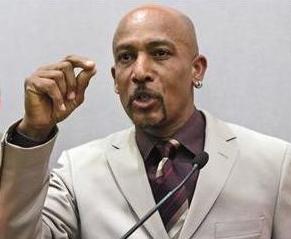
*Saturday in Maine, television host Montel Williams spoke at yesterday’s Maine Medical Marijuana conference.
He was at the event, held at the University of Southern Maine, to speak about the state’s new law allowing medical marijuana dispensaries in hopes that he could be a voice for patients and caregivers who are often not heard in public debates and conferences around the country on the legality and validity of the use of this form of medication.
At one point when his pain level became so bad and was in tears, attending Cumberland County Sheriff Mark Dion shouted from the audience “why don’t you just take your medicine?” … the audience applauded and stood as Williams sat down, pulled out a joint and fired it up, lighting up the approval meter of the attendee’s present.
Click HERE for more info.
Watch this video report for info:
Posted by gjblass at 12:19 PM 1 comments
Labels: Medical Marijuana, Medical Marijuana Bill, Medical Marijuana Dispensary
| Photo: Dave's blog of random shit |
| Federal medical marijuana patient Irv Rosenfeld smokes a joint in front of the Capitol Building |
| Photo: MPP |
| Karen O'Keefe, MPP: "The District will at last have a law that recognizes... marijuana can be safe and effective medicine" |
Posted by gjblass at 9:26 AM 0 comments
Labels: medical cannabis, Medical Marijuana, Medical Marijuana Bill, Medical Marijuana Dispensary, Washington D.C., Washington DC
Reuters Officer Chad Vanderklok executes a search warrant for marijuana at a Kalamazoo, Mich., home in November.
PROVIDENCE, R.I.—A retired police officer and the proprietor of an organic eatery make an odd couple when it comes to trying to overturn marijuana laws in this tiny state, but Jack Cole and Josh Miller are giving it their best shot.
Mr. Cole, 71 years old, is a veteran of decades with the New Jersey State Police, almost all with the drug squad. Mr. Miller, 55, runs Local 121, a restaurant favored among "buy local" diners, and also serves in the state Senate, where he leads a special commission to study marijuana prohibitions. The panel began hearings in January to discuss an overhaul of the state's pot laws, starting with decriminalization of small amounts.
As legislators across the U.S. struggle to rescue state budgets hammered by the recession, decriminalization is one idea gaining traction. Advocates say states could cut costs of policing, prosecuting and incarcerating offenders, and even raise money by taxing users.
"Any respect for this issue lies right now in its impact on the budget," said Mr. Miller.
His committee will hear testimony Wednesday from Mr. Cole, the founder of Law Enforcement Against Prohibition, or LEAP, a national lobby seeking an end to the drug war. LEAP's 10,000 members include many former police officers, corrections workers and federal agents of the Border Patrol and Drug Enforcement Administration.
Decriminalization faces resistance from district attorneys and police departments that have grown used to making arrests and building criminal cases in a longstanding war-on-drugs tradition, and often equate decriminalization with being "soft" on crime.
The first steps state legislatures take tend to be narrow: legalizing marijuana use for cancer or glaucoma patients, or allowing municipalities to impose fines on casual smokers.
In California, one of 14 states that allow marijuana use for medical purposes, legislators are weighing a bill to legalize most marijuana sales and create tax and licensing fees for the industry. The measure was approved by the state Assembly's Public Safety Committee last month, but probably won't advance further this session.
New Hampshire is considering a pair of House bills, one to legalize and tax pot sales, and another to decriminalize possession. A medical-marijuana bill passed last year but was vetoed by the governor.
Decriminalization measures have also been introduced in Vermont, Virginia and Washington, while medical-marijuana bills are being considered in Maryland, Delaware and Wisconsin, among other states.
Mr. Miller said that in Rhode Island, which allows medical-marijuana use, decriminalization was the next step. He noted that last month a bill was introduced in the House to make possession of an ounce or less a civil offense punishable by a fine of $100, rather than a criminal offense.
Rhode Island has run budget deficits of just over $200 million in each of the past two years, and is looking at a $400 million deficit in the next fiscal year on a budget of $7 billion. Savings from decriminalization wouldn't be great, Mr. Miller conceded—say, $2 million to $3 million a year by freeing prison beds occupied by pot offenders. Rhode Island spends about $33,000 a year per inmate.
Not everyone agrees with that math. Matthew Dawson, deputy chief of the criminal division of the state attorney general's office, testified before Mr. Miller's panel last month that the state would achieve "zero savings" from decriminalization. He said police and prosecutors employed criminal charges for possession to plea bargain with suspects, and that suspects might otherwise have to be prosecuted for more serious crimes, at greater cost to the state. Others say possession charges help police cajole witnesses into cooperating in criminal inquiries.
Mr. Miller said such arguments may persuade some of his colleagues, but others would look to the decision two years ago in neighboring Massachusetts to decriminalize pot, which raised hopes among some legislators that a similar measure could pass in Rhode Island. "It's not far-off California, but the big state next door," Mr. Miller said.
Mr. Cole traveled to Providence recently to help Mr. Miller craft a strategy. He often wears a badge that reads: "Cops Say Legalize Drugs. Ask Me Why."
In his standard speech, he describes the epiphany he experienced early in his career as an undercover narcotics investigator. "I learned firsthand of the family-destroying consequences of sending drug users [often mothers and fathers] to jail. I can't think of a better policy for creating the next generation of drug addicts than to remove parents from children," he said. "I also realized that when police arrested a robber or rapist they made the community safer for everyone but when I arrested a drug pusher, I simply created a job opening for someone in a long line of people willing to take his place."
Messrs. Cole and Miller agreed the former cop's presentation must appeal to law-and-order politicians. Mr. Cole said the way to win them over was to show that chasing pot smokers keeps police from fighting other crimes.
"Look at the clearance rates for these crimes," he said. In the 1960s, before federal antidrug funds flowed heavily to states, "91% of all murders in this country were solved. Today, it's 61%." He cited similar drops for arson (60% unsolved) robbery (75% unsolved) and rape (60% unsolved).
Mr. Cole said the national addiction rate has remained unchanged for a century at about 1.3% of the population. He concludes that if drugs are legalized, the addiction rate would stay the same, "but we'll be spending a lot less to manage it."
Write to Joel Millman at joel.millman@wsj.com
Posted by gjblass at 7:06 PM 0 comments
Labels: legalizing marijuana, marijuana decriminalization, Medical Marijuana, Medical Marijuana Bill, Medical Marijuana Dispensary, pot legalization, War on Drugs
Last night, Gov. Jon Corzine (D) signed New Jersey's medical marijuana legislation into law. As a result, New Jersey is now the 14th state to protect seriously ill patients from arrest and jail for using medical marijuana with their doctors' approval.
The bill had been passed by the New Jersey Legislature on January 11, passing by 48-14 in the Assembly and 25-13 in the Senate.
The new law will not only protect medical marijuana patients from arrest and jail but also allows for the regulated dispensing of medical marijuana. When the law is implemented, it's likely that there will be at least six dispensaries for patients to obtain their medicine, two in each part of the state. Doctors will be able to recommend up to two ounces of marijuana to patients within a 30-day period.
The Drug Policy Alliance New Jersey and the Coalition for Medical Marijuana-New Jersey led the lobbying efforts to pass this important legislation, which will go into effect this summer.
We're hoping that the decisive victory in New Jersey will convince neighboring state New York to do the right thing and protect patients who continue to live in fear. MPP has been pushing a medical marijuana bill forward there for seven years, and this year looks like the year that it may finally become law.
With the help of MPP's 29,000 dues-paying members, we'll continue to roll back the government's war on the sick and dying. We're working hard in Arizona, New York, Delaware, Illinois, Maryland, and Massachusetts to make these states the 15th, 16th, 17th, 18th, 19th, and 20th to pass medical marijuana legislation. Would you please consider making a donation today to support our efforts?
Thank you,

Rob Kampia
Executive Director
Marijuana Policy Project
Washington, D.C.
Posted by gjblass at 1:30 PM 0 comments
Labels: medical cannabis, Medical Marijuana, Medical Marijuana Bill, New Jersey, New Jersey Compassionate Use Medical Marijuana Act
Some educators and law enforcement advocates worked doggedly against the proposal, saying the law would make marijuana more readily available and more likely to be abused, and that it would lead to increased drug use by teenagers.
Damon Winter/The New York TimesMichael Oliveri, a muscular dystrophy patient, with his mother, Christiane, left, and Diane Rivera-Riportella, who has Lou Gehrig’s disease, after the bill’s passage in the General Assembly.
Posted by gjblass at 11:02 AM 0 comments
Labels: Denver Marijuana Policy, Marijuana Advocates, Medical Marijuana Bill, Medical Marijuana Dispensary, pot dispensary
Posted by gjblass at 2:27 PM 0 comments
Labels: California, Cannabis Horticulture, Cannabis Legalization, Cannabis tax, Denver, Denver Marijuana Policy, dispensaries, Medical Marijuana Bill, Medical Marijuana Dispensary, pot dispensary

By Robin Kaminski / The Daily Item
LYNN - The topic of medicinal marijuana is one that can go up in smoke according to Essex County Sheriff Frank Cousins and state Rep. Robert Fennell.
Posted by gjblass at 10:19 AM 1 comments
Labels: Medical Marijuana, Medical Marijuana Bill, Medical Marijuana Dispensary
Posted by gjblass at 4:45 PM 0 comments
Labels: Medical Marijuana Bill, Medical Marijuana Dispensary
By: Paul Armentano, NORML Deputy Director

How do you say: “Game, set, match” in southern California? Here’s how:
High court won’t hear county’s marijuana challenge
via SignOnSanDiego.comThe U.S. Supreme Court will not take up San Diego County’s challenge to state medical marijuana laws.
For more than three years the county has been fighting in court to overturn state laws that require counties to issue medical marijuana identification cards. The county contends federal law, which does not recognize medical marijuana usage, trumps the state law.
The county has lost that argument in state trial and appellate courts, and the state Supreme Court declined to take up the case, too. The county’s last, long-shot chance was to have the U.S. Supreme Court take up the case.
San Bernardino and Merced counties initially joined the suit, but Merced eventually dropped out. The high court also rejected San Bernardino’s petition to take up the case.
In other words, the oft-heard prohibitionist refrain that federal law trumps state medical marijuana laws has no legal merit.
None. Nada. Zero.
To anyone who has followed the unethical actions of the San Diego and San Bernardino Supervisors over the past three years, the Supreme Court’s refusal to hear their appeal shouldn’t come as a surprise. After all, the counties’ vapid arguments had previously been struck down — unanimously — by the Superior Court of the state of California the 4th District Court of Appeals.
In addition, the Legislative Counsel of California, the state Attorney General’s Office, and a majority of the California legislature had also previously determined that local politicians and law enforcement were obligated to uphold the provisions of California’s medical marijuana laws.
Finally, California’s constitution is also quite clear on this point — mandating that police have a sworn duty to uphold state law, not to enforce federal statutes.
Let’s be blunt: San Diego and San Bernardino’s protracted lawsuits — lawsuits that arguably cost county taxpayers hundreds of thousands of dollars and jeopardized the health and safety of thousands (if not tens of thousands) of citizens — were never about resolving legal ambiguity.
Rather, it was about the arrogance and recalcitrance of those who willfully chose to abuse their power and position to hamstring the will of the voters, the legislature, and the courts.
And while this particular legal battle is now over, our outrage shouldn’t be.
Posted by gjblass at 2:35 PM 0 comments
Labels: Medical Marijuana, Medical Marijuana Bill, Medical Marijuana Dispensary, San Bernardino, San Diego, Supreme Court

Marijuana advocates were not the only ones who were overjoyed when U.S. Attorney General Eric Holder confirmed that he was ending federal raids on medical-marijuana facilities unless they were in violation of both state and federal laws. In budget-strapped California, for one, taxpayers are grateful. There, the fed crackdowns, which had continued despite the end of the state's own raids, got in the way of upwards of $100 million in revenue from medical-marijuana sales taxes in 2007, according to Americans for Safe Access (ASA), an advocacy group for prescription pot.
The federal Drug Enforcement Agency (DEA) is estimated to have spent more than $10 million from 2005 to 2007 on raids on California dispensaries alone. (Twelve other states have legalized medical marijuana.) Legal costs are almost impossible to calculate in the Golden State. "I suspect it's well above $10 million, and that doesn't even take into account the fee for the time it's taking me to defend these cases. The government doesn't have to pay for that, but it's certainly an expense," says Joe Elford, ASA staff attorney. "It's the beginning of the end, hopefully, and it will save the taxpayers millions if not tens of millions of dollars." He estimates that $500,000 is spent on the prosecution and incarceration of each individual facing charges. (See pictures of classic Hollywood stoner cinema.)
However, though enforcement on the state and federal level may now be virtually the same in the affected states, a large legal gray area remains. "They've only begun to scratch the surface on this," says Dale Gieringer, California coordinator for NORML, a group lobbying to legalize marijuana. "They're going to have to change the whole treatment of marijuana under federal law because you can't just have a law lying around and say, 'Well, we're just not going to enforce it in this case,' and leave it like that. If they don't change the law, there are going to be issues for years to come."
The problem is clearly evidenced by the cases of Charles C. Lynch and 30 to 40 other individuals who faced or were incarcerated for medical-marijuana-related charges before the Obama Administration relaxed its policy. Lynch was convicted in federal court in 2008 on five counts, including distributing marijuana through his dispensary, Central Coast Compassionate Caregivers, in Morro Bay, Calif. Lynch, 47, who believed he was complying with state laws regarding his clinic — he had a business license for his dispensary, a nursery license for the marijuana plants he cultivated and the blessing of city officials, including the mayor — was charged with violating both state and federal laws. Lynch's defense team was not allowed to inform the jury that medical marijuana was legal in the state or that Lynch was compliant with state law. (See if pot is good for you.)
On March 23, the judge postponed Lynch's sentencing until April 30 and requested that prosecutors provide a written clarification from the Justice Department on the Obama Administration's position that federal agents target marijuana distributors only if they violate both state and federal laws. Thom Mrozek, spokesman for the U.S. State Attorney's Office for the Central District of California, said they were reviewing the judge's request but declined further comment.
Lynch's attorney, Reuven Cohen, a deputy federal defender, said, "The bottom line is this: If this case were brought today, Charlie would not be prosecuted, period. And anyone who says otherwise is either completely lying or does not know the truth or the facts. If the people at main justice are provided with full and accurate information, they will dismiss this case. If they are serious about what [Holder] said — in other words, that someone had to be in violation of federal and state law — then they will dismiss the case." (Read "An American Pastime: Smoking Pot.")
The prosecution paints a more complex picture, contending that Lynch's operation was pervaded by marijuana transactions outside the store by his employees and customers; they claim evidence shows that, though Lynch may not have known of such transactions, "the atmosphere and example that defendant set, and that his employees and customers followed, was not one of strict compliance with the law but rather a casual, almost carnival-like attitude toward the use and distribution of marijuana." One of the most serious federal charges leveled against Lynch was that he sold the drug to more than 250 minors, which is defined as under 18 under state law and under 21 under federal laws. (Read "Can Marijuana Help Rescue California's Economy?")
Furthermore, the feds can still cite the double requirement — violation of both state and federal laws — to justify a raid. Just a week after Holder's announcement, the DEA raided Emmalyn's California Cannabis Clinic in San Francisco, claiming it violated both sets of laws. Evidence used to justify the raid is currently sealed and not available to the public. However, the San Francisco Chronicle reported that a source in the city government said the state law that was broken was a sales-tax violation. Emmalyn's attorney and a former district attorney for the city, Terence Hallinan, says, "They've done everything they're supposed to do. They haven't done any of the things they're accused of. Here a week after the Attorney General makes a statement, they go ahead and make this raid. I think it's just a slap in Obama's face."
Marijuana advocates believe that what happens with Lynch will be a bellwether for other individuals facing charges related to medical marijuana. "All of these people are in a wild state of flux that Mr. Holder and Mr. Obama have placed them in," says Allen St. Pierre, executive director of NORML. "[Lynch] is the case that will probably inform society where we're going to go on this because he got arrested under the Bush Administration. He was a Main Street medical distributor who enjoyed the support of the town council, the mayor — quintessential local acceptance. His case has been caught up for months now in the [transition between the two] Administrations. These defendants are caught in this sort of Alice in Wonderland of medical marijuana, between the states and Federal Government."
While the Obama Administration cannot reverse the charges against Lynch, St. Pierre says it has great latitude over his sentencing. (State prosecutors have recommended the minimum mandatory sentence of five years in federal prison.) "They could commute his sentence. They can pardon his sentence," says St. Pierre. "That will be very demonstrative as to what this new Administration will do about medical marijuana. They can influence it. They can dial back what had been overt federal opposition to medical marijuana and allow, as they should have from the beginning, local mores and values to dictate who is going to run afoul of the law."
Posted by gjblass at 7:28 PM 1 comments
Labels: California, Marijuana Laws, Marijuana Legislation, Marijuana Reform, Medical Marijuana, Medical Marijuana Bill
Irvin Rosenfeld and the Compassionate IND -- Medical Marijuana Proof and Government Lies.
Irv Rosenfeld's appearance at the Illinois medical marijuana hearings has drawn quite a bit of attention and interest. People have been asking me questions about him and the program, so I thought I'd go into more detail.
But first... Steve at decrimwatch was also at the hearings yesterday and provides a fabulous perspective on the detention of Irv Rosenfeld.
"The government does give marijuana to patients. I'm living proof," he told reporters during a press conference. "I'm also living proof that it works well. I'm also living proof that the government doesn't want to know how well it works. If they want to do research, all they have to do is contact me."
He brought a tin can full of marijuana cigarettes that he picks up at his pharmacy each month and showed them to a room full of astonished state legislators during the hearing. Shortly after his presentation, he found himself surrounded by four burly state security officers.... [read the rest]
You see, Irv Rosenfeld is one of a small group of patients who actually gets medical marijuana legally from the federal government -- yep, that same federal government that sends storm troopers to arrest California patients doing the same thing. He is part of the Compassionate IND (Investigational New Drug) program and gets about 300 marijuana cigarettes in a metal tin prescribed to last 25 days.
He was a real hit at the Illinois House Committee hearing yesterday. The press was particularly fascinated by the notion that someone could be legally carrying around a tin of marijuana in the State Capital. (seen here examining Irv's tin and supporting letters)

And no surprise. It's not common knowledge. The federal government doesn't want people to know. They don't deny the existence of the program, but they sure avoid talking about it.
How did Irv become a federal medical marijuana patient?
It all started in 1976 in a fascinating case...
U.S. v. RandallIn 1976, a Washington, D.C. man afflicted by glaucoma employed the little-used Common Law doctrine of necessity to defend himself against criminal charges of marijuana cultivation. On November 24, 1976, federal Judge James Washington ruled Randall's use of marijuana constituted a "medical necessity." In part, Judge Washington ruled:
While blindness was shown by competent medical testimony to be the otherwise inevitable result of defendant's disease, no adverse effects from the smoking of marijuana have been demonstrated.... Medical evidence suggests that the medical prohibition is not well-founded.Judge Washington dismissed criminal charges against Randall. Concurrent with this judicial determination, federal agencies responding to a May, 1976 petition filed by Randall, began providing this patient with licit, FDA-approved access to government supplies of medical marijuana. Randall was the first American to receive marijuana for the treatment of a medical disorder.
Randall chose not to be silent about his victory, and started organizing others, which led to:
Randall v. U.S.In 1978, federal agencies, disquieted by Randall's outspoken opposition to the medical prohibition, sought to silence him by disrupting his legal access to marijuana.
In response, Randall, represented pro bono publico by the law firm of Steptoe & Johnson, brought suit against FDA, DEA, the National Institute on Drug Abuse, the Department of Justice and the Department of Health, Education & Welfare.
Twenty-four hours after the suit was filed, federal agencies requested an out-of-court settlement. The resulting settlement provided Randall with prescriptive access to marijuana through a federal pharmacy located near his home.
The settlement in Randall v. U.S. became the legal basis for FDA's Compassionate IND program. Initially, this program was limited to patients afflicted by marijuana-responsive disorders and some orphan drugs. In the mid-1980's however, the Compassionate IND concept was expanded to include HIV-positive people seeking legal access to drugs which had not yet received final FDA marketing approval.
Irv Rosenfeld met Randall, who convinced him to go after the same legal arrangement, which he successfully did (around 1983). Irv has a rare degenerative bone disease called multiple congenital cartilaginous exostoses, a painful bone disease.
More patients joined the Compassionate IND program, but in the 1980s, it looked like it would grow significantly because of AIDS. So The George H.W. Bush administration shut it down in 1991.
Again, from marijuana-as-medicine.org:
The Compassionate IND program was closed because too many people were asking for access to medical marijuana supplies. In order for marijuana to be classified as a prohibited Schedule I drug it must not have "accepted medical use in treatment" in the United States. The federal government knew that hundreds of approved Compassionate INDs would quickly undermine that criteria and marijuana would have to be rescheduled. Rather than respond in an honest and open way, the federal government closed the Compassionate IND program for marijuana.
The existing patients were grandfathered in because it would require public and embarrassing court cases to deny them medicine at this point. The AIDS patients in the program died (this was prior to the AIDS cocktails that could prolong life). And finally, Randall died, making Irv Rosenfeld now the oldest living legal federal marijuana patient.
Seven are alive, two of which remain anonymous.
They continue to get their marijuana on a fairly regular basis. They have to work with a pharmacy that's been approved by NIDA and that has a secure safe. Then usually a five month supply is shipped at once, and the patient is informed so they can pick it up. The marijuana is grown on a farm at the University of Mississippi, mostly from seeds of Mexican origin, rolled and packaged at the Research Triangle Institute in North Carolina under the supervision of the National Institute on Drug Abuse (NIDA).
Irv's current supply was grown in 1997, and frozen until needed. It's low grade marijuana with very low levels of THC, which explains the large amount that must be smoked to serve the medical purposes.
The patients have no other contact with the federal government. There's no ID card or official paperwork -- only some decades-old letters and phone numbers of the pharmacy and an old DEA friend that keep him out of trouble when he's detained (as he was yesterday).
Irv gets animated and almost angry when he talks about the federal government's complete and utter lack interest in him over the past 22 years that they've been supplying him with 10-12 joints a day.
He notes that they've had a perfect opportunity to do a full scale study on long-term controlled use of medical marijuana, and they aren't interested. They don't even want to know. All the talk about not having sufficient evidence, about not having controlled scientific studies. Total crap.
"Go ahead, study me!" he exclaimed.
So some of the patients got involved in their own study (excerpts from the study by Ethan Russo, MD are available at CannabisMD). They received MRI scans of the brain, pulmonary function tests, chest x-ray, neuropsychological tests, hormone and immunological assays, electroencephalography (brain wave recording), P300 testing, history, and neurological clinical examination. The results? Other than their original condition for which they were taking marijuana, there was nothing wrong with them. No significant adverse affects from smoking 10-12 joints a day. Irv even had 108% lung capacity. That's after smoking marijuana for over 30 years, 22 years for the federal government. That's over 80,000 federal marijuana cigarettes.
This is medical marijuana, the drug that the federal government declares to be too dangerous to be used as medicine, and yet that they supply to 7 patients every month.
Irv Rosenfeld is grateful that he gets his medicine, but finds it extremely unfair that others cannot, so he feels that it's his responsibility to help spread the word. He was riveting on the Montel show, and was a hit yesterday at the hearing. He single-handedly made numerous people in the room realize how much of a liar the drug czar is (although unfortunately that was not enough, as the Drug Czar carries significant political clout).
Irv's a real dynamo. He's a successful stockbroker working in a fast-paced industry while smoking marijuana every day. He's an outstanding public speaker, and the entire room is drawn to him. He's a terrific asset to the medical marijuana movement -- not only as a good speaker, but because in the end, when the drug warriors claim that medical marijuana is dangerous, Irv stands in front of them proudly and strongly and demands:
"Explain me!"

The truth about medical marijuana:
In the end, it's really quite simple. Here's what you say to those who would deny medical marijuana.
Posted by gjblass at 8:27 PM 0 comments
Labels: FDA, Illinois Medical Marijuana Bill, Irv Rosenfeld, Marijuana Laws, Marijuana Legislation, Medical Marijuana, Medical Marijuana Bill, US Government