Zazzle Shop

Screen printing
Showing posts with label Cannabis tax. Show all posts

Thursday, November 4, 2010

Globe Toking: Pot Around the World (Photos)

newsweek.com — A slideshow of how other countries in the world handle marijuana use. The list comprises countries that allow people to use the drug without facing jail time, mandatory drug treatment, or other penalties. 1 day 15 hr ago

The most marijuana-friendly nations

The most marijuana-friendly nations

By Ryan Tracy

Would Proposition 19, the proposal to legalize, tax, and regulate marijuana use in California, have really generated the benefits that its proponents claimed? We may never know. But in theory, the answer is hazy for one main reason: Prop 19 would have gone further than any marijuana law on the books anywhere. The policy would have been revolutionary in the U.S., where marijuana is legal only for medical purposes—and that in just 13 states. But not even the world's pot meccas have legalized and taxed the drug from production to consumption, as Prop 19 would have allowed cities in California to do. Drug-policy experts, though, disagree on whether Prop 19 took the right approach. Do other parts of the world have a more sensible system? We've put together a slideshow of how some other countries in the world handle marijuana use.

Netherlands

Netherlands

Not even Amsterdam, home of the Cannabis Cup, has laws like the ones Prop 19 proposes. Cannabis is illegal in the Netherlands, but the Dutch have decided to fight other types of crime and leave pot smokers, like this one smoking a pipe in Amsterdam, alone. Cops also don't bother "coffee shops" that sell marijuana as long as they follow certain rules, like not selling to minors and not selling "hard" drugs such as cocaine (the Dutch consider marijuana a "soft" drug). Prop 19 would make marijuana legal to use for people over the age of 21, though they could not smoke around minors, in public, or on school grounds. The Netherlands' system for regulating cannabis is similar to what Prop 19 proposes: individual municipalities decide how many marijuana retailers they will tolerate by issuing licenses. Licensed "coffee shops," in turn, have to pay taxes. Prop 19 would allow both those things in the state of California, but it would also permit and tax the commercial production of marijuana, sanctioning an industry that could create a huge supply of legal weed. Commercial marijuana production for recreational use is not legal anywhere on the planet.

Portugal

Portugal

Portugal decriminalized all drug use and possession in 2001, meaning that while using or possessing drugs is not legal, authorities don't punish users as they would a criminal offense, like robbery. When drug users are caught, they must appear before a three-person "dissuasion commission," which might mandate treatment if the person is a repeat offender. Drug dealers can still be prosecuted as criminals. A 2009 report by the libertarian Cato Institute found that drug use did not increase in Portugal after decriminalization, but deaths and disease related to drug use have decreased, perhaps because the government now offers better treatment programs for addicts. For some, decriminalization isn't enough, though: above, a pro-legalization March in Lisbon in 2008.

Peru

Peru

While Peru doesn't allow the sale of marijuana, it has gone further than other nations down the path to legalization. It's legal to possess about a third of an ounce (eight grams) of marijuana for personal use, with no fines, treatment programs, or other consequences. Debate about further legalization continues, though President Alan García has come out against the proposals. And the Peruvians are still making drug busts like the one cops are showing off above, in which they seized marijuana hidden in vuvuzelas at a school in Lima.

Argentina

Argentina

Argentina only recently entered the ranks of countries with relatively liberal cannabis policies. Last year a Supreme Court ruling declared that the country's constitution gave "each adult" the right to "make lifestyle decisions without the intervention of the state," paving the way for citizens like this man to grow cannabis plants on a small scale or use drugs. The court overturned convictions of people who had served jail terms for carrying marijuana. The ruling opened the door for the country's government to decriminalize other drugs as well.

Uruguay

Uruguay

If Argentina is the newest member of the decriminalization club, Uruguay may be the oldest. The nation has never criminalized marijuana for personal use. Its laws have, since 1974, left it up to judges to determine what amount constitutes "personal use" on a case-by-case basis. Still some Uruguayans want more freedom. Above, a man smokes a joint a pro-legalization rally in Montevideo in 2007.

Mexico

Mexico

In August 2009 Mexico decriminalized possession of small amounts of marijuana and other drugs, including heroin and cocaine. Individuals can possess less than a quarter of an ounce (five grams) of marijuana for personal use, though the law states that if a person is caught with small amounts of drugs on three occasions, he will face mandatory drug treatment. On the first and second occasions, treatment is optional. The decision to focus on treatment and leave drug users unprosecuted came in the midst of a bloody war between drug cartels, but young Mexicans are still organizing pro-legalization rallies, like the one above in September 2010.


Belgium

Belgium

Though Belgium has decriminalized marijuana, meaning that possession of up to five grams, or less than a quarter of an ounce, will not lead to a criminal penalty, possession will still net you a fine. The fine of €75 (about $104) is relatively low, however—Luxembourg mandates a fine of €250 for a possessing a small amount of marijuana, and in Spain the fine is €300. Still, pro-legalization rallies, like this one in Antwerp, still attract a crowd. Belgium has made it illegal to smoke in the presence of minors or in public—as California would should Prop 19 pass—but will tolerate personal consumption in private. Belgium treats the cultivation of any more than one plant as a criminal offense.


Tuesday, November 2, 2010

INFOGRAPHIC: Your Guide to Prop 19

By Brandon Ferguson
From http://blogs.ocweekly.com/

For all you unmotivated pot-heads waiting til the last minute to get the facts on Proposition 19, this just in: The election is tomorrow. Take a look at this trippy infographic designed by Jay Brockman. It'll fill you in on everything you need to know about the issues surrounding marijuana legalization.


Click on the image to enlarge!


Thursday, October 28, 2010

Marijuana on the ballot: 6 states moving toward 'legalization'

Calfornia voters aren't the only ones considering loosening their state laws against pot possession next week

From: http://theweek.com/
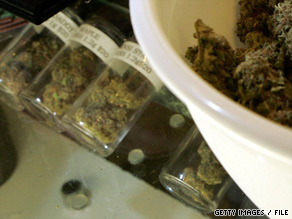
California's Prop 19 would be the most permissive marijuana law in the nation. A medical marijuana dispensary in L.A. is pictured.

California's Prop 19 would be the most permissive marijuana law in the nation. A medical marijuana dispensary in L.A. is pictured. Photo: Getty SEE ALL 29 PHOTOS

While the battle to control Congress is getting most of the pre-election ink, voters in several states will also be deciding how to handle the touchy issue of marijuana's legal status. Fourteen states already have medical marijuana laws on the books, and more are likely to vote in doctor-approved pot use this year or in 2012. (Click here to read The Week's latest coverage: "Will California's Proposition 19 pass?") Here are six states that could take a major step down the path toward decriminalization — or even legalization — on Nov. 2:

California
Passage of Proposition 19 by Golden State voters would create by far the most permissive marijuana law in the nation. The ballot measure would legalize — at the state and local level, anyway — recreational amounts of marijuana and allow local goverments to tax and regulate sales of the drug. The contentious battle over Prop 19 is creating some strange political dynamics, says NPR's Mandalit del Barco. For instance, many growers and "stoners" are opposed to the new taxes and government oversight, while some cops and mothers' groups support Prop 19 as a way to take profits out of the hands of drug dealers and Mexican cartels. None of that may matter, says Nate Silver in The New York Times, since support for the measure appears to be "going up in smoke" as the election nears. Today it stands no better than a 50-50 chance of passing.

Oregon
More than one in every 100 Oregonians already smokes marijuana legally for medical purposes, and Measure 74 would let them purchase their pot from state-licensed growers and nonprofit retailers, called dispensaries. (Under current law, card-carrying smokers have to grow their own marijuana, or designate someone to grow it for them.) The problem with the measure, says The Portland Mercury in an editorial, is it has no regulation mechanism to assure "all pot is safe and legal," as with other medicines. Oregon should learn from the mistakes in California and Colorado, "and do ours better." But Oregon has already taken "the main step" of legalizing medical marijuana, says the Albany, Ore., Democrat-Herald in an editorial, and "if something is legal to use — such as liquor and tobacco — it's not unreasonable to authorize places where it may be sold."

Arizona
Proposition 203 would allow Arizonans with a host of diseases to possess up to 2.5 ounces of pot with a doctor's recommendation. They would be allowed to buy medical marijuana from nonprofit, state-licensed dispensaries, or grow it themselves if the nearest outlet is more than 25 miles away. "Opponents worry it will bring more crime, substance abuse, and corruption to our state," says Lori Jane Gliha at ABC News 15. But with polls showing it the most popular measure on the ballot, with 54 percent support, "we'll go out on a limb and say [it] will probably pass" anyway, says Ray Stern in the Phoenix New Times.

South Dakota
Measure 13 is a do-over for South Dakota medical-marijuana proponents, after a similar measure in 2006 fell short by about 15,000 votes, or 4 percentage points. Activists "think they can get over the top this time around," says Phillip Smith in Drug War Chronicle, with restrictions carefully tailored "to win over a skeptical and conservative prairie electorate" — to wit, the proposed law limits people with specific conditions to 1 ounce and only upon the recommendation of a doctor with whom they have "bona fide relationship." But not all skeptics are convinced: "I just think it's a total scam being done by people interested in legalizing marijuana," says Yankton County, S.D., Sheriff Dave Hunhoff. "If they want to legalize marijuana ... they should just stand up and use that argument."

Vermont
The Democratic candidate for governor of the Green Mountain State, Peter Shumlin, publicly advocates the decriminalization of marijuana, says Ron Kampia in The Huffington Post. And if he beats Lt. Gov. Brian Dubie (R), who is "ultra-hostile to decriminalization," Vermont — which already has a medical-marijuana law — "has a good chance of decriminalizing the possession of marijuana," too. But Shumlin can't count on getting every pro-pot vote, says Brad Sylvester in Yahoo News, since he's also facing Liberty Union candidate Ben Mitchell, whose platform calls for making Vermont into the "Amsterdam of the U.S."

Massachusetts
In November, 73 Massachusetts towns and cities will vote on a nonbinding ballot measure instructing state lawmakers "to vote in favor of legislation that would allow the state to regulate the taxation, cultivation, and sale of marijuana to adults" — in short, to legalize pot. Although only 13 percent of the state's voters will see the ballot initiative, its sponsor, the Massachusetts Cannabis Reform Coalition, says majority approval would lay the foundation for a statewide, binding ballot measure in 2012. State voters have already approved decriminalization, says Michael Cutler in Wicked Local, and "the sky hasn't fallen." Full legalization would better limit access to the drug and raise revenue.

Friday, May 7, 2010

California Collects $100 Million In Marijuana Sales Taxes


By Steve Elliott
From http://www.tokeofthetown.com/


Photo: The Baltimore Spectator

California is collecting between $50 million and $100 million a year in sales taxes from medical marijuana, according to the California Board of Equalization, confirming an estimate previously published in an economic analysis by California NORML.

The numbers were also independently confirmed by patient advocacy group Americans for Safe Access.

The state's retail market for medical marijuana has surpassed $1 billion per year, according to California NORML estimates, with a total adult use market of $6 billion.

An initiative to legalize and tax cannabis for adult use will be on this November's ballot in the Golden State.

Marijuana opponents, led by Los Angeles County District Attorney Steve Cooley, have tried to choke off the state's lucrative medical marijuana market by claiming that all marijuana sales are illegal.

The stand stands to lose tens of millions of dollars in sales tax revenues and millions more in enforcement costs if Southern California's dispensaries are closed, according to Cal NORML Director Dale Gieringer.

"Marijuana prohibition is a losing proposition for California's taxpayers," Gieringer said. "On one hand it costs the state to arrest, prosecute, and imprison marijuana offenders, and on the other it deprives the state of valuable tax revenues."

Adult use legalization could net the state some $1.4 billion in revenues, according to California's Legislative Analyst's Office, or more than $1.2 billion by California NORML's estimate.

Thursday, March 25, 2010

Marijuana Legalization Officially Qualifies for California Ballot

From http://blogs.alternet.org


It’s official. Tax Cannabis 2010, the most far-reaching state effort ever, which would legalize the consumption of cannabis for all adults over 21 — and would finally take the industry that serves those consumers out of a legal gray area — will qualify for the November mid-term ballot later today.

The Tax Cannabis campaign gathered just under 700,000 signatures, well over the 434,000 needed to qualify for the California ballot.

For background on the initiative, read my extensive analysis of the campaign, spearheaded by Richard Lee, the pot entrepreneur behind Oaksterdam University in Oakland.

From that article, here’s a primer on what this measure would change, if it were to pass:

The measure does not actually legalize pot as much as it absolutely decriminalizes certain marijuana offenses. (Marijuana has been “decriminalized” in California since 1975, but it still can generate a fine, an arrest and a misdemeanor charge on your record.) Tax Cannabis institutes a one-ounce personal possession limit and allows for limited personal cultivation.

Interestingly, the ballot initiative refers to local control, meaning that cities and counties can decide whether to allow regulated marijuana sales at all, and if so, how that would work. Tax Cannabis allows for the personal consumption, possession and cultivation of cannabis by any adult over 21 throughout the state, but the business of it would be left to local jurisdictions. (A few people suggested Lee was inspired by his home state of Texas’ dry-county, wet-county policy regarding alcohol sales.)

Polling shows that a growing number of people here in California think legalization is the right solution to this particular segment of the drug war. A poll in April showed 56 percent support for legalization. And Tax Cannabis’ internal polling in March found 44 percent support among likely California voters in non-presidential elections. This was followed by an August internal poll that found 52 percent support by likely November 2010 voters.

These slim majorities are not ideal, but that’s why Tax Cannabis is focused on a public-education campaign, and will be targeting their message to fit the different concerns and needs of all kinds of voters across the state.

I still stand behind what I wrote back in January: This is the best chance for marijuana legalization on a state-level yet. And as 13 states have followed California in legalizing medical marijuana, other states could similarly follow it if legalizes cannabis this year. In other words, as goes California, so could go many others.

Friday, March 19, 2010

Forget Taxing Marijuana; The Real Money's In Cocaine

sign from health care protest

Different strains of medical marijuana at Coffeeshop Blue Sky in Oakland, California. (Justin Sullivan/Getty Images)

By Jacob Goldstein

A Harvard economist has estimated how much money states would raise by legalizing and taxing marijuana and cocaine.

In a podcast a while back, Harvard's Jeffrey Miron told us that his estimates for what California would bring in from taxing marijuana are much smaller than some of the numbers that are floating around out there (including a $1.4 billion estimate from state officials).

Since that interview, Miron has come out with a paper estimating, among other things, potential tax revenues from cocaine and marijuana.

It turns out the big tax money is in cocaine.

Sure, legalizing marijuana is highly unlikely and legalizing cocaine isn't even on the table in mainstream politics. Still, it's interesting to know what the numbers would be -- particularly when they're coming from a Harvard economist.

Here's a table that shows Miron's estimates for the annual tax revenues each state would get from marijuana and cocaine. (The figures are in millions; for more details, see the explanation and links after the table.)

State Marijuana Cocaine
Alabama 25.59 80.54
Alaska 6.53 16.28
Arizona 41.91 177.67
Arkansas 19.87 54.49
California 201.74 767.73
Colorado 46.97 133.74
Connecticut 22.57 72.53
Delaware 6.07 18.76
Florida 142.05 362.34
Georgia 86.75 213.96
Hawaii 10.09 21.59
Idaho 11.73 22.66
Illinois 83.98 263.93
Indiana 43.44 120.04
Iowa 18.72 45.94
Kansas 16.69 53.95
Kentucky 28.05 77.79
Louisiana 30.02 97.43
Maine 6.64 25.46
Maryland 37.68 113.79
Massachusetts 44.94 167
Michigan 69.04 174.55
Minnesota 45.43 102.31
Mississippi 19.67 41.17
Missouri 54.99 111.28
Montana 7.94 19.29
Nebraska 13.87 29.13
Nevada 13.97 53.19
New Hampshire 9.03 29.18
New Jersey 74.6 140.31
New Mexico 11.92 47.42
New York 136.81 464.05
North Carolina 87.88 191.04
North Dakota 4.02 9.54
Ohio 88.7 248.79
Oklahoma 29.23 58.23
Oregon 24.09 76.88
Pennsylvania 73.73 211.85
Rhode Island 7.75 37.12
South Carolina 26.29 79.71
South Dakota 7.28 11.96
Tennessee 39.94 146.9
Texas 270.39 483.02
Utah 16.34 53.16
Vermont 3.67 15.86
Virginia 53.35 175.63
Washington 35.76 143.55
West Virginia 8.97 36.65
Wisconsin 61.12 114.16
Wyoming 3.72 11.26
DC 4.82 25.94
Total 2,138.47 6,234.11

On top of state revenues, Miron estimates that a federal taxes would amount to $4.28 billion for marijuana and $12.47 billion for cocaine.

Miron figures taxes on the drugs would be comparable to taxes on alcohol and tobacco. His estimates for how many people in each state use marijuana and cocaine are based on a government survey. (He notes that the number of users would likely rise if the drugs were legalized, but his estimates don't account for this.) He estimates that if marijuana and cocaine were legalized, their prices would fall by 50% and 80%, respectively. The research was funded by the Criminal Justice Policy Foundation; here's the foundation's take on drug policy.

categories: Drugs

Friday, January 8, 2010

Marijuana Stores Trump Starbucks In Denver

If you want more proof that selling legal pot is a booming business, consider this statistic: Denver has more medical-marijuana shops than Starbucks Corp. locations.

Denver's City Treasurer Steve Ellington tells ABC New affiliate Channel 7 that at least 390 pot dispensaries applied for a sales-tax license recently. That compares to 208 Starbucks in the entire state of Colorado, the station reports. Denver's city council took a step toward regulating the marijuana stores last night, and the businesses are filing their tax applications.

The Denver statistic sheds light on a business that is becoming more institutionalized as local governments try to figure out ways to raise revenue. The Denver council will hold a public hearing and take a final vote Monday. Only a day later, on Tuesday, a California Assembly panel is expected to vote on a bill that would legalize pot across the state.

Denver is an example of how desperate politicians are to collect taxes on this burgeoning industry. The marijuana dispensaries are rushing to get their sales-tax applications filed to beat a deadline as part of a new law being considered. The change in law: No marijuana store can be within 1,000 feet of schools or child-care centers unless you get your tax application in before a deadline.

Friday, November 6, 2009

Dutch 'among lowest cannabis users'

THE Dutch are among the lowest users of marijuana or cannabis in Europe despite the Netherlands' well-known tolerance of the drug, according to a regional study.

Among adults in the Netherlands, 5.4 per cent used cannabis, compared with the European average of 6.8 per cent, according to an annual report by the European Monitoring Centre for Drugs and Drug Addiction, using latest available figures.

A higher percentage of adults in Italy, Spain, the Czech Republic and France took cannabis last year, the EU agency said, with the highest being Italy at 14.6 per cent. Usage in Italy used to be among the lowest at below 10 per cent a decade ago.

Countries with the lowest usage rates, according to the Lisbon-based agency, were Romania, Malta, Greece and Bulgaria.

Cannabis use in Europe rose steadily during the 90s and earlier this decade, but has recently stabilised and is beginning to show signs of decline, the agency said, owing to several national campaigns to curb and treat use of the drug.

"Data from general population and school surveys point to a stabilising or even decreasing situation," the report said.

The policy on soft drugs in the Netherlands, one of the most liberal in Europe, allows for the sale of marijuana at "coffee shops", which the Dutch have allowed to operate for decades, and possession of less than 5 grams (0.18 oz).

Nearly a fifth of the 228 coffee shops in the Dutch capital of Amsterdam, a popular draw for tourists, are scheduled to be shut down because they are too close to schools.

Thursday, October 29, 2009

Chronic City: L.A.'s Marijuana Dispensary Ban Could Cost City Millions


Los Angeles' proposed medical marijuana ordinance -- which would ban the sale of pot at dispensaries -- could cost the city $36 million to $74 million in lost sales tax, according to a marijuana advocacy group.

800px-Medical-marijuana-shop.crop.jpg
Photo by lavocado, Wikimedia Commons
Open for business on L.A.'s Ventura Boulevard... but for how long?
Dale Gieringer, coordinator for the California chapter of the National Organization for the Reform of Marijuana Laws (NORML), said the proposed ordinance, supported by L.A. District Attorney Steve Cooley, would "effectively shut down the city's marijuana distribution system by banning all sales of marijuana and sharply curtailing collectives' ability to grow and obtain medicine."

No other city or county in California has regulated collectives while banning sales, according to NORML.

Under the proposed ordinance, also prominently backed by L.A. City Attorney Carmen Trutanich, only nonprofit medical marijuana collectives -- groups of qualified patients with physicians' recommendations and their primary caregivers -- would be allowed to cultivate the herb to relieve the symptoms of serious illnesses.

dalegeringer.jpg
NORML.org
Dr. Dale Gieringer, California NORML: L.A. dispensary ban "Ill-conceived"
​"Los Angeles would be foolish to pass this unworkable, ill-conceived ordinance," Gieringer said. "Not only would it cost $36 to $74 million in lost sales taxes and thousands of jobs, but the city can expect serious legal challenges in the courts. The city would be better advised to adopt a system of licensed regulation and taxes, which has proven successful elsewhere in the state."

In Oakland, considered by many a statewide model for the orderly regulation of medical marijuana dispensaries, voters recently passed, with 80 percent of the vote, a special tax on dispensary sales that is expected to put millions of dollars into city coffers. Cities that NORML lauds as having "successful dispensary regulations" also include San Francisco and West Hollywood. According to the pro-pot organization, these city governments are already collecting millions in taxes and license fees from dispensaries.

A survey by California NORML found the dispensaries pay an average of $82,000 in sales tax. At this rate, some $74 million per year in sales tax would be generated if Los Angeles has 900 dispensaries.

According to NORML, other cities and counties that regulate dispensaries allow them to sell to their members as nonprofit collectives as long as they pay sales tax. NORML estimates that there are 100,000 to 200,000 medical marijuana patients in the Los Angeles area, generating between $400 million and $800 million annually in retail sales.

Under the proposed ordinance, which has come under heavy criticism from the medical marijuana community, over-the-counter sales of pot would be outlawed. The collectives would have to be at least 1,000 feet from other collectives, schools, playgrounds, child care facilities, religious institutions, public libraries, public parks, hospitals, and rehab centers.

The normal committee hearing process is being bypassed so that the L.A. city council can fast-track the vote on the hastily written measure as soon as Nov. 3.

There are an estimated 800 to 1,000 marijuana dispensaries in L.A. County. A judge recently ruled the city's temporary moratorium banning new dispensaries was invalid.

NORML said the proposed ordinance would hamper the distribution of medical marijuana in Los Angeles by limiting collectives to a single, 100-plant garden, meaning each dispensary could only serve a handful of members. This would require tens of thousands of collectives and growing operations throughout the city, the pro-pot organization said. According to the group, nothing in state law authorizes such limitations. Most collectives serve hundreds or thousands of members and draw from many gardens.

NORML also objects to a provision in the ordinance that would ban marijuana extracts and edibles, which enable many patients to ingest the herb without smoking it. Oral preparations are especially important for patients who want to avoid the possible respiratory hazards of smoking.

Patient advocates are expected to sue if the restrictive proposed ordinance is passed, on the grounds that it would limit patients' rights to collectively cultivate and obtain medicine, as guaranteed under Proposition 215 and Senate Bill 420.

Last week, a Mason-Dixon poll found that 77 percent of L.A. residents favor regulating marijuana dispensaries rather than banning them.

Thursday, July 23, 2009

Oakland, California, passes landmark marijuana tax

  • Story Highlights
  • 80% of voters choose to impose tax on Oakland's medical marijuana facilities
  • Oakland, California, becomes first U.S. city to impose such a tax
  • Cannabis club leader says he supported effort; he'll owe about $350,000 next year
  • People opposed to medical marijuana facilities say tax sends wrong message

OAKLAND, California (CNN) -- Oakland's bid to become the first U.S. city to tax proceeds on medical marijuana passed Tuesday by a landslide vote.

About 80 percent of people voting in the Oakland election approved the new medical marijuana tax.

About 80 percent of people voting in the Oakland election approved the new medical marijuana tax.

About 80 percent of voters chose to impose the tax on Oakland's medical marijuana facilities, according to the Alameda County Registrar of Voters.

Some celebrated the news at Oaksterdam University by hand-rolling large marijuana cigarettes or stuffing cannabis into pipes. The school trains students for work in the medical marijuana industry.

"It is important because the city of Oakland is facing a massive deficit like many jurisdictions in California," said Steve DeAngelo, a leader of one of the city's cannabis clubs. "And we decided to step up to the plate and make a contribution to the city in a time of need."

DeAngelo, one of the people who led the effort to get the tax approved, said his business will now have to pay more than $350,000 from the new tax next year. Video Watch report from CNN's Dan Simon »

Oakland's City Council was also behind the move.

"Given that the medical cannabis dispensaries are something that was legalized in California, why not have revenue from it?" said councilwoman Rebecca Kaplan.

There was no formal opposition to the effort, but some drug fighters say the tax sends the wrong message.

"The taxation of a federally unlawful drug is just not something that the community should accept," said Paul Chabot of the Coalition for a Drug Free California. "With the state in dire straits in finances and the country looking for ways to pay down debt, looking at illegal drugs is the absolute wrong thing to do."

The measure, passed in special mail-in election Tuesday, imposes a 1.8 percent gross receipts tax on the four licensed medical cannabis dispensaries in Oakland.

These facilities would have to pay about $18 in taxes for every 1,000 in marijuana sales.

Wednesday, July 22, 2009

Chronic City: To Tax Pot, Or Not? Oakland Votes Tuesday

562549310_c8ed42f1d6.jpg
Photo: chron.ron
The color of money
Mail-in voting closes Tuesday on Measure F, a new ordinance in Oakland which would impose a special tax on sales of medical marijuana in the city's dispensaries. The measure would make Oakland the first city in the United States to have a business tax category for marijuana merchants.

Dispensaries have already been paying a rate of $1.20 per $1,000 of gross receipts. Measure F would create a separate category for marijuana sellers, at a rate of $18 per $1,000 of sales. Sales taxes is already assessed on purchases.

Many activists see the proposed ordinance as an incremental step toward complete legalization. After all, once government bean counters associate the marijuana business with a positive revenue stream, they're likely going to think in much more favorable terms about the herb -- and be a lot less inclined to crack down on dispensaries.

The ordinance would create a new business tax category in Oakland for legal marijuana merchants (of which Oakland currently has only four), and would likely bring the cash-strapped city hundreds of thousands of dollars a year in additional revenue. Oakland City Auditor Courtney Ruby estimates initial revenues from the proposed ordinance at $294,000 annually.

Councilwoman Rebecca Kaplan said she believes the actual take could be closer to $1 million. The city's four dispensaries report that they took in $19.7 million in the last fiscal year.

"I don't think it's a turning point... but it starts the ball rolling," Oakland City Attorney John Russo told the San Francisco Chronicle. "As cities start taxing pot and making money, other government entities are going to start asking: 'Why aren't we getting in on this revenue stream?'"

Local marijuana dispensaries (along with community groups and even local police) almost unanimously support the new tax, seeing it as a way to further legitimize their businesses. And it's not hard to understand their desire to be seen as legitimate, in a city that not so long ago was on the front lines of the war between federal and state marijuana laws. In 2001, the U.S. Supreme Court upheld the DEA's shutdown of an Oakland dispensary, finding no "medical necessity" exemptions in federal pot laws.

The issue of marijuana as an law enforcement concern for the Oakland Police Department was clarified by 2004's Measure Z, which instructed city cops to make marijuana laws their lowest priority.

Los Angeles Looking North

It's unlikely that anyone is watching the outcome of Tuesday's vote more closely than members of the Los Angeles City Council. Last week, Councilwoman Janice Hahn called for L.A. to get its share of money from the city's pot dispensaries.

Hahn suggested during last week's city council meeting that a city tax on medical marijuana could provide millions of dollars for Los Angeles, which, like Oakland, is in dire straits financially. Between 400 and 800 pot shops (according to whose estimate you believe) operate in Los Angeles; none are currently taxed. Hahn argues that marijuana should be taxed just like any other commodity.

Pundits believe a pot tax would be a slam-dunk politically, according to the L.A. Weekly. "Although Californians, particularly Angelenos, have repeatedly shown their tolerance for individual marijuana use, I would bet most of us would view such a tariff as just another sin tax -- the kind voters almost routinely pass on cigarettes and liquor," writes Steven Mikulan.

Sacramento's Watching, Too...

You can believe that if Oakland -- and Los Angeles -- start raking in piles of cash from marijuana dispensaries, state legislators will be taking notes.

As reported in this space, Assemblyman Tom Ammiano (D-San Francisco) earlier this year proposed a measure that would legalize and regulate marijuana sales to adults in California.

Particularly in view of the state's economic woes, the proposal has attracted serious interest, especially since last week's report that indicates a marijuana tax could fatten state coffers by as much as $1.4 billion a year.

Opposing View: Unfairly Taxing Patients?

Occasionally lost in the excitement of the rapidly-changing situation on the ground is the fact that the proposed city taxes on marijuana might be seen as unfairly penalizing the sick and dying, since they'll be assessed solely on medical users of the herb.

"Ammiano's [state-wide] bill specifically exempts medical patients from the tax," medical marijuana patient/activist J. Craig Canada told the SF Weekly. "Oakland and Los Angeles, on the other hand, are proposing taking money the sick and dying spend for medicine and giving it to politicians, to balance the budget."

Canada, of Santa Cruz, says he's been a medical marijuana patient since 1995, when he became a member of the San Francisco Cannabis Buyers Club a year before Proposition 215 legalized medical marijuana statewide. In 2004, he became the first person in San Bernardino County to have felony cultivation of marijuana charges dismissed on medical grounds.

"It's a regressive tax," Canada said. "The people who use the most marijuana and need the highest potency are the sickest, and probably the poorest. Medicine should not be taxed."


Tuesday, July 14, 2009

He's Not High: Inside Barney Frank's Plan to Legalize Marijuana

Buzz up!

While Congress debates health care, handles the economic downturn, and the quagmire in Afghanistan, Congressman Barney Frank is eyeing America's draconian pot policies. Read our exclusive interview.

PLUS: Why Obama really might decriminalize weed, and what the Bush team knew about legalization

By John H. Richardson

[more from this author]


congressman barney frank

To my shame, I started my interview with Congressman Barney Frank about the legalization of marijuana by apologizing to my subject. "I know you guys have a lot on your plate these days, so I'm sorry to be calling you about something kind of trivial..."

Then I did a rapid midcourse correction. "But it's not trivial, because people go to jail over it."

"That's exactly right," Frank said.

We were talking about the Personal Use of Marijuana by Responsible Adults Act of 2009, Frank's latest attempt to bring sanity to the federal marijuana laws. Currently, pot is classified as a Schedule I Controlled Dangerous Substance under federal law, which makes it worse than morphine, cocaine, amphetamine, and PCP. Possession of a single joint carries a penalty of $1,000 and a year in prison – a charge faced by about 800,000 American citizens every year. This is the government whose judgment on war and economics we are supposed to respect.

So I started the interview over.

ESQUIRE: Could you tell me why you're doing it at this time? Everybody says you guys have got so much to handle right now.

BARNEY FRANK: Announcing that the government should mind its own business on marijuana is really not that hard. There's not a lot of complexity here. We should stop treating people as criminals because they smoke marijuana. The problem is the political will.

ESQ: That's my second question. There's already been a lot of change in the country. Thirteen states have decriminalized pot. What's holding up Congress?

BF: This is a case where there's cultural lag on the part of my colleagues. If you ask them privately, they don't think it's a terrible thing. But they're afraid of being portrayed as soft on drugs. And by the way, the argument is, nobody ever gets arrested for it. But we have this outrageous case in New York where a cop jammed a baton up a guy's ass when he caught him smoking marijuana.

ESQ: You're kidding.

BF: Actually, I've just been corrected by my partner – it was a radio he jammed up the guy's ass, not his baton.

ESQ: Small radio, I hope.

BF: By the way, the bill is bi-partisan: I've got two Democrats and two Republicans.

ESQ: Who are the Republicans?

BF: Ron Paul. And Dana Rohrabacher from California.

ESQ: Isn't Rohrabacher pretty hard-right?

BF: He's a very conservative guy, but with a libertarian streak.

ESQ: That libertarian streak will help you out once in a while. And who's against it?

BF: Well, Mark Souder from Indiana, who's very much a proponent of the drug war.

ESQ: When you talk to Souder about it, what does he say?

BF: You don't waste your time on people with whom you completely disagree.

ESQ: Okay.

BF: Here's one thing I would say – there's a great intellectual flaw at work here. People say, "Oh, you want the government to approve of smoking marijuana." And the answer is, no, there should be a small number of things that the government makes illegal, but the great bulk of human activity ought to be none of the government's business. People can make their own choices.

ESQ: What about the "public-square" argument that we need to keep prostitutes off the streets and pot-smokers on the run in order to promote a higher level of morality and civic order?

BF: One, I don't think it's immoral to smoke cigarettes or drink alcohol, even though they may make you sick. Morality to me is the way you treat other people, not the way you treat yourself. John Stuart Mill's On Liberty makes a great deal of sense in that regard. I wish more people read him.

ESQ: My father forced me to read On Liberty when I was fourteen years old. I still haven't recovered.

BF: He deals very thoughtfully with some of the objections.

ESQ: Then let me ask you from the other side: Why is the bill so modest? You explicitly say you're not going to overturn state laws.

BF: Because I think it's important, when you're confronting political opinions this way, to make it easier for people. This isn't for drug dealers. Although I do think there's a logic that once you've allowed people to smoke, you're going to go beyond that.

ESQ: So how far do you really want to go? Decriminalize completely? Tax it, like they're talking about out in California?

BF: I don't think that's a debate I should get into right now.

ESQ: So you want to be a cautious centrist, waiting for the country to come around?

BF: [pause] You think this is centrist?

ESQ: [laughs] Okay, sorry.

BF: I must say, I don't have a lot of sympathy with people on the left who say, "Oh, I'm not going to settle for some small step, I'm going to take the big step." I'm doing something I think could be passable. I believe the results of modest beginnings will encourage people to go further. And if the people who disagree with me are right, it won't go further.

ESQ: Realistically, do you think it's going to pass?

BF: Not this year, no.

ESQ: How long do you think it will take?

BF: There's no point in my guessing. Why would I want to guess? We'll have a rational discussion, and we'll see where it goes from there.


While We're Here, One Final Hit on the Topic

Meanwhile, in the wacky world of Republicans who love liberty almost as much as they love prisons, an Illinois congressman named Mark Kirk has proposed a competing law to make selling "this new potent marijuana" punishable by $1 million in fines and 25 years in prison. Apparently Kirk is talking about something called "kush," which I cannot personally evaluate since I am A) not currently a pot-smoker, and B) too crippled by college bills to afford anything that costs $600 an ounce. But for those old-fashioned reality-based types who care about scientific evidence, here's what the guys in white lab coats say.


So, Which One Is Goliath Again?


Jane Hamsher of MSNBC and Jillian Brandes go toe-to-toe last week about health-care reform.

Speaking of reform, last week MSNBC reported the shocking statistic that health-care reformers have spent $15 million on ads, while the enemies of reform have spent a mere $4 million. "It's a David and Goliath situation," whined a right-wing shill named Jillian Bandes.

Well, there are statistics and there are statistics. Behind the scenes, where it really matters, hospitals, doctors, and Big Pharma are spending $1.4 million a day to kill reform. They've hired three-hundred-and-fifty former members of congress and congressional staffers as temporary lobbyists. "Even in a city where lobbying is a part of life, the scale of the effort has drawn attention," the Washington Post reports.

David and Goliath, indeed.


You Like Dislike Me, You Really Like Dislike Me!

Loving a vigorous debate and personal abuse as I do, I have come to rely on my many right-wing critics for my weekly dose of bile. So it was very exciting to open my Web browser yesterday and find myself attacked from the left! My crime was comparing the 19th-century abolitionist John Brown to the "right to life" assassin Scott Roeder. Also, lamenting the 620,000 people who died in the Civil War. According to historian Louis DiCario, that makes me a racist. "What Richardson actually seems to be asking is: "Was ending the enslavement of black people worth a half-million white people's lives?" And I was wrong to call Brown a terrorist too. Although he dragged a farmer and his sons from their beds and watched as his raiding party hacked them to death with swords, he was actually a "counter-terrorist." Check it out!

In DiCario's honor (and Barney Frank's and John Stuart Mill's and all the victims of righteous causes), here's the quote of the day: "There is in most of us an unreconstructed Southerner who will not accept domination as well as a benevolent despot who wants to mold others for their own good, to assemble them in such as way as to produce a comprehensive unit which will satisfy our own ambition by realizing some vision of our own; and the conflict between these two tendencies – which on a larger scale gave rise to the Civil War – may also break the harmony of families and cause a fissure in the individual." – Edmund Wilson, Patriotic Gore

Questions? Comments? Concerns? Click here to e-mail John H. Richardson about his weekly political column at Esquire.com.

Friday, July 10, 2009

High times in the Himalayas

The people of Malana are poor, illiterate and grow some of the world's best pot. That may be about to change.

By Joel Elliott — Special to GlobalPost

Click here for photo gallery

MALANA, HIMACHAL PRADESH, India — Half a dozen men, all in their 20s, began to stir as the first rays of sunlight broke over the snow-capped Himalayan peaks and warmed the interior of their guest house. They had been smoking hashish and drinking whiskey until the early morning hours.

Within the first hour of daylight, they lit up and began smoking again. They would not stir from their spots until sleep overtook them, a cycle they had established over the past couple of weeks.

This is the vacation many drug tourists experience in Malana, an ancient village of 1,600 known internationally for its "Malana Cream," coveted as some of the best hashish in the world. Most villagers can speak just enough English to facilitate a hashish sale.

“Do you want charas [hashish]?” one man asked a visitor.
“No charas, no thank you.”
“Charas? Malana Cream? You want.”
“No, thank you.”

He looked confused.

The mostly illiterate residents of Malana make their living from cultivating cannabis, or "charas," and have almost no other industry. Decades of mafia domination and a desire for quick cash has reduced a village with a rich history spanning thousands of years to little more than a drug production facility.

This is something O.P. Sharma would like to change. Sharma, once a farmer, then a narcotics officer, and now a freelancing anti-drugs activist, seeks not merely to eradicate cannabis from the area, but to provide the villagers with alternative cash crops as well.

“For the last three decades or more these people have been cultivating cannabis almost exclusively,” he said. “These people have never grown anything which is legal.”

News of the extent of Himachal Pradesh's drug cultivation broke in 2006 when Iram Mirza, a young journalist with CNN's local affiliate, went on an undercover reporting trip through the region. She found that thousands upon thousands of acres of unclaimed forest land in the mountains were being used for cannabis cultivation. European and Israeli drug mafias pulled all of the strings.

Similarly, a recent tour of the mountains and ridges surrounding Malana revealed scores of terraced fields full of cannabis.

“The cops come and raid with 100, 200, 300 men with swords, cutting down charas wherever they see it, but it's only once in a blue moon, and they never find the good plants,” said a drug user named Sumit (who asked that his real name not be used for fear of arrest).

Despite the fact that the hashish they cultivate ultimately becomes some of the most prized in the world, people in Malana live in squalor. Raw sewage flows across paths in the middle of town. Health and education facilities are poor. Many villagers suffer from eye and skin infections. Drug use begins at a very young age.

One reason for the village's lack of infrastructure is that the villagers receive only a tiny portion of the returns from their crops. Buy a tola, or 10 grams, of the best hashish in Malana, and you'll pay $30. But once that same hashish makes its way to Delhi, the price increases threefold, while the rate in Goa is 10 times the original sale price.

“In Amsterdam, it's like a vintage car,” Sumit said. “Dealers can name their price.”

In this system, the transporters and dealers, not the cultivators, make most of the money. Sharma hopes his plan will show the Malana villagers it is possible to make a decent living growing something other than cannabis. For the first step of the plan, Sharma secured a $3,900 grant from Sai Engineering Foundation Shimla to purchase almost 6,000 pounds of sweet peas and beans, which he gave to 225 of Malana's villagers to be planted.

Sharma figures a husband and wife farming team in Malana can make about $935 per year growing beans and sweet peas, versus what he estimates as a $1,000-per-year return on cannabis cultivation. He hopes the fact that his alternative crops are legal will persuade villagers to turn to them.

It won't be easy. Mirza is betting 60:40 odds — against Sharma.

“It's a herculean task,” she said. “You see, cannabis is such an intrinsic part of their culture. It's just growing out there; you can't control it. I saw fields — entire mountains covered with it — 3,000 acres of land under cultivation. Why would an average farmer go for an alternative crop?”

Only this summer's harvest will reveal the project's success.

Tuesday, June 2, 2009

Court challenge aims to legalize all cannabis use

Health Canada has faced court challenges over medical marijuana eight times and has lost all of them. In each case the decision came because the court felt regulations were too restrictive for those seeking legal marijuanaMario Anzuoni/Reuters Health Canada has faced court challenges over medical marijuana eight times and has lost all of them. In each case the decision came because the court felt regulations were too restrictive for those seeking legal marijuana

Advocates say previous rule a 'mockery'

Shannon Kari, National Post Published: Monday, June 01, 2009

Medical marijuana advocates are planning a court challenge aimed at legalizing all cannabis use, in response to the latest restrictions announced by Health Canada.

The federal government announced last week that it would allow designated producers to grow marijuana for as many as two medical users, instead of a maximum of one, permitted under the old regulations.

The previous rules were ruled unconstitutional by a Federal Court of Canada judge in January, 2008, because they did not provide for a sufficient legal supply of cannabis for medical users without having to use the black market.

Health Canada appealed unsuccessfully to the Federal Court of Appeal and Supreme Court, which refused in April to hear the case.

It was the eighth time in the past decade that Health Canada has lost in court trying to uphold its medical marijuana policies and regulations, each time over restrictions on supply.

The federal government's decision to allow producers to grow for no more than two users is a "mockery" of the courts, said lawyer Ron Marzel, who was part of the successful Federal Court challenge to the previous regulations.

The most recent restrictions for medical producers that were struck down were virtually identical to ones that were found to be previously unconstitutional by the Ontario Court of Appeal. The rules "create an alliance between the government and the black market," to supply "the necessary product" wrote the appeal court in October, 2003.

One option for medical users is to go back to the Federal Court to ask it to find that the two-to-one ratio is also invalid.

However, the response from Health Canada would likely be to start another round of appeals in court, observed Mr. Marzel.

"It is time for the vicious cycle to end. It means we have to take it to the next level, to show the government it cannot thumb its nose at our courts," said Mr. Marzel.

The lawyer explained that he is organizing a court challenge this summer on behalf of a number of people in Ontario facing marijuana trafficking charges, and has asked that all charges be dismissed.

If he is successful, it would effectively mean that there is no prohibition on possessing or producing marijuana, for medical or recreational use.

"This is the only way. The courts have repeatedly given the government time to come up with a workable solution. They didn't do it. Health Canada has brought this upon itself," suggested Mr. Marzel.

For several months in Ontario in 2003 there was no valid prohibition against simple possession of marijuana, as a result of a Superior Court decision related to the flaws in the medical marijuana regulations.

Similar arguments will be made by Mr. Marzel in asking a court to strike down all prohibitions, unless Health Canada enacts regulations that allow for a legitimate supply for medical users.

skari@nationalpost.com