Zazzle Shop

Screen printing

Thursday, August 5, 2010

The 20 Worst Construction Fails (PICS)

heavy.com — Construction is hard, and failing at it is hilarious.

train track balcony construction fail

The Johnsons loved having coffee on their new balcony. On the first morning at least.

House with a tree piercing construction fail

Unfortunately, Flordia law makes it illegal to disturb a palm tree in any way.

Click here for the Full Gallery: http://www.heavy.com/comedy/2010/08/the-20-worst-construction-fails/


Head Like a Hole Meaning

From: http://www.shmoop.com/

How deep is your love for this song? Go deeper.
Nine Inch Nails has to be one of the modern-day recording industry's more unlikely multiplatinum success stories. Nine Inch Nails isn't really a band at all; it's really just a vehicle for the abrasive musical genius of Trent Reznor, who writes all NIN material and typically performs all instrumentation on NIN tracks. (For live shows, obviously, Reznor has to bring along some other musicians since he can't play everything at once.) So why should it be so surprising that NIN has sold more than 20 million records worldwide since its 1989 debut? Well, for one, when it all started Reznor was working as a janitor in a Cleveland recording studio, stealing unused studio time to lay down his musical vision while no paying customers were using the equipment. And that musical vision itself isn't quite what you'd usually expect for a bestselling pop artist; Reznor's music is deliberately challenging, if not even unpleasant, to listen to. And finally, Reznor hates the recording industry itself and has spent much of the last two decades feuding with his own record labels. Not exactly the usual recipe for selling tens of millions of albums, perhaps, but hey, somehow it worked.

And it really started working with "Head Like A Hole," the second single off NIN's debut album, Pretty Hate Machine (1989). The song wasn't dissimilar from the album's first single, "Down In It" (which was also the first song Reznor ever wrote). Both songs combined a drum-machine dance beat with raw vocals, layered sampling, and a generally dark mood. But "Head Like A Hole" was probably the more successful piece, more fully realizing Reznor's dark vision. The song remains a fan favorite staple of NIN live sets today, fully two decades after its first release. Some have even called it an anthem, the industrial-dance equivalent of Nirvana's groundbreaking grunge staple "Smells Like Teen Spirit," which emerged about the same time and plumbed similar themes of alienation and sexualized angst.

Thrasher magazine captured well Reznor's genius in describing Pretty Hate Machine as "the clammy warmth of psychosexual angst set against the detached cold of coarse rhythmic aggression. NIN is an entrancing juxtaposition of imagery and energy built on a foundation of intermingled repulsion and desire." Songs like "Head Like A Hole" offer an intoxicating blend of attraction and repulsion, heat and cold, passion and detachment, agony and alienation. "Head Like A Hole" is, like "Teen Spirit," a song for the disillusioned. With its lyrical tirade against those greedy ones who lust after wealth as if it were "God Money," becoming sucked into its seductive wickedness, this song is told from a non-mainstream American point of view. This is a song that people who'd reject the dominant socio-economic ideologies of the Age of Reagan. At the same time, it's also a song of more carnal and perhaps even deviant passions; suggestive lines like "nail me up against the wall" were carnal enough to help turn Trent Reznor into a sexual icon of the goth world in the '90s.

The binaries established in the lyrics are echoed in the way the music plays against itself. Trent Reznor himself insightfully described Pretty Hate Machine as an album "about juxtaposing human imperfections against very rigid, sterile, cold arrangements. You can't just have icy vocals over icy music. If the music is very precise, make a vocal tape that's less perfect, so you've got this meshing of man versus machine." Clearly we've got an artist who knows what he's doing here. How does "man versus machine" work in context of the meaning of the song, its attractiveness as an "anthem," with regard to the music itself?

You do not have to be a musicologist to make some observations about the music and the vocals. The music is, as Reznor said, very precise. With most instruments synthesized electronically, this is machine-cut precision, if you will, like a finely crafted watch. Then there's the looping of various samples, which also feels precise and mechanical. The vocals, however, are very much the opposite. Reznor said that they were imperfect, and as a result he sounds very emotional and honest. The opposition of cold music and hot vocals echoes the lyrical theme of opposition between righteous "us" versus the greedy "thems." The bloated, distorted, robotic, yet sexual grind of the music contributes to the sense of what God Money is all about, while Reznor's single-take vocals ring out as a lone voice in angry opposition. (This could almost be the soundtrack to Ridley Scott's famous "Big Brother" Apple TV commercial.) Indeed, Reznor sings as if he were one of the bruised upon whose backs God Money and his hedonistic followers carelessly dance. And there is power in that; Reznor's anger and imperfection translates into a charged, energetic honesty that is, frankly, inspiring.

Wednesday, August 4, 2010

Hands On with the BlackBerry Torch 9800

By: Sascha Segan

From: http://www.pcmag.com/

The BlackBerry Torch 9800 for AT&T isn't all-new and all-different, but it's new and different enough.

On Tuesday, Research in Motion (RIM) announced the company's first slider-style BlackBerry, the Torch 9800, which is also the first BlackBerry with both a touch screen and hard keyboard, and the first device to run the new OS 6. We received a bit of hands-on time with the new phone.

The Torch feels and looks very much like a BlackBerry, with the proper BlackBerry Bold-style arrangements of plastic, metal and glass; there are also BlackBerry fonts on the keys and the now-standard BlackBerry trackpad. Like a good BlackBerry, it feels rock-solid and like a premium device in the hand.

But of course it also has that touch screen. The Torch's 3.2-inch, 360-by-480 screen is a standard capacitive LCD touch screen, not that weird "click-screen" from the BlackBerry Storm that RIM seems to have finally given up on. The screen is bright and sharp, but it's obviously behind the competition in terms of resolution.

The phone's sliding mechanism feels tight and solid; RIM says it's been rated for 150,000 slides. The QWERTY keyboard, on the other hand, feels tighter and flatter than previous BlackBerry keyboards.

The new BlackBerry 6 OS adds touch to the interface mix, but you can still navigate with the trackpad or QWERTY if you prefer. Applications now appear in a pop-up drawer - a little like on Android - with swipeable panes that take you to "All," Favorites," "Media" or "Downloads." There's a little bit of a delay when swiping, which I found a bit disconcerting.

I was very happy to see universal search here – just start typing a word and results pop up from contacts, email, programs, and media files. That's quite slick.

According to RIM, the new WebKit-based Web browser speeds up data transfers by compressing data two to three times, while still providing the kind of fidelity you see on the iPhone and Android platforms. That should, in part, help make up for the phone running at HSPA 3.6 speeds rather than HSPA 7.2, and it should let AT&T users get more Web pages out of their $15/month, 200-MB data plans.

I haven't comprehensively tested the speed, but it displayed Expedia.com with great fidelity. Unfortunately, there's no way to change the user agent to pretend to be a desktop browser, which means lots of sites (such as ours) just show dull WAP pages.

RIM appears to have totally rewritten its media apps. There's a new Desktop Manager coming with BlackBerry 6, and a Social Feeds app that combines Twitter, Facebook, and various instant messaging conversations.

More specs: the Torch has a 5-megapixel camera with VGA video recording, Bluetooth 2.1, 512 Mbytes of program memory, 4 Gbytes of built-in storage, and 802.11n Wi-Fi. As is usual for BlackBerrys, these aren't super-duper, top-of-the-line specs. Rather, the BlackBerry experience is about providing solid reliability.

BlackBerry 6 is exclusive to the Torch for now, but it may come to other existing BlackBerries. The Torch has the same 624-MHz Marvell processor and screen resolution as the existing BlackBerry Bold, so there aren't any hardware hurdles to get the new version onto higher-end existing phones.

The BlackBerry Torch is an AT&T exclusive, though RIM execs I spoke to said they would like to turn this form factor into a platform. That means if AT&T's Torch is successful, they may build versions for other carriers.

You can look at the BlackBerry Torch two ways. If you live in BlackBerry World, it's obviously a big step forwards. But on AT&T, it's competing against the Samsung Captivate and iPhone 4, with their gigahertz processors, "retina" screens, and thousands upon thousands of apps. Can the Torch compete with the new round of super-phones? We'll have a full review of the BlackBerry Torch soon.

Gamerator: a Video Game Cabinet with bonus Kegerator

From: http://www.toplessrobot.com/

gamerator1.jpg
​Behold the Gamerator. It's one of those home arcade cabinets that I've always wanted. It has 85 classic arcade games on it, which isn't a ton but it also comes with a Gametap Gamefly subscription so you can play all those games as well. It has joysticks and buttons and a trackball and yadda yadda yadda. So why am I so excited about the Gamerator when these sorts of things have been available for years?
gamerator3.jpg
​
BECAUSE IT'S ALSO A KEGERATOR. This arcade cabinet also houses "a refrigerated interior capable of holding a pony keg of domestic beer." Without fear of hyperbole, I can say AAAAA AAAAAAAAAAAA AAAAAAAAAAA AAAAAAAAAAAAAA AAAAAAAAAAAAAAA AAAAA AAAAAAA THIS IS THE GREATEST THING IN THE HISTORY OF EVER. Infinite thanks to Vaderfan70 for the tip.keg

Hidden Tunnels May Hide Tombs Under Ancient Ruins

| Associated Press

TEOTIHUACAN, Mexico -- A long-sealed tunnel has been found under the ruins of Teotihuacan -- and chambers that seem to branch off it may hold the tombs of some of the ancient city's early rulers, archaeologists said Tuesday.

Experts say a tomb discovery would be significant because the social structure of Teotihuacan remains a mystery after nearly 100 years of archaeological exploration at the site, which is best known for the towering Pyramids of the Moon and the Sun.

No depiction of a ruler, or the tomb of a monarch, has ever been found, setting the metropolis apart from other pre-Hispanic cultures that deified their rulers.

See pictures of the excavation

Archaeologists had suspected the hidden tunnel was there after a heavy rainstorm in 2003 caused the ground to sink at the foot of the Temple of Quetzacoatl, in the central ceremonial area of the ruins just north of Mexico City.

Starting last year, they began digging, and after eight months of excavation, they reached the roof of the tunnel last month, 40 feet (12 meters) below the surface.

They lowered a small camera into the 12-foot-wide (4-meter) corridor, which had been carved out of the rock early in Teotihuacan's history, and got the first glimpse of the space that they say was intentionally closed off between A.D. 200 and 250.

"I think the tunnel was the central element, the main element around which the rest of the ceremonial center was built," archaeologist Sergio Gomez said. "This was the most sacred place." The camera showed the tunnel appearing to extend about 37 yards (meters) before it is blocked by a wall or mound.


Ground-penetrating scanner images found the tunnel extends beyond the blockage and ends in a large chamber that measures 10 yard (meters) on each side, lying almost directly beneath the temple. Two smaller chambers appear on either side of the rough-hewn corridor.

All the signs point to it being a ruler's tomb, Gomez said, including the rich offerings tossed into the tunnel at the moment it was closed up: almost 50,000 objects of jade, stone, shell and pottery, including ceramic beakers of a kind never found before at the site.

"Up to now, every archaeologist who has worked in Teotihuacan has tried to find the tombs of the rulers," Gomez said.

"There is a high possibility that in this place, in the central chamber, we can find the remains of those who ruled Teotihuacan," he added.

The complex of pyramids

, plazas, temples and avenues was once the center of a city of more than 100,000 inhabitants and may have been the largest and most influential city in pre-Hispanic North America at the time.

Nearly 2,500 years after the city was founded -- and about 2,100 years after the Teotihuacan culture began to flourish there -- the identity of its rulers remains a mystery.

The city was built by a relatively little-known culture that reached its height between 100 B.C. and A.D. 750. It was abandoned by the time the Aztecs arrived in the area in the 1300s and gave it the name "Teotihuacan," which means "the place where men become gods."

Luis Barba, of the Anthropological Research Institute of Mexico's National Autonomous University, said that because there are no images, names or other references to rulers among Teotihuacan's rich murals and stone carvings, some experts suggest the city might have had a shared leadership, with rulers alternating between its four precincts.

"People have looked for these rulers for many years," Barba said. "Perhaps they will be found now. There is nothing to rule it out or make it impossible, but at this point, we have nothing." Gomez said it will take at least two more months of digging before archaeologists can actually enter the tunnel.

Unsinkable Gecko

from:http://blogs.discovery.com/

Being small sometimes has its advantages. The Brazilian pygmy gecko, which is so tiny insects dwarf it, escapes the notice of many predators and can hide in the minutest of spaces. Not only is it unusually small, it has some other very odd and extremely cool adaptations.

To see these adaptations in action, check out this BBC video clip, narrated by Sir David Attenborough (and raise your hand if you want do be David Attenborough when you grow up).


Evolution of Video Games

From: http://kokugamer.com/2010/08/03/info-graph-evolution-of-gaming/
Online School
Source [
Online Schools.org]

Why You Shouldn't Dance Into Traffic.

Batman Married Wonder Woman

By Rob Bricken in Nerdery
batman ww wedding.jpg
​

Shockingly, this is not from an official DC comic. Instead, it's just a couple of British nerds who tied the knot this past weekend in England, while dressed as the Caped Crusader and Wonder Woman. From the Sun:

Caped Crusader Neil Vaughn, 46, and Wonder Woman wife Sharon, 40, tied the knot dressed as their comic book idols with their guests following suit.

Best man was Robin while The Joker was master of ceremonies with the Powerpuff girls as bridesmaids.

Among the guests in Paignton, Devon, were Superman, the Incredibles, Iron Man, the Incredible Hulk and Captain America.

Neil said: "We're not particularly traditional, and we wanted to have a fun day with our friends."

My favorite part about the picture -- besides tiny Iron Man firing a repulsor beam at the cameraman -- is how awesomely happy the groom looks. It's like Brian Blessed in a Batman suit... and now I just made myself dizzy at how awesome that idea is. Thanks to Joe Dono for the tip.

Top 8 Best And Free Antivirus Software For Windows 7

by Yogesh Mankani

Having done with the top 10 best free antivirus software for year 2010 two months before which was appreciated by our readers and downloaded best antivirus software according to their needs.

I switched from Windows Vista to Windows 7 some time before as I was pretty annoyed by the slow speed of Vista. And believe me Windows 7 is really brilliant operating system that I am waiting for long enough from Windows team. It is not only fast but the glossy looks, default sounds and themes make it more awesome.

But we all know that as earlier Windows OS versions, Windows 7 is also prone to virus and spyware attacks. And to stay free from viruses, it the most basic and fundamental task of any Windows user to find the antivirus software programs. So, I thought to research best antivirus software for Windows 7 and end up with some really great options that provided maximum security against viruses, malwares and several other threats.

Antivirus software listed below are fully compatible with Windows 7 – 32 and 64 OS and available freely on the internet for single and non-commercial use.

So, have a look on SaveDelete’s assorted list of Top 8 best and free antivirus software for Windows 7 to keep your computer safe against various virus threats and hackers.

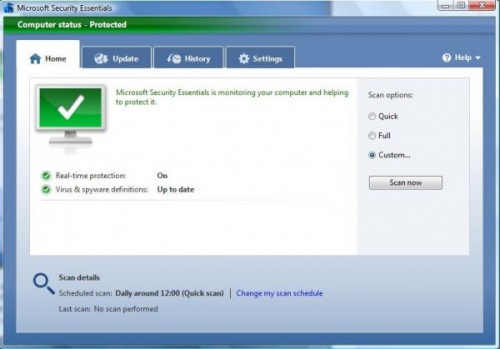
1) Microsoft Security Essentials : Microsoft Security Essentials provides real-time protection for your home PC that guards against viruses, spyware, and other malicious software. Microsoft Security Essentials is a free download from Microsoft that is simple to install, easy to use, and always kept up to date so you can be assured your PC is protected by the latest technology. For more details and how to download MSE, you can check our article totally dedicated on MSE.

2) Avast Free Antivirus : avast! antivirus software is available for free and commercial use. It provides complete virus protection for your computer. Antivirus engine is complemented by anti-spyware, firewall and antispam modules to protect you against phishing schemes, identity theft and internet-distributed web viruses. Automatic updates for greater user convenience and safety.

3) AVG Free Antivirus : AVG has been around in the Antivirus market from ages and gained lot of loyal users to their kitty. They also provide upgraded version which is very costly but I believe that their free Antivirus program is great for users having personal computers. AVG user interface is pretty simple and it takes a minute to install on your computer.

4) Avira AntiVir Personal : One of the simple to use and light Antivirus software in the market. It works perfectly fine to detect virus, spyware, rootkit threats. The best part of Avira is that it is quiet outstanding in terms of finding malware. Few false positives about Avira is that it does not inlude E-mail scanner in free version, but if you open any infected E-mail, it comes again into action.

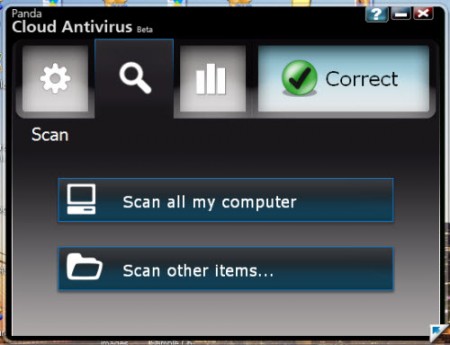
5) Panda Cloud Antivirus : The first free cloud antivirus against viruses, spyware, rootkits and adware. Panda Antivirus Beta3 supports Windows 7 (32 and 64bit). . The antivirus carries out BackgroundScan by deactivating many unnecessary operations.

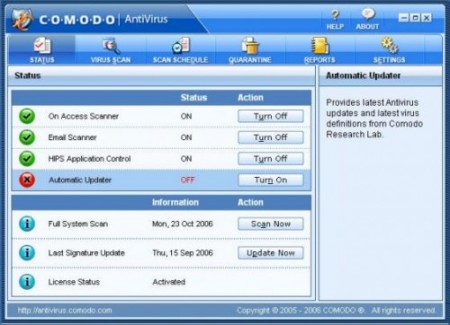
6) Comodo Firewall + Antivirus : Comodo Firewall and Antivirus is now Comodo Internet Security.Comodo Internet Security 4.0 includes a built-in sandbox which combines file system/registry virtualization and least-privileged user account principle in order to combat unknown malware.

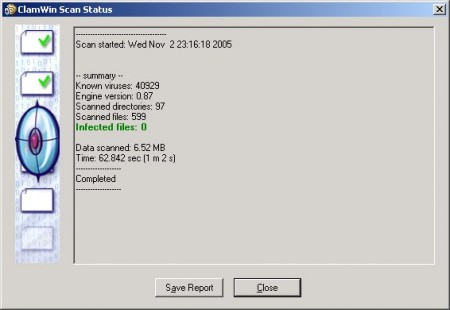
7) ClamWin Free Antivirus : ClamWin is a Free Antivirus program for Microsoft Windows 7 / Vista / XP / Me / 2000 / 98 and Windows Server 2008 and 2003. It comes with an easy installer and open source code. Please note that ClamWin Free Antivirus does not include an on-access real-time scanner. You need tomanually scan a file in order to detect a virus or spyware.

8 ) Free eScan Antivirus Toolkit Utility : eScan Antivirus Toolkit 12.x is compatible with Windows 7 – 32 & 64-bit OS. eScan Antivirus Toolkit is a FREE utility that enables you to scan and clean Viruses, Spyware, Adware and any other Malware that may have infected your computer. The eScan Antivirus Toolkit requires no installation and can be run directly from anywhere, on your computer, USB Drive or from a CD ROM. It can also be run even if you already have other antivirus software installed on your computer.

Unbelievable and Outstanding Photos of Li Wei

From: http://smashinghub.com/

Li Wei is an outstanding artist from Beijing China. His gravity defying photos have been attention-grabbing the world, capturing impossible looking moments of apparent extreme danger. You will find each photo hanging on in dangerous situation. He has done this unbelievable and impossible scaffolding with Photoshop to create photos.
Here's a collection of some of Wei's most outstanding photos.

1 Unbelievable and Outstanding Photos of Li Wei

3 Unbelievable and Outstanding Photos of Li Wei

2 Unbelievable and Outstanding Photos of Li Wei

4 Unbelievable and Outstanding Photos of Li Wei

5 Unbelievable and Outstanding Photos of Li Wei

6 Unbelievable and Outstanding Photos of Li Wei

7 Unbelievable and Outstanding Photos of Li Wei

8 Unbelievable and Outstanding Photos of Li Wei

9 Unbelievable and Outstanding Photos of Li Wei

10 Unbelievable and Outstanding Photos of Li Wei

11 Unbelievable and Outstanding Photos of Li Wei

12 Unbelievable and Outstanding Photos of Li Wei

13 Unbelievable and Outstanding Photos of Li Wei

20 Unbelievable and Outstanding Photos of Li Wei

19 Unbelievable and Outstanding Photos of Li Wei

18 Unbelievable and Outstanding Photos of Li Wei

17 Unbelievable and Outstanding Photos of Li Wei

16 Unbelievable and Outstanding Photos of Li Wei

14 Unbelievable and Outstanding Photos of Li Wei

Gisele: Breastfeeding Should Be Mandatory

From: http://www.thebostonchannel.com

Super Model Says There Should Be Worldwide Law

First-time mom and world's richest super model Gisele Bundchen has some pretty strong words about parenting. Bundchen, the wife of Patriots quarterback Tom Brady, said in a recent interview that she thinks there should be a "worldwide law" requiring every mother to breastfeed their children."Some people here (in the US) think they don't have to breastfeed," she told Harper's Bazaar UK. "And I think 'Are you going to give chemical food to your child when they are so little?' I think there should be a worldwide law, in my opinion, that mothers should breastfeed their babies for six months." Bundchen went on to recall how easy it was to give birth to her son Benjamin with Brady, thanks to a little meditation.
SURVEY
Gisele Bundchen thinks there should be a "worldwide law" requiring mothers to breastfeed for six months.
"It prepared me mentally and physically. It's called 'labor' not 'holiday' for a reason, and I knew that," she said."You want to go into the most intense physical experience of your life unprepared? That doesn't make any sense to me," she said. "Then I was ready and I thought 'OK, let's get to work'. I wasn't expecting someone else to get the baby out of me." She said it, "didn't hurt in the slightest." By the way, her Patriots husband turns 33 Tuesday.


New Evidence About Prisoners Held in Secret CIA Prisons in Poland and Romania

By: Andy Worthington, t r u t h o u t | Report
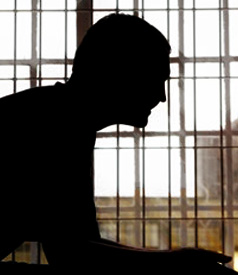
photo
(Photo: Prisoner 159753; Edited: Jared Rodriguez / t r u t h o u t)

On Friday, the Polish Border Guard Office released a number of documents to the Warsaw-based Helsinki Foundation for Human Rights, which, for the first time, provide details of the number of prisoners transferred by the CIA to a secret prison in Poland between December 5, 2002, and September 22, 2003, and, in one case, the number of prisoners who were subsequently transferred to a secret CIA prison in Romania. The documents (available here and here) provide important information about the secret prison at Szymany, in northeastern Poland, and also add to what is known about the program in Romania, which has received far less scrutiny.

The existence of the prisons was first revealed in The Washington Post on November 2, 2005, although the Post refrained from "publishing the names of the Eastern European countries involved in the covert program, at the request of senior U.S. officials." However, on November 6, 2005, Human Rights Watch identified the countries as Poland and Romania, and stated that it had seen "flight records showing that a Boeing 737, registration number N313P - a plane that the CIA used to move several prisoners to and from Europe, Afghanistan, and the Middle East in 2003 and 2004 - landed in Poland and Romania on direct flights from Afghanistan on two occasions in 2003 and 2004."

Although the Polish and Romanian governments denied the claims, Swiss Sen. Dick Marty, a rapporteur for the Council of Europe, concluded in a report in June 2007, based on two years' research and interviews with over 30 current and former members of the intelligence services in the United States and Europe, that he had enough "evidence to state that secret detention facilities run by the CIA did exist in Europe from 2003 to 2005, in particular in Poland and Romania." Marty also identified both sites, noting that the flights to Romania flew into the Mihail Kogalniceanu military airfield, and also explained how the flights were disguised using fake flight plans.

In September 2008, a Polish intelligence official confirmed that between 2002 and 2005 the CIA had held terror suspects inside a military intelligence training base in Stare Kiejkuty in northeastern Poland. He said that only the CIA had access to the prison, and that, although Prime Minister Leszek Miller and President Aleksander Kwasniewski knew about it, "it was unlikely either man knew if the prisoners were being tortured because the Poles had no control over the Americans' activities."

It was not until March 23, 2009, however, that the first details of specific flights into Szymany were officially confirmed in Poland, when the Polish Air Navigation Service Agency released information about a Lockheed L100-30 Hercules, registration number N8213G, which had flown in on February 4, 2003. This was followed up on September 16 with far more incriminating records, demonstrating that a notorious "torture jet," a Gulfstream V, registration number N379P, had flown into Szymany on six occasions between February 8 and September 22, 2003, (see here and here), and on June 2 this year, a further release identified a Gulfstream IV, registration number N63MU, which had flown in on July 28, 2005.

Friday's revelations by the Polish Border Guard Office are, however, even more significant, firstly because they include, for the first time, confirmation that N63MU flew into Poland on December 5, 2002, and secondly, because they provide details of the number of passengers on seven of the flights, as follows:

December 5, 2002: 8 passengers delivered
February 8, 2003: 7 passengers delivered; 4 others flown to an unknown destination
March 7, 2003: 2 passengers delivered
March 25, 2003: 1 passenger delivered
May 6, 2003: 1 passenger delivered
July 30, 2003: 1 passenger delivered
September 22, 2003: 0 passengers delivered; 5 flown to Romania

Who Are the "High-Value Detainees" Held in Poland?

In identifying these 20 passengers, the documents provide more questions than answers, as it is not known how many of them were prisoners, and how many were US government operatives accompanying them.

However, what can be stated with certainty is that three of the men who arrived on December 5, 2002, were the HVDs (HVDs) Abu Zubaydah, Abd al-Rahim al-Nashiri and Ramzi bin al-Shibh, who had all been held previously in a secret CIA prison in Thailand.

Don’t miss a beat - get Truthout Daily Email Updates. Click here to sign up for free.

In the CIA Inspector General's Report on "Counterterrorism Detention and Interrogation Activities (September 2001-October 2003)," published in May 2004, but only made publicly available last August, it was stated that the "enhanced interrogation of al-Nashiri continued through 4 December 2002" and that, "after being moved, al-Nashiri was thought to have been withholding information," indicating that it was at this time that he was rendered to Poland.

Moreover, in research for a "Joint Study on Global Practices in Relation to Secret Detention in the Context of Counter-Terrorism," published by the United Nations in February this year, an analyst

identified a flight from Bangkok to Szymany, Poland, on 5 December 2002 (stopping at Dubai) ... though it was disguised under multiple layers of secrecy, including charter and sub-contracting arrangements that would avoid there being any discernible "fingerprints" of a United States Government operation, as well as the filing of "dummy" flight plans.

This, clearly, is the flight identified in the newly released documents as having flown into Poland via Dubai.

In addition, according to information provided to "ABC News" by "[c]urrent and former CIA officers" in December 2005, seven other high-value detainees, as well as Zubaydah, al-Nashiri and bin al-Shibh, were held in Poland, while an 11th, Hambali, was held elsewhere (possibly on the British island of Diego Garcia, in the Indian Ocean, which is leased to the US). "ABC News" identified these men as Khalid Sheikh Mohammed, Waleed bin Attash, Ibn al-Shaykh al-Libi, Abdul Rahim al-Sharqawi, Mohammed Omar Abdel-Rahman, Hassan Ghul and Ahmed Khalfan Ghailani.

Of these seven, Hassan Ghul (whose whereabouts are still unknown, although he was reportedly held in a Pakistani prison in 2006) and Ahmed Khalfan Ghailani (who was one of 14 HVDs transferred to Guantanamo in September 2006) were seized in 2004, outside of the period from December 2002 to September 2003 covered by the documents, but the other five may all have been held in Poland.

In April 2009, Der Spiegel reported that Khalid Sheikh Mohammed (another of the 14 HVDs, and the alleged mastermind of the 9/11 attacks) was flown to Szymany on March 7, 2003, and if this is the case (and the date, noticeably, corresponds with one of the dates in the newly released documents), then it is possible that Mustafa al-Hawsawi, who was seized with him on March 1, 2003, (and who was also transferred to Guantanamo in September 2006), was the other passenger who arrived with him on that date - although it is also, of course, possible that the second passenger was an interrogator or a psychologist.

As for the others identified by "ABC News," Waleed bin Attash (another of the 14 HVDs), seized in Karachi, Pakistan, on April 29, 2003, could be the passenger delivered on May 6, and Mohamed Omar Abdel-Rahman, one of the sons of Omar Abdel-Rahman, the "Blind Sheikh," imprisoned in the US, could have been on any of the flights. Seized in Quetta in February 2003, his detention has never been officially acknowledged by the US authorities, and his current whereabouts are unknown.

More contentious are the claims that Ibn al-Shaykh al-Libi and Abdul Rahim al-Sharqawi were held in Poland. Al-Libi, the emir of the Khaldan training camp in Afghanistan, which was closed down by the Taliban in 2000 after he refused to cede control of it to Osama bin Laden, was, notoriously, rendered by the CIA to Egypt soon after his capture in Afghanistan in December 2001, where, under torture, he came up with the false allegation that Saddam Hussein was working on a chemical weapons program with al-Qaeda, which was used to justify the invasion of Iraq in March 2003.

According to an account by the journalist Stephen Grey, al-Libi was rendered back to Afghanistan in November 2003, and according to another account, by a Libyan who talked to al-Libi in a prison in Tripoli before his suspicious death last May, he was rendered from Egypt to prisons in Mauritania, Morocco and Jordan, before his return to Afghanistan, where he was held in three separate prisons run by, or under the control of the CIA, before his eventual return to Libya (possibly in 2006). As a result, although it's possible that he was also held in Poland for a while, it is by no means certain.

As for al-Sharqawi (also identified as Sharqwi Abdu Ali al-Hajj or Abdu Ali Sharqawi), the available reports suggest that, after he was seized in a house raid in Pakistan in February 2002, he was rendered to Jordan, where he was held for nearly two years - and tortured on behalf of the CIA - before being transferred to the CIA's "Dark Prison" near Kabul, and then, via Bagram, to Guantánamo, where he arrived in September 2004. As with al-Libi, however, it is possible that at some point he was transferred to Poland.

A Program Still Shrouded in Secrecy

Given the intense secrecy that still surrounds the HVD program, all that we can state with certainty is that, in May 2005, Assistant Attorney General Stephen Bradbury of the Office of Legal Counsel stated in a memo (updating the notorious "torture memos" of August 1, 2002, by John Yoo and Jay S. Bybee) that the CIA had, by that point, "taken custody of 94 prisoners [redacted] and ha[d] employed enhanced techniques to varying degrees in the interrogations of 28 of these detainees." These figures do not include prisoners rendered to prisons in other countries that were not directly under CIA control.

As these are essentially the only details about the program's scope that have ever been made publicly available, it is impossible to state with any certainty how many of these 94 prisoners were held in Poland. However, research undertaken for the UN's secret detention report indicated that the majority of the 94 were probably held in secret prisons in Afghanistan, and the figure of ten men in Poland that was cited by "ABC News" is close to the figure quoted by Marty, who noted, "a single CIA source told us that there were 'up to a dozen' high-value detainees in Poland in 2005, but we were unable to confirm this number." If this is the case, then the 20 passengers referred to in the newly released documents may include just eight prisoners, with two more - Hassan Ghul and Ahmed Khalfan Ghailani - arriving in 2004, and the rest being interrogators and psychologists.

One more question, however, concerns the origin of one of the flights. Although the first flight came from Bangkok via Dubai, and the rest appear to have flown directly from Kabul, Afghanistan, the flight on February 8, 2003, which contained seven passengers, and left the next day with four passengers (again, perhaps US personnel) arrived from Rabat, Morocco. Given that Morocco was one of a handful of countries (along with Jordan, Egypt and Syria) that were used either as proxy torture prisons or in order to "disappear" prisoners entirely, it is possible that the flight picked up three prisoners in Morocco, and flew them on to Poland.

If this is the case, then three possible candidates are Abu Zubair al-Haili, a Saudi seized in Morocco in June 2002, who was known as "the Bear," because of his size, and who was reported to be "one of the top 25 al-Qaeda leaders," and to have had "a very close relationship to Abu Zubaydah," plus two other Saudis seized with him. The whereabouts of all three men have never been explained by either the US or the Moroccan authorities, although, in September 2002, The Independent reported that al-Haili was "in U.S. custody."

Romania's Role in the CIA's Secret Prison Program

The final piece of the jigsaw revealed by the new Polish documents concerns Romania, as it seems clear that, on September 22, 2003, five prisoners were taken from the Polish prison to what may, at the time, have been a new project in Romania. In his report for the Council of Europe, Marty stated:

For reasons of both security and capacity, the CIA determined that the Polish strand of the HVD program should remain limited in size. Thus a "second European site" was sought to which the CIA could transfer its detainees with "no major logistical overhaul". Romania, used extensively by United States forces during Operation Iraqi Freedom in early 2003, had distinct benefits in this regard: as a member of the CIA's Counterterrorist Centre remarked about the location of the proposed detention facility, "our guys were familiar with the area."

Marty added:

Romania was developed into a site to which more detainees were transferred only as the HVD program expanded. I understand that the Romanian "black site" was incorporated into the program in 2003, attained its greatest significance in 2004 and operated until the second half of 2005. The detainees who were held in Romania belonged to a category of HVDs whose intelligence value had been assessed as lower but in respect of whom the Agency still considered it worthwhile pursuing further investigations.

While this avenue remains to be explored, the UN secret detention report suggested that three of the men held in Romania may have been the Yemenis Salah Nasser Salim Ali (seized in Indonesia in August 2003), Mohammed Farag Ahmad Bashmilah (seized in Jordan in October 2003) and Mohammed al-Asad (seized in Tanzania in December 2003), who, after being held in secret prisons in Afghanistan, were transferred in April 2004 to "an unknown, modern facility apparently run by United States officials, which was carefully designed to induce maximum disorientation, dependence and stress in the detainees ... Research into flight durations and the observations of Mr. al-Asad, Mr. Ali, and Mr. Bashmilah suggest that the facility was likely located in Eastern Europe."

All three were eventually transferred to Yemeni custody in May 2005, but they were clearly more fortunate than the other men rendered to Romania, whose stories have never emerged, and are as unknown as those of the five men transferred from Poland to Romania on September 22, 2003, whose existence has just been revealed.

In conclusion, while the release of these documents provides only a tantalizing glimpse into a program that is still shrouded in secrecy, it also provides some much needed information to be used in an attempt to compel the Polish government, the Romanian government and, most of all, the US government, to stop pretending either that these prisons did not exist, or that "we need to look forward as opposed to looking backwards," and to come clean about both the prisons and the men held there.

Creative Commons License
This work by Truthout is licensed under a Creative Commons Attribution-Noncommercial 3.0 United States License.


Facebook + Fantasy Football = Heaven

Facebook + Fantasy Football = Heaven

sportsillustrated.cnn.com — Two real world social-life killers unite.


http://sportsillustrated.cnn.com/specials/fantasy-football-2010/

Tuesday, August 3, 2010

A BUSTY artist is putting her 38DD boobs to good use — by PAINTING pictures with them.

from: http://www.thesun.co.uk/

Kira Ayn Varszegi covers her breasts in paint and then presses them like brushes against her canvases.

The 34-year-old uses a mixture of colours and angles her boobs in various different directions to create her eye-catching pieces.

She then sells her breast pieces online, with some fetching more than £600.

Since creating her first painting in 2001, Kira, from Connecticut, US, has created thousands of pieces which she sells from her online shop, Turtle Kiss Designs.

She said: "I enjoy working with different mediums and finding new ways to get paint on to a canvas.

"My intention is to provoke emotion through my art, make living spaces more beautiful, spark conversation, and most importantly, make people smile.

"I think my art raises more than a few smiles.

"My paintings are art I would hang on my own wall. I don't think about what other artists do or galleries would want."

Meanwhile, an amateur artist known only as Victoria is also hoping to make a splash by painting with her breasts.

Victoria, of St Petersburg, Russia, said: "I had a dream one night that I was painting with my breasts and I made beautiful flowers on canvas.

"When I woke up I decided to try it. Then one person decided to buy this painting, he said it was very beautiful. And this has really inspired me."


"Inception" Score is Edith Piaf Song In Slow Mo

Hans Zimmer used crazy math and Edith Piaf to create main "Inception" theme.
from: http://www.ifc.com/

"Inception" Warner Bros. Entertainment, Inc. 2010

The Edith Piaf song, "Non, je ne Regrette Rien" is used by characters "Inception" like an alarm to wake from dreaming. It's a lovely touch, and one exploited by composer Hans Zimmer in assembling the film's entire score. Here's a handy audio comparison [I saw on Cinematical] to cut straight to the big reveal:

Technically, Zimmer didn't just slow the Piaf song down and call it a day, but extracted bits and then used his electroturdmatics to reconstruct a theme in varying "subdivisions and multiplications of the tempo of the Édith Piaf track," he told Dave Itzkoff writing for Arts Beat. Normally I'd be restraining myself from using foul language to discuss Zimmer's approach to creating film scores, but credit where it's due. I love the idea and the use of Piaf to achieve the encompassing theme. Zimmer is clearly still giddy over the whole thing. "So I could slip into half-time; I could slip into a third of a time," he said, tripping his balls off over the tempo manipulations he employed to great effect. "Anything could go anywhere. At any moment I could drop into a different level of time."

A question remains whether or not he will be eligible for Oscar recognition, given the Academy's strict rules -- is it Hans Zimmer or Edith Piaf we should be awarding? Zimmer first said he only extracted "these two notes out of a recording," but later stated, "I didn't use the song; I only used one note." Perhaps both are true, depending on which level of time he happens to be dropping through. I think he's at least one step ahead of the Academy.

More on "Inception" score.

‘Arrested Development’ movie script half done

by James Hibberd
from: http://livefeed.hollywoodreporter.com/

"Arrested Development" creator Mitch Hurwitz said the much-discussed, long delayed, oft-speculated, will-probably-happen-but-might-not movie is still on track.

In fact, the script is half done.

hurwitz tca"Were writing it; we're halfway through," Hurwitz said at the TCA press tour. "The reason I've been so cagey is fans have been so [eager about it]. I really want to do it. Jason Bateman gave an interesting quote recently saying 'when we get it, we'll read it and decide if we want to do it [Hurwitz gives 'What? Really?' look]."

"It's not going to be a big money maker," Hurwitz added. "It's going to be fun, like a family reunion. The only stumbling block could be scheduling. Everybody wants to play together."

What about a logline? A title?

"That would give too much away."

Hurwitz was on hand to discuss his new Fox comedy "Running Wilde." The pilot is being largely reshot with Hurwitz saying that notes from Fox entertainment president Kevin Reilly are helping to ground the series.

"It's sometimes easier to write unlikable characters because they do funnier things," Hurwitz said. "Kevin Reilly is pushing us out of our comfort zone ... we went through nine and ten drafts and every time Kevin would give us a very specific idea and we would gnash our teeth and curse and every time it would get a little better."

The comedy is also bringing on board David Cross who, in addition to star Will Arnett, is sure to fuel comparisons between "Wilde" and "Arrested."

"We're going to get the comparisons -- good and bad -- to 'Arrested Development,'" Arnett said. "Bad mainly, but fuck it."

Glass invented in 1962 could be multibillion-dollar bonanza

CORNING, N.Y. — An ultra-strong glass that has been looking for a purpose since its invention in 1962 is poised to become a multibillion-dollar bonanza for Corning Inc.

The 159-year-old glass pioneer is ramping up production of what it calls Gorilla glass, expecting it to be the hot new face of touch-screen tablets and high-end TVs.

Gorilla showed early promise in the '60s, but failed to find a commercial use, so it's been biding its time in a hilltop research lab for almost a half-century. It picked up its first customer in 2008 and has quickly become a $170 million a year business as a protective layer over the screens of 40 million-plus cell phones and other mobile devices.

Now, the latest trend in TVs could catapult it to a billion-dollar business: Frameless flat-screens that could be mistaken for chic glass artwork on a living-room wall.

Because Gorilla is very hard to break, dent or scratch, Corning is betting it will be the glass of choice as TV-set manufacturers dispense with protective rims or bezels for their sets, in search of an elegant look.

Gorilla is two to three times stronger than chemically strengthened versions of ordinary soda-lime glass, even when just half as thick, company scientists say. Its strength also means Gorilla can be thinner than a dime, saving on weight and shipping costs.

Corning is in talks with Asian manufacturers to bring Gorilla to the TV market in early 2011 and expects to land its first deal this fall. With production going full-tilt in Harrodsburg, Ky., it is converting part of a second factory in Shizuoka, Japan, to fill a potential burst of orders by year-end.

"That'll tell you something about our confidence in this," said Corning President Peter Volanakis.

Investors are taking notice. In June, Sanford C. Bernstein & Co. in New York raised Corning's projected share price, predicting Gorilla would be its second biggest business by 2015.

"There's a wide range of views on how successful this product will be," said Deutsche Bank analyst Carter Shoop. "But I think it's safe to say that, in aggregate, people are becoming much more bullish. It's a tremendous opportunity. We'll have to see how consumers react."

DisplaySearch market analyst Paul Gagnon said alternatives "obviously scratch easier, they're thicker and heavier, but they're also cheaper." He estimates that a sheet of Gorilla would add $30 to $60 to the cost of a set.

It remains to be seen "whether this becomes a hit trend that propagates to other models and sizes or remains in the confines of a premium step-up series of products," Gagnon said.

"This is a fashion trend, not a functional trend, and that's what makes (the growth rate) very hard to predict," said Volanakis. "But because the market is so large in terms of number of TVs — and the amount of glass per TV is so large — that's what can move the needle pretty quickly."

Based in western New York, Corning is the world's largest maker of glass for liquid-crystal-display computers and TVs. High-margin LCD glass generated the bulk of Corning's $5.4 billion in 2009 sales.

By ramping up volume production quickly in a budding market, Corning is pursuing a well-worn strategy designed to keep rivals from gaining ground. Its patience is also well practiced. Executives know too well the gulf between inspiration and application is sometimes decades-wide.

Corning set out in the late 1950s to find a glass as strong as steel. Dubbed Project Muscle, the effort combined heating and layering experiments and produced a robust yet bendable material called Chemcor.

Then in 1964, Corning devised an ingenious method called "fusion draw" to make super-thin, unvaryingly flat glass. It pumped hot glass into a suspended trough and allowed it to overflow and run down either side. The glass flows then meet under the trough and fuse seamlessly into a smooth, hanging sheet of glass.

To make Chemcor, Corning ran the sheets through a "tempering" process that set up internal stresses in the material. The same principle is behind the toughness of Pyrex glass, but Chemcor was tempered in a chemical bath, not by heat treatment.

Corning thought Chemcor sheets created this way would be the material of choice in car windshields, but British rival Pilkington Bros. intervened with a far cheaper mass-production approach. And another Chemcor adaptation in photochromic sunglasses also fizzled in the retail market.

Fusion draw finally proved its commercial value when Japanese electronics companies, looking for slim sheets free of alkalis that contaminate liquid crystals, turned to Corning's soda-lime LCD glass in the 1980s. Corning rapidly turned into the world's biggest supplier of LCD glass for laptops and that business blossomed around 2003 when LCD technology migrated to TVs.

In 2006, when demand surfaced for a cell phone cover glass, Corning dug out Chemcor from its database, tweaked it for manufacturing in LCD tanks, and renamed it Gorilla. "Initially, we were telling ourselves a $10 million business," said researcher Ron Stewart.

With relatively low startup costs, Gorilla should generate its first profit this year. And now that production is back on, designers are again exploring using it in unexpected places, like refrigerator doors, car sunroofs and touch-screen hotel advertising.

Among the 100-plus devices with Gorilla are Motorola Inc.'s Droid smart phone and LG Electronics' X300 notebook. Whether Apple Inc. uses the glass in its iPod is a much-discussed mystery since "not all our customers allow us to say," said Jim Steiner, general manager of Corning's specialty materials division.

Since the Civil War, Corning has turned out a glittering array of innovations from railroad signals to Pyrex and auto-pollution filters to optical fiber. Allotting 10 percent of revenue to research keeps promising projects brewing at its Sullivan Park research hub on Corning's hilly outskirts.

Optical fiber is another example of an invention that took a long time to come into its own. In 1934, chemist Frank Hyde came up with a practical method of making fused silica — an exceptionally pure glass — in bulk, yet it wasn't put to use as optical fiber until the 1970s. Once there, it helped create the Internet revolution.

In his office lobby, Steiner showed off a 400-foot-long spool of flexible, 16-inch-wide glass that's as thin as a sheet of paper.

"Kind of like Chemcor was back in the '60s," he said. "We're not sure what we're going to do with it, but it's cool isn't it?"

Hiroshi Ishiguro creates his creepiest robot yet, the Telenoid R1

289diggsdigg Sure, creating freakish humanoid clones is Hiroshi Ishiguro's primary hobby, but his latest work takes a couple steps outside the Uncanny Valley. The Telenoid R1 telepresence robot trades extremities for an androgynous doll-like body, which researchers at Osaka University and ATR describe as "soft and pleasant" but strikes us as something we'd see crawling out of the depths of hell on stump-like arms. (Perhaps Ishiguro was going for Casper the Friendly Ghost.) The $35,000 prototype transmits both the voice and head motions of a remote operator, allowing dutiful Japanese individuals to visit their elders via internet-equipped PCs, and a final version will actually go on sale later this year for around $8,000 should said elders agree with the latest in puffy white design. Watch a sample visit after the break.


sourceIEEE Spectrum

Summer of the Shark: Great White Sightings Off Cape Cod

See the original image at boston.com

boston.com — It may be Discovery Channel's 'Shark Week,' but it is shark summer in Massachusetts.

Please click here for Gallery: Summer of the Shark: Great White Sightings Off Cape Cod