Zazzle Shop

Screen printing
Showing posts with label Secret Bunker. Show all posts

Wednesday, September 7, 2011

Is there Really Just Gold in Fort Knox?

Posted by: Rocco Penn
From: http://topcultured.com/

Fort Knox Image

As you’ll see below, there’s an awful lot that goes into protecting our nation’s gold. Considering that it’s current value is around $270 billion, some speculate that there’s more than just gold inside. Some say there are…

  • Weapons and Defense Items: In case of nuclear or zombie attack (or both) there is no safer place in the world. Could there be secret weapons and a way to get the President and other important people down there in case DC is compromised?
  • Aliens: Whenever tinfoil hats come out, aliens have to be in the picture.
  • Lies: What if we already sold off all of our gold? The vault would be the perfect way to keep our economy from collapsing despite the lack of a gold standard.

Whatever you believe, one thing is certain: you’d have an easier time getting into the White House than you would getting into Fort Knox (and don’t try to get into the White House – it’s dangerous over there).

This infographic by CreditSesame breaks down the facts and speculations nicely. Click to enlarge.

Fort Knox

Friday, September 17, 2010

Germany’s Repurposed World War II Bunkers

From: http://1800recycling.com/

Could you imagine living in a bunker? Far from drab and depressing, repurposed bunkers take on a life of their own, providing peace, quiet and safety.

12 studio bunker Germanys Repurposed World War II Bunkers

Image via treehugger

Military bunkers have long been an eyesore for those living close to them. Like gray behemoths, they stand around, waiting to be used again for their original purpose. Luckily, though, they don’t necessarily have to go back to being used for warfare — in Germany, many were recycled as homes decades ago by students and people living alternative lifestyles.

6 hochbunker Germanys Repurposed World War II Bunkers

Three old military bunkers refurbished as stylish houses by Luczak architects in Cologne. Image via aknw.

However, now there seems to be a new trend: refurbishing old military bunkers and turning them into high-quality apartments. Germany has a treasure trove of these kinds of conversions, as many architects are rediscovering old bunkers as sustainable and easy-to-maintain residential buildings.

Not pretty but functional: the old German submarine bunker in Trondheim

11 sub bunker Germanys Repurposed World War II Bunkers

Image: Aslak Raanes

Architects Rainer Mielke and Claus Freudenberg of mielke+freudenberg specialize in converting old military bunkers in the northern German city of Bremen into living quarters. Their reasoning: “Bunkers have been built to receive people and to shelter them. Because of their massive construction, they last even without costly maintenance efforts.”

5 EmdenExBunkerRudolfBreitscheidStrasse Germanys Repurposed World War II Bunkers

Image: Emder Muschelschubser

And indeed, many architects appreciate their sturdiness and low risk of geological disruption, making them safe, lasting and stylish buildings, too. A prime example of this is the remodeled bunker in the northern German town of Emden (above). Here, only the strict square form reminds one of the building’s original purpose.

Military bunkers were built to protect troops and civilians, but also machinery and important equipment from air raids. There was a bunker building boom during World War II due to the development of aerial warfare and the existence of aircraft which could transport heavy bombs. In Germany especially, bunkers were built in abundance, as is still apparent today.

A bunker with a cool blue roof at Claussenstrasse in Bremen

 Germanys Repurposed World War II Bunkers

Image via thelocal

Many of them were industrial bunkers, built to safeguard important industries but also food, materials and files from aerial bombardment. Many also served as living quarters. On their website, Mielke and Freudenberg explain why it makes sense to repurpose old bunkers: “Because of their central location in many suburbs, many of them are ideal for living. We convert these bunkers into residential buildings in a modern and sustainable fashion and integrate these historical buildings into the cityscape without denying their own identity.”

A bunker turned studio in Frankfurt
bunker exterior Germanys Repurposed World War II Bunkers

Image via treehugger

The story behind this bunker is quite intriguing. Admittedly not the prettiest, Frankfurt’s residents too found it an eyesore but had to live with it, as demolishing the extremely compact bunker would have been too costly. Turning it into living quarters was also out of the question, as it is located in a non-residential part of town, between junkyards and shipping container depots. Finally, Index Architects came up with a practical solution and, using the old bunker as a giant table, added artists’ studios and a space for the Institute of New Media on top. And the old bunker? It’s now housing musicians’ studios.

Like a bird’s nest on top of the bunker

 Germanys Repurposed World War II Bunkers

Image via thelocal

After World War II, most bunkers were abandoned, as the occupying forces had no use for them and Germany was focused on rebuilding its economy rather than its military. However, given their sturdiness, they survived all these decades unscathed and can be found in abundance around WWII hotspots like the former mining area around the Ruhr, in Berlin and Dresden, along the borders, and even on some of the beaches. In the suburb of Poppelsdorf in Germany’s former capital Bonn, for example, Scherf Architects used an old WWII bunker as the foundation for three apartments and simply built on top of the existing structure, thus guaranteeing a good view.

3 bonn poppelsdorf Germanys Repurposed World War II Bunkers

Image via immowelt

The “basement” that is the old bunker, houses the heating, electricity and other maintenance functions.

4 lueftungsanlage Germanys Repurposed World War II Bunkers

Image via immowelt

At the corner of Dortmund’s Wittelbacher and Landgrafen streets, the old bunker was a 20- x 20-square-meter block, 10 meters high with 2-meter-thick walls. It used to look gray and depressing…

8 Wittelsbacker alt Germanys Repurposed World War II Bunkers

Image via bunker-dortmund

… before it was turned into this cool building:

after Wittelsbacher Germanys Repurposed World War II Bunkers

Image via bunker-dortmund

Here is another bunker in Emden that has been repurposed.

7 flak wykoff emden Germanys Repurposed World War II Bunkers

Image via luftschutzbunker

There are a surprising number of uses for abandoned military bunkers. All it takes is a creative architect, some imagination and innovative design. People who like peace and quiet and a feeling of safety will appreciate living in one of these constructions. For other cool uses to which bunkers have been put, take a look here.

Sources: 1, 2, 3, 4, 5

Wednesday, August 4, 2010

New Evidence About Prisoners Held in Secret CIA Prisons in Poland and Romania

By: Andy Worthington, t r u t h o u t | Report
photo
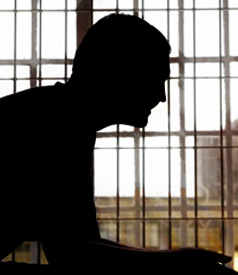
(Photo: Prisoner 159753; Edited: Jared Rodriguez / t r u t h o u t)

On Friday, the Polish Border Guard Office released a number of documents to the Warsaw-based Helsinki Foundation for Human Rights, which, for the first time, provide details of the number of prisoners transferred by the CIA to a secret prison in Poland between December 5, 2002, and September 22, 2003, and, in one case, the number of prisoners who were subsequently transferred to a secret CIA prison in Romania. The documents (available here and here) provide important information about the secret prison at Szymany, in northeastern Poland, and also add to what is known about the program in Romania, which has received far less scrutiny.

The existence of the prisons was first revealed in The Washington Post on November 2, 2005, although the Post refrained from "publishing the names of the Eastern European countries involved in the covert program, at the request of senior U.S. officials." However, on November 6, 2005, Human Rights Watch identified the countries as Poland and Romania, and stated that it had seen "flight records showing that a Boeing 737, registration number N313P - a plane that the CIA used to move several prisoners to and from Europe, Afghanistan, and the Middle East in 2003 and 2004 - landed in Poland and Romania on direct flights from Afghanistan on two occasions in 2003 and 2004."

Although the Polish and Romanian governments denied the claims, Swiss Sen. Dick Marty, a rapporteur for the Council of Europe, concluded in a report in June 2007, based on two years' research and interviews with over 30 current and former members of the intelligence services in the United States and Europe, that he had enough "evidence to state that secret detention facilities run by the CIA did exist in Europe from 2003 to 2005, in particular in Poland and Romania." Marty also identified both sites, noting that the flights to Romania flew into the Mihail Kogalniceanu military airfield, and also explained how the flights were disguised using fake flight plans.

In September 2008, a Polish intelligence official confirmed that between 2002 and 2005 the CIA had held terror suspects inside a military intelligence training base in Stare Kiejkuty in northeastern Poland. He said that only the CIA had access to the prison, and that, although Prime Minister Leszek Miller and President Aleksander Kwasniewski knew about it, "it was unlikely either man knew if the prisoners were being tortured because the Poles had no control over the Americans' activities."

It was not until March 23, 2009, however, that the first details of specific flights into Szymany were officially confirmed in Poland, when the Polish Air Navigation Service Agency released information about a Lockheed L100-30 Hercules, registration number N8213G, which had flown in on February 4, 2003. This was followed up on September 16 with far more incriminating records, demonstrating that a notorious "torture jet," a Gulfstream V, registration number N379P, had flown into Szymany on six occasions between February 8 and September 22, 2003, (see here and here), and on June 2 this year, a further release identified a Gulfstream IV, registration number N63MU, which had flown in on July 28, 2005.

Friday's revelations by the Polish Border Guard Office are, however, even more significant, firstly because they include, for the first time, confirmation that N63MU flew into Poland on December 5, 2002, and secondly, because they provide details of the number of passengers on seven of the flights, as follows:

December 5, 2002: 8 passengers delivered
February 8, 2003: 7 passengers delivered; 4 others flown to an unknown destination
March 7, 2003: 2 passengers delivered
March 25, 2003: 1 passenger delivered
May 6, 2003: 1 passenger delivered
July 30, 2003: 1 passenger delivered
September 22, 2003: 0 passengers delivered; 5 flown to Romania

Who Are the "High-Value Detainees" Held in Poland?

In identifying these 20 passengers, the documents provide more questions than answers, as it is not known how many of them were prisoners, and how many were US government operatives accompanying them.

However, what can be stated with certainty is that three of the men who arrived on December 5, 2002, were the HVDs (HVDs) Abu Zubaydah, Abd al-Rahim al-Nashiri and Ramzi bin al-Shibh, who had all been held previously in a secret CIA prison in Thailand.

Don’t miss a beat - get Truthout Daily Email Updates. Click here to sign up for free.

In the CIA Inspector General's Report on "Counterterrorism Detention and Interrogation Activities (September 2001-October 2003)," published in May 2004, but only made publicly available last August, it was stated that the "enhanced interrogation of al-Nashiri continued through 4 December 2002" and that, "after being moved, al-Nashiri was thought to have been withholding information," indicating that it was at this time that he was rendered to Poland.

Moreover, in research for a "Joint Study on Global Practices in Relation to Secret Detention in the Context of Counter-Terrorism," published by the United Nations in February this year, an analyst

identified a flight from Bangkok to Szymany, Poland, on 5 December 2002 (stopping at Dubai) ... though it was disguised under multiple layers of secrecy, including charter and sub-contracting arrangements that would avoid there being any discernible "fingerprints" of a United States Government operation, as well as the filing of "dummy" flight plans.

This, clearly, is the flight identified in the newly released documents as having flown into Poland via Dubai.

In addition, according to information provided to "ABC News" by "[c]urrent and former CIA officers" in December 2005, seven other high-value detainees, as well as Zubaydah, al-Nashiri and bin al-Shibh, were held in Poland, while an 11th, Hambali, was held elsewhere (possibly on the British island of Diego Garcia, in the Indian Ocean, which is leased to the US). "ABC News" identified these men as Khalid Sheikh Mohammed, Waleed bin Attash, Ibn al-Shaykh al-Libi, Abdul Rahim al-Sharqawi, Mohammed Omar Abdel-Rahman, Hassan Ghul and Ahmed Khalfan Ghailani.

Of these seven, Hassan Ghul (whose whereabouts are still unknown, although he was reportedly held in a Pakistani prison in 2006) and Ahmed Khalfan Ghailani (who was one of 14 HVDs transferred to Guantanamo in September 2006) were seized in 2004, outside of the period from December 2002 to September 2003 covered by the documents, but the other five may all have been held in Poland.

In April 2009, Der Spiegel reported that Khalid Sheikh Mohammed (another of the 14 HVDs, and the alleged mastermind of the 9/11 attacks) was flown to Szymany on March 7, 2003, and if this is the case (and the date, noticeably, corresponds with one of the dates in the newly released documents), then it is possible that Mustafa al-Hawsawi, who was seized with him on March 1, 2003, (and who was also transferred to Guantanamo in September 2006), was the other passenger who arrived with him on that date - although it is also, of course, possible that the second passenger was an interrogator or a psychologist.

As for the others identified by "ABC News," Waleed bin Attash (another of the 14 HVDs), seized in Karachi, Pakistan, on April 29, 2003, could be the passenger delivered on May 6, and Mohamed Omar Abdel-Rahman, one of the sons of Omar Abdel-Rahman, the "Blind Sheikh," imprisoned in the US, could have been on any of the flights. Seized in Quetta in February 2003, his detention has never been officially acknowledged by the US authorities, and his current whereabouts are unknown.

More contentious are the claims that Ibn al-Shaykh al-Libi and Abdul Rahim al-Sharqawi were held in Poland. Al-Libi, the emir of the Khaldan training camp in Afghanistan, which was closed down by the Taliban in 2000 after he refused to cede control of it to Osama bin Laden, was, notoriously, rendered by the CIA to Egypt soon after his capture in Afghanistan in December 2001, where, under torture, he came up with the false allegation that Saddam Hussein was working on a chemical weapons program with al-Qaeda, which was used to justify the invasion of Iraq in March 2003.

According to an account by the journalist Stephen Grey, al-Libi was rendered back to Afghanistan in November 2003, and according to another account, by a Libyan who talked to al-Libi in a prison in Tripoli before his suspicious death last May, he was rendered from Egypt to prisons in Mauritania, Morocco and Jordan, before his return to Afghanistan, where he was held in three separate prisons run by, or under the control of the CIA, before his eventual return to Libya (possibly in 2006). As a result, although it's possible that he was also held in Poland for a while, it is by no means certain.

As for al-Sharqawi (also identified as Sharqwi Abdu Ali al-Hajj or Abdu Ali Sharqawi), the available reports suggest that, after he was seized in a house raid in Pakistan in February 2002, he was rendered to Jordan, where he was held for nearly two years - and tortured on behalf of the CIA - before being transferred to the CIA's "Dark Prison" near Kabul, and then, via Bagram, to Guantánamo, where he arrived in September 2004. As with al-Libi, however, it is possible that at some point he was transferred to Poland.

A Program Still Shrouded in Secrecy

Given the intense secrecy that still surrounds the HVD program, all that we can state with certainty is that, in May 2005, Assistant Attorney General Stephen Bradbury of the Office of Legal Counsel stated in a memo (updating the notorious "torture memos" of August 1, 2002, by John Yoo and Jay S. Bybee) that the CIA had, by that point, "taken custody of 94 prisoners [redacted] and ha[d] employed enhanced techniques to varying degrees in the interrogations of 28 of these detainees." These figures do not include prisoners rendered to prisons in other countries that were not directly under CIA control.

As these are essentially the only details about the program's scope that have ever been made publicly available, it is impossible to state with any certainty how many of these 94 prisoners were held in Poland. However, research undertaken for the UN's secret detention report indicated that the majority of the 94 were probably held in secret prisons in Afghanistan, and the figure of ten men in Poland that was cited by "ABC News" is close to the figure quoted by Marty, who noted, "a single CIA source told us that there were 'up to a dozen' high-value detainees in Poland in 2005, but we were unable to confirm this number." If this is the case, then the 20 passengers referred to in the newly released documents may include just eight prisoners, with two more - Hassan Ghul and Ahmed Khalfan Ghailani - arriving in 2004, and the rest being interrogators and psychologists.

One more question, however, concerns the origin of one of the flights. Although the first flight came from Bangkok via Dubai, and the rest appear to have flown directly from Kabul, Afghanistan, the flight on February 8, 2003, which contained seven passengers, and left the next day with four passengers (again, perhaps US personnel) arrived from Rabat, Morocco. Given that Morocco was one of a handful of countries (along with Jordan, Egypt and Syria) that were used either as proxy torture prisons or in order to "disappear" prisoners entirely, it is possible that the flight picked up three prisoners in Morocco, and flew them on to Poland.

If this is the case, then three possible candidates are Abu Zubair al-Haili, a Saudi seized in Morocco in June 2002, who was known as "the Bear," because of his size, and who was reported to be "one of the top 25 al-Qaeda leaders," and to have had "a very close relationship to Abu Zubaydah," plus two other Saudis seized with him. The whereabouts of all three men have never been explained by either the US or the Moroccan authorities, although, in September 2002, The Independent reported that al-Haili was "in U.S. custody."

Romania's Role in the CIA's Secret Prison Program

The final piece of the jigsaw revealed by the new Polish documents concerns Romania, as it seems clear that, on September 22, 2003, five prisoners were taken from the Polish prison to what may, at the time, have been a new project in Romania. In his report for the Council of Europe, Marty stated:

For reasons of both security and capacity, the CIA determined that the Polish strand of the HVD program should remain limited in size. Thus a "second European site" was sought to which the CIA could transfer its detainees with "no major logistical overhaul". Romania, used extensively by United States forces during Operation Iraqi Freedom in early 2003, had distinct benefits in this regard: as a member of the CIA's Counterterrorist Centre remarked about the location of the proposed detention facility, "our guys were familiar with the area."

Marty added:

Romania was developed into a site to which more detainees were transferred only as the HVD program expanded. I understand that the Romanian "black site" was incorporated into the program in 2003, attained its greatest significance in 2004 and operated until the second half of 2005. The detainees who were held in Romania belonged to a category of HVDs whose intelligence value had been assessed as lower but in respect of whom the Agency still considered it worthwhile pursuing further investigations.

While this avenue remains to be explored, the UN secret detention report suggested that three of the men held in Romania may have been the Yemenis Salah Nasser Salim Ali (seized in Indonesia in August 2003), Mohammed Farag Ahmad Bashmilah (seized in Jordan in October 2003) and Mohammed al-Asad (seized in Tanzania in December 2003), who, after being held in secret prisons in Afghanistan, were transferred in April 2004 to "an unknown, modern facility apparently run by United States officials, which was carefully designed to induce maximum disorientation, dependence and stress in the detainees ... Research into flight durations and the observations of Mr. al-Asad, Mr. Ali, and Mr. Bashmilah suggest that the facility was likely located in Eastern Europe."

All three were eventually transferred to Yemeni custody in May 2005, but they were clearly more fortunate than the other men rendered to Romania, whose stories have never emerged, and are as unknown as those of the five men transferred from Poland to Romania on September 22, 2003, whose existence has just been revealed.

In conclusion, while the release of these documents provides only a tantalizing glimpse into a program that is still shrouded in secrecy, it also provides some much needed information to be used in an attempt to compel the Polish government, the Romanian government and, most of all, the US government, to stop pretending either that these prisons did not exist, or that "we need to look forward as opposed to looking backwards," and to come clean about both the prisons and the men held there.

Creative Commons License
This work by Truthout is licensed under a Creative Commons Attribution-Noncommercial 3.0 United States License.


Thursday, March 25, 2010

18 Weird and Wonderful Places To Live: Churches, Bunkers, Water Towers and Caves

by Lloyd Alter, Toronto
From: http://www.treehugger.com/

cave house new york times photo
Lars Tunbjork for The New York Times

The New York Times Magazine did a photo spread of some rather extreme conversions of churches, shipping containers and water towers and even caves, like the happy family shown above with an umbrella over the pool table to control the sand. We do our own roundup of TreeHugger favourites:

Churches

Chapel Converted to Residence by ZECC Architects

church conversion zecc photo

ZECC Architects, beloved of their conversion of a water tower into a residence, are at it again with this conversion of a Dutch chapel into a single family residence. In some ways it is a bit sad, when formerly public spaces get converted to private residences, but not every church can be converted into a bookstore or other public use, and this chapel is a bit less dramatic than the church that became the bookshop.

More in TreeHugger

Record Houses: A Modest Little Reno

church convertion tower into apartment

Christopher Wren's Christ Church was bombed out in WW2 and is now a roofless rose garden; its tower survived and got into private hands. Architect Nicholas Boyarsky has designed an apartment in it: eleven stories high. Owner Kate Renwick must have great legs, going up and down those stairs all day.

More in TreeHugger


Church House, Kyloe, England in New York Times

church-nyt.jpg

One we missed: "Ian Bottomley and his partner, Sally Onions, take in the sun in the graveyard of their home, a converted 1792 church."

More in the New York Times

Church Converted into Bookshop

church converted into bookshop photo

Our favourite religious conversion is this one in Maastricht; Where we live, churches that are no longer needed for religious purposes are turned into condos and pass out of the public realm. How much more appropriate that they turn into such a magnificent shrine to the book.

More in TreeHugger

Water Towers

Water Tower Converted into Residence

zecc water tower utrecht photo

Talk about recycling buildings; this is a conversion of a water tower into a residence in Soest, Utrecht, Netherlands in 2004. It is by zecc arcitechten of Utrecht, Netherlands.

More in TreeHugger

AR Awards: Water Tower Conversion

water tower dorte mandrup

Water towers are often "formally crude, over-engineered and top heavy" (although there are some nice ones about) and there is usually nothing under them but air. Here is a brilliant use of that space: fill it with apartments! Since the tower is often built on the highest spot of land, the views will be great. What a wonderful reinvention of an underutilized structure.

More in TreeHugger

Water Tower House by Jo Crepain

belgium water tower conversion photo
For a long time the owner was in love with an old water tower and the little park around it, outside of Antwerp. Although it was by no means possible to live in the old tower, since it was just a skeleton, with a huge barrel on top, he started dreaming of building it into a house. And six years later, together with his architect, he made a dream come through.

More in TreeHugger

Water-Tower Apartment, Essen, Germany

nytimes water tower photo
Lars Tunbjork for The New York Times

We missed this one but the NY Times didn't:

"A decade ago, the architects Arnim Koch and Michael Dahms were working on a project for the municipal utility of Essen, Germany, when they became enamored with an obsolete 1905 water tower. The pair designed eight floors into the tower's base, which are now home to two rental apartments, a real estate agency and a communications business".
More in the New York Times

Tom Dixon's Water Tower Home and Showroom

Dixon_water_tower_ready.jpg

New to TreeHugger is designer Tom Dixon's water tower in Ladbroke Grove. According to BD Online,

"Tom is a big fan of brutalist structures and strong forms, and extruding the cylinder upwards is the purest way of dealing with it," said Harris. "The planners really got the intention. Rather than short, fat and bland, they said let's make a statement but quite a slender statement."

The house will expand over nine storeys -- yes, there is a lift -- including four new levels, with two roof terraces. On the ground floor there will be an exhibition space for Dixon's furniture, with the living rooms housed in an open-plan, double-height cube extension at first floor level. There will be four bedrooms and a study in the upper levels of the cylinder with a lofty penthouse reception room.


More in BDonline

Bunkers

The Times didn't show any conversions of bunkers, but we have a few:

Bunker Turned Into Studios by Index Architects

bunker conversion germany

Often our readers complain that some of the architecture I like looks like a bunker; (see church here) sometimes they are right, such as in this case in Frankfurt. It is, in fact, a World War II bunker in Frankfurt that had been previously disguised as a house because it was too expensive to demolish.

More in TreeHugger

New Buildings from Old Bunkers in Bremen

bunker bremen

There are a lot of bunkers in Bremen and around Germany; after WWII most were left in their original form "due to a so-called "civil protection commitment" to keep the building free in case of an emergency requiring people to use it for protection again." After the reunification of Germany this became less of an issue, and architect Rainer Mielke was able to begin converting them into housing.

The advantages over conventional housing are immediate; "the thick walls create a special temperature in the rooms. In summer it's cool, and in winter it's warm"

More in TreeHugger

Creative Recycling: Bunker to Apt Rms w Vu

archivolver bunker photo

What do you do with a bunker like this? Archivolver put a house on it. Of course their site is in stupid flash so I can't translate it. And they have something else going on so I cannot even copy the link to the page. Why do architects do these things?

More in TreeHugger

Caves and Underground Houses

Bill Lishman's Underground Dome Home

lishman house photo

Readers may remember Fly Away Home, the film starring Jeff Daniels and Anna Paquin that was based on William Lishman's flights with birds. The script stuck pretty close to Lishman's life, and even included the round pop-up refrigerator in his kitchen. But they didn't use his house; it is a group of interconnected igloo-like domes, buried underground; they thought it was "too weird." Perhaps they were right; it does look like a wacky sixties out-take. But it also evidently needs almost no energy to cool and almost none to heat, even though it is in a pretty cold, windy location.


More in TreeHugger

For Sale: Repurposed, Recycled and Renovated Atlas Missile Base

underground silo home photo

There is nothing greener than renovation, repurposing and reuse of existing buildings, so how could we not publish this conversion of an Atlas Missile base in the Adirondacks into a lovely 2300 square foot underground home, complete with private runway, contemporary fiber optic effect lighting along with natural sunlight rendition back lighting, and a ventilation system specially designed to deal with the challenges of everyday living, including nuclear and biochemical attack.

More in TreeHugger

Underground Houses: Vals House by SeArch and Christian Müller Architects

vals house photo

There are a lot of benefits to building houses underground; they are cheap, almost free, to heat and cool. In Vals, Switzerland there are famous thermal baths with amazing views, so in order to build close to the baths, the architects buried the house into the hill.


More in TreeHugger

Other oddball conversions:

Pump House Converted into Green House


See More World's Greenest Homes at PlanetGreen.com

Located on Lake Erie, an architect revives a rustic pump house, utilizing the original pump system and the structure's original ice wall.

See it larger at Planet Green

Back Lane Blacksmiths Shop turned into Eco Home

superkul house photo

Downtown Toronto is full of back lanes, and some of them have old commercial buildings on them that creative architects want to reuse. It is always a struggle with the zoning bylaws, the neigbours, the building code limitations on openings at property lines. For something that is so sensible as intensification using an existing infrastructure, the authorities almost conspire to make it almost impossible.

But Andre D'Elia and Meg Graham of Superkül pulled it off in a trendy part of midtown Toronto, in a building that I was in four years ago, looking at doing a prefab addition and just shaking my head.

More in TreeHugger

It was also covered on Planet Green's World's Greenest Homes:


See More World's Greenest Homes at PlanetGreen.com

Wednesday, October 7, 2009

The Pirate Bay Relocates to a Nuclear Bunker

Written by Ernesto

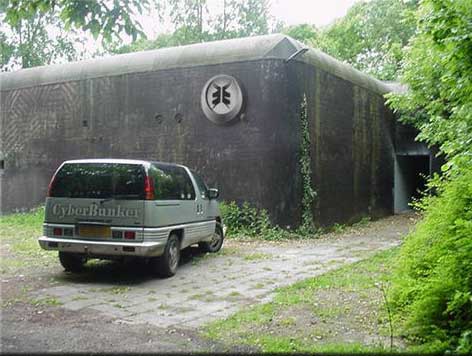
The Pirate Bay is going on a road trip through Europe, one they hope to end today in a former NATO bunker. After a move from Sweden to the Ukraine, The Pirate Bay has now arrived at CyberBunker, an ISP that can provide them with a facility that can resist a nuclear attack as well as electromagnetic pulse bombs.

After being chased by various anti-piracy groups, The Pirate Bay returned a few hours ago. “Nobody puts The Pirate Bay in a corner,” they say on their frontpage, referencing Patrick Swayze’s famous line in Dirty Dancing. Not in a corner, no, but what about a bunker?

Last Friday we reported that The Pirate Bay was forced to move outside of Sweden, and that the world’s largest BitTorrent tracker had found a new home in the Ukraine. Unfortunately this was a short-lived solution, with TPB now moving to Cyberbunker.

CyberBunker is located in a former military nuclear warfare bunker in The Netherlands. The facility was built by NATO in the 50s to survive a nuclear war, but after the nuclear threats were over it was sold to its current owners. The bunker is now used as a webhosting data center.

The bunker is equipped with Electromagnetic Pulse (EMP) shielding and Nuclear/Biological/Chemical (NBC) air filtration to guarantee that the servers they host stay up no matter what happens. As of this week it is also the new home of The Pirate Bay.

CyberBunker: The Pirate Bay’s new home

cyberbunker

According to Sven Kamphuis, one of the owners of CB3ROB/Cyberbunker, there were some initial troubles with setting up The Pirate Bay in its new location as several carriers refused to pass on the relay information after they received threats from the entertainment industry led by the Dutch anti-piracy outfit BREIN.

Despite these troubles the site is now accessible again in most locations, and Cyberbunker will continue to host the site and does not intend to cave in to the threats of the entertainment industry.

“I don’t expect BREIN to do pretty much anything at this point. The last conversation we had with them was about some mp3 site they wanted to have shut down somewhere in 2001/2002. It took around 3 hours at 2am at night and the end result was that both parties agreed not to agree,” Kamphuis told TorrentFreak.

Whether The Pirate Bay is actually located in one of the server racks at the bunker or another hideout was not confirmed

Tuesday, May 19, 2009

Biden Reveals Location of Secret VP Bunker

The vice president, well-known for his verbal gaffes, confirms at a dinner the existence and location of a secret hidden bunker that Cheney is believed to have used after the 9/11 attacks.

FOXNews.com

Vice President Joe Biden, well-known for his verbal gaffes, may have finally outdone himself, divulging potentially classified information meant to save the life of a sitting vice president.

According to a report, while recently attending the Gridiron Club dinner in Washington, an annual event where powerful politicians and media elite get a chance to cozy up to one another, Biden told his dinnermates about the existence of a secret bunker under the old U.S. Naval Observatory, which is now the home of the vice president.

The bunker is believed to be the secure, undisclosed location former Vice President Dick Cheney remained under protection in secret after the 9/11 attacks.

Eleanor Clift, Newsweek magazine's Washington contributing editor, said Biden revealed the location while filling in for President Obama at the dinner, who, along with Grover Cleveland, is the only president to skip the gathering.

According to Clift's report on the Newsweek blog, Biden "said a young naval officer giving him a tour of the residence showed him the hideaway, which is behind a massive steel door secured by an elaborate lock with a narrow connecting hallway lined with shelves filled with communications equipment."

Clift continued: "The officer explained that when Cheney was in lock down, this was where his most trusted aides were stationed, an image that Biden conveyed in a way that suggested we shouldn't be surprised that the policies that emerged were off the wall."

On Monday, Biden's press office issued a statement in response to this story, denying the bunker report.

"What the Vice President described in his comments was not -- as some press reports have suggested -- an underground facility, but rather, an upstairs workspace in the residence, which he understood was frequently used by Vice President Cheney and his aides," said Biden's spokesperson Elizabeth Alexander. "That workspace was converted into an upstairs guestroom when the Bidens moved into the residence. There was no disclosure of classified information."

In December 2002, neighbors complained of loud construction work being done at the Naval Observatory, which has been used as a residence by vice presidents since 1974.

The upset neighbors were sent a letter by the observatory's superintendent, calling the work "sensitive in nature" and "classified" and that it was urgent it be completed "on a highly accelerated schedule."

Residents said they believed workers were digging deep into the ground, which would support Biden's report of a secret bunker, but officials never confirmed the purpose of the work performed.

The revelation is the latest from Biden, who has a long history of political blunders.

Most recently, he said in a televised interview that if a family member asked him about traveling he'd advise staying away from public transportation or confined spaces to avoid swine flu -- a remark described as "borderline fearmongering" by an airline spokesman.