Zazzle Shop

Screen printing

Friday, February 18, 2011

Seinfeld Uncle Leo actor Len Lesser dead at 88

From: http://www.latimes.com/

Len Lesser
Len Lesser was a veteran character actor best known for his recurring role as Uncle Leo on “Seinfeld." (Craig Schwartz)


Len Lesser

Veteran character actor

Len Lesser, 88, a veteran character actor best known for his recurring role in the 1990s as Uncle Leo on the hit NBC-TV comedy "Seinfeld," died Wednesday in Burbank, publicist Laura Stegman said. He had pneumonia and cancer.

Starting in the early 1950s, Lesser built a reputation for mostly playing the heavy in dozens of movies and hundreds of TV appearances, while nurturing his love of the theater. But the bald, hook-nosed actor took his career to a higher plane once he established himself as Jerry Seinfeld's annoying Uncle Leo with his trademark greeting "Hello!"

"He's the kind of guy who is a total nuisance at times and the kind of guy you avoid," Lesser said of Uncle Leo in a 1998 interview with The Times. "He's a very expansive character, and that has an attraction to it."

Born Dec. 3, 1922, in New York, Lesser received a bachelor's degree in economics and government from the City College of New York in 1942. He served in the Army during World War II, then returned to New York to study acting.

He moved to Los Angeles in 1954 and began working in television and commercials. Movie roles followed, including small parts in "Kelly's Heroes," "Papillon" and "The Outlaw Josey Wales."

Besides "Seinfeld," he also had a recurring role on the CBS sitcom "Everybody Loves Raymond" as Raymond's father's friend Garvin.

He appeared frequently on local stages, including in "Cold Storage" at the Gnu Theatre in 1993, "Cantorial" at the Actors Alley in 1992 and "Awake and Sing!" at A Noise Within last year.

Ecuadorean Villagers May Hold Secret to Longevity

People living in remote villages in Ecuador have a mutation that some biologists say may throw light on human longevity and ways to increase it


Arlan Rosenbloom
A 67-year-old man who has Laron-type dwarfism with his daughter, 5, and sons, 7 and 10.

The villagers are very small, generally less than three and a half feet tall, and have a rare condition known as Laron syndrome or Laron-type dwarfism. They are probably the descendants of conversos, Sephardic Jews from Spain and Portugal who were forced to convert to Christianity in the 1490s but were nonetheless persecuted in the Inquisition. They are also almost completely free of two age-related diseases, cancer and diabetes.

A group of 99 villagers with Laron syndrome has been studied for 24 years by Dr. Jaime Guevara-Aguirre, an Ecuadorean physician and diabetes specialist. He discovered them when traveling on horseback to a roadless mountain village. Most such villages are inhabited by Indians, but these were Europeans, with Spanish surnames typical of conversos.

As Dr. Guevara-Aguirre accumulated health data on his patients, he noticed a remarkable pattern: though cancer was frequent among people who did not have the Laron mutation, those who did have it almost never got cancer. And they never developed diabetes, even though many were obese, which often brings on the condition.

“I discovered the population in 1987,” Dr. Guevara-Aguirre said in an interview from Ecuador. “In 1994, I noticed these patients were not having cancer, compared with their relatives. People told me they are too few people to make any assumption. People said, ‘You have to wait 10 years,’ so I waited. No one believed me until I got to Valter Longo in 2005.”

Valter D. Longo, a researcher on aging at the University of Southern California, saw the patients as providing an opportunity to explore in people the genetic mutations that researchers had found could make laboratory animals live much longer than usual.


Arlan Rosenbloom
A 32-year-old community leader and artist who has the rare dwarfism condition, with his bride, 17.

The Laron patients have a mutation in the gene that makes the receptor for growth hormone. The receptor is a protein embedded in the membrane of cells. Its outside region is recognized by growth hormone circulating through the body; the inside region sends signals through the cell when growth hormone triggers the receptor.
The Laron patients’ mutation means that their growth hormone receptor lacks the last eight units of its exterior region, so it cannot react to growth hormone. In normal children, growth hormone makes the cells of the liver churn out another hormone, called insulinlike growth factor, or IGF-1, and this hormone makes the children grow. If the Laron patients are given doses of IGF-1 before puberty, they can grow to fairly normal height.
This is where the physiology of the Laron patients links up with the longevity studies that researchers have been pursuing with laboratory animals. IGF-1 is part of an ancient signaling pathway that exists in the laboratory roundworm as well as in people. The gene that makes the receptor for IGF-1 in the roundworm is called DAF-2. And worms in which this gene is knocked out live twice as long as normal.

The Laron patients have the equivalent defect — their cells make very little IGF-1, so very little IGF-1 signaling takes place, just as in the DAF-2-ablated worms. So the Laron patients might be expected to live much longer.

Because of their striking freedom from cancer and diabetes, they probably could live much longer if they did not have a much higher than usual death rate from causes unrelated to age, like alcoholism and accidents.
Dr. Longo said he believed that having very low levels of IGF-1 was the critical feature of the Laron patients’ freedom from age-related diseases. In collaboration with Dr. Guevara-Aguirre, he exposed human cells growing in a laboratory dish to serum from the Laron patients. The cells were then damaged with a chemical that disrupts their DNA. The Laron serum had two significant effects, the two physicians reported on Wednesday in Science Translational Medicine.

First, the serum protected the cells from genetic damage. Second, it spurred the cells that were damaged to destroy themselves, a mechanism the body uses to prevent damaged cells from becoming cancerous. Both these effects were reversed when small amounts of IGF-1 were added to the serum.

Dr. Longo said that some level of IGF-1 was necessary to protect against heart disease, but that lowering the level might be beneficial. A drug that does this is already on the market for treatment of acromegaly, a thickening of the bones caused by excessive growth hormone. “Our underlying hypothesis is that this drug would prolong life span,” Dr. Longo said. He said he was not taking the drug, called pegvisomant or Somavert, which is very hard to obtain.

A strain of mice bred by John Kopchick of Ohio University has a defect in the growth hormone receptor gene, just as do the Laron patients, and lives 40 percent longer than usual.

Dr. Longo said that his report had first been submitted to Science, a better-known journal, which turned down the paper because of an adverse report from one reviewer.

Andrzej Bartke, a gerontology expert at Southern Illinois University, said that the new result was “very important” and that the authors had done a fine job in following the patients and generating high-quality data. “This fits in with what we are learning from studies in animals about the relationship of growth hormone to aging, because both cancer and diabetes are related to aging,” Dr. Bartke said.

The longest-lived mouse on record is one studied by Dr. Bartke. It had a defect in its growth hormone receptor gene, just as do the Laron patients. “It missed its fifth birthday by a week,” he said. The mouse lived twice as long as usual and won Dr. Bartke a prize presented by the Methuselah Foundation (which rewards developments in life-extension therapies) in 2003.

Dr. Guevara-Aguirre said he had been struggling to get sufficient IGF-1 to treat 30 of his patients before they reached puberty, at which point it will be too late. He said his group of Laron patients, the largest in the world, had provided essential data for drug companies making IGF-1, and he chided the companies for not reciprocating by providing the drug for his patients.

Dr. Arlan Rosenbloom, a pediatric endocrinologist at the University of Florida who has worked with Dr. Guevara-Aguirre, took a similar position. “Considering that the drug companies needed the initial studies to determine dosage and efficacy, it seems ironic that we should have so much difficulty getting the drug,” he said.

Ownership of the drug has passed through several companies’ hands, so any initial obligation may have been weakened. Dr. Guevara-Aguirre also said he believed that the government of Ecuador should do more to help get the drug for his patients.

Dr. Harry Ostrer, a geneticist at New York University who is exploring the Laron patients’ degree of Sephardic ancestry, said that he had seen several of Dr. Guevara-Aguirre’s patients in Quito, Ecuador’s capital, and that they were “remarkably youthful in appearance.”

Epic dog destroys annoying girl on sled

This dog was trying to have some fun in the snow, when two annoying girls kept driving by his house while towing a sled. He let it slide the first few times, but when they started blasting K$sha, he had to put his paw down.


EMBED-Dog Owns Girl Getting Towed On Sled - Watch more free videos

Massachusetts Bill to Legalize Marijuana

by ■ Edward Xiao
from: http://www.digitaljournal.com/article/303753#ixzz1EK9XH0Kq

article imageMassachusetts bill to legalize marijuana

A bill calling for the legalization, regulation and taxation of recreational marijuana has been introduced into the Massachusetts Legislature. 
According to The 420 Times, "The Cannabis Regulation and Taxation Act", which was drafted by attorney Richard M. Evans and introduced by Rep. Ellen Story (D-Amherst), would legalize the possession, consumption and sale of marijuana. An age limit of 21 and multiple fee-requiring licenses would also be established. The bill includes specific regulations and limits, such as processors of marijuana only being able to process the cannabis into one ounce packages, a $5000 fine for driving while high and specific indoor locations to sell the product. As noted in The Daily Collegian, the bill would also erect a Cannabis Control Authority. Made up of seven part-time directors serving seven-year terms and collecting salaries 20% that of the governor's, the group would oversee the Massachusetts cannabis industry, create regulations and rules, revoke licenses in the case of transgressing any laws pertaining to marijuana and its distribution, approve licenses for cannabis and collect $10 excise taxes per one percent of THC per one ounce of marijuana. While many are glad to see such a bill in the legislature, they still maintain a cautious outlook on the likelihood of the bill actually passing. Although he created it, Evans believes that the bill won't pull through because the legislature "won’t touch the legalization bill with a 10-foot pole.” He further states that supporters of the bill are reluctant to voice their approval because of fear that they will be labeled drug addicts. A ballot initiative, Evans claims, would be a more effective first step towards the legalization of cannabis. However, such an initiative would have to wait until 2014 to be introduced because under the law, highly similar proposals cannot be filed within four years of each other. Nevertheless, Massachusetts is still a focal point in the crusade to legalize marijuana. According to The MetroWest Daily News, since 2000, voters in the state have had a positive reaction to every question pertaining to the easing of restrictions on weed.

New Radiohead Album Drops A Day Early, New Video Released


Radiohead's new album "The King Of Limbs" is coming out 24 hours early. The album is being sent to those who pre-ordered it earlier this week. (Note: It's 6:20am and I've just been authorized to download my purchased copy.) This is the statement on the XL Recordings website.
"With everything ready on their website, the band decided to bring forward the release by a day rather than wait until the planned date of Saturday, Feb 19 to deliver the music."
Here's the first video from the album.


Lotus Flower by Radiohead
Source: YouTube

Orders for the download or the special edition, which is packaged in Radiohead's version of what the band is calling newspaper, can still be placed at radiohead.com. XL Recordings will be releasing the album on CD and vinyl on March 28.

Van Damme vs Kamsing [2011] • Who'll Win the Fight?


Actor Jean-Claude van Damme will fight Olympic gold-medalist boxer Somluck Kamsing in a K-1 muay thai match in April 2011 in Las Vegas, Nevada.

Thursday, February 17, 2011

Scratching the Surface: Portraits Carved in Walls

From: http://www.visualnews.com/


Using decaying plaster on old walls as a canvas, street artist Alexander Farto (aka Vihls) makes large detailed portraits by carving with hammers and chisels. His works give new life to decrepit buildings, while helping them retain a timely character at the same moment. Often his works leave chipped away plaster at their base, tipping off observers as to how the piece was created. Farto’s work has made an impact far and wide, with examples in many European cities and New York.
For more on Alexander Farto and his many works in many mediums (from graffiti to motion graphics) see his website alexandrefarto.com.


Source: omgshots.com,

Why Hasn't the Person You Texted Responded Yet? (Flowchart)

The Art of FLIGHT - snowboarding film trailer w/Travis Rice

 
please double click the YOUTUBE LOGO (on the right) to play in FULL 1080P HD
Just when you thought the producers of "That's It, That's All" couldn't top themselves comes a new breed of snowboarding entertainment.

The Art of FLIGHT follows Travis Rice, John Jackson, Mark Landvik, Scotty Lago, Jake Blauvelt, Nicolas Muller, Gigi Ruf, DCP and Pat Moore as they dream up new global adventures and progress the sport to unimaginable levels.

Brain Farm has gathered an arsenal of the most advanced and progressive film making technology to bring the masses a snowboarding adventure of epic proportions. Filmed on location in Jackson Hole, Alaska, Chile, Aspen, Patagonia, British Columbia and more, FLIGHT brings the viewer along for the perfect blend of adventure/travel drama and high-energy snowboarding action. The Art of FLIGHT releases September 2011.

Robo-Rainbow

From: http://www.good.is/

robo-rainbow from mudlevel on Vimeo.

robo-rainbow from mudlevel on Vimeo.

Take a look at Adam Nilsson's "Robo-Rainbow," a fantastic short video depicting a "complicated technical solution to aide in simple acts of vandalism." It should appeal to fans of robotics, street art, and/or rainbows.

Sally Lapointe: Fashion designer rides celebrity wave

Mass. native gets boost from singer

By Christopher Muther Globe Staff / February 17, 2011
From Boston.com 

NEW YORK — On the third floor of a sparse art gallery, a dozen stylists frantically straightened and slicked the hair of a small army of porcelain-skinned models. A dozen makeup artists painted faces with foundation and smoky eye shadow. Amid the bustle, the woman who should have been the most anxious calmly took it all in.
Marblehead native and designer Sally LaPointe, 26, showed her fall/winter 2011 collection at New York Fashion Week on Friday night. But unlike her first show here last fall, this time the eyes of the fashion elite watched closely. After pop superstar Lady Gaga plucked a LaPointe-designed black jersey dress to wear at last month’s Consumer Electronics Show in Las Vegas, the designer has found herself on the brink of the big time.

The audience for LaPointe’s show included her downtown art-school pals, but also featured tastemaking editors from Italian Vogue, Women’s Wear Daily, Elle magazine, and the influential website Style.com. Retail buyers, who will decide whether to pick up LaPointe’s line for their stores, were also in the house.

“I should probably be a lot more nervous,’’ LaPointe said shortly before the runway show, her black hair tucked under a ski hat. “But I feel good about the line. I feel good about how things are going. It’s all kind of exciting.’’

LaPointe, a Rhode Island School of Design graduate now based in New York, launched her line just two years ago and was quickly named one of New York Magazine’s “Nine Designers to Watch.’’ Her first collection also caught the eye of stylist Nicola Formichetti, who chose the black dress for Gaga to wear at a much buzzed about Polaroid event in Las Vegas.

“It definitely put her on the map,’’ says Harper’s Bazaar contributing editor and celebrity stylist Mary Alice Stephenson. “That press is worth probably a million dollars.’’

The fact that Gaga wore a LaPointe creation made perfect sense. The designer’s spring collection was based on the idea of going mad, and the dresses and jumpsuits were over-the-top, fanciful, and not exactly something the average woman would wear for a night on the town.

For her new fall collection, LaPointe scaled back on the craziness. While she showed some flashy pieces, the designer made huge strides toward wearability, or, as LaPointe prefers to say, “desirability.’’ Modern and feminine, the silhouettes were body conscious and well-tailored, whether it was a curve-hugging red gown or a full-sleeved silver minidress with matching leggings.

The reaction to her new line has been swift and positive. Women’s Wear Daily raved: “Futuristic can sometimes look dated but Sally LaPointe’s printed silk shirts in white and fiery orange over pants and a cropped red leather jacket were right on for the here and now.’’ Style.com noted: “They’re just the sort of thing Gaga would slip on to pick up the paper.’’

When LaPointe and her best friend and business partner Sarah Adelson launched the line, they were working day jobs at other fashion companies and never anticipated LaPointe’s work would get noticed so quickly. They now focus on the designs full time.

“Once you get a press jump like that, it creates more buzz, which is huge for us,’’ LaPointe says. “This is a pretty exciting time. It’s funny, because when my friends heard that Gaga wore one of my dresses, they just said, ‘It’s about time,’ because it just makes perfect sense that she would.’’

Celebrities have become a key vehicle for fashion designers who want to get their clothes noticed. During red carpet season, top designers pay celebrities thousands of dollars to wear their gowns to award shows and high-profile events.

But it doesn’t have to be a star-studded gathering. Paparazzi photos of a celeb wearing an eye-catching look to a restaurant, boutique, or even a court date can have a huge impact on the fate of a fashion label. The body-hugging white dress that Lindsay Lohan wore to face felony grand theft charges last week immediately sold out thanks to the publicity.

“Look at what happened with [fashion designer] Kimberly Ovitz,’’ says Joanna Coles, editor-in-chief of Marie Claire magazine. “Despite the fact that it was Lindsay Lohan, and despite the fact that it was a court date, it was still felt like an incredibly helpful moment for Kimberly. There are so many young designers out there, and the challenge for them is to get their name out there.’’

Designer Adam Lippes, who showed his collection in New York on Saturday, can speak to the power of celebrity. He’s seen his outfits worn on reality TV, but his star rose tremendously after Oprah Winfrey featured his clothes on her show.

“You can’t imagine how important something like this is,’’ Lippes said. “People are constantly looking at celebrities in magazines and blogs. It shouldn’t be that important, but it is. The bigger the celebrity, the bigger the exposure, and right now there isn’t much bigger than Lady Gaga.’’

Still, most shoppers aren’t looking for costumes; they want clothing they can wear and feel good in. LaPointe said that she had a slightly different approach in mind as she designed the new collection. She knew the fashion world would be watching, and she wants to keep it that way.

“I think that the meat and potatoes of the collection is that I wanted to make the clothes really wearable,’’ LaPointe says. “I do have a few show pieces, but I made a stronger push to make clothes that a women would really want.’’

It’s too early to tell whether the good reviews will lead retail buyers to stock shelves with LaPointe’s pieces. But no matter what happens, her two biggest fans were enthralled during last week’s show. LaPointe’s parents, who traveled from Marblehead, sat in the front row watching models strut the runway in shades of red, black, and turquoise. Their shy daughter is now the center of attention.

“It’s her outlet,’’ said her mother, Jodi LaPointe. “We all need an outlet to express ourselves, and she’s found a beautiful one. I just can’t believe I’m sitting here. Wow. I’m at my daughter’s fashion show. It doesn’t get better than that.’’

Christopher Muther can be reached at muther@globe.com.

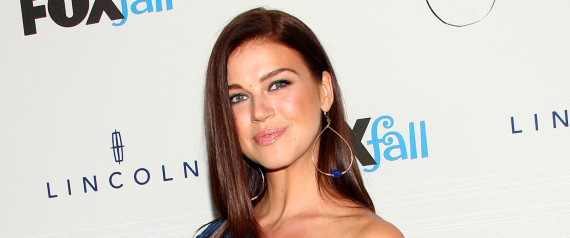
Adrianne Palicki: Wonder Woman In David E. Kelley's TV Reboot

From: http://www.huffingtonpost.com/

Adrianne Palicki

It's a tough job, casting someone to be the most beautiful (and ass-kicking) woman in the universe, but David E. Kelley has found his Wonder Woman: Adrianne Palicki.

Kelley, the "Ally McBeal" and "Boston Legal" creator who inked a deal with NBC in October to bring the iconic DC Comics character back to television for the first time since the 70's, cast Palicki, best known for her star turn in "Friday Night Lights," as his heroine. And she'll have to be something of a real superhuman to pull off all that he'll be asking of her.

With the new series set in modern day Los Angeles, Palicki will actually be taking on three roles: gritty crime fighter Wonder Woman; her first alter-ego, billionaire business woman Diana Themyscira; AND her assistant, Diana Prince.

She'll have to be fast, one assumes, to get her CEO self the latte that she demands her assistant self to get, ASAP.

Turns out, there wasn't much competition for the job -- Deadline.com reports that Palicki was the only actress that screen tested for the role.

She's had a brush with DC Comics already, playing a villainess in a pilot for "Aquaman" that was never picked up.

Lynda Carter, who flew to fame with the golden lasso in the 70's, apparently approves of the decision, tweeting "Congratulations Adrianne!" on Wednesday.

The Best And Worst of As Seen on TV Goods

ugo.com — Is that a 'vibrator' on her neck? 


Personal Massager

Click here for The Best And Worst of As Seen on TV Goods

Which Media Center Is Right for You: Boxee, XBMC, and Windows Media Center Compared

By: Jason Fitzpatrick & Kevin Purdy —
From: http://lifehacker.com/

Want all your downloads, streaming video, and other techie media stuff on your TV? Wondering which media center works best for you? Here's a look at the biggies in chart and Venn diagram form, followed by some lengthy breakdowns of each.

New to the idea of TV-connected computers? Head down below the charts for some explainers and deeper comparisons of each system. If you're already familiar with the HTPC scene, we'll give you the good stuff first.

We focused on three widely available, and generally popular, media centers for our comparison and review. We're certainly aware there are many alternatives out there, as free software or stand-alone hardware boxes, but these are the three of the most popular media centers, they receive ongoing development, and they can easily be installed on a wide number of TV-connected computers.

The graphical explanations

Here's how we see the three major media centers, in chart list and Venn diagram forms. Note: The chart is based on out-of-the-box features that don't require the user to install any plug-ins.


What's a media center, exactly?


What does a media center do? It varies, but it generally takes all the stuff you'd normally enjoy on a computer or portable device—MP3s, video files, Netflix, Hulu, digital photos, and web/social apps—and plays it on a television, through your speakers, and back onto your wireless network, if you'd like. Media centers can be run off of pretty much any capable computer, but are generally intended for small and specialized computers, called Home Theater PCs, or HTPCs. HTPCs have the video and audio ports necessary to hook up to a modern high-definition television, and generally have enough processing power and memory to handle the heavy burden of converting, playing, and sometimes recording high-resolution files. If you've got a home network set up with shared files and network-attached storage (NAS), media centers can generally pull their content off other systems and devices, as well as receive files for storage and download them directly off the net.

Put simply, a media center allows you to sit on a couch and do the most fun things you'd do on a computer with a remote. You can fire up a movie from Netflix's streaming service or from a file you've already downloaded, catch the show you missed last night on Hulu, put on background music while you're doing something else, share your Flickr or Picasa photos with visiting relatives—whatever you'd like, really.
Not every media center can do everything, however, and some are much better at certain entertainment jobs than others. The editors at Lifehacker conferred on what each box does best, tried to pin down what each system can and can't do, and put it together in ways that we hope can help you decide.

Windows Media Center, XBMC, and Boxee

Here's a more in-depth look at the media centers—installing and setting them up, and their pros and cons.
Windows Media Center is "free" with Home Premium or Ultimate copies of Windows Vista, all versions of Windows 7 except Starter or Home Basic, and available as a stand-alone, XP-based operating system dubbed "Media Center Edition." XBMC is a free and open-source media center software that was born as a game-changing XBOX modification, but now runs on Windows, Mac, Linux, and XBOX systems, as well as booting and running off a USB stick. Boxee is based on the same core internal code as XBMC, but focuses on bringing web content—video sites, blog streams, and social apps—into your living room, while XBMC remains oriented toward a download-and-play setup.
Plex, a popular and very eye-pleasing media center for Mac OS X, is certainly a contender in this category. For all intents and purposes, though, it's a variant of XBMC. Most anything we write or display in this post about XBMC applies to Plex, too, except for matters of looks and interface.
Those would be our definitions in the Lifehacker Dictionary, anyways. Let's get a bit more encyclopedic on the strengths and weaknesses of each system:

Windows Media Center

 
Installation and Setup: Fairly easy. It comes pre-loaded in the higher-end editions of Windows Vista and 7, and assuming your computer or HTPC has the right outputs and plugs, Windows can fairly easily adjust its display to your television. If you're running other Windows systems on your wireless network, you won't have to do much configuration to start "sharing" files back and forth from the TV-connected system to your other platforms. If you're running Mac or Linux computers, you'll have a good deal more work to do. If your media computer came with a TV tuner card already installed, Windows will recognize it and work with it to record TV shows.

Here's how Adam turned a Windows PC into a Media Center powerhouse, with a good detail on the installation and setup process.
Strengths
  • Nice and easy DVR: And you don't have to pay a monthly fee.
  • Calm, easy interface: Divided into obvious sections and fairly intuitive directional layouts.
  • Large range of compatible remotes: Look online or in an electronics store for a "Windows Media Center remote," and you'll find something with lots of buttons that instantly hooks up to your Media Center, usually through a USB-connected receiver.
  • Generally easy networking: Across Windows systems, that is, and if you're down with the shared folders setup.
Weaknesses
  • File handling: Generally, Media Center can handle the same files that Windows Media Player can handle, and, with the right codec installations, that can be quite extensive. But out of the box, don't expect support for the diverse range of video and audio you'll find around the web.
  • Windows-only: But you knew that.
  • Complex remotes: Media Center works with a lot of remotes, but they often look like parodies of button-stuffed clickers. If a simple, Apple-like navigator exists for Media Center, do tell us in the comments.
  • Locked-down DVR files: Work-arounds and decoders exist, of course, but if you want to play your recorded TV shows on anything other than your personal set of authorized Windows machines, Zunes, and XBOX devices, good luck.
Note: Windows Media Center doesn't support Hulu by default, but with the right plug-in it can do the trick.

XBMC

 
Installation and Setup: It depends, of course, on the platform and hardware you're installing on. Getting it running and connected on a modern Windows or Mac system is fairly painless, at least from a software standpoint. Running it as a "live" system from a USB stick isn't too hard, either, and you can install it from there onto an HTPC hard drive. Plugging it into a Madriva Linux box and hooking it up to your very specialized 1080p plasma setup with optical audio out will likely require hair plugs and years of therapy.
Read up on Adam's guide to building a silent, standalone XBMC media center on the cheap for a look at the live-USB-to-installation path on a $200 HTPC system.
Strengths
  • Open source, open nature: Need XBMC to do something it doesn't do already? Chances are, there's a clever hacker working on it. XBMC doesn't have the same kind of "platform" that its offspring Boxee does, but coders can get into it and make it better, and make it do more.
  • Meta-data and file recognition: From personal trials and commenter anecdotes, XBMC is really good at knowing when you've put new files somewhere in your system, figuring out what types of files they are (movie, TV, music, or picture), and reaching out to the internet to pull down relevant pictures, data, reviews, and even trailer links for the videos and music you plug into it.
  • Light and agile: Relatively speaking, XBMC may have some really nice graphics and menus, but because it comes from a project to put a full media center on a game system, XBMC is focused on playing back media files as smoothly as possible.
  • Slick, customizable looks: Even putting Plex aside, XBMC wins, hands-down, for looking like you're living in the future when displayed on a really big, nice TV. Don't like the way it looks by default? Put a new skin on it, and it's a whole different beast.
  • Format support: Personally, I've never found a file on the web, or converted from a friend's computer, that XBMC couldn't play, unless something was wrong with it.
Weaknesses:
  • Lack of Netflix, Hulu: There have been work-arounds, hacks, and other tweaks to make XBMC work with the two big names in streaming video. If you were depending on either one, though, XBMC would not be a safe bet.
  • Over-stuffed, sometimes complicated menus: XBMC's menus and layout are the geekiest around—how you react to that depends on your temperament. You can do all kinds of things from any screen in XBMC, and its interface often has a smile-inducing futuristic feel to it. But for someone new to media centers and looking to just sit down and play something, it can be quite imposing.

Boxee

 
Installation and Setup: On Windows and Mac systems, the latest Boxee beta is relatively simple to install, as it uses the built-in video and audio systems to push out content. On Linux, it's a good deal more complex, but, then again, what on Linux isn't? Apple TVs require a bit of hacking. In general, Boxee is compatible with the same kind of hardware as XBMC—OpenGL or DirectX-compatible video cards are highly recommended.
Here's how Kevin set up a cheap but powerful Boxee media center using a brawny $350 HTPC and free copies of Linux and Boxee.
Strengths
  • Built-in Hulu and Netflix: Boxee and Hulu have had their differences, but they seem to have reached a draw in the stand-off—most Hulu shows and movies work, most of the time. Netflix works fine on Windows and Mac, assuming you don't mind installing Microsoft's Silverlight system.
  • Growing directory of web content apps: Love FailBlog? Dig Vimeo's really hi-res stuff? Fan of TwiT's videocasts? Watch them all from Boxee's app, and grab more in the app "store," which has a very healthy selection of customized streaming content.
  • Play anything (technically): Boxee uses a reworked Firefox browser to view Hulu, but it's available for nearly any kind of web video page you find on the web. The Boxee Browser is a kind of last resort for any web content that doesn't have its own app.
Weaknesses
  • Love-it-or-leave-it interface: Even with its content-forward redesign, many media center aficionados have said they can't get used to Boxee's hidden left-hand sidebars and forward/back functionality. Some just don't like the default looks. It's not a make-or-break issue, considering it's basically the same core tools as XBMC, but if you're going to spend serious time with a media center, you want to like how it looks.
  • Local file handling: Boxee doesn't seem as smart about recognizing and updating local file stores. In the words of one Lifehacker editor, "Local files are almost an afterthought." That's to be expected, somewhat, on a system that's so web-facing and stream-savvy, but Boxee could do a lot more to make downloaded music, movies, and pictures easier to gather, organize, and access.

We know—we absolutely know—that we may have missed a feature, put in "No" where "Yes" should have been, or otherwise missed a detail or two in our breakdown of these media centers. We tried our best to research and check them, but if you see something wrong, or missing, in our explanations or charts, by all means: tell us, politely, in the comments, and we'll update this post, and the charts to match the reality. Feel free to also tell us which system has worked best for you, and why, in the comments.


Build your own Home Theater PC (HTPC) ... for under $600!

By Adrian Kingsley-Hughes

Adrian also runs a popular blog under the name The PC Doctor, where he covers a range of computer-related topics -- from security to repairing and upgrading.

Over the past few weeks I’ve had dozens of requests from readers wanting me to put together a parts list for a kick-ass, low-cost Home Theater PC (HTPC). Well, here you go!
Before I go on, first let me explain briefly what a HTPC is and how it differs from a regular PC. Basically, an HTPC (sometimes called a Media PC or Media Center) is a PC that’s specifically designed to playback music and video. Also, since it’s an entertainment system, you want to be able to control the PC remotely, and you want to keep noise down to a minimum.

What I’m going to outline here is an entry-level system that’s going to be able to handle all the basic tasks that you’d expect of an HTPC system. It’s going to be able to handle HD resolution video (1080p and 720p), cope with streaming video, upscale DVD, ad will even be good for playing games, as long as you’re not too greedy when it comes to resolution. It’s also going to have plenty of storage space so you’ve got plenty of room to store your ever-growing library of media.
OK, let’s get going!

Processor
One of the key factors to building a successful HTPC is to pick a processor that’s powerful enough to handle the demands placed on it by the tasks it has to carry out, but not so powerful that you’re having to add powerful fans to have to cool the thing off.
For this built I’ve chosen an AMD Athlon II X2 255 Socket AM3 part. This is a 3.1GHz dual-core CPU, but far more importantly than that, it has a TDP of only 65W. This means less heat is produced when it’s running, which in turn means less cooling, and it also means you can cram more components into a smaller chassis.
Price: $80

Motherboard
Now that we’ve chosen the CPU, it’s now time to choose a motherboard to match it. There are several consideration to take into account.
First, size. Ideally, you want your HTPC to have a smallish footprint, along the lines of a VCR, so it’s best to choose one with a micro-ATX form factor. Also, it’s a good idea for the motherboard to have an on-board graphics processor (GPU) and support for HDMI. Oh, and to match the processor, this needs to be a Socket AM3 board.
With all these requirements in mind, I’ve chosen a Gigabyte GA-MA785GMT-UD2H board. Highlights of this board include:
  • AMD 785G chipset
  • ATI Radeon HD 4200 GPU
  • HDMI
  • SATA support
Price: $90

Memory
Nothing special here, since the demands on the RAM aren’t that great. We need DDR3 for the motherboard, and a pair of 1GB sticks are ample for an HTPC.
Shop around for a good deal.
Price: around $40

Hard drive
What you want here is a drive that offers ample storage (take what you think you’ll need and double it!), is quiet and energy-efficient.
The drive I’m going to go for is a Western Digital GreenPower drive, because there are energy-efficient, quiet, designed for streaming audio and video, and are able too cope with being shut away in a small hot metal box with other components. I’m pushing the boat out here and going for a 1.5TB drive (AV-GP WD15EVDS). If you want to spend more, go for the 2TB drive, if you want to spend less, go with a smaller capacity … dial it in to suit your needs.
Price: $120

Optical drive
Lots of choices here, but the main question is whether you want a DVD drive or one that can play Blu-ray discs too. DVD drives start at around $20, while Blu-ray drives start at $100, so I’m going to opt for an entry-level Blu-ray drive - the LG black 8X BD-ROM 16X DVD-ROM 40X CD-ROM SATA internal combo that’ll handle pretty much any disc you throw at it.
Price: $100

Chassis/Power Supply Unit
OK, you’re building an HTPC here, not a desktop system, so you don’t really want it to look like a desktop PC. You need a chassis that’s designed specifically for HTPC. Fortunately, there are loads to choose from. The downside is that prices vary wildly.
Oh, you also need a Power Supply Unit (PSU) for the HTPC …
I’m going to make life easier for you here by picking a decent chassis that comes complete with a PSU … the Antec Black M FusionRemote 350 Micro ATX. Not only is this a good chassis, and comes with a nice PSU, it also comes with an IR receiver and remote control so you can operate your HTPC from your couch!
Price: $90

Keyboard/Mouse
You will want a wireless keyboard and mouse combo to control your HTPC. I’d go with something cheap from the Logitech range unless you want a specific feature/
Price: $50

Price (without Operating System): $590

OK, what about the Operating System?
Yes, your HTPC will need an operating system. You have choices available to you (for example, if you’re comfortable with Linux, you can take that route), but most people are likely to want Windows 7 on their HTPCs, and you can pick up an OEM copy of Windows 7 Home Premium for around $105.
Price (with Operating System): $695!!!

Back to the Future With 17 Cool Gadgets and Designs

By Chip
From http://walyou.com/

Those who were grown up in the 80s must not forget the science fiction movie that was storming cinemas in 1985 – “Back to the Future”. The amazing journey of the everyday teenager Marty McFly made all the kids go crazy over time traveling machine. Let’s hop on a DeLorean and take a trip back to Back to the Future era with these 17 amazing Back to the Futre gadgets and designs below.

Dolerean Hovercraft


Anyone who has watched Back to the Future must have dreamed of the Dolerean Hovercraft, but Matthew Riese is one of few people who have found the way to make his childhood dream come true. He launched a project on Kickstarter to raise $5500 for the project, and the result is the craft that can hover over flat surfaces like sand sand or water at the speed of approximately  45 miles per hour.

Delorean DMC-12 Flash Drive

Coolest_Back_to_the_Future_Gadgets_and_Designs_1
This 1:18 scale model of Delorean is an amazing toy car which will drive you right from the 1980’s flick into the present with an impressive capacity of 500GB. Invented by Flash Rods, the flash drive is available at $250 each.

Back to the Future Lights and Sound DeLorean

Coolest_Back_to_the_Future_Gadgets_and_Designs_2
Image Source: Indian Car and Bike Blog
This Back to the Future II DeLorean doesn’t come with 500GB capacity but is complete with a cool electronic system of lights and sounds, gull-wing doors that swing open and wheels that pop out for flight mode. The model was built as limited edition on 1:15 scale.

Back to the Future DeLorean Model

Coolest_Back_to_the_Future_Gadgets_and_Designs_3
This perfect toy car is a replica that will make McFly proud. The Back to the Future DeLorean die cast model is 1:18 scale and 9.5? in length, and is available at $49.99.

Lego RC Back to the Future Delorean

Coolest_Back_to_the_Future_Gadgets_and_Designs_4
Image Source: Seriously Geek
As a combination of Lego, radio control and the epic sci-fi movie, this Lego RC Back to the Future DeLorean is geeky – beautifully geeky – from every perspective.

DeLorean Perler Bead Sprite

Coolest_Back_to_the_Future_Gadgets_and_Designs_5
Image Source: GadgetHim
Playing with Perler beads is one of the newest geeky trends. Doctor Octoroc has created some amazing Perler bead sprites of famous vehicles including our beloved DeLorean.

Authentic Back to the Future Hovercraft

Coolest_Back_to_the_Future_Gadgets_and_Designs_6
Image Source: Radar/Nois
As one of the hero Mattel Hoverboards used by Marty McFly in the classic 80s trilogy, this Hovercraft drove the fans crazy when it went on auction with starting bid of $30,000. Nostalgia doesn’t come cheap.

Hoverboard Project


If $30,000 is a bit out of your budget, you might want to learn from Nils Guadagnin as he created his own hovercraft. To defy gravity, the French artist uses an electromagnetic system to levitate the board,  and a laser system to stabilize the object in the air.

Nike 6.0 SE DeLorean Shoes

Coolest_Back_to_the_Future_Gadgets_and_Designs_7
Nike made a breakthrough in shoes design when it introduced the shoes that look like a car in the classic sci-fi – dubbed as Nike 6.0 SE DeLorean. The soles mimic the tail lights of the classic DMC-12, the exterior is designed to look a lot like the stainless steel frame and the bottom of the shoe has the same gridded red-yellow-white pattern.

Marty McFly’s Back to the Future Shoes


To celebrate Back to the Future’s 25th anniversary, a fan decided to make a version of Marty McFly’s auto closing shoes. The mod uses an Arduino micro-controller and two servo motors. As you step inside the shoe, the force sensor feels the additional pressure, adds tension to the lases, tightens the shoe.

Marty’s Color Changing Hat


Available at $21.39, this famous color changing Marty Cap will help you show off your crazy love for the 80s sci-fi on your face.

Back to the Future Camcorder

Coolest_Back_to_the_Future_Gadgets_and_Designs_9
Image Source: retromax
Retromax is the luckiest Back to the Future fanboy. He has a real 1984 JVC GR-C1 Camcorder, the same model Marty McFly used in Back To The Future. Listed on top 100 gadgets of all time, this was the first ever combined camera and recorder.

Back to the Future Flux Capacitor Replica

Coolest_Back_to_the_Future_Gadgets_and_Designs_10
People tend to go nuts over DeLorean and forget what really started everything: the Flux Capacitor. This cool replica, sold at $230, finally gives Flux Capacitor justice.

iPhone 4 Flux Capacitor Decal


Image Source: CrunchGear
With just $6, you can change the sleek appearance of the latest version of iPhone into something retro and geeky with this iPhone 4 Flux Capacitor decal.

Back to the Future 25th Anniversary Cake

Coolest_Back_to_the_Future_Gadgets_and_Designs_12
Made to celebrate Back to the Future’s 25th anniversary, this stunning DeLorean Cake is the sweetest thing any fan can dream of.

Back to the Future Birthday Cake

Coolest_Back_to_the_Future_Gadgets_and_Designs_13
Even though it was not made for the official 25th anniversary, this DeLorean cake is no less cool and geeky.  The cake retains the original shape and color of the car with interesting details like the 2.12 gigawatt nuclear generator and the windshield wipers. I want one for my birthday too.

Back to the Future Mug

Coolest_Back_to_the_Future_Gadgets_and_Designs_14

Image Source: Gadgetshop
A coffee in this Back to the Future mug – featuring the logo of the film and the famous DeLorean – is the perfect way to start a day full of adventures.