Amazing street art in Guatemala by Stinkfish [Pics Galore]

items are from between 01 Jan 2005 & 02 Jan 2009.



items are from between 01 Jan 2005 & 02 Jan 2009.


TOKYO — Nissan is now ready to tell us a lot more about the GT-R SpecV, the extreme, long-awaited limited-edition version of Japan's award-winning sports car. At a news conference in Tokyo today, the SpecV faced the media, including Inside Line, for the first time. On hand were chief engineer Kazutoshi Mizuno and his GT-R team.
The GT-R to date has been the "everyday" supercar. But the lightweight, hard-core $169,000 SpecV is aimed at a far more specialized audience: buyers shopping for a Porsche 911 GT2 or a Ferrari 430 Scuderia, for instance.
The starting point is the improved 2009-spec GT-R that launched in Japan on December 8. This means the SpecV runs with the now stock 478-horsepower twin-turbo V6, albeit with a twist.
The SpecV gets a high-gear boost-control device to broaden the car's 434-pound-feet torque curve by an extra 15 lb-ft between 3,500 and 5,000 rpm. You engage the system via a small steering-wheel switch, but to get the full effect you have to wait as long as 80 seconds, according to Nissan, which might lead some to wonder exactly how wondrous this new device is.
There are no reported changes to the GT-R's brilliant all-wheel-drive system, and body dimensions stay the same, but Nissan has worked hard to knock off the pounds, so the SpecV comes in 132 pounds lighter than normal at 3,704 pounds.
Losing the two rear seats has certainly helped. There are now simple vinyl covers where the rear seats used to be.
Up front, the SpecV gets slimline, super-stylish carbon fiber bucket seats. Outside, carbon fiber is also used for the rear spoiler, the brake ducts and across the front grille. Under the hood, the engine cover for the GT-R's formidable 3.8-liter VR38 DETT power unit is now black instead of gray.
Suspension, with Bilstein Damptronic struts, is set up to be ultra-stiff, to racing spec, and the SpecV also introduces Nissan's first carbon-ceramic brakes for production. These massive brakes, co-developed with Brembo, save 11 pounds per wheel and generate titanic stopping force (up to 2.0 G at the Nürburgring) but cost more than $50,000 to overhaul.
Lightweight 20-inch Rays forged alloy wheels shod with high-grip Bridgestone Potenza RE070R run-flat tires are also unique to the SpecV, while the titanium-coated exhaust comes over from the Nismo Club Sports GT-R that bowed in Japan last September.
The theme color for the SpecV is a moody, mysterious Ultimate Opal Black that changes color depending on the light (yes, really) but costs an extra $6,180. It's not so different from a color famously used on the R34 GT-R in Japan, but if you want to save money, standard-issue white, red and gray are also available.
Nissan is expecting to build the SpecV (which has yet to be approved for the United States) at the rate of 20-30 units per month, versus the global build run of 1,000 units per month for the "normal" GT-R.
So, it's going to be very select. Nissan won't yet say how fast it is, or how quickly it can zap around the Nürburgring. But you can be sure Porsche will be among those wanting to find out.
Inside Line says: Americans will be watching for news of U.S. approvalNEW YORK (CNNMoney.com) -- There are many ways to spend $800 billion to revive the economy. In recent days, President-elect Barack Obama has ticked off many of them: invest in infrastructure projects, help states pay for Medicaid, cut taxes on the middle class, expand use of renewable energy.
But what about helping those at risk of foreclosure, and by extension the housing market as a whole?
Lawmakers in Washington are demanding that more be done, and they are aiming their sights both at the $700 billion financial rescue package known as TARP and the massive economic stimulus bill Obama is pushing as vehicles for new housing measures.
Already, Treasury Secretary nominee Timothy Geithner is working on plans to revamp the way TARP is used to make foreclosure prevention a bigger priority, two transition aides told CNN. Congress has made it known that it likely won't release any more TARP funds until some of the money is earmarked for housing.
For his part, Obama has been shy on details but has said that within a month or two he would unveil "a sweeping effort to address the foreclosure crisis so that we can keep responsible families in their homes."
Meanwhile, Senate Budget Chairman Kent Conrad, D-N.D., on Wednesday said it would be a mistake to pass a stimulus bill without also tackling the housing crisis.
"The housing market is 16% of the economy," Conrad said. "To think that we are going to have a package of economic recovery that does not address housing adequately I think would miss the boat."
Use TARP for homeowners: House Financial Services Chairman Barney Frank, D-Mass., is writing a bill that would impose conditions on the use of any more TARP money. He sent a memo to colleagues this week calling for "substantial efforts" to be made to reduce foreclosures, a spokesman for Frank's office said in an e-mail.
One of his suggestions: mandate that some TARP money be used to support a version of a plan proposed by FDIC Chairwoman Sheila Bair. The FDIC has estimated the cost of that program at roughly $25 billion, although other estimates run higher.
Bair's plan would systematically modify loans and provide a government guarantee to protect investors in the event a homeowner re-defaults after the loan has been modified.
Reform bankruptcy law: On Thursday, Senate Banking Chairman Christopher Dodd, D-Conn., and Sen. Richard Durbin, D-Ill., said that Citigroup (C, Fortune 500) has agreed to support a proposal that the lending industry has strongly opposed that would allow bankruptcy judges to write down the primary mortgages of homeowners filing for bankruptcy.
The bank's support of the proposal is based on the condition that the change only apply to existing mortgages and that homeowners filing for bankruptcy notify their lenders 10 days before to give them a chance to modify the mortgage.
Other lenders and housing industry interests -- including the powerful National Association of Home Builders -- have also started to lower their resistance to so-called bankruptcy cramdowns.
The long-held argument against cramdowns is that they would cause rates to rise because mortgage securities investors would demand a higher interest rate to compensate for the risk that a judge could rewrite mortgage contracts on terms disadvantageous to the investor.
Offer bigger tax break to home buyers: NAHB has been pushing for all home buyers to get a temporary tax credit for buying a primary residence worth up to 10% of the purchase price. A tax credit is a dollar-for-dollar reduction of one's tax liability.
Currently, only first-time buyers may get a temporary tax credit worth up to $7,500 for a limited period of time. But that credit functions more as an interest-free loan from Uncle Sam because the home buyer has to repay it over time.
Neither Dodd nor Senate Finance member Charles Schumer, D-N.Y., speaking to the press on Thursday, endorsed the idea of an actual tax credit. Dodd said a tax credit would not help prevent foreclosures but could spur economic growth.
And Schumer said there was "broad support" among members of the Senate Finance Committee to make tax policy changes to support housing, particularly existing homes as opposed to newly constructed ones.
Push interest rates down: The National Association of Realtors, among others, has pushed for the Treasury Department to take a more active role in driving mortgage rates down by buying securities backed by 30-year fixed-rate mortgages from Fannie Mae and Freddie Mac.
A plan already in place at the Federal Reserve has already had the effect of lowering rates on the 30-year fixed to record lows. The Fed is buying up to $500 billion in mortgage-backed securities backed by Fannie and Freddie, a move that bolstered confidence in the mortgage giants' ability to continue to buy and back loans in the secondary market.
Another idea that has been floated recently is to have Uncle Sam use money to buy down points on home buyers' mortgages to lower interest rates.
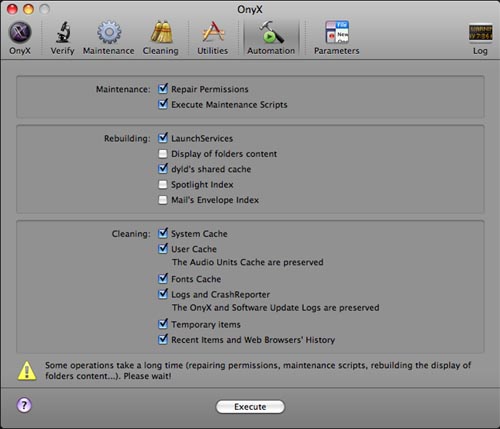
OnyX allows you to verify the Startup Disk and the structure of its System files, run miscellaneous tasks of system maintenance, configure some hidden parameters of the Finder, Dock, Dashboard, Exposé, Safari, Login window and some of Apple’s own applications.
This is the post where we are listing out few great free tools for Mac Operating System, this is an exclusive post for our those readers who are the Mac users. But our other readers will also enjoy this post. Don’t forget to bookmark this post for your future reference as it has few most useful and free application that will be helpful for you when you are on your Mac system. This is absolutely a great list of 21 Free Apps For Mac OS X That Are Absolutely Useful.
Summed up perfectly by Laura- Capitalism runs of self interest not trust or transparency. Guard yours carefully.
I think there is a far and wide incorrect perception of competence/fiduciary responsibility the general public has with private industry that still escapes me.
I've been trying to figure out why it still permeates. When are people going to understand, with the greater wealth creation in private industry comes the occasional tidal waves created by those who helped build and then sold you your boat in the first place.
Someone recently asked me if the current economic crisis has the power to change the way Americans think about money long-term -- the way the Great Depression shaped a generation of thrifty savers. There's no doubt the worst meltdown since the 1930s is shifting the culture; whether those changes endure beyond the credit crunch is an open question. But here are five trends to watch for in the year ahead:
1. Frugal is sexy.
Coupons are becoming more popular. But estimates suggest that just 2 percent of Americans actually redeem them, presumably because they worry that other people will view them as cheap or poor. In fact, Canadian researchers recently reported that the stigma about coupon-users is not only real but also extends to the people standing nearby.
Participants in four different experiments, published in the 'Journal of Consumer Research', perceived the people standing near the coupon-redeemer as cheap -- especially if the coupon was of low value (50 cents or less) and the two people knew each other. Interestingly, the stigma-by-association disappeared when the third party was highly attractive.
The choice here is clear: Always look your best while shopping, or accept the fact that you can randomly catch coupon-cooties -- so you might as well use them yourself (especially when the store offers to double them). Or better yet, do both, and you can help make bargain-hunting sexy.
2. A Downshift in Reference Groups
One reason people stumble into debt is social. Given the vast geographic and social mobility we enjoy in the U.S. (not to mention the ability to keep in touch with everyone we've ever known on Facebook), our reference groups often include friends with more money.
We tend to idealize the consumption of these friends, and then construct extravagant ideas about what we should consume ourselves, says Ron Wilcox, professor at the Darden School of Business at the University of Virginia, and author of 'Whatever Happened to Thrift: Why Americans Don't Save and What to Do About It.'
Most at risk for idealized consumption: the overeducated and underemployed, Wilcox says. "Education often defines who you spend your social time with," he says. "You may have someone who has a master's degree or a doctorate but they don't make that much money. They get invited to events that the cognoscenti attend. They go to art gallery openings. They know good wine from bad wine. Combine that with a lack of income and people get in bad trouble that way."
In this economic decline, watch for like-minded consumers to band together, forming clubs to trade financial tips or cut costs by splitting staples bought in bulk. Which brings us to...
3. Tighter Bonds Among the Neighbors
My neighbors and I have saved a fair bit of change on babysitters and kennels over the years by watching each others' kids and dogs. What I didn't realize is that these friendly exchanges may be good for our careers as well.
A new study finds that social interactions between neighbors are an important source of job referrals, especially if the neighbors are of similar age and education, and have children of the same age. Duke economist Patrick Bayer, Stephen Ross of the University of Connecticut, and Giorgio Topa of the Federal Reserve Bank of New York published their findings in the 'Journal of Political Economy' in December.
Examining 1990 Census data, the researchers looked at neighbors in the Boston area and found that residing on the same block (versus on nearby streets) increased the probability of working together by 33 percent. The "referral effect" benefits were greatest for neighbors who were well-matched in terms of education and age: Those men tended to earn 4 to 6 percent more, suggesting that they were finding better positions through their neighbors. There was no salary effect for well-matched women, but they were more likely to be in the workforce.
These days, instead of keeping up with the Joneses, maybe the Joneses can help you keep up.
4. Marketing to Uncertainty
With Americans worried about the fate of their jobs, homes, access to credit, retirement, and college savings accounts, it didn't take long for someone to come up with a marketing campaign that taps into mass anxiety.
Hyundai recently launched a promotion that allows consumers to return a vehicle they buy or lease within the first year if they lose their jobs involuntarily. The maximum benefit under the "Hyundai Assurance Program" is $7,500.
Watch for similar campaigns to tap other timely trends. Think about what's made you angry over the past year: bailouts for the irresponsible and incompetent; unfair penalties and fees; service plans that assault you with their complexity and thwart genuine price comparison; and the loss of hard-earned and hard-saved dollars in a no-place-to-hide financial meltdown. Watch for corporate America to respond with messages about security, quality, responsibility, fairness, transparency, and comfort.
One of the more insidious marketing strategies is one that exploits hyperopia -- an excess of farsightedness, or a tendency to plan too much for the future. Research has found that, as time passes, hyperopic people tend to regret their virtuous behavior and wish they had lived a little more.
The 'Journal of Consumer Research' recently ran an article entitled "Seize the Day! Encouraging Indulgence for the Hyperopic Consumer". Researchers at the University of Pittsburgh and Texas A&M suggest luxury goods companies can lure these tough customers by relating indulgent purchases to a positive long-term outcome.
In other words, beware the ad suggesting that buying a Lexus today will somehow be useful to you in retirement.
5. The Death of Trust
Finally, as Warren Buffett once said, "Trust is like the air we breathe. When it's present, nobody really notices. But when it's absent, everybody notices." That giant sucking sound you hear is the American investor, gasping for breath.
The lessons of the subprime mortgage debacle and the Madoff scandal are clear: Understand where and how your money is invested. Know the policies and fees of your bank, insurer, credit card company, and 401(k) service provider, because there will always be an inherent conflict between your goal -- building wealth -- and the goals of companies and advisors that earn money on your wealth.
In a recent op-ed, 'The Wall Street Journal' suggested that "capitalism runs on trust." But the truth is, capitalism runs on self-interest.
No broker will present you an investment or mortgage product without thinking of his or her commission. No rating agency will value the truth about an investment over the firm's profitability. No government agency chief or member of Congress will protect the individual investor from the abuses of financial services companies without pondering the impact on his or her future employment or campaign contributions.
And no Treasury bailout czar will demand accountability for hundreds of billions of your tax dollars being showered upon the drunken captains of industry who ran the ship aground to begin with. As a Government Accountability Office report noted in December: "The standard agreement between Treasury and the participating institutions does not require that these institutions track or report how they plan to use, or do use, their capital investments."
If there is an object lesson that will shape this generation of savers and investors, it's one of betrayal. Capitalism runs on self-interest. Guard yours carefully.
by Laura Rowley
NEW YORK (CNNMoney.com) -- The hemorrhaging of American jobs accelerated at a record pace at the end of 2008, bringing the year's total job losses to 2.6 million or the highest level in more than six decades.
A sobering U.S. Labor Department jobs report Friday showed the economy lost 524,000 jobs in December and 1.9 million in the year's final four months, after the credit crisis began in September.
The unemployment rate rose to 7.2% last month from 6.7% in November - its highest rate since January 1993.
The steep annual drop in jobs marked the highest yearly job-loss total since 1945, the year in which World War II ended.
"We're seeing a complete unraveling of the labor market and are on track for getting beyond 10% unemployment," said Lawrence Mishel, president of the Economic Policy Institute.
The total number of unemployed Americans rose by 632,000 to 11.1 million.
November, in which 584,000 jobs were lost, and December marked the first time in the 70-year history of the report in which the economy lost more than 500,000 jobs in consecutive months.
"We have a bigger economy now, but even on a proportional basis, the last months have been the worst since [1945]," said Kurt Karl, head of economic research at Swiss Re. "It's just an enormous acceleration of job losses."
A growing number of workers seeking full-time jobs were able to find only part-time work. Those working part-time jobs - because they couldn't find full-time work, or their hours had been cut - jumped by 715,000 people to 8 million, the highest since such records were first kept in 1955.
The so-called under-employment rate, which counts those part-time workers as well as those without jobs who have become discouraged and stopped looking for work, rose to a record 13.5% from 12.6%. Calculations for that measure began in January 1994.
"The existing unemployment figures are greatly understated," said billionaire steel tycoon Wilbur Ross in a recent interview with CNNMoney.com. "They count as employed someone who used to have a high-paid manufacturing job, and now is working at a Wal-Mart or a Wendy's."
In another discouraging sign, the average hourly work week fell last month to 33.3 hours - the lowest level in history - from 33.5 hours. Even with a modest 5-cent gain in the average hourly salary, the average weekly paycheck fell by $2 to $611.39.
Job losses were spread across a wide variety of industries. Manufacturing lost 149,000 jobs, the leisure and hospitality industries cut 22,000 jobs, and the mining industry shed 1,000 positions.
Even in the midst of the holiday shopping season, retailers still slashed payrolls by 66,600 workers last month.
Professional and business services jobs, a category seen by some economists as a proxy for overall economic activity, dropped by 113,000. And financial services jobs fell by 14,000.
Only two of ten industry categories were hiring last month. Government hiring, which has stayed relatively strong throughout the downturn, added another 7,000 jobs in December. Education and health services also grew payrolls by 45,000 employees.
Construction employment shrank further by 101,000 jobs, and the rate of construction unemployment soared to 15.3% - by far the highest of any group.
"Today's jobs report ... is conclusive evidence that it is time to put people back to work building America," said Terry O'Sullivan, general president of the Laborers' International Union of North America. "Now it's time for Congress to move to create jobs with the same urgency as they did on the $700 billion Wall Street bailout."
President-elect Barack Obama has begun his push for a massive stimulus plan, aimed at creating or saving 3 million jobs over the next two years. Lawmakers have called for rapid action to address the extraordinary stresses facing the labor market, including spending hundreds of billions of dollars on new infrastructure projects.
"This morning, we received a stark reminder about how urgent action is needed," said Obama at a Friday press conference. "Clearly the situation is dire, it is deteriorating and demands urgent and immediate action. For the sake of our economy and our people, this is the moment to act, and act without delay."
Many economists have said job losses will continue to accelerate without government intervention.
"The country is losing half a million jobs in a month, and if the government doesn't act quickly, there's no reason that wouldn't intensify," said Mark Zandi, chief economist of Moody's Economy.com before a Democratic Steering and Policy Committee forum Wednesday.
Infrastructure experts agree, saying unemployed construction workers are eager to get back to work.
"Putting money into highways won't by itself end the recession, but it will put a lot of skilled workers back on job," said Ken Simonson, chief economist for The Associated General Contractors of America.
December's job losses were expected to be deep, as employers looked to slash payrolls to free up balance sheets for the new year. But large-scale cutbacks may continue throughout the first half of 2009, economists say, as the nation's economy continues on its slow path to recovery.
"I think this [level of job loss] is going to continue at least through March," said Tig Gilliam, chief executive of Adecco Group North America, a unit of the world's largest employment firm. "The many clients I've spoken with are not expecting an economic bounce-back soon. They're making the painful and difficult decisions to adjust their capacity for the reduced demand for their goods and services."
Gilliam and Karl both expect about another 1 million jobs to be lost in January and February before the declines begin to shrink to about a 200,000 level in June. Both said stimulus will help, but they doubt infrastructure jobs will have as quick of a boost as lawmakers hope.
"Infrastructure projects won't have an effect until late in the year," said Karl. "Tax cuts may have a more immediate impact, but as we saw with the last stimulus package, they may have no economic impact at all."
In another sign that more losses will come soon, temporary employment, including workers employed by temp agencies, fell by another 80,600 jobs last month. Employers often cut temporary workers before they begin cutting permanent staff.
The economy has lost more than 2.5 million jobs in the current recession, which began in December 2007, far surpassing the previous two recessions, and just below the 2.7 million jobs lost in the 1981-1982 recession, which had the deepest unemployment in the 70-year history of the report. 


Motorola has announced plans to launch the world’s first completely carbon neutral mobile phone, at CES 2009 in Las Vegas.
The shell of the W233 Renew is made entirely of recycled water bottles, and will be available via T-Mobile within the next three months. The struggling cell phone manufacturer has also teamed up with CarbonFund.org to offset the energy used in the manufacture, distribution and operation of each phone throughout its lifetime.
As part of the alliance, Motorola will invest in renewable energy sources and global reforestation projects. The company also plans to print all of the phone’s documents on post-consumer recycled paper using vegetable-based inks.
According to Jeremy Dale, corporate vice president, global marketing, Motorola Mobile Devices, “Today, natural resources, energy and time are more precious than ever before. From the product’s design, to the packaging to our partnership with Carbonfund.org, we wanted to ensure that this device makes the right impact with consumers and the environment.”
There is no news yet on a price, but Motorola have announced that the phone will be “extremely affordable.”
Now, if they can make one model carbon neutral, how about rolling the approach out to the entire range…?
Image Credit - ModMyMoto.com
EYE ON THE BEACH Rob Holman of Oregon State University with sand samples from nearly 1,000 sites around the world. CORVALLIS, Ore. — As a young geophysicist in the 1980s, Rob Holman attended a conference in San Francisco that included a field trip to a beach. Dr. Holman, who grew up inland, in Ottawa, stared at the ocean, assessing the strengths and vectors of the waves and currents. But when he looked around, everyone else was studying the sand. He realized, he recalled, that “sand is not the same everywhere.” So he started collecting it. “I collected a few samples and put them in jars,” he said. “Then I had so many I built a rack. Then I built three more racks. Then I built four more.” Today Dr. Holman is best known as a coastal oceanographer at Oregon State University whose computerized photography system, called Argus, has given researchers new ways to observe and measure beaches. But he still collects sand, which he displays on shelves in the corridor outside his office. By now he has almost a thousand samples. They come from his travels and from geologists and amateurs all over the world (including this reporter) who send him grainy shipments in envelopes, plastic bags, paper towels and other wrappings. Each offering is dried and transferred to glass laboratory jars a few inches high, which Dr. Holman labels by latitude and longitude of their site, as best he can determine them from the sometimes sketchy information his contributors provide. The collection includes sand from all continents, including Antarctica. “Dutch colleagues are particularly good” at mailing in sand, Dr. Holman said. “Africa is lacking in samples,” a deficiency he attributes in part to an unfortunate accident. “Early on, I had a rack collapse,” he said. Though these offerings have not necessarily ended up in the formal display, he has also received a bottle containing a gimmick portrait in purple sand, Hawaiian sand samples sold in packages to tourists, salt and pepper (“that was actually my secretary”) and all kinds of other things that were found on beaches, or might have been, including jelly beans and M&Ms. He accepts contributions of sand from inland riverbeds and places like Ayers Rock, in the Australian Outback, and even from hotel lobby ashtrays “if it’s a high-class place,” he said. These are listed as “miscellaneous.” Occasionally offerings come from the community of psammophiles (formally, plants that live in sand) — people who collect sand for fun. There are more of them than one might think. Sand collecting “is not a new hobby or a passing fad,” according to the Web site of one group, the International Sand Collectors Society (www.sandcollectors.org). Its motto: “Discovering the World, Grain by Grain.” Dr. Holman watches some sand sites, but from a distance. “I don’t participate in the chats,” he said. For Dr. Holman, what started almost as a joke has become a valuable teaching tool. Geology students at the university study his collection, and they can learn a lot from it. “This row is a north to south transect along the East Coast,” he said one day recently, pointing to tubes containing samples collected at sites from Cape Cod to Key West. “It just gets lighter and finer.” That is because most of the time sand is not stationary on the beach. On the East Coast, “the big waves come in from the northeast, and they drive the littoral drift predominantly from north to south,” Dr. Holman said, referring to the longshore movement of sand. By the time a grain of sand washes up on a beach in Florida, it has been battered by waves for a long time. “The physical action of being continually beaten causes the grains to break down, the angular corners to break off,” he said. “They become more rounded.” And relatively dense mineral grains, like garnet, have settled out. The result is a row of samples shifting from the relatively dark, coarse grains of the Northeast to the fine white beach sand of the Southeast. Dr. Holman keeps about two dozen especially telling samples in a portable “teaching rack” for use in classes and at lectures. Some are dark volcanic grains. One vial, from the Banzai Pipeline, a surfing mecca in Oahu, “is all broken up shells with rounded edges,” he said. “This sand cannot last very long.” The rack “illustrates a lot of the things we need to know about how beach sands are different,” he said. “I have occasionally taken in sand to a student exam and said, ‘Tell me about this beach.’ A good person can do very well. There are a number of characteristics you can look at — the nature of the sand and the shape, where would the minerals come from, different transport and aging. Those all affect the sand you see on the beach.” Dr. Holman also takes the teaching rack with him when he gives talks to the public, an effort to encourage people “to think about what they see on beaches.” “Then I show them some Argus pictures, which always make them think about sandbars and how mobile they are,” he said. Argus is the system Dr. Holman developed in research he began about 20 years ago at theArmy Corps of Engineers research pier on the coast at Duck, N.C. Researchers assigned to the Duck pier regularly send instruments into the surf to make precise measurements of the underwater topography in the surf zone, particularly the formation and movement of sandbars along the beach. Understanding these sandbars is critical to study of beach erosion and climate-related sea level rise, but the surf zone is a notoriously hostile research environment. Setting up and maintaining instruments there is almost impossible unless the equipment is so sturdy it distorts its own data, by interfering with the flow of water and sand. As a practical matter, the measurements made routinely at Duck are unobtainable almost anywhere else, and certainly not here in Oregon, where the wave climate is the harshest of any coastline in the Lower 48. Dr. Holman used the Duck instrument data and time-lapse film from a camera he mounted on a tower at the Corps installation to figure out how to correlate photographic information to changes in the topography under the surf. The results were surprising. For one thing, sandbars were not moving in simple patterns, as many coastal scientists had thought they did. “The biggest thing we learned is how much more complicated it is than we thought it was,” he said. “There is a richness of morphologies.” Using Argus data, scientists can watch, almost in real time, as sandbars appear, disappear, curve, drift, breach and otherwise act up under the camouflage of breaking waves. The system can even be used to spot rip currents in real time. The lesson of Argus, he said, is “never give up observing” S. Jeffress Williams, a coastal geologist with the United States Geological Survey, called the system “a critical piece of new technology.” “The Argus system allows us to quantify and document visually the changes that take place along the coast on a variety of different time frames,” he said. Dr. Williams, a contributor to Dr. Holman’s collection, said that without the system, these observations would be difficult or even impossible. “A lot of the changes take place during storms and at times when it is difficult to have people out on the beach making observations and taking measurements.” At one time, Dr. Holman said, coastal scientists thought that if they understood all the underlying physics, they would understand everything about beaches. “The pendulum has swung back,” he said. “Argus has been part of that. Argus helped us realize that our simple concepts were simple.” While it is true that all beaches “live by the same rules” in that the movement of wind, water, waves and sand is always a matter of F = ma (force equals mass times acceleration), beaches behave differently. “We hope to figure that out,” he said. Today, there are Argus installations at Duck and in Oregon, California, Hawaii, England, the Netherlands, Australia, New Zealand, Spain, Italy and Brazil. Dr. Holman has also begun working with NATO in hopes of adapting routine reconnaissance images, most of which are discarded, to the Argus system. Meanwhile, sand keeps piling up. When he first displayed the collection, Dr. Holman said, “the dean was a little queasy” about investing in shelving. But now it may be time for another infusion of money. Though he installed shelves with what he thought was ample room, he said, “we have run out of space.” Leah Nash for The New York Times
(CNN) -- When a new president strolls into the White House, there's a kick in his step and a twinkle in his eyes.
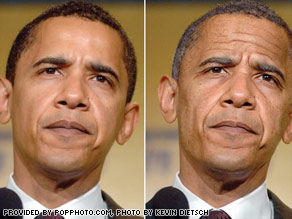
This photo illustration projects what President-elect Barack Obama may look like in four years.

But as the years go by, the high-stakes decisions, constant criticisms and the fluctuating public opinion chip away at the president. His shoulders slump a little and his energy may seem sapped.
The president ages twice as fast while in office, according to a theory advanced by Dr. Michael Roizen, a chief wellness officer at the Cleveland Clinic.
"The typical person who lives one year ages one year," he said. "The typical president ages two years for every year they are in office."
Using public information, Roizen looked through medical records of previous presidents back to Theodore Roosevelt. Assessing factors such as diet, blood pressure, physical activity and lifestyle habits, he calculated that the leader of the free world ages more quickly.
Roizen, who is the author of "RealAge: Are You as Young as You Can Be?" has not assessed the "real age" of President-elect Barack Obama, who is 47, because of lack of medical data.
"Barack Obama is a fairly young guy and doesn't have great of a risk," Roizen said. "If he's president for eight years, he ends up having the risk of disability or dying, like someone who is 16 years older."
Former president Bill Clinton entered the office with a robust head of salt-and-pepper hair and a healthy habit of running. After bitter partisan battles, the Monica Lewinsky scandal, and impeachment by the House, Clinton left office with wrinkles and powder-white hair.
"Chronic stress can produce lots of wear and tear on the body," said James A. McCubbin, a Clemson University professor of psychology and senior associate dean of the College of Business and Behavioral Science. "This is what we see in the changes in the appearance in the beginning and end of the presidency."
Roizen points to the experience of Ronald Reagan.
"When Reagan came into office, he stood up absolutely straight. He was joking and incredibly quick-witted about current events. When he left office, he was hunched over. The age signs on face was there. His jokes were those of olden days rather than current events," he said.  See the toll of the presidency »
On Wednesday, Obama, President George W. Bush, and all three living former presidents -- Jimmy Carter, George Herbert Walker Bush, and Clinton -- are meeting in the Oval Office and then having lunch together at the White House.
After eight draining years in the Oval Office, an outgoing president like George W. Bush can reverse the tolls of stress by exercising and spending time with friends, Roizen says.
"Do as many healthy things as you can adopt," Roizen suggested. "The main thing he should do is finding what he wants to do with the rest of his life, which is tough for presidents to find something meaningful to do."
During his second term, Bush dealt with a troubled war, a struggling economy, and sagging approval ratings. But the avid runner, mountain biker and fisherman showed that his reflexes haven't slowed.
"I mean, did you see him dodge that shoe?" said David Zinczenko, editor-in-chief of Men's Health magazine, referring to a December news conference in Iraq where an Iraqi journalist threw his shoes at the president and Bush swiftly ducked the flying footwear. Twice.
The incoming president is also no slacker. Although accused by California Gov. Arnold Schwarzenegger of having skinny legs, Obama regularly frequents the gym and plays basketball. The president-elect was on the cover of Men's Health in November.
"This is not a broccoli-shunning, pork rind-eating, McDonald's-popping guy. I mean, this is someone who eats arugula and guacamole and Hawaiian pizza," Zinczenko told CNN.  Watch a report on presidential aging »
"If the worst that happens is that your hair goes a little gray, so be it."
Many recent presidents have turned to sports to decompress. Presidents have enjoyed mountain biking (George W. Bush), golf (Clinton, Gerald Ford, Dwight D. Eisenhower), tennis (Ford, Carter, George H.W. Bush), jogging (Clinton, Carter and both Bushes), swimming (Ford), bowling (Richard Nixon), horseshoes (George H.W. Bush) and horseback riding (Reagan). Check out projected aging of other political leaders
"The daily routine of a president is really grueling," Ron Nessen, Ford's press secretary, told CNN. "It's hard to get thinking time. Ford talked about how when he was swimming laps, it gave him time to think about things."
During the Democratic primaries, Obama worked out at the gym in the Cleveland Clinic the morning of his debate with then-rival Hilary Clinton. Living up to his nickname "No Drama Obama," the candidate was remarkably calm, considering a high-stakes debate was to take place that night, Roizen recalled.
"Maybe he will age better, because he handles stress better," he said. "The fact that he smokes means he still has inner stress."
Retaining a close group of friends and confidants is an important way to reduce the isolation of the presidency, Roizen said.
This video imagines what Jean-Claude Van 

 .
.

 Posts
All Comments
Posts
All Comments