“How graceful is the wisteria as its branches bend down covered with whorls of delicately colored petals!” from The Pillow Book of Sei Shonagon (966-1017) (translated and edited by Ivan Morris, Penguin Classics)
“Fatigued, time to beg for night lodging Blooming Wisteria” Basho (1644-1694)
“Wisteria in bloom Voices of pilgrims Voices of birds” Issa ( 1763-1828)
Byoudoin Temple in Uji, Kyoto, is a conversion of the glorious villa owned by the Fujiwara Clan. The Amidado, commonly known as Hoo-oo-do (Fenghuang in Chinese or Phoenix in English, the mythical bird revered and meant to protect Buddha) Hall was built in 1053. It is a real wonder how the beautiful Heian Period building survived wars and fires throughout history. I was lucky enough to see wisteria in full bloom when I visited this past April.
I also visited Kisshoji Temple decorated with a famous local (Kitakyushu) wisteria garden, founded by the Reverend Chinzei as his ancestral Katsuki Clan Botai temple.
Wisteria in Japanese is Fuji. The Chinese characters for the flower Fuji is not the one used for Mt. Fuji. Instead, the character is the one used in the Fujiwara Clan. Yes, that's right. The family crest of Fujiwara uses wisteria as its symbol. The dominant Fujiwara names split and spread as descendents with such derivative names as Ito, Kato, Kondo, Goto, Sato, ..., etc. Bill Bryson's A Short History of Nearly Everything says Caspar Wister gained a certain unexpected immortality when the botanist Thomas Nuttall named a delightful climbing shrub after him (1818). Belonging to the pea family, wisteria vines entwine around any available support, usually a trellis.
Now, I’d like to offer a bit of intro to the Kabuki Play “Fuji Musume" for blog readers overseas. It is a visual climax of a Kabuki show, in which the dancer performing the role of a wisteria maiden. She changes her Kimonos four times and dances against the gorgeous backdrop of clusters of mauve and purple wisteria flowers, as well as giant trunk of green pine tree. Pine stands for man, wisteria for woman. Accompanied by Nagauta chanting “Wisteria whorls colored delicately purple and extended longer”, the dancer expresses feelings and emotions related to love in the manner of the Edo period by holding a wisteria twig with her coquettish and adorable gestures, twirling around the pine tree. Eventually, sadness and despair take over the maiden. Heartbroken and drunk on Sake, she does a most beautifully frenzied and tortured dance of unrequited love.
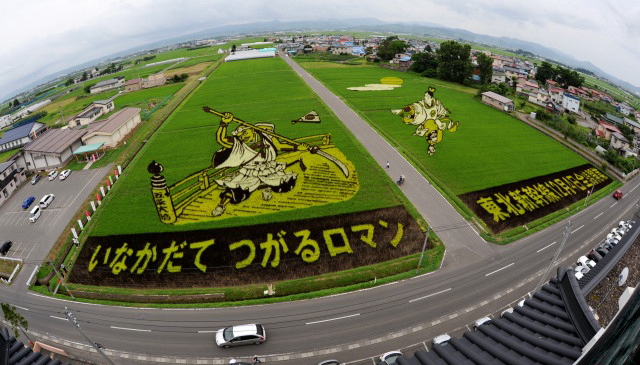
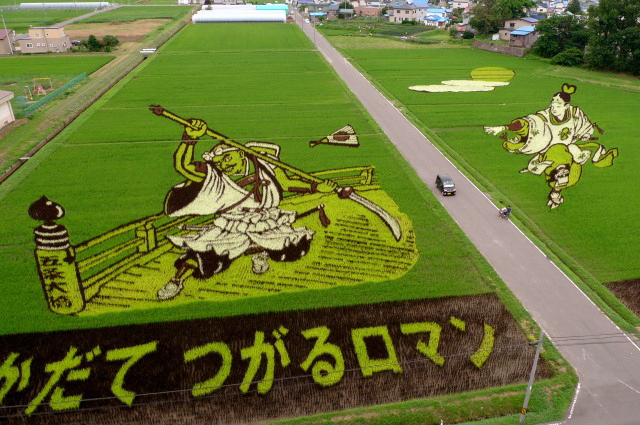
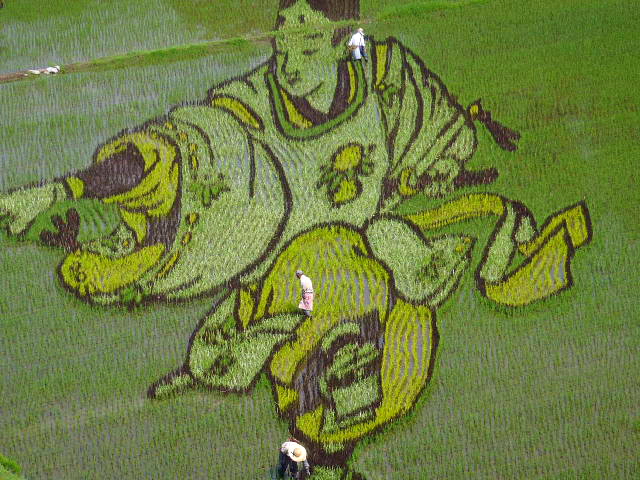
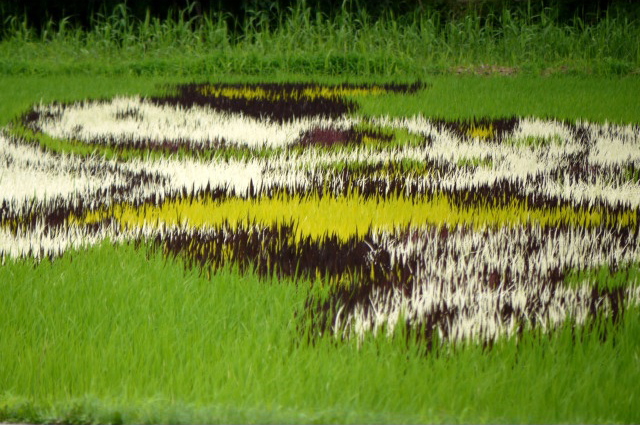
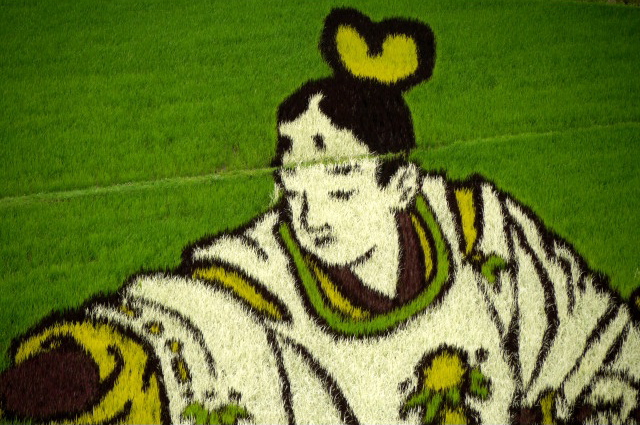
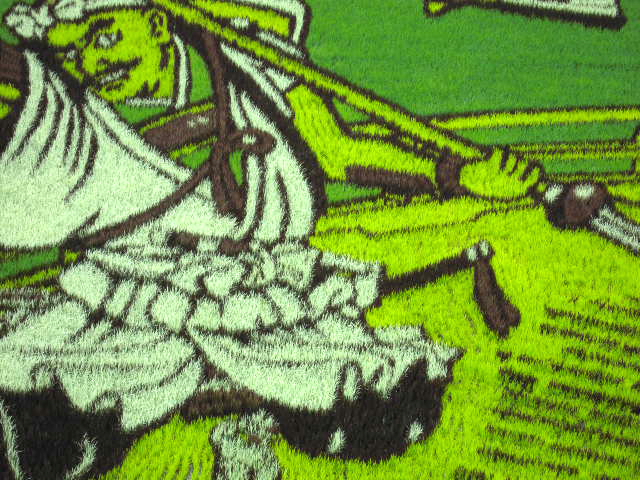
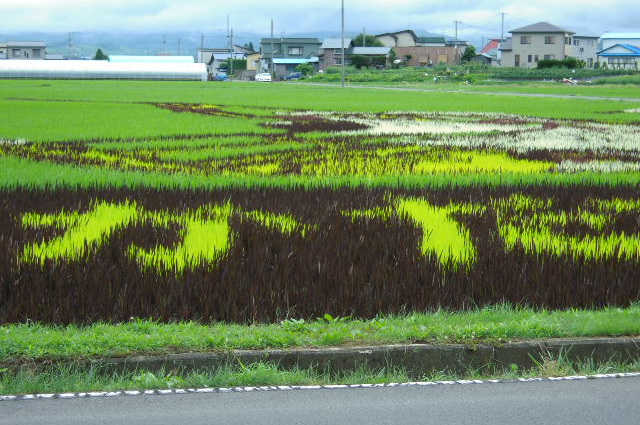
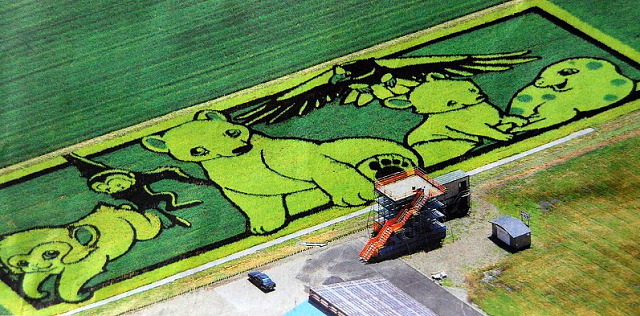
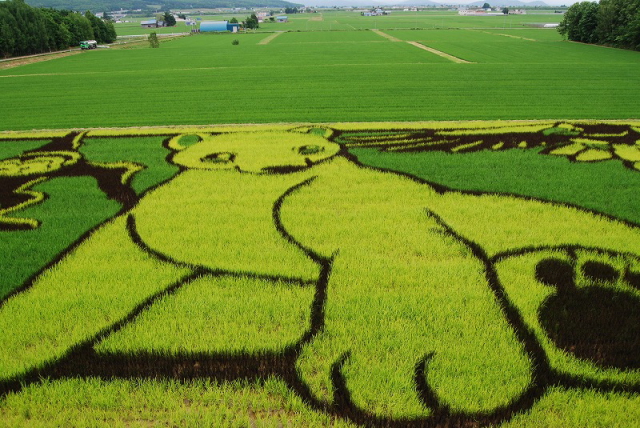
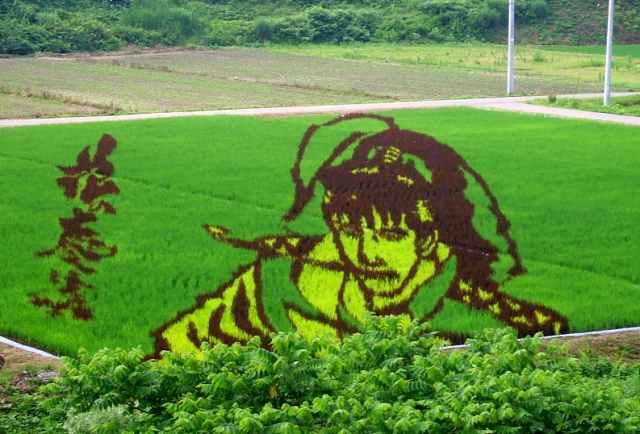
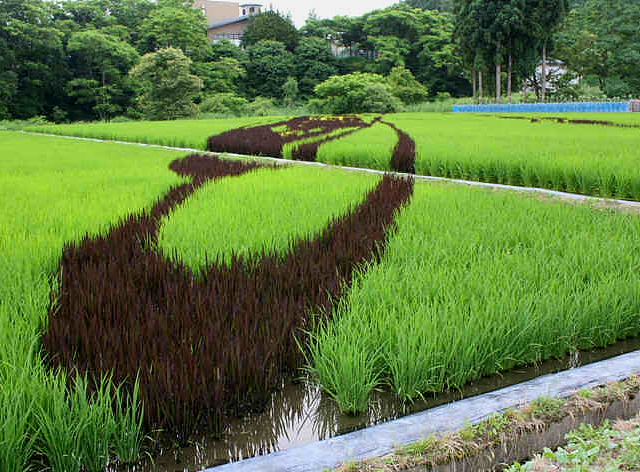
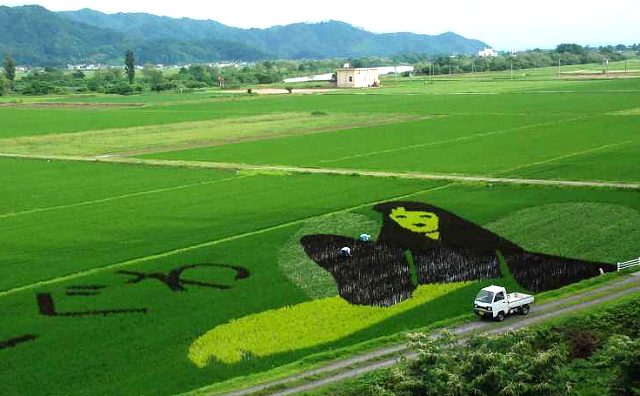
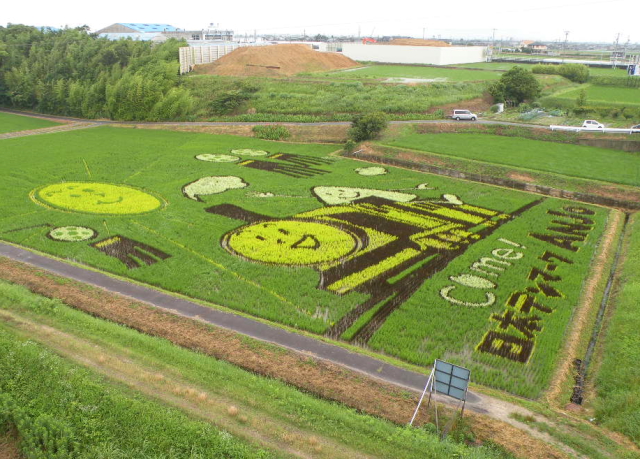
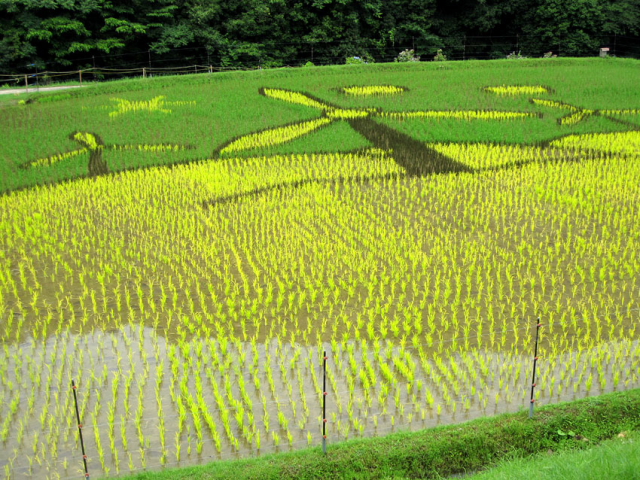
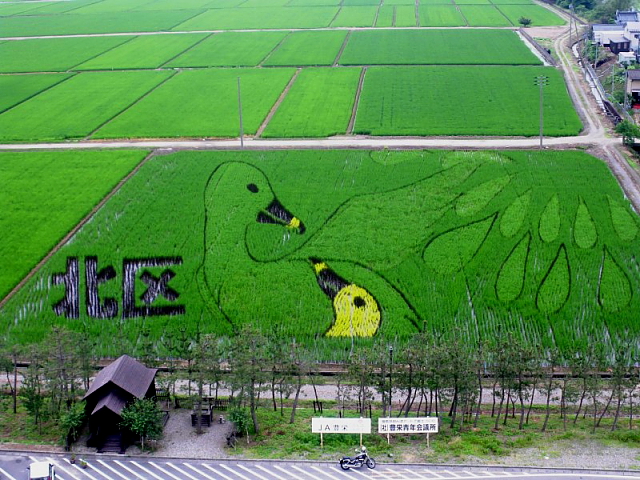
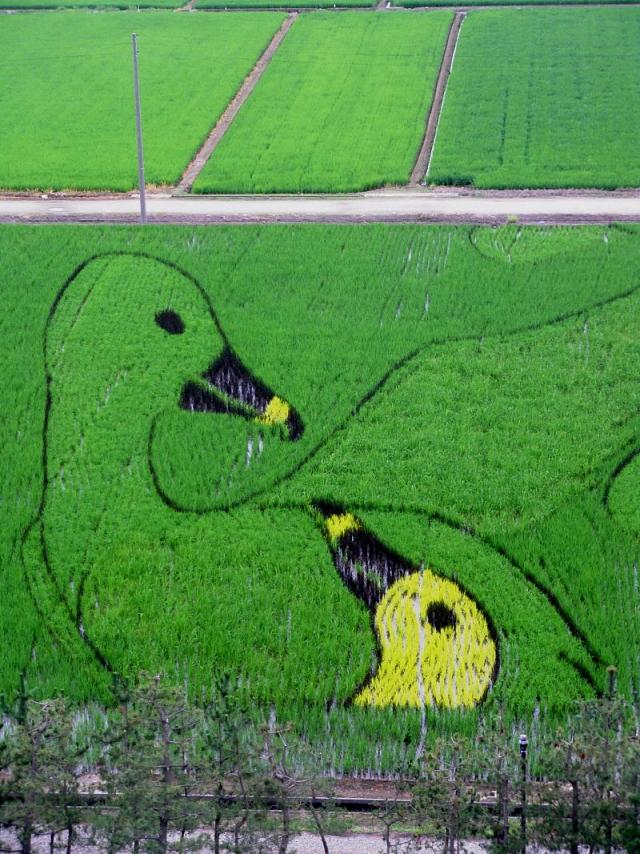
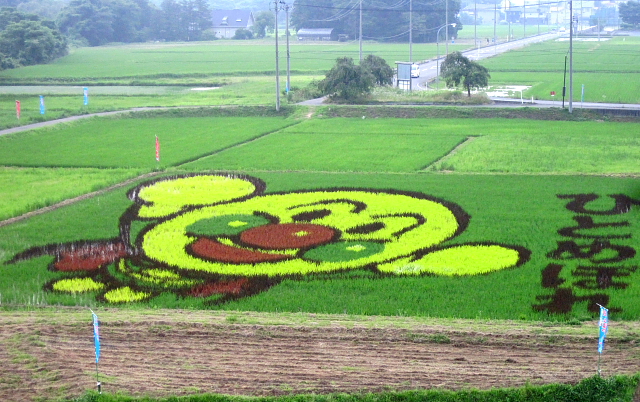
This year’s selection of rice paddy art has begun to crop up in fields across Japan.
Rice paddy art in Inakadate (Aomori prefecture) [photo]
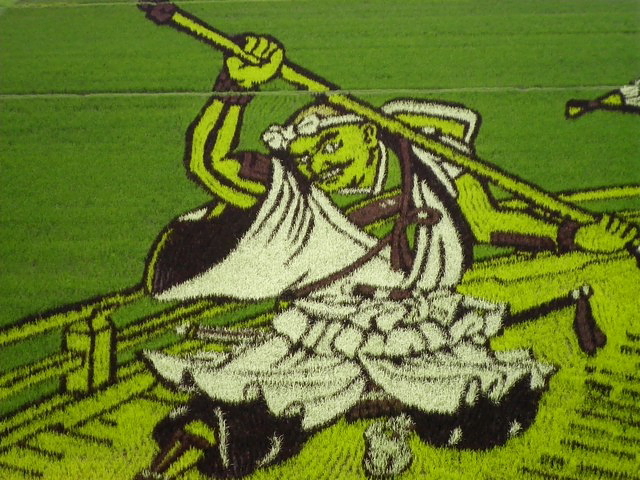
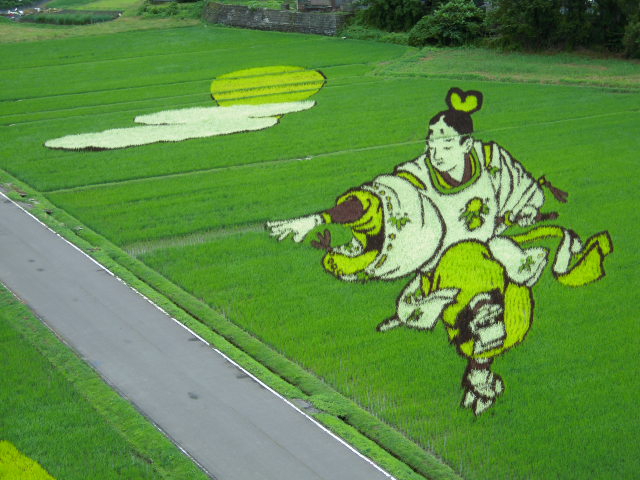
Two historical figures — the legendary warrior-monk Benkei (left) and the warrior Ushiwakamaru, a.k.a. Minamoto no Yoshitsune (right) — have emerged in a pair of fields in the Aomori prefecture town of Inakadate. For nearly 20 years, the town has prided itself as home to Japan’s finest rice crop art, which is created by carefully arranging different colors of rice plants in the field.
TOKYO (May 16) -- Almost everyone stood when the bride walked down the aisle in her white gown, but not the wedding conductor, because she was bolted to her chair.
The nuptials at this ceremony were led by "I-Fairy," a 4-foot tall seated robot with flashing eyes and plastic pigtails. Sunday's wedding was the first time a marriage had been led by a robot, according to manufacturer Kokoro Co.
"Please lift the bride's veil," the robot said in a tinny voice, waving its arms in the air as the newlyweds kissed in front of about 50 guests.
The wedding took place at a restaurant in Hibiya Park in central Tokyo, where the I-Fairy wore a wreath of flowers and directed a rooftop ceremony. Wires led out from beneath it to a black curtain a few feet away, where a man crouched and clicked commands into a computer.
Japan has one of the most advanced robotics industries in the world, with the government actively supporting the field for future growth. Industrial models in factories are now standard, but recently Japanese companies are making a push to inject robots into everyday life.
Honda makes a walking child-shaped robot, and other firms have developed them to entertain the elderly or play baseball. Kokoro, whose corporate goal is to "touch the hearts of the people," also makes giant dinosaur robots for exhibitions and lifelike android models that can smile and laugh. The company is a subsidiary of Sanrio Co., which owns the rights to Hello Kitty and other Japanese characters.
"This was a lot of fun. I think that Japanese have a strong sense that robots are our friends. Those in the robot industry mostly understand this, but people mainly want robots near them that serve some purpose," said bride Satoko Inoue, 36, who works at manufacturer Kokoro.
"It would be nice if the robot was a bit more clever, but she is very good at expressing herself," said new husband Tomohiro Shibata, 42, a professor of robotics at the Nara Institute of Science and Technology in central Japan.
The I-Fairy sells for about 6.3 million yen ($68,000) and three are in use in Singapore, the U.S. and Japan, according to company spokeswoman Kayako Kido. It has 18 degrees of motion in its arms, and mainly repeats preprogrammed movements and sounds.
Japanese TV: think people hurting themselves in weird and unusual ways, games in which the only prizes are naked chicks, and panties. Lots of them. Absurdly obsessive amounts of them. We’ve compiled a list of some of the weirdest moments from Japanese TV – although to be honest, there’s plenty that was too fruity for us to show. Says it all about what they like to watch, really. Anyway, check it out…
10. Pantyhose Tug of War
We all know the Japanese are utterly enthralled by anything and everything to do with girls’ underwear. They also love taking simple, innocent enough games and whacking in a pair of panties or a nipple just to spice things up. Unfortunately, the rest of the world just thinks they’re a bit weird. Check out these two meatheads, whose idea of fun is placing pantyhose over their heads and competing in a tug of war. We struggle to understand exactly what the winner hopes to gain. Check out the face of the guy in white at 20 secs – you wouldn’t want him going through your mum’s underwear draw (you probably wouldn’t want anyone doing that, to be honest).
9. Insect Freak Show
Possibly one of the weirdest things we’ve seen all year. Apparently this guy has the ability to make insects perform circus tricks, using… his finger. We’re not sure whether to be amazed or repulsed, or whether we simply don’t care. Knowing the Japanese, what is amazing is that he doesn’t use his powers to magic a pair of panties onto those flies.
8. Dizzy Bowling
A Japanese girl, dressed in maid’s costume, dizzies herself by spinning around on a baseball bat – giving the obligatory glimpse of panties, naturally – before making a pathetic attempt to send a bowling ball down the lane and collapsing to the floor. And it gets weirder: from nowhere an utterly random and insane bunny girl fantasy suddenly appears. Are these people on crack or something?
7. Transsexual MRI Scan
This seems to have absolutely no point whatsoever. A bunch of men, dressed as nurses (why we ask?), undergo MRI scans. But there’s an oh-so-hilarious catch – as they slide into the chamber they are met, face-to-face by… another face. The result? After this side-splittingly unfunny experience, many of these dudes seem genuinely psychologically traumatized.
6. Naked Body Surfing
“Wait. We’ve just had a killer idea. Take one aging, slightly balding, bespectacled Japanese man. Grease him up and get him to run full pelt (which is pathetically slow in his case) towards a line of horizontal bikini-clad babes, before diving on them and seeing how far he can slide across their firm, naked flesh.” Who the hell went through that thought process and came to the conclusion it was a great idea for TV – more importantly, how didn’t the guy in the video get wood?
5. Bikini Balance Beam
We’re willing to bet the guys that dreamed up this one had consumed a fair bit of sake. It’s so cliched it’s actually brilliant. Get loads of hot chicks, whack them in bikinis, and make them fight (or in their case, feebly grapple) to stay on a beam. Simple but effective, this is classic lad’s entertainment at its most meaningless. The winner even gets to pull the string on a confetti loaded exploding ball. Genius.
4. Boob Ringing
You might want to make sure nobody is looking over your shoulder when you watch this one – it basically boils down to a few hyper Japanese guys running around fondling the boobs of mannequins placed in a variety of suggestive poses. Totally inexplicable, but somehow endlessly fascinating.
3. Unraveling Dress
This is definitely an idea we should think about exporting from Japan. A load of men wearing nappies (ok, we don’t need that part) bust their guts turning a giant wheel that gradually, tantalizingly unravels the threads of girls’ clothes, leaving them standing in – you guessed it – their underwear! Just check out the anguished looks of genuine concern from the dudes watching when they fear the guys on the wheel will run out of steam before they get to see the final girl’s hooters. As her naked nipples are slowly uncovered men collapse and are thrown off the wheel in agony, but they gallantly keep going (as any true gentleman would in the situation), using the famous industrious Japanese work-ethic to repeatedly jump back on for one final, kamikaze push. And boy, are they rewarded.
2. Peepshow
This basically just leaves us speechless. The mysterious thought that lies behind putting a man on a giant bungee and getting him to run towards a woman behind a screen and throw balls to knock it down… well, it’s just bizarre. And yes, that’s right, she is in only her underwear. Predictably.
1. Sniper Prank
They say Japanese prank shows are the best in the world. Well, yes. If your idea of ‘best’ means the pranks they play are so disturbingly realistic, their victims have to spend several years in institutions recovering. The look of sheer horror on this guy’s face as his buddies are brutally gunned down is not a pleasant sight – and what’s worse is watching his reaction. Like most of us, he doesn’t try to play the hero, or even tend to his wounded pals, but drags himself into the corner of the room, wetting himself, and thinking only of saving his own skin. This truly is closer to cruelty than entertainment.
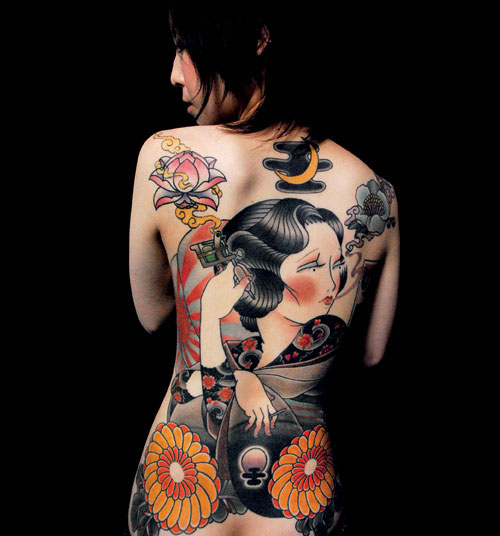
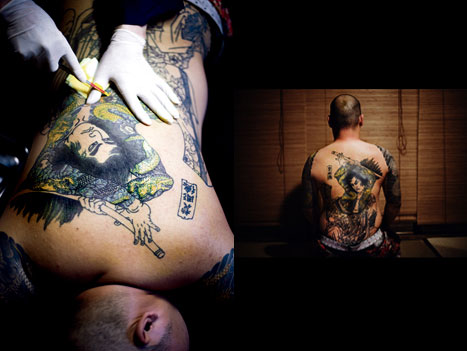
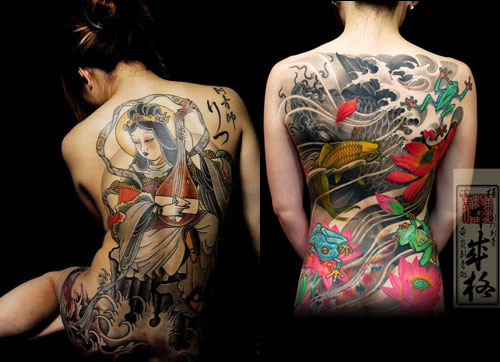
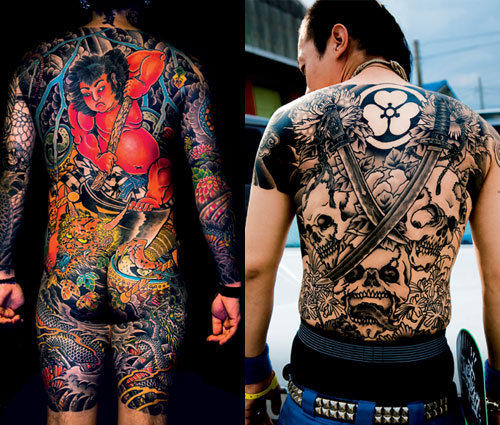
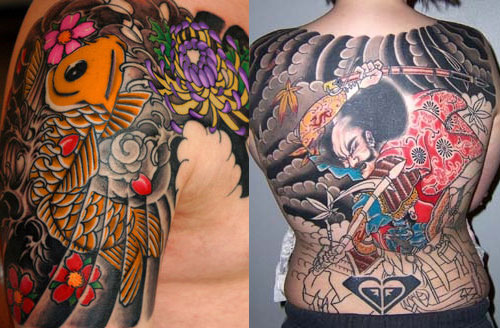
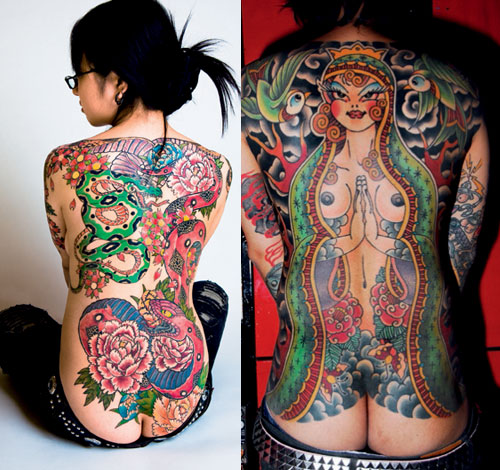
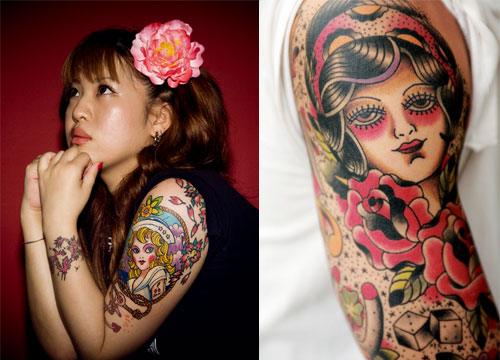
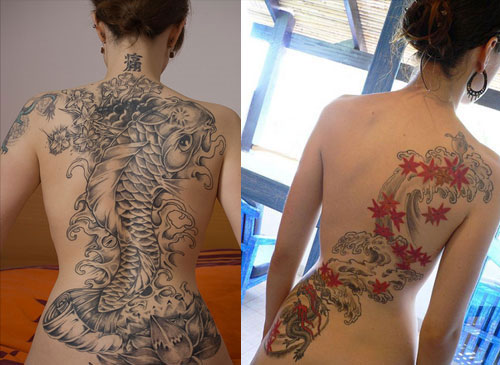
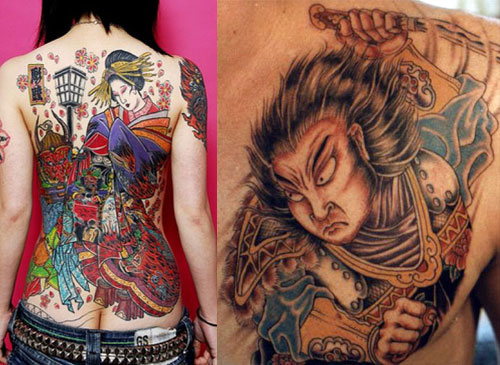
Last summer, I wrote a post about 3D Tattoos which got a heated response. Today I will continue the exploration of the amazing tattoo world, talking something about Traditional Japanese Tattoos which is known for their full body styling, bold lines, historic patterns and traditional images. Fans of Japanese culture and of tattoo art will find much to enjoy in today’s topic which explores the diversity of Japan’s tattoo scene.
There are so many different terms for tattoo in Japanese, such as Irezumi, Horimono, Kakushibori… (wiki). Each one has slightly different meaning, as complex as the tattoo shown in this blog… (lol)
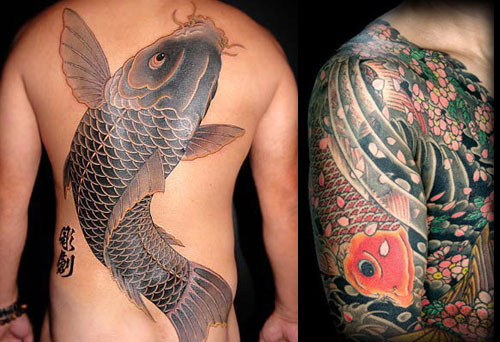
Continuing since about the 3rd century, tattooing in Japan is a tradition that has been developed over a long period of history. Popular themes include: carps, tigers, mythical animals such as dragons and phoenixes, flowers such as Japanese cherry and chrysanthemum, and the Buddhist motifs like Amitabha Tathagata, bodhisattva and Siddham script (bonji).
Japan traditional tattoo are usually on arms, shoulders and back. In recent years in Japan and popularity among young people of today to a tattoo.
And just keep in mind, you’re not allowed to enter a public bath (onsen) in Japan if you have tattoos.
Popular gadgets in Japan often just need a little time to start popping up in the U.S. For instance, most Japanese were using LCD monitors years before they were common stateside. But the rule doesn't hold for every gadget. Every now and then Japan produces a consumer technology that's incompatible with the American populace. Hit the Continue jump for some standout tech absences that are all the rage in the Far East.
6. Massage chairs
The Japanese buy massage chairs like they were La-Z-Boys. Maybe the stresses of everyday Japanese life encourage people there to put a massage chair in their home, but for whatever reason they're popular enough to have a whole section dedicated to them in many department stores.
Why they haven't caught on stateside: Call us crazy, but the thought of having a chair grip you tightly enough to give you a massage is more than a little unsettling. I tried it once, and I couldn't stop thinking, "Don't piss this thing off."
5. Elongated phones
Walk down a crowded street in Tokyo and you'll see any number of people holding a phone to their face. What's surprising is how many of those phones are long and slim — often much longer than is necessary for the speaker to be clearly heard by the mike.
Why they haven't caught on stateside: Style, mainly. Super-skinny phones, like the Motorola KRZR, were so 2007.
4. Blu-ray recorders
Witness this machine, a Panasonic Blu-ray recorder that can hold up to two terabytes on its internal hard disk, ready to burn that video onto a Blu-ray disc anytime. That's pretty impressive technology, letting users save entire seasons of TV shows before archiving them to disc.
Why they haven't caught on stateside: Americans use video technology differently. Setting up a machine to record TV shows to discs — or tapes, for that matter — is beyond many people. The U.S. rejected DVD recorders because we use DVD machines as players only, with the DVR essentially taking over all video-recording duties. By the time Blu-ray came, virtually no one was recording to disc anymore outside of the PC.
3. Sit-down showers
Need a shower? In Japan, it's not uncommon to be able to kick your feet up while you rinse, sitting on a stool or, as in this photo, a chair built right into the wall. Pretty handy at the end of a long day, or if you simply don't want to get your hair wet.
Why they haven't caught on stateside: Showers in Japan are used before you get in the bath, and in public baths you're supposed to wash only from the neck down. In the U.S. public baths aren't mainstream, and sit-down showers have pretty much been relegated to bathrooms of the elderly and disabled.
2. Really small netbooks
Yes, you can get mini laptops here in the U.S., but in Japan it's the really tiny ones that stand out. Asus and Acer, known for their tiny (sub 10-inch) machines, have dominated the netbook market in Japan, and other manufacturers (notably Sharp) are following suit.
Why they haven't caught on stateside: You've got us. Maybe those small screens look a little too dainty to American sensibilities. Or maybe we just need to give it a few more months.
1. Bidet toilets
No list of curiously popular technologies in Japan would be complete without mentioning bidet toilets. As any visitor will tell you, going number two is a whole experience in Japan, from the first moment your behind touches the heated seat to the built-in stereos to the automatic flush.
Why they haven't caught on stateside: Beyond the sheer impractibility of connecting power cables to every toilet in America, here it's more accepted to catch up on some reading while sitting on the throne. That's entertaining enough for us.
Hiroshima's Atomic Bomb Dome would be one of the historic centrepieces if the city were to host the 2020 Summer Olympic Games. (Shizuo Kambayashi/Associated Press)
Hiroshima and Nagasaki are launching a joint bid for the 2020 Summer Olympic Games.
Mayor Tadatoshi Akiba of Hiroshima and Nagasaki's Tomihisa Taue are founding members of the Mayors for Peace 2020 Campaign, advocating for a global ban on nuclear arms, and they want to use that to springboard the world's largest sporting event into their two cities.
The Japanese cities were the site of the 1945 atomic bombings that closed out the Second World War in the Pacific.
"The Olympics symbolize the abolition of nuclear arms and world peace, and we want to work to realize our plan to host the games," Akiba said.
Hiroshima's mayor spoke last month in Mexico City, saying he firmly believed the world could abolish nuclear weapons by 2020. He suggested his city and Nagasaki could hold the Games that year to celebrate.
The mayors' announcement comes just over a week after Tokyo lost in its bid for the 2016 Games to Rio de Janeiro.
There is no word yet as to whether Tokyo will try for the Olympics again in 2020. Only one city from each country can bid.
Competition for the Games is expected to come from Delhi, Istanbul and Budapest. All three cities have already expressed interest in submitting a bid to host the Olympics.
Although the two cities that the United States dropped nuclear bombs on share a tragic bond, they are quite a distance apart on a map. Hiroshima is in western Japan, about 650 kilometres from Tokyo. Nagasaki is on the island of Kyushu, roughly 320 kilometres from its fellow Olympic aspirant.
Hiroshima has held a large-scale event before, hosting the 1994 Asian Games. The competition brought 7,300 athletes from 42 countries and regions to western Japan.
While the Japanese Olympic Committee praised the two cities for their enthusiasm, they felt that it would take far more than simply a message of world peace to be successful in their bid for the Games.
"The concept to host the Olympics is wonderful," Japanese Olympic Committee secretary general Noriyuki Ichihara said, according to the Kyodo news agency.
"But I believe it would be difficult for the IOC to accept it just on the basis of abolishing nuclear weapons."
A Japanese company, Haruyama Trading Co., has developed a suit that it claims protects the wearer from the deadly H1N1 strain of influenza.
By Julian Ryall in Tokyo
The anti-flu suit which is on sale in JapanPhoto: HANDOUT
The company has produced 50,000 of the suits and will start selling them on Thursday, according to a company spokesman.
The suit is coated with the chemical titanium dioxide, which reacts to light to break down and kill the virus when it comes into contact with it, according to Junko Hirohata. The chemical is a common ingredient in toothpaste and cosmetics.
The suit - which is indistinguishable from any other worn by Japan's legion of "salarymen" - comes in four colours and styles, which are medium grey, charcoal, navy and a grey pinstripe. It will go on sale for about £365.
The company said it spent a year developing the suit, which retains its properties even after being washed numerous times.
Japan has been gripped by swine flu fear since the global outbreak began a year ago, with the World Health Organisation confirming more than 340,000 cases worldwide and around 4,100 deaths.
A seven-year-old boy became the latest victim in Japan on Sept 22, the youngest and 18th fatality from the disease here.
In the same week, medical institutions across the country reported treating 23,275 cases of influenza, the majority with the new H1N1 strain. Most of the new cases were reported in urban areas, where population density increases the risk of transmission.
img238.imageshack.us —Ever seen a picture/video where you can't really tell if it's NSFW or not? I don't think this is, but my brain's too busy 'splodin' to figure it out.
While that perv in the back is busy shooting HRP-4C's firm buttocks shaped from a glossy Stormtrooper alloy, the rest of us can marvel at the fact that Japan has produced a walking, talking fashion robot. Standing at just over 5-feet tall and 95-pounds, HRP-4C, developed by Japan's National Institute of Advanced Industrial Science and Technology, will make its catwalk debut next week at the Tokyo fashion show. The she-bot features 30 motors spread throughout its body with an additional eight motors in its face for expressing general boredom and disgust with the help. Its main purpose is entertainment and to attract crowds much like its fleshy counterparts -- so don't expect home cooked meals and laundry service should you take the $200,000 robot home. Unfortunately, HRP-4C didn't function as planned today. Reports say that the robot, "kept looking surprised, opening its mouth and eyes in a stunned expression, when the demonstrator had asked it to smile or look angry." Hmm, sounds like a fully functional model-slash-actress to us.
Update: Video posted after the break that's equal parts creepy and uh, creepy.
.
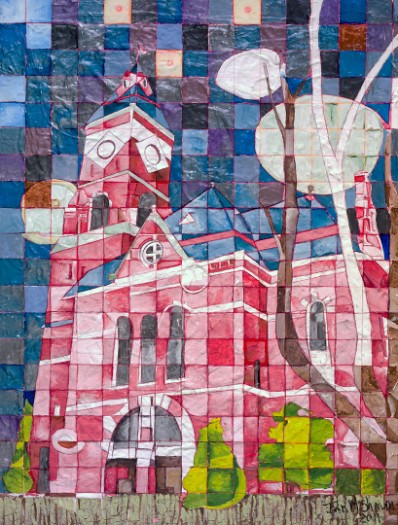
All you art collectors out there. Here is a chance to get a Giclee copy of some of Ian M Sherwin work. Ian is planning on doing a whole series of Marblehead, Massachusetts paintings. His work is amazing.