How To Park Like A Boss
How To Park A Porsche Like You Mean It - Watch MoreFunny Videos



Porsche Design Indicator watch

In a world where many teens seem to lack both patience and common sense, one teen in Glendora, CA, demonstrated both masterfully.
Steven Ortiz, 17, used Craigslist to trade his way up from an old cell phone to a Porsche. It took him 2 years of bartering like mad, but it appears that the effort was worth it. He’s the only student at Charter Oak High School who drives a Porsche to school.
His path from old cell phone to Porsche included working his way up to an iPod, then a MacBook Pro laptop. Eventually, Ortiz traded up from electronics to dirt bikes, then cars and trucks, and an SUV.
“A lot of my friends are jealous,” Ortiz said. “A lot of my friends come up to me and tell me, ‘You want to trade my phone for a car? Try to get me a Ferrari.’ I tell them it’s not that easy. It takes time and patience, definitely.”
Ortiz’s skill at identifying a good deal started years ago when he would buy cell phones off of his friends. At $30 each, he would turn around and sell the used cell phones online for three times the amount he paid. He also picked up a knack for repairing electronics, which enabled him to take something that was almost worthless and get it functioning again.
Eventually, Ortiz discovered bartering. Many people online are looking for ways to exchange something they don’t need in order to get something they do need. These same people often realize that they can get more through bartering than through selling the item for cash.
“A lot of people don’t have money right now, in this economy. So they think, `I really need a new phone, but I don’t have the money. Here I have this CD player lying around that I don’t use anymore, maybe I can trade,”‘ Steven’s father Esteban explained.
Like many Americans, the Ortiz family has been hit hard by the economy. But with his uncanny ability to scour the Web for incredible deals, Steven Ortiz has still managed to get whatever he wants, despite facing economic hardship.
* * *
The New York International Auto Show is less than a week away, and as the auto world waits enthusiastically to see what the global automakers have in store, we thought it would be a good time to give you a preview of what to expect at this years show. As the show’s Director, Candida Romanelli puts it, “Whether you’re in the mood for a new car, or just fantasizing about your dream ride of the future, the New York Auto Show has got just what you’re looking for,“. So sit back, and take a look at some of the hottest vehicles set for debut this year.
This lightweight sports car comes complete with Gullwing doors and the ultimate handling dynamics. It comes powered by a 6.3L, V8 front-mid engine that develops 571 hp when coupled with a seven-speed double-declutch transmission and sports suspension with aluminum double wishbones.
“the new ultimate sports machine” – Automobile Magzine

Complete with a light aluminum body, powerful and efficient engines and improved MMI control system, the new Audi A8 is slated to arrive in dealerships later this year. The Audi A8 comes equipped with an FSI direct injection 4.2L V8 engine that outputs 350 hp.
“meant to appeal to wealthy consumers looking for maximum luxury and space” – Edmunds.com

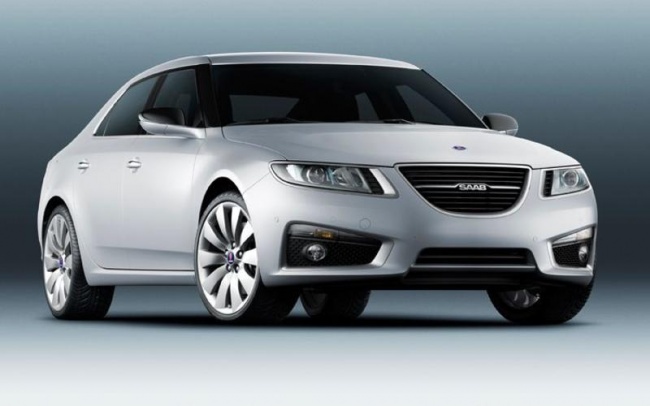
In spite of all the commotion experienced during its sale to Spyker, SAAB seem’s to have done itself an unmistakable job with this Scandinavian beauty that is based of SAAB’s Aero X Concept. The 2.8L, V6 engine is enhanced by a Borg-Warner twin-scroll turbocharger, which results in 296 hp and 295 lb-ft of torque
“a clear resurgence of past design traits married to a modern, sleek profile” – MotorAuthority
The 2011 Ford Shelby GT500 is expected to take high performance to a whole-new level with improved handling capabilities, driving dynamics and fuel efficiency. It comes loaded with a muscular 5.4L all-aluminum V-8 engine that generates up to 550 hp and 510 lb-ft of torque.
“has the aluminum powerplant we all wanted…, and the effect is absolutely en-lightening.” – Autos.aol.com

After sales figures that exceeded expectations by ten-fold in Japan, the sleek, stylish and sporty Honda CR-Z sport hybrid coupe is bound to give the Toyota Prius its first real competition. Powered by a 1.5L i-VTEC engine and Honda’s Integrated Motor Assist (IMA) electric system, the CR-Z hybrid coupe is expected to hit a mileage of 36 mpg city/38 mpg highway.
“Transforming the automotive landscape” – MotorTrend Magazine.

This luxurious performance sedan comes with a slew of latest technology features, including the Blind Spot Navigation (world’s first system to help avoid blind spots) and Eco Pedal (encourages eco-driving behavior). The M37 comes loaded with a 3.7L, V6 engine that outputs 330 hp, while the M56 comes with a direct injection 5.6L, V8 that delivers 420 hp.
“M has gone from a good-looking sedan to a gorgeous, exotic-looking car from the future.” – cars.about.com

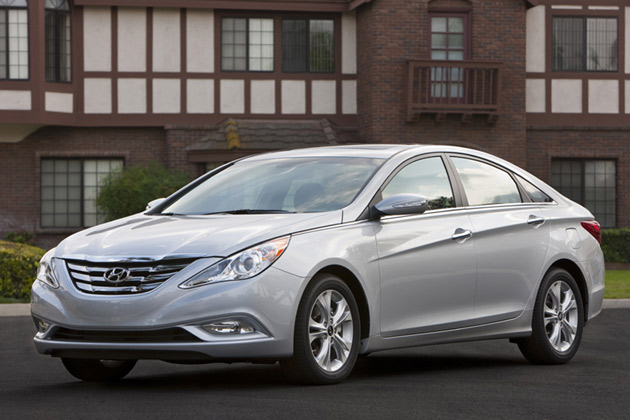
Hyundai seems to be one of the fastest growing brands, and that claim seems to have been substantiated by Kelly Blue Books (KBB) analysis that Hyundai beat Toyota for “Brand Loyalty” for the first time this year. Hyundai’s popular mid-size sedan, based on their new “fluidic sculpture” design comes with a Theta II 2.4-liter gasoline direct injection (GDI) engine that delivers 198 hp.
“the perfect symbol of Hyundai’s transformation.” – The Truth About Cars.
This fabric-top two-door E-Class Cabriolet from the Mercedes-Benz staple exudes confidence and style like none other. It comes in a choice of either a 3.5L, V6 delivering 268 hp and 258 lb-ft of torque in the form of the E350, or a 5.5L, V8 that churns out 382 hp and 391 lb-ft of torque in the form of the E550 cab.
“2011 Mercedes-Benz E-Class Cabriolet is a smooth Spanish Fly(er)” – Autoblog

Based off the Nissan Qazana concept crossover we saw at last years Geneva Motor Show, the slightly larger Nissan Juke comes with a squared-off roofline along with a pair of extra doors. In the European markets the Nissan Juke is available in either a 1.5-liter turbo-diesel I-4, or one of two 1.6-liter I-4s, one of which comes with a turbocharger.
“filling a niche between the Versa hatchback and Rogue crossover.” – Consumer Report

The lighter, more powerful and fuel-efficient Porsche Cayenne comes with a complete interior and exterior styling re-design. Watch out for the Cayenne S Hybrid – a highly advanced full hybrid that delivers the performance of an eight cylinder with the fuel-economy of a six cylinder. It packs 333-hp, through its supercharged V-6 engine teamed with a 47-hp electric motor.
“…the Cayenne isn’t the sportiest member of the Porsche range, but it does offer a level of precision, feel, and driver gratification that is lacking in many other luxury SUVs” – MotorTrend Magazine.


 Tomorrow in Geneva, Porsche will unveil a new plug-in hybrid concept called 918 Spyder. This is not your average hybrid like Toyota Prius or Honda Insight.
918 Spyder plug-in hybrid concept is powered by a V8 that develops more than 500 horsepower and electric motors on the front and rear axle with an output of 218 horsepower. Combined power output is an impressive 708 horsepower!
Purely on electric power it has a range of up to 25 km (16 miles).
As the engine is positioned mid-ship, in front of the rear axle, it gives the car excellent balance and the right set-up for supreme performance on the race track.
0-100 km/h comes in just 3.2 seconds, top speed is 320 km/h (198 mph), and a lap time on the Nürburgring is less than 7:30 making it faster than the Porsche Carrera GT.
What really impresses, is the fuel economy! Average fuel economy is just three liters per 100 kilometers (78 mpg) and the car emits just 70 grams of CO2 per kilometer.
Will we ever see it in production? Very likely yes as Porsche is well known for taking their concepts into reality!


Porsche Reveals High-Performance 918 Spyder Concept Highly Efficient and Ultra-Fast Plug-in Hybrid Super Sports Car Unveiled in Geneva
Today, on the eve of the Geneva Motor Show, Porsche unveiled an ultra-efficient, low-emission, mid-engine super sports car featuring hybrid and electric drive technology.
The 918 Spyder concept combines high-tech racing features with electric-mobility to offer a fascinating range of qualities. For example, it is planned to provide an emission level of just 70 grams of CO2 per kilometer on fuel consumption of only three liters/100 kilometers (equal to approximately 78 mpg U.S.), which is truly outstanding, even for an ultra-compact city car. This car, however, is intended to offer the performance of a super sports car with acceleration from a standstill to 100 km/h in just under 3.2 seconds, top speed of 320 km/h (198 mph), and a lap time on the Nordschleife of N ̧rburgring in less than 7:30 minutes, faster than even the Porsche Carrera GT.
The 918 Spyder is one of three Porsche models with hybrid drive making their world debut at the 2010 Geneva Motor Show. This trio ñ made up of Porscheís new Cayenne S Hybrid SUV with parallel full-hybrid drive, the 911 GT3 R Hybrid race car with electric drive on the front axle and a flywheel mass battery, and the two-seater high-performance 918 Spyder mid-engined sports car with plug-in hybrid technology ñ clearly demonstrates not only the great bandwidth of this new drive technology, but also the innovative power of Porsche as a genuine pioneer in hybrid drive.
The highly-innovative 918 Spyder concept car combines Porscheís Intelligent Performance philosophy with the high-technology from motorsport, with classic but modern design to make a truly convincing statement.
Innovative powertrain combines race-bred V8 engine with electric drive
This open two-seater is powered by a high-revving V8 developing more than 500 horsepower and a maximum engine speed of 9,200 rpm ñ as well as electric motors on the front and rear axle with overall mechanical output of 218 horsepower (160 kW).
The V8 combustion engine is the next step in the evolution of the highly successful 3.4- liter power unit already featured in the RS Spyder racing car and positioned mid-ship, in front of the rear axle, giving the car excellent balance and the right set-up for supreme performance on the race track.Power is transmitted to the wheels by a seven-speed Porsche-Doppelkupplungsgetriebe (PDK) transmission that feeds the power of the electric drive system to the rear axle. The front-wheel electric drive powers the wheels through a fixed transmission ratio.
The energy reservoir is a fluid-cooled lithium-ion battery positioned behind the passenger cell. The big advantage of a plug-in hybrid is that the battery can be charged on the regular electrical network. A further point is that the carís kinetic energy is converted into electrical energy fed into the battery when applying the brakes, thus providing additional energy for fast and dynamic acceleration.
Driverís choice of four distinct driving modes
A button on the steering wheel allows the driver to choose among four different running modes: The E-Drive mode is for running the car under electric power alone, with a range of up to 25 km or 16 miles. In the Hybrid mode, the 918 Spyder uses both the electric motors and the combustion engine as a function of driving conditions and requirements, offering a range from particularly fuel-efficient all the way to extra-powerful.The Sport Hybrid mode uses both drive systems, but with the focus on performance. Most of the drive power goes to the rear wheels, with Torque Vectoring serving to additionally improve the carís driving dynamics.
In the Race Hybrid mode the drive systems are focused on pure performance with the highest standard of driving dynamics on the track, running at the limit to their power and dynamic output. With the battery sufficiently charged, a push-to-pass button feeds in additional electrical power (E-Boost), when overtaking or for even better performance.
With the hybrid drive system offering this wide range of individual modes and applications, the 918 Spyder is able either to achieve lap times comparable to those of a thoroughbred racing car, or the extremely low emissions and high fuel economy figures of a plug-in hybrid.
Advanced body structure and design offer more than just good looks
Like the drivetrain, the lightweight body structure of the Porsche 918 Spyder also bears out the carís DNA carried over directly from motorsport: The modular structure with its monocoque bodyshell made of carbon-fiber-reinforced plastic (CFP) and liberal use of magnesium and aluminum not only reduce weight to below 1,490 kg, or 3,285 lb, but also ensure supreme driving precision thanks to a high level of torsional stiffness.Reminiscent of highly successful, legendary racing cars such as the Porsche 917 and the current Porsche RS Spyder, the 918 Spyder, with its design concept so typical of Porsche arouses powerful emotions. The combination of racing car dimensions, clearly structured design with perfectly balanced surfaces, and innovative details throughout, creates an ideal synthesis of form and function ñ following Porscheís design DNA.
The smooth balance of tradition and progress gives the car a powerful stance on the road. Variable aerodynamics, typical of Porsche, ensures both visionary and traditional highlights especially around the rear spoiler. The striking rear hoods extending out of the headrests, in turn, not only fulfill an aerodynamic function on the 918 Spyder, but also accommodate retractable air intakes with a ram air function.
High-tech interior provides glimpse into the future
The driver and passenger are not only embedded in contoured sports bucket seats but also form part of the cockpit, which provides a synthesis of efficient functionality and ergonomic high-tech operation. Additionally, the cockpit offers a glimpse at the potential interior architecture of future Porsche super sports cars. The three free-standing circular dials for road speed (left), engine speed (middle) and energy management (right) would appear to come directly from a racing car in the ë60s, bearing out that unique philosophy of driver orientation so characteristic of Porsche.The center console rises up towards the front in the 918 Spyder and houses a touch screen for intuitive control of the carís functions, serving to reduce the number of visible controls and maintain the principle of direct operation.
The control units relevant to the driver are mainly concentrated on the three-spoke multifunction sports steering wheel, while the variable driving modes are supplemented by a switch enabling the driver to call up various drive programs and serving as the push-to-pass button for E-boosting. Instrument illumination, finally, varies from green for the consumption-oriented running modes to red for the performance-oriented driving programs.
The Porsche 918 Spyder concept also comes with further innovative functions such as the Range Manager. After being activated in the Center Display, the Range Manager uses the map in the navigation system to present the remaining range the car is able to cover, naturally allowing the driver to influence that range through the appropriate choice of power and performance.
In cities with environmental alert areas the Range Manager also states whether the driver is able to reach a certain destination on electric power alone.
Applying this information and using further info on the availability and location of special energy filling stations, the driver is then able to choose his personal style of driving as well as the right battery charge and filling strategy.
Offering a unique combination of extremely low fuel consumption, supreme performance and long electric range, the Porsche 918 Spyder concept represents an essential milestone in Porsche’s strategy on the way to genuine electric-mobility.
Hello fellow Porschephile! If you want to be notified the next time we have something new, subscribe to our RSS feed, Email updates, or follow us on Twitter. Thanks for visiting!

Technical data Royal Falcon Fleet RFF135
Total length: 135 feet (41.2 metres)
Length at waterline: 114 feet (35.7 metres)
Breadth: 41 feet (12.5 metres)
Draught: 5.6 feet (1.7 metres)
Engine: MTU 16V 4000 M93L
Power output: 2 x 3,440 kW (4,600 HP)
Speed: 35 knots
Range: 2,000 nautical miles at 30 knots
Fuel consumption: 750 litres per hour
Tank capacity: 2 x 25,000 litres
Freshwater reservoir: 5,000 litres
Waste water reservoir: 2 x 4,000 litres
Classification: Lloyd's Register
Material: certified, high-strength aluminium
Form: High-speed catamaran hull
Interior deck area: 472 square metres
Exterior deck area: 208 square metres
Passenger capacity: 10 guests and 10 crew
STUTTGART (Reuters) -- Sports car maker Porsche conceded a months-long power struggle to mass-market rival Volkswagen by axing its chief executive and saying it would raise at least €5 billion in equity as the two prepared for a merger.
After an all-night meeting of its board of directors, Porsche said Wendelin Wiedeking, Germany's best-paid executive and its CEO for the past 16 years, along with finance chief Holger Haerter, would quit the group immediately.
Their hasty exit will be sweetened by payoffs of €50 million and €12.5 million, respectively.
Wiedeking, who had opposed selling Porsche to Volkswagen, which would have helped the company reduce the debt he had run up in a botched attempt to take over VW, will be succeeded by Porsche's production head Michael Macht, the board said in a statement early on Thursday.
The meeting of the non-executive directors, which include the Piech and Porsche families that between them control Porsche, approved Wiedeking's proposal to raise fresh equity -- either in cash or through a contribution in kind -- and endorsed talks to sell a stake to the Gulf state of Qatar.
"This should lay the foundations for the creation of an integrated automobile group consisting of Porsche SE and Volkswagen," Porsche said.
It was unclear from Porsche's statement who would contribute to the capital increase and whether it would be taken up by Qatar. A Porsche spokesman declined to comment further.
The board's unanimous approval signals that the powerful Porsche and Piech clans may be open to surrendering some of their influence at the maker of the 911 sports coupe.
Between them they control 100% of Porsche's voting shares and have resisted selling a stake to an outsider.
Joining forces
A source at Volkswagen, speaking on condition of anonymity, told Reuters it was still open whether oil-rich Qatar would take a stake in the Porsche SE holding company or directly in Volkswagen, or in both groups.
The issue was due to be discussed by Volkswagen's own board of directors, which gathers for an extraordinary session on Thursday in Stuttgart, where Porsche's Zuffenhausen headquarters are based, rather than its own headquarters in Wolfsburg.
Volkswagen, Europe's biggest carmaker, declined to comment.
The moves came as Porsche enters the final stretch of negotiations with Volkswagen to create what both sides have called an "integrated" auto group, in which Porsche would essentially become the 10th brand in Volkswagen's sweeping automotive empire.
Porsche SE, the holding company that controls sports car maker Porsche AG, needs to bolster its finances after accumulating more than €10 billion in debt through its botched attempt to seize control of VW.
Porsche was forced to abandon attempts to win control over 75% of VW, leaving it with a stake of nearly 51%. The failed takeover attempt opened the door to Ferdinand Piech, VW's powerful chairman and himself a part-owner of Porsche, to turn the tables on Porsche.
The Porsche and Piech families had been at loggerheads for months over how to resolve the company's debt woes and the role VW would play. Piech has pushed for VW to take over Porsche, on condition that Porsche fixes its finances first. 
Pure electric propulsion is the name of the game for cutting gas/electric hybrid fuel consumption, and Porsche claims to have taken it to a whole new level with the upcoming 2010 Cayenne S Hybrid. Capable of traveling at speeds up to 86 mph solely on electric propulsion, the 5,000-some-odd pound full-frame SUV's thirst for premium should be cut dramatically.
Economy estimated at 26 mpg or slightly greater (extrapolated from Porsche's claim of less than 9 liters/100 km fuel consumed on the European cycle) is very respectable for this behemoth, but it's a figure shamed by car-based crossover hybrids. Interesting will be the difference between city and highway mileage; typically, gas/electric hybrids attain their biggest mileage benefits in city driving where the electric motors are most helpful, but this Porsche system turns that paradigm on its head with stout electric highway capabilities.
The hybrid drive in the Porsche Cayenne S Hybrid uses a parallel full hybrid design that sandwiches the electric motor between an Audi-sourced V-6 and an eight-speed automatic transmission. The V-6 is Audi's new 3.0-liter supercharged V-6 found in models like the 2009 Audi A6, itself surprisingly efficient considering the 333 hp and 324 lb-ft torque it yields. The electric motor will be supplied by a 154-lb. nickel metal hybrid battery that fits in the spare tire well.
Porsche promises no intrusions into cabin or cargo space, as well as a 0-60 mph sprint of just under 6.8 seconds. So drivers of heavy luxury SUVs may soon have their cake and eat it too. But aren't drivers of luxury SUVs quickly abandoning the segment? History will tell us the rest of the story, but let's not forget the miserable sales of GM's (Tahoe, Escalade) and Chrysler's (Aspen, Durango) well-engineered full-size SUV hybrids.

The new Porsche 911 Carrera and Carrera S feature a pair of powerful new engines, an all-new twin-clutch automated manual transmission and even better handling.
Since the first 911 rolled off the assembly line in 1965, Porsche has been on a singular mission to make it the world's best sports car. And it's done a great job. Even though the basic structure has remained essentially the same throughout the years, the 911 can never be called stodgy or behind the times. It's a classic that keeps getting better and more refined with age.
While the 2009 911 Carrera and Carrera S might look like the outgoing models, looks can be deceiving. Suspension, brakes, lighting, interior and exterior styling — all were massaged for the new model year. Plus, the Stuttgart-based automaker added a pair of new powerful and economical engines, as well as an optional, twin-clutch, seven-speed automated manual transmission that's simply spectacular. Is it the best sports car in the world? That's debatable. But one thing is for sure: It is the best 911 yet.
Model Lineup
Porsche offers the 2009 911 Carrera as a two-door coupe or convertible (called Cabriolet), both in base or S trim. All offer 2+2 seating with small rear seats, and the Cabriolet has a power-folding soft-top. Also offered are the all-wheel-drive 911 Carrera 4 and Carrera 4S, as well as the 911 Turbo. The 911 GT3 goes on hiatus for 2009. This review covers only the 911 Carrera and 911 Carrera S.
Base versions are equipped with leather upholstery, automatic climate control, tilt/telescoping steering wheel, bi-xenon headlights, 235-watt AM/FM/CD stereo, cruise control, universal garage door opener, onboard computer, and staggered Z-rated 18-inch tires on alloy wheels. The S trims add Porsche's Active Suspension Managements system (PASM), a sunroof (coupe) and staggered 19-inch tires.
Mechanical options include Porsche's new seven-speed Porsche Doppelkupplung (PDK) automated manual transmission, PASM, a limited-slip rear differential lock, the Sport Chrono Package Plus, and Porsche's Ceramic Composite Brakes. Interior options consist of heated seats, ventilated seats, a heated steering wheel, a Bluetooth wireless cell phone link, XM Satellite Radio, a universal audio interface and a Bose sound system.
Click picture to enlarge
Larger front air intakes, LED daytime driving lights and new dual-arm side mirrors highlight the exterior mods.
All 2009 Porsche 911 Carreras have dual front airbags and the Porsche Side Impact Protection system with dual front torso airbags that deploy from the seats, and dual front head airbags that deploy upward from the door panels. Other safety features include a tire-pressure monitor, anti-lock brakes with brake assist, traction control and electronic stability control. Cabriolets also have an auto-deploying roll bar system. Available as an option are dynamic cornering headlights that point in the direction the car is turning so drivers can see where they are going.
Under the Hood
The 2009 Porsche 911 Carrera offers two all-new boxer six-cylinder engines. Engineers have simplified the design with 40 percent fewer moving parts, which should translate to better reliability. Porsche's VarioPro variable valve timing returns, but both engines now have direct fuel injection, which helps increase power and fuel economy and reduce emissions.
Base trims have a 3.6-liter flat six that produces 345 horsepower at 6500 rpm and 288 lb-ft of torque at 4400 rpm — up from 325 horsepower and 273 lb-ft of torque in 2008. It is offered with a standard six-speed manual transmission or the new optional seven-speed PDK automated manual transmission. EPA fuel economy numbers are up 7 percent for the manual transmission at 18/25 mpg (city/highway) and up 15 percent for the PDK (compared to last year's Tiptronic five-speed automatic) at 19/27 mpg.
For 2009, the 3.8-liter flat six in the Carrera S produces 385 horsepower at 6500 rpm and 310 lb-ft of torque at 4400 rpm — up from 355 horses and 295 lb-ft of torque. Its fuel economy numbers are 18/25 mpg (city/highway) with the manual and 19/26 mpg with the PDK.
Inner Space
Traditionally, the 911 isn't known for its stellar interior. Even so, Porsche still tries to provide a pleasant environment for driver and passenger. The upholstery is leather, the headliner is suede-like Alcantara and the dashboard, door panels and center console use weighty soft-touch materials that have a quality look and feel. It's all very nice, but it doesn't have the attractive design or premium quality of, say, an Audi interior.
For the most part, form follows function. The instrument panel features the tachometer front and center, making it easy to see when the engine is operating in its ideal performance range (around 6500 rpm). Reading the offset and sparsely marked speedometer, however, can be tough, especially with the hammer down. The standard tilt/telescoping steering wheel combines with an array of seat controls to allow most drivers to find a comfortable driving position. Headroom and legroom up front are ample. The front seats have enough side bolstering to keep occupants in place during aggressive cornering, but it's not so deep that short drivers will knock their arms against the bolsters when shifting.
A coupe body design can often suffer from poor rearward visibility, but not the 911. The classic design has thin rear pillars that don't block the view and the rear window is big. Sight lines to the sides and rear are also aided by 2009's larger exterior mirrors. This is a user-friendly, driver-focused cabin.
With that said, the rear seat isn't so user-friendly. It's only good for very small children. Alternately, its 7.24 cubic feet of volume is a good place to put packages. That's important because the trunk is up front has only 4.42 cubic feet of cargo room, which is about enough for two overhead-sized suitcases.
On the Road (and Track)
To give journalists a feel for the new 911's handling prowess, Porsche let us play on the 24-turn, 4.5-mile Miller Motorsports Park road course just outside of Salt Lake City, Utah. On the track, the new model is incredible.
The 911's fantastic road feel and quick, direct steering remains unchanged. Balance, however, is improved immensely. The inherent problem with a rear-engine design like the 911's is oversteer, a propensity for the rear end to come around during aggressive cornering. The new 911 is so supremely balanced, however, that the rear end stays put. Part of the reason is the pair of new engines. Both are shorter, lighter and sit lower than the previous engines, improving the 911's center of gravity.
Click picture to enlarge
Porsche 911 Carrera S versions have quad exhaust pipes, while the base trim has dual exhaust. The louvered Porsche "whale tail" rear spoiler pops up at 75 mph and comes back down at 50 mph.
The engines are also more powerful than their predecessors. Each provides smooth, linear acceleration that doesn't knock drivers back into their seats but instead just keeps pulling. Zero to 60 mph comes faster than it feels — 4.7 seconds in the coupe with the base 3.6-liter boxer six and the smooth-shifting six-speed manual transmission.
Performance is even better with the new PDK automated manual transmission, making it a fine choice for both weekend racers and those who don't want to row their own gears. The PDK, a pricey $4,030 option, can shift faster than a human can shift a manual and, unlike some previous attempts at automated manuals (BMW's Sequential Manual Transmission comes to mind), power to the wheels is never interrupted. Those shifts happen quicker with the S version's Sport Chrono system in Sport mode, and the PDK enters full race mode with the optional Sport Chrono Plus package's Sport Plus mode. Note that the shifts can feel harsh in Sport Plus, and they come at redline, so it's not for use on the street.
Click picture to enlarge
The PDK can operate like an automatic or be shifted manually by pushing the gearshift forward and back, or tapping the standard steering wheel paddles.
Zero-to-60-mph times vary for the S trim. With the manual, Porsche says 0 to 60 mph takes 4.5 seconds. With the PDK, it's 4.3 seconds. And if the Launch Control feature that comes with the PDK is employed, the sprint is only 4.1 seconds. To activate Launch Control, press the Sport Plus button, step on the brake, jab the throttle and rev the engine to 6500 rpm, then let go of the brake. The 911 leaps to life with little if any tire spin. All times are two-tenths of a second slower for the Cabriolet.
The 2009 911 Carrera also stops short and quick. The base version gains last year's S brakes, meaning 13-inch diameter brake rotors are now found at each corner in all models. In a full-day on a long racetrack, we never experienced any brake fade. The pedal may have softened a bit, but there was never any hint that the brakes wouldn't bring us down from speeds in excess of 130 mph. With that kind of racetrack performance, drivers can be confident that the brakes will do the job on the street.
Track prowess aside, the 911 does have some drawbacks on the street. The price for excellent road feel is ride quality that can feel too harsh, especially when the PASM system's Sport mode is engaged. Both engines also emit Porsche's signature guttural blat. It can be music to the ears to some, but others might find it annoying, especially on long trips. Occupants also have to deal with copious road noise from the 911's wide performance tires.
Right for You?
The Porsche 911 Carrera is for anyone who loves to drive, but not for those who want to be fiscally responsible. With limited cargo capacity and room — realistically — for two, the 911 is a great sunny day cruiser. It's also chock full of amazing engineering and sturdy performance parts that make it a great choice for weekend warriors who get the occasional chance to drive on a racetrack. For toting the family around, look elsewhere.
 Click picture to enlarge
 The 911 Cabriolet features a power-operated, locking soft-top that opens or closes in about 20 seconds. And it doesn't take up any cargo space by folding down around the engine compartment.
By Kirk Bell of MSN autos
Kirk Bell has served as the associate publisher for Consumer Guide Automotive and editor of Scale Auto Enthusiast magazine. A Midwest native, Bell brings 18 years of automotive journalism experience to MSN, and currently contributes to JDPower.com and Kelley Blue Book's kbb.com.


 .
.

 Posts
All Comments
Posts
All Comments


