Zazzle Shop

Screen printing
Showing posts with label Saab. Show all posts

Tuesday, March 30, 2010

Preview: The Hottest Debuts @ the 2010 New York Auto Show

The New York International Auto Show is less than a week away, and as the auto world waits enthusiastically to see what the global automakers have in store, we thought it would be a good time to give you a preview of what to expect at this years show. As the show’s Director, Candida Romanelli puts it, “Whether you’re in the mood for a new car, or just fantasizing about your dream ride of the future, the New York Auto Show has got just what you’re looking for,“. So sit back, and take a look at some of the hottest vehicles set for debut this year.

Mercedes-Benz SLS AMG

This lightweight sports car comes complete with Gullwing doors and the ultimate handling dynamics. It comes powered by a 6.3L, V8 front-mid engine that develops 571 hp when coupled with a seven-speed double-declutch transmission and sports suspension with aluminum double wishbones.

“the new ultimate sports machine” – Automobile Magzine

Mercedes Benz SLS AMG 2011 New York Auto Show e1269567842314  Preview: The Hottest Debuts @ the 2010 New York Auto Show

Audi A8

Complete with a light aluminum body, powerful and efficient engines and improved MMI control system, the new Audi A8 is slated to arrive in dealerships later this year. The Audi A8 comes equipped with an FSI direct injection 4.2L V8 engine that outputs 350 hp.

“meant to appeal to wealthy consumers looking for maximum luxury and space” – Edmunds.com

2011 audi a8 New York Auto Show Preview: The Hottest Debuts @ the  2010 New York Auto Show

SAAB 9-5

In spite of all the commotion experienced during its sale to Spyker, SAAB seem’s to have done itself an unmistakable job with this Scandinavian beauty that is based of SAAB’s Aero X Concept. The 2.8L, V6 engine is enhanced by a Borg-Warner twin-scroll turbocharger, which results in 296 hp and 295 lb-ft of torque

“a clear resurgence of past design traits married to a modern, sleek profile” – MotorAuthority
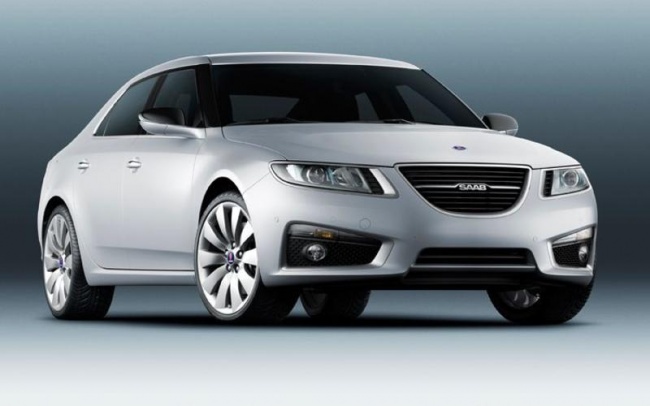
2010 saab 9 5 New York Auto Show Preview: The Hottest Debuts @ the  2010 New York Auto Show

Ford Shelby GT500

The 2011 Ford Shelby GT500 is expected to take high performance to a whole-new level with improved handling capabilities, driving dynamics and fuel efficiency. It comes loaded with a muscular 5.4L all-aluminum V-8 engine that generates up to 550 hp and 510 lb-ft of torque.

“has the aluminum powerplant we all wanted…, and the effect is absolutely en-lightening.” – Autos.aol.com

2011 ford shelby gt500 New York Auto Show Preview: The Hottest  Debuts @ the 2010 New York Auto Show

Honda CR-Z

After sales figures that exceeded expectations by ten-fold in Japan, the sleek, stylish and sporty Honda CR-Z sport hybrid coupe is bound to give the Toyota Prius its first real competition. Powered by a 1.5L i-VTEC engine and Honda’s Integrated Motor Assist (IMA) electric system, the CR-Z hybrid coupe is expected to hit a mileage of 36 mpg city/38 mpg highway.

“Transforming the automotive landscape” – MotorTrend Magazine.

2011 honda cr z  New York Auto Show Preview: The Hottest Debuts @  the 2010 New York Auto Show

Infiniti M-Series

This luxurious performance sedan comes with a slew of latest technology features, including the Blind Spot Navigation (world’s first system to help avoid blind spots) and Eco Pedal (encourages eco-driving behavior). The M37 comes loaded with a 3.7L, V6 engine that outputs 330 hp, while the M56 comes with a direct injection 5.6L, V8 that delivers 420 hp.

“M has gone from a good-looking sedan to a gorgeous, exotic-looking car from the future.” – cars.about.com

Nissan 2011 Infiniti M Sedan Preview: The Hottest Debuts @ the  2010 New York Auto Show

Hyundai Sonata

Hyundai seems to be one of the fastest growing brands, and that claim seems to have been substantiated by Kelly Blue Books (KBB) analysis that Hyundai beat Toyota for “Brand Loyalty” for the first time this year. Hyundai’s popular mid-size sedan, based on their new “fluidic sculpture” design comes with a Theta II 2.4-liter gasoline direct injection (GDI) engine that delivers 198 hp.

“the perfect symbol of Hyundai’s transformation.” – The Truth About Cars.
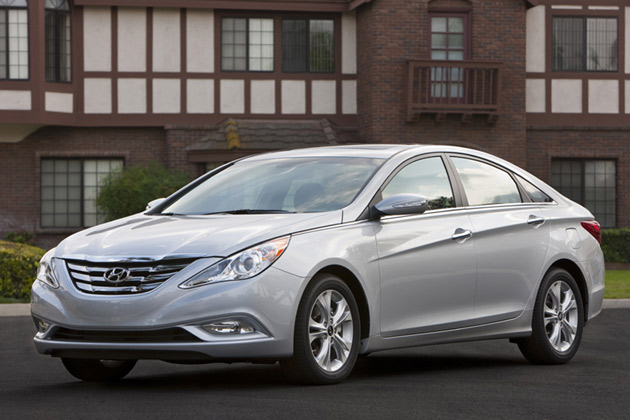
2011 hyundai sonata Cabriolet New York Auto Show Preview: The  Hottest Debuts @ the 2010 New York Auto Show

Mercedes-Benz E-Class Cabriolet

This fabric-top two-door E-Class Cabriolet from the Mercedes-Benz staple exudes confidence and style like none other. It comes in a choice of either a 3.5L, V6 delivering 268 hp and 258 lb-ft of torque in the form of the E350, or a 5.5L, V8 that churns out 382 hp and 391 lb-ft of torque in the form of the E550 cab.

“2011 Mercedes-Benz E-Class Cabriolet is a smooth Spanish Fly(er)” – Autoblog

Mercedes Benz E Class Cabriolet New York Auto Show e1269561946909  Preview: The Hottest Debuts @ the 2010 New York Auto Show

Nissan Juke

Based off the Nissan Qazana concept crossover we saw at last years Geneva Motor Show, the slightly larger Nissan Juke comes with a squared-off roofline along with a pair of extra doors. In the European markets the Nissan Juke is available in either a 1.5-liter turbo-diesel I-4, or one of two 1.6-liter I-4s, one of which comes with a turbocharger.

“filling a niche between the Versa hatchback and Rogue crossover.” – Consumer Report

2011 nissan juke New York Auto Show Preview: The Hottest Debuts @  the 2010 New York Auto Show

Porsche Cayenne

The lighter, more powerful and fuel-efficient Porsche Cayenne comes with a complete interior and exterior styling re-design. Watch out for the Cayenne S Hybrid – a highly advanced full hybrid that delivers the performance of an eight cylinder with the fuel-economy of a six cylinder. It packs 333-hp, through its supercharged V-6 engine teamed with a 47-hp electric motor.

“…the Cayenne isn’t the sportiest member of the Porsche range, but it does offer a level of precision, feel, and driver gratification that is lacking in many other luxury SUVs” – MotorTrend Magazine.

2011 porsche cayenne New York Auto Show Preview: The Hottest  Debuts @ the 2010 New York Auto Show

Tuesday, January 26, 2010

General Motors sells Saab to Dutch firm Spyker

Saab logo
Saab has not made a profit since 2001

From: http://news.bbc.co.uk/2/hi/business/8481621.stm

Sweden's Saab is being sold to Dutch luxury carmaker Spyker, General Motors (GM) has confirmed.

GM has been trying to sell Saab since January 2009. Earlier this month, it said it would start to shut down the firm while still looking for a buyer.

But GM said wind-down activities would be immediately suspended, "pending the close of the transaction".

Spyker sold 43 cars in 2008, when it posted a loss of $35m (£21m). It has yet to make a profit in six years.

Spyker has agreed to pay $74m in cash for Saab, John Smith, GM vice-president for corporate planning and alliances, told reporters.

Under the deal, GM would also get $326m worth of preferred shares in Saab.

ANALYSIS
Jorn Madslien
Jorn Madslien, Business reporter, BBC News

Saab, the car that emerged from a company making fighter jets, is set for a new existence as a subsidiary of Spyker, a small, loss-making Dutch sports car maker.

Spyker chief Victor Muller says he wants to create more jobs, rather than reduce the Saab workforce, as he is keen to prevent the number of cars produced from falling further.

But others have tried and failed to make Saab into a volume carmaker.

For the 3,400 workers at Saab's factory in Trollhaettan, the deal offers a glimmer of hope for the future, though it is too early to suggest their jobs are safe.

The Swedish government has also agreed to guarantee a 400 million-euro (£349m; $563m) loan Saab had requested from the European Investment Bank, which was seen as key to the sale.

"Now the deal between Spyker and GM has been finalised, so the government has today taken the decision to give loan guarantees to Saab Automobile," Enterprise Minister Maud Olofsson said.

'Great news'

Saab lost 3bn kronor (£255m; $412m) in 2008, and has not made a profit since 2001.

US group GM rejected an earlier offer from Spyker for Saab in December.

Shares in Spyker were earlier suspended on the Amsterdam stock exchange, with the Dutch financial market regulator saying the move was "pending [a] press release" from the company.

Its shares were 2.8% higher before the suspension, after having risen more than 60% on Monday.

"Today's announcement is great news for Saab employees, dealers and suppliers, great news for millions of Saab customers and fans worldwide, and great news for GM," said GM's John Smith.

"General Motors, Spyker Cars, and the Swedish government worked very hard and creatively for a deal that would secure a sustainable future for this unique and iconic brand, and we're all happy for the positive outcome," he said.

Wednesday, June 17, 2009

G.M. Sells Saab to Swedish Automaker

Adam Ihse/Agence France-Presse — Getty Images

Christian von Koenigsegg, the founder of a Swedish luxury sports car maker that produces just a few $1 million cars a year, is part of a group that is buying Saab from General Motors.


General Motors announced Tuesday that it had agreed to sell its Swedish unit, Saab Automobile, to a consortium led by the sports car maker, Koenigsegg Automotive.

The companies said a deal was contingent on $600 million of financing from the European Investment Bank that is to be guaranteed by the Swedish government. They did not release further financial details of the deal, which is expected to close in the third quarter.

Saab sold 93,000 cars last year, and it has not turned a profit in years. With a narrow, though loyal, customer base focused on Sweden, Britain and the American Northeast, it proved too small to lure the world’s big automakers, many of which are seeking tie-ups to increase economies of scale.

Koenigsegg, an unlisted company with 45 employees based in Angelholm, Sweden, turns out just a few “supercars” — high-performance sports cars costing more than $1 million each — a year. It was founded by Christian von Koenigsegg; a Norwegian entrepreneur, Bard Eker, holds a 49 percent stake.

“I’m struggling to see the point of this deal,” said Philippe Houchois, head of European auto industry research at UBS in London. “Is it to ensure the survival of Saab, to save jobs? It looks like a short-term solution that doesn’t resolve the core issues.”

Saab, he added, is too small to make money in the long term.

With its American parent in restructuring and the Swedish government taking a hard line, Saab filed for reorganization on Feb. 20. General Motors itself sought protection from creditors on June 1.

G.M.’s filing did not include its European operations, which also include the British brand Vauxhall and Opel, both of which it is pooling under the Adam Opel unit in Germany. General Motors will retain a 35 percent stake in that business, which is being sold to Magna International, a Canadian auto parts maker, and Sberbank, a Russian lender, with support from the German government.

In addition to Saab and Opel, G.M. is selling or eliminating three other brands. About two weeks ago, G.M. reached a preliminary agreement for the sale of Hummer to a machinery company in western China, Sichuan Tengzhong Heavy Industrial Machinery Company. Last week, G.M. agreed to sell Saturn to the Penske Automotive Group, whose chairman is Roger Penske, 72, one of the nation’s biggest automobile dealers. It also plans to eliminate the Pontiac brand in 2010.

“This is yet another significant step in the reinvention of G.M. and its European operations,” the G.M. Europe president, Carl-Peter Forster, said in a statement, and the deal represents “the best chance for Saab to emerge a stronger company.”

G.M. will provide Saab with some parts and technology, and Saab will keep production of its new 9-5 model at its facility in Trollhattan, Sweden, as opposed to the Rüsselsheim, Germany, plant where it makes the current version. G.M. and Koenigsegg will jointly finance the introduction of some products in the pipeline.

Jan Ake Jonsson, managing director of Saab automobile, hailed the deal in the statement as “great news” for Saab’s customers, dealers, suppliers and employees. Saab’s union employees also backed the deal.

Saab has said it would need about $1 billion to carry out its business plans. It got $150 million of that from G.M. in February.

Mr. Houchois said the $600 million that the Swedish government is being asked to guarantee is “a big chunk of money, given the uncertainty about sustainability of the business.” The government is ready to open talks with the European Investment Bank on that financing, Bloomberg News reported.

Halldora von Koenigsegg, executive manager at Koenigsegg Automotive, said she could not comment on negotiations over the financing. She also declined to identify the other members of the consortium, which is called the Koenigsegg Group.

Jan Ake Jonsson, managing director of Saab automobile, hailed the deal in the statement as “great news for Saab’s current and future customers, dealers, suppliers and employees around the globe.”

Wednesday, February 25, 2009

MCE-5 to Debut 220-HP 1.5L Engine with Variable Compression Ratio at Geneva


If you know much about how engines work, the idea of a variable compression ratio seems almost crazy. The idea isn't new, in fact Saab claims to have been working on it since the 1980s, but it's never been commercially viable. Nine years after the last attempt to bring it to market, the variable compression engine is back for another round and it's got some big promises to keep.

This time, another European company is giving it a go. France-based MCE-5 Development was founded in the year 2000 by a small group of engineers from a school in Paris dedicated to developing VCR technology. The company quickly teamed up with a number of European automakers and auto parts suppliers and has been trying to perfect an engine design originally conceived back in 1997.

Here's what they've come up with: The gasoline-powered, four-cylinder MCE-5 VCRi (for Intelligent Variable Compression Ratio) engine uses a two-state turbocharger, displaces 1.5L and pumps out an impressive 220 hp and 310 lb-ft of torque -- numbers comparable to engines with much larger displacement and more cylinders. MCE-5 says the engine will get 35 mpg and emit only 0.56 grams of CO2 per mile.

Sound too good to be true? Wait, it gets better. MCE-5 says that the engine shown here is just a preliminary model and will soon be upgraded. For 2010, MCE-5 will add direct injection, optimized combustion chambers and advanced temperature management of the engine, cylinder head, piston, and exhaust. All of these upgrades will help the revised engine produce a whopping 266 hp and 347 lb-ft of torque, all from just 1.5L. It'll even bump fuel economy over 40 mpg and drop CO2 emissions under 0.5 lbs per mile. MCE-5 is optimistic even here, suggesting that emissions could drop under 0.43 lbs per mile by 2012-2013 and fuel economy could improve even further.

The last time we saw this kind of technology was the 2000 Geneva Motor Show, where Saab rolled out the Saab Variable Compression engine, which could alter its compression ratio while running. To do so, Saab attached one side of the cylinder head to the cylinder block with a hinge, then placed a lifting mechanism on the other side of the block. When activated, it would tilt the cylinder head four degrees up to one side in a similar fashion to opening the lid of a piano. Doing so would increase the volume of the combustion chambers, lowering the compression ratio. Saab claimed that the technology could change the compression ratio from 8:1 to 14:1 while the engine was running for optimal efficiency and performance, yielding 225 hp and 224 lb-ft of torque on 40 psi of boost from a supercharged 1.5L engine.

MCE-5 VCRi Engine Cutaway Diagram

MCE-5, though, has other ideas. Rather than move the cylinder head around, MCE-5 appears to be manipulating the stroke of the pistons. In a traditional internal combustion engine, each piston is attached directly to the crankshaft by a rod. MCE-5, though, has added an intermediary in the form of a special gear. This gear acts as both a gear and a rocker arm, and special hydraulic jacks embedded in the engine block next to the cylinders manipulate this rocker gear in order to change the length of the piston stroke, thereby changing the volume of the combustion chamber and therefore the compression ratio. MCE-5 says their system can change the compression ratio from 7:1 to an incredible 18:1 and the system can change the ratio from the lowest to the highest in less than 100 milliseconds. The system will supposedly allow the gasoline engine to run on compression like a diesel in some cases, use the more-efficient Atkinson Cycle and run various other fuels like bio-fuels and compressed gasses. The system can even control each cylinder separately, allowing all four cylinders to operate at different compression ratios, each one optimal for that cylinder.

At least, that's how we understand it. The new design is very complex and MCE-5 never explains exactly how the mechanics of the system work, so our understanding is a bit hazy. If you're mechanically inclined, pop over to MCE-5's website and have a look around at their diagrams, videos and other materials and see what you can make of it.

MCE-5 claims that because their system is based on simple mechanics and utilizes all of the same construction techniques as conventional engines, the cost of putting an MCE-5 engine in a car is less the $700 more than using a conventional engine. The company will be showing off their prototype nestled under the hood of a Peugeot 407 at the 2009 Geneva Motor Show next week, and who knows, maybe we'll see it on the road someday.

Source: MCE-5 Development

Thursday, December 18, 2008

Top 10 Turbocharged Cars of All Time (With Video!)

Turbochargers are fast becoming ubiquitous. It's not because the whole car-buying world is crying out for huge surpluses of horsepower, but because turbos are simply the most elegant way to help small engines produce power while still delivering decent fuel economy. That's been obvious for decades. The development of turbocharged production cars hasn't been a steady march, but more a series of intermittent storms; big leaps forward, followed by fallow periods lasting years. In fact, some of the first turbocharged cars, like the Chevrolet Corvair Monza and Oldsmobile F-85 Jetfire introduced by GM for the 1962 model year, led to few sales and no significant production legacy. But since the mid-1970s certain turbo cars have pushed the art forward significantly. These are ten of the most important and prominent.


1. 1976 Porsche Turbo Carrera

1976 Porsche Turbo Carrera

Whatever you call it – 911 Turbo, Turbo Carrera, Turbo Porsche, 930, or just plain Turbo – this is it: The great icon of the turbocharged art. It's more than merely a Porsche 911 with a turbocharger, it's a cultural touchstone for anyone who grew up during the '70s. It's the car that inspired teenagers to put a poster of it up in their dorms next to that one with Farrah Fawcett—and the Lamborghini Countach of course. It's the car upon which the awesome 934 and 935 race cars were based, and there has never been a more thrilling or dominant race car than the 935. With its flared fenders and whale-tail spoiler, this is the car virtually everyone thinks of when the word "turbo" comes up in conversation.

But none of this is the reason why the original Turbo Carrera is so important. Porsche had been ludicrously successful in Can Am racing with its turbocharged 917/30 race machine so it made sense to port that experience over to the 911 where it could elevate Porsche's road car into a serious competitor against Ferraris and Lamborghinis. But making a turbocharged engine that was both powerful and civil enough for everyday driving wasn't going to be easy. Unlike previous turbo car builders, Porsche was able to pair the Turbo Carrera's turbocharger with Bosch's new K-Jetronic electronic fuel injection.

The combination of turbocharging paired with the precise fuel metering of electronic fuel injection was almost magical. It was now finally possible to produce a turbo engine that didn't detonate or starve for fuel throughout its operating rev range. That first Turbo Carrera wasn't an easy car to drive fast (there was plenty of turbo lag), but it was just about the first turbo car so capable of reliably puttering around town.

That Carrera's 3.0-liter flat Six was rated at just 234 hp and was available only with a four-speed manual transmission. As time passed, Porsche has sustained the 911 Turbo legend by constantly upgrading and tweaking its successors. Today, the beastliest 911 Turbo of them all is the 2009 GT2, which slams along with 530 hp. 'Nuff said.

This video is in Norwegian … you do speak Norwegian, right?

Test Driving the 1976 Porsche Turbo Carrera


next

CLICK FOR MORE
The Top 10 Turbocharged Cars of All Time

1976 Porsche Turbo Carrera
1. 1976 Porsche Turbo Carrera
1978 Saab 99 Turbo
2. 1978 Saab 99 Turbo
1987 Ferrari F40
3. 1984 Ferrari 288 GTO and 1987 Ferrari F40
1978 Mercedes-Benz 300SD
4. 1978 Mercedes-Benz 300SD
1984 Buick Grand National
5. 1984 Buick Grand National and Regal T-Type
2005 Bugatti Veyron
6. 2005 Bugatti Veyron
1994 Toyota Supra Turbo
7. 1994 Toyota Supra Turbo
1982 Volvo 240 Turbo Wagon
8. 1982 Volvo 240 Turbo Wagon
1992 Mitsubishi Lancer Evolution
9. 1992 Mitsubishi Lancer Evolution
1979 Ford Mustang Turbo
10. 1979 Ford Mustang Turbo