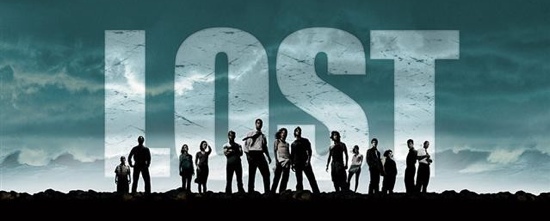
Anthony Spinner, a television producer whose credits include Baretta and Babes in Toyland, is suing ABC and Touchtone Television with the claim that he created the tv show Lost 32 years ago. Spinner says that he wrote a television pilot for the network in 1977 titled Lost, which contains many ideas and characters that Spinner claims were later used for the hit television series Lost.
Spinner was paid $30,000 to write a TV pilot, but the network passed on the show in 1977, 1991 and 1994. Spinner is suing for damages and a cut of royalties, profits among other things. You might be wondering why Spinner waited five years to sue. Well, apparently he tried to file a lawsuit a few years back but it was dismissed for procedural reasons.
A list comparing the two shows has been leaked to TMZ which accounts for a lot of similar storylines and characters. His show featured a airplane headed to Los Angeles which crashes into a tropical jungle-like island, and tells the story of the survivors through the use of flashback sequences to their regular lives, pre-crash. The castaways included:
Doctor (Jack?) who was the humanitarian voice of the group,
Trailblazer (Locke?) who challenges the group to accept that they are stuck on the island,
Strategic military man (Sayid?),
Stubborn and reluctant semi-her (Sawyer?) who challenges the leadership and has a dark father-son past,
Drug addicted survivor (Charlie?),
Physically fit young woman who can perform many of the same tasks as the men (Kate?),
An ethnic minority character (Sayid?) that has to deal with the racial slurs from another survivor (Sawyer?),
Lone survivor of a scientific expedition (Roussau?) is found with gunpowder, secure shelter, and a relationship with others who were on the island before them (The Others)
Female lead with criminal past (Kate?)
The show also involved a love triangle like Jack/Kate/Sawyer, the discovery of a cold weather animal in the warm tropical jungle (a saber tooth tiger instead of a Polar Bear), and a raft built that is destroyed by the natives.
And of course, there is always the possibility that the two shows stumbled onto a lot of the same ideas. Most of the characters are regular archetypes. Concepts like love triangles and natives on the island aren’t exactly original, and could have easily come from taking the idea to their logical conclusions. That said, the concept, complete with character-based flashbacks, is awfully similar. Who knows if these claims are accurate, but the producer seems a little bit more credible than the usual crazy crackpot.
It should be noted that some people believe this is just viral marketing for the show, especially considering that the teleplay was written in 1977.
life.com —The Department of Homeland Security recently issued a chilling report: Americans, it said, can expect an upsurge in "rightwing extremism" from White nationalists, militias, and groups like the Ku Klux Klan. The Klan, of course, has had a hand in some of the nation's most infamous acts of racial terror and murder.
Very cool video of Rap/Hip-Hop being presented in 30 different countries around the globe. It comes in all shapes and sizes.
Here is a sampling of 30 different raps, from 30 different countries (in alphabetical order). While I’m not the biggest fan of the genre, this video really showcases how different Rap/Hip-Hop can sound depending on what part of the world you come from. Same concept but way different look and sound.
Considering it’s only been a few decades since Rap started dominating the U.S. Billboard charts, it amazes me how fast a style of music can spread with a little word of mouth and a lot of love from the internet.
Enjoy!
F.Y.I. The Chinese version takes the cake for me!
List by appearance:
American: Missy Elliott British: Lady Sovereign Cantonese: LMF Chinese: Wang Lee-hom Croatian: Tram 11 Danish: Tue Track Filipino: Parokya Ni Edgar Finnish: Pikku G France: Booba Germany: Samy Deluxe Greek: Stereo Mike Hebrew: Shi 360 Hungarian: Ganxsta Zolee Icelandic: Forgotten Lores Italy: Frankie Hi-NRG MC Japanese: Japanese Rap Sta Korean: Yoon Mi Rae (Tasha/T) Norwegian: Don Martin (Gatas Parlament) Polish: Abradab Romania: Daddy Caddy (Bug Mafia) Russia: Михей (Mihey) Slovenian: Murat & Jose Spanish: Violadores del Verso Swedish: Fronda Swiss: EKR Turkish: Ceza Vietnamese: VNR Wolof: Bad’s Diom
London’s iconic double-decker buses recently received an eco update as six highly efficient hybrid Volvo vehicles hit the streets for the first time. The new B5L two-story buses retain their classic red color, but under the hood a hybrid drivetrain saves 25% on fuel consumption while significantly reducing emissions and noise. The buses have entered service in the city as part of a trial run, and if all goes according to plan they will be joined by additional vehicles in the future.
Volvo’s new B5L buses feature a parallel hybrid I-SAM (Integrated Starter, Alternator, Motor) system, which uses an electric motor and a hybrid engine to power the vehicle. The buses can go up to 12mph in electric mode, after which, the diesel engines steps in. The speed of 12mph might not sound like much, but it is quite perfect for most bus routes.
The vehicles are operated by the bus operator Arriva London and last week they joined several other hybrid bus lines in the city. Managing Director of Arriva London Mark Yexley stated, “With the support of Transport for London, this is a pioneering project for Arriva to be involved with. These six vehicles will provide an excellent opportunity to assess the benefits and the whole life cost proposition of hybrid technology in a real life day to day operating environment.”
By MARCUS WOHLSEN, Associated Press Writer Marcus Wohlsen,
SAN FRANCISCO – A bill to tax and regulate marijuana in California like alcohol would generate nearly $1.4 billion in revenue for the cash-strapped state, according to an official analysis released Wednesday by tax officials.
The State Board of Equalization report estimates marijuana retail sales would bring $990 million from a $50-per-ounce fee and $392 million in sales taxes.
The bill introduced by San Francisco Democratic Assemblyman Tom Ammiano in February would allow adults 21 and older to legally possess, grow and sell marijuana.
Ammiano has promoted the bill as a way to help bridge the state's $26.3 billion budget shortfall.
"It defies reason to propose closing parks and eliminating vital services for the poor while this potential revenue is available," Ammiano said in a statement.
The way the bill is written, the state could not begin collecting taxes until the federal government legalizes marijuana. A spokesman says Ammiano plans to amend the bill to remove that provision.
The legislation requires all revenue generated by the $50-per-ounce fee to be used for drug education and rehabilitation programs. The state's 9 percent sales tax would be applied to retail sales, while the fee would likely be charged at the wholesale level and built into the retail price.
The Equalization Board used law enforcement and academic studies to calculate that about 16 million ounces — or 500 tons — of marijuana are consumed in California each year.
Marijuana use would likely increase by about 30 percent once the law took effect because legalization would lead to falling prices, the board said.
Estimates of marijuana use, cultivation and sales are notoriously difficult to come by because of the drug's status as a black-market substance. Calculations by marijuana advocates and law enforcement officials often differ widely.
"That's one reason why we look at multiple reports from multiple sources — so that no one agenda is considered to be the deciding or determining data," said board spokeswoman Anita Gore.
Advocates and opponents do agree that California is by far the country's top pot-producing state. Last year law enforcement agencies in California seized nearly 5.3 million plants.
If passed, Ammiano's bill could increase the tension between the state and the U.S. government over marijuana, which is banned outright under federal law. The two sides have clashed often since state voters passed a ballot measure in 1996 legalizing marijuana for medical use.
At the same time, some medical marijuana dispensary operators in the state have said they are less fearful of federal raids since U.S. Attorney General Eric Holder said the Justice Department would defer to state marijuana regulations.
Advocates pounced on the analysis as ammunition for their claim that the ban on marijuana is obsolete.
"We can't borrow or slash our way out of this deficit," said Stephen Gutwillig, California state director of the Drug Policy Alliance. "The legislature must consider innovative sources of new revenue, and marijuana should be at the top of that list."
Ammiano's bill is still in committee. Hearings on the legislation are expected this fall.
Also Wednesday, three Los Angeles City Council members proposed taxing medical marijuana to help close the city's budget gap.
Council members Janice Hahn, Dennis Zine and Bill Rosendahl backed a motion asking city finance officials to explore taxing the drug.
Hahn said that with more than 400 dispensaries operating in the city, the tax could generate significant revenue. The motion pointed out that a proposed tax increase on medical marijuana in Oakland, which has only four dispensaries, was projected to bring in more than $300,000 in 2010.
Meanwhile, marijuana supporters have taken the first official step toward putting the legalization question directly to California voters.
A trio of Northern Californiacriminal defense attorneys on Wednesday submitted a pot legalization measure to the state attorney general's office, which must provide an official summary before supporters can begin gathering signatures.
About 443,000 signatures are necessary to place The Tax, Regulate and Control Cannabis Act on the November 2010 ballot. The measure would repeal all state and local laws that criminalize marijuana.
While Congress debates health care, handles the economic downturn, and the quagmire in Afghanistan, Congressman Barney Frank is eyeing America's draconian pot policies. Read our exclusive interview.
To my shame, I started my interview with Congressman Barney Frank about the legalization of marijuana by apologizing to my subject. "I know you guys have a lot on your plate these days, so I'm sorry to be calling you about something kind of trivial..."
Then I did a rapid midcourse correction. "But it's not trivial, because people go to jail over it."
"That's exactly right," Frank said.
We were talking about the Personal Use of Marijuana by Responsible Adults Act of 2009, Frank's latest attempt to bring sanity to the federal marijuana laws. Currently, pot is classified as a Schedule I Controlled Dangerous Substance under federal law, which makes it worse than morphine, cocaine, amphetamine, and PCP. Possession of a single joint carries a penalty of $1,000 and a year in prison – a charge faced by about 800,000 American citizens every year. This is the government whose judgment on war and economics we are supposed to respect.
So I started the interview over.
ESQUIRE: Could you tell me why you're doing it at this time? Everybody says you guys have got so much to handle right now.
BARNEY FRANK: Announcing that the government should mind its own business on marijuana is really not that hard. There's not a lot of complexity here. We should stop treating people as criminals because they smoke marijuana. The problem is the political will.
ESQ: That's my second question. There's already been a lot of change in the country. Thirteen states have decriminalized pot. What's holding up Congress?
BF: This is a case where there's cultural lag on the part of my colleagues. If you ask them privately, they don't think it's a terrible thing. But they're afraid of being portrayed as soft on drugs. And by the way, the argument is, nobody ever gets arrested for it. But we have this outrageous case in New York where a cop jammed a baton up a guy's ass when he caught him smoking marijuana.
ESQ: You're kidding.
BF: Actually, I've just been corrected by my partner – it was a radio he jammed up the guy's ass, not his baton.
ESQ: Small radio, I hope.
BF: By the way, the bill is bi-partisan: I've got two Democrats and two Republicans.
ESQ: Who are the Republicans?
BF: Ron Paul. And Dana Rohrabacher from California.
ESQ: Isn't Rohrabacher pretty hard-right?
BF: He's a very conservative guy, but with a libertarian streak.
ESQ: That libertarian streak will help you out once in a while. And who's against it?
ESQ: When you talk to Souder about it, what does he say?
BF: You don't waste your time on people with whom you completely disagree.
ESQ: Okay.
BF: Here's one thing I would say – there's a great intellectual flaw at work here. People say, "Oh, you want the government to approve of smoking marijuana." And the answer is, no, there should be a small number of things that the government makes illegal, but the great bulk of human activity ought to be none of the government's business. People can make their own choices.
ESQ: What about the "public-square" argument that we need to keep prostitutes off the streets and pot-smokers on the run in order to promote a higher level of morality and civic order?
BF: One, I don't think it's immoral to smoke cigarettes or drink alcohol, even though they may make you sick. Morality to me is the way you treat other people, not the way you treat yourself. John Stuart Mill's On Liberty makes a great deal of sense in that regard. I wish more people read him.
ESQ: My father forced me to read On Liberty when I was fourteen years old. I still haven't recovered.
BF: He deals very thoughtfully with some of the objections.
ESQ: Then let me ask you from the other side: Why is the bill so modest? You explicitly say you're not going to overturn state laws.
BF: Because I think it's important, when you're confronting political opinions this way, to make it easier for people. This isn't for drug dealers. Although I do think there's a logic that once you've allowed people to smoke, you're going to go beyond that.
ESQ: So how far do you really want to go? Decriminalize completely? Tax it, like they're talking about out in California?
BF: I don't think that's a debate I should get into right now.
ESQ: So you want to be a cautious centrist, waiting for the country to come around?
BF: [pause] You think this is centrist?
ESQ: [laughs] Okay, sorry.
BF: I must say, I don't have a lot of sympathy with people on the left who say, "Oh, I'm not going to settle for some small step, I'm going to take the big step." I'm doing something I think could be passable. I believe the results of modest beginnings will encourage people to go further. And if the people who disagree with me are right, it won't go further.
ESQ: Realistically, do you think it's going to pass?
BF: Not this year, no.
ESQ: How long do you think it will take?
BF: There's no point in my guessing. Why would I want to guess? We'll have a rational discussion, and we'll see where it goes from there.
While We're Here, One Final Hit on the Topic
Meanwhile, in the wacky world of Republicans who love liberty almost as much as they love prisons, an Illinois congressman named Mark Kirk has proposed a competing law to make selling "this new potent marijuana" punishable by $1 million in fines and 25 years in prison. Apparently Kirk is talking about something called "kush," which I cannot personally evaluate since I am A) not currently a pot-smoker, and B) too crippled by college bills to afford anything that costs $600 an ounce. But for those old-fashioned reality-based types who care about scientific evidence, here's what the guys in white lab coats say.
So, Which One Is Goliath Again?
Jane Hamsher of MSNBC and Jillian Brandes go toe-to-toe last week about health-care reform.
Speaking of reform, last week MSNBC reported the shocking statistic that health-care reformers have spent $15 million on ads, while the enemies of reform have spent a mere $4 million. "It's a David and Goliath situation," whined a right-wing shill named Jillian Bandes.
Well, there are statistics and there are statistics. Behind the scenes, where it really matters, hospitals, doctors, and Big Pharma are spending $1.4 million a day to kill reform. They've hired three-hundred-and-fifty former members of congress and congressional staffers as temporary lobbyists. "Even in a city where lobbying is a part of life, the scale of the effort has drawn attention," the Washington Post reports.
David and Goliath, indeed.
You Like Dislike Me, You Really Like Dislike Me!
Loving a vigorous debate and personal abuse as I do, I have come to rely on my many right-wing critics for my weekly dose of bile. So it was very exciting to open my Web browser yesterday and find myself attacked from the left! My crime was comparing the 19th-century abolitionist John Brown to the "right to life" assassin Scott Roeder. Also, lamenting the 620,000 people who died in the Civil War. According to historian Louis DiCario, that makes me a racist. "What Richardson actually seems to be asking is: "Was ending the enslavement of black people worth a half-million white people's lives?" And I was wrong to call Brown a terrorist too. Although he dragged a farmer and his sons from their beds and watched as his raiding party hacked them to death with swords, he was actually a "counter-terrorist." Check it out!
In DiCario's honor (and Barney Frank's and John Stuart Mill's and all the victims of righteous causes), here's the quote of the day: "There is in most of us an unreconstructed Southerner who will not accept domination as well as a benevolent despot who wants to mold others for their own good, to assemble them in such as way as to produce a comprehensive unit which will satisfy our own ambition by realizing some vision of our own; and the conflict between these two tendencies – which on a larger scale gave rise to the Civil War – may also break the harmony of families and cause a fissure in the individual." – Edmund Wilson, Patriotic Gore
Questions? Comments? Concerns? Click here to e-mail John H. Richardson about his weekly political column at Esquire.com.
On the left is Anand Pai and on the right is Lingchong You of Duke University. (Credit: Duke University Photography
ScienceDaily (July 13, 2009) — The Rosetta Stone of bacterial communication may have been found. Although they have no sensory organs, bacteria can get a good idea about what's going on in their neighborhood and communicate with each other, mainly by secreting and taking in chemicals from their surrounding environment. Even though there are millions of different kinds of bacteria with their own ways of sensing the world around them, Duke University bioengineers believe they have found a principle common to all of them.
The researchers said that a more complete understanding of communication between cells and bacteria is essential to the advancement of the new field of synthetic biology, where populations of genetically altered bacteria are "programmed" to do certain things. Such re-programmed bacterial gene circuits could see a wide variety of applications in medicine, environmental cleanup and biocomputing.
It is already known that a process known as "quorum sensing" underlies communication between bacteria. However, each type of bacteria seems to have its own quorum-sensing abilities, with tremendous variations, the researchers said.
"Quorum sensing is a cell-to-cell communication mechanism that enables bacteria to sense and respond to changes in the density of the bacteria in a given environment," said Anand Pai, graduate student in bioengineering at Duke's Pratt School of Engineering. "It regulates a wide variety of biological functions such as bioluminescence, virulence, nutrient foraging and cellular suicide."
The researchers found that the total volume of bacteria in relation to the volume of their environment is a key to quorum sensing, no matter what kind of microbe is involved.
"If there are only a few cells in an area, nothing will happen," Pai said. "If there are a lot of cells, the secreted chemicals are high in concentration, causing the cells to perform a specific action. We wanted to find out how these cells know when they have reached a quorum."
Pai and scientist Lingchong You, assistant professor of biomedical engineering and a member of Duke's Institute for Genome Sciences & Policy and Center for Systems Biology, have discovered what they believe is a common root among the different forms of quorum sensing. In an article in the July 2009 issue of the journal Molecular Systems Biology, they term this process "sensing potential."
"Sensing potential is essentially the linking of an action to the number of cells and the size of their environment," You said. "For example, a small number of cells would act differently than the same number of cells in a much larger space. No matter what type of cell or their own quorum sensing abilities, the relationship between the size of a cell and the size of its environment is the common thread we see in all quorum sensing systems.
"This analysis provides novel insights into the fundamental design of quorum sensing systems," You said. "Also, the overall framework we defined can serve as a foundation for studying the dynamics and the evolution of quorum sensing, as well as for engineering synthetic gene circuits based on cell-to-cell communications."
Synthetic gene circuits are carefully designed combinations of genes that can be "loaded" into bacteria or other cells to direct their actions in much the same way that a basic computer program directs a computer. Such re-programmed bacteria would exist as a synthetic ecosystem.
"Each population will synthesize a subset of enzymes that are required for the population as a whole to produce desired proteins or chemicals in a coordinated way," You said. "We may even be able to re-engineer bacteria to deliver different types of drugs or selectively kill cancer cells"
For example, You has already gained insights into the relationship between predators and prey by creating a synthetic circuit involving two genetically altered lines of bacteria. The findings from that work helped define the effects of relative changes in populations.
The research was supported by National Institutes of Health, a David and Lucile Packard Fellowship, and a DuPont Young Professor Award.
Duke University (2009, July 13). 'Rosetta Stone' Of Bacterial Communication Discovered. ScienceDaily. Retrieved July 14, 2009, from http://www.sciencedaily.com/releases/2009/07/090707093619.htm
Judging by this screenshot taken by an IE6 user who was watching some videos on YouTube, it appears the Google company will be phasing out support for the browser shortly. I don’t have Internet Explorer 6 installed on my computer, so I can’t verify this first hand, but illogical it seems not and a simple Twitter search shows multiple people confirming the news. Heck, some are even downright ecstatic over the news.
The online video behemoth is pointing to ‘modern’ browsers like Google Chrome (twice on the same page even, unsurprisingly), Internet Explorer 8 and Firefox 3.5 as alternatives.
With the impending move, YouTube follows in the footsteps of that other Web 2.0 poster child, Digg, which recently hinted at wanting to cut support for the browser too. Digg’s User Experience Architect Mark Trammell at the time wrote that the site is strongly considering removing essential features like digging and commenting for IE6 users. He explained that while IE6 users make up around 5% of site traffic, it only accounts for 1% of diggs, buries, and comments.
YouTube so far hasn’t officially communicated about the desire to drop support for IE6, but it’s conceivable that like Digg it would rather have its developers spend time optimizing the service for newer, better browsers than wasting man hours on the oft-despised Microsoft browser. We recently reported that Internet Explorer is losing market share to Firefox and Safari at a rapid pace.
No one knows why dozens of jumbo squid washed up on a southern California beach on Saturday, although an earthquake occurred in the area about an hour earlier. Still, experts don’t know if there’s a link between the ‘quake and the beached squid.
The conundrum has puzzled the area’s residents, including one woman who said she’d never seen anything like it in the 42 years she’d lived in the area. The jumbo squid do venture into shallower depths at night, according to LiveScience:
During the day, the somewhat mysterious jumbo squid are known to descend to lower depths in the ocean to rest, slowing down their metabolism to deal with the lower oxygen levels there. At night, they return to well-oxygenated waters nearer the surface to feed.
Beachgoers tried to throw back the squid, which measured up to four feet long, before seagulls could feast on them. But for many of the marine creatures, the attempt was futile.
An archaeologist works on a stone monolith at the Templo Mayor (Great Temple) site in Mexico City.
The skeleton of a richly decorated canine and several unbroken plaster seals add to clues that the site could be the only known tomb of an Aztec king, researchers said in June 2009.
Eliza Barclay for National Geographic News
After nearly 30 years in the field, archaeologist Leonardo López Luján may be on the verge of the discovery of a lifetime: the only known tomb of an Aztec king.
An air of excitement has been thickening around Mexico's Templo Mayor (Great Temple) since 2006, when excavations near the temple revealed a stone monolith with a carving of an Aztec goddess.
Recently the anticipation intensified with the discovery of a richly decorated canine skeleton near a sealed entrance.
The animal was found wearing wooden earflaps mounted with turquoise mosaic, a collar of greenstone beads, and golden bells around its four feet.
But López Luján, a senior researcher at the Templo Mayor Museum in Mexico City, remains cool and cautious.
The skeleton could be that of a dog or a Mexican wolf—a question López Luján's team hopes to clear up with DNA testing.
"It would be very important if it turns out to be a dog, as it would tell us that we are close to arriving at a funeral context," he said.
The skeleton "could represent the dog that accompanied the deceased to the other side and helped them to cross a river called Chicnahuapan, one of the dangers before arriving at the ninth and deepest level of the underworld," López Luján said.
Many ancient Mesoamerican cultures, including the Aztec, believed that dogs escorted their masters to the afterlife, he added, and archaeologists have discovered many dog skeletons alongside Mesoamerican human remains.
Unlooted Tomb?
The Templo Mayor canine skeleton was found next to a stone box that contained the remains of a golden eagle, flint sacrificial knives, crustacean shells, and balls of copal resin—tree sap thought to have been used in various substances, such as incense, medicine, and glue.
Recent excavations also uncovered unbroken plaster seals made of lime and sand.
The existence of multiple seals suggests that the tomb, if it's there, could be a collective crypt containing the king and his successors, López Luján said.
"Each time they buried a newly deceased [dignitary], they sealed the entrance with a plaster seal," he speculated.
That the seals are unbroken suggests that the potential tomb has not been looted.
If there is a royal tomb behind the seals, López Luján would expect to find the ruler's ashes in stone or ceramic containers as well as the remains of servants, accompanied by personal objects and more offerings from the funeral rites.
The tomb, López Luján says, would not be as large as that of Tutankhamun in Egypt or the Maya funeral chambers of Copán in Honduras, "because the Mexicas [Aztecs] never build arches or vaults. It might be a very small room full of offerings."
Despite rising expectations, the archaeologist said he and his team must be patient.
Only by working slowly and methodically will the team be able to reconstruct the funerary customs and other artifacts that could shed light on the Aztec economy, political system, and religion as it existed before the arrival of the Spanish in the 1500s.
And now the workers must grapple with yet more challenges: the weather and a high water table.
"We have to go very slow," he said, "because now we are in the rainy season."
A Texan firm has come up with a 'shower in a bottle' that promises to get even the sweatiest commuter clean with no need for running water. Does it work?
Rocket Shower pack for cyclists who don't have shower at work. Photograph: Frank Baron
Of all the excuses for not cycling to work, a lack of showers is perhaps the most rational. No one wants to tramp into the office looking as if they've had a sauna with their clothes on. But now a Texan firm has come up with a solution; a "shower in a bottle" that promises to get even the sweatiest commuter clean with no need for running water.
But is it what the xenophobic might call a "French shower"? An expensive version of dousing yourself with Lynx instead of having a wash? Or spraying your clothes with Febreze?
To test Rocket Shower, I slipped into a toilet cubicle after cycling on a hot day. Feeling slightly weird, I took off my dirty clothes, sprayed myself all over with Rocket Shower, waited a few seconds and then dryed off with the technical handtowel in the "jet pack" (£19.99 from Fitsense.co.uk). It contains witch hazel to cleanse, alcohol to help sweat evaporate and kill bacteria, peppermint to cool the skin and grapefruit oil - to stop you smelling like an alcoholic.
To my surprise it worked rather well. I felt cool, dry and confident enough to head to a packed leaving do where no one seemed to wrinkle their nose in disgust.
Result - the only downer is that now you'll need a new excuse for getting the bus.
How do you cope in a workplace with no showers? Share your tips below.
July 13, 2009 - Marvel Studios announced today that Academy Award nominated actress Natalie Portman has been cast to star as Jane Foster in the studio's highly anticipated movie Thor. In the early Thor comics, Jane Foster was a nurse who became Thor's first love. The character will be updated for the feature adaptation. Portman will star opposite Chris Hemsworth who will play Thor and Tom Hiddleston who will play the villain Loki. Kenneth Branagh will direct the film.
Marvel Studios' Kevin Feige will produce Thor. Principal photography for the film is set for early 2010. The film will be released in the US on May 20, 2011 and distributed by Paramount Pictures.
Marvel Studios expands its film universe with a new type of superhero: Thor. This epic adventure spans the Marvel Universe; from present day Earth to the realm of Asgard. At the center of the story is The Mighty Thor, a powerful but arrogant warrior whose reckless actions reignite an ancient war. Thor is cast down to Earth and forced to live among humans as punishment. Once here, Thor learns what it takes to be a true hero when the most dangerous villain of his world sends the darkest forces of Asgard to invade Earth.
Portman will next be seen starring in Jim Sheridan's Brothers opposite Jake Gyllenhaal and Tobey Maguire. She recently wrapped production on Hesher, starring Joseph Gordon-Levitt and executive produced by her production company handsomecharlie films, and Don Roos' Love and Other Impossible Pursuits, which also she executive produced. In 2004, she won a Golden Globe Award for Best Supporting Actress as well as an Academy Award nomination in the same category for Closer. She also earned critical acclaim for her role in Garden State and is most well known for her role as Queen Padme Amidala in the Star Wars Trilogy. Other film credits include The Other Boleyn Girl, V For Vendetta, Cold Mountain, Anywhere But Here, Heat, Beautiful Girls, and The Professional.
Thor is one of a continuing slate of films being produced by Marvel Studios based on the Marvel characters, including Iron Man 2 on May 7, 2010, The First Avenger: Captain America on July 22, 2011, and The Avengers on May 4, 2012.
Apple fans have been clamoring for a Mac tablet for years, and year after year the Cupertino, Calif.-based company has disappointed them. Now a new report from Taiwan says the company plans to a release a $800 tablet in October.
The device will have a 9.7-inch touchscreen, reports InfoTimes, and three Taiwanese gadget manufacturers–Foxconn, Wintek and Dynapack–have received orders for different components of the tablet.
At Gadget Lab, we’re treating this latest rumor with the same skepticism as previous Apple tablet and “Mac netbook” rumors. In May, Gadget Lab reported that well-known Apple analyst Gene Munster predicted Apple will have a tablet in the market in early 2010. But this is the first time that specific information has been discussed in terms of screen size and price.
The netbook market — and to a lesser extent, the inexpensive tablet market — is begging for the company’s touch. While consumers like the tiny size of netbooks and their wallet-friendly price tag, dissatisfaction runs high in terms of ease of use. An NPD Group survey of 600 customers showed only 58 percent of consumers were satisfied with their netbooks, compared to 79 percent of regular laptop buyers. Netbook keypads can be difficult to type on and trackpads are often ineffective, complain buyers.
With its track record of creating sleek small factor consumer gadgets such as iTouch and iPhone, Apple could potentially solve some of these problems.
Earlier, Apple known for its obfuscation while working on a new product, has called the netbooks category as “junky.” An $800 touchscreen Apple tablet wouldn’t exactly be a netbook, as we know it today, yet Apple could tap into the trend of mobile devices that is popular among consumers.
What will also be interesting to see is if Apple’s tablet will run OS X or a souped-up version of the iPhone OS 3.0 that is available on iPhone and iPod Touch. In either case, Apple is likely to end up competing with more than just Microsoft. Google recently announced its Chrome operating system for netbooks.
Photo: Illustration of an imaginary Apple Tablet (vernhart/Flickr)
With great bands often come great videos, and Radiohead is one of those bands that matured quickly and garnered talented directors early on. Some directors set out to create a good marketing tool and simply made the members look cool. Others were as cutting edge as the band whose songs they set to the moving image. Here's a look at some of Radiohead's more memorable videos and the directors who shot them:
Director: Jake Scott Video: "Fake Plastic Trees" (1995)
But that's what the kids want in a video -- to get closer and more intimate with the rock stars they idolize.
Scott, son of Ridley Scott (and nephew of Tony), seems to have more influences, education and inspiration to draw from than he actually knows what to do with. His film debut, the 1999 feature "Plunkett & Macleane," may satisfy the urge to indulge in a roguish period picture, but it was also almost terminally frenetic. You'd never guess from watching it that four years earlier Scott directed the video for Radiohead's "Fake Plastic Trees." His other standout work, R.E.M.'s "Everybody Hurts," shows more stylistic parallels with "Just," a Radiohead video from another director [see below], with subtitles moving a mysterious narrative along.
Scott likes the close-up, favoring gratuitous shots of his subjects talking, singing, strumming and striking poses with their heads. But that's what the kids want in a video -- to get closer and more intimate with the rock stars they idolize. "Fake Plastic Trees," with its whitewashed, saturated colors, may still be his best. Can't forget that long, bright look at Thom Yorke's fascinating face. (On the film side, Scott's next feature, the upcoming "Welcome to the Rileys," looks to be a considerably calmer drama that stars Kristen Stewart.)
Director: Jamie Thraves Video: "Just" (1995)
Thraves has done videos for bands like Blur and radio titans Coldplay, but none of his videos has caused more stir than Radiohead's "Just." It epitomized the look of rock cool at the time. He nailed it with the Elvis glasses, Yorke's wardrobe and the hot shots of Jonny [Greenwood]'s string-bending solo. But what's kept fans talking on forums and blogs over the years is the weighty statement made by the man on the sidewalk that makes the crowd lie down with him, just as the subtitles stop. People have gone so far as to watch it in slow motion with lip-reading experts to determine what the line is. The results? Inconclusive, since the shot cuts away to the band anyway. Neither Jamie Thraves nor the band will say, even if there is actually something to say, since they feel it would defeat the point of the art. But fans still keep asking the question, anyway.
Director: Michel Gondry Video: "Knives Out" (2001)
Gondry's wild, fantastical style is apparent throughout all his work, particularly his features "Eternal Sunshine of the Spotless Mind" and "The Science of Sleep." But the French-born director got his start in music videos, and his filmic language, while evolved, remains rooted in the short form. Playfully toying with the viewer's frame of reference is a Gondry signature. In his video for "Knives Out," the camera eventually moves into a TV screen that shows Thom Yorke and a girlfriend (played by actress Emma de Caunes) in a train car. As the couple fight and Yorke eventually offers her an engagement ring, a hand is shown beneath the TV set hitting the VCR's rewind button to show their relationship play out in reverse through the train window. The scene bears a striking resemblance to the opening of Gondry's "Be Kind Rewind," which depicts the real-life jazz musician Fats Waller dying in a train car, as the window reveals a model of the train itself parked at a station outside. The same stylish mind-boggle plays out continually in the video, and indeed in much of his work.
Glazer did both "Street Spirit (Fade Out)," from "The Bends," and "OK Computer"'s radio-friendly "Karma Police." The latter plays out like some kind of missing nightmare episode from Glazer's critically acclaimed 2000 film "Sexy Beast." The barrel-chested thuggish character jogging in front of the menacing car could pass as one of the middle-aged criminals in that film. Just replace Thom Yorke with Ray Winstone's dreamscape hairy rabbit thing.
The earlier "Street Spirit" video is perhaps more interesting, even if its visual style has become tiring, and that's putting it kindly. At the time, Glazer's use of various camera speeds and tricks that showed Yorke and crew moving at different speeds in the same frame was new, cutting edge and as hip as the band it was created for. In one scene, Yorke remains static in the foreground as Jonny Greenwood leaps into the air, changing speeds from slow, then fast, then slow again. There's quite a bit of jumping, in fact, something of which Radiohead no longer seems fond.
Director: Grant Gee (1998) Video: "No Surprises"
Gee claims that the idea for "No Surprises" came from brainstorming at his desk, where a little poster from Stanley Kubrick's "2001" was stuck on the wall above. It was the picture of astronaut Dave Bowman's face as he is stuck outside the ship -- "That first moment of panic across the guy's eyes and it's just a close-up shot of him through his visor," as Gee puts it. For "No Surprises," Gee upped the ante by putting Yorke in a similar situation and filling the visor up with water, which solved two problems the director needed to address: how to introduce drama and mark the passage of time.
There's a great scene in Gee's 1998 documentary on the band, "Meeting People is Easy," in which a group of British TV journalists are discussing how awful "No Surprises" is while watching Gee's video for it. In this work within a work, they naïvely wonder about how Yorke can hold his breath so long as Gee humorously intercuts footage from the video's shoot, revealing the camera tricks that should have been apparent to them.
Shynola isn't the fanciful handle of a single person, it's actually the name of a London artist collective who've worked with Radiohead a number of times. Multi-talented animators, they've also created videos for Beck, Blur, Stephen Malkmus, The Rapture and Unkle, among others. Their Radiohead collaboration started with the creation of some of the cartoon "blips" that coincided with the release of "Kid A" in 2000. These little 30-second animated spots, which were first used as marketing tools, eventually came together as the video for the song "Motion Picture Soundtrack." Whether putting the shorts together was planned from the start or realized separately later, it's genius.
A precursor for their work on the feature adaptation of "The Hitchhiker's Guide to the Galaxy," Shynola's animated short for "Pyramid Song" uses watery effects to capture the dreamlike quality of the song in a way that live action could not have done without the most colossal budget. Of "Pyramid Song" itself, Thom Yorke reportedly called it "the best thing we've committed to tape, ever." Shynola's video might be as moody and beautiful as the song for which it was made.
After five seasons, it seems as though the boys from Entourage are finally ready to grow up. Vince, Drama, Turtle and E return this Sunday at 10:30pm for the Entourage season 6 premiere, and maturity is finally setting in.
It's been more than seven months since we last saw HBO's hip crew, and Vincent Chase (Adrian Grenier) spent his hiatus starring in Martin Scorsese's Gatsby. As Entourage season 6 begins, the film is ready to open and relaunch Vince's career.
However, as has always been the case, Vince isn't particularly interesting. He's a surprisingly bland actor who is immune to the world. He has fun, sleeps with sexy women in coat closets and cars, and lets nothing alter his mood. The rest of the gang is a different story.
Eric (Kevin Connolly) is now a successful manager who considers getting his own place, Johnny Drama (Kevin Dillon) is finding success on his hit TV show, and Turtle (Jerry Ferrara) is still dating Jamie-Lynn Sigler from The Sopranos, playing herself. While these guys were satellites to Vince during the first five seasons, they're all ready to do their own things, and perhaps Vince might finally lose his Teflon attitude if his posse isn't around all the time.
But any true Entourage fan knows the real stars of the show are uber-agent Ari Gold (Jeremy Piven) and his trusty sidekick Lloyd (the terrific scene stealer Rex Lee). The maturity bug even hits Lloyd, as he wants to move up in the Miller-Gold Agency and stop being just Ari's assistant. This storyline looks promising not just for its comedic potential, but because it means Lloyd will get a more substantive role in the show.
If there is one major problem with the return of Entourage, it's the fact that the maturity might cost the show some major cool points. It doesn't help that several references in the first episode are already outdated. Vince promotes his movie on the now defunct Tonight Show with Jay Leno while Ari's old friend Andrew Klein makes a big deal out of signing Greg Garcia, creator of the now canceled My Name is Earl. I realize the show needs to film episodes well before air, but when the show is about the world of pop culture, it's hard for a show to act like something is hip and cool when it's already yesterday's news.
Even with that road bump, Entourage returns for season 6 with its same light and breezy attitude that makes you want to hit a club with Turtle or enjoy one of Johnny Drama's signature omelets. It's also great to see Gary Cole back, as well the arrival of The O.C.'s Autumn Reeser, who is sure to cause some huge problems for anyone she meets.
Entourage is back, and even though the boys are thinking about their future and moving on, there's still enough fun in them to make this a triumphant return.
New season, new ball. The three big football leagues—England’s Premier League, Spain’s La Liga, and Italy’s Serie A—begin in just a few weeks, and Nike has developed a fancy, new ball for them that’s loaded with all types of hi-tech goodness that may pique your interest. It’s called the T90 Ascente. Goalkeepers will hate it; flashy forwards will love it.
What’s so damn special about the ball? The Nike bullet points are: “360 Sweet Spot,” “Longer Range,” “Increased Visibility,” “Higher Accuracy,” and “Greater Speed.”
Breaking those down, the “360 Sweet Spot” refers to the way the ball reacts to being kicked. Usually, footballs have a “sweet spot,” like the “meat” of a baseball bat, that you’re trained to hit for maximum speeds, accuracy, etc. Apparently the T90 Ascente doesn’t have a “sweet spot,” per se, rather that the whole ball is a sweet spot. That is, wherever you kick it, the ball will react as if you’ve kicked the sweet spot. Good news for Quaresma. (Why do sports compilation videos on YouTube always have terrible music?)
Longer range? That’s pretty obvious, right? The ball is constructed in three layers, and this somehow makes the ball travel two ball lengths longer than previous Nike footballs.
Increased visibility. You’ll notice the patterns on the ball; it sort of looks like the scanner from Half-Life 2:
Anyhow, the patterns are such that they create a “flicker” as the ball spins. That’ll be helpful on those awful, gray winter days in Liverpool.
If you actually had the ball in your hands, you’d see that its surface is textured to a degree that’s probably a little different than the last ball you kicked. Nike calls it “micro-textured,” which basically lets air flow around the ball more smoothly, creating less resistance, etc. You know, like the dimples on a golf ball.
The T90 Ascenete is also faster than previous balls, traveling at about 22.19 m/s (72.17 feet/s). Something to do with the three-layer construction.
All this talk of multi-layer construction reminds me of the great Razor Blade Wars of the past decade. “Our razor has three blades.” “Well our razor has four blades.” “Ha! Our blade has five blades!.
And, uh, if you speak Spanish, watch this video. It explains the technological wonder of the ball.
Nike has its own video, in English, that I can’t embed. (Though, if I were feeling crazy, I could probably just swipe the Flash file then upload to our CG YouTube account. No thanks.) It’s here if you’re interested.
About 15 minutes ago I wrote “Goalkeepers will hate it; flashy forwards will love it.” But now I see FC Barcelona’s goalkeeper Víctor Valdés praising the ball in that Spanish video. Figures.
Not exactly. To cap its 20th anniversary, Fox will air a documentary special on "The Simpsons" produced and directed by Morgan Spurlock.
Titled "The Simpsons 20th Anniversary Special in 3-D on Ice," the outing will air Jan. 14.
According to the announcement, Spurlock "will examine the cultural phenomenon of 'The Simpsons' in his distinctive and innovative style. The special will document how the world sees 'The Simpsons' and how the Simpson family has seen the world for two decades." Huh.
“When they first called me about this, I thought it was a prank and I hung up,” said Spurlock, the documentary filmmaker of "Super Size Me" and FX's "30 Days." "And then my agent called back and said, ‘No, no, this is for real,’ at which point I fainted. Then when I woke up, I called everyone I knew because it was the coolest thing I could ever get to do in my career.”
The project was announced in the Most Confusing. Press Release. Ever. The release announced "The Simpsons 20th Anniversary Special in 3-D on Ice," went on for awhile with quotes and stuff and several repeat mentions of the "3-D on Ice" stuff, and then at bottom added, under a note about art availability, "EDITOR’S NOTE 2: Please note the special is neither in 3-D nor on ice." So two of the four aspects -- Spurlock and documentary -- are true.
Great episode ideal, funny title. And too bad the show isn't doing a 3D episode for real.
Here's the official release:
FOR IMMEDIATE RELEASE Monday, July 13, 2009
FILMMAKER MORGAN SPURLOCK TO PRODUCE AND DIRECT “The Simpsons 20th Anniversary Special in 3-D on ICE” AIRING THURSDAY, JANUARY 14, ON FOX
Academy Award-nominated filmmaker Morgan Spurlock (“Super Size Me,” “30 Days”) is set to produce and direct The Simpsons 20th Anniversary Special in 3-D on Ice airing Thursday, January 14 on FOX. The documentary special will be the momentous conclusion to the “Best. 20 Years. Ever.,” a year-long global celebration of THE SIMPSONS that launched in January 2009 and culminates on the 20th anniversary of the series’ debut.
In The Simpsons 20th Anniversary Special in 3-D on Ice, Spurlock will examine the cultural phenomenon of THE SIMPSONS in his distinctive and innovative style. The special will document how the world sees THE SIMPSONS and how the Simpson family has seen the world for two decades.
“When they first called me about this, I thought it was a prank and I hung up,” said Spurlock. “And then my agent called back and said, ‘No, no, this is for real,’ at which point I fainted. Then when I woke up, I called everyone I knew because it was the coolest thing I could ever get to do in my career.”
Morgan Spurlock has built a career that spans film, television and web programming. His first feature-length documentary, “Super Size Me,” won the Documentary Directing Award at the Sundance Film Festival in 2004 and was nominated for an Academy Award the following year. In 2005, Spurlock formed his Manhattan-based film, television and web production company, Warrior Poets, which is devoted to making socially significant and simultaneously entertaining work. Warrior Poets has produced the feature documentaries “The Third Wave,” “What Would Jesus Buy?” and “Where in the World Is Osama Bin Laden?”
Now the longest-running comedy in television history, THE SIMPSONS immediately struck a chord with viewers across the country as it poked fun at itself and everything in its wake. With its subversive humor and delightful wit, the series has made an indelible imprint on American pop culture, and the family members have become television icons.
THE SIMPSONS is a Gracie Films Production in association with 20th Century Fox Television. James L. Brooks, Matt Groening and Al Jean are the executive producers. Film Roman is the animation house.
[EDITOR’S NOTE 1: For artwork and more information on The Simpsons 20th Anniversary Special in 3-D on Ice, please visit foxflash
[EDITOR’S NOTE 2: Please note the special is neither in 3-D nor on ice.]
.
All you art collectors out there. Here is a chance to get a Giclee copy of some of Ian M Sherwin work. Ian is planning on doing a whole series of Marblehead, Massachusetts paintings. His work is amazing.









 Thom Yorke gets lost in the supermarket in 1995's "Fake Plastic Trees"
 Jonathan Glazer's "Karma Police," 1997
 After five seasons, it seems as though the boys from Entourage are finally ready to grow up. Vince, Drama, Turtle and E return this Sunday at 10:30pm for the Entourage season 6 premiere, and maturity is finally setting in.


 .

 Posts

