Zazzle Shop

Screen printing
Showing posts with label soccerball. Show all posts

Wednesday, September 21, 2011

The sickest soccer juggling skills [VID]

By

From: http://matadornetwork.com/

This young kid from Alexandria, Egypt, who goes by the name of Disha, is an absolute genius with a football. Check it out!

HE HAS SOME INCREDIBLE MOVES, and some of his groundwork looks like a weird cross between Brazilian Ju-Jitsu, football, and contact juggling.

The video is just shy of four-and-a-half minutes, and it’s well worth watching the whole thing, as it gets better and better. Make sure not to miss:

  • 0.46 – contact juggling using his head, outside the Alexandria Library

  • 1.00 – yogic football balancing

  • 1.58 – on a tank… yes, a tank

  • 3.11 – some shin-up action

  • 3.44 – stomach-ups (parental advisory only)

Make sure you check out his Facebook page, too.

Friday, June 25, 2010

The Origin of the Word “Soccer”

From: http://www.todayifoundout.com/

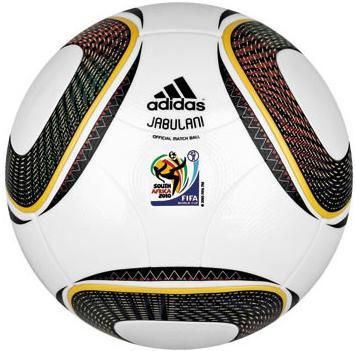
jabulani soccer ballToday I found out the origin of the word “soccer”. For all you out there who love to complain when Americans, and certain others, call “Football”, “Soccer”, you should know that it was the British that invented the word and it was also one of the first names of what we now primarily know of as “Football”.

In fact, in the early days of the sport among the upper echelons of British society, the proper term for the sport was “Soccer”. Not only that, but the sport being referred to as “Soccer” preceded the first recorded instance of it being called by the singular word “Football” by about 18 years. This happening when it became more popular with the middle and lower class. When that happened, the term “Football” gradually began dominating over “Soccer” and the then official name “Association Football”.

In the 1860s, as in most of history with records as far back as 1004 B.C., there were quite a lot of “football” sports in existence being played popularly throughout the world and of course, England. Many of these sports had similar rules and eventually, on October 26th, 1863, a group of teams in England decided to get together and create a standard set of rules which would be used at all their matches. They formed the rules for “Association Football”, with the “Association” distinguishing it from the many other types of football sports in existence in England, such as “Rugby Football”.

Now British school boys of the day liked to nickname everything, which is still somewhat common. They also liked to add the ending “er” to these nicknames. Thus Rugby was, at that time, popularly called “Rugger”. Association Football was then much better known as “Assoccer”, which quickly just became “Soccer” and sometimes “Soccer Football”.

The inventor of the nickname is said to be Charles Wredford Brown, who was an Oxford student around the time of Association Football’s inception. Legend has it, in 1863 shortly after the creation of Association Football, Wredford-Brown had some friends who asked him if he’d come play a game of “Rugger”, to which he replied he preferred “Soccer”. The name caught on from there.

In the beginning, the newly standardized Rugby and Soccer were football sports for “gentlemen”, primarily being played by the upper echelons of society. However, these two forms of football gradually spread to the masses, particularly Soccer as Rugby didn’t really catch on too well with the lower classes. This resulted in the name switching from “Soccer” and “Association Football”, to just “Football”; with the first documented case of the sport being called by the singular term “Football” coming in 1881, 18 years after it was first called simply “Soccer” or officially “Association Football”.

This game then gradually spread throughout the world under the lower class name of “Football”, rather than “Soccer” as the “gentlemen” called it. The problem was though, that a lot of other countries of the world already had popular sports of their own they called “Football”, such as the United States, Canada, Ireland, Australia, New Zealand, and South Africa, to name a few. In these countries, the name “Soccer” was and, in some, still is preferred for this reason.

Bonus Factoids:

  • Just as intriguing, for those who like to lambaste American Football being called such when the ball interacts primarily with hands, most of the earliest forms of Football were named thus, not because you kicked a ball with your foot, but because they were played on foot. Peasants played most of their sports on foot; aristocrats played most of theirs on horseback. Thus, games played on foot were called “football”, whether they had anything to do with kicking a ball or not. Indeed, many of the earliest forms of football involved carrying balls in an attempt to get across goal lines passed some opposing team or individual players.
  • Soccer balls were originally painted with the now classic black and white checkered look in order to make them more visible on black and white TV during the 1970 FIFA World Cup. Naturally, people wanted to buy balls that looked like those that the professionals used on TV and thus everybody bought the black and white checkered soccer ball instead of the previous traditional solid color ball.
  • In the United States, early on the word “Football” was incorporated in the name for Soccer. The first name of the league was the “United States Soccer Football Association”. This lasted about 30 years before it was shortened to simply the “United States Soccer Federation” in 1975.
  • “Rugby” was also once known as “Football” and originally had almost the same set of rules as Soccer, though over time increasingly diverged. The name “Rugby” comes from Rugby School in England. Legend has it, during a Football match at that school, William Webb Ellis picked up the ball in his hands and ran with it over the goal line. It didn’t count as an official goal, as you weren’t supposed to use your hands; but the referee remarked, it was a “jolly good ‘try’”, which, according to legend, is where that particular Rugby scoring term comes from. The official Rugby Union was then formed in 1871 with a split in 1893 forming the Rugby League.
  • Rugby never caught on with the lower class as Soccer did. Thus, the famous British saying, “Soccer is a gentleman’s game played by ruffians and Rugby is a ruffian’s game played by gentlemen.”
  • The earliest known record of a Soccer-like sport was in 1004 B.C. in Japan. There are also many references to Soccer-like sports in 50 B.C. China, even being played between teams from China and Japan.
  • The Romans also played several types of Football games, including some that resembled Soccer. One of which was also included in the Roman Olympic Games. This particular version, in the Olympic Games, featured 27 men a side. The game was so rough that 2/3 of the players had to be hospitalized after the game.
  • The last genuine leather soccer ball used in the World Cup was the Adidas Tango Espana, used in the 1982 World Cup. Shortly thereafter, in 1986, the first fully synthetic World Cup soccer ball was used.
  • The designers of the Adidas Teamgeist, used in the 2006 World Cup, claim that ball was the roundest ever made for a sport.
  • During King Edward’s reign (1307-1327), he had laws passed against the playing of football sports. Anyone caught playing any form of football would be imprisoned, “For as much as there is a great noise in the city caused by hustling over large balls, from which many evils may arise…”
  • He wasn’t the only British monarch that hated football. Queen Elizabeth the First “had football players jailed for a week, with follow-up church penance”. King Henry IV and Henry VIII also passed laws against football sports.
  • American Football was originally known in England as “Start-Stop Rugby with Padding”… Catchy. :-)

Sources:

Monday, June 21, 2010

Giant sculpture made out of 3000 balls for the World Cup

From: http://www.thisblogrules.com/

nike-ball-man

Nike is continue to impress with their advertisement methods. This huge sculpture, which has been named Ballman, is made with almost 3,000 footballs suspended from steel wire ropes giving the illusion that it is floating in the air. It is located inside shopping centre in Johannesburg, South Africa.

Ballman will stay in place for the whole World Cup tournament , and when dismantled, the plan is that the balls will be given away.

If you are a World Cup fan, then you will probably like these posters made for every team on tournament.

sculpture-of-ballsnike-ball-sculpture nikeballman nike-ball-details ball-man-nike

Thursday, January 28, 2010

Man sets 'keepy-uppy' world record in London


Dan Magness visited all of London's Premier League grounds during his feat

A man has broken a world record by playing "keepy-uppy" 30 miles across London, visiting every Premier League stadium in the capital.

Dan Magness, 26, left Fulham's Craven Cottage at 0800 GMT and finished at Tottenham Hotspur's White Hart Lane stadium at about 2145 GMT.

The football freestyler beat the record for the longest keepy-uppy journey.

To manage the feat he had to keep the ball off the ground using all parts of his body, except his hands.

After reaching White Hart Lane, Mr Magness, of Milton Keynes, Buckinghamshire, said: "I am absolutely exhausted, I've had every sort of cramp but I am really proud."

'Amazing spectacle'

He said he now hoped to visit every Premier League ground doing his football tricks.

The ball he used will embark on a 10,000-mile overland journey to Johannesburg, South Africa.

On its journey, the football will be taken through Europe and 17 African countries to the opening of the World Cup in the South African city.

In much the same vein as the Olympic Torch, the football - which organisers refer to as The Ball - is seen as a symbol of hope, promoting peace and unity.

The ball was hand-stitched in Africa by Alive & Kicking, a UK-based social enterprise that runs stitching factories in Kenya and Zambia.

"It's a fitting way to begin the ball's journey to the World Cup in South Africa and we're very proud that a ball hand-stitched by Alive & Kicking in Kenya will be the centrepiece of this amazing footballing spectacle," said Alive & Kicking director Will Prochaska.

Mr Magness has already broken four world records, recently controlling a ball for 24 hours in a box in central London's Covent Garden.

Thursday, December 17, 2009

Ronaldinho is a Freak When it Comes to Juggling the Ball

Sports Videos, News, Blogs

brazil.fandome.com New FIFA 10 commercial shows the best soccer players in the world trying to juggle the ball with a blindfold on....guess who's the best?

Tuesday, July 14, 2009

Nike’s T90 Ascente football: So damn advanced they might as well throw Google Chrome OS on it


by Nicholas Deleon

t90

New season, new ball. The three big football leagues—England’s Premier League, Spain’s La Liga, and Italy’s Serie A—begin in just a few weeks, and Nike has developed a fancy, new ball for them that’s loaded with all types of hi-tech goodness that may pique your interest. It’s called the T90 Ascente. Goalkeepers will hate it; flashy forwards will love it.

What’s so damn special about the ball? The Nike bullet points are: “360 Sweet Spot,” “Longer Range,” “Increased Visibility,” “Higher Accuracy,” and “Greater Speed.”

Breaking those down, the “360 Sweet Spot” refers to the way the ball reacts to being kicked. Usually, footballs have a “sweet spot,” like the “meat” of a baseball bat, that you’re trained to hit for maximum speeds, accuracy, etc. Apparently the T90 Ascente doesn’t have a “sweet spot,” per se, rather that the whole ball is a sweet spot. That is, wherever you kick it, the ball will react as if you’ve kicked the sweet spot. Good news for Quaresma. (Why do sports compilation videos on YouTube always have terrible music?)

Longer range? That’s pretty obvious, right? The ball is constructed in three layers, and this somehow makes the ball travel two ball lengths longer than previous Nike footballs.

Increased visibility. You’ll notice the patterns on the ball; it sort of looks like the scanner from Half-Life 2:

scanner

Anyhow, the patterns are such that they create a “flicker” as the ball spins. That’ll be helpful on those awful, gray winter days in Liverpool.

If you actually had the ball in your hands, you’d see that its surface is textured to a degree that’s probably a little different than the last ball you kicked. Nike calls it “micro-textured,” which basically lets air flow around the ball more smoothly, creating less resistance, etc. You know, like the dimples on a golf ball.

The T90 Ascenete is also faster than previous balls, traveling at about 22.19 m/s (72.17 feet/s). Something to do with the three-layer construction.

All this talk of multi-layer construction reminds me of the great Razor Blade Wars of the past decade. “Our razor has three blades.” “Well our razor has four blades.” “Ha! Our blade has five blades!.

And, uh, if you speak Spanish, watch this video. It explains the technological wonder of the ball.

Nike has its own video, in English, that I can’t embed. (Though, if I were feeling crazy, I could probably just swipe the Flash file then upload to our CG YouTube account. No thanks.) It’s here if you’re interested.

About 15 minutes ago I wrote “Goalkeepers will hate it; flashy forwards will love it.” But now I see FC Barcelona’s goalkeeper Víctor Valdés praising the ball in that Spanish video. Figures.