Zazzle Shop

Screen printing
Showing posts with label Internet. Show all posts

Friday, August 26, 2011

Do you want some Wi-Fi with that beer?


Wi-Fi is everywhere, and thank goodness for that, otherwise we would all be stuck paying through the nose for minuscule bandwidth from greedy carriers that want to overcharge for overloaded and poor 3G networks. Now there are a lot of places where you can get Wi-Fi: coffee shops, fast food joints, some train stations and shopping malls. The latest place to join the Wi-Fi revolution, according to entrepreneurial blog Springwise? Pubs, the epicenter of British social life.

Dutch beer maker Heineken has sponsored free Wi-Fi in 100 London pubs and will add another 200 pubs across the U.K. by the end of 2012. British newspaper The Independent will provide location-specific content on the network. This is a brilliant idea; sponsoring free Wi-Fi access is much better and cheaper advertising opportunity for big brands, something we’ve been saying forever.

However, what Heineken has done right is targeting its ideal audience/customer demographic in the right location. Google sponsoring Wi-Fi on Virgin America, and at some airports, was another such clever co-branding/marketing effort that targeted the right audience.

Hey Nike, how about coming up with free Wi-Fi at baseball stadiums?

Monday, August 8, 2011

Comcast Launching $9.95 'Internet Essentials' Broadband for Low-Income Families

by Michael Santo
from http://hothardware.com/

Comcast is launching Internet Essentials, a new initiative offering discounted Internet access and home computers to families that meet low income requirements. The program was mandated as a requirement of Comcast's acquisition of NBC Universal, earlier this year.

In that way, it's very similar to AT&T's Naked DSL program, which AT&T was required to offer as a condition of its merger with BellSouth. Internet Essentials will be available wherever Comcast offers broadband, which means 39 states. To promote the program, Comcast has launched websites in both English and Spanish.

To qualify for Internet Essentials, a family must meet the following requirements:
  • Has at least one child eligible to receive a free school lunch under the NSLP (as an example, according to the Department of Agriculture, a household of three would have to make less than $25,000 a year in income);
  • Has not subscribed to Comcast Internet service within the last 90 days;
  • Has children in grades K-12
  • Does not have an overdue Comcast bill or unreturned equipment.
As part of the program, families will receive literacy training and Internet service for $9.95 a month (plus tax). Comcast Executive Vice President David Cohen said, "When we look around the country, we see the disparities that exist. Quite frankly, people in lower-income communities, mostly people of color, have such limited access to broadband than people in wealthier communities."

Families will also receive a voucher which will allow them to purchase a new computer for $149.99 (plus tax).

As an example, according to the Department of Agriculture, a household of three would have to make less than $25,000 a year in income to qualify. Qualifying students will receive an application at the start of the upcoming school year.

Friday, July 29, 2011

MTV News Explains The Internet In 1995


youtube.com — Kurt Loder's 1995 MTV News report about "a worldwide computer network called the Internet" that's being used by "10 million people," is "definitely exploding," and features "a proliferation of special interest truck stops called websites?" 16 hr 14 min ago

Friday, February 25, 2011

7 Excellent Web Apps You Might Not Know About (But Should)

By AN Jay

Smashing Apps has been featured at Wordpress Showcase. If you like Smashing Apps and would like to share your love with us so you can click here to rate us.

 
There are many web apps out there, but getting by free and good ones is not that easy. That is why I am sharing The7 Excellent Web Apps You Might Not Know About (But Should). Read each entry in the list and see which tool suits your needs best.

Lockbin

Lockbin
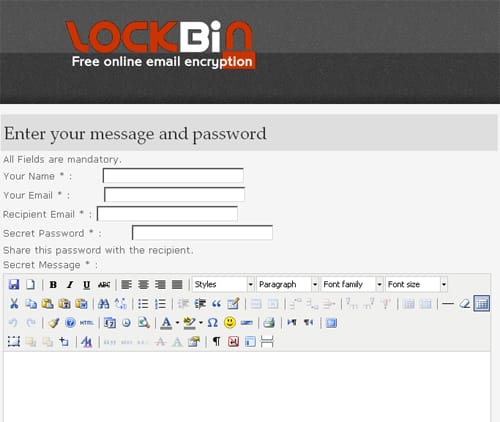
Lockbin is a free service for sending private email messages. You can use it to send things like credit card information or confidential information.

Colorhat

Colorhat
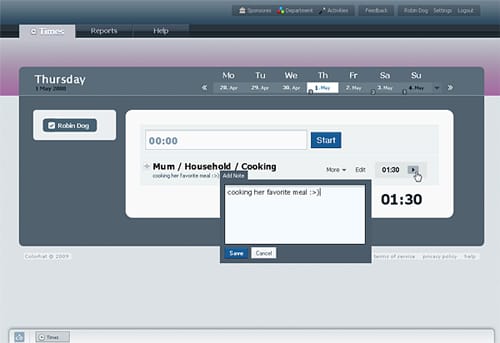
Colorhat is currently a time management and time tracking software. Whether you are a developer, designer, teacher, student, engineer, or just a person who wants to keep track of your training sessions or hobbies, You can use Colorhat.

NeedASig

NeedASig
NeedASig is one of the best free signature generator.  You can create beautiful and stylish email signatures and icons using NeedASig. It has more then 1500 different styles to choose from.

EmailTheWeb

EmailTheWeb
EmailTheWeb is the only web-based service that allows you to email any web page to any one. The entire web page is emailed in a flash and is captured as it is now. Your recipient will see the same exact page as you.

Free login to any site

free-login-2.jpg
This service is made for you to save your time on registration for many sites. You can not register at all sites, so just type the name of site for which you need to enter login and password and click «Get».

Temporary Inbox

Temporary Inbox
A temporary inbox is a disposable email address, which doesn’t require registration and can be used to avoid spam. Use this email address in forums, lotteries, erotic sites or wherever. The spammers will never find out your private email address. You can also use their forwarding email address to register at websites/boards/lotteries and so on.

pleasenotify.me

pleasenotify
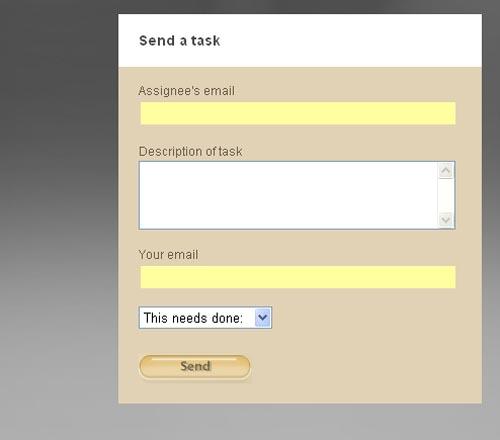
pleasenotify.me is a simple, free service to let you send tasks to people, and be notified when they’re done. You can use the form to email someone a task. If they don’t mark it complete by the time you specify, both of you will be notified. You’ll both be reminded daily until it’s finally completed. It’s the simplest project management imaginable.

Wednesday, September 8, 2010

Google Instant Streaming Search Results Eliminate the Search Button

From: http://gizmodo.com/

Live: Google Instant Streaming Search Results Eliminate the Search Button

The Google streaming search results are here. Already leaked, and seen in the wild by users, the new Google search updates on-the-fly, as-you-type, without you having to hit the search button when you're done. They call it Google Instant.

To recap, here are some of the recent search changes at Google.
Live: Google Instant Streaming Search Results Eliminate the Search Button

Live: Google Instant Streaming Search Results Eliminate the Search Button

This is what a search looks like right now. The user-interaction part where you type in a query and selecting a result takes the most time.

Here's a video showing Google instant. You can try it out by visiting this site and setting that as your home page.

The search results automatically pop up as you're typing, complete with auto correcting. If your search has various suggestions, you can scroll up and down to each selection and the page will automatically update to reflect what would happen if you had actually searched for that.

Google says it's not exactly "search as you type", but they predict what you're likely to type and bring you results for that, instead of the half-of-a-word you only typed.

Live: Google Instant Streaming Search Results Eliminate the Search Button

A screenshot of it working, showing the result of what Google things I'm going to type, when I've only typed Goo.

Google Instant will be available on Chrome, Firefox, Safari and IE 8 starting today. They'll roll out as part of their home page and search results today, but they'll roll out in the next week internationally (for people who are signed in), in these countries:
Live: Google Instant Streaming Search Results Eliminate the Search Button

Here are the pieces that Google say make up the pie. Instant results, Predictions and Scroll to Search.

Live: Google Instant Streaming Search Results Eliminate the Search Button

A sample Google search: Typing the letter W predicts that you're going to look for weather, and knows your location, so it looks up weather for you in your location after just one keypress.

Prediction! If someone types in "the gi" when you don't know the entire title of "The Girl With the Dragon Tattoo", it'll predict the title for you and show you results so you can see if it's what you want.

And scrolling to search gives you various information, say, if you want to take a vacation to yosemite, the predictions are stuff like, weather, maps, lodgings and other likely results you'd want if you searched for this.

When all three gears come together, this is what you get. Feedback.

In Google's example, they show that three searches (searching for a a title, searching for the title + musical, searching for the title + musical + tickets to find tickets), can be combined into "one" search, because you get auto-predict and streaming results when you continue to type.

Upcoming!

Google Instant is coming to mobiles, in the future. It works the same way as it does on the desktop. It's coming "later this fall".

Live: Google Instant Streaming Search Results Eliminate the Search Button

Some interesting Q&A results from Google's page:

Q:
Will Google Instant slow my Internet connection?

A:
We anticipate that Google Instant will not slow your Internet connection, and we plan to automatically turn it off for very slow connections. Even though we are serving more results pages, the additional load this enhancement creates is very small when compared to other types of web services such as streaming video and online gaming. We've also worked hard to minimize the amount of data that is sent and received during the search process. For example, when rendering new results as you type, we only send the parts of the page that change, without updating the static elements, such as a the page frame around the results.

Q:
If an offensive or lewd word is a fraction of my query, will Google push these results in front of me as I type?

A:
As always, we provide options to filter the content you see in search. You can choose to set SafeSearch to filter out explicit content, and parents can lock SafeSearch to the strict setting. In addition, autocomplete excludes certain terms related to pornography, violence and hate speech. Learn more about SafeSearch.

This will be on web browsers (Chrome), from the search box, in the next few months.

Send an email to Jason Chen, the author of this post, at jchen@gizmodo.com.

A Google TV Refresher: What We Know So Far

Jared Newman, PC World

A Google TV Refresher: What We Know So Far

Google TV's planned fall launch is not news, but given that Google hasn't said much about its television plans since May, it's time for a refresher. Here's a quick rundown of everything to know about Google TV as anticipation grows for the imminent launch of the service:

What is Google TV?

It's a platform that joins the Internet with traditional television. Google TV shares some traits with TiVo Premiere -- search by name for a movie or show, and you'll find ways to watch on cable or the Web -- but Google's approach to the Internet is more open. Google TV can act as a full Web browser for Flash videos, e-mail and reading, and users can set up home screens for their favorite channels, shows and Web sites.


So it's not actually a television?

Not necessarily. Just as Android is a platform for smartphones, with hardware partners like Motorola and HTC, Google TV will run televisions and set-top boxes from other manufacturers. So far, Logitech has announced a set-top box called the Revue, and Sony plans to launch a television that integrates Google TV. Any cable box should be able to connect with Google TV devices at launch, but Dish Network HD DVR receivers will be "optimized" for the service, extending universal search to the Dish TV Guide, DVR recordings and on-demand movies.

How will subscription Web TV services work?

They'll be available through the browser like any other Web site, but whether there will be special treatment for services like Netflix and Hulu Plus remains unclear. Google has at least demonstrated embedding of Amazon and Netflix content within the main Google TV interface.


Will there be apps?

Google TV will start supporting the Android Market next year, bringing smartphone apps to the television, but it's still not clear how touchscreen apps will translate to the remote control. Separately, Google is encouraging Website developers to create Web apps for the television, optimized for viewing from the couch and controllable with buttons.

Do you need a mouse and keyboard?

It's a possibility, but Logitech's set-top box will include a remote that combines a mini-keyboard, remote control and touch screen. Logitech also has free remote apps for iPhone and Android, and this image shows the different kinds of controls that can be used. Sony's remote control plans are not as clear-cut.


Any other phone integration?

Android phone owners will be able to control the TV with voice searches and push videos that they're watching on the phone onto the television.

Can I watch movies and shows stored on other local media?


At the very least, I hope Google TV's future support for Android apps will allow streaming from networked computers and media centers, but I can't find any remarks from Google, Logitech or Sony on this topic.

How much will Google TV cost?

Pricing is still a mystery. For context, consider that Apple TV costs $99, and the upcoming Boxee Box, another Internet TV device that uses its own interface to pull in Web content, will cost $200 when it arrives in November.

Friday, July 30, 2010

Seven Key Masters Have the Power to Restart the Internet

By Emerald Catron
From: http://www.asylum.com/

Paul Kane -- internet key holderWhen that fateful day comes where you find yourself suddenly unable to harp on your fantasy league because the Internet has been hijacked, fear not. There's a plan for that.

Basically, scattered across the globe are seven key holders who must come together and combine their powers to summon Gozer recreate the Domain Name System (DNS) security root key, a security measure that ensures websites are authentic and not just pirate copies. Because when you go to www.hungryforwaffles.com, you want it to really be your number one source for waffle information, not just some poseur copy.

The Internet Corporation for Assigned Names and Numbers (ICANN) wants to secure the DNS, which is basically like the internet version of a phone book -- it takes domain names and translates them into IP addresses for the Internet to understand. Of course, since we're talking about technical Internet matters, their methods get dorky real fast, with lots of acronyms and "ceremonies" and unnecessary capitalization befitting the lifestyle of somebody who would volunteer to help protect the Domain Name System.

The seven mythical key holders are just one third of 21 Trusted Community Representatives (TCRs) who are necessary for root key generation and signing ceremonies. These guys were selected based on "Statements of Interest" solicited from the "Internet Community," yet, somehow, Pedobear is nowhere to be found among their numbers. ICANN was looking for "Persons of integrity, objectivity, and intelligence, with reputations for sound judgment and open minds." We didn't even know there were 21 people like that on the Internet.

The 14 TCRs who aren't Recovery Key Share Holders (or Keymasters, as we like to call them for dramatic flair) are called "Crypto Officers." They get the "cool" name because they have to do all the actual work, rather than having the Internet fall in love with them for keeping a smart card in a Ziploc baggie somewhere.

The Crypto Officers (a name which suggests that this really is just a bunch of AV guys who want to feel awesome) get a key to a physical deposit box in an ICANN facility that contains the credentials needed to enable the security measure that contains the private half of the root the 7 Keymasters come together to create the other half of. They are divided up equally between East and West coast facilities and actually have to travel and do stuff a few times a year without splitting our country in half via hip hop feuding.

The mythical keymasters are divided up across the globe, and each possesses a smart card that has been encoded with a part of the root key. Five of the seven members have to meet in the U.S. in the event that the DNS Security Extensions (DNSSEC) has had to sever the connections between important servers to contain the damage caused by fancy-free, rollerblading hackers. As proof that they haven't lost the cards in a poker game, the key holders must send in a picture of the card along with a special secret phrase once a year.

We'd love to imagine that the people who hold these keys -- one each in the U.S., U.K., China, Trinidad and Tobago, Burkina Faso, the Czech Republic, and Canada -- are all mysterious men in long, dark, face-concealing robes whose identities must remain forever secret to protect the Internet.

Truthfully, however, they're more like Paul Kane -- an old blond guy in a suit. So typical of the Internet -- always building up our hopes for something awesome, and then dashing them against the ground without a moment's hesitation. For another example, www.hungryforwaffles.com isn't even a website, it's just something we made up as a joke. Lousy Internet.

Wednesday, July 21, 2010

Cell-Phone Carriers like AT&T and Verizon Killing Unlimited Data Plans

From: http://www.infernodevelopment.com/

Cell Phone Carrier

AT&T killed its unlimited data plans recently due to large volumes of data, most probably from the Apple iPad. From $30/month for unlimited plan to $25/month for 2 GB of data bandwidth transfer per month for the Apple iPad. $20/month for iPhone limited to 2GB as well. For some it may seem like 2GB is enough, but it really depends on how often you use your data services. How often are you using your email?

Apparently, this bandwidth payment deal started around June 7th.

Engadget reports that Verizon will be switching to this limited data system soon as well (that they've hinted at for a while). No word or confirmation on pricing or whether it even will happen but Verizon will probably not miss out on this opportunity to make extra cash, especially if their biggest competitor is doing it.

This is where I'm glad I still use T-Mobile--I hope they won't follow these other company leads.

If consumers want to actually make a difference, they need to use their purchasing power to force these companies to get rid of these rip off offers. For example, all airline companies now charge $25 for the FIRST bag; Southwest doesn't, so it makes sense for consumers to start using Southwest. Similarly, we need to switch cell-phone carriers to unlimited plans to make those limited plan ideas crawl back under the rocks from whence they came.

The only way capitalism can work perfectly is through informed consumers who will punish those companies that find loopholes and ways to charge more money. Informed consumers like yourselves need to take a stand and switch to the competition no matter what. Another example, almost every cell phone company makes 2-year contracts; well then we should try to switch to providers who don't have any contracts (if they exist).

Consumer rip off

Unfortunately, most consumers are use to taking whatever is thrown at them and biting the bullet. Imagine the charge amounts when you accidentally download too many attachments (which sometimes automatically get downloaded if they are images). They already double the monthly charge when you accidentally go over your minutes.

Wednesday, June 9, 2010

Life Before The Internet & Google

">

Monday, May 17, 2010

Spokeo: The Internet White Pages For Stalkers


from: http://www.techi.com/

Concerned about the security of your personal information on the internet? We all are, and thanks to Mark Zuckerberg, we’re more concerned than ever before. While having your Facebook profile show up in search engines for anyone talented enough to Google your name may be worrisome, it’s far from the worst case scenario. What if there was a website that pulled data from all of your social networking profiles, from Twitter to Flickr, and put it on display for anyone with curious eyes to see?

I hate to break it to you, but there is… introducing… Spokeo!

What Is A Spokeo?

Founded by a team of Stanford alumni in 2006, Spokeo didn’t start out pure evil. The original vision for Spokeo.com was to be a social networking aggregator, a la FriendFeed. This would allow their users to follow their friends, family, and colleagues across several social networking platforms. Nothing wrong with that, right?

Well, Spokeo’s alarming business model began to unveil shortly thereafter. Redesigning their site in 2008, Spokeo made it possible for users to import their e-mail contacts and create friend lists. At this point, it became apparent that Spokeo had more information on you than you may be comfortable with, including LinkedIn profiles, Picasa photos, and personal blog posts.

This year, Spokeo revamped their site once again, transforming into the all-knowing, data-hungry monster it is today.

How Does It Work?

Type in a name, any name, and if you’re feeling specific feel free to narrow your search by adding in a city and state. Spokeo will then pull data from its massive scraped database of personal information and provide you with every detail you did, or didn’t want to know about that person’s life. Now, if you’re skeptical, you may think that this isn’t as bad as it seems — who cares if someone can search information that people have knowingly and willingly made available across social networking websites, right? Sure, that’s a valid argument, but (and this is a big BUT) it doesn’t stop at social networking sites.

Spokeo collects information not only from online profiles, but also from government censuses, property listings, and business websites. Sure, this information is all publically accessible, but did you really fill out your census assuming that your answers would be easily searchable on the internet? The real concern here lies in the fact that all of this information is taken from different sources, stacked together, and readily displayed for the average (or not so average) person to find.

What Information Does Spokeo Provide?

So what information, exactly, does Spokeo have on you? You may not want to know the answer. Let’s start with a rundown of the “basic profile” information: name, address, phone number, age, gender, ethnicity, zodiac sign, relationship, children, occupation, education level, hobbies, and home ownership status.

Moving on, anyone who looks you up will be provided with a list of your personal interests and hobbies that include: which sports you play, what kind of books you read, your taste in music, personality traits, what type of automobiles you prefer, and what type of investments you research. Oh, and that’s just the beginning.

Searchers are then given a breakdown of your household and the people living in it. How many people are living there? What type of home do you live in? Do you have children? A fireplace? A swimming pool? How long have you been living there? What kind of neighborhood do you live in? Most importantly, how much is your home worth?

Paid Options For The Ultra-Creep

For a measly $4.95 per month, potential stalkers, convicted felons, and bitter ex-lovers can get a bit more information on you. That is, if they’re crazy enough to provide this data devouring beast with their credit card information. Fear not, though, logic isn’t among the strongest of traits in the obsessive.

So what information is disclosed when you pay off Spokeo? For starters, your “basic profile” will be expanded upon to disclose your religion, political affiliation, birthday, and spoken languages. Moving on to your “wealth” info, Spokeo provides anyone willing to pay 5 bucks with your estimated income, investments, and mortgage value. What a steal!

Next up, your average psychopath can get expanded information on your “lifestyle indicators.” I can only imagine what kind of info lies behind closed gates.

Last, but certainly not least, a paid-membership to Spokeo provides customers with detailed (“full,” as they describe it) household information. Considering the fact that the standard household info contains the number of people living in your home, whether or not your house has a fireplace, central air/heating, and/or a swimming pool, you can only imagine what information 5 dollars will get you. Blueprints of your home? A live webcam feed of your living room? Probably lots of cool stuff that any web-savvy burglar would like to know.

Oh, and let’s not forget that your basic household information indicates whether or not you have children. It can only be assumed that paying customers will be given a few more details on that aspect of your life. With all of the data Spokeo has racked up, I’d hope that they at least do a criminal background check before giving anyone with internet access and a credit card such information. My guess, however, is that they don’t.

The Accuracy Of Spokeo's Data

Now, you may be curious about the accuracy of the data and personal information that Spokeo has on file. Without question, the data available at this time is far from “perfect.” Keep in mind, though, Spokeo’s new, enhanced version just launched a couple of months back.

In any case, here are some general notes I’ve compiled on the accuracy of Spokeo’s information after a bit of research:

  • Address & Phone Number: The addresses and phone numbers they have listed are very accurate, not surprising as they are pulled from the phone book.
  • Photos: The photos given are not accurate in the slightest, I have no idea where these (seemingly random) photos are coming from.
  • Basic Profile: Info in the basic profile information is, for the most part, accurate. The exception here is estimated home value (no, my home is not worth over a million dollars, unfortunately).
  • Lifestyle & Interests: The lifestyle and interests section is somewhat accurate, I’d say around 50 percent of what they have listed on there is correct (yes, I own dogs; no, I don’t enjoy knitting).
  • Household: The names and ages of household members are accurate, as well as the home description and length of residence. The estimated home value, again, is off.
  • Neighborhood: Containing median income, home value, as well as age, ethnicity, and occupation distribution, the neighborhood information looks accurate in general. Not much to add here.

A Cause For Concern?

Spokeo’s large database of personal information is definitely of concern. While there are several notable inaccuracies in the info they provide at this point, it’s important to recognize that they are just getting started. Without a doubt, Spokeo will do everything in their power to make their information more precise, and more detailed.

Obviously, you don’t want random lurkers, criminals, or creeps of other varieties to have easy access to all of your personal info, but you may not want current or potential employers to have it either. Thanks to Spokeo, with as little information as your name, the outcome of your job interview may be predetermined before even stepping foot in the door. These are just some of the potential problems that a website like Spokeo can cause in your life, if you think about it, the list is nearly endless.

How do you feel about your personal information being neatly compiled and readily available on the internet?

Thursday, March 25, 2010

How 1Gbps fiber came to Cleveland's poorest, free of charge

In the middle of one of America's poorer cities, residents are about to get an unexpected gift: one gigabit per second Internet access over fiber optic cables courtesy of Cleveland's Case Western Reserve University.

According to the school's vice president for Information Technology Services, Lev Gonick, 72 percent of the homes around campus have no Internet access of any kind; 60 percent are on food stamps. "On a national scale, neighbors of the University have as much Internet access as Panamanians or Vietnamese," he wrote last year in a blog entry announcing the school's new project.

That's slowly changing as the university embarks on an ambitious research project to roll out 1Gbps Internet access to the immediate neighborhood, possibly extending this testbed network to 25,000 total Cleveland residents in total.

While most of the US has to live without any fiber at all, residents near University Circle are getting two strands apiece.

How much will it cost the residents? Nothing. The project is a research-driven attempt to find out if broadband can deliver more than e-mail and Web browsing. Can it provide what the community truly needs—public safety, more educational opportunities, and better medicine?Case Western Reserve doesn't yet know, but within a year, it plans to find out.

Fiber: can it make a neighborhood safe?

The school has a long history of working with fiber internally. Back in networking's Dark Ages—1989—the school had gone so far as to wire fiber to every outlet, offering 10Mbps Ethernet connections at a time when Cat3 was still the main twisted pair standard.

In 2001, Gonick became CIO and the university decided that the future was 1Gbps. It set about upgrading every outlet on campus to that speed.

By 2009, it realized that this bandwidth bounty could be pushed into the surrounding community and used as a testbed to find out just how a transformative truly high speed broadband might (or might not) be.

Given the school's location, public safety was the first priority for the deployment. No less than six separate public safety communities exist right in University Circle, and a fast broadband network could make it easier for them to share video feeds, share dispatching technology, and improve their coordination. In the neighborhoods around the school, a fat broadband pipe could make it easy to do remote video monitoring—in fact, two local apartment building owners have already told Gonick that they plan to use the new fiber build to help monitor each other's buildings. (See a video tour of the neighborhoods around the school below.)

Case Western Reserve researchers also want to see how the network is used for health care, education, and power. Smart grid technologies are one key component of the deployment; residents will have access to high tech thermostats, for example, which can display their home's energy use compared to that of their neighbors or to the neighborhood. On health care, providers like the Cleveland Clinic will use the network to see what sort of cost savings and care benefits might be wrung out of HD video conferencing with patients and automated home health monitoring gear.

The school has partnered with a host of community institutions on the project, encouraging each to develop its own "killer app" for the network within the next 18 months that the project will run. After that, the university hopes to get out of the business of running the network.

The entire network is being run on the "open access" model in which any provider—clinic, pay-TV operator, education network, power company—can access the connection. Gonick tells Ars that three video providers are already interested in selling their services over the link, providing a perfect example of how open access fiber can sever the link between infrastructure and provider that exists in most current cable and telco deployments.

The result, if all goes well: competition.

The buildout

The network build is now underway. The first "beta block" of 104 homes is currently being wired, while a second block has already been identified for future service. A demonstration center is already lit and running, with the official ribbon cutting for the beta block scheduled for May 23.

When it comes to the commercial competitors, such as traditional ISPs and pay-TV providers, the reception has been a bit cooler. Gonick stresses that this is a research program and is totally appropriate for a university to do, and he notes that the school has not "hidden this project at all" from local ISPs.

Jeff Gumpf, the IT architect for the school, tells Ars that the system is meant to last three decades or more, a decision that dictated the network design. Case Western Reserve first consulted with Herman Wagter, who ran Amsterdam's CityNet fiber-to-the-home build (and just described that process in great detail for Ars), about the architecture. Gumpf and Gonick took his advice: two fiber strands to every home, each running back to the main equipment room (point-to-point, rather than shared, fiber).

This approach costs more in the short term due largely to the cost of all that additional fiber, but compared to the cost of digging up the streets to lay more fiber in the future, doing it first is a terrific bargain. Only one strand will be lit initially, with the second strand in place simply to future-proof the deployment.

Case Western Reserve had trouble finding the gear that each home would use to terminate the fiber connection. Here, Wagter helped them out again, hooking them up with European equipment maker Genexis, which makes power-efficient, installer-friendly home gateways that take a fiber connection on side and spit out voice, data, and video connections on the other.

The plan has already garnered attention from Washington; indeed, it is the first example cited in the National Broadband Plan's "Research and Development" chapter. In essence, Case Western Reserve is doing the research to find out how one of the plan's key priorities might affect local communities—the plan to wire up all "anchor institutions" in the US with 1Gbps fiber, then treat them as "middle-mile" ISPs who can help push that bandwidth out into the surrounding community by partnering with companies and municipalities.

Gonick has already done his homework when it comes to working with the politicians; he wants the entire deployment to be "mayor-proof," not tied to any particular politician whose successor might kill the scheme. The City of Cleveland is on board with the deployment, as are local hospitals, equipment vendors, and community groups, but none can simply veto the plan.

When it comes to the commercial competitors, such as traditional ISPs and pay-TV providers, the reception has been a bit cooler. Gonick stresses that this is a research program and is totally appropriate for a university to do, and he notes that the school has not "hidden this project at all" from local ISPs.

However, when Case Western wrote to those local ISPs for letters of support... it didn't get a single one. Anchor institutions around the country, take note.

Together with Google's similar 1Gbps fiber testbed announcement, such research projects have important roles to play when it comes to policy decisions. Just how important is it to run super-fast fiber to US homes? What will people do with it? Can it truly transform poor or crime-ridden areas? And just how important is an open-access network?

Apart from the Google announcement, similar research is only being done by universities and by those few municipalities who run their own community networks. Case Western Reserve's is one of the most ambitious, and its data should start rolling sometime in 2011.

If the idea works, and if other schools, libraries, and community centers across the US start rolling out similar projects, the landscape for Internet access could change dramatically over the next decade. If it doesn't... well, better to find out now.

Friday, March 12, 2010

New Site Unmasks Chatroulette Players

I have a confession to make. I’m addicted to Chatroulette, the buzz-generating Web site created by a Russian teenager that pairs anonymous strangers with each other in a video chat room.

For me, Chatroulette offers a welcome break from the daily digital footprints I leave across the Web on sites like Twitter, Facebook and Google Buzz, where every comment, tweet and “like” is tied back to my real-world identity. Chatroulette is intended to be comfortably anonymous, and it also has the sheen of nostalgia. It’s reminiscent of my earliest encounters with the Internet – firing off messages about schoolwork and television shows in AOL chat rooms and chattering with my World of Warcraft guildmates about their families, jobs and weekend plans.

But now a service called Chatroulette Map, a mash-up of the site with Google Maps, is peeling back some of the anonymity of the users cruising through the site.

Chatroulette Map,which first bubbled up on blogs like Laughing Squid, grabs screenshots of people using the service and, using their IP address and geolocation tools, plots their location on a global map. (Note: Some images may not be work-safe.)

On one hand, Chatroulette Map offers a riveting snapshot of the people who are trying out the service. But on the other, it strips away some of the voyeuristic appeal of being able to peer into a random stranger’s home and life without revealing much information about yourself.

Of course, playing Chatroulette is not without some risk. My colleague Nick Bilton aptly described it as “speed-dating tens of thousands of perfect strangers — some clothed, some not.” The upside to Chatroulette Map is that some of those users might think twice about getting unclothed, making the service more family friendly and less jarring for its users.

On the other hand, the service raises privacy concerns for people using Chatroulette. A recent update on Chatroulette Map reads: ”We’ve decided, at least for the time being, to hide I.P. and host information as some user-identifiable information was found in some entries.”

I’ve reached out to the creators of Chatroulette Map for comment and will update if they respond.

Thursday, February 18, 2010

HBO introduces online streaming

The cable network is making its movies available to subscribers online. Will this hurt Netflix?

Home theater © Frare/Davis Photography/CorbisHBO has taken a page right out of Netflix's (NFLX) business model with the introduction of HBO Go, its new video-streaming service.

Here's how it works: HBO subscribers can go online and watch the same movies HBO offers on its cable networks. And -- at least for now -- the service will be free.


But HBO Go is only for the 38 million subscribers to HBO or Cinemax, according to CNET. If you don't pay for the cable channels, you won't get online access.

This is similar to the way Netflix offers on-demand video streaming for its customers. Netflix has long considered this to be its future business model; mailing DVDs to customers is just a way to get it there.

Will HBO Go be a "go" for consumers? CNET's Greg Sandoval wonders why the cable channel would even bother.

A huge part of Netflix's appeal is lower-cost video entertainment. Cable subscribers can jump to Netflix and pay just $10 a month to watch DVDs mailed to their home or the movies that Netflix streams over the Web.

But at least HBO will likely have newer titles than Netflix. So far, Netflix's on-demand offerings have been a bit lackluster. The company is trying to change that, and recently agreed to delay Time Warner new releases for nearly a month in return for better titles on its streaming service.

Tuesday, January 5, 2010

Internet Speeds And Costs From Around The World

From: i.imgur.com


Tuesday, November 3, 2009

First-time mom plans to give birth live on the internet

Posted by Lylah M. Alphonse

Lynsee, a 23-year-old teacher in Minneapolis, is expecting her first child any day now. And she's decided to share the whole experience, from the first labor pain to that final awesome push, with the internet.

Like many mommy bloggers have before, she’s been documenting every detail of her first pregnancy; unlike any of them, she’s been sharing the highs and lows with more than 900 Watch Lynsee Grow! readers at the Twin Cities’ Moms Like Me website, which will broadcast the birth from the hospital as it happens. Only Moms Like Me members will be able to leave comments during the event, though anyone with an internet connection will be able to watch the live feed.

“We wanted to document the pregnancy and create a one-of-a-kind memento for our baby to have forever,” Lynsee told the website's partner KARE-TV 11, which is also following her pregnancy (she requested that I not publish her last name, for privacy reasons). "You'll be at some of the doctor's appointments... You'll be there in the delivery room, tastefully, but you will be there.’’

Fresh off of the Balloon Boy saga, one may wonder whether Lynsee or her 24-year-old husband, Anders, is in it for fame or fortune -- or reality TV. But they're not. Though there are a few corporate sponsors on board and KARE-TV helped throw her a baby shower at the famed Mall of America, all gifts were donated to charity and Lynsee is not being compensated for her participation in the project, according to Twin Cities Moms Like Me site manager Cindy Chapman.

Moms Like Me representatives say that the goal of the project was to get more members to share and interact on the site. Many members are fans of A Baby Story on TLC, Chapman says, and she was hoping to take the concept a step further. "We have the perfect vehicle on the internet with taking the birth live -- something A Baby Story doesn’t do." She sent a private message out to the members of the Twin Cities' site, asking if there were any pregnant women who were interested in participating. Lynsee was one of about 12 who responded. “I emailed her right away and she filled me in on the project,” Lynsee told me. “I talked with my husband and we were excited about it!”

Of course, you can't log off when you're the one in labor. And you certainly can't script a birth. Viewers won’t see any graphic details -- an experienced camera crew will be at the helm, Chapman says, and a team of people will be monitoring the shoot as well as the online chat. Chapman, who will be at the hospital with Lynsee, says that there is a "massive crisis plan" in place.

In October, MomsLikeMe.com asked their members for their thoughts on the couple's decision to share their child's birth with the world. About 60 percent of moms said that they do not want anyone besides their significant other in the delivery room but, in another poll, the same percentage responded that they would be interested in watching a broadcast of a live birth. "You never know when you start projects like this, how they’re going to go,” Chapman says. "The response has been overwhelming, very supportive, very positive for Lynsee."

I’m sure that every parent reading this right now is having a mini-flashback to their first birth experience -- I know I am -- and wondering how they'd cope with having a camera crew in the room. But that’s not how Lynsee, a family and consumer science teacher, sees the project. “It’s so miraculous and special because each birth is different. If I were in a classroom, I would be teaching about childhood development, so I feel that I’m using myself as a textbook to teach others about pregnancy and delivery."

"I will also have all the support from the mom’s on the site while I’m having the baby. Just knowing they are there during labor means a lot to me," she adds. (You can read my entire interview with Lynsee here.)

As the big day approaches -- she’s due Nov. 19 -- Lynsee says she’s not having any second thoughts about broadcasting the labor and delivery live. “No – it’s the final part of the journey,” she says. “It’s the one big moment and the special part and it’s what I’m looking forward to sharing with everyone the most.”

Who was in the room when your child was born? And would you have let the internet watch?

Lylah M. Alphonse is a Globe staff member and mom and stepmom to five kids. She writes about juggling career and parenthood at The 36-Hour Day and blogs at Write. Edit. Repeat. E-mail her at lalphonse@globe.com.

Tuesday, April 14, 2009

New bill would give president power to halt Internet traffic

Greg Fulton
Published: Monday April 13, 2009


A recently proposed but little-noticed Senate bill would allow the federal government to shut down the Internet in times of declared emergency, and enables unprecedented federal oversight of private network administration.

The bill's draft states that "the president may order a cybersecurity emergency and order the limitation or shutdown of Internet traffic" and would give the government ongoing access to "all relevant data concerning (critical infrastructure) networks without regard to any provision of law, regulation, rule, or policy restricting such access."

Authored by Democratic Sen. Jay Rockefeller of West Virginia and Republican Olympia Snowe of Maine, the Cybersecurity Act of 2009 seeks to create a Cybersecurity Czar to centralize power now held by the Pentagon, National Security Agency, Department of Commerce and the Department of Homeland Security.

While the White House has not officially endorsed the draft, it did have a hand in its language, according to The Washington Post.

Proponents of the measure stress the need to centralize cybersecurity of the private sector. "People say this is a military or intelligence concern," says Rockefeller, "but it is a lot more than that. It suddenly gets into the realm of traffic lights and rail networks and water and electricity."

Snowe added, "America's vulnerability to massive cyber-crime, global cyber-espionage and cyber-attacks has emerged as one of the most urgent national security problems facing our country today. Importantly, this legislation loosely parallels the recommendations in the CSIS [Center for Strategic and International Studies] blue-ribbon panel report to President Obama and has been embraced by a number of industry and government thought leaders."

Critics decry the broad language, and are watchful for amendments to the bill seeking to refine the provisions. According to opencongress.com, no amendments to the draft have been submitted.

Organizations like the Center for Democracy and Technology fear if passed in its current form, the proposal leaves too much discretion of just what defines critical infrastructure. The bill would also impose mandates for designated private networks and systems, including standardized security software, testing, licensing and certification of cyber-security professionals.

"I'd be very surprised if it doesn't include communications systems, which are certainly critical infrastructure," CDT General Counsel Greg Nojeim told eWEEK. "The president would decide not only what is critical infrastructure but also what is an emergency."

Adds Jennifer Granick, civil liberties director of the Electronic Frontier Foundation, "Essentially, the Act would federalize critical infrastructure security. Since many systems (banks, telecommunications, energy)are in the hands of the private sector, the bill would create a major shift of power away from users and companies to the federal government."

Monday, April 6, 2009

World’s Fastest Broadband at $20 Per Home

By Saul Hansell

If you get excited about the prospect of really, really fast broadband Internet service, here’s a statistic that will make heart race. Or your blood boil. Or both.

Pretty much the fastest consumer broadband in the world is the 160-megabit-per-second service offered by J:Com, the largest cable company in Japan. Here’s how much the company had to invest to upgrade its network to provide that speed: $20 per home passed.

The cable modem needed for that speed costs about $60, compared with about $30 for the current generation.

By contrast, Verizon is spending an average of $817 per home passed to wire neighborhoods for its FiOS fiber optic network and another $716 for equipment and labor in each home that subscribes, according to Sanford C. Bernstein & Company.

Those numbers from Japan came from Michael T. Fries, the chief executive of Liberty Global, the American company that operates J:Com.

His larger point: “To me, this just isn’t an expensive capital investment,” he said.

The experience in Japan suggests that the major cable systems in the United States might be able to increase the speed of their broadband service by five to 10 times right away. They might not need to charge much more for it than they do now and they’d still make as much money.

The cable industry here uses the same technology as J:Com. And several vendors said that while the prices Mr. Fries quoted were on the low side, most systems can be upgraded for no more than about $100 per home, including a new modem. Moreover, the monthly cost of bandwidth to connect a home to the Internet is minimal, executives say.

So what’s wrong with this picture in the United States? The cable companies, like Comcast and Cablevision, that are moving quickly to install the fast broadband technology, called Docsis 3, are charging as much as $140 a month for 50 Mbps service. Meanwhile other companies, like Time Warner Cable, are moving much more slowly to upgrade.

Competition, or the lack of it, goes a long way to explaining why the fees are higher in the United States. There is less competition in the United States than in many other countries. Broadband already has the highest profit margins of any product cable companies offer. Like any profit-maximizing business would do, they set prices in relation to other providers and market demand rather than based on costs.

Pricing at Liberty varies widely by market. In Japan, its 160 Mbps service costs 6,000 yen ($60) per month. That’s only $5 a month more than the price of its basic 30 Mbps service. In the Netherlands, meanwhile, it charges 80 euros ($107) for 120 Mbps service and 60 euros ($81) for 60 Mbps. Mr. Fries said that he expected these prices would fall over time.

“Our margins go up,” he said. “But we are delivering more value.”

Cable executives have given several reasons for why many cable systems in the United States are going very slowly in upgrading to Docsis 3. There’s little competition in areas not served by Verizon’s FiOS system, which soon will offer 50 Mbps service. And some argue there isn’t that much demand for super-high speed.

Mr. Fries added another: Fear. Other cable operators, he said, are concerned that not only will prices fall, but that the super-fast service will encourage customers to watch video on the Web and drop their cable service.

The industry is worried that by offering 100 Mbps, they are opening Pandora’s box, he said. Everyone will be able to get video on the Internet, and then competition will bring the price for the broadband down from $80 to $60 to $40.

Aren’t you worried that the prices will fall too? I asked.

“Maybe,” he said very slowly. “We’ll see how it happens. We want to keep it up there for now. It is a premium service.”

16 of the Internet's Weirdest Meat Creations

From meat hats to bacon bras, giant burgers and outrageous barbeques, find out what the latest obsession really means.


"What’s not to like? Custard? Good. Jam? Good. Meat? Gooooood.” – Joey Tribbiani, Friends

It seems the Internet is awash in meat these days. And it's not just because people are using a bit of code to literally drape a big slab of bacon over their monitors (though that is pretty entertaining). For some time now baconmania has swept social media sites, forums, bulletin boards and blogs, spawning it's own subreddit, a baconcyclopedia, tattoos and humor.

red meat in package

Bacon commonly appears in comments, and many have taken to calling pigs simply "prebacon." Of course, it's also true that the bacon meme (note word coined by Richard Dawkins!) has possibly past its prime (especially for the 4chan set), being that Slate has said so, and it appeared in a Taco Bell commercial and has been discussed in the Old Gray Lady and in the LA Times (the latter is a great piece, btw).

At the same time, consumers are becoming increasingly aware about the rising obesity epidemic and the enormous impacts of factory farming, you know to raise all that prebacon. Remember too, it's not just crispy, aromatic bacon that is much beloved and e-celebrated: steaks, hamburgers and other meats are seeing a lot of cultural love, too (Whopper Virgins anyone?). Some guy lifts giant hunks of gyro flesh with his beard. Heck, a character from one of the coolest shows around is nothing more than a walking, talking, igloo-shape-shifting wad of meat. All this despite the fact that a recent ten-year study of 540,000+ people by the National Cancer Institute found that those who ate the most red meat boosted their overall risk of death by 30% (16% for processed meat consumers).

In one sense the LA Times has a point when they theorize that part of the reason for bacon's recent popularity is that pigs can be raised almost anywhere, thereby contributing to local foods and even slow food. In reality most of our meat comes form enormous factory farms, which have huge impacts in terms of resource inputs and manure and methane pollution. Plus, it's hard to see that most of the Internet denizens who scream Bacon! are really thinking about Alice Waters or Michael Pollan.

They crave bacon and red meat because they think it tastes delicious -- though it's possible that the recent fetishistic emphasis may lead some to consume more, and even to bash those who are trying to eat less of it for their health and the planet. In a hint of the possible culture war underlying the craze, consider a recent post on the humorous site Show Us Your Beef. Click on the sausage icon for "The Enemy" and get some anti-PETA (and spokesmodel Pamela Anderson) funnies, and this statement: "These people are Vegans. Find them. Mock them. They will not hit you. They do not have the strength. No beef. No strength. Force them to show us their beef."

Interestingly, it's also true that there a number of vegetarians, even vegans, who eschew all animal flesh except for bacon.

More than one e-commenter has speculated that part of the reason why meat is so hot in internet culture is because so many of us are fat, pasty, undersocialized beings that have little to look forward to beyond Battlestar Galactica and drowning our loneliness in pork products and sweets. I don't share this view.

Quick facts on why we should resist bacon's delightful sizzle and beef's hearty beefiness (or at least cut back some):

  • It takes 600 gallons of water to produce one hamburger patty.
  • It takes about 2 pounds of grain to produce a quarter-pound of burger meat.
  • Livestock produces 130 times as much manure as people.
  • If people simply cut their meat intake from the average 90 kg/year to 53 kg/yr, meat-associated carbon emissions would drop by 44%.
  • Some 70% of forests in the Amazon basin have been cut down to raise cows, largely for an export market.

So, what is this meat fetish we speak of? Behold, some of the most horrific, fascinating meats of the Internets. To some, these are edible works of art, the epitome of a carnivorous culture. What do you think?


bacon and twinkie stonehendge

1. Bacon and Twinkie Stonehenge

A fun site that invites users to submit your "deliciously gross food," This Is Why You're Fat is truly the place where "dreams become heart attacks." Don't forget to look for the "Elvis Donut." It's something to behold.


4489 calorie burger, fifth third burger

2. The 4489, 166-lb Burger

An obscure minor league baseball team called the West Michigan Whitecaps earned 15 minutes of e-fame when it recently unveiled their new stadium menu. Among typical ballpark fare is the 4489 Calorie "Fifth Third Burger." This 1.66 pound monstrosity, named after a bank, costs $20 and feeds 1-4 people (that's kind of a big range). If you finish it all by yourself you "win" a t-shirt.


man with enormous burger

3. More Ginormous Burgers

Since Americans historically have liked big cars, big open spaces and big houses, it's probably inevitable that we like big burgers too. Really, really big burgers. Banned in Hollywood has a great shocking gallery of humongous hunks of meat.


baconnaise

4. Baconnaise

Nasty or new craze? A new bacon-flavored sandwich spread, Baconnaise, has taken the blogosphere by storm. "This makes me want to cry sweet bacony tears of joy," reported Because Emily Says So Blog. "You're right, everything should taste like bacon," said Ian B.


bacon bra

5. The Bacon Bra

Practically a meme itself, the bacon bra has received widespread virtual circulation. It's not hard to see why. There is something horrifying about it, yet it's hard to look away. Combining meat and porn/sex is not a new idea (just ask Carol Adams).

As far as I can tell, this image originates with bkusler of Flickr, who wrote: "at some point after too many tequilas and my friend talking about how to get more men interested in her, someone said, 'wait, men love bacon and boobs, why not combine the two? That's a million dollar idea right there!'" Not dissimilar to that Taco Bell commercial…


bacon lamp shade

6. Bacon Lamp Shade

Looking a little like the decorating style of Buffalo Bill, the bacon lamp shade is one of many objects on the net made of pork. A number of commenters have asked if the meat cooks slowly with the heat of the bulb (although one person noted that a cool CFL probably wouldn't do the job).

bacon man effigy

7. The Bacon Man

According to the fun blog Food Proof, a woman named NetDiva really likes bacon. Channeling Burning Man, or perhaps the Cremation of Care, NetDiva apparently made an effigy of bacon.


hot dog rake motivational poster

8. Hot Dog Rake

Clearly, a regular stick just isn't fast enough. Too bad John Candy never lived to see this. Think what he could have done with it!

Funny motivational photos ftw!


meat baby

9. Meat Baby

Meat Baby is one of the most horrible thing I've seen in months. Thanks a lot Daily Weird! Meat Baby is an accursed thing.


meatsicle

10. The Meatsicle

The Meatsicle is a humorous site that aggregates meat-related content. You'll find the web's most outrageous stuff there, as well as actual news articles about the foodstuff. Occasionally, posts about vegetarianism, animal welfare and factory farming even slip through among the gags and gross-outs.


flower arch

11. Cheesy Meat Pie Thing

WTF is that?


deli meat skull halloween decoration

12. Meat Skull

From the guy who enjoys kitty litter cakes comes this exciting meat Halloween decoration. The photo was taken by lechatnoirfan and also featured on the Augusta Chronicle's site.


meat house with bacon

13. Meat House

Craftzine had it right: meat house is "gross, interesting." Nothing more to see here.


bbq addicts bacon explosion

14. The Bacon Explosion

Thanks to BBQ Addicts, the world has discovered the bacon explosion. The world is now obese and hooked up to a bacon iv, thanks a lot BBQ Addicts. They gave us step-by-step instructions to make this behemoth, complete with documenting photos. Judging by all the buzz and the trackbacks, it looks like it turned out to be a genius form of viral marketing.


meat hats

15. Hats of Meat

Hats of Meat is an amazing place, where creativity (and horror) come alive. Behold meat cow-boy hat: "this American classic, made of the best marbleized cuts of beef available, assures that you won’t just herd cattle, you’ll wear them. With this beauty, the cows are always on your mind." Or, the brisket yarmulke: "made of 100% kosher brisket, this one-size-fits-all 'beefy beanie' comes emblazoned with a horseradish Star of David."


 turbaconducken, chicken stuffed in duck stuffed in a turkey, wrapped in bacon

16. Turbaconducken (Turducken Wrapped in Bacon)

The good folks at Bacon Today (yes you read their name right) bring us Turbaconducken, described as "a chicken stuffed in duck stuffed in a turkey, all wrapped in bacon. Otherwise known as a bacon-wrapped turducken." Apparently, it all started with a dream, and five pounds of bacon. There are detailed steps.


Also check out this cool gallery of "edible architecture."

Photo Credits: Istock, This Is Why You're Fat, Banned in Hollywood, Baconnaise, bkusler/Flickr, Bits and Pieces, NetDiva/Flickr, MotivatedPhotos.com, The Daily Weird, Meatsicle.com, This Is Why You're Fat, lechatnoirfan/Augusta Chronicle, Craftzine.com, BBQ Addicts, Hats of Meat, Bacon Today