Zazzle Shop

Screen printing
Showing posts with label 3G. Show all posts

Friday, August 6, 2010

Call Your Facebook Friends for Free From Your Android or iOS Device


VoIP giant Vonage has just introduced a new iPhone, iPod touch and Android app that allows users to call their Facebook friends for free. Vonage Mobile for Facebook [iTunes link] is similar to VOiP apps like Skype or Fring, but with a twist: It’s all about Facebook.

The free app does not require a Vonage subscription, but does require both parties to have the Vonage Mobile for Facebook app installed. Once installed, calls can be made over 3G or Wi-Fi.

The app is pretty simple to set up and only requires that you enter in your Facebook (Facebook) credentials once. Friends are displayed in different groups; those that can be called with the app have a “V” logo next to their names. If a friend is online but doesn’t have the app installed, you can chat with him or her and also send an invite to download the app.

Like the most recent Skype Mobile release, the app can run in the background, meaning that even if it’s not open, incoming calls can still come through. When an incoming call comes through the app, the caller’s Facebook photo and most recent status update are displayed on the screen.

This video shows how the app works:

The concept of making voice calls over Wi-Fi or 3G using a VOiP mobile application may no longer be new or novel, however, we appreciate that Vonage is targeting a specific set of users. For many individuals, Facebook is the nerve center for all online communication — building a VOiP app off of Facebook is pretty smart.

An iPad version of Vonage Mobile for Facebook is poised to join the iPhone, iPod touch and Android () versions soon. We hope that Vonage will also consider bringing the app to BlackBerry handsets.

What do you think of Vonage Mobile for Facebook? Do you use any VOiP apps on your mobile device?

Tuesday, January 5, 2010

An Affordable $199 Tablet for Everyone -- And It's Not From Apple


Daniel Ionescu, PC World

Just as the rumors of a pricey Apple tablet computer have reached a high-water mark, Freescale Semiconductor on Monday showcased reference designs of an affordable, lightweight tablet computer, which is set to hit the market later this year.

Freescale, which supplies the guts for this new breed of computers called smartbooks (about one third the size and volume of a typical netbook), is putting its weight behind this category with a concept of what could become everybody's tablet.
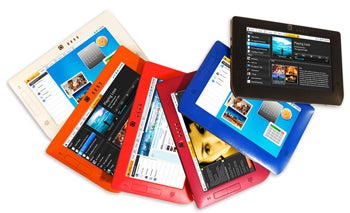
The Freescale tablet reference design (pictured above) has specifications close to what we have been hearing about the mythical Apple tablet: a 7-inch touch screen, 3-megapixel camera and various sensors such as a three-axis accelerometer and an ambient light sensor.
Next to the 512MB of RAM, up to 64GB of internal storage (microSD expansion) and a 1GHz processor, Freescale's smartbook tablet features a potentially killer spec: a $200 price tag. Next to an Android or Linux operating system, it also includes Wi-Fi and Bluetooth connectivity and options for a 3G modem.

The smartbook reference design is intended to run everyday-use applications such as a Web browser (with Adobe Flash support), an e-mail client, an RSS reader, social networking tools, and an office suite, among others.
So far, no one has had a chance to have a deeper look at Freescale's holy grail smartbook, but the chipmaker is planning to demonstrate the design at the 2010 Consumer Electronics Show (CES) later on this week.
If manufacturers pick up on Freescale's concept, such smartbooks should show up in a store near you perhaps later on this summer, with a price point below the $200 ceiling, the chipmaker says. However, no potential vendors for this tablet design have been named.
Here are the full specs of the Freescale smartbook:
  • Size: 200mm by 128mm by 14.9cm and weighing 376 grams; no need for fan or heat sink
  • Processor: Freescale i.MX515 applications processor provides high performance and low power
  • ARM Cortex-A8 1GHz
  • OpenVG & OpenGL/ES graphics cores
  • HD video decoder hardware
  • Memory: 512 MB DDR2
  • Display: 7-inch (1024 by 600) touch screen
  • Storage: 4-64 GB internal storage; removable micro SD
  • Connectivity: 3G modem (option) 802.11 b/g/n, Bluetooth 2.1, GPS, RF4CE (option)
  • Ports: USB 2.0 and USB mini (also for charging), audio in/audio out, SIM card
  • Audio: speaker, microphone
  • Camera: 3 Megapixel (video recording up to VGA @ 30fps)
  • Battery: 1900mAh, USB charging
  • Sensors: the MMA8450Q three-axis accelerometer and an ambient light sensor
  • Power management IC
And while we are in tablet land, January should see another tablet design unveiled, as Apple is reportedly preparing to introduce its tablet on January 26.

Follow Daniel on Twitter @danielionescu

Thursday, July 2, 2009

iPhone 3G speed performance compared in 13 U.S. cities

comparison of 13 eastern, middle and western cities in the United States of America.


middle-east-western-us-citieis-3g-speed-performancel

click to enlarge

Image and original 6 page Source via ‘A Day in The Life of 3G’ [PC World] found via Lifehacker

Tuesday, June 9, 2009

iPhone 3GS Complete Feature Guide

As expected, the new Apple iPhone 3GS is out. We were right: The photos of the new iPhone were real. Here you have a comprehensive guide to the iPhone 3GS' new features:

Speed
The "S" stands for "SPEED!" And according to Apple, it is faster launching applications or rendering Web pages.

• The iPhone 3GS has a new processor built-in. Apple claims that it is up to two times faster than the previous generation: Launching messages is 2.1 faster, load the NY Times in Safari: 2.9 times faster. It also consumes less, which has an impact on the improved battery life.

Camera
This is one of the strong points of the iPhone 3GS, according to Apple. They increased the resolution to 3 megapixels, which—judging from the shots they showed-seems much better quality under all conditions.

• 3 Megapixels sensor.
• New camera, with auto focus, auto exposure, and auto white balance.
• You can also tap to focus, changing white balance in the process. That is really neat, if you ask me.
• Special macro and low light modes.
• The camera also supports photo and video geotagging.
• Any application can access all the camera functions now.


• It supports video, 30 frames per second VGA with auto focus, auto white balance, and auto exposure.
• You can trim the video shot just using your finger, then share it via MMS, email, MobileMe and YouTube.

Connectivity
The other part of the "S" is the support for the faster 7.2 Mbps 3G standard, which in theory will deliver data faster to your iPhone.

• Three band UMTS/HSDPA.
• Four band GSM/EDGE.
• Wi-Fi 802.11b/g.
• Bluetooth 2.1 + EDR

Graphics
• The new iPhone 3GS includes new 3D graphics support in hardware. This means faster and more complicated 3D games.
• Same 3.5-inch widescreen multitouch display, but this time it has a fingerprint-resistant oleophobic coating. I wonder if it will withstand a full frontal Shake Shack burger attack.

Design

• Same design as before, including the glossy finish of the back (so much for all the rumors about the matte back.)
• Same size as the old iPhone 3G: 4.5 x 2.4 x 0.48 inches.
• The weight increases a bit: One ounce to 4.8 ounces (135 grams vs 133 grams).
• Greener materials: Arsenic-free glass, BDF-free, Mercury-free LCD.

New special features
• It has a magnetometer, which works with a Compass application, third parties, and it is integrated into the new Google maps app, showing your orientation with a small semitransparent cone.
Voice control. You can now talk with your iPhone, Enterprise-style. You can instruct it to play similar songs to the one you are playing, or call people.
• Nike + support built in.
• Supports accessibility features, like zooming on text, inverting video, and voice over when you touch whatever text is on screen.

Battery life
• One of the more important new features is the increased battery life.
• According to Apple, you will get up to 12 hours of talk time on 2G and 5 on 3G, with a up to 300 hour standby time.
• On 3G, it will deliver 5 hours of internet use.
• On Wi-Fi, Internet goes up to 9 hours.
• Video playback is 10 hours vs 30 hours for audio.


Price and availability
• $199 for 16GB version.
• $299 for 32GB version.
• Available on June 19th.

If you are "a valued AT&T customer," AT&T offers an "early iPhone upgrade with a new 2-yr commitment and an $18 upgrade fee." The price? $399.00 for the 16GB iPhone 3G S and $499.00 for the 32GB iPhone 3G S. It gets worse: For non-qualified customers, including existing AT&T customers who want to upgrade from another phone or replace an iPhone 3G, the price with a new two-year agreement is $499 (8GB), $599 (16GB), or $699 (32GB).

Insane. Way to go AT&T.

Monday, June 1, 2009

Sony Ericsson Unveils PS3-compatible Phone

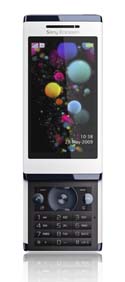
As part of its Christmas line-up of products, Sony Ericsson introduced a new phone that will allow consumers to connect to their PS3 gaming consoles remotely. The new phone, known as Aino, will let users access media content such as music, videos, and photos from the PS3 while on the go. Sadly, Aino will not allow users to play games or access high-definition video from the phone.

Aino can also synchronize with media files on your PC using Sony Ericsson’s Media Go multimedia manager. Sony Ericsson AinoAs for the phone itself, Aino features an 8.1-megapixel camera with geotagging capability; 3G, Bluetooth, and Wi-Fi connectivity; a physical keypad; and a three-inch touchscreen.

Sony Ericsson, the world’s fifth largest handset maker, has lost some of its market share as competition in the mid-market handset segment has increased. The company believes wireless operators are hungry for phones that can drive data usage without requiring huge subsidies. Given that interest in the company’s years-old Sony-branded Cybershot camera phones and Walkman music phones has faded, Sony Ericsson now must find new models to renew interest in its brand. The Aino is one of three new phones the company hopes will help it make a comeback.

In February, Sony Ericsson announced the Satio (previously known as the Idou) at the Mobile World Congress show. The Satio has a 12-Sony Ericsson Satio megapixel camera, a 3.5-inch widescreen touchscreen display, and runs on Symbian S60 5th edition. Satio users will also be able to play 3D and high-definition games on the handset as well as watch various types of media files.

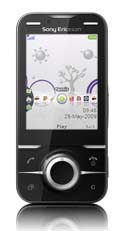
Another new Sony Ericsson phone called the Yari contains accelerometers that can be used for motion controls with games similar to Nintendo’s Wii controllers. The Yari has a 5-megapixel camera, assisted-GPS, instant messaging, and Microsoft Exchange ActiveSync support.

Sony Ericsson YariExpect the new phones to be available in select markets later this year, likely in the fourth quarter. No U.S. launch dates have been given, however, Jon Mulder, head of North American product marketing, did say “currently we do anticipate that these models will be unlocked in various channels in the U.S. We have yet to announce operator partnerships.”

Sony Ericsson also plans to launch a virtual software applications store. The company plans to announce additional details concerning the store at next week’s JavaOne Conference.

Wednesday, April 22, 2009

AT&T plans to double its 3G network capacity

No service
Many iPhone users complain about AT&T's service -- or lack thereof. Credit: dbrulz123 at Flickr.

It's a common complaint among iPhone users: The device is great, but the much-heralded 3G network, provided by AT&T, needs work. Now, it seems AT&T may be listening.

AT&T is testing increased download speeds on its 3G network, according to spokesman Geoff Mordock. The news first emerged in an interview with Scott McElroy, AT&T Mobility vice president of technology realization, in Telephony Online. The tests, if implemented, would bring the theoretical maximum speed to 7.2 megabits per second -- double the current maximum speed.

AT&T is also increasing network capacity by adding new cell sites and nearly doubling the total network capacity in most markets via an additional spectrum at 850 MHz, according to Mordock. That frequency makes it easier to get coverage inside buildings. Network capacity determines how much information can be sent over the network, including calls and data connections.

AT&T has come under fire lately for its sluggish 3G speeds. It was sued in March for promising faster 3G speeds than were available, the latest in a long line of quibbles over 3G speed. The plaintiff in the March lawsuit said he could connect to the 3G network only periodically.

The news about the increased speeds comes at a strategically beneficial time to AT&T: last week, reports emerged that the wireless company was trying to extend its exclusive relationship with Apple until 2011.

-- Alana Semuels

Tuesday, March 17, 2009

Breakthroughs in Post-4G (12.5Gb/s) Wireless Communications

ScienceDaily (Mar. 14, 2009) — With much of the mobile world yet to migrate to 3G mobile communications, let alone 4G, European researchers are already working on a new technology able to deliver data wirelessly up to 12.5Gb/s.


The technology – known as ‘millimetre (mm)-wave’ or microwave photonics – has commercial applications not just in telecommunications (access and in-house networks) but also in instrumentation, radar, security, radio astronomy and other fields.

Despite the quantum leap in performance made possible by combining the latest radio and optics technologies to produce mm-wave components, it will probably only be a few years before there are real benefits for the average EU citizen.

This is thanks to research and development work being done by the EU-funded project IPHOBAC, which brings together partners from both academia and industry with the aim of developing a new class of components and systems for mm-wave applications.

The mm-wave band is the extremely high frequency part of the radio spectrum, from 30 to 300 gigahertz (GHz), and it gets it name from having a wavelength of one to 10mm. Until now, the band has been largely undeveloped, so the new technology makes available for exploitation more of the scarce and much-in-demand spectrum.

New products from Europe

IPHOBAC is not simply a ‘paper project’ where the technology is researched, but very much a practical exercise to develop and commercialise a new class of products with a ‘made in Europe’ label on them.

While several companies in Japan and the USA have been working on merging optical and radio frequency technologies, IPHOBAC is the world’s first fully integrated effort in the field, with a lot of different companies involved. This has resulted in the three-year project, which runs until end-2009, already having an impressive list of achievements to its name.

It recently unveiled a tiny component, a transmitter able to transmit a continuous signal not only through the entire mm-wave band but beyond. Its full range is 30 to 325GHz and even higher frequency operation is now under investigation. The first component worldwide able to deliver that range of performance, it will be used in both communications and radar systems. Other components developed by the project include 110GHz modulators, 110GHz photodetectors, 300GHz dual-mode lasers, 60GHz mode-locked lasers, and 60GHz transceivers.

Truly disruptive technology

Project coordinator Andreas Stöhr says millimetre-wave photonics is a truly disruptive technology for high frequency applications. “It offers unique capabilities such as ultra-wide tunability and low-phase noise which are not possible with competing technologies, such as electronics,” he says.

What this will mean in practical terms is not only ultra-fast wireless data transfer over telecommunications networks, but also a whole range of new applications (http://www.iphobac-survey.org).

One of these, a 60GHz Photonic Wireless System, was demonstrated at the ICT 2008 exhibition in Lyon and was voted into the Top Ten Best exhibits. The system allows wireless connectivity in full high definition (HD) between devices in the home, such as a set-top box, TV, PC, and mobile devices. It is the first home area network to demonstrate the speeds necessary for full wireless HD of up to 3Gb/s.

The system can also be used to provide multi-camera coverage of live events in HD. “There is no time to compress the signal as the director needs to see live feed from every camera to decide which picture to use, and ours is the only technology which can deliver fast enough data rates to transmit uncompressed HD video/audio signals,” says Stöhr.

The same technology has been demonstrated for access telecom networks and has delivered world record data rates of up to 12.5Gb/s over short- to medium-range wireless spans, or 1500 times the speed of upcoming 4G mobile networks.

One way in which the technology can be deployed in the relatively short term, according to Stöhr, is wirelessly supporting very fast broadband to remote areas. “You can have your fibre in the ground delivering 10Gb/s but we can deliver this by air to remote areas where there is no fibre or to bridge gaps in fibre networks,” he says.

Systems for outer space

The project is also developing systems for space applications, working with the European Space Agency. Stöhr said he could not reveal details as this has not yet been made public, save to say the systems will operate in the 100GHz band and are needed immediately.

There are various ongoing co-operation projects with industry to commercialise the components and systems, and some components are already at a pre-commercial stage and are being sold in limited numbers. There are also ongoing talks with some of the biggest names in telecommunications, including Siemens, Ericsson, Thales Communications and Malaysia Telecom.

“In just a few years time everybody will be able to see the results of the IPHOBAC project in telecommunications, in the home, in radio astronomy and in space. It is a completely new technology which will be used in many applications even medical ones where mm-wave devices to detect skin cancer are under investigation,” says Stöhr.


Adapted from materials provided by ICT Results.