Zazzle Shop

Screen printing
Showing posts with label Wine. Show all posts

Friday, August 5, 2011

One Hell of a Trick: 100 Sake Bomb Dominoes (Video)


Props to the bartender!

Thursday, July 28, 2011

Peachy Canyon Winery: Old Jesse James Hideout Turns Sustainable Winery

by
from http://www.treehugger.com/


Green Wine Guide Peachy Canyon Photos 
Photo via Peachy Canyon


Peachy Canyon Winery is a sustainable, family-owned winery located on the westside of Paso Robles' popular Highway 46. The winery is named after a horse thief who took refuge in a cave near the vineyard; Jesse James made use of the same hideout.

Peachy--the oddly named horse thief--was eventually caught and hung in town. Jesse James' uncle, Drury James, co-founded the town of El Paso de Robles and was part owner of the famous La Panza Ranch where James and his brother, Frank, took shelter after holding up a bank in Russellville, Kentucky, on March 20, 1868. Jesse was ailing a gunshot wound from the robbery.

Green Wine Guide Peachy Canyon Photos 
Photo by Jaymi Heimbuch

The winery has four estate vineyards, totaling 100 acres, and also sources grapes from other growers within the Paso Robles AVA. The Old School House Vineyard, located within the county's Templeton Gap, was purchased in 1998. The property's landmark attraction--yes, a school house--was built circa 1886 and now serves as the winery's only public tasting room. Their other vineyards include Snow Vineyard, Mustang Springs Ranch and Mustard Creek.

A Family Affair

The Beckett family relocated to Paso back in 1982 when they sold everything they had to buy a walnut farm in the area. It was there that Doug Beckett met hobby winemaker Pat Wheeler who had a garage-based winery. Soon Doug had his eyes set on an even larger commercial venture, a winery. Pat, who was hoping to leave the Golden State (crazy talk!), was less interested. So Doug, along with his wife Nancy, moved all of the winemaking equipment from Pat's garage to the farm near Peachy Canyon Road.

Thanks to a load of Zinfandel grapes from Benito Dusi's vineyard, Peachy Canyon Winery officially launched their label in 1988 with just a few hundred cases. Since then the Beckett's have gotten a wee bit more ambitious, production this year is set for 84,000 cases!

Green Wine Guide Peachy Canyon Photos 
Photo of Josh Beckett via Peachy Canyon
While Doug and Nancy still head the winery, their sons Josh and Jake also play a big part in the family business. Josh has worked at the winery for about nine years and has been the winemaker since 2003. Jake is the winery's General Sales Manager.

You Gotta be Nuts!

Josh explains that before the original vineyard was in fact a vineyard, it was an organic walnut grove, "There was no certification back then but it was definitely organic because [with] dry farmland that's all you do -- prune and cultivate, and that's it. Like out there, there's no spraying, no nothing going on out there. You just turn the soil, shake the trees and pick the nuts up off the ground, and you prune in the winter, and that's it. That's all you do with walnuts."

Walnuts were sold to both Diamond Foods of California and a tiny little candy company known as See's Candies. In fact, the original vineyard near Peachy Canyon Road still grows both crops. It's about one-quarter walnuts and the rest is grapes.

Green Wine Guide Peachy Canyon Photos 
Photo via Peachy Canyon

The walnuts didn't stick around but the sustainable farming practices did.

Doing It the Old Fashioned Way

All four vineyards compost the waste accumulated during harvest; grape skins, stems, seeds, everything is recycled and put back into the vineyard. By doing so, Peachy Canyon is able to avoid using fertilizers.

Cover crops are grown throughout the vineyards every year. Barley is the crop of choice as it prevents runoff during the rainy season. Other plants include vetch, legumes and other beans. In the Spring, the barley and other plants are mowed and disked back into the soil.

"We like to see the grass and we like to see the different weeds because we know there's life in there [the vineyard] and there's healthy stuff going on. There's worms, there's all this stuff out there. Without that greenery and without that life, it [the vineyard] wouldn't be there," says Josh.

Pests are kept to a minimum using beneficial insects such as ladybugs, praying mantis and lacewings. Organic style oil is used to thwart leaf hoppers, the vineyards' most common pest. Netting is used to keep out the birds.

Peachy Canyon has been SIP certified since 2007 like some of its neighbors such as Halter Ranch and Robert Hall.

Green Wine Guide Peachy Canyon Photos 
Photo via Jaymi Heimbuch

Josh explains that while they do sometimes water and spray, "we don't get on a regimented spray program or a regimented irrigation program. We go out there and spend time [in the vineyards], and we'll see what the plants actually need and don't need, and don't just water just to water. [We] don't just do things because. A lot of the big, huge farms, they have to. They don't have a choice."

Deadly Zins

While Peachy Canyon grows a plethora of varietals such as Cabernet Sauvignon, Petite Sirah, Malbec, and Petite Verdot but they are really known for their Zins.

Their 2008 Old School House Zinfandel is brooding with dark cherries, cocoa and just enough citrus to keep it fresh and light. This School House Zin is bound to land you in detention. Josh really hits it home with his 2009 Cirque Du Vin, a blend of Cabernet Sauvignon, Zinfandel, Petite Sirah, Merlot, Petit Verdot, and Malbec that borders on blasphemy. The wine gracefully dances between herbal notes and ripe fruit. Both of these wines can be purchased online for $36 and $17 respectively.

There are two things I never turn down and one of them is a Cab Franc. So I am hesitant to mention Peachy Canyon's 2008 Cabernet Franc. The wine is a tsunami of cherries and currents anchored by a touch of oak and some herbal undercurrents. It retails for $25 and is also available online along with their other wines.
While Paso Robles is no longer the Wild Wild West, you could very well end up in a duel over Peachy Canyon's wine.

Visit TreeHugger's Green Wine Guide for more green wineries, recipes and virtual tours.

Friday, July 22, 2011

Whoops! $1 million worth of wine spilled

From: http://news.blogs.cnn.com/
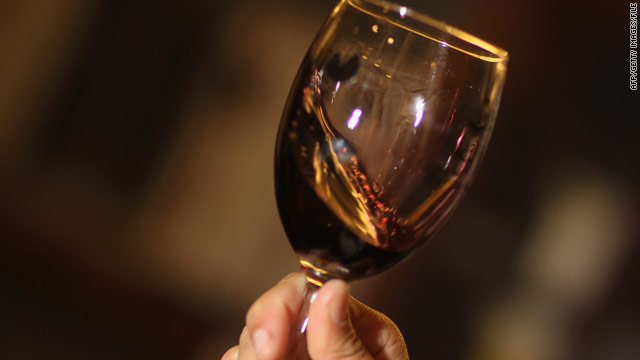
Whoops! $1 million worth of wine spilled
More than 5,000 bottles of Australian wine won't be in glasses after a forklift accident Thursday.

A malfunctioning forklift dropped 462 cases of wine in Australia on Thursday, a spill with a price tag of more than $1 million.

The 5,544 bottles of 2010 Mollydooker Velvet Glove shiraz, with a price tag of $185 a bottle,  fell almost 20 feet to ground of a wharf in Port Adelaide as the forklift was loading it for shipment abroad, according to media reports.

"We just couldn't believe it," winemaker Sparky Marquis said in a report on Adelaide Now. "As you can imagine, this wine is our pride and joy. To see it accidentally destroyed, and not consumed, has left us all a bit numb.

"The container manager said that when his team came and told him what had happened, he was looking around for cameras to see if it was a 'gotcha' hoax. He realised it was serious when nobody was laughing," Adelaide Now quotes Marquis as saying.

Marquis told ABC.net that only one carton among the 462 was undamaged. His staff was searching through the others to see if any other bottles may have escaped.

"All of the bottles are in the cool store and we're just having to go through every single bottle, check it first of all to see if it has any cap seal damage to it, in which case it just gets immediately discarded," ABC.net quotes him as saying.

The lost wine represents a third of his company's output for a year.

Brett McCarthur of Kerry Logistics, the company which operated the forklift, told Adelaide Now his company moves tens of thousands of heavy containers each year.

"We move hundreds of pallets a day filled with sand and even stuff that it wouldn't matter if you dropped it from 50 feet in the air, but the only premium container had to be the one," McCarthur was quoted as saying.
Marquis said he was working with insurers to get compensated for his loss.

Friday, July 1, 2011

R.W. Barrel Saunas: Behemoth, body-baking barrels

From: http://www.thrillist.com/

Saunas were thought to have near-supernaturally restorative properties when invented by the ancient Finnish people, which makes it all the more tragic that modern-day ones are often creepily hijacked by dudes just trying to finish. Bringing back their old-school majesty...and privacy: R.W. Barrel Saunas.

Individually hand-milled in northern Minnesota, these cedar-hewn sweatboxes are made via the same process as regular barrels (but presumably with more ladders), can be styled/sized to your liking, are more affordable/efficient than standard saunas, and have the “traditionally pleasing shape that everyone loves”, despite the cans looking nothing like Scar Jo's. Each unit comes with a weather-sealed door, your choice of heating component (electric, gas, or wood), interior benches that can comfortably seat six, and a tempered glass window; they're all fit together with ball & socket joints, and rimmed with huge stainless steel hoops, aka a cyborg contestant on Flavor of Love 2112. Aside from picking your size, you can also decide between a traditional model or the slightly sleeker tube sauna, which doesn't get bulbous in the midsection like a barrel, meaning it's more easily assembled and thus can be done inside your house after arriving in kit form, assuming you actually want a black Trans-Am with Mr. Feeny's voice inside your house.

If you live within 50mi of the shop -- it's nearly 2hrs outta Mpls, so you likely don't -- delivery's free, but for everyone else, a small delivery fee also buys you an expert hand in getting the thing set up, which's ironic, as avoiding an extra hand's the reason you wanted your own private sauna in the first place.

These things have to be seen to be believed, at RWSaunas.com

Tuesday, June 14, 2011

Italy: A Colorful Land of Wine

From: http://www.visualnews.com/

Vinophiles: whether your favorite Italian type is a crisp classic Chianti or a young sparkling Lambrusco, you’ll find it on Antoine Corbineau’s tasty poster ‘Incomparabili Vini Italiani.’ The map charts everything from the countries varietals, regions and types into a playful and colorful format that would make almost anyone thirsty. The illustration was created for his ongoing project with Italian production and distribution group Carniato Europe.


Via: creativeroots.org

Friday, January 14, 2011

Earliest Known Winery Found in Armenian Cave

From: http://news.nationalgeographic.com/


World's oldest, or earliest, known winemaking equipment, including a wine press (picture), as identified by a UCLA/National Geographic Society excavation
An apparent wine press (in front of sign) and fermentation vat (right) emerge during a dig in Armenia.
Photograph courtesy Gregory Areshian

James Owen

As if making the oldest known leather shoe wasn't enough, a prehistoric people in what's now Armenia also built the world's oldest known winery, a new study says.

Undertaken at a burial site, their winemaking may have been dedicated to the dead—and it likely required the removal of any fancy footwear.

Near the village of Areni, in the same cave where a stunningly preserved, 5,500-year-old leather moccasin was recently found, archaeologists have unearthed a wine press for stomping grapes, fermentation and storage vessels, drinking cups, and withered grape vines, skins, and seeds, the study says.

"This is the earliest, most reliable evidence of wine production," said archaeologist Gregory Areshian of the University of California, Los Angeles (UCLA).

"For the first time, we have a complete archaeological picture of wine production dating back 6,100 years," he said. (Related: "First Wine? Archaeologist Traces Drink to Stone Age.")

The prehistoric winemaking equipment was first detected in 2007, when excavations co-directed by Areshian and Armenian archaeologist Boris Gasparyan began at the Areni-1 cave complex.

In September 2010 archaeologists completed excavations of a large, 2-foot-deep (60-centimeter-deep) vat buried next to a shallow, 3.5-foot-long (1-meter-long) basin made of hard-packed clay with elevated edges.
The installation suggests the Copper Age vintners pressed their wine the old-fashioned way, using their feet, Areshian said.

Juice from the trampled grapes drained into the vat, where it was left to ferment, he explained.
The wine was then stored in jars—the cool, dry conditions of the cave would have made a perfect wine cellar, according to Areshian, who co-authored the new study, published Tuesday in the Journal of Archaeological Science.

(Related pictures: "Before and After: Wine-Cult Cave Art Restored in Petra.")

Wine Traces
To test whether the vat and jars in the Armenian cave had held wine, the team chemically analyzed pottery shards—which had been radiocarbon-dated to between 4100 B.C. and 4000 B.C.—for telltale residues.
The chemical tests revealed traces of malvidin, the plant pigment largely responsible for red wine's color.
"Malvidin is the best chemical indicator of the presence of wine we know of so far," Areshian said.
Ancient-wine expert Patrick E. McGovern, a biomolecular archaeologist at the University of Pennsylvania Museum in Philadelphia, agrees the evidence argues convincingly for a winemaking facility.

One thing that would make the claim a bit stronger, though, said McGovern, who wasn't involved in the study, is the presence of tartaric acid, another chemical indicator of grapes. Malvidin, he said, might have come from other local fruits, such as pomegranates.

Combined with the malvidin and radiocarbon evidence, traces of tartaric acid "would then substantiate that the facility is the earliest yet found," he said.

"Later, we know that small treading vats for stomping out the grapes and running the juice into underground jars are used all over the Near East and throughout the Mediterranean," he added.
(Related: "Ancient Christian 'Holy Wine' Factory Found in Egypt.")

Winery Discovery Backed Up by DNA?
McGovern called the discovery "important and unique, because it indicates large-scale wine production, which would imply, I think, that the grape had already been domesticated."

As domesticated vines yield much more fruit than wild varieties, larger facilities would have been needed to process the grapes.

McGovern has uncovered chemical and archaeological evidence of wine, but not of a winery, in northern Iran dating back some 7,000 years—around a thousand years earlier than the new find.

But the apparent discovery that winemaking using domesticated grapevines emerged in what's now Armenia appears to dovetail with previous DNA studies of cultivated grape varieties, McGovern said. Those studies had pointed to the mountains of Armenia, Georgia, and neighboring countries as the birthplace of viticulture.
McGovern—whose book Uncorking the Past: The Quest for Wine, Beer, and Other Alcoholic Beverages traces the origins of wine—said the Areni grape perhaps produced a taste similar to that of ancient Georgian varieties that appear to be ancestors of the Pinot Noir grape, which results in a dry red.

To preserve the wine, however, tree resin would probably have been added, he speculated, so the end result may actually have been more like a Greek retsina, which is still made with tree resin.
In studying ancient alcohol, he added, "our chemical analyses have shown tree resin in many wine samples."

Ancient Drinking Rituals
While the identities of the ancient, moccasin-clad wine quaffers remain a mystery, their drinking culture likely involved ceremonies in honor of the dead, UCLA's Areshian believes.

"Twenty burials have been identified around the wine-pressing installation. There was a cemetery, and the wine production in the cave was related to this ritualistic aspect," Areshian speculated.
Significantly, drinking cups have been found inside and around the graves.

McGovern, the ancient-wine expert, said later examples of ancient alcohol-related funerary rituals have been found throughout the world.

In ancient Egypt, for example, "you have illustrations inside the tombs showing how many jars of beer and wine from the Nile Delta are to be provided to the dead," McGovern said. (Also see "Scorpion King's Wines—Egypt's Oldest—Spiked With Meds.")

"I guess a cave is secluded, so it's good for a cemetery, but it's also good for making wine," he added. "And then you have the wine right there, so you can keep the ancestors happy."

Future work planned at Areni will further investigate links between the burials and winemaking, study leader Areshian said.

Winemaking as Revolution
The discovery is important, the study team says, because winemaking is seen as a significant social and technological innovation among prehistoric societies.

Vine growing, for instance, heralded the emergence of new, sophisticated forms of agriculture, Areshian said.
"They had to learn and understand the cycles of growth of the plant," he said. "They had to understand how much water was needed, how to prevent fungi from damaging the harvest, and how to deal with flies that live on the grapes.

"The site gives us a new insight into the earliest phase of horticulture—how they grew the first orchards and vineyards," he added.

University of Pennsylvania archaeologist Naomi Miller commented that "from a nutritional and culinary perspective, wine expands the food supply by harnessing the otherwise sour and unpalatable wild grape.
"From a social perspective, for good and ill," Miller said, "alcoholic beverages change the way we interact with each other in society."
****
The ancient-winery study was led by UCLA's Hans Barnard and partially funded by the National Geographic Society's Committee for Research and Exploration. (The Society owns National Geographic News.)

Friday, November 19, 2010

Best American Wines Under $20

F&W honors eight new American value wines.

The winners of F&W's 13th annual American Wine Awards, chosen from a field of nominees at blind tastings, celebrate the diversity of America's West Coast vineyards.

Most U.S. wine comes from California, and the state delivered 5 winners for less than $20—two from the 2007 vintage, which was stellar throughout most of the state. Specifically, two winning bottles came from Sonoma County, a powerhouse region that produces exceptional Chardonnay, Pinot Noir and Zinafandel, and consistently gives good value. While all of these wines are well worth a search, most—like Columbia Crest's Merlot from Washington state—are widely available. The quality and price point of these award-winning bottles make them an ideal choice for Thanksgiving, dinner parties or gift giving.

Whites

Sauvignon Blanc

2008 Honig ($16)
Winemaker Kristin Belair innovates with different winemaking methods on different parcels of grapes, allowing her, for instance, to emphasize the grapefruity character of a specific lot. The Napa winery itself is innovative, too: All energy needed for production, cooling and bottling is solar-generated.

Chardonnay

2008 Mount Eden Vineyards Wolff Vineyard ($20)
In 2008, bad weather in California's Edna Valley drastically cut the amount of fruit from Wolff Vineyard but packed flavor into the grapes. Jeffrey Patterson makes this wine exactly the same way he makes Mount Eden's pricier estate Chardonnays, producing a white with vivid flavors of pear, peach and lime.

Pinot Gris

2008 Elk Cove ($19)
Elk Cove benefited from the fine 2008 vintage in Oregon's Willamette Valley, where it's been producing top Pinot Noir and Pinot Gris since the 1970s. A cool summer and sunny fall meant ideal grapes, and winemaker Adam Campbell accented their brightness by fermenting this lemon-zesty wine in stainless steel tanks.

Reds

Pinot Noir

2008 Wallace Brook ($19)
This Oregon red offers the lively, aromatic appeal of Willamette Valley Pinot Noirs costing twice as much. An affordable secondary brand made by the Willamette Valley's Adelsheim Vineyard, one of the pioneering producers of Oregon Pinot Noir, this Wallace Brook shows the ripeness of the great 2008 vintage.

Merlot

2007 Columbia Crest H3 ($15)
This widely available Merlot comes from Washington's Horse Heaven Hills (hence H3), a promising region for complex, full-bodied reds. Its ripe blackberry fruit keeps some needed restraint thanks to the skill of winemaker Ray Einberger.

Zinfandel

2007 Four Vines, Old Vine Cuvée ($14)
Founder-winemaker Christian Tietje scoured vineyards from California's top Zinfandel counties—from Amador to Paso Robles—to assemble the fruit for this streamlined red. It's sumptuous in style, full of blackberry and blueberry fruit.

Syrah

2008 Red Car, Boxcar ($20)
Winemaker Carroll Kemp started Red Car back in 2000 in his Los Angeles driveway with two barrels of Syrah. His output has grown since then, but Syrah remains the focus, as in this highly polished red's array of classic, cool-climate Syrah flavors: plum, dark berries and black pepper.

Cabernet Sauvignon

2007 Louis M. Martini, Sonoma County ($17)
Michael Martini's winemaking team used vineyards around the county for a straightforward red that also has considerable finesse. That deft touch isn't surprising, as Michael himself has been making wine for more than 30 years, and his family for more than 100.


Tuesday, November 9, 2010

World's Weirdest Wines

Glasses are filled every day, all over the world, with natural elixirs made with some of the most unlikely ingredients, like pumpkins, lizards and tree sap. Each reflects what's locally available and honored—its particular, and often peculiar, terroir—and they make wine tasting an adventure.

Glasses are filled every day, all over the world, with natural elixirs made with some of the most unlikely ingredients, like pumpkins, lizards and tree sap. Each reflects what's locally available and honored—its particular, and often peculiar, terroir—and they make wine tasting an adventure.

Snake Bile Wine (Ruou Mat Ran)

World's Weirdest Wines: Snake Bile Wine (Ruou Mat Ran)

Photo © Tom Martin.

As if Vietnamese snake wine—prepared by steeping a snake (preferably a venomous one) in rice wine—weren't disconcerting enough, there's snake bile wine. The forbidding drink is prepared by mixing rice wine with the greenish-black bile taken from the gallbladder of a freshly sliced cobra.


Birch Sap Wine

World's Weirdest Wines: Birch Sap Wine

Photos © Gunno Rask / Tommy Andersson.

Each spring, the winemakers at Sav in Jämtland, Sweden, start their production process with a highly unexpected first step: They extract the sap from silver birch trees. Their peculiar sparkling wine follows a recipe that dates back to 1785.


Lizard Wine (Hejie Jiu)

World's Weirdest Wines: Lizard Wine (Hejie Jiu)

Photo © Franko.

For this potent beverage found in China, lizards—traditionally the gecko—marinate in rice wine or whiskey for up to a year. According to (questionable) lore, the amber-hued drink can cure a range of ailments from ulcers to arthritis.


Retsina

Some considered Retsina the tears of wood nymphs. Others trace its origins to the Roman invasion of Greece, when Greeks added resin to their wine to discourage the invaders from enjoying the spoils of war. Made for more than 2,000 years, Retsina is still fermented with tree resin for a distinctly piney taste.

slideshow Slideshow: More of the World's Weirdest Wines

Wednesday, September 22, 2010

New Wine In Old Bottles: The Greenest Way To Drink

by Lloyd Alter, Toronto
from: http://www.treehugger.com/

wine-vend-france.jpg
Images via Inhabitat

Whenever there is a discussion about wine packaging, TreeHugger comes down on the side of local and refillable. We return often to TreeHugger Emeritus Ruben Anderson's article in the Tyee: New Wine in Old Bottles, where he notes that in France, wine bottles are refilled an average of eight times. Now they even have computerized wine dispensers where you can fill your own jugs with vin de table for about two bucks a litre.

wine-screen.jpg

It is much like filling up your car at the self-service gas station, and at 1.45 euros per litre, it is about the same price. (gas in France is 1.41 euros per litre). It isn't a new idea; Dr. Vino writes:

Astrid Terzian introduced this concept that hearkens back to a bygone era when wine would arrive in Paris shops in tonneaux and consumers would bring their own flagons to fill. But today, Terzian says, she started this scheme in fall 2008 to fill a niche, tapping into two key themes, environmental awareness and the economy.

Dr. Vino also suggests that the system is coming to the States within the year. But every time we have this discussion, people note that in the litigious USA, somebody will get sick and sue. There are people trying to do refillable bottles in America; Pend d'Oreille Winery sells wine in a refillable 1.5 litre jug. Wines and Vines writes:


The economic benefits have sweetened the environmental proposition that initially inspired the program. Since a local market for glass recyclables doesn't exist in Sandpoint, bottles were typically reintegrated with solid waste and sent to an Oregon landfill. Pend d'Oreille's program helps reduce that waste stream.

In British Columbia a lot of wineries are looking at refillable bottles.


Preliminary economic models developed by Dr. Ian Stuart of the Faculty of Management at the University of British Columbia-Okanagan in Kelowna pegged the per-bottle savings of the program at 46 cents (Canadian) per bottle (based on an annual flow of 840,000 bottles through the system). Smaller wineries typically pay between 85 cents to $1.20 Canadian (CA$1 = US$0.94) per new bottle.

wine keg photo

In Michigan, you can bring your own bottles to Left Foot Charleys.

It's cheaper and better for the environment, obviously the greenest alternative. But what do we get peddled as green?

Boxes aren't Green

tetra pack image

We noted earlier Ruben's wonderful article, where he questioned the green-ness of boxed wine, writing

While looking for wine in refilled bottles I had the misfortune to see one of those shrill displays of wine in Tetra Paks; this crap is being flogged as a "Green Solution." It's junk like this that drives me to the liquor store in the first place. Tetra Paks are here to save us because they weigh less, so less climate-changing diesel fuel is required to lug them across the ocean from Australia. Dear God, where to start?

He does go on, read the rest in Which Is Greener, Wine Bottle or Box? Neither.

tetra pak lifecycle analysis

TreeHugger Jenna, who does life cycle analyses for her day job, had a close look at boxed wine and concluded that it did have a lower carbon footprint than bottled.

Overall, the study concludes that the paperboard systems have the lowest total energy as well as the lowest greenhouse gas emissions; the glass systems have the highest total energy as well as the highest greenhouse gas emissions.

More in Hitting the Bottle or Hitting the Box? The Debate Continues

tetra pak flattened

But as was noted in a post on the recycling of Tetra Pak,

Green is reusable. Green is refillable. Green is not disposable and downcylable, for the lucky 20% of Americans who have access to it, and landfill for the 80% who don't. Tetra Pak is the most elaborate greenwashing scheme ever, and they are doing a very good job of it.

(although I must point out that Pablo disagrees with me in his Defense of Tetrapak)

bagged wine ontario photo

Others are trying to reduce their impact by putting wine in pouches, which are then put in a cardboard box. It is popular in Europe but has only six percent of the market in the USA, as everyone evidently thinks it is only for plonk suitable for rubbies. Alan Dufrêne, a wine consultant, blames the industry. "Don't put low quality wine in bag-in-box packaging," Dufrêne told wine makers. "It will only reduce its appeal." More in Which Is Greener, Wine Bottle or Box? Depends on the Box

wine pet bottles image

PET Bottles were developed for the British market, so that yobs wouldn't kill each other at football games. Their claim is that they are lighter and smaller, taking less energy to ship. The bottles " are 88 percent lighter than glass bottles, and use less energy to manufacture than glass bottles. The lightweight plastic bottles also reduce distribution emissions." John isn't convinced and writes Marks & Spencer Delivers Wine in Plastic Bottles, but Is It Greener?

new zealand wine photo

April wrote about Yealands Estate wine, packed in PET, noting that "its Full Circle sauvignon blanc bottles are 89% lighter than 750ml glass bottles, which means they generate 54% less greenhouse gas emissions and use nearly 20% less energy to produce than glass. " Ways to Wine: From Bottle to Box, Back to Bottle

wine in pouch photo

April is also fond of wine in pouches, noting that they are a twentieth of the weight of glass, and quotes a study:

Even if 100% of wine bottles were recycled and 0% of wine pouches were recycled (because by the way, the mixed-material pouches are NOT currently recyclable) pouches would still have less environmental impact and contribute less waste.

It is a difficult issue. As Matt calculated in his post Ship or Truck Transport Makes All the Difference in Wine's Carbon Footprint , it doesn't really take a lot of energy to move wine by ship around the world. In fact, driving to the wine store probably has a bigger footprint than shipping the bottle from New Zealand. But it still takes a lot of energy to make a bottle or a box, energy that would be saved if we could refill our own jugs and bottles right from the tank. But notwithstanding Dr. Vino's optimism, I don't expect to see it any time soon.

Friday, July 23, 2010

Why Didn't I Think of That? The Wine Rack, Already a Breast-Seller

This summer's must-have accessory? The Wine Rack, a bra that holds an entire bottle of wine. Guys, don't worry -- there's a version for you too.

Thirsty? The Wine Rack bra stores 25 ounces of your favorite beverage.
The latest heatwave has helped sales of all things summer -- electric fans, air conditioners, flip flops and more. Add to that list the Wine Rack, which has been selling briskly among college students as the temperatures climb.

The Wine Rack isn't quite what it sounds like. It's a bra -- a bra that can hold an entire bottle of wine or 25 ounces of your beverage of choice.

The booze bra comes with a straw for sipping, and thanks to the watertight tubing, it can inflate a woman's chest by two sizes. Take that, Wonderbra.

"It's an idea whose time had come," says Paul Krasulja, general manager of Paterson, N.J.-based online site BaronBob.com, which specializes in selling off-beat gifts. "It had been coming for a long time."

No kidding. The Wine Rack has been on the market for at least three years, but thanks to us poor saps in the media who just love writing about it, business remains brisk. It's a great strategy for small companies with catchy products and slim advertising budgets.

"That's pretty much exactly how it happens," Krasulja says. "Everybody picks it up, writes about it, it boosts the sales of the item, and then after a month or two, it all dies down."

But it's easy to see why the public is fascinated with it. The Wine Rack dovetails with the American male's interest in alcohol and women. As it turns out, the idea for the Wine Rack was actually inspired by a guy's version -- the Beerbelly, which holds 80 ounces of beer.

The Beerbelly and Wine Rack were both created by serial entrepreneur Brooks Lambert, a 50-year-old Californian who came up with the idea when he and a pal were hanging out in his backyard, remembering how they used to sneak beer into ball games and movies. Suddenly, he had an idea.

Brooks ultimately sold the manufacturing rights to Aaron Knirr, 31, and his business partner, Chris Pounds, 34, who co-own Cooler Fun, based in Ellisville, Mo.

"This is awesome, let's jump on it," recalls Knirr, who ordered a few prototypes. In 2008, they made an offer to purchase Lambert's equipment and assets, so they could become the main distributor and manufacturer of both the Beerbelly and Wine Rack.

Knirr won't say how many Beerbelly and Wine Racks have been sold, but he says "sales are decent." After several years of being mostly an Internet sales phenomenon, the products are now appearing in a few scattered liquor stores and other small retailers across the country, with the possibility of rolling out to larger chains in the future. The publicity -- the Wine Rack has been featured on the Today show, and by countless other media outlets -- has definitely helped sales, along with word of mouth, Knirr says.

Knirr cites one of his favorite testimonials, where one guy wrote in to rave, "The Beerbelly is quite possibly the best product ever invented in the world ever -- as good as, if not better than the wheel, the light bulb, sliced bread and the Internet."

Some people clearly love their beer.

Meanwhile, Krasulja says the customers he has talked to over the phone mostly seem to be getting the Wine Rack and Beerbelly for sporting events, although he recently had a female customer who said she was using the Wine Rack when attending PTA meetings.

As for sipping beer out of a bra or a belly harness during those sporting events, "When you're spending $11 on a beer at Yankee Stadium, it's easy to see why they want it," Krasulja says. "I went to the stadium last year and spent $290 on beer. It's an amazing, beautiful stadium, but [the beer is] overpriced."

Geoff Williams is a regular contributor to AOL Small Business. He is also the co-author of the book Living Well with Bad Credit.

Friday, March 5, 2010

The 25 greatest cities in the world for drinking wine

Dreaming of sipping wine in a little Parisian cafe? Or picturing yourself in trendy Napa Valley, sampling new vintages straight from the barrel? While these well-known areas indeed spring to mind when thinking about the world's finest vintages, you may be surprised to know that excellent wine is being made and enjoyed just about everywhere.

As a wine judge and hobby winemaker, my favorite wine trips have always been to out-of-the-way places, away from tourists and kitsch. This is where you will find the best wines and the most interesting experiences. Here are dozens of not-to-miss wine experiences to plan into your next trip.

San Gimignano, Italy
San Gimignano is an ancient city in Tuscany whose medieval towers still fill the skyline today. While several grape varieties are grown in the area, the town is famous for its Vernaccia di San Gimignano, a dry white wine made in the region since the 13th century, and made famous by a reference in Dante's Inferno.

This unique wine is best paired with local fare such as wild boar or mushroom risotto which can be enjoyed in many local restaurants. One of the town's restaurants, Dorand, even serves authentic medieval food paired with local wines. A luxurious and decadent experience, it will not be soon forgotten.

Beamsville, Ontario, Canada
The Niagara Region of Canada has developed into a thriving wine region over the past thirty years. Its micro-climate is perfect for European-style grape growing and this area is known for award-winning Chardonnays, Rieslings, and Merlots.

The region's best product, however, is its Icewine. This naturally sweet dessert wine is made from white grapes that have been allowed to remain on the vine into the winter and are picked and pressed during the first hard freeze.

Forgo the touristy Niagara-on-the-Lake and stay in Beamsville to the west. Beamsville is surrounded by small craft wineries and vineyards producing a number of varietals. From Beamsville, wine tours are an easy day trip. Beamsville restaurants also carry many local wines, so you can sample to your heart's content while planning your trip through wine country.
Beaune, France
On your next trip to France, escape Paris and drive three hours south east to the city of Beaune. Even without wine, Beaune is a beautiful, historical city, with centuries-old cathedrals, ancient ramparts, and world-class cafs and restaurants.

The best place to sample wines in Beaune is the Marche aux Vins. The Marche, located in a 15th century Franciscan church, is a collective run by many of the region's wine merchants. For a mere 10.00 €, you can spend a morning or afternoon sampling a very large selection of Burgundies. You will be provided with a souvenir tasting cup and will make your way through the maze of wines. All of the wines are available to purchase. I most enjoy the heavier, older, and often more expensive vintages which are presented near the end of the tastings. Don't fill up on the cheap stuff first!

Temecula, California, USA
When one thinks California wineries, the exclusive and hip Napa Valley is the first area that comes to mind. While the Napa region produces some amazing wines, California harbors a wine secret farther to the south.

An hour from San Diego, Orange County, and Los Angeles, Temecula has been quietly gaining a name for itself in the wine industry. The hills to the north and west and the ocean breezes make for a perfect grape-growing climate.

If you enjoy gaming as well as wine, the Pechanga Casino and Resort just outside of town provides both. Or take a self-guided tour through Temecula's small boutique wineries and discover vintages that you will be unlikely to see on your supermarket's shelves.

Mainz, Germany
When you visit other cities, add a new wine to your repertoire. As years go by, when you taste that varietal, it can take you back to your trip.
Mainz sits perched on the banks of the Rhine as it has for almost two thousand years. The surrounding countryside is famous for its Rieslings, Sylvaners, and Muller-Thurgau. The cultivated vineyards encompass over 65,000 acres and, like many wine-growing regions along the Rhine, their soil imparts a unique character to these delicate white wines.

In Mainz, you can sample wines at many of the local vineyards, or take a boat ride down the Rhine with wine glass firmly in hand -- my favorite activity when I visit Germany. Stick with the Rieslings and forgo the more everyday Mullers. They want to be Rieslings when they grow up.

Valencia, Spain
The Mediterranean Sea keeps the vineyards around Valencia at just the right temperature. The Valencia area is famous for paella and its locally-produced wines; two treats that can easily be combined into one outing to one of the city's many Spanish restaurants.

The wineries in Valencia are some of the largest in Spain due to the city's large port and ability to ship large quantities of wine around the world. The area produces deep red Riojas, unique roses, and complex aged sherries.

There are several wine tours, both guided and self-guided that you can sign up for to see the wineries and sample a wider variety than what is available in restaurants.

Bellingham, Washington, USA
Washington is one of the great wine regions of the United States. Although just coming into its own in the past decade, Washington is now the second largest state producer of wine in the country.

While wine towns can be found in most areas of the state, Bellingham, near the Canadian border, is a fun experience and a short trip from the British Columbia wineries to the north.

Bellingham is known for its wine bars and local wine can be found in every one of them. The pace of life in Bellingham tends to be a little more laid back than you may be used to so sit back, enjoy the wine, and listen to live music. If visiting in the fall, include tours of local vineyards in your plans and watch the winemaking happen first hand.

Brisbane, Australia
Brisbane makes the list, not because of its own wine-growing identity, but because of its location. In Brisbane, you can sample the fruit wines produced to the north, on the Sunshine Coast, including pineapple, kiwi, or mango wines. You can also sample more traditional wines from farther south

Australia is known for its Shiraz, a red grape originally from Europe and there are many to choose from in Brisbane restaurants. My favorite way to enjoy wine in Brisbane is to find an outdoor table at one of the restaurants surrounding South Bank park and sip some of Australia's finest while watching kids play on the man-made beach.


Cape Town, South Africa
Cape Town is the center of South African wine-making and both reds and whites have been made here for almost 300 years. All of the great grapes of Europe can be found here including Chardonnay, Cabernet Sauvignon, Shiraz (called Petit Syrah in France), and Sauvignon Blanc.

Many of Cape Town's upscale hotels offer packages that include tours of the 130+ vineyards (or 'wine farms' as they are called in South Africa), wineries, food pairings and accommodation. This is the best way to see Cape Town's surrounding wine country and an opportunity not to be missed

Pelee Island, Ontario, Canada
Pelee Island is the southernmost tip of Canada and is, in fact, farther south than parts of California. This tiny island is inhabited by only about 500 full-time residents but boasts some of the best vineyards on the continent.

Pelee Island Winery grows all of its grapes on the island (over 500 acres). A weekend on Pelee Island is a great opportunity to get away for a romantic weekend, which I do as often as possible. There are several bed and breakfast inns on the island and the winery offers various wine tours, tastings and educational sessions. And when you tire of drinking wine (an unlikely occurrence), you can enjoy the nature preserve or take a bike ride around the entire island.

-- The above was written by
Angie Mohr, Seed contributor.


Walla Walla, Washington, USA
This small town is a four-and-a-half hour drive from Seattle, and it's a completely different world. Besides having a semi-arid climate and little-to-no traffic, Walla Walla is one of the world's hottest wine regions. Scattered throughout the countryside are vineyards and tasting rooms (highly recommended is Pepper Bridge Winery, one of many great producers in Walla Walla).

In the small but charming downtown there are enough tasting rooms to keep a wine tourist busy for days. Add in a few very high quality restaurants (Saffron and Brasserie Four, for example), and Walla Walla is one of the world's most inviting and laid-back wine towns.

Saint-Emilion, France
The wine-tourism capital of Bordeaux is an obvious pick for this list. The vineyards of Saint-Emilion surrounding the ancient town center (a World Heritage Site) produce some of the world's most sought-after wines. Chateau Cheval Blanc and Chateau Ausone are the only two Chateaux to receive Saint-Emilion's highest ranking, and great vintages of the wines frequently fetch over $1,000 per bottle. There are plenty of more economical choices though, and with nearly all of the 13,600 acres dedicated to wine production, there's plenty to go around.

Portland, Oregon, USA
The largest city in Oregon sits on the banks of the Willamette River and is a mere half-hour drive from many wineries in the Willamette Valley, one of the world's premium Pinot Noir growing areas. If touring the vineyards isn't on the agenda, there are numerous great wine bars and restaurants. Check out Alu Wine Bar, which claims a stellar wine list of both Oregon Pinot Noirs and intriguing imported selections.

Cochem, Germany
Cochem is one of dozens of small towns along Germany's Mosel River, and it is particularly charming. The Mosel is famous for producing some of the world's best -- as well as age-worthy -- Rieslings. The wide range of wine styles guarantees a hit with every palate. The town is surrounded by steep hillside vineyards, and a thousand-year-old castle on a hill overlooking the town square adds to the atmosphere.

San Francisco, California, USA
One of the most diverse cities in the United States also has plenty of choices when it comes to wine. Dozens of wine bars are scattered throughout the city center -- try Yield Wine Bar for an earth-friendly wine list or the aptly named WINE for a constantly rotating glass selection.

Bonus: Outside the bustling downtown, Napa Valley and Sonoma are easy day trips to sample some of the best U.S.-made wines.

Los Olivos, California, USA
Rather than fighting the crowds in Napa Valley try this quaint Victorian town just north of Santa Barbara. The area is now famous as the setting of Sideways. Don't let the Hollywood connection scare you away though: the region is stunningly beautiful and is one of the best Pinot Noir producing areas in the United States (alternatively, swing by Andrew Murray for some killer Syrahs). The historic downtown is home to over a dozen wine tasting rooms in a small area.


Chateauneuf-du-Pape, France
The town name is translated as "new castle of the Pope," from the days when the Pope ruled from nearby Avignon. The Pope no longer lives there, instead you'll find some of the best wines in the world in this on the rise region. The stellar 2007 vintage is getting a lot of attention around the world, so a visit is recommended before the crowds become unbearable, which seems almost inevitable for good reason.

Montalcino, Italy
It's hard to imagine any better place to be in the summer than in Tuscany. This old hilltop town has been booming since the 1970s when its now world-famous wine, Brunello di Montalcino, began to receive praise. It's now surrounded by the world's premier Sangiovese vineyards, and provides a stunning view of the Tuscan countryside.

Tampa, Florida, USA
While this city is not even close to a major wine region, it does have events and restaurants to make it one of the East Coast's best wine destinations. Possibly the biggest draw is Bern's Steak House, which has an absurdly huge wine list. There can't be many other restaurants in the world offering a 1970 Pauillac for $18 per glass. If that doesn't suit your style there are 150 other wines by the glass to choose from.

Pro tip: The Florida Wine Festival is held every April in nearby Sarasota.

New York, New York, USA
If money is no object, but drinking wine is, New York is hard to beat. There's a particularly high concentration of wine bars in the East Village and Midtown. If you're in Midtown, check out Clo WineBar above Columbus Circle for a high-tech, interactive wine experience. The wine list is displayed on a touch screen bar top, and the wines are dispensed automatically throughout the room.

-- The above was written by
Steven Washuta, Seed contributor.


Yountville, California, USA
Tucked into the vastness that is Northern California's famous wine country, is this 5-mile-long, cozy village. Wine country has many excellent dining opportunities to enjoy with their world class wines -- but Yountville beats them all with top restaurants (several are Michelin). It's hard to say which is better -- the wine or the food -- but wine pairing is what this area is all about. Stay at the Villagio Inn, and explore the town's antique shops and art galleries. And at night, get ready for Wine Pairing 101, taught by some of the world's best sommeliers.

Oetigheim, Germany
This quaint town is home to Germany's largest open-air theater, the Volksschauspiele. Nestled along the French border, this area also has it's own understated wine country: many of these vineyards grow the grapes that make German whites so infamous and versatile.

The tiniest restaurants here pride themselves on their schnitzel or other old world dishes. Pair a favorite with one of the regional, world class Rieslings -- some are produced in such small quantity, you may not find this nectar anywhere else in the world.

Steamboat Springs, Colorado, USA
When you visit other cities, add a new wine to your repertoire. As years go by, when you taste that varietal, it can take you right back to your special trip. While known for world class skiing, Steamboat is a summer haven -- to enjoy fresh mountain air, wine and music. A tiny specialty grocer, Market on the Mountain, can assist you in packing the perfect picnic basket with your favorite cheeses, crusty bread and a Pinot Grigio, so you may enjoy the majestic beauty of Mt. Werner and the Yampa Valley.

Pro tip: try to visit during "Strings on the Mountain" -- Steamboat's summer music festival (though Strings also runs a winter concert series, as well).

London, England
London has it all -- excellent wines from all over the world to pair with multiple cuisines, entertainment, and easy ways to get around without driving. Start out in one of Mayfair's excellent restaurants (we like the Greenhouse). Ask the sommelier for a brand new release -- or a warming Cabernet before taking the tube to the West End. SoHo's wine tasting and dancing venues top off the night, and grab a taxi back to your place. Wine, food, entertainment and transport are all integral to global scale, "good times" in the London scene.

Bethlehem, Pennsylvania, USA
Host to the nation's largest music festival (Musikfest), Bethlehem has an historic "Party Hearty" reputation. This may have originated with the 1741 settlers: Moravians (who were wine-makers) moving in alongside Germans (who, even today, remain devoted wine-drinkers).

Gaining recognition is the region's wine industry; Rieslings and Chambourcin are local favorites. Stay in the historic district in one of the B&B's (we like Morningstar Inn) and discover the town. Tour the wineries: Amore', Franklin Hill and Blue Mountain. This area's unique mix of history, music, and party provides lots of good times for Vino Explorers in search of new regional finds.

Pro tip for novice oenophiles: Where ever you live -- your town (and home) can become The Best Place for Wine Drinking. Take time to train your palate by starting with a single varietal, maybe a Merlot, and stick with it for a while. Then add another -- perhaps a Pinot -- and try that for a couple weeks. Soon, you'll be able to tell the difference in a blind taste test. When you're ready, try adding a Cabernet to the mix, but don't push this one. And, when you visit other cities, add a new wine to your wine repertoire. As years go by, when you taste that varietal, it can take you right back to your special trip.

--The above was written by
Kris Myers, Seed contributor.

Thursday, March 4, 2010

Scientists Have Discovered Booze That Won't Give You A Hangover


Booze, for all its magical wonder, still has big drawbacks: You can't sober up quickly, and you often get a hangover. Now Korean researchers have found a way of tweaking booze to limit the fallout — without cutting its strength.

Doctors Kwang-il Kwon and Hye Gwang Jeong of Chungnam National University studied the properties of oxygenated alcohol - booze with oxygen bubbles added - which is a popular concoction in their country. In these drinks, oxygen is added the way carbonation is usually added to soda, and the scientists wanted to know if these oxygenated beverages affected people differently than non-oxygenated ones. The answer was a resounding yes.

They ran three experiments using 19.5% alcohol drinks, and measured the speed at which people's blood alcohol dropped to 0.000%. In other words: How fast did they sober up?


The drinks with the added oxygen content sobered people up 20-30 minutes faster, under the influence of the rather potent alcohol they used for the trials. 20% alcohol is around the strength of fortified wine, soju, or a very strong mixed drink, so while shaving a half hour off your drunken tomfoolery might not seem a great deal, when you're trying to fall asleep at night and combating the spins, you'll appreciate it.

The researchers also asked what would change if someone were to drink multiple oxygen-enriched drinks over the course of the night. Would there be a cumulative effect? Again, the answer was yes: People who drank oxygenated booze had less severe and fewer hangovers than people who drank the non-fizzy stuff.
The alcohol these scientists used for testing was created by the Korean firm Sunyang Co, and on the English language version of their site, they market their oxygenated soju — O2 Lin — as a a drink that "helps clarify your brain, energizes your body cells, and maintains healthy and resilient skin." There's some more wonderful eco-marketing associated with the drink here.

So why does adding O2 to booze lessen the nasty after effects? When you drink ethanol, you body needs to oxidize it to water and carbon dioxide in order to process it. This occurs via hepatic oxidation, where the liver does its thing to counteract the liquor you've just poured down your gullet. The enzymes that process alcohol require oxygen to function, and it's thought that by storing the oxygen in the alcohol itself, the system functions more quickly and efficiently.
Kwon said:
The oxygen-enriched alcohol beverage reduces plasma alcohol concentrations faster than a normal dissolved-oxygen alcohol beverage does. This could provide both clinical and real-life significance. The oxygen-enriched alcohol beverage would allow individuals to become sober faster, and reduce the side effects of acetaldehyde without a significant difference in alcohol's effects. Furthermore, the reduced time to a lower BAC may reduce alcohol-related accidents. It seems that these drinks can maintain a high dissolved-oxygen concentration for about 10 to 20 days before the stopper is removed, and for 70 minutes after removing the stopper, respectively, at room temperature.
There are plenty of questions this raises. How does oxygen affect the taste of the alcohol? What drink types does it work with? I can't image you'd want to add oxygen to beer. While more research is needed, this study is one more step towards not spending a morning feeling as though someone's kicked your skull in with jackboots, and stuffed the cavity with cotton wool.
Maybe this is the first step towards synthahol, the intoxicating drink on Star Trek that people can sober up from instantly.

Results published in Alcoholism: Clinical and Experimental Research
Creative Commons image "soju bottle" by Flickr user riNux

Send an email to Tim Barribeau, the author of this post, at tim@io9.com.

Tuesday, January 26, 2010

Drink Great Wine on a Budget

CLICK TO ENLARGE
CLICK TO ENLARGE
Launch Infographic

Infographic by Carolyn Alburger

Unless you’re a real wine aficionado, you probably lack the confidence to know which of those bottles of wine on-sale at the local BevMo are a bargain and which deserve the appellation, two-buck-chuck. That’s why we’ve asked two Master Sommeliers to suggest some wines that can stand-in for more well-known (and expensive) bottles. With the right attitude and our handy chart, you’ll upgrade your wine cred, impress your guests, and save money.