Zazzle Shop

Screen printing

Tuesday, November 4, 2008

Abonded property - Disney Pop Century

Found a great website http://illicitohio.illicitohio.com/

This guy and his friends take photography of abandoned sites and building. He has many pictures, lots of before/after.


OLD vs NEW

Idora Jack Rabbit

Back Wabbit - 1980s
Back Wabbit - Late 1990s

Welcome to the new and improved before and after section. This was most recently updated in 2007, but will contain some of the same comparisons as the original... such as the first group you see here... the Idora Park Jack Rabbit. The Jack Rabbit was built in 1910 by the TM Harden Co, and was later altered in the 1930's to increase the length. The cars were turned around to make it the Back Wabbit as pictured here sometime during the 1980s. Finally the coster was torn down in 2001 following a fire at the ballroom. This was 17 years after the park's closing, and 91 years after it was built.

Disney Pop Century

Disney Pop Century Resort - Legendary Year


Where: Orlando, Florida

When: 2008

Status: Waiting.

Looking across the lake toward the abandoned section of the hotel.


One of the abandoned buildings with no interiors, theming, etc.


click here to see more

s

Greenland Amusement Park: Fukushima Prefecture, Japan


This abandoned park sports a large rollercoaster and one small one as well as many classic rides such as the ferris wheel and a unique version of the lazytown sportacopters and a merry go round...


Plenty more pictures to see here and here


The next park I'd like to share with you guys is the abandoned Spree Park in Berlin, Germany. This one comes courtesy of my friends at Urban Travel...

Originally opened in 1969 this park closed in 2001 when it went bankrupt and the owners fled to Lima, Peru with about 20 attractions whom authorites thought were being sent for repairs but were really sold and relocated to other parks


If you'd like to see some more pictures from this park click here.

Rainforest Fungus Naturally Synthesizes Diesel

Img_6306

A fungus that lives inside trees in the Patagonian rain forest naturally makes a mix of hydrocarbons that bears a striking resemblance to diesel, biologists announced today. And the fungus can grow on cellulose, a major component of tree trunks, blades of grass and stalks that is the most abundant carbon-based plant material on Earth.

"When we looked at the gas analysis, I was flabbergasted," said Gary Strobel, a plant scientist at Montana State University, and the lead author of a paper in Microbiology describing the find. "We were looking at the essence of diesel fuel."

While genetic engineers have been trying a variety of techniques and genes to get microbes to create fuel out of sugars and starches, almost all commercial biofuel production uses the century-old dry mill grain process. Ethanol plants ferment corn ears into alcohol, which is simple, but wastes the vast majority of the biomatter of the corn plant.

Using the cellulose from plants — the stalk instead of the ear, or simply wood from poplars — to make liquid fuel is a long-held dream because it would be more environmentally efficient and cheaper, but is far more difficult.

Img_7029

First, the cellulose must be broken down into its constituent parts — sugars bearing carbon — and then those pieces must be synthesized into more complex hydrocarbons. Both steps have proven difficult to do without applying large amounts of heat, pressure or chemicals.

"Traditionally that's been an energy-intensive process that also involves lots of chemicals," said Andrew Groover, a plant geneticist studying cell wall formation at the U.S. Forest Service's Pacific Southwest Research Station. "So, one approach is to look for situations in nature where there are organisms that can break down wood as part of their natural lifestyle: wood rot, fungi, termites."

What's exciting about the Gliocladium roseum fungus, however, is that it can both break down cellulose and synthesize the liquid fuel.

"A step in the production process could be skipped," Strobel said in a press release.

That said, the paper's authors admit that the technique is far from any sort of industrial production.

"This report presents no information on the cost-effectiveness or other details to make G. roseum an alternative fuel source," they write. "Its ultimate value may reside in the genes/enzymes that control hydrocarbon production, and our paper is a necessary first step that may lead to development programmes to make this a commercial venture."

The genome of the fungus is being analyzed at Yale University under the direction of Scott Strobel, a molecular biologist and Gary Strobel's son.

But beyond the biofuel implications, Strobel said that because the fungus can manufacture what we would normally think of as components of crude oil, it casts some doubt on the idea that crude oil is a fossil fuel.

"It may be the case that organisms like this produced some — maybe not all — but some of the world's crude," Strobel said.

Images: 1. Gliocladium roseum. 2. Gary Strobel on one of his many international journeys to find novel species.

Ryanair set for £8 flights to US

Ryanair jet landing
Ryanair plans to undercut its struggling competitors on prices

Budget airline Ryanair is to offer flights to the US for eight pounds, by buying planes from struggling rivals.

The plan will be revealed when chief executive Michael O'Leary announces the firm's quarterly results on Monday.

"Economy class will be very cheap, around 10 euros, but our business class will be very expensive," he said in a newspaper interview.

Ryanair's second quarter profits are expected to fall, due to higher fuel prices and its decision to cut fares.

Mr O'Leary is expected to announce plans to buy more than 50 extra aircraft, as part of plans to beat the recession by undercutting more expensive rivals.

"We'll just have to keep flying more aircraft, opening up more routes and offering people more cheap flights," Mr O'Leary said.

Profits down

The flights - which could begin by the end of next year - would be available for those booking early. Passengers would pay airport taxes on top of the fares.

The transatlantic flights are likely to go from Stansted and Dublin airports to New York, Florida, Los Angeles, San Francisco and Boston.

Meanwhile, it is expected that Ryanair's quarterly profits will drop significantly.

Royal Bank of Scotland is forecasting net earnings of 145m euros (£115m; $184m) for Ryanair for the second quarter, down from 260m euros last year.

While the oil price has come down lately, analysts say Ryanair is still suffering because it insured against changing fuel costs at too high a price.

Mr O'Leary has said he expected the airline to make a profit for the full year as long as oil stays below $70 a barrel.

High-definition TV in three dimensions – and no glasses

Screen manufacturers are finally moving into three dimensions, with big screens and dramatic high definition

A 3D television screen

Tucked away in the Sound and Vision department of Harrods is a 42in LCD television set. As a not-for-sale display model, it draws only the occasional glance from the tourists and Christmas shoppers packing the store. Despite its unexceptional looks, though, this item of hardware may offer the answer to that great unsolved problem of technology: three-dimensional television.

The LG True 3-D television is one of a new generation of screens that can create a 3-D image without the viewer having to wear irritating colour-filtering goggles. And unlike previous prototype 3-D televisions, which have been small and have provided only modest picture quality (because a lot of detail is lost in the process of adding apparent depth to 2-D images), it can be manufactured in conventional television sizes to provide pictures of impressive clarity.

Philips is also getting in on the 3-D act. Last week the Dutch company showcased a 56in Quad Full-HD screen, which it claims has a resolution four times higher than that of a conventional Full HD television. “Even allowing for the reduction in quality as a result of adding the 3-D effects, this screen still delivers footage in high definition,” said Bjorn Teuwsen of Philips 3D Solutions. Impressively, this would make it the first television screen to be both 3-D and HD.

Both the LG and the Philips prototypes achieve their 3-D effect through the use of transparent cylindrical lenses known as lenticules; according to those who have viewed both, the Philips makes far better use of that technology.

A sheet of tiny lenticules is fixed onto a high-resolution LCD display in such a way that each eye sees a slightly different view of each image pixel. The effect is akin to those 3-D plastic postcards that look a bit like a hologram if you view them at the correct angle. The underlying design for this was first conjured up by Sir Charles Wheatstone, a Victorian inventor, way back in 1840.

The results are impressive, but with one striking drawback: watching the screen can sometimes make you feel seasick. This is a perennial difficulty, explains Neil Dodgson, an expert on 3-D screens at Cambridge University. “Film-makers have traditionally tended to overdo 3-D effects in order to show off the technology,” he says. “If the two sets of muscles in your eyes [focus and orientation] are overworked as a result of keeping up with the 3-D, your brain receives conflicting signals and you begin to feel sick. You need to be a skilled film-maker to avoid giving your audience nausea.”

The big question is: assuming the public has an appetite for 3-D films, where will the content come from?

There are three principal sources. The first is footage originally created on a computer. “It’s fairly straightforward to make computer-animated 3-D content,” says Dodgson. And it’s no problem for advertisers to magic up 3-D footage of, say, a beer bottle that spookily seems to float towards you.

A 3-D version of the children’s computer-animated film Chicken Little enjoyed a successful run in 2005, although it was restricted to the few cinema screens equipped with the required 3-D digital projector. There are still only about 1,500 of them world-wide. Out in the UK next February is Bolt, a 3-D animated Disney film about a dog – voiced by John Travolta – that believes it has superpowers.

The process is more complicated when it comes to live-action films, though. Footage must be “shot in stereo, usually with cameras that have multiple lenses, to achieve the stereoscopic effects”, says Teuwsen, adding: “This gives an astonishing 3-D effect, no doubt about it, but the result is more suited to the cinema than the small screen.”

Few film-makers have so far embraced the idea of shooting with stereoscopic cameras, but the numbers are growing. Tim Burton is one director to give it a whirl: he is making a version of Alice in Wonderland in 3-D, starring Johnny Depp and Helena Bonham Carter. Another is James Cameron, the director of Terminator and Titanic. His next big movie, Avatar, was shot in stereo, and there are plans to release an accompanying 3-D game. As with all the 3-D cinema releases, an Avatar spin-off game would probably use the type of technology that requires you to wear 3-D glasses.

There is huge potential for the games industry in the technology. Plugged into a suitable games-playing PC, the new screens can create a convincing 3-D effect (most existing PC games are already 3-D-compatible).

Another area in which 3-D can add realism is sporting events. The NBA (National Basketball Association, which runs American basketball) is experimenting with filming basketball matches with stereo cameras.

The widest-ranging, most exciting source of future 3-D material, however, will be conventional 2-D films converted into a format that works on the new 3-D screens. This is eminently possible, according to experts. Ben Nicholls, a director of PPC, an advertising postproduction company based in London, says: “There’s no reason you couldn’t recreate Casablanca in 3-D, though it would be a challenge because the footage is complex. Having said that, the conversion technology is growing more powerful all the time.”

To be clear, this is not - at least for now - a matter of popping a regular DVD into a special 3-D disc player, then sitting back to savour Ingrid Bergman’s luscious pout as it looms towards you.

The conversion process is painstaking and requires powerful equipment and skilled technicians to reengineer the footage. “A good print of any classic film could be converted into 3-D if there was enough will to do so,” says Nicholls. This is because video captured on 35mm film stock is of such high quality that any loss of resolution should be unnoticeable on a relatively small screen. “If it’s done badly, the results can look a bit like cardboard cutouts,” he adds, “but if it’s done well it can give you a genuine taste of the 3-D movie experience without being in a cinema.”

One fly in the ointment will be the stiff cost of the first generation of commercial 3-D screens. Philips’s smaller, 42in screen costs around £5,000 and is not sold on the high street, as it’s intended for advertising display in shops, bars and showrooms. And when it goes on sale to trade customers in mid2009, the 56in Philips Quad Full-HD panel is expected to cost an eyewatering £9,000 (though we should remember that conventional flat-panel televisions also cost unfeasibly large sums just a few years ago).

In the meantime, if you’re in a bar watching a television and you notice a beer bottle floating toward you, you will at least know why. Either you’re witnessing the latest in TV technology, or it’s high time you went home.

I CAN SEE THE FUTURE - AS LONG AS I KEEP STILL

Is it really possible to view 3-D footage without wearing the kind of cardboard glasses that make you look like Timmy Mallett? I was sceptical, knowing that 3-D technology had always relied on seeing a split picture through colour filters to give the illusion of depth, writes Emma Smith. So would this new optical trick produce the same effect?

Last week, at a special viewing of one of Philips’s new screens, I found out. As Pinocchio’s nose grew out further and further towards my own during a clip from the animated Disney film, it seemed unsettlingly real. A boxing match was rendered even more brutal as the 3-D effect appeared to put the viewer almost inside the ring, and when a leggy dancer high-kicked out of the screen, I had to stop myself ducking.

There’s one problem: move your head just slightly to one side and the 3-D effect can slip frustratingly out of focus. The viewer must sit in one of six zones - or “sweet spots”; move between zones and the effect blurs. For a fully fledged couch potato, that level of immobility might not be too taxing, but for a fidgety film-watcher like me it was distracting. (Philips says its new Quad Full-HD screen has bigger sweet spots, which should reduce the problem.)

Perhaps even more impressive is the ability to make computer games appear in three dimensions, so that in Lego Indiana Jones, for example, you get the sensation of travelling through the landscape, with Indy’s whip flicking dramatically off the screen.

By overdoing it, 3-D films have sometimes induced motion sickness. The trailer for Bolt, Disney’s new 3-D animation, gives an indication that the genre is coming of age: it avoids the temptation of making 3-D the main attraction and tumbling from one big effect to the next. Soon you find yourself simply taking it for granted and cooing over a cute hamster, so fluffy you want to reach out and stroke it.

TAKE YOUR BRAIN TO ANOTHER DIMENSION

How do we see in 3-D? Three-dimensional objects appear at a slightly different angle to each eye. The brain processes the two views, works out the difference between them and translates the information into a 3-D image.

What does a 3-D TV look like? Like a standard flatscreen television. However, it actually sends out not one but multiple views. As long as you’re sitting in one of several “sweet spots” within a 135-degree viewing angle, each eye will pick up a separate view. This effect mimics the angular differences produced by a three-dimensional object and fools the brain.

How is the effect achieved? There is a layer of convex lenses over the screen, each one scarcely bigger than the individual pixels that make up the panel. When a suitably processed signal passes through them, the lenses produce multiple sets of paired images aimed at up to six “sweet spots”. If you are within a sweet spot, the brain interprets the paired images as 3-D.


The Largest Crystal Beams of Selenite Dwarf Discovered

Massive beams of selenite dwarf human explorers in Mexico's Cave of Crystals deep below the Chihuahuan Desert.  Formed over millennia, these crystals are the largest yet discoverd on Earth

Massive beams of selenite dwarf human explorers in Mexico's Cave of Crystals deep below the Chihuahuan Desert. Formed over millennia, these crystals are the largest yet discoverd on Earth

Picture: Carsten Peter ©2008 National Geographic/Speleoresearch & Films

Battlefield Medic on a Chip


Smart sensor: Joseph Wang hopes to use flexible electrodes, like the one he's holding here, to create a chip that diagnoses battlefield injuries.
Credit: UCSD Jacobs School of Engineering

The majority of deaths on the battlefield occur within half an hour after injury--often too quickly for a soldier to get to a medic, let alone a hospital. But a collaboration between researchers at the University of California, San Diego (UCSD), and Clarkson University, in New York, aims to change all that with a chip that could detect injuries and treat them almost instantly.

At the center of the research is a sensor, still in development, that could be used to continuously monitor a soldier's blood, sweat, or even tears for biomarkers. All of these fluids contain glucose, oxygen, lactase, and the hormone norepinephrine, which fluctuate depending on a person's health and activity levels. Specific, collective changes in these markers can indicate the presence of an injury.. And once the sensor picks that up, it could transmit the information elsewhere on the chip, or to another chip, and trigger release of an appropriate medication. That, at least, is the idea; the reality, however, could take a little while to develop.

The head of the project, Joseph Wang, is a nanoengineering professor at UCSD whose office is packed with electronic sensors of every shape but only two sizes: small and even smaller. Wang, who previously helped develop a noninvasive glucose monitor that samples sweat, is no stranger to continuous sensing. But rather than picking up just one signal, the new sensor will need to differentiate among multiple markers and interpret the results.

To do this, Wang is collaborating with Clarkson's Evgeny Katz, who recently created a system that uses an enzyme-based logic gate to not only measure a combination of biomarkers but also use the results to make a limited diagnosis. Katz's system is based on enzyme-driven reactions: in the presence of certain enzymatic products, one set of "gates" is unlocked and triggers a specific chain reaction; other products trigger a completely different set of gates. The end result is a logic chain that has the potential to identify certain medical conditions.

So far, Katz's enzyme logic diagnostics work only in solution. But Wang and Katz envision a system that would use an electronic sensor, one containing enzymes, to detect the presence or absence of the four biomarkers mentioned above: glucose, oxygen, lactase, and norepinephrine. In different combinations, these biomarkers can indicate different injuries, such as brain trauma or shock. Depending on the injury, the electrodes would translate the enzymatic results into a code that activates signal-dependent membranes to release the appropriate medication. If a soldier were to go into hemorrhagic shock, for example, the electrode would detect rising levels of lactate, glucose, and norepinephrine. As the electrode enzymes' product mixture begins to change, the reaction would trigger the logic gate unique to shock and, potentially, signal for the release of the appropriate medication. "We want to build a smart, intelligent sensor that can distinguish between different injuries, make the decision to treat, and, once it recognizes the injury, treat appropriately," Wang says.

If this all sounds a bit theoretical, that's because it is. Katz and Wang expect it will be four years before their newly funded project reaches completion. At this stage, Katz can't even say for certain which injuries their system might be able to recognize, or exactly how it could treat them. Right now, he says, they're simply designing a logic gate that can distinguish between different injures--what the biomarker combinations look like and the enzymatic code to interpret them. Next they'll decide which bodily fluids would work best, and from there they can begin their electrode design.

Of the hundreds of sensors in Wang's office, he points to a few he believes might be useful models. One, meant to be rolled up into a tight cylinder, is so minute that it could fit into a tear duct. Another, larger one could have a small subcutaneous sensor that sits just under the skin. "We want something that would be minimally invasive, or, more desirably, noninvasive, that could sample tears, saliva, or sweat," he says.

The researchers have a big task ahead of them. "I think an important challenge is finding out of the things they can sense, how reliable [they] will be in a battlefield situation," says Martin Bazant, a professor of mechanical engineering at Stanford University. "Will you be able to add value to the soldier without adding weight or risk of malfunction?"

Bazant is familiar with the difficulties of designing for soldiers in combat--he was one of the founding members of MIT's Institute for Soldier Nanotechnologies--and he notes that development of the sensor itself would be a huge boon. "Having the ability to detect accurate levels of those chemicals in real time in the battlefield, reliably--that's already interesting," he says. "A medic could read it off, and use it to determine how critical a patient is, whether treatment is necessary, whether a patient should be moved to another location." However, Bazant is skeptical about the use of a fully automated system for injury sensing and drug dosing in the absence of a medic.

If Wang and Katz are successful, their project will have applications not just during wartime but in everyday medicine. Doctors are always in need of sensors that provide a more accurate picture of what's going on in a patient's body. It could be adapted to detect cardiac markers--for example, to rapidly diagnose a heart attack or a stroke. "This can be useful whenever we have something urgent that needs quick action," Wang says.

If you think Spreading the Wealth will never impact you, think again

Estate Taxes will chop any bequests in just about half! Think a $3.5million exemption is crazy well with real estate and the value of a successful business these days, you may be having your families wealth spread to the tune of 50%.

IT'S NOT THE CHANGE WE NEED!


A family farm in Iowa- 5000 acres- half of the value gone!

A chain of Pizza shops 5 stores- half the value gone!

Hint: Best to have your bequeaths happen in 2010 when there is zero estate tax.


Question: What is the current estate tax rate and limits?

The estate tax, or inheritance tax as it is sometimes known, has long been regarded by its critics as an onerous example of socialistic wealth redistribution. Supporters argue that it prevents families from amassing fortunes and creating an American aristocracy like those found in the older European countries. Regardless of your viewpoint on the estate tax, you will have to deal with it if you are fortune enough to have amassed wealth. So, what are the current estate tax rate and limits?

Answer: The answer is complicated. Prior to the estate tax reduction, estates were taxed at rates beginning at 37 percent and going as high as 55 percent. Generally, the estate tax only applied to assets exceeding $1 million.

Included in President Bush's tax cuts, however, was a provision to phase out the estate tax rate over the next few years. For families with large real estate holdings such as farms that have been held for generations or small businesses, this stroke of good luck will ensure that assets are passed onto posterity without Uncle Sam taking a majority of the bounty. This would be accomplished in two ways: 1.) by raising the amount exempt from the estate tax rate, and 2.) lowering the estate tax rate itself.

According to the IRS literature, an estate tax filing need only be made if the value of an estate exceeds the following amounts:

2005: First $1,500,000 in assets
2006-2008: First $2,000,000 in assets
2009: First $3,500,000 in assets

In addition, the maximum estate tax rate applied to the amounts in excess of these figures are as follows:

2005: 47 percent
2006: 46 percent
2007- 2009: 45 percent

In 2010, the estate tax rate drops to zero percent; if you die in that year, your heirs would not pay taxes, even if you passed on $20 billion!

One caveat: Congress ensured that the law sunsets in 2011. That is, on January 1st, 2011, the estate tax rate will return to its pre-Bush levels. Practically speaking, this means the difference between dying on December 31, 2010 and January 1, 2011 can mean 55 percent of your estate if you are person of means!

Carbon Capturing Rock could make Clean Coal Possible

Carbonated rock: A type of rock rich in magnesium, called peridotite, is laced with veins containing magnesium carbonate that form when the rock comes into contact with carbon dioxide from the atmosphere.
Credit: Peter Kelemen

Chemical reactions that pull carbon dioxide out of the atmosphere and store it in the form of solid rock inside geological formations could offset billions of tons of carbon-dioxide emissions each year, according to researchers at Columbia University, in New York. The scientists say that research done on large rock formations in Oman suggests new ways to sequester carbon-dioxide emissions to help lessen global warming.

The researchers have shown that rock formations called peridotite, which are found in Oman and several other places worldwide, including California and New Guinea, produce calcium carbonate and magnesium carbonate rock when they come into contact with carbon dioxide. The scientists found that such formations in Oman naturally sequester hundreds of thousands of tons of carbon dioxide a year. Based on those findings, the researchers, writing in the current early edition of the Proceedings of the National Academy of Sciences, calculate that the carbon-sequestration rate in rock formations in Oman could be increased to billions of tons a year--more than the carbon emissions in the United States from coal-burning power plants, which come to 1.5 billion tons per year.

The Columbia researchers' strategy is attractive because of the very large potential to store vast amounts of carbon dioxide, says Marco Mazzotti, the head of the Separation Processes Laboratory at the Swiss Federal Institute of Technology, in Zurich. Typically, today's strategy for carbon sequestration involves pumping it underground, where it is trapped in porous aquifers. Since the Columbia researchers' approach would store carbon dioxide in the form of rock, it would eliminate the chance that the carbon dioxide would leak out, Mazzotti says.

The researchers found that the natural peridotite formations in Oman captured carbon dioxide in a network of underground veins. Peridotite contains large amounts of olivine, a mineral composed of magnesium, silicon, and oxygen. As groundwater reacts with the olivine, the water becomes rich in dissolved magnesium and bicarbonate, with the latter effectively increasing the carbon concentration in the water by about 10 times. As this water seeps deeper into the rock and stops reacting with the air, the magnesium, carbon, and oxygen precipitate out of solution and form magnesium carbonate, also called magnesite. Dolomite, which contains calcium, magnesium, carbon, and oxygen, also forms. As the magnesite and dolomite form, they increase the total volume of the rock by about 44 percent, causing cracks to appear throughout it, which creates a network of fractures as small as 50 micrometers across. This opens up the rock and allows water to penetrate further. "It's a little bit like setting a coal seam on fire," says Peter Kelemen, a professor of earth and environmental studies at Columbia University. "You're taking rocks that haven't been exposed to the atmosphere, and you're oxidizing them very fast."

The researchers calculate that the natural process can be sped up dramatically. Using techniques commonly employed by the oil industry to increase oil production, the rock could be fractured further, increasing the surface area for the reactions. Carbon dioxide captured from power plants could then be pumped into the rock, where it would trigger the formation of carbonates. Heating the rock would increase the rate of the reactions. What's more, because the reactions themselves generate heat, once they reach a certain rate, they will be self-sustaining. Initiating this self-sustaining reaction would require heating the rock to 185 °C, the researchers say, which could be done during the process for fracturing the rock. They calculate that in such a system, one cubic kilometer of rock would store a billion tons of carbon dioxide per year.

researchers propose a carbon-sequestration strategy that would eliminate the need to transport carbon dioxide, as well as the need to heat up the rock. In this scenario, they would access rock formations in shallow ocean waters off the coast of Oman and elsewhere by drilling into them and fracturing the rock using existing oil-industry techniques. The researchers would drill two holes. Into one, they'd pump cool seawater. Rock temperature increases with depth, so as the water is pumped into the holes, it will get hotter, until it reaches nearly 185 °C. Carbon dioxide naturally dissolved in the water would then precipitate out of the solution. The hot water would eventually make its way through the fractured rock to the second drilled hole, where it would rise to the surface via convection. This seawater would quickly absorb more carbon dioxide, since shallow waters and surf mix well with the atmosphere. Because "the atmosphere transports carbon dioxide all over the world for free," Kelemen says, this approach, if deployed on a grand scale, could be used to lower worldwide levels of carbon dioxide.

This scenario would be limited by the concentration of carbon dioxide in seawater, so a cubic kilometer of rock would only sequester about a million tons of carbon dioxide a year. But since it wouldn't be necessary to transport carbon dioxide or pay to heat the rock, Kelemen says, it would be possible to work with much larger areas of rock, and thereby reach a rate of billions of tons of carbon dioxide per year.

"From a conceptual point of view, all they say makes sense," says Mazzotti. Yet questions remain about whether the methods will work in practice. For one thing, the self-sustaining reactions depend on the magnesium carbonate and other precipitates continuing to fracture the rock to expose more of it. The researchers have observed that this has happened in the geology in Oman, but it's not a given that it would continue in the scenarios that they propose. The researchers' concepts should now be complemented with large-scale tests, Mazzotti says.

Beer that's Good for you- adding resveratrol from red wine


Stock still: Undergraduates are brewing beer in a Rice University lab as part of a project to create "BioBeer" that contains resveratrol, a compound found in red wine. Animals given resveratrol live longer, healthier lives.
Credit: Taylor Stevenson, Rice University

Since headlines began trumpeting the antiaging effects of red wine a couple of years ago, the traditional toast to good health has become more meaningful. But students at Rice University, in Texas, think that beer drinkers shouldn't be left out. They're trying to engineer a yeast that produces the antiaging chemical found in red wine--resveratrol--and use it to brew "BioBeer" with a health boost.

"It's not going to prevent you from getting a beer gut from drinking too much beer, or from getting cirrhosis of the liver," says Taylor Stevenson, one of six undergraduates working on the project. "But people are already drinking beer, so why not make the activity a little healthier?"

Resveratrol was discovered in red wine in the 1990s, prompting scientists to wonder if it might explain the "French paradox"--the fact that the French have a relatively low death rate from heart disease, despite a diet relatively high in saturated fat. Resveratrol is now known to extend life span in various organisms, including fish, flies, and yeast, and aging mice fed high doses of the chemical are healthier in their old age. It's not known whether resveratrol has the same effects in humans.

The BioBeer project is an entry in the International Genetically Engineered Machine (iGEM) competition being held this weekend in Cambridge, MA. The event showcases student work in the field of synthetic biology, in which researchers string together blocks of DNA--whether artificial or naturally occurring--in order to build useful new organisms from scratch.

Many of the blocks of DNA identified by synthetic-biology researchers have been recorded in the open-source Registry of Standard Biological Parts at MIT. Participants in the iGEM competition submit their own DNA blocks to the registry, and they may use parts from the registry in their projects. The BioBeer team will submit 16 blocks to the registry, Stevenson says.

Other researchers have engineered yeast to produce resveratrol under aerobic conditions, but that's of limited use, since resveratrol is deactivated by exposure to oxygen. The Rice students are trying to create a yeast that produces the chemical during fermentation. They say that the method could be used to introduce other air-sensitive pharmaceuticals into beer, which is the most popular alcoholic beverage in the United States.

"I think of it as a drinkable bioreactor," says Thomas Segall-Shapiro of the BioBeer team. "It's completely ready to go once it's brewed."

The BioBeer team has equipped yeast with two genes that code for enzymes required for resveratrol production. The first enzyme converts the amino acid tyrosine into coumaric acid, and the second turns that into resveratrol.

Resveratrol is found in low levels in hops, the raw ingredient of beer. "We're just trying to enhance something that's probably there at very low levels," says Jonathan Silberg, faculty advisor for the BioBeer project at Rice. "We're not trying to undermine wine's little niche in any way. It's a different market."

"I'm sure there would be people interested in drinking resveratrol in beer rather than wine," says Rafael de Cabo of the National Institute on Aging, who has studied the effects of resveratrol. But "you can add resveratrol directly to the beer," he says. "You don't need to make a yeast that will make resveratrol."

Stevenson, though, says that because resveratrol is sensitive to air and light, the process of extracting it from plants and then purifying it may impair its effectiveness. "Beer's actually this really ideal transport vessel for these light and air-sensitive pharmacological products," he says.

The idea of brewing resveratrol beer is "potentially good," says Leonard Guarente, a professor at MIT who's studied the effects of resveratrol, but the BioBeer team must prove that it's bioactive.

The students plan to test their BioBeer on fruit flies to confirm that it extends their life spans. Researchers have shown that resveratrol gives flies, mice, and worms longer, healthier lives, mimicking the effects of a very low-calorie diet. Resveratrol is also being tested as a treatment for type 2 diabetes.

Resveratrol is found in modest amounts in peanuts and some berries, including cranberries and blueberries, but it is more plentiful in the skins of grapes. When grapes are fermented to produce red wine, the skins are left on, but they're removed earlier in the process of producing white wine--hence the greater resveratrol concentration in red wine.

The Rice University team has engineered yeasts to produce resveratrol, and they're about to brew their first batch of BioBeer.

Resveratrol shouldn't affect the taste of the beer, Silberg says, but another biological product of the yeast might. One of the enzymes that the students added to the yeast not only catalyzes the first step in the production of resveratrol but also transforms phenylalanine into cinnamic acid. Cinnamic acid has a honeyed, floral taste, which "sounds like a plus for flavor," Stevenson says. Like five of the six team members, though, Stevenson isn't old enough to legally sample his BioBeer.

Mark Leid, a professor in the Department of Pharmaceutical Sciences at Oregon State University, wonders whether the BioBeer will contain enough resveratrol to have health benefits when consumed in moderate amounts. That remains to be seen, Stevenson says, but he adds that the bioengineered yeast could be further modified to optimize resveratrol production.

"The amount in red wine's actually not that much compared to what might be possible with this process," Segall-Shapiro says.

At the moment, Stevenson says, the yeast does not contain a gene that actively exports resveratrol out of the cell. Some will diffuse out of the cell on its own, but in the short term, he says, the beers that impart the greatest health benefits could be unfiltered brews like Hefeweizens, which are clouded by yeast that drinkers swallow whole.

Although plenty of people already pop resveratrol pills, "there are a lot of things that need to be done before we put resveratrol in foods or we put it in a pill," de Cabo says. "There are a number of things we don't know about resveratrol."

Besides, he says, "we're running on hope that some of the things we've seen in the mouse studies will replicate in humans."

Great Question- What Fills the Space Left in Wells When Oil is Extracted From the Ground?

Fire Down Below: Oil wells dip 30,000 feet below ground -- still too shallow to hit magma: Justin Guariglia/Getty Images

You might guess that magma or tumbling rocks fill the void, but the truth is much more prosaic: water. Petroleum deposits, which are naturally mixed with water and gas, lie thousands of feet below the earth’s surface in layers of porous rock, typically sandstone or limestone. (Contrary to what you might imagine, drilling for oil is more like sucking oil from a sponge with a straw than from a giant pool of liquid.) At such depths, these liquids are under very high pressure. Pump petroleum out, and the pressure in the well drops. Water in the surrounding rock, which is also packed under high pressure, then pushes its way into this low-pressure pocket until the pressure reaches equilibrium. “It’s just like digging a hole at the beach, where water in the sand around it flows into the lower pressure zone of the hole,” explains Chris Liner, a professor of petroleum seismology at the University of Houston.

Unless you drill in a volcanically active region (which would be unwise), magma typically flows miles below the deepest oil wells, which tap out around 30,000 feet down. And although some shifting of rock and deep sediment can occur, it wouldn’t spur a major earthquake. Typical drilling-induced quakes register between –2 and –4 on the Richter scale, which is one thousandth as forceful as the rumble of a tractor-trailer driving by.

Where Business is Booming even - "In this Economy"

Besides Railroads, Healthcare, Biotech and shipping companies our neighbors to the north are thriving and have some openings as well


(Fortune Magazine) -- Cold, landlocked, and boasting as its largest metropolis the city of Saskatoon, Saskatchewan may not be top of mind for most Americans. But the Canadian province is one of the richest spots in the world when it comes to natural resources. It's the world's largest producer of uranium. It's the biggest producer of the fertilizer potash (current price: $1,000 a ton, up from $300 this time last year). It is the world's largest exporter of green lentils and chickpeas. And it's home to enormous supplies of oil and gas: The U.S. buys more oil from Saskatchewan than it does from Kuwait. No wonder the CEO of one Fortune 500 company - Jim Prokopanko of Mosaic, which has a potash mine near the town of Esterhazy - describes the prairie province as "the next sovereign wealth fund."

Indeed, Saskatchewan - for the geography challenged, it shares its southern border with Montana and North Dakota - today enjoys Canada's fastest-growing economy; its GDP is expected to rise 3.9% this year, compared with 0.9% for the country as a whole, and it has a $3 billion budget surplus. Entrusted with "not screwing it up" (his words) is Saskatchewan Premier Brad Wall, the pro-business conservative elected in 2007. Wall's goal is actually much more than not screwing it up. He's on a mission to tell Saskatchewan's growth story at home and abroad.

I first met Wall - a glib and personable 42-year-old who's as comfortable talking NFL football as he is quoting Thomas Friedman - when he was in New York City last spring to speak at an energy conference. He promised not to raise oil royalties, which won him a standing ovation from the bankers in the crowd.

But Wall's top priority is at home: He needs to fix Saskatchewan's labor shortage. An area the size of Texas, Saskatchewan has only one million residents. "For any business thinking about building a new mine or expanding an existing one, the top-of-the-list question [in Saskatchewan] is always going to be 'Can we get the tradesmen?'" he says. Because of the shortage, Wall is reluctant to spend much money on new infrastructure projects, despite having the cash to do it. (The province doesn't yet have a sovereign wealth fund, but Wall says it's on his radar.)

Wall wants to grow the population 10% in ten years. So far, his government has launched splashy recruiting campaigns in Alberta, Ontario, and Manitoba, and has sent missions as far as the Philippines to recruit medical personnel.

In September Wall traveled to Toronto along with 50 Saskatchewan employers to sell the province at Canada's national job fair. During breaks he delivered his sales pitch to reporters. "Saskatchewan is not just a great place to live, it is a great place to make a life," Wall would say over and over to anyone with a notepad or a microphone, each time referring the listener to the 10,000 job openings listed at saskjobs.ca. (Diamond driller, salary $56,000, for example.)

Of course, life in Saskatchewan isn't for everyone. The average high temperature in Saskatoon in November is 29 degrees Fahrenheit. The average low in January is 9 below. "We need to focus on finding people who are looking for an economic opportunity," Wall says. But like any savvy marketer, he knows his limitations. "We have to be realistic," he says. "We'd better not be going to anywhere with a warm climate saying, 'Yes, but it's a dry cold.'" To top of page

2011 Boxster Base Engine could be Turbo 4

Fresh rumors out of Stuttgart are hinting that, for the first time in over 30 years, a Porsche may feature a horizontally-opposed four-cylinder engine rather than a six-cylinder unit. Insiders at Porsche are saying that the 2011 Boxster line-up may include a base model that's powered by a flat-four powerplant rather than a flat-six, a first for the Boxster model.

Little is known about this rumored boxer-four, but it's expected to be turbocharged, producing roughly 200 hp. The car will also be significantly lighter than the current Boxster and company insiders tell Autocar that it will be "the most economical Porsche ever." The company's current economy leaders are the Cayman and Boxster equipped with the entry-level 2.7L flat-six. Porsche fans will note that while the rumored flat-four would be the first of its kind in a Porsche since the 1976 912E, it's not the most recent four-banger the company has used. That distinction is held by the 944, which used an inline four-cylinder engine until its end in 1991.

Source: Autocar

Aston DB9 at the Drags

I'm on the phone with Automobile Magazine's road test editor and all-around Anglophile, Marc Noordeloos, discussing the gorgeous Aston Martin DB9 sitting in my driveway. From the background, his British (and very fabulous) mother-in-law yells that the DB9 is nothing more than an English Camaro.


So I wonder: if I had a Camaro in my possession right now instead of the DB9, what would I do with it? I'd probably take it drag racing. It just so happens that Infineon Raceway, a quick drive from my house, hosts a quarter-mile drag race most Wednesday nights. And it just so happens that it's Wednesday.

I had just admitted to Marc that the DB9 felt slow. He laughed at me and reminded me that the DB9 was capable of a 0-to-60-mph run in the mid-four-second range and a quarter-mile somewhere around 13 seconds at 110 mph. So either something is wrong with this particular DB9, or something is wrong with me, was the implication. I assume it's the latter, but I head off to the dragstrip to prove my insanity.

This being the first time I've ever run a car down a quarter-mile track, I had no idea what I was doing. My social anxiety was compounded by the fact that everyone was staring at me, the dude in the only $200,000 car on the grid. To my surprise, there were no insults thrown my way-at least none that I heard. People actually were nice-especially a couple in their sixties in their full-size pickup next to me on the grid. They walked over to me to offer the services of their son's company, Central Coast Clear Bra, to protect my lovely new Aston from rock chips. By the time I explained the car wasn't mine, they had also figured out that I was a drag strip virgin. So had the official, who was trying frantically to get my attention. Apparently I needed to do something called a qualifying run.

So I pull the big DB9 up to the lights, which gradually turn green, and I'm off. No wheelspin, no drama. The helmet seems so unnecessary, I think, as I keep my foot down with the automatic transmission orchestrating supple shift after supple shift. This is so unbelievably easy. And the Aston's V-12, which sounds like not much of anything from inside the cabin, must have been doing a whole lot of something under the hood, because it hurtled the 4000-pound DB9 down the quarter-mile track in 12.851 seconds at 111.85 mph.

Yikes. There's definitely nothing wrong with the Aston; I had just gotten more proof that I'm out of my mind. This is an observation that the officials share with me after they notice me hauling ass down the return road. Apparently I was slightly over (like, um, quadruple) the 15-mph speed limit. Which, in my defense, isn't posted anywhere.

When I got back to the staging grid, my mentors in the F-150 explained some of the intricacies of bracket racing, wrote a number on my windshield, and sent me on my way. The rest of the evening was uneventful-I ran twice before I was eliminated. Both runs were within a hair of 13.0 seconds @ 111 mph.

But one thing is certain: the Aston is definitely not slow. I didn't do a thorough check, but I didn't see anything in the street class that was remotely close to the Aston's thirteen-second achievement.

No, I realize later, the reason the Aston feels so slow is because I had just driven a brand-new 2009 Chevy Corvette ZR1 a few days earlier. I'm apparently ruined for life. If a 5.9-liter, 470-hp Aston Martin V-12 sounds unimpressive and feels slow, I fear I may never recover. Nothing on this planet can compare to the acoustic fury generated by the ZR1, not to mention its accelerative thrust.

I hereby sentence myself to driving nothing but mid-1980s four-cylinder Mercedes-Benz diesels until my sense of "fast" is restored. A 240D automatic should do. I think they did the quarter-mile in about three minutes, maybe four. What a drag.

2010 Mercedes E class interior Spied


Why even bother with the camo? It almost seems like Mercedes-Benz wants us to see every detail of its new E-class. This isn’t the first time we’ve spied the 2010 sedan and its square headlights, but the engineers have gotten sloppy and let us have a peek at what’s on the inside.

But we’ve seen this all before. This new interior was hiding in plain sight at the recent Paris motor show, where Mercedes displayed its ConceptFASCINATION, a shooting brake design study that presages the new E-class’s front-end styling. Evident differences between the concept and this preproduction tester include the shifter location and steering wheel.

The current E-class is one of the last remaining Mercedes models to use a conventional console-mounted shift lever. It appears that the 2010 model will adopt the column-mounted joystick found on much of the M-B lineup. Paddle shifters are seen here stuck on the back of a four-spoke steering wheel and, along with the stubby joystick, likely control a seven-speed automatic. Another obvious human-machine interface change is the appearance of the Mercedes COMAND control knob on the center console.

Like the vehicle’s exterior styling, the cabin looks a lot like that in the latest C-class. As its littler brother did, the E-class loses some of its old-world elegance for a more modern, clean look. Unlike the C-class, however, the E gets a rectangular hood for its central display, whereas the C’s display pops up from the top of the dash when summoned.

Overall dimensions will remain basically the same inside and out, as the new E-class is largely based on the current car. Engine options should look similar, though 3.5-liter V-6 models will get a 20-hp boost, thanks to direct injection. Expect some new safety tech, like road-sign detection and a collision warning system.

The new E-class will debut at the 2009 Geneva show, followed shortly thereafter by the CLK-class replacement, which will be renamed E-class coupe.

Testing James Bond's Rides

There are two ways James Bond’s cars are portrayed in film: seductively sitting still (often draped with beautiful women) or blazing across the screen in some of the most exciting car-chase sequences ever made for the big screen. But in many cases, there’s got to be some serious lens trickery going on: upon reviewing our test data for some of James Bond’s coolest cars, we found that not only are Bond’s rides seldom the fastest cars of their time, some of them couldn’t catch a bad guy on a bicycle. This could explain why some of those chase scenes take so long.

So, as the latest James Bond flick, Quantum of Solace, is set to open soon, now seems like a great time to present the most famous cars we’ve seen in the 22-film James Bond series, along with performance figures gathered from our own road tests over the years.
________________________________________________________________________________________

Aston Martin DB5 – Goldfinger (1964)

  • 4.0-liter inline-6 (282 hp, 288 lb-ft)
  • 0–60 mph: 8.1 seconds
  • Quarter-mile: N/A

If Double-O could pick a favorite among his many slick rides, it might be the silver Aston Martin DB5 first seen in 1964’s Goldfinger. Appearing in many subsequent films and setting the standard for every clever, gadget-laden four-wheeled sexpot he has driven since, the DB5 is also one of Bond’s slowest rides ever: its 0-to-60-mph time of 8.1 seconds—before the machine guns and smoke-screen equipment were strapped on—would allow it to be outrun by a villain in a VW Rabbit. No wonder he’s upgraded to the DBS since then.

________________________________________________________________________________________

Toyota 2000GT Convertible – You Only Live Twice (1967)

  • 2.0-liter inline-4 (150 hp, 130 lb-ft)
  • 0–60 mph: 8.2 seconds
  • Quarter-mile: 16.3 @ 87 mph

Two icons met in the Far East in 1967’s You Only Live Twice: Sean Connery and the exquisite Toyota 2000GT. And the latter was no ordinary 2000GT, but a convertible—one of two ever built (both of which were made specifically for this fifth James Bond film). We tested the coupe and found it to be none too quick—0 to 60 mph took more than eight seconds—but certainly, the 2000GT convertible was one of the most timeless rides to appear in a James Bond movie.

________________________________________________________________________________________

Lotus Esprit S1 – The Spy Who Loved Me (1977)

  • 2.0-liter inline-4 (140 hp, torque N/A)
  • 0–60 mph: 9.6 seconds
  • Quarter-mile: 17.3 @ 79 mph

Another of the most-famous Bond cars, the white Lotus Esprit in The Spy Who Loved Me turned into a submarine after Roger Moore drove it off a deck in Sardinia. Once in the water, it could spew smoke like an octopus and unleash depth charges. Back on land, however, it needed nearly 10 seconds to hit 60. Subsequent Turbo models would cut that time nearly in half, as Bond himself found out four years later in For Your Eyes Only.

________________________________________________________________________________________

Aston Martin V-8 – The Living Daylights (1987)

  • 5.3-liter V-8 (hp/torque N/A)
  • 0–60 mph: 7.8 seconds
  • Quarter-mile: 15.9 @ 92 mph

Timothy Dalton drove an Aston Martin V-8—a car that some of us have called the “British Barracuda” on account of its brawny muscularity—in 1987’s The Living Daylights. But with a lazy 0-to-60 time of 7.8 seconds, Dalton’s V-8 could have been whipped, buttered, and served with crumpets by a 1987 Buick Regal GNX. Then again, no Buick we can think of has ever come with spiked tires, outrigger skis, lasers, and missiles under the foglamps. Advantage: Bond.

________________________________________________________________________________________

BMW Z3 – GoldenEye (1995)

  • 1.9-liter inline-4 (138 hp, 133 lb-ft)
  • 0–60 mph: 8.1 seconds
  • Quarter-mile: 16.3 @ 83 mph

Among the memorable aspects of 1995’s GoldenEye is the now-laughable vision of freshman 007 Pierce Brosnan bounding down a sunny road in a narrow-bodied, four-cylinder BMW Z3 It was perhaps Bond’s most egregious case of product placement gone awry—the new 2009 VW Jetta TDI casts roughly the same performance footprint. We might have had more respect for the little Z as a credible Bond ride had it actually used its alleged headlight-mounted Stinger missiles, parachute braking system, or better yet, its self-destruct function.

________________________________________________________________________________________

BMW 750iL – Tomorrow Never Dies (1997)

  • 5.4-liter V-12 (322 hp, 361 lb-ft)
  • 0–60 mph: 6.3 seconds
  • Quarter-mile: 14.8 @ 98 mph

Having learned, perhaps, that 138 horsepower is woefully inadequate for someone with James Bond’s velocity (and dignity) requirements, BMW supplied Britain’s most famous secret agent with a car boasting twice the mass, three times as many cylinders, 236-percent more horsepower, and about 10 times more machismo than the wimpy Z3 he drove in the previous flick. No wonder he had two Bond girls this time around.

________________________________________________________________________________________

BMW Z8 – The World is Not Enough (1999)

  • 4.9-liter V-8 (394 hp, 369 lb-ft)
  • 0–60 mph: 4.5 seconds
  • Quarter-mile: 13.0 @ 111 mph

It only took three films, but BMW finally gave James Bond a suitably flattering ride in the form of the stunning, then-new Z8 roadster in 1999’s The World is Not Enough. Of course, Denise Richards also appeared in the movie, but, frankly, we’d rather have seen Richards sawn in half than the Z8. Oh well, the M5–powered sports car was fast while it lasted and is still Bond-girl beautiful today.

________________________________________________________________________________________

Aston Martin Vanquish – Die Another Day (2002)

  • 5.9-liter V-12 (460 hp, 400 lb-ft)
  • 0–60 mph: 4.4 seconds
  • Quarter-mile: 12.9 @ 115 mph

Bond spent his 40th anniversary in film by returning to Aston Martin as his favored marque after a few stints in BMWs. In Die Another Day, Bond drove the muscular Vanquish, his fastest car yet. However, at more than two tons, the Vanquish was none too dainty (which contributed to its loss to the Ferrari 550 Maranello in our 2001 comparison test). But it was much quicker and far more debonair than the coral-colored Thunderbird driven by Halle Barry, who played the seductive Jinx.

________________________________________________________________________________________

Aston Martin DBS – Casino Royale (2006), Quantum of Solace (2008)

  • 5.9-liter V-12 (510 hp, 420 lb-ft)
  • 0–60 mph: 4.3 seconds
  • Quarter-mile: 12.6 @ 117 mph

Bond’s quickest ride ever also made one of the poorest showings of them all, meeting its demise in a series of spectacular pirouettes and somersaults within about a minute or so of first appearing, steered off the road by novice 007 Daniel Craig in order to save his hapless female interest, who had been tied up and left in the Aston’s path. The DBS gets a chance to redeem itself this year in Quantum of Solace. We hope Daniel Craig has learned how to drive by now.

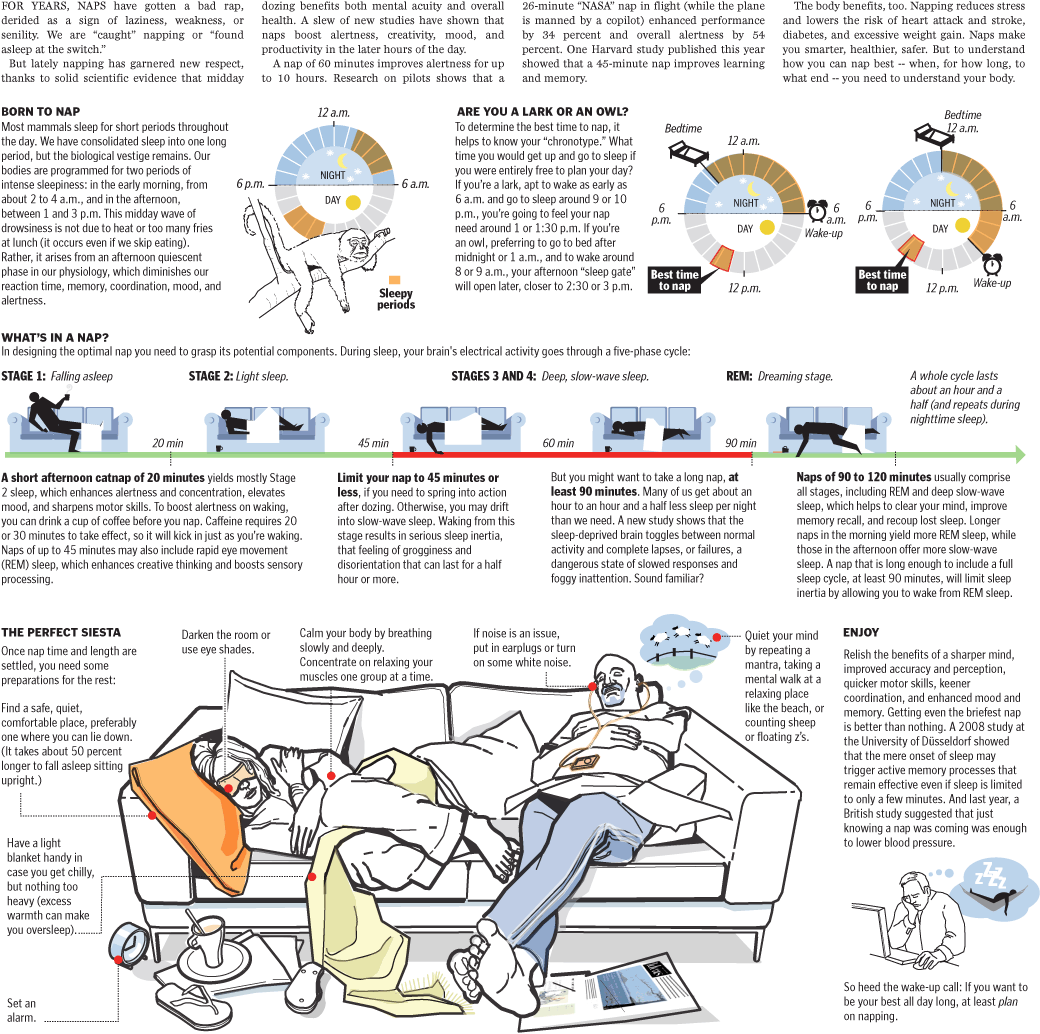
How to Take a Nap that Enhances Your Mental Skills..

Lately, napping garnered new respect, thanks to solid scientific research that midday dozing benefits both mental acuity and overall health. A slew of new studies have sown that naps boost alertness, creativity, mood, productivity in the later hours of the day.

New York City’s Green Taxi Program Red Lighted By Federal Judge

A federal judge has stopped Mayor Bloomberg’s attempt to clean up the air in New York City by using fuel-efficient hybrid taxis.


The judge, Paul A. Crotty, of Federal District Court in Manhattan, issued a 26-page ruling (PDF) to stop the city from enforcing the rule because, he said in a written order, the plaintiffs were likely to succeed in a key legal argument — that only the federal government has the right to set fuel efficiency standards under the Energy Policy and Conservation Act of 1975, which bars state and local governments from setting their own, competing standards.

The hybrid-cab requirement was the centerpiece of Mayor Bloomberg’s PlaNYC 2030 package of environmental initiatives. It required all new taxicabs to be fuel-efficient hybrids and that all yellow cabs would be green by 2012. The initiative which would have started on Nov 1, specifically required a new cab coming in to service to get 25 miles per gallon, and the following year the standard would be 30 miles per gallon.

The standard yellow cab gets about 14 miles per gallon. Considering there are about 13,000 cabs in NYC and only about one-thousand of them are hybrids, this could’ve had a large positive effect on the city’s pollution.

Bloomberg said he was “very disappointed” and blasted the ruling for relying on “archaic Washington regulations” that keep New York and other cities “from choosing to create cleaner air.” He said the city was exploring options to appeal.

The Metropolitan Taxicab Board of Trade — they represent about a quarter of they city’s taxis – sued to block the enforcement. They argued only federal government could impose such restrictions, not the city’s Taxicab & Limousine Commission. They also noted that Hybrid’s aren’t safe enough to use as cabs.

“Millions of people who ride taxicabs and the thousands of drivers, owners and other participants in the New York City taxi industry can breathe a sigh of relief today,” Trade association president Ron Sherman said in approval of the decision..

“Greening the taxi fleet is a major priority, and we are going to use every mechanism at our disposal to make New York a cleaner, healthier city,” Bloomberg vowed.

Hopefully Yahoo doesn’t mind donating a few more of those green cabs…

Image source: Yodel Anecdotal on Flickr

NATALIE PORTMAN & RASHIDA JONES Speak Out Again

Natalie Portman & Rashida Jones urge everybody to vote on Nov. 4th.

See more Natalie Portman videos at Funny or Die

If you missed Saturday's Bruins Game, here's some great higlights of Old Time Hockey

Jack Edwards borders on insanity as the play by play guy.