Zazzle Shop

Screen printing
Showing posts with label electric charging stations. Show all posts

Thursday, July 14, 2011

Car2go Brings First All-Electric Car-Sharing Service To The U.S.

BY Ariel Schwartz
From:  http://www.fastcompany.com/


Get ready for the newest way to grab some wheels when you need them. The service, launching in November in San Diego, is gunning for Zipcar by making it easier to pay for and drop off your borrowed car.
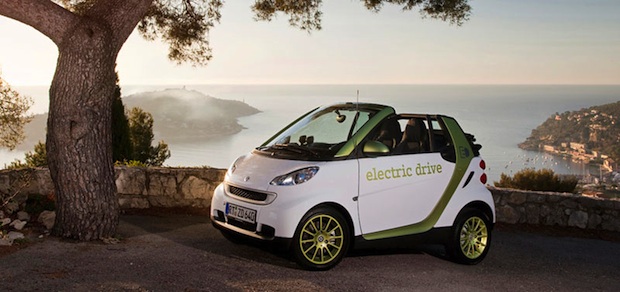
Smart electric Fortwo
Zipcar has long dominated the city car-sharing space. But Car2go, a program from Daimler AG that allows users to rent Smart cars by the minute, recently popped up in Austin, Texas to challenge the larger company's dominance. Now Car2go is set to gain even more attention as it launches the country's first large-scale electric car-sharing program in San Diego.

It makes sense on a number of levels to start an all-electric service in San Diego, explains Car2go CEO Nicholas Cole. "It's a bit of a tech hub, and one of the great things is that ECOtality and the EV Project are in the process of installing 1,000 charging stations in the city by the end of the fourth quarter in 2011. Car2go will have direct access."

Car2go's model is simpler than competitors like Zipcar. Whereas Zipcar requires members to pick up and return cars from the same location, make reservations to rent vehicles in advance, and pay by the hour, Car2go members can rent vehicles by the minute without reservations--and drop off the vehicles at designated points throughout the city.

If members in the San Diego program discover that their electric vehicle has a low charge, they will be asked to drop it off at a charge station. Car2go will also have a third-party maintenance fleet to move the vehicles to charge points at the end of the day so that they can juice up overnight.

Cole is confident that members won't run out of charge on their journeys. "We took a hard look at our current model from a use standpoint in Austin. We see the average trip is less than five miles for our members, and the Smart Fortwo is rated at 84 miles per charge," he says. "We're confident that we'll be able to shift that charging burden to evenings." Members will also be able to see how much charge each vehicle has using the Car2go website and iPhone app. That way, users can opt to take fully charged vehicles if they know they will be taking longer trips.

The San Diego program, which will feature 300 electric Smart Fortwo vehicles when it launches in November, is Car2go's second announced all-electric fleet--the company is also launching an electric car-sharing service in Amsterdam later this year. The company's other programs in Hamburg, Germany, and Austin use gasoline-powered cars.

Car2go doesn't have any plans to expand the all-electric car-sharing model to other U.S. cities--yet. "Our expansion focus is on identifying markets for combustion engines," says Cole. "But if a city determines the investment [in an EV infrastructure] is worthwhile, that could change over the coming months."
[Image: Daimler]

Wednesday, May 26, 2010

Europe's first commercial fast-charging station officially opens to public

Late last week, Epyon unveiled Europe's first commercial electric vehicle (EV) fast-charging station at a fueling depot in the Netherlands. The Epyon system is capable of delivering 50 kilowatts of juice, which the company claims can charge a nine-person taxi-van or a Nissan Leaf in as little as 30 minutes. Taxi Kijlstra, the nation's largest taxi company, recently converted a couple of its vans over to electric power and will utilize the charger during the work day.

The Epyon charging system is somewhat unusual because it features several outlets, allowing multiple vehicles to charge up simultaneously. The fast-charger supports the 400-volt CHAdeMO-standard, though it should be noted that no official standards exist for fast-charging systems. The charger also features remote configuration and Internet-based communications which allows the Dutch utility company Essent to bill customers for usage. Though it's Europe's first fast-charger, it certainly won't be the last. We imagine demand for EV charging that takes mere minutes is sure to grow.

[Source: Green Car Advisor]

Tuesday, March 23, 2010

Good Vibrations: Electric Car Uses Bumps to Charge Battery


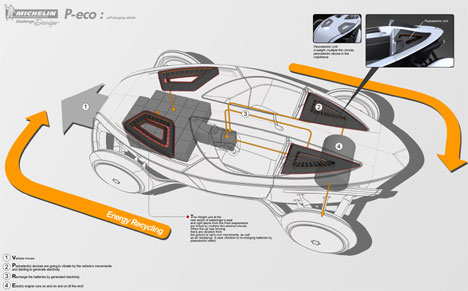
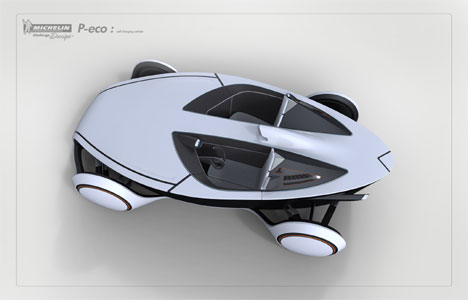
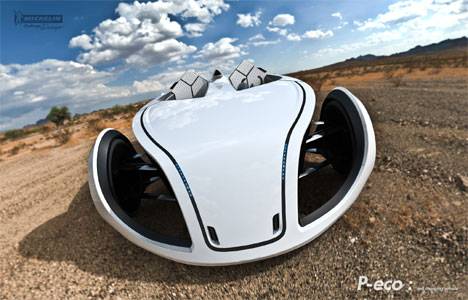
This odd-looking car is an interesting concept from industrial designer Jung-Hoon Kim and was an entry in the 2010 Michelin Challenge Design competition. Unlike other electric cars that rely on special charging stations or an extension cord plugged into an outlet at home, the P-Eco relies on four piezoelectric devices to charge the car’s battery as it moves.

Kim’s idea behind the P-Eco was that cars waste a great deal of energy that could be harvested for good use. Every moment that a car is moving, it’s bouncing and vibrating…and those movements could be harnessed by piezoelectric devices to generate electricity that could recharge the battery. With piezoelectric devices located on both sides of each passenger seat, this concept car could keep itself running efficiently with no additional expenditures for electricity or gasoline.

The car would obviously need another source of energy as a back-up, especially when it sits idle for a while. But it would be easy enough to simply charge the battery from grid electricity at home, then let the motion of the car keep it charged while you’re on the road. The entire concept relies on the future efficiency of piezoelectric devices, making it somewhat unreasonable for production today – but some day, those bumps in the road could actually be a good thing.

Friday, July 10, 2009

Brazil’s First Network of Electric Charging Stations Will Be Solar-Powered

Motorcycle on road

The first of many roadside electric charging stations in Brazil is set to be installed in the Barra de Tijuca neighborhood in Rio de Janeiro, and it’ll be solar-powered.

The neighborhood was chosen because it has the highest number of electric motorcycles certainly in circulation. The battery charging point will serve a mainly symbolic purpose at first, “awakening environmental awareness by showing people that it is possible to use energy without harming the environment,” said spokesperson Edimar Machado.

Brazil has been a worldwide leader in reducing the impact of the transportation sector on the environment, with 90% of new cars sold in the country being flex-fuel– capable of running on ethanol or gasoline in any proportion. Now the hope is that they can also lead the world in infrastructure for electric vehicles. Once they become more financially viable, Machado hopes to have an electric charging station positioned every 30km across the country.

That could soon allow every electric motorcyclist the capability to travel the entire length of Brazil’s major roadways if they wanted, even if their battery length is only around 40km, like most of the bikes currently in circulation there. Machado also suggested that used batteries could be exchanged for already-charged ones at the stations for the same price as a full charge, in case roadsters can’t wait around for the standard 4 hours it takes to charge the batteries. That would make the time it takes to “fill up” your electric vehicle no longer than it would take to fill up a gas tank.

Even better, the charging stations will generate their electricity from solar energy. The charging point captures solar energy by means of an array of 28 photovoltaic panels that generate 184 volts of direct current, which is transformed into triphasic alternating current. Output is at 110 or 220 volts [1]. And on days when there isn’t much sunlight, or at night, the stations could still derive electricity from the grid system.

The Brazilian Electric Vehicle Association says the market for electric vehicles is already growing by about 50 percent a year, and with new charging stations located conveniently around town that number is expected to increase dramatically. They also project that electric vehicles will consume barely three to five percent of the country’s total energy in 2030, meaning as the system expands it shouldn’t be a significant strain on the country’s electricity. Meanwhile, car fuel consumption will be reduced by 10 percent.

Although that nationwide system of stations is still far from practical, the implementation of this first station is symbolic of what can be envisioned with the right political will and incentive.

Source: IPS News

Image Credit: Diego_3336 on Flickr under a Creative Commons License