Zazzle Shop

Screen printing
Showing posts with label credit cards. Show all posts

Monday, September 19, 2011

MasterCard engages the senses with mobile payment tech


MasterCard is working on a number of fronts to bring mobile payments to the market, partnering with Google on Google Wallet and throwing support behind Isis, the carrier-led NFC joint venture. But it’s got some interesting ideas of its own on how to spur mobile payments, shopping and interaction with a mobile phone.

The credit card company showed off a handful of projects Thursday that highlighted how it can leverage mobile phones to encourage shopping using a variety of technologies, from QR codes and NFC to audio signals motion control. The projects are all part of a larger platform, called QkR for now, that is being incubated in MasterCard Labs and is close to being deployed in the coming months.

When consumers use a QkR app that contains their credit card credentials, they’ll be able to scan QR codes right off a home shopping network-like show. After scanning the code when they see an item they’d like to buy, the app will let them check out and buy the product immediately. MasterCard also showed off an NFC table coaster that allows people to buy products without getting up and scanning the QR code. Instead, the NFC reader recognizes what product is being shown on TV and initiates a transaction when a user taps their phone on the coaster.


Another implementation involves audio scanning. Similar to the work that IntoNow and Shazam and others are doing, MasterCard can embed high and low frequency signals into TV commercials. When a user opens up their app and presses a button to listen, the app will recognize the signal and pull up relevant content based on the commercial. So a MasterCard commercial featuring the New York Yankees will pull Yankees gear for sale. The system uses high-frequency signals, which can work in loud settings and also can utilize low frequencies, which is how most scanning technologies work.

In a restaurant setting, users can scan a QR code or tap an NFC sticker to pull up discounts and coupons. And when they get to their table, they can do the same thing to pull up a menu, where they can order remotely and have their dishes delivered to their table. MasterCard said it’s talking to a lot of restaurants about this technology, which many businesses feel could be useful in improving efficiency. Users can also pay for their bills right from the app, which can also be a nice way to get in and out quickly.


And finally, MasterCard showed off how QkR can work in conjunction with the Xbox Kinect motion control system. Users can wave their hands to engage the system and conduct a transaction for a product by just moving their hands to get through a check-out process. I’m not sure how many people need to conduct a transaction using gestures, but MasterCard is showing how you can utilize other technologies to facilitate purchases. And it’s further playing off the idea that people will be able to make more purchases right from their couch.

Again, none of this is on the market, but an announcement could be coming in the next few weeks, I’m told. Since MasterCard is already a payments company, it makes sense for it to build apps and services that can speed people to the point of purchasing something. By using existing and emerging technologies and leveraging the mobile phone, MasterCard is trying to remove the barriers that might prevent or hinder people from buying things.


This is going to ultimately change the way we interact with the world. Our TV shows will likely be dotted with prompts to audio scan with an app. Stores will all come with NFC stations where people can check-in, get discounts and see what’s on sale. Restaurants may start to do away with waiters coming to take our order and instead let customers get their food order going by using their phones.

MasterCard can win if it becomes the conduit for all these transactions and encourages people to open up their digital wallets more often. But overall, the MasterCard technology shows that there are still a lot of ways in which we can tap smartphones and other technology to get transactions going.

Thursday, March 10, 2011

The CARD Act

For millions of consumers, credit debt is a burden, as is dealing with credit companies. From rate hikes to hidden fees creditors have historically been in control. In 2009, President Obama signed the CARD Act, which established regulations for companies charging consumers.

click to enlarge

The CARD Act
click to enlarge
Source:The CARD Act

Tuesday, June 15, 2010

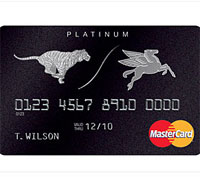
MasterCard trialling smart credit cards with display & keypads

By Chris Davies
From: http://www.slashgear.com/

MasterCard has announced that it will be rolling out new credit and debit cards with integrated display screens, in an attempt to further prevent bank fraud. The cards, developed by NagraID Security, resemble their regular counterparts, but – when an integrated button is pressed – display a one-time passcode that can be used to authorize online and phone transactions.

mastercard smart cards 540x349

In addition, more complex versions of the cards can include a 12-digit keypad, and be used for electronic signature and authentication modes, as well as to enhanced security features such as challenge-response applications and PIN code card protection. MasterCard even envisage being able to show customers their current balance on the card’s display.

Pilot schemes with the cards are kicking off in association with a Turkish bank, and if successful MasterCard are looking to spread the use of the technology to other countries. The real irony is, in the middle of writing this article, my own bank called to say my card had been cloned – I guess these new display cards can’t come soon enough!

Press Release:

MASTERCARD and NAGRAID Security Introduce new Display Cards with Extended Features for Secure Banking Applications

NagraID Security developed a new family of MasterCard financial cards with integrated display screen allowing:

Optimized security for online transactions thanks to strong owner authentication
Display of the card balance on the card’s screen

La Chaux de Fonds, Switzerland, 10th June 2010 – NagraID Security, a subsidiary of the Kudelski Group (SIX:KUD), is pleased to announce that its families of display cards passed MasterCard’s (CSI – Card Structure & Integrity) approval process, thus demonstrating the required levels of durability, safety and compliance to ISO standards required for the commercial launch of banking cards and the introduction into MasterCard’s brand standards and rules.

The innovative Debit and Credit MasterCard Display Card looks and feels like a normal credit or debit card but comes with an additional small display and a button that enables card holders to use the same card for standard banking payment functionality and to generate second-factor one-time passwords (OTPs), thereby providing strong authentication.

The cards are very reliable and extremely simple to use. They offer optimal security to achieve banking transactions outside payment terminals using one single device.

This password generation technology complies with the requirements of MasterCard’s 3D Secure Chip Authentication Program (CAP). Optionally, a touch-sensitive keypad with twelve keys permits access to advanced functionality such as electronic signature and authentication modes, as well as to enhanced security features such as challenge-response applications and PIN code card protection.

Historically, banking institutions who protected access to their services with a One-Time Password required the use of a separate cumbersome token.

“Cards were born from cardboard, they’ve been ‘mag striped’ and ‘chipped’ and now we enter their silicon age, with an LCD display and touchpad opening up a multitude of possibilities. With NagraID’s recent achievements to demonstrate compliance to industry standards, the stage has well and truly been set to deliver the next generation consumer’s card proposition” says Eric Tomlinson, MasterCard Europe.

“This display card is designed to provide a very high level of security and reliability as well as ease of use. Users simply press a button to generate an OTP for secure access to their online services,” commented Philippe Guillaud, Executive Vice President and CTO of NagraID Security. He also added “The programmable nature of this platform makes it future proof and one can expect to see even more exciting and fantastic functionality in the near future.”

MasterCard directed promotional initiatives and large scale roll-outs will ensure that market price expectations are achieved. “As the world evolves towards increasing online and cashless transactions, the timing of our partnership with MasterCard is ideal, as it enables the growing security expectations of a rapidly expanding base of digital technology users to be quickly addressed via a secure, reliable and unified solution in a familiar and convenient form-factor.” said Cyril Lalo, President and CEO of NagraID Security.

Thursday, March 18, 2010

Is credit card debt a hindrance?


US Credit Card Debt

US Credit Card Debt

With the recession forcing more and more Americans to burden their credit cards with debt, it's time to ask whether the increasing accrued costs are manageable, or are detrimentally impacting lives.

Unless you've had your head in the sand for a few years, you know times are hard. For those old enough to remember they aren't Great Depression hard, but for most of us, poor economy, lack of opportunities and a loss of jobs equal a rolling snowball which carries with it exceeding pressure to find money we don't have, and in turn means we turn to the plastic more than we would like.

And the numbers don't lie. In the last decade, 22 million more Americans have got their hands on a credit card, bringing the figure to 181 million, up from 159 million in 2000. This doesn't tell the whole story, as around half of the cardholders have more than one credit card, with 14 percent having up to ten credit cards, (yes you read that correctly, ten!) meaning the total number of credit cards in circulation in the U.S is estimated at around 1.5 billion. That means the potential for spending is gargantuan ($2.1 trillion in 2008 to be precise, up from 1.4 trillion in 2003) and in turn, the potential for crippling debt ($972 billion in 2008, up from less then $8 million in 1968).

Alarmingly, almost 15 percent of families have debt exceeding 40 percent of their income.

US Credit Card Debt

The average outstanding credit card debt for households that have a credit card was $10,679 at the end of 2008.

Debt by the numbers

In 2006, fee's alone cost consumers $17.1 billion. Over the past 10 years, household debt has grown by 147 percent, with credit card debt growing by 69 percent. Credit card debt slowed to less than half of household debt primarily because consumers borrowed against equity in their homes to pay down credit card account balances, says lowcards.

One look at the top ten some top credit card issuers in 2008 shows that credit card issuing is a profitable business. Topping the list is US Bank, recording profits of £1.07 billion, with Capital One also recording profit over £1 billion. Other top profits belong to Wells Fargo at $990 million, and American Express with $850 million. Only Citi Bank recorded a loss, at $530 million. This in part is because the average credit card APR is 14.9%, the average penalty/default rate is 23.9%, going as high as 32.24% (Chase), and the average late-payment fee is $25. Cardholders also pay $25 on average for encroaching over their limit fee.

The debt, it appears, is spread evenly geographically and demographically.

Undergraduate spending

Undergraduates have long been a target of cardholders, and with rising college fees, undergraduate credit card debt is averaged at £3,173 per student. One investigation highlighted nearly 30 percent of undergraduates put tuition on their credit card, an increase from 24 percent in 2004. In total, 92 percent of undergraduate credit cardholders charged textbooks, school supplies, or other direct education expenses, up seven percent from the previous study.

Thankfully this could become a thing of the past, as new laws are coming in to protect those students buying stuff on the plastic. The Credit Card Accountability, Responsibility and Disclosure Act (CARD) is an attempt for consumer protection and should hold credit card companies more responsible, the CARD Act ends certain fees and the increase of high interest rates.

"This marks a turning point in helping to protect consumers from practices that have gotten us in the hole we’re in now,” said Jared Bernstein, chief economic advisor to Vice President Joseph Biden. “It’s unfortunate when young people get in over [their] head with credit cards."

In the UK, Prime Minister Gordon Brown has taken measures to protect those cardholders most vulnerable to rising debt, namely by forcing credit card lenders to change the way they make consumers pay off their debt.

Eighty-four percent of undergraduates indicated that they felt they needed more education on financial management topics. And with no light at the end of the recession tunnel, it seems its not only undergraduates who could do with help with regard to spiralling debt.

Credit Card debt accounts for just over 2 percent of America's total debt.

Tuesday, February 23, 2010

Demystifying the Credt C.A.R.D. Act of 2009 (Infographic)


The nine-month lead-in time for the Credit C.A.R.D. Act of 2009 has now passed and the law officially goes into effect to protect consumers from unfair and deceptive practices by credit card companies starting today, February 22, 2010. Here is our breakdown of the new credit card rules, who the Credit C.A.R.D. Act protects, which companies complied in advance and what protections are now guaranteed to cardholders by law.

Credit Card Act: New Credit Card Rules


Find the best credit cards at BillShrink.com

Tuesday, January 19, 2010

Watch the iPhone Swipe a Credit Card


Square, one of a few iPhone peripherals hoping to turn the iPhone into a credit card swiper, sounds promising. But how does it work? YouTube shows us!
Through its own app, Square processes a credit card, produces a receipt and even takes a signature. But as you'll see in this clip, there's one petty but fixable problem to the system—the Square dongle. Watch as Rose needs to steady the plug with his finger to swipe a card without popping anything loose.
I mention this now because I'm hoping that Twitter's Jack Dorsey and Digg's Kevin Rose—who are both behind the project (Rose just financially)—don't each have an alpine garage full of these horribly designed dongles. Beef up the casing a bit to increase its surface area against the iPhone, just as Mophie has with their recently announced credit card scanner, and everything will be right as rain. [Kevin Rose via Ubergizmo]

Contact information for this author is not available.

Monday, November 2, 2009

5 Evil Things Credit Card Companies Can (Still) Do

by Julianne Pepitone

by

The credit card reform bill tries to help cash-strapped customers, but companies are coming up with new ways to boost profits.

obama.jpg
Photo: Chuck Kennedy / White House Photo Office
President Obama discussed credit-card reform in Rio Rancho, N.M., in May.

The Bill

Credit card companies are socking it to consumers left and right.

They're hiking interest rates to as much as 36% and doubling minimum monthly payments, frustrating customers who are already cash-strapped and credit-crunched.

In an effort to curb these abusive practices, President Obama signed into law a credit card reform act in May that's rolling out in three parts over 12 months.

At the same time, credit card companies have been hard at work coming up with new ways to boost profits while sidestepping the reforms.

"Card issuers are making sure they can make up the lost money in new ways," said Bill Hardekopf of Lowcards.com, a research company funded by a commercial debt collector.

The first part of the law, which took effect in August, requires banks to give customers more notice ahead of major changes to their accounts, like rate hikes. Starting in February, limits will be imposed on when issuers can raise rates on existing card balances, and on new cards. In August 2010 some credit card penalty fees will be will reined in.

But no legislation can fully shield consumers from the credit card industry's ongoing efforts to boost the bottom line.

The worst part? "All of these hikes are taking place simply because they can," Hardekopf said.

youtube.jpg
Photo: Youtube.com
Ann Minch's YouTube video convinced BofA to drop her rate to 12.99%.

1. Rate Hikes

Interest rates are out of this world.
"They've increased steadily over the past 5 years, and in general are higher than they've ever been," said Josh Frank, senior researcher at the Center for Responsible Lending (CRL), who says he's seen annual percentage rates as high as 36%.

No current laws cap credit card interest rates, according to Pamela Banks of Consumers Union, the nonprofit publisher of Consumer Reports, so technically the sky's the limit.

But the CARD act will help curb abusive practices. As of February, issuers won't be able to arbitrarily raise rates on existing balances. But cardholders will still be subject to interest hikes for late payments and various other infractions.

And card companies will be able to raise their rates as high as they want, whenever they want, on future purchases even after the reform bill kicks in completely.

The act will bring protections for new customers; issuers will no longer be able to hike rates on new accounts in the first 12 months, unless the borrower is delinquent by more than 60 days or the increase is stated in the contract.

Keven Vallance recently saw the rate on his Sears card increase from 9.99% to 13.99% for no apparent reason. When Vallance called Sears Credit, which is owned by Citibank, a rep told him every cardholder's rate is increasing by 4%.

Citi spokesman Samuel Wang said in an email that the company has "adjusted pricing and card terms for some customers as part of our regular account reviews."

Consumer outrage is boiling over. Last month, a disgruntled Bank of America customer posted a YouTube video complaining her bank "jacked up my interest rate to a whopping 30% APR." Her rant went viral, and BofA dropped her rate back to its original 12.99%.
youtube.jpg
Courtesy: House.gov
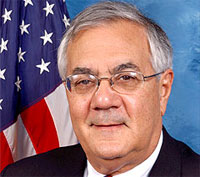
Rep. Barney Frank hopes a new consumer protection agency can curb credit card fees.

2. New Fees

Fees aren't just rising -- they're multiplying. Cardholders are getting slapped with fees they've never seen before.
The hitch: New laws can address only existing fees and business practices; they can't predict what credit card companies will do in the future.

"Theoretically, they could create a fee for names that begin with 'J,'" said Lowcards.com's Hardekopf.

In reality, customers are seeing new annual fees, inactivity charges and more. Not of these charges are unheard of, but many fees that were unusual are becoming commonplace.

Earlier this month, for instance, some Bank of America customers were shocked to learn that their no-fee credit cards would be subject to a new annual fee.

BofA spokeswoman Betty Riess said the fees are part of a company test that affects 0.5% of all consumer accounts, and that the fees range from $29-$99.

The charges will be levied in February, and Riess said customers were chosen "based on risk and profitability" but have the option to reject the fees by canceling their accounts.

Fifth Third Bank recently introduced a $19 inactivity fee for customers who don't charge anything for 12 months, and Citibank is hitting some consumers with a fee if they put less than $2,400 on their card annually.

To address this problem, House Financial Services Committee Barney Frank (D-Mass.) has proposed a new regulatory body, the Consumer Financial Protection Agency, which would approve new credit card fees. While the House Financial Service Committee approved the agency, it remains to be seen whether legislation will pass; lawmakers are battling over this and other reform proposals floating around Washington.

youtube.jpg
Photo: Jupiterimages

3. Higher Minimum Monthly Payments

Banks are also demanding bigger and bigger minimum payments. Chase has bumped up the minimum payment for some consumers to 5% of the monthly balance from 2%.

For someone who carries a $5,000 balance, that means the monthly payment of $100 skyrockets to $250 -- a whopping 150% increase.

Consumer Union's Pamela Banks says her organization has compiled a wealth of anecdotal evidence that indicates such increases in minimum monthly payments are widespread.

"This is making payments virtually impossible for some people," she said. "It's throwing people off when they were living on a tight budget anyway."

Some good news is on the way, however. After February, card companies won't be able to increase monthly minimum payments by more than 100%. For example, a bank cannot increase a 2% minimum payment to any higher than 4%. And this so-called "doubling" will be allowed only once during the life of the card.
youtube.jpg
Photo: Photodisc / Jupiterimages

4. Fewer Rewards

Say goodbye to beach vacations and new iPods just for swiping your card.

Rewards programs have been enticing shoppers to charge a purchase rather than paying cash -- but card issuers are cutting back those perks.

"This is happening with a significant amount of cards," Hardekopf said, adding that many consumers are now receiving 1% cash back instead of the 2% or 3% they once enjoyed.

American Express recently cut its Blue Card's cash back policy from 1.5% to 1.25%. And all AmEx customers who make a late payment will no longer accrue points on their purchases -- however, those points can be reinstated with a $29 fee.

youtube.jpg

5. Slashed Credit Limits and Canceled Accounts

Without so much as a call from the bank, some customers are learning their credit limits have been slashed by as much as 75%, or that their accounts have been closed altogether, according to the Center for Responsible Lending's Josh Frank.

Citibank recently closed what a spokesman called a "limited number" of MasterCard gas cards co-branded with Citgo, ExxonMobil, ConocoPhillips and Shell.

"People go to make a purchase, and they find out about these huge changes only when they're denied," Frank said. "It's a shock, and it's been happening a lot."

Even cardholders who don't charge anything might find their accounts abruptly closed, Frank said. With credit losses at a record high, companies see inactive cards as a red flag and close the accounts to avoid the worry of future writedowns.

"Usually cardholders have this credit line available for an emergency, for this kind of current economic situation," Frank said. "But now they're turning to it when they need it, and it's gone."

What's a Cardholder to Do?

Consumers must pay close attention to the terms of their contracts, staying alert to any changes.

"It's boring reading, and it can be hard to understand, but that's where everything is spelled out," said Lowcards.com's Hardekopf.

Of course, while there are laws aimed at helping consumers, legislation can't do it all.

"As we close the loopholes on some things, they open up elsewhere," said Consumer Union's Banks. "Reform acts don't cover everything, and cardholders have to watch out for their own accounts."

And if you don't like your credit card's new terms? "Shop around -- you are not married to your card," Hardekopf said. "It's a partnership, not a lifelong contract."

Copyrighted, CNNMoney. All Rights Reserved.

Monday, October 5, 2009

Why American Credit Cards Suck


If you prefer to use a credit card when traveling abroad due to safety and better exchange rates, bad news. Other countries have adopted smartchip technology in their bank cards, and soon we Americans may be forced to use cash when traveling.

Smartchip technology is sort of a banking equivalent of the metric system—it's superior to magnetic stripe cards, every other country is using it, and the American banking system simply isn't interested.

Twenty-two countries, including much of Europe, Mexico, Brazil and Japan, have adopted the technology, according to the Smart Card Alliance, a nonprofit association that promotes chip cards. About 50 other countries are in various stages of migrating to the technology in the next two years, including China, India and most of Latin America, according to the association.

In the last year, Canada began rolling out chip-and-PIN cards and plans to stop accepting magnetic stripe debit cards at A.T.M.'s after 2012 and at point-of-sale terminals after 2015.

These governments like the cards because they reduce fraud. With an embedded microcontroller, large amounts of data can be stored on the card itself rather than in a central database, and counterfeiting such a card is difficult.

Canada, nooooo!

We understand that American banks have enough problems right now, and tourists' ability to buy train tickets or rent bicycles at a kiosk is not high on their list. So consider this a travelers' advisory instead of a consumer complaint.

For Americans, Plastic Buys Less Abroad [NY Times]

(Photo: Ciaran McGuiggan)

Thursday, March 19, 2009

10 lies that got you (and keep you) in credit card debt

By Karen Datko

This post comes from partner blog The Dough Roller.

While we don't have any credit card debt now, except for 0% APR balance transfers, there was a time when we did. While we never let our credit cards get completely out of control, we did build up several thousand dollars on our credit cards when I first got out of college.

So having gotten into card debt and then climbed out of it, we've learned many of the causes of this financial pain. The fact is, we can talk ourselves into using our credit cards in ways that will hurt our finances down the road.

So here are 10 lies we tell ourselves that get us in credit card debt and keep us there.

It's an emergency
. Often we go into debt by convincing ourselves that we have an emergency. Certainly there are times when a true emergency arises. Medical expenses are a good example of a real crisis. But many times what we call an emergency isn't really an emergency. Whether it's a second car that needs repair, or even our child's college education, we can often go without addressing what at first seems like an urgent expense. If life or liberty isn't at stake, it's probably not a true emergency.

We deserve it. This one has snagged us more than once. After working so hard to save money and spend wisely, sometimes we let our guard down under the guise of a reward. Perhaps you've had a hard week at work, and spending $150 on a fancy dinner that you can't really afford seems like a good idea and something you've earned. The problem is that it's like taking one step forward, two steps back. The "reward" just digs you deeper and deeper into debt.

We all need a break now and again. But if you are fighting credit card debt, don't go into more debt as a reward. Find some other way to reward yourself that doesn't make your financial problems more severe.

It's a bargain. Bargains are great, but they shouldn't be used as an excuse to spend more than we have. Great deals also shouldn't be used to buy more than we need. The one thing I've learned is that great deals generally come and go pretty regularly. Regardless, it's not a great deal if you spend a ton of money on credit card interest paying off the debt over months or even years.

It's not much money. It's so easy to spend money we don't have if we spend it in small amounts. Here's a factoid: Last year the Bush stimulus bill sent out stimulus payments to those taxpayers who qualified. Under the 2009 stimulus plan, payments will not be sent in lump-sum checks. Instead, those taxpayers who qualify for a stimulus payment will see their take-home pay increased each month by about $7 to $13. Why? Because we are more likely to spend an extra $10 or so each month than we are a lump-sum $400 to $800.

The same is true with "small" credit card debt. Enough small charges on the card over time can grow into a mountain of debt. If you are fighting your way out of credit card debt, there is no such thing as a small credit card charge.

The payment is small. Let's be honest. How many have justified a purchase based on the monthly finance cost? We all do that when we buy a home, asking ourselves if we can afford the payments. But with credit cards, it can be a real problem. Because most cards calculate the monthly payment at about 2% of the outstanding balance, payments are extremely small compared with the amount owed.

For example, you can nab a $1,000 TV and pay "only" about $20 to $30 a month for it. The small credit card payments have probably caused more financial turmoil for many consumers than any other factor. Remember, the payment may be small and manageable at first, but buy enough on credit and the payments grow substantially. On top of that, you still have to pay back the borrowed amount with interest.

The card rewards make it worth it. We take advantage of many travel reward credit card offers and cash-back rewards. But if the allure of these awards is putting you deeper and deeper into debt, they just aren't worth it. If you pay off your card each month, the rewards are great. But if you don't, stay away from them. In fact, if the rewards are tempting you into credit card debt, get a card without rewards or just use your debit card.

Offers of 0% APR on purchases. The 0% APR and low-interest credit cards can be like a drug dealer giving away his product for free -- at first. Once you're hooked, prices go up, way up. In the case of credit cards, once the 0% APR introductory rate expires, interest rates can easily soar into the double digits. To avoid this, I've often turned down 0% APR deals, particularly those offered by furniture stores and other retailers. If you are going to use a 0% APR deal on purchases, make sure you can pay off the balance in full before the offer expires.

Offers of 0% APR on balance transfers. We've saved a ton of money with balance-transfer credit cards. We transferred home-equity debt from a home remodeling to 0% APR cards and have saved literally thousands of dollars in interest. But we also make sure to pay off the balance transfer before the 0% APR rate expires. We also make sure not to use the card for anything else while we still have a balance on the transfer deal.

Balance-transfer offers can be great, but just like 0% APR purchase offers, make sure you can pay off the debt before the 0% APR offer expires.

It's for my business. A business credit card, particularly for small companies, can serve many important roles. Business cards can be used by employees to easily track their expenses. They can also help keep your business expenses separate from personal expenses, which is particularly important at tax time. But like all credit cards, business cards can also cause you to spend more than you should. It's easy to justify the expense as necessary when you may be able to do without. All small-business owners have to decide for themselves, of course, just how necessary an expense is, but with business credit cards, it can be easy to spend more than you should.

I'll pay it off after graduation. This is perhaps the most insidious credit card lie of all. Study after study shows that the outstanding credit card balance for college students increases as they near graduation. There are a lot of reasons for this, but one reason is that they convince themselves that they can handle the debt once they graduate and get a job. The problem is that they start out in the workforce already in the hole. Credit card debt of $10,000 or more is not uncommon for college graduates. Add to that school loans, and debt can be overwhelming even before they get started.

So if you are a high school or college student, avoid revolving credit card debt like the plague.