Zazzle Shop

Screen printing
Showing posts with label Spring. Show all posts

Wednesday, June 23, 2010

The Most Psychedelic Hot Spring on Earth

Geothermal Pools 2

Photo: Chmehl

The melted-highlighter hues of the Wai-O-Tapu hot springs in New Zealand make one wonder how nature can look so unnatural. Also known as the Champagne Pools, Sacred Waters, and Artist's Palette, the Wai-O-Tapu geothermal pools have attracted much attention for their psychedelic qualities.

Pools 7

Photo: macronix

The Wai-O-Tapu pools are the result of thousands of years of volcanic activity. Nine hundred years ago, a hydrothermal eruption solidified the presence of the pools. The eruption was triggered by the infiltration of rainwater into the ground, which returned to the surface significantly hotter and hydrostatically pressurized due to its passage through the earth.

Geothermal Pools 1

Photo: tokyoahead

The geothermal gradient beneath the pools is responsible for an outward heat flow from Earth's boiling interior. The heat flow from the Earth at these locations is so powerful that it generates 0.3% of the world's electricity.

Pools 4

Photo: anna t

The Champagne Pool is maintained at a temperature of 165 degrees Fahrenheit, but the deepest parts, which do not lose heat into the atmosphere, can hit 500 degrees. Due to the high heat, very little life can survive in the pools, which are more a geological phenomena than an ecosystem. However, at least three bacteria have been found to exist within the waters.

Pools 3

Photo: Leyo

The colorful pools are even more impressive due to their size. The craters are over 200ft in diameter and 200ft deep, and are filled with nearly 2 million cubic feet of geothermal fluid.

Pools 5

Photo: Tim Parkinson

The Champagne Pool is aptly named given the presence of surplus carbon dioxide, yielding bubbly fizz in the water, much like is found in a bottle of Dom Perignon. The colors are attributed to the variety of minerals and metalloid compounds including orpiment and stibnite.

Geothermal Pools 6

Photo: khirol

Although originally occupied by the Ngati Whaoa tribe, the Wai-O-Tapu geothermal wonderland complex is now a vibrant tourist attraction. The area includes geysers, which erupt daily, and bubbling mud pools, and has been protected as a scenic reserve since 1931.

Geothermal Pools 9

Photo: viahar24.com

geothermal pools 8

Photo: viahar24h.com

Sources: 1, 2, 3, 4

Tuesday, June 8, 2010

9 Awe-Inspiring Hot Springs

Find out which healing waters are richest in history, minerals and more

By Brynn Mannino

from WomansDay.com


Hot springs—leaks within the earth’s geothermal crust from which hot, mineral-rich water pours—exist all over the globe. And though it hasn’t actually been proven that they cure diseases (as some are reputed to), hot springs are generally known for their de-stressing and muscle-soothing properties. However, there are a handful of bubbling pools that are so awe-inspiring—whether it’s the view, the water color or frequent animal visitors—that they’re in a league of their own.

Most Dangerous

As melting snow pours out of the 8,500-foot-high Twin Lakes in Long Valley, California, it joins forces with the Hot Creek State Fish Hatchery and flows down from the Hot Creek Springs. Problem is, since May 2006, the springs have been sporadically spurting hot, sediment-filled water as high as 6 feet above the stream. The site has been a longtime recreation escape for fishing, hiking, bird watching and more, but some areas have been closed to the public while the water’s geothermal activity is monitored. Photo courtesy of the United States Geological Survey.


Most Fleeting

The Steep Ravine Beach Hot Springs in Mill Valley, California, are quite possibly some of the most fleeting (and secret) in the world. Believe it or not, the springs are hidden below the ocean at the shoreline’s tidal zone and only revealed during low tide, which occurs four to five times a year (at the winter and summer solstices plus a few other occasions). So if you go, it’s probably a good idea to take a guide; the pools can be hard to find on your own. Photo courtesy of John Weiss via Flickr.


Largest Pool

At 529 feet long and 100 feet wide, Colorado’s Glenwood Hot Springs, originally termed “The Grand Spring” by the Ute Indians, form the largest natural hot spring swimming pool in the world. The 104°F pool water contains sodium chloride, potassium sulfate, calcium sulfate and calcium bicarbonate (known for healing dehydrated skin and soothing sore muscles). The pool is continuously filled by the Yampah Spring, which has a daily flow rate of 2.5 million gallons of water. Photo courtesy of Passion for Pics.


Highest Hot Springs in Tibet

Yangbajing, near the Tibetan capital of Lhasa, is host to a group of famous hot springs, which dot a green valley encircled by snow-capped mountains, and sit at altitudes reaching 15,000 feet. Filled with salty minerals even on the most frigid days of winter, the hot springs maintain a temperature of nearly 90°F. Photo courtesy of China Fact Tours.


Largest in the United States

Located in the Midway Geyser Basin in Yellowstone Park, the deep Grand Prismatic Spring is the largest hot spring in the U.S. (and third largest in the world). The “boiling lake,” as early explorers described it, measures 300 feet in diameter and is famous for its rainbow of colors—usually orange and red in the summer, dark green in the winter—which are the result of an interaction between the heat and the bacterial film that lines the edge of the spring. Photo courtesy of Yellowstone National Park.


Largest Known Calcium Carbonate Spring

Located in the northwest corner of Yellowstone Park, Terrace Mountain is the largest known calcium carbonate–depositing spring in the world. The terraces are formed from the mountain’s daily outpouring: Two tons of calcium carbonate–rich water flow from the Norris Geyser Basin each day, which turns into limestone, attributed to the ever-expanding size of the travertine hill. The process releases energy that’s said to help fuel other geothermal areas within the park. Photo courtesy of Bernt Rostad via Flickr.


Most Photogenic

Considered one of the nine “hells” or springs of Beppu, Japan (others include a mud spring, white-foam spring and crocodile-breeding spring), the Chinoike Jigoku or “blood pond hell” is known for its red water, made so by iron. Considered the most photogenic of the “hells,” the spring has been around for 1,300 years. The temperature is near 172°F, which makes it perfect for your viewing, rather than bathing, pleasure. Photo by AFP/Getty Images.


Coolest Animal Bathers

Located in the valley of the Yokoyu River in Yamanouchi, Japan, are several steaming, bubbling hot springs. What sets the Jigokudani Monkey Park springs apart from all others is its frequent bathers—specifically furry, red-faced Japanese Macaques, commonly referred to as snow monkeys. Despite its relatively remote location, roughly 90,000 visitors trek through the woods each year to visit the park, which boasts at least 250 monkeys. Photo by Getty Images.


Highest Temperatures in Europe

The Aquis-Granum Springs in Aachen, Germany, are famed for both their extensive history (Charlemagne and Casanova both allegedly bathed there) and their record-breaking temperatures. At 165°F, the thermal springs in the area are among the hottest in Central Europe. Based on a small amount of documentary proof, the Romans are credited with finding and naming the springs, which can now be visited in two prime locations: Carolus Thermen complex and the bathhouse in Burtscheid. Photo by Bernd Stuhlmann.


Friday, March 12, 2010

Bhang Your Head! Hindu Holi Festival Celebrated With Marijuana Milk Shakes

By Steve Elliott
From: http://www.tokeofthetown.com/
Monday, Mar. 8 2010 @ 12:14PM
h01_18257809.jpeg
Photo: AP/Gemunu Amarasinghe
"Dude... I am soooo high." (Or the local equivalent.) Men smear colored powder on each other's faces during celebrations of Holi, the Hindu spring festival of colo

They're getting that old time religion in northern India, as the annual Holi festival, an extravagant Hindu spring celebration of colors, is observed with potent marijuana milk shakes.

The festival, celebrated in March each year (the exact date depends on the lunar calendar), is an occasion during which men, women and children play wildly with water guns and colored powder, according to The Observers. And the fact that "bhang thandai," an almond-flavored milk shake blended with cannabis, is a prominent part of the celebration doesn't hurt the festive atmosphere one bit.

Bhang Shop.jpeg
Photo: Fractal Enlightenment
While technically "illegal," bhang is still sold in government-authorized shops in India.
​The marijuana milk shakes are widely served, from exclusive private gatherings to street parties. On this particular day, using bhang is considered completely acceptable for all adults, youths to grandparents.

Cannabis is technically illegal in India, since the nation is a signatory to Harry Anslinger's 1961 Single Convention narcotics treaty. But the substance has been a part of the country's cultural heritage for thousands of years, and a law that's been around less than half a century hasn't made much of an impact. Bhang is sold for consumption through government licensed outlets.

According to popular legend, bhang drinks were offered to the gods and were particularly loved by Lord Shiva. If that's a close enough connection for the revelers to get stoned, then it works for me, too. Praise Shiva and pass the bhang, homies!

holi1 imovies4you.com.jpeg
Photo: iMovies4you.com
​"At places, the revelry becomes rowdy and violent," said Percy Fernandez, a New Delhi-based consultant. "Not just bhang, Holi is also associated with heightened guzzling of alcohol. Marijuana is not legal in India, but the tradition of having bhang during Holi is that it has a religioius association."

"I know of shops selling bhang served with thandai (a combination of milk, almonds, and cardamom) and sweets among other eatables," Fernandez said. "Cannabis is traditionally smoked with tobacco or eaten in the form of pakkoras or even sweets."

"For me, Holi is all about being a kid again, shedding your inhibitions, getting colors all on you, generally having a good time," said Rahul Verghese, a Gurgaon-based entrepreneur.

h03_18271171.jpeg
Photo: Reuters/K.K. Arora
Women tear off the clothes of men as they play huranga, a game played between men and women a day after the Holi festival during which men drench women with liquid colors and women tear the men's clothes off.
​"In our little colony... we have a little celebration with food, drinks and bhang," Verghese said. "It tastes smooth, and doesn't hit you initially, but a little later you're knocked out."

The fun's not over on the day after the Holi festival. Huranga, a game played between men and women on the day after Holi, involves men drenching women with liquid colors and women tearing off the men's clothes. [Craig Ferguson voice] "I knooooow!"

Factor in that practically everybody involved is high as a freakin' kite, and got-DANG if that doesn't sound exactly like my kind of party.

Here's a bhang-up recipe, courtesy of Fractal Enlightenment:

2413-Bhang.jpeg
Photo: Cannabis Culture
​Bhang

2 cups water
1 ounce marijuana (fresh leaves and flowers of a female plant preferred)
4 cups warm milk
2 tablespoons blanched and chopped almonds
1/8 teaspoon 'garam masala' (a mixture of cloves, cinnamon, and cardamon)
1/4 teaspoon powdered ginger
1/2 to 1 teaspoon rosewater
3/4 to 1 cup sugar

Bring the water to a rapid boil and pour into a clean teapot. Remove any seeds or twigs from the marijuana, add it to the teapot and cover. Let this brew for about 7 minutes.
Now strain the water and marijuana through a piece of muslin cloth, collect the water and save.

Take the leaves and flowers and squeeze between your hands to extract any liquid that remains. Add this to the water. Place the leaves and flowers in a mortar and add 2 teaspoons warm milk. Slowly but firmly grind the milk and leaves together. Gather up the marijuana and squeeze out as much milk as you can.

Repeat this process until you have used about 1/2 cup of milk (about 4 to 5 times). Collect all the milk that has been extracted and place in a bowl. By this time the marijuana will have turned into a pulpy mass.

Add the chopped almonds and some more warm milk. Grind this in the mortar until a fine paste is formed. Squeeze this paste and collect the extract as before. Repeat a few more times until all that is left are some fibers and nut meal. Discard the residue.

Combine all the liquids that have been collected, including the water the marijuana was brewed in. Add to this the garam masala, dried ginger and rosewater. Add the sugar and remaining milk.

Chill, serve and enjoy.


Friday, March 20, 2009

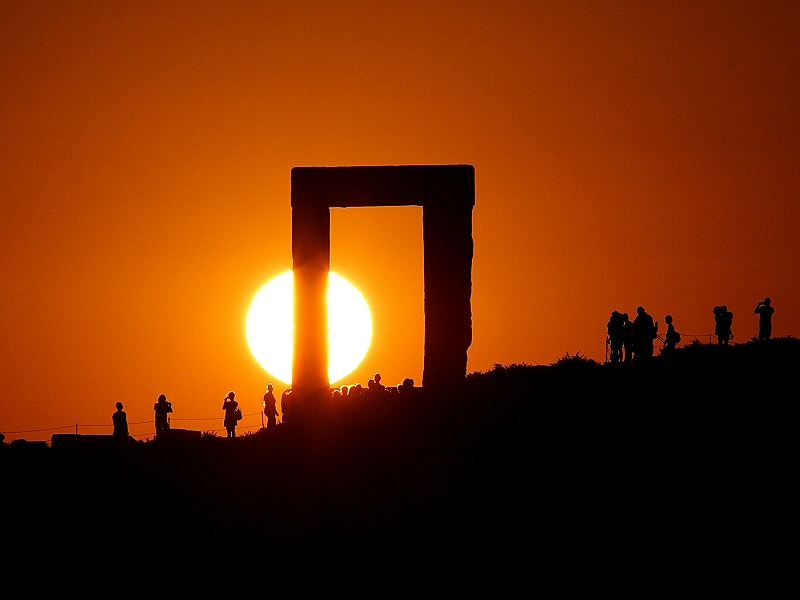
Equinox: Sunset at the Portara

Discover the cosmos! Each day a different image or photograph of our fascinating universe is featured, along with a brief explanation written by a professional astronomer.


See Explanation.  Clicking on the picture will download  the highest resolution version available.

Sunset at the Portara
Credit & Copyright: Anthony Ayiomamitis (TWAN)

Explanation: Today, the Sun crosses the celestial equator heading north at 11:44 UT. Known as an equinox, this astronomical event marks the first day of spring in the northern hemisphere and autumn in the south. It also marks the beginning of Norouz, the Persian (Iranian) new year. Equinox means equal night. With the Sun on the celestial equator, Earth dwellers will experience nearly 12 hours of daylight and 12 hours of darkness. Of course, in the north the days will grow longer, the Sun marching higher in the sky as summer approaches. To celebrate the equinox, consider this scenic view of the setting Sun from the island of Naxos in the Aegean Sea. Recorded last June, the well-planned image captures the Portara (big door) in a dramatic silhouette. Measuring about 6 by 3.5 meters, the Portara is the large entrance to the Greek island's ancient, unfinished Temple of Apollo.