Zazzle Shop

Screen printing
Showing posts with label Mushroom. Show all posts

Wednesday, November 17, 2010

Sundance: Gaspar Noe On Enter the Void, Avatar, and Magic Mushrooms

From: http://nymag.com/
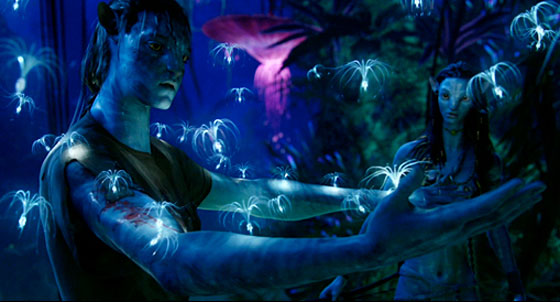
Avatar: James Cameron straight tripping?

Avatar: James Cameron straight tripping?Photo: 20th Century Fox

Even here in Park City, it’s hard to escape Avatar’s long shadow. And it’s not just because everybody’s talking about the sci-fi epic’s record-breaking box office. Comparisons to James Cameron’s film came swiftly among both critics and moviegoers after the premiere of French director Gaspar Noe’s stunning Enter the Void, a borderline experimental techno epic about a junkie whose spirit floats above the streets of nighttime Tokyo after he’s killed during a drug bust. Sort of an art-film counterpart to Cameron’s film, Void is a fever dream that blends elements of 2001, The Tibetan Book of the Dead, and dozens of other films, books, and videogames to craft a journey into an alternate reality, one that seems to have emerged from the deepest recesses of one passionately twisted auteur’s mind. (Though, unlike Avatar, it’s also got acres and acres of explicit sex and nudity.) And for all his arthouse cred, Noe doesn’t seem bothered by the comparisons: He freely cops to loving Avatar, and the fact that he and Cameron share a Stanley Kubrick obsession.

He’s also convinced they have something else in common: “I’m sure Cameron did some mushrooms,” Noe told us during a chat here. “Those scenes in the forest with the glowing plants — if you’ve ever done mushrooms any time in your life, you know those are exactly the kind of visions you have. I’m sure he must have done some ‘mental research’ before he made that movie.” Cameron, of course, has denied ever having done drugs (except inadvertently, when someone infamously spiked the catering for Titanic). Noe shrugs: “Michel Gondry also does very trippy images, and I know for a fact that he’s clean as water. So maybe it’s true.”

For his part, Noe has been fairly open about how drug use played a part in the conception of Enter the Void, which the director has been working on for over a decade. (Along the way, to test out some of his techniques, he made the super-controversial Irreversible, which told a rape-revenge story in reverse, opening with a man being bludgeoned to death on-camera and then progressing backwards to the 10-minute Monica Bellucci rape scene which triggered the act.) “One day, in my 20s, I was with friends, and had done too many mushrooms,” he recalls. “I turned on the TV as I was coming down, and it was showing Lady in the Lake, the Robert Montgomery film noir that’s filmed entirely through the character’s eyes. I wasn’t so much hallucinating at that point, but I thought it would be great to make a movie like this and add all the experiences I had today on mushrooms — telepathic perception, strange colors around people, the sense of floating.”

So, will Enter the Void, which has been picked up by IFC Films and is set to be released later this year, now generate armies of imitators, as Avatar surely will? Noe isn’t so sure. “This is mainly a big budget underground movie, and it could only have been made in Europe. If it wasn’t me, then maybe it would be Lars von Trier or somebody making it. But I don’t know how many people will try to do what we did. It was pretty exhausting.”


Friday, October 15, 2010

This Is Why Mushrooms Are Bloody Awesome!

Bleeding Tooth Fungus 
Photo: Darvin DeShazer

The world of fungi is diverse and mystifying. Some fungi are delicious fried up or tossed into an omelet, other fungi are sought after for their hallucinogenic properties, and some fungi are thought to be responsible for mass plagues - dancing fever anyone?

Allow me to introduce to you one of the more unusual members of Kingdom Fungi, the Bleeding Tooth Fungus, or Hydnellum peckii which goes by various names often referring to juice or blood. This fungus can be found in North America where it is more common in the Pacific Northwest and resides mostly in coniferous forests. The Bleeding Tooth also makes appearances in Europe and has recently been discovered in both Iran and Korea.

Bleeding Tooth - older specimen 
Photo: Lacy Smith

Upon a first glimpse of the bleeding tooth fungus, one may dismiss the ruby-red liquid as the blood of some poor forest creature splattered across the white mushroom cap. When inspected more closely, it becomes obvious that the fungus is oozing liquid through its own small pores. The liquid on most specimens does in fact resemble blood, but can also be light pink, yellow, orange or beige in color. Many describe the liquid as blood-like or juice-like; some may think it resembles liquid candy, (the kind sold in vials at the convenience store). Though not uncommon, many people appear stumped when encountering this unusual shroom out in the wild, as is evident in many forum posts and blogs questioning their sanity and asking simply: “What is this thing?” One would think that the existence of these perplexing fungi would be a hot topic during biology class, it’s hard to imagine a middle school biology teacher passing up the opportunity to gross out the students with bleeding mushrooms, but I could be wrong.

Bleeding Tooth Fungus - amber 
Photo: Lacy Smith

We are often taught not to eat or touch unusual things that grow wild, but the flashy Hydnellum peckii is not considered toxic to humans, just inedible. This unique mushroom obtains its “inedible” status due to the taste of its flesh and juice which are described as “acrid” or extremely bitter and “peppery.”

Bleeding tooth mushrooms 
Photo: Lacy Smith

The aroma of this fungus is often described as being “unpleasant”. The juice itself contains a pigment called atromentin which has been discovered as having anticoagulant properties similar to heparin which is derived from the mucus membranes of slaughtered cattle and hogs. Scientists have also discovered the fungus contains antibiotic properties, effective against streptococcus pneumoniae. The mushroom can also be dried and transformed into a plant based dye for cloth, producing an earthy beige color. Useful as well as mysteriously repulsive, this little fungus is sure to be counted as one of your favorites, that is, once you get over the initial shock of it’s gruesome appearance.

Sources: 1, 2

Wednesday, July 14, 2010

Nicolas Cage Took Psychedelic Mushrooms with His Cat

by Aimee Deeken
from http://www.tvsquad.com/


Nicolas Cage swears he had a magic cat who once spoke to him. No, it was the mushrooms that were magic. On the 'Late Show' (weeknights, 11:35PM ET on CBS), Cage proffered quite the anecdote when David Letterman innocently asked whether Cage drank beer in high school.

"No, not beer, but I do remember having a bag of mushrooms in my refrigerator," Cage answered. "My cat used to sneak into the refrigerator and he would steal the mushrooms ... He ate them voraciously, he just loved them. It was like catnip to him."

So Cage took some too. "I remember lying in my bed for hours, and Louis [the cat] was on the desk across from the bed for hours -- staring at each other ... And I had no doubt that he was my brother."

Tuesday, October 6, 2009

Glow-in-the-Dark Mushrooms Discovered

By Jeanna Bryner, Senior Writer

As if teensy night-lights were dangling from tree trunks and branches, glow-in-the-dark mushrooms illuminate the forests across the globe. Now, scientists have discovered several species of such radiant 'shrooms.

The freaky findings, reported today in the journal Mycologia, increases the number of aglow mushroom species from 64 to 71, shedding light on the evolution of luminescence in nature.

The newly identified mushrooms, which emit a bright, yellowish-green light 24 hours a day, were found in Belize, Brazil, Dominican Republic, Jamaica, Japan, Malaysia and Puerto Rico. They include four species new to science and three new reports of luminescence in known species.

"If daylight was not so bright you could see them during the day, but the greenish-yellow light does not stand out against daylight so we cannot visualize them," lead researcher Dennis Desjardin of San Francisco State University told LiveScience. "But take them into a dark room at any time of day, and wait until your eyes adjust to the darkness, and you'll see them glow very nicely."

Here are some of the highlights:

  • Found on sticks in an Atlantic forest habitat, Mycena luxaeterna is tiny, each cap spanning 0.3 inches (8mm) in diameter, with jelly-like stems. (The species' name, which means "eternal light," was inspired by Mozart's "Requiem.")
  • One psychedelic-looking mushroom, called Mycena silvaelucens, was found on the bark of a standing tree at the Orangutan Rehabilitation Center in Borneo, Malaysia. Each mushroom cap measuries just over a half inch (18 mm) in diameter.
  • So-called Mycena luxarboricola was collected from the bark of a living tree in an old growth Atlantic forest in Paraná, Brazil. Each cap measures less than 0.2 inches (5 mm) in diameter. (The species' name, which means "light dwelling on a tree," was also inspired by Mozart's "Requiem.")

Three quarters of glowing mushrooms, including the newly identified species, belong to the Mycena genus, a group of mushrooms that feed off and decompose organic matter.

Mycena mushroom
Discovered on the bark of a standing tree in Borneo, Malaysia, this new glow-in-the-dark mushroom called Mycena silvaelucens emits a yellowish-green light throughout the day, though it's easier to see at night (right). Credit: Brian Perry, University of Hawaii.

"What interests us is that within Mycena, the luminescent species come from 16 different lineages, which suggests that luminescence evolved at a single point and some species later lost the ability to glow," Desjardin said.

Glowing fungi
Tiny mushrooms called Mycena luxarboricola were discovered in an old growth forest in Parana, Brazil and described in the journal Mycologia. Though they glow all day, it's best to observe them at night (right). Credit: Cassius V. Stevani, Chemistry Institute, University of Sao Paulo.

He and other scientists still have many questions about such glow-in-the-dark fungi, including how and why they light up. They know the luminescent process is similar to that of glowing bacteria and other luminescent organisms. For instance, the glowing involves a luciferin-luciferase mediated reaction that emits light in the presence of water and oxygen. But they are not sure of the exact chemical compounds involved in the reaction.

As for why, Desjardin says some fungi glow to lure in nocturnal animals that aid in the dispersal of the mushroom's spores, which are similar to seeds and are capable of growing into new organisms. Fungi, along with plants, animals and protists are considered eukaryotes by biologists, meaning "true kernel," due to the packaging of the genome into the membrane-bounded compartment called the nucleus. (Simple bacteria and archaea, which lack a cell nucleus, are considered prokaryotes.)

To date, Desjardin has discovered more than 200 new fungi species, including a phallic mushroom.

This research was supported by the National Science Foundation and the National Geographic Society.

Tuesday, January 13, 2009

The Magic of Mushroom Spores

By Brandon Keim Email

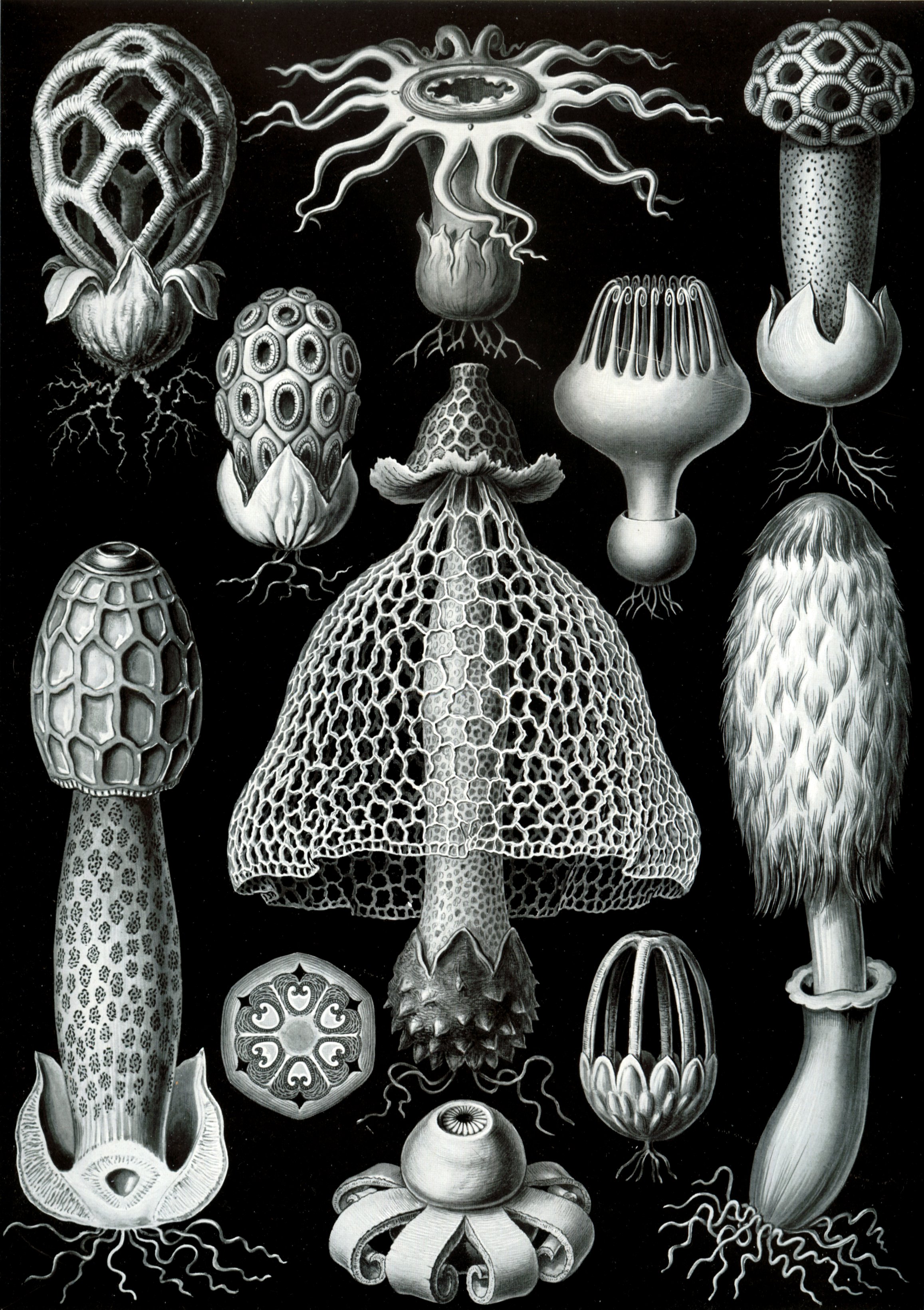
Haeckel_basimycetes_2

High-speed video has revealed that the incredible variety of fantastic forms taken by fungal spores helps them catapult themselves into the air.

For hundreds of years, scientists have described the spectrum of spore shapes — a different one for each of 15,000 known varieties of fungi, an assortment so astounding as to have sprung from the mind of Willy Wonka rather than Charles Darwin.

But for all their observations, they've known relatively little about why spores took those shapes. Some mycologists suspected it was merely evolutionary noise. But the first comparative analysis of fungal spore form and reproductive dispersal shows that shapes are no evolutionary accident.

"What people have done for 200 years is volume after volume of taxonomic work with descriptions of spore shape and size, without reference to why it's there. You've just got these weird and wonderful forms, but nothing about why," said botanist Nicholas Money of Miami University in Ohio.

Money's team used high-speed video analysis to study spores thrown into the air by a biomechanical process as elegant as it is miniscule. A single bead of water condenses on a spore's surface; when the bead touches a film of water on another part of the spore, the bead pours into it, like raindrops merging on a windowshield. The resulting shift in weight distribution is so sudden and massive as to hurl the entire conglomeration — called the ballistospore — airborne.

That process is part of the asexual reproduction of fungi, and the many different shapes may serve to help different species grow and reproduce in different conditions. A single mushroom can launch 31,000 ballistospores per second, adding up to some 2.7 billion spores per day. This process is already understood, but Money and his colleagues are among the first researchers to break it down in frame-by-frame resolution.

What made their paper special, said Money, is their description of variation in this mechanism. They found that tiny changes in spore shape produced profound alterations in water droplet shape. Changes in water droplet shape then affected the the trajectory of dispersed spores.

At one level, the findings are literally microscopic; at another, they're universal.

"Mushrooms are masterpieces of natural engineering," said Money, "and we are just beginning to understand how they work."

The research, published Thursday in Public Library of Science ONE, was funded in part by the National Institutes of Health. They are interested in using Money's insights to develop methods of fungal control. That, however, will be done by others; Money's focus is purely on the magic of mushroom biomechanics.

Asked whether spore trajectories could be scaled up to thrown baseballs or other reader-friendly terms, Money replied that mushroom spores don't go far at all.

"If the viscous drag of air acted upon a baseball with the same intensity that it impedes the flight of a mushroom spore, you would see the pitched ball slow after an arm's length of motion, stop dead, and fall vertically to the ground," he said. "In my seminars I refer to this flight path as the Wile E. Coyote trajectory."

This makes sense, Money said, because it ensures that spores will fall cleanly downward from the densely packed gills where they originate.

"Speaking technically, this is a ****ing beautiful mechanism," he said.

Citation: "Adaptation of the Spore Discharge Mechanism in the Basidiomycota." By Jessica L. Stolze-Rybczynski, Yunluan Cui, M. Henry H. Stevens, Diana J. Davis, Mark W. F. Fischer and Nicholas P. Money. Public Library of Science ONE, Vol. 4 No. 1, Jan. 8 2009

Image: Plate detail from Ernst Haeckel's Kunstformen der Natur, depicting Basimycetes / WikiMedia Commons

Videos: 1. Ultrahigh-speed video clip (50,000 f.p.s.) showing ballistospore discharge in gilled mushroom of Armillaria tabescens / PLoS ONE 2. Ballistospore discharge in the stinking smut fungus Tilletia caries. Video captured at 24 frames per second; shows drop behavior before discharge / Nicholas Money, Miami University. 3. Spore release from cap of fairy ring mushroom captured with conventional digital camera in video mode / Nicholas Money, Miami University.