Zazzle Shop

Screen printing
Showing posts with label Human Genome. Show all posts

Monday, March 8, 2010

The Human Body as a Subway Map (PIC)


Click Above To ENLARGE

infosthetics.com Sam Loman [just-sam.com] created an original take on illustrating the inner structure and workings of the human body as the tight intertwining of different systems (e.g. arterial, digestive, musculetal, respiratory, etc.), by way of a subway map metaphor.

Wednesday, June 10, 2009

Growing Organs in the Lab

Written on June 8, 2009 – 3:19 pm | by Drew Halley |

Why transplant an organ when you can grow yourself a new one?

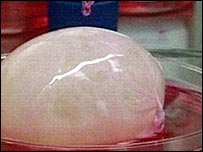
lab-grown-bladder-atala

A homegrown bladder (Photo courtesy of BBC)

This research isn’t something that might happen in the distant future. It’s being used today to grow fresh organs, open up new ways to study disease and the immune system, and reduce the need for organ transplants. Organ-farming laboratories are popping up across the planet, and showing impressive results. Here we look at the state of the union of a rapidly advancing field called tissue engineering: what’s been accomplished so far, and what’s right around the corner.

Patients who undergo organ transplants require loads of toxic drugs to suppress their immune systems; otherwise their body might reject the organ. But tissue engineering could make organ transplants a thing of the past. By using a patient’s cells to grow new types of tissue in the lab, researchers are finding new ways to custom-engineer you new body parts by using your own cells.

At the cutting edge of organ engineering is Tengion, a clinical-stage biotech company based outside of Philadelphia. Their most successful research to date led to the creation of the Neo-Bladder. Tengion takes some of your cells and grows them in culture for five to seven weeks around a biodegradable scaffold. When the organ is ready, it can be transplanted without the need to suppress the patient’s immune system (because the organ was grown from the patient’s own cells, it carries no risk of rejection). Once the organ is in, the scaffold degrades and the bladder adapts to its new (old) home.

The Tengion Neo-Bladder is in Phase II testing, meaning that they have already implanted the organ into individuals and studied how the body adapts to it. After 5 years, the company was able to show that the homegrown organs are safe and effective, capable of treating the bladder effects of spina bifida (a neural tube defect that effects bladder function, among other things). After another round of Phase II trials, Tengion will move on to Phase III testing; after that, the Neo-Bladder should be approved and be made commercially available.

atala_organ_growing_regeneration

Atala wants to grow you an organ

Tengion’s Neo-bladder is nearing the completion of its clinical trials, but they weren’t the first to grow one. If anyone on Earth deserves the job title “Organ Farmer,” it’s Dr. Anthony Atala. He and his research team at Wake Forest University Medical Center pioneered the world’s first lab-grown bladder, and they remain at the forefront of the organ-growing field (Atala is also the chairman of Tengion’s scientific advisory board). Wake Forest is the world’s largest regenerative medicine research center, and their current research is growing 22 different types of tissue: heart valves, muscle cells, arteries, and even fingers.

So how many different types of human organs have been grown and transplanted? The lab-grown bladders are among the only transplants of an entire organ, but a wide variety of partial organ transplants have taken place. Skin cells are regularly grown in culture and grafted onto patients’ bodies. A graft was grown from a patient’s trachea cells and transplanted to replace part of her airway that had degraded due to disease. Cartilage has been grown and transplanted into a patient’s knee.

A number of technologies are under development but have yet to be transplanted into human bodies. Recently, Dr. Nicholas Kotov and his lab at the University of Michigan have engineered artificial bone marrow, a task that was previously doomed to failure. Kotov and his colleagues realized that in the body, stem cell differentiation relies on chemical signals in three dimensions (whereas in a petri dish, it takes place in two dimensions). This insight led to a new methodology that more closely replicated the natural environment of stem cell differentiation in bone marrow tissue. The resultant homegrown marrow grew and divided normally, even releasing antibodies in fight off an introduced influenza strain. It can be used to study the role of bone marrow in fighting disease within the body, as well as creating a “bioreactor”: harnessing the artificial marrow within a device to grow cells and tissues.

Tengion is pretty busy these days as well. Their new website lists a variety of new applications on the horizon, including a Neo-Kidney augment, artery replacements (including in the heart), and variations on their bladder technique to replace cancerous organs. Their company pipeline gives a general idea of the relative stages of each project.

A number of initiatives are under way to create an artificial pancreas, which would revolutionize the way we treat diabetes. By providing diabetics with a healthy pancreas, doctors could restore their natural control of blood glucose by giving them an endogenous source of insulin. Anyone with experience of diabetes knows the difficulty of manually monitoring and controlling your sugar levels, not to mention regularly injecting insulin. A lab-grown pancreas replacement would be an incredible benefit to the 23.6 million individuals in America alone who suffer from diabetes.

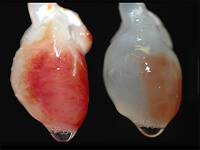
ratheart

The Minnesota rat heart

As we previously reported, researchers at the University of Minnesota grew an entire rat heart in a laboratory last year. Their next goal is to grow a pig heart, a significant milestone towards growing a human heart due to their similar structure. Researchers hope to combine the scaffold of a pig heart with human cardiac tissue to grow a hybrid heart suitable for transplant.

Another exciting frontier is the field of printable tissue and organs, which is just what it sounds like. Inkjet cartidges are cleaned out and loaded with a mixture of live human cells and “smart gel.” Then, layer by layer, the cells are printed atop one another until a 3D organ is constructed. Just as a normal printer can deposit different colored ink, organ printing allows scientists to specify where to place different cell types. Organ printing has already created beating cardiac cells, and could soon produce organs that are viable for transplant. But unlike other 3D printers, I wouldn’t want this one in my living room.

The hottest areas in tissue growth are the types hardest to make: nerve, liver, kidney, heart and pancreas cells. But these are precisely where Alata and Tengion are heading, pushing the industry into fresh territory. Coupled with new regenerative treatments like Cook biotech’s foams and stem-cell organ patching, tissue engineering will be keeping our organs young and healthy in the years to come.

Merely a decade ago, tissue engineering was still a new field that struggled to find funding and support. Today, thousands of scientists worldwide are coordinating efforts to reach new breakthroughs, and the demonstrated potential of these methods has helped bring in investors. That should keep the organ growing field moving forward in the future months and years, and we’ll be covering new advances as they emerge.

Check out this Wired Science video that tours around Atala’s lab:

Monday, June 8, 2009

The First GM Human Embryo Could Dramatically Alter the Future

Human_embryo “The advance of genetic engineering makes it quite conceivable that we will begin to design our own evolutionary progress.”

~Isaac Asimov, famous thinker and sci-fi writer

Cornell University researchers in New York revealed that they had produced what is believed to be the world’s first genetically altered human embryo—an ironic twist considering all the criticism the US has heaped on South Korea over the past several years for going “too far” with its genetic research programs. The Cornell team, led by Nikica Zaninovic, used a virus to add a green fluorescent protein gene, to a human embryo left over from an in vitro fertilization procedure. The research was presented at a meeting of the American Society of Reproductive Medicine last year, but details have emerged only after new controversy has emerged over the ethics and science of genetically modifying humans.

Zaninovic has pointed out that in order to be sure that the new gene had been inserted and the embryo had been genetically modified, scientists would ideally want to keep growing the embryo and carry out further tests. However, the Cornell team did not get permission to keep the embryo alive. The GM embryos created could theoretically have become the world’s first genetically altered man or woman, but it was destroyed after five days.

British regulators form the Human Fertilization and Embryology Authority (HFEA), have warned that such controversial experiments cause “large ethical and public interest issues”.

Much of the debate stems from the fact that the effects of genetically altering an embryo would be generational and permanent. In other words, if we create a mutant baby and it grows up to have children of it’s own—they’ll all be mutant gene carriers too. Genes injected into embryos and reproductive cells, such as sperm, affect every cells in the body and would be passed on to future generations. Critics say current humans don’t have the right to tamper with the gene pool of future generations.

On the other hand, proponents of such technology say that this science could potentially erase diseases such as cystic fibrosis, hemophilia and even cancer. In theory, any “good” gene could be added to embryos to offset any “bad” genes they are currently carrying. That could potentially mean the difference between life and death for many children.

John Harris, the Sir David Alliance Professor of Bioethics at Manchester University, takes it a step further. He believes that as parents, citizens, and scientists, we are morally obliged to do whatever we can genetically to make life better and longer for our children and ourselves. Society currently devotes so much energy and resources towards saving lives, which, in reality, is simply postponing death, he notes. If it is right to save life, Harris reasons, then it should also be right to postpone death by stemming the flow of diseases that carry us to the grave.

For Harris, having the ability to improve our species lot in life but refusing to do so, makes little sense. He has a difficult time understanding why some people are so insistent that we shouldn’t try to improve upon human evolution.

“Can you imagine our ape ancestors getting together and saying, ‘this is pretty good, guys. Let’s stop it right here!’. That’s the equivalent of what people say today.”

Ethicists, however, warn that genetically modifying embryos will lead to designer babies preloaded with socially desirable traits involving height, intelligence and coloring.

Dr David King, director of Human Genetics Alert, warns, “This is the first step on the road that will lead to the nightmare of designer babies and a new eugenics.”

Harris, however, doesn’t support that argument. He says it’s not about “beauty” it’s about health, and what parent wouldn’t want a healthy child, he asks.

“Certainly, sometimes we want competitive advantage [for our children], but for the enhancements I talk about, the competitive advantage is not the prime motive. I didn’t give my son a good diet in the hope that others eat a bad diet and die prematurely. I’m happy if everyone has a good diet. The moral imperative should be that enhancements are generally available because they are good for everyone.”

The only other route to equality, he says, is to level down so that everyone is as uneducated, unhealthy and unenhanced as the lowest in society – which would be much more unethical in his opinion. Even though we can’t offer a liver transplant to all who need them, he says, we still carry them out for the lucky few. “Much better to try to raise the baseline, even if some are left behind.”

The Human Fertilization and Embryology Bill in currently under consideration in Britain will likely make it legal to create GM embryos in that country, but only for research—implantation in the womb will still be banned—at least for now. However, ethicists believe that the legislation could easily be relaxed even further in the future.

People who believe that genetically modified humans is something way into the future might want to consider that many experts are worried that some forms of it are already happening in the sports world.

Faster, bigger, better, stronger—in theory, the single most effective way to radically alter your physical capacities is to manipulate your genes. Athletes are beginning to take notice. Now that we’ve mapped out the human genome and identified exactly which genes make you buff, tough and rough—experts are concerned about the future of genetic doping.

Gene doping could spawn athletes capable of out-running, out-jumping and out-cycling even the world’s greatest champions. However, researchers at the University of Florida are attempting to prevent that from happening by detecting the first cases of gene doping in professional athletes before the practice becomes mainstream.

Montreal-based World Anti-Doping Agency (WADA), responsible for monitoring the conduct of athletes, is working with investigators around the globe to develop testing to identify competitors who have injected themselves with genetic material that is capable of enhancing muscle mass or heightening endurance.

“If an athlete injects himself in the muscle with DNA, would we be able to detect that?” asked one of France’s leading gene therapy researchers, Philippe Moullier, M.D., Ph.D., director of the Gene Therapy Laboratory at the Universite de Nantes in France.

Right now, he says the answer is clearly “no”. But that may soon change. The UF scientists are among several groups collaborating with national and global anti-doping organizations to develop a test that can detect evidence of “doped” DNA.

“WADA has had a research program in place for some years now, to try to develop tests for gene-based doping,” said Theodore Friedmann, M.D., head of the agency’s panel on genetic doping and director of the gene therapy program at the University of California, San Diego.

Nearly every day now we are inundated with new genetic discoveries. Scientists can now pinpoint many specific genes including being lean, living a long life, improved self-healing, thrill seeking behavior, and having an improved memory among many other incredible traits. Many believe that these genes can be manipulated in ordinary humans, in effect creating Super-Mutants.

Theoretically, options are nearly limitless. Even a gene that exists in another species could be brought over to a human cell. Imagine some of the incredible traits of the animal kingdom that some humans don’t possess such as night vision, amazing agility, or the ability to breath underwater. The precedence for these types of radical changes is already in place. Experimental mice, for example, were successfully given the human ability to see in color. If animals can be engineered to have human traits, then humans can certainly be mutated to have desirable animal traits.

It is even thought possible to so drastically alter human genomes that a type of superhuman species could emerge. The fear with germline engineering is that since it is inheritable, offspring and all succeeding generations would carry the modified traits. This is one reason why this type of engineering is currently banned- it could lead to irreversible alteration of the entire human species.

Ethics, not scientific limitations, is the real brick wall. Most scientists believe manipulating genes in order to make an individual healthy is a noble and worthwhile pursuit. Some are against even that notion, arguing that historically amazing individuals have sometimes been plagued by genetic mental and physical disorders, which inadvertently shaped the greatness of their lives. Should we rob the human race of character shaping frailty? Very few scientists would dare to publicly endorse the idea of using genetic engineering to make a normal, healthy individuals somehow superior to the rest of the human race.

“The push to redesign human beings, animals and plants to meet the commercial goals of a limited number of individuals is fundamentally at odds with the principle of respect for nature,”
said Brent Blackwelder, President of Friends of the Earth in his testimony before the Senate Appropriations Committee.

However, would it be so bad if the human race were slightly improved? What if a relatively simple procedure could make an individual and his or her offspring resistant to cancer? After all, Nature isn’t always right. Nature has naturally selected many people to carry the burden of uncomfortable and often lethal genetic disorders. If nature knows best, then shouldn’t we quit trying to “improve” upon nature by “curing” people of genetic conditions we consider inferior? Many say we shouldn’t change human genetics, UNLESS it’s the RIGHT thing to do. Who gets to decide where the line is between righteous endeavor and the corruption of nature? These are the questions facing our generation.

Posted by Rebecca Sato

Tuesday, May 19, 2009

13,000 offer up DNA to put their genomes online

Study among first to offer data to computer scientists

Lucas Mearian

Since opening to the public late last month, The Personal Genome Project has signed up 13,000 volunteers who will donate genetic material for the benefit of gene research worldwide. Information about the genetic material will also be posted online.

The project was launched last year with the goal of creating the world's first publicly accessible database of human genomic and trait data from 100,000 people. Initially, it started as a closed test study with 10 volunteers so that those who later sign up for the project "will know what they're getting into," said George Church, the Harvard Medical School professor leading the initiative.

Those first 10 volunteers had their genomes, along with photos and personal and family history, placed online as a pilot for the experiment, which one day could include millions of unique genomes.

Church said study participants have not been promised any anonymity -- just the opposite.

Participants are schooled on the fact that their private medical data, including any diseases or deformities, will be available for the world to view. And while Church acknowledged that will initially scare a some people off. But once people have gotten used to the idea of participating in medical research, "it's a fairly small additional step to say, 'Let's allow anyone at all to take a look at it.'

"We don't need that many people to enroll. One hundred thousand people out of 6.5 billion is a very tiny number of people," Church said.

The purpose of the public genome database is to offer up genetic information to the world's scientific community, including computer scientists, for the study of hereditary medical issues, according to Church. The project is among the first to allow researchers other than traditional medical doctors to use the data.

"I think there's a lot of opportunity for someone who looks at things differently to make connections that the so-called experts missed," he said. "So we're very excited about having participation of computer scientists, mathematicians, physicists and so forth."

Church believes that within a few years, everyone will have the opportunity to keep their own genome data -- and personal medical information -- in a personally-controlled electronic record. That valuable information becomes even more valuable when it can be shared with the scientific community in general.

"...If everyone shares, then suddenly it adds value to the resources everyone already has," he said.

The Personal Genome Project will focus initially on medical research. For example, Church and his team are interested in morphological characteristics, such as what makes a person's face the shape that it is.

"That doesn't sound like it's immediately medical, but things about morphology can affect whether you have sleeping or breathing problems," Church said. "We're trying not to be prejudicial in deciding in advance what's medical or not because there are opportunities for serendipity and holistic interconnections that computers can find that people may have missed because they're not as good at finding correlations."

To date, scientists have discovered 1,450 genes that are considered predictive of hereditary disease and that are actionable. That means a person with the genes can be treated medically if given enough warning or they can make a lifestyle change to make them less susceptible to illness, Church said.

The project targets families that have had diseases or abnormalities since their data will be of more use in finding genetic links. According to Church, older volunteers get priority because they've had more life history and more medical incidents.

Volunteers who sign up to have their genetic material tested must first answer a detailed questionnaire and demonstrate that they understand that their private information will be made very public. They will then be asked to give genetic material, such as hair, blood, skin or saliva, from which their genome will be extracted.

While volunteers won't have their names published with their genomic information, Church said the subjects are completely aware that anyone familiar with them can deduct from the photos and background information who they are.

A genome represents a full set of chromosomes -- or the complete genetic sequence -- of a human being, half of which come from the father and half from the mother. The genetic sequence represents 6 billion base pairs of nucleotides -- complementary DNA strands -- connected by hydrogen bonds.

A microsopic look at X and Y chromosomes that make up a genome.
The X and Y chromosomes that make up a genome.

In order to store the research data, one byte of capacity is required for each base pair. As a result, 6GB of data capacity is needed to store the genetic information of just one person, according to Church.

To address the scalability required for such a database, the project has turned to Web 2.0 technology and crowd sourcing. In other words, the project is being offered to the worldwide community of developers and technology vendors. For example, Isilon Systems Inc. stepped up to offer network-attached storage (NAS) clusters as primary storage for the project.

Church said Harvard went with NAS clusters because traditional monolithic storage arrays with RAID 5 protection is becoming less reliable for research where data grows exponentially. "We're starting to see solutions at that scale start to fail on a very regular basis," he said, "meaning you get two simultaneous disk failures and then lose whole data set."

Eventually, Church said he envisions millions of volunteers participating in the Personal Genome Project, requiring a highly scalable infrastructure. For just the current database with data on 10 people, the project is using 100 servers and a three-node Isilon IQ 12000x cluster.

The success of the project is highly dependent on how well the crowd-sourcing model works and which companies step forward to offer up technology for research. Church said Google has also offered "significant gifts," as has Amazon, which offered to host the data on its cloud storage offering.

Church said he expects The Personal Genome Project to have its 100,000 volunteers by the end of the year, even though not all of those participants will have been processed by that time.

"We're trying to build a model where even if only 100,000 out of 6.5 billion share, it's enough to benefit all 6 billion," he said.