Zazzle Shop

Screen printing
Showing posts with label Farming. Show all posts

Friday, March 5, 2010

15 Fantastically Futuristic Plant Growing Design Concepts

Not all of us own land for farming, but even urban dwellers can grow gardens and plants. There are more and more fantastic green living concepts being designed for people who want to try out their green thumb. Here are 15 fantastically futuristic plant growing design concepts.

One Pot, Two Lives

(image credits: Yanko Design)

The planter and fish tank work together to make your fish and your plant healthier. The system works by the fish poo acting as a moist fertilizer for the plant. The filter system helps to maintain neutral PH quality in the water for the fish while extending the watering period by about one week for the plant. One Pot, Two Lives was created by designers Sheng-Zhe Feng and Ling-Yuan Chou.

Urb Garden

(image credits: designawards)

Urb Garden by Xavier Calluaud allows people who do not have space for traditional horizontal gardens to indulge in gardening. Vertical food gardens encourage urban dwellers to grow their own food. It comes with a self-contained drip watering system, keeping the plants hydrated. It was also designed for organic recycling to act as plant fertilization.

PC Green Computing Concept

(image credits: core77)

Designer Luis Luna created this green computer concept design called “O.” The project was inspired by the oxygen and the photosynthesis cycle, trying to reduce the amount of CO2 that computers generate. This CPU is both decorative and meant to encourage a green thinking lifestyle for computer users.

Kitchen Garden & Moss Bathmat

(image credits: La Chanh Nguyen,La Chanh Nguyen)

Designer La Chanh Nguyen came up with both of these green living concepts. The Kitchen Garden basically grows over the pot holding kitchen utensil and provides a vertical garden. The chef can cut some fresh aromatic herbs as needed. How about a moss bathmat? Moss Carpet utilizes the humidity of the bathroom as well as water dripping off a person to stay watered. It would also provide a very different feeling under your feet than most people experience when stepping out of the shower or tub.

Office Partition & Foot Rest

(image credits: yankodesign)

Having plants in the office is not a new idea, but designers Jinsun and Seonkeum Park have a couple of plant growing concepts that you have doubtfully seen in the office yet. For those of you trapped in the dreaded cubicle, perhaps office life would seem a bit less bleak with a Breathing Partition? They claim it will bring an ever-lasting oasis to an otherwise dull and dreary office environment. Not for you? Then how about a grass foot rest to allow a feeling of nature under your bare feet?

Le Petit Prince

Le Petit Prince was designed by Martin Miklica and was one of the 2009 Electrolux Design Lab Competition winners. This intelligent robotic greenhouse concept was designed to help with future exploration and expanding population on Mars. The four-legged pod can carry and tend to a plant inside its glass container. It also can send wireless communication to other greenhouse robots, allowing them to learn from each other.

Ecohabitare

(image credit: trendsupdates)

If you don’t have the farming land for a garden, surely you have enough space to hang a “picture?” Ecohabitare is a vertical garden designed by Daniele Adamo and Ravel Casela. Made from flat plates manufactured from recycled packages, this portable vertical garden takes 20 minutes a day to harvest and irrigate. The fertilized soil only needs changed once a year when you add new seeds. It requires about 9.8 feet or 3 meters of wall space and is best suitable for growing chives, parsley, tomato, basil, mint, bold, strawberry and rosemary.

Air-conditioning Curtain / Vertical Planter

(image credit: designboom)

This air conditioning curtain concept was designed by Laura Boffi. “Fresco Di Lana” is made from wool and meant to be kept wet via a water pump. The air-conditioning curtain could perhaps be considered swag except it also functions as a vertical garden. The wet wool filters hot air, cooling it as it enters the house. The wet wool provides pockets in which to grow your food, flowers, or plants indoors.

Envi Urban Waste Management

(image credits: behance)

Designer Julien Bergignat created Evni, one of 58 projects that was shortlisted for the 2009 BraunPrize competition. Envi is a foresight urban dustbin, promoting composting from biodegradable waste. The concept design shows the benefits of urban recycling in which the waste turns into compost for the plant it carries.

Refrigerator That Grows Plants

(image credits Yanko Design)

Designer Hanna Sandström worked with Green Fortune & Whirlpool to come up with a refrigerator that will nurture a seed into a plant. It’s meant to grow herbs and organic greens that you might normally purchase. Although still in concept design stage, the system should automatically water and give light to the refrigerator garden. Not possible? Once upon a time, the same thing was said about ice spitting out the refrigerator door. Growing plants in your frig would give garden fresh a whole new meaning.

Ekokook

(image credits Yanko Design)

Designer FALTAZI came up with Ekokook, one of the coolest kitchen concept systems ever invented. You can watch the video below whether you understand French or not and see it in action. Ekokook does it all, from use and re-use of your solid waste, liquid waste, organic waste, oh…and cook too. It has a combo fridge/freezer, steam oven, and two-tier dishwasher. Non-smelly waste is placed into a bin and compacted into briquettes. The double sink collects water that is filtered to be reused on the plants hanging above it. Organic waste is taken care of by earthworms and then further recycled into food for indoor and outdoor plants.

Volksgarden Hydroponics

(image credits: gizmag)

Volksgarden is not a concept design but a reality of an effective hydroponic garden on wheels. It’s a ferris wheel ride for plants, growing up to 80 plants at once, taking 45-50 minutes to complete a rotation, spinning 24/7. The unit only takes up 1/3 of the floor space used by a conventional flat garden. Omega Garden Technology claims Volksgarden yields three to five times the comparable weight per watt average per harvest. This seems like a great way to grow your own food . . . or weed.

Home Farming

(image credits: designboom)

Philips design completed a project on how we might eat and source our food in 15-20 years from now. This Home Farming concept is a self-contained farm for growing plants and raising fish. This vertical garden is a step beyond those above as you would also be able to provide meat with your veggies. Below is a video of their design probe looking at the future of food.

Wednesday, September 23, 2009

7 Intriguing Genetically Modified Fruits & VeggiesS

By Ecoist

montagefruitvegg-copy

Genetically modified food is one of great controversies of our time. Supporters point to wonderful possibilities of nutrient-packed food and solving world hunger, while critics fear unknown effects on human health. But whatever one’s opinion the matter, one thing is clear: some genetically modified fruits and vegetables are awfully intriguing! Here are 7 of the most interesting examples:

Graisins

graisin

(Image via Elanso)

The graisin (or giant raisin) is a raisin which has been genetically re-programmed to grow far beyond its normal size. It was produced by Japan’s National Institute of Genetics, which is unsurprising given that nation’s love for large fruits of all kinds. And while they taste exactly the same as small raisins, graisins are sure to make dinner guests stare in awe!

Grapples

grapple

(Image via Wikipedia)

Originally funded by UNICEF and created for Third World aid efforts, a grapple is simply a genetic cross between a grape and an apple. The fruit keeps the size and shape of the apple, the texture of the grape, and the flavor of both while providing a potent, high-strength dose of vitamin C.

Pluots

pluot

(Image via Palomar.edu)

Plums and apricots are delicious fruits in their own right, but combined, they form the genetically modified treat known as the pluot. Described by WiseGeek as “an intensely flavored fruit”, pluots are heavily fortified with vitamin C and have no sodium or cholesterol.

Tangelo

tangelo

(Image via TeamSugar)

“Should I have a tangerine or a grapefruit?” No longer need this question be asked! Lovers of each fruit can now get the best of both worlds with this sweet hybrid, which boasts a ton of fiber, vitamin C, and a slightly tart taste!

Colorful carrots

carrots

(Image via MSNBC)

Could colorful, genetically-modified carrots like those pictured here be the secret to absorbing more calcium? Two Texas researchers say yes – and they’ve created a carrot they claim allows people to absorb 40% more calcium than normal carrots to back up their claims!

Diabetes-fighting lettuce

lettuce

(Image via FloridaTrend)

Diabetes is one of the most frustrating and life-threatening illnesses out there. Living with it (at minimum) means daily, sometimes painful insulin injections – until now. University of Central Florida professor Henry Daniell has created a genetically modified strain of lettuce (pictured above) that carries the insulin gene. The lettuce cells protect the insulin on its journey through the digestive tract, and when the insulin reaches the intestines, the body’s natural insulin-producing response is triggered.

Lematos

lemato

(Image via FreeWebs)

Okay, so a lemon and a tomato aren’t the most natural of pairs, but that didn’t stop Israeli researchers from bringing us the Lemato! Unlike other genetically altered fruits and veggies (which were created primarily for health reasons), it appears that the lemato was solely an experiment to determine if it was possible to make tomatos give off the scent of lemons. Mission accomplished!

Monday, September 14, 2009

Better Tomatoes Via a Fertilizer of...Human Urine?


Tomatoes C.P.Storm (CC licensed)

You say tomayto, I say tomahto.

You say Miracle-Gro, I say ... pee.

Apparently, human urine works remarkably well as a fertilizer for tomatoes, according to a new study out of Finland.

Plants fertilized with a mixture of stored human urine and wood ash produced 4.2 times more fruit than plants without the pee, the study found. The urine-fertilized tomatoes had more beta-carotene than unfertilized ones, and much more protein than traditionally fertilized plants.

And the tomatoes were just as good as those grown with traditional fertilizer, according to a panel of 20 brave tasters.

Healthy human urine is rich in nutrients like nitrogen, potassium and phosphate, all key ingredients for healthy plants. As long as the pee doesn't contain any fecal matter, it's usually free of any microorganisms.

Surendra K. Pradhan, K. Holopainen and Helvi Heinonen-Tanski of the University of Kuopio in Finland collected human urine during the winter of 2007-2008 from several eco-toilets in private homes. The urine was stored for about six months at 45 degrees F and tested for microbes and bacteria. The team mixed it with wood ash collected from a household furnace, and found the mixture was just as good as -- or better than -- conventional chemical fertilizer.

In taste tests, the urine-fertilized tomatoes tasted different from those fertilized with urine and ash, but tasters didn't have a preference -- "all tomato samples were evaluated as being equally good by the tasters," the study says. The results are reported in the latest Journal of Agricultural and Food Chemistry.

The same team had previously tested human pee as a fertilizer for cucumber and cabbage, and a South African team reported last year that urine had successfully fertilized maize. The Finnish team said they tried tomatoes because they're grown all over the world and are a staple ingredient in many recipes.

The use of urine to fertilize crops has been practiced since ancient times, but is relatively rare today, thanks to the ick factor and the prevalence of chemical and mineral fertilizers. But as farmers and home growers seek organic ways to grow food, urine could be a solution.

The study "may contribute to the development of positive attitudes about the use of urine and ash as fertilizer as a way to both increase crop yield and reduce water pollution," the authors wrote.

It may not be necessary to go all NASA with our pee and start drinking it. But if we can safely and efficiently grow food with it, why not?

Monday, August 31, 2009

Marijuana as a Gateway... to Farming?

by Sami Grover, Carrboro, NC, USA

hydroponic-marijuana-tomato.jpg
Image credit: Sami Grover (the tomato!), and The Seedbank (with help from CBay on photoshop).

I was in a local gardening shop the other day that specializes in hydroponics. I noticed that many of the plant foods and other products were being marketed to, shall we say, a certain herbalist demographic. (Don't ask me how I know - I just do.) Yet much of the interest on TreeHugger around this subject relates, on the surface at least, to hydroponics for growing your own food, hydroponic rooftop agriculture, backyard aquaponics - even commercial scale aquaponics. So this got me wondering - could illicit cultivation of marijuana be used to excite folks about growing food to feed the world?

I'm not talking about the large, organized crime type growers here - which tend, I think, to be in it for the profit (although perhaps they should find jobs with big agribusiness?!). But rather your average domestic grower of a few plants. After all, growing illegal plants in illicit conditions requires a stealth and ingenuity that could prove useful as we try to figure out how to reintegrate food production into our everyday environments.

And isn't it possible that cultivators initially drawn to the allure of their drug of choice, might actually get the bug for growing plants in general? I've met more than one former pot head who has long since left the funny weed behind, but still has a love for the gifts of nature - and some serious horticultural knowledge to show for their past. (I've met others who have no intention of leaving it behind - and they are pretty good gardeners too. They just tend to get up later in the day...)

I'm wary of getting too far into the rights and wrongs of current marijuana laws here (I learned my lesson discussing the environmental impact of cocaine), but as long as people are being arrested for small scale cultivation, maybe there is a way to direct their interests toward legal pursuits. Maybe folks could receive reduced sentences or pardons if they volunteer for urban community farms? Maybe confiscated equipment could be used for vocational training/aquaponic farms in prisons? Or maybe we just leave the gardeners of this world alone to do what they do - but as I said, I don't want to get into that discussion.

Any former herbal growers out there who care to tell us about their tomato plants? You don't have to use your real name...

Friday, July 31, 2009

20 Vertical Farming Pics, Designs & Concepts

One couldn’t say that the concept of vertical farming isn’t controversial, but they could say that it has serious merits that need to be considered on both sides of the issues.

credit

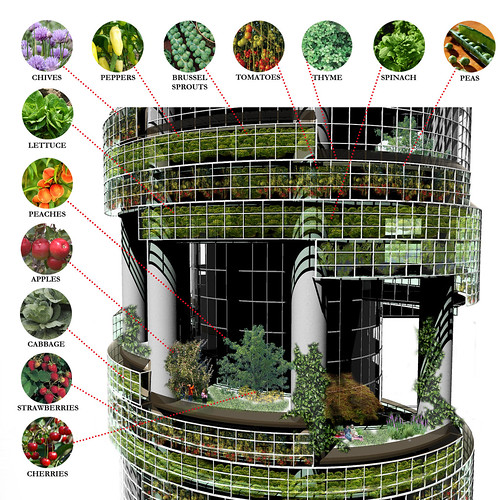
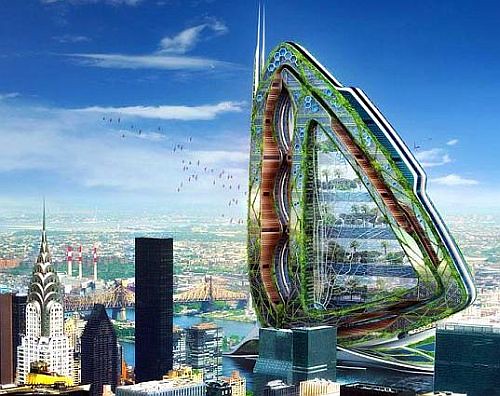
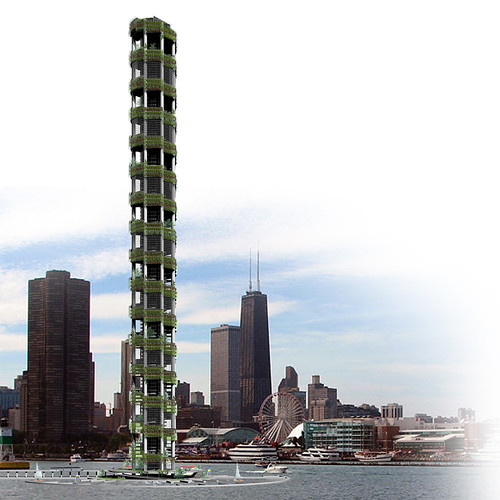
What is a vertical farm? The basic premise, as you see in this image, is to be able to grow food in urban areas by creating tall buildings where, instead of each floor having offices, each floor is in essence its own super greenhouse, where different crops can be grown to feed people within its own community. The idea is to not only be able to feed the community, but to protect the land that’s being damaged by over-farming and making sure that there will still be enough food for an ever growing population.

credit

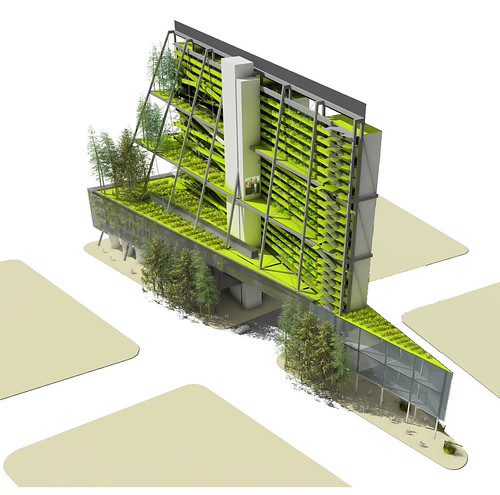
Of course, not all designs would be the same, but this model of a design for the city of Seattle helps us to see how it would work. It’s integrated into a city plan so that it fits in, and has areas where people can go inside to not only tend to the plants, but could actually buy their produce at the same time.


credit

Thinking of vertical farm in terms of super stores fits a model like this one, where the ground floor has everything a traditional supermarket would have,


credit

While upper levels would contain areas for growing produce. This particular example tries to highlight how power might be created for all the energy needed to grow crops in urban areas, as the designs for vertical farming wouldn’t be able to provide natural light for all of the crops, so they’d need enhancement from artificial lighting. It’s one of the major criticisms of trying to have vertical farms.


credit

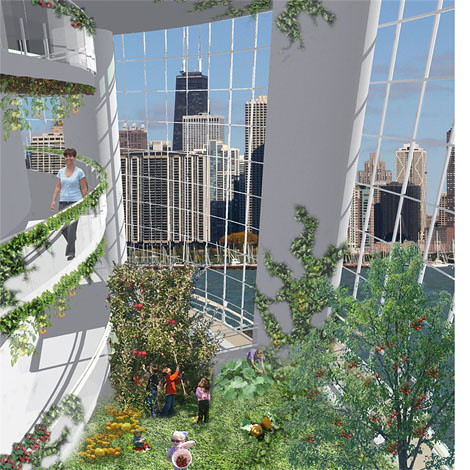
As you can see from this image of what the inside of the vertical farm in Seattle might look like, not only are there people who tend to the plants, and in some cases can pick their own produce, but it’s a place of beauty and tranquility that many in urban areas have to leave the city to enjoy.


credit

In a city like New York, for instance, one could see a design like this in either lower or upper Manhattan, where they have dense populations and no land areas to grow their own products, making it expensive to get produce into the city.


credit

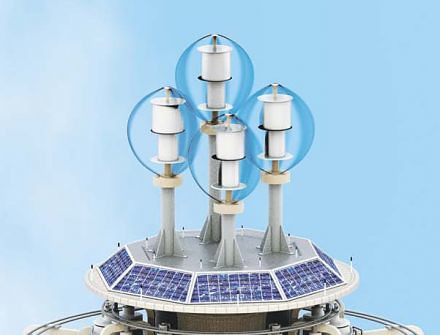
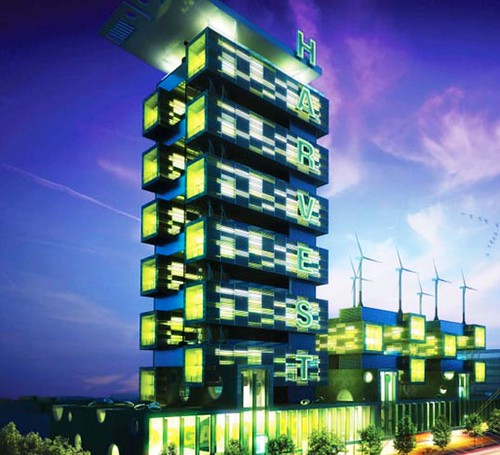
This is another design for the Roosevelt Island area of New York City, built not only to be productive, and not only to help generate its own energy with a combination of solar and wind power, but can also be a popular meeting place in the city, with a supermarket, restaurant, and even kind of a virtual indoor park in the middle of the city.


credit

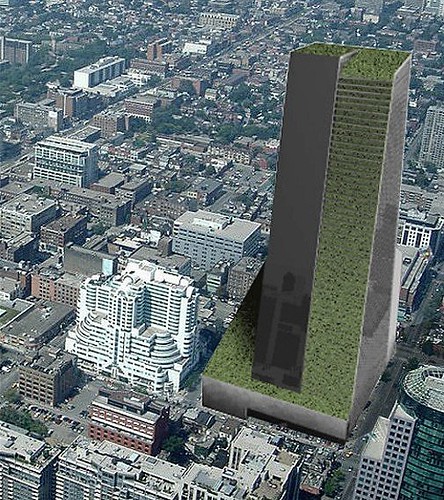
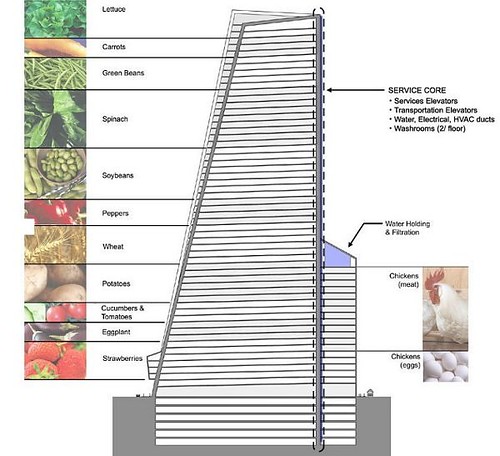
This design was made for the city of Toronto, and was estimated to be able to feed around 35,000 people a year. It would be a 58 stories high, becoming the fourth highest building in the city if made, but it’s design is still sleek enough to fit in with the culture of the city. And,


credit

this gives us an idea of how the builders see different products being produced on the different levels.


credit

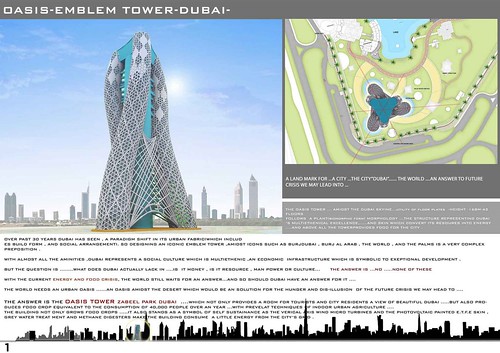
In this design for a city like Dubai, where fresh water isn’t as readily available, seawater is sued to cool the greenhouse and also create humidity, which not only helps the plants grow, but then produces more fresh water that can be used for not only the crops, but if produced in significant amounts could be used for the city’s water supply.


credit

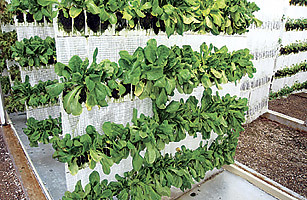
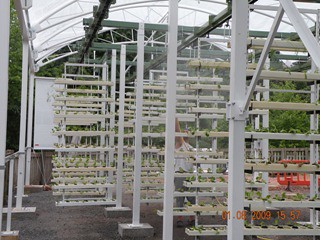
The initial testing of the vertical farm system is already in place in a much different way. One test is in El Paso, TX, where above you see how this type of farming concentrates certain types of plants close together, yet requires less water and needs almost no fertilizer for the crops to grow.


credit

Another real test is presently going on at Paignton Zoo in the United Kingdom, where they’re trying to cut the zoo’s overall costs by growing their own produce. Both of the last two examples are outside, yet they still qualify as vertical farms because the idea is growing produce in limited space, not expanding space.


credit

Could you imagine a city like Las Vegas, which is not only landlocked but also has no true vegetation growing around it for hundreds of miles, being able to grow their own produce in a building like this one, which was designed as a prototype for them? This design could easily capture enough sunlight, though there would still have to be modifications to keep the temperatures down, especially in summer months.


credit

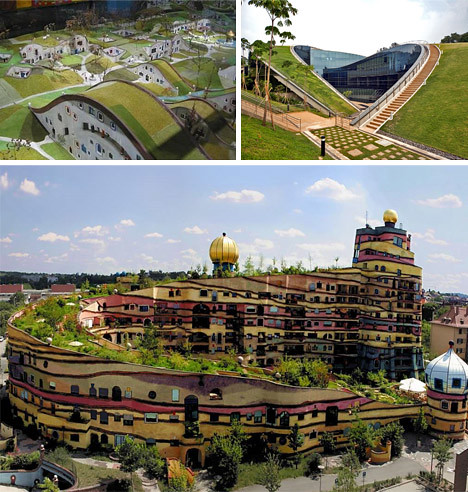
Not all urban areas are the same around the world, however. Vertical can still take up a lot of area, and as this image shows, it can be a planned community where everything is self contained and the farm can be a mixture of internal and external, as well as retaining certain elements of a culture.


credit

This was an idea for a vertical farm in Vancouver, which was drawn up in 2003. This idea even comes with a plan for a grazing plain and a dairy farm, right in the city. The energy for it would come from wind turbines and geothermal heat pumps.


credit

There are no end to the types of designs that vertical farms could be. This is another one for Dubai, this time in the middle of the city, being powered by wind turbines and, once again, creating its own water.


credit

This one, the pyramid vertical farm, is a favorite of the guy who helped come up with the concept, Dickson Despommier, a professor of environmental health sciences and microbiology at Columbia University. It’s not only a vertical farm, but a tourist attraction as well as a peaceful park of sorts.


credit

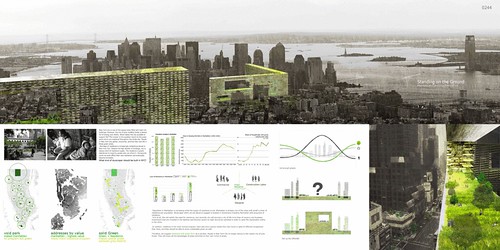
Something like this, a proposal that won 3rd place in an international competition, is the concept of an actual farming community right within the confines of a large city, in this instance Manhattan once again, where residents who would normally inhabit the city still live there, but share the space with farmers on alternate levels around the city.


credit

Even designs like this could be used, where, instead of taking over land that could be used for residential or commercial space, one could build vertical farms right into the waterways, where they would still be a popular attraction.


credit

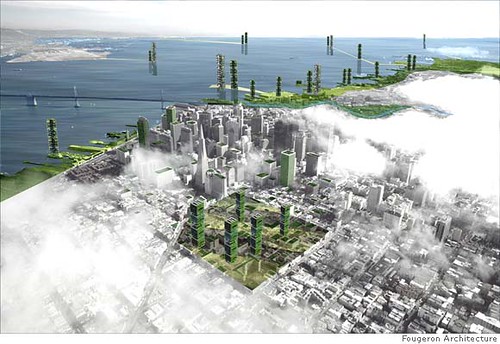
If cities needed to be redesigned to fit a changing environment, a design like this one for the city of San Francisco would not only be environmentally friendly, but this one is estimated to be able to feed over 7 million people.

The world of vertical farming could offer so much to the world as it concerns food, the environment, and our living space issues, as its estimated that we could have as many as 9 billion people on the planet by 2050. It will take a lot of planning, and a lot of energy, but if most of these buildings can be somewhat self energy sufficient, vertical farming could be viable within a relatively short period of time.

Tuesday, December 9, 2008

Lebanon farmer grows super-sized spud

Lebanon farmer grows super-sized spud
Lebanese farmer Khalil Semhat holds his giant potato in the southern Lebanese city of Tyre. The enormous vegetable weighs 11.3 kilos (24.9 pounds) and Semhat says he is planning on contacting the Guiness Book of Records. (AFP null)

TYRE, Lebanon (AFP) A farmer from Lebanon couldn't believe his eyes when he discovered he had grown a prize-winning potato on his land, he told AFP on Saturday, saying he was hoping to enter the Guinness World Records.

"This giant weighs 11.3 kilos (24.9 pounds)," Khalil Semhat said at his farm in the Tyre area, 85 kilometres (50 miles) south of Beirut.

"I've been working the land since I was a boy, and it's the first time I've seen anything like it."

Semhat, 56, said he had not done anything special to cultivate such a super-sized spud. "I didn't use any chemicals at all," he insisted, adding that he had to ask a friend to help him haul the huge tuber out of the ground.

Now he hopes the find will get a mention in the famous Guinness Book of Records, and said he will send in the details for possible inclusion next year.

He said he was "very proud" to have grown the enormous specimen on his farm, which took a pounding in 2006 during the war between Israel and Lebanon's Shiite Hezbollah movement.

© 2008 Agence France-Presse