Zazzle Shop

Screen printing
Showing posts with label Eating Healthy. Show all posts

Monday, September 19, 2011

12 Surprising Reasons to Eat More Blueberries

By: Michelle Schoffro Cook
From: http://www.care2.com/

1. Catechins found in blueberries activate fat-burning genes in abdominal fat cells to assist with weight loss, and belly fat loss in particular. According to research at Tufts University, regularly ingesting catechins increases abdominal fat loss by 77 percent and double total weight loss.

2. They contain a group of natural phytonutrients (plant nutrient) called proanthocyanidins which have a unique ability to protect both the watery and fatty parts of the brain against damage from some environmental toxins.

3. Blueberries are one of the richest sources of proanthocyanidins. These phytonutrients decrease free radicals levels that are linked to aging (yes wrinkling!) and disease.

4. In animal studies, those given an extract of blueberries had less motor skill decline and performed better on memory tests than animals not given the blueberries. Researchers conclude that compounds in blueberries may reverse some age-related memory loss and motor skill decline.

5. Blueberries are packed with vitamins C, E, riboflavin, niacin, and folate.

6. They are a rich source of the phytonutrients ellagic acid. Ellagic acid has proven anticancer and genetic-material-protection capabilities. It also encourages a healthy rate of apoptosis—how the body seeks out and destroys harmful or damaged cells, like cancer cells.

7. Because they contain plentiful amounts of the phytonutrient quercetin, they may reduce the likelihood and severity of allergies.

8. Blueberries contain minerals like iron, magnesium, manganese, and potassium.

9. Blueberries contain salicylic acid—the natural version of aspirin. Salicylic acid is known to thin the blood and reduce pain.

10. Blueberries are excellent anti-inflammatory agents. They increase the amounts of compounds called heat-shock proteins that decrease as people age. When heat shock proteins decrease the result is inflammation and damage, particularly in the brain. Research shows that by eating blueberries regularly, inflammation lessens.

11. They increase the production of feel-good dopamine. Dopamine is a natural neurotransmitter (brain messenger) that tends to be low in Parkinson’s.

12. They just taste great. Ok, this is no surprise but it’s a great reason to eat blueberries anyway.

Adapted from The Life Force Diet by Michelle Schoffro Cook.

Wednesday, November 10, 2010

Nutrition Professor Drops 27 Pounds on a Twinkie Diet

Megan Bedard
From: http://www.takepart.com/


prof_haub

Mmmm, mmm, delicious? (Photo: Professor Haub's Facebook Page)

Kansas State University nutrition professor Mark Haub has been making headlines lately for his two-month Twinkie stunt. For 60 days straight, Haub ate a snack cake for every meal, with Doritos, Oreos and sugar-soaked cereals for snacks between meals.

The crazy part? He lost 27 pounds, and his cholesterol dropped.

Those results are so dang counterintuitive, the questions flood to your head—like a sugar rush.

First of all, what was he thinking?

Believe it or not, the professor had a larger plan in mind. Haub had a hunch that when it comes to dieting, calorie counting is the single most important factor in weight loss. It wasn't what he ate, he thought; it was how many calories it amounted to. He committed to proving his theory as a living example to his students.

But he's a nutrition professor?

Yep. That's exactly what left him conflicted. Having proved his point after 60 days, Haub wasn't so sure he wanted to tout the Twinkie Diet. "I'm not geared to say this is a good thing to do," he told CNN.

Commentors on his Facebook page have applauded and abhorred his actions.

"This is phenomenal, congratulations. Hopefully you will continue to update with your maintenance plan, because I felt on top of what you have done so far—but maintenance is another game altogether from my experience," one fan wrote.

"This 'experiment' boarders on CRIMINAL for a Professor of Nutrition to... be espousing this... Just think how many LAZY YO-YO's in this country will now think eating convenience store food will help them lose weight," complained a dissenter.

Why'd he lose weight, instead of gaining it?

In short, Haub's theory about caloric intake held up. He burned more calories than he ate, and that caused him to shed pounds. As for the other health improvements, like lowering his "bad" cholesterol and upping his "good" cholesterol? "When you lose weight, regardless of how you're doing it—even if it's with packaged foods, generally you will see these markers improve when weight loss has improved," explained Dawn Jackson Blatner, spokesperson for the American Dietetic Association.

Will he ever eat another Swiss Cake Roll again?

Yes, actually. Though he's planning to eat more healthfully and add 300 calories back into his daily diet, Haub hasn't sworn off snack cakes.

So overweight people should switch to Little Debbie diets?

Haub wouldn't recommend it. There are other health factors, he says, that we can't predict, such as the link between junk food and cancer. Plus, there's one other factor to consider: energy levels.

What's the lesson here?

Haub pointed out one real-life application to his experiment: tackling obesity rates in "food deserts," areas across America where people don't have access to grocery markets and rely on the food they can find in convenience stores.

"These foods are consumed by lots of people. It may be an issue of portion size and moderation rather than total removal," he said. "I just think it's unrealistic to expect people to totally drop these foods for vegetables and fruit. It may be healthy, but not realistic."

Friday, September 10, 2010

16 Food Items That Could Make a Bulimic Fat

From: http://itthing.com/

So bulimia is no joke, we know, but we wanted to make a point that the foods we discovered are so fatty, so laden with lard, calories, and trans fat that it could potentially make anyone obese if they make eating these foods a habit of sorts. Some of these items provide a full days worth of calories, sodium and fat in just a few bites and if that isn’t enough they are often times disguised as ‘healthy’ choices. You might be surprised to see that not all of these come from fast food restaurants either.

McDonald’s Deluxe Breakfast

Starting with one of the more obviously unhealthy places to eat, McDonalds offers a moderate sized breakfast platter that includes eggs, sausage, pancakes (with syrup and margarine), hash browns and a buttermilk biscuit. I say moderate because I have seen average sized men take down 2-3 of these plates as the portions aren’t huge. Chewy sausage, squishy eggs, and crunchy oily hash browns- I can’t see how people palate this stuff, but it’s cheap I suppose if you are in need but definitely not a wise choice.
Total: 1,220 calories, 550 of them from fat, including 17 grams of saturated fat.

Cinnabon Caramel Pecanbon

Another breakfast choice of many, this deliciously sticky roll is nothing more but sugar, lard and flour- sorry to ruin your fantasy. It offers virtually no nutritional value and does nothing but give you a quick sugar high and instant cellulite on your bum.
Total: 1,100 calories and 56 grams of fat


Outback Steakhouse Aussie Cheese Fries

In the mood for a cheesy appetizer or just a quick snack while slugging back a few beers? One of the fattiest items on the menu, this platter of straight fat… err cheese, french fries, bacon, and salt should truly come with a warning. Prepare to feel like crap after eating this- fair warning.
Total: 2,710 calories, 203 grams of fat, 25 grams of saturated fat and 6360 mg of sodium.

Burger King’s Triple Whopper With Cheese

I suppose this must come from peoples demands to have ‘more’ in order to satisfy their appetites but no matter how hungry you are, this burger just isn’t right. Keep in mind that the calorie count below is pre fries and drink!

Total: 1,230 calories and 82 grams of fat including 32 grams of saturated fat.

Subway’s Double Meat Tuna Sandwich

Subway Restaurant, renowned for their low-fat subs and Jared- the fat guy who lost weight eating nothing but Subway sandwiches, is actually home to several unhealthy sandwich choices. The 6-inch Double Meat Classic Tuna, which has extra meat, extra mayo, and extra cheese, has far too many calories and fat to be called a wise choice by anyone unfortunately.
Total: 790 calories, 55 grams of fat, including 16 grams of saturated fat.

Taco Bell Fiesta Taco Salad

A salad you might think would be the better option to order at taco bell, but you would be fooled if you think this dish of tasty greens is anything healthy. Have a bean burrito instead and save yourself the heart ache- literally.
Total: 860 calories, 46 grams of total fat, 14 grams of saturated fat

Baskin Robbin’s Large Oreo Chocolate Shake

A simple summertime treat- a yummy Oreo chocolate shake from Baskin Robbins is too good to pass up on a hot day. Sure we all know ice cream isn’t the best thing in the world- but it certainly doesn’t seem like the worst right? Wrong! This is why kids are overweight these days- put a health warning on it for parents, please!
Total: 2600 Calories: 2600, 135 grams of fat, 59 grams of saturated fat and 1700 mg of sodium.

Macaroni Grill Spaghetti and Meatballs with Meat Sauce

Spaghetti and meatballs seems like a fairly normal meal and in comparison to a triple cheese burger, would seem like a much better options- noodles, marinara, and a little beef sounds like nice meal. Better look out with this dish however- I am not even sure how it’s even possible to get the number of calories here as the plate doesn’t weigh in at 10 pounds- they must use a pound of butter and retain the meats fat for flavor… just gross. You really might want to skip the bread and butter beforehand.
Total: 2430 Calories, 128 grams of fat, and 5290 mg of sodium.

Uno Chicago Grill’s Pizza Skins

Indeed I realize I am upsetting many football fans here as these fun appetizers are perfect for parties and munching on while watching sports, but sorry to say these little guys have more fat and calories than a whole pizza.
Total: 2400 Calories, 155 grams of fat, 50 grams of saturated fat, and 3600 mg of sodium

Outback Steakhouse Baby Back Ribs – Full Rack

Ah, the ribs! So finger licking good, and with each lick you probably gain a pound. More fat than quality meat, this rib dish is meant to be shared. Sing it with me folks- “I want my ‘old bootie back, bootie back, bootie back”.
Total: 2260 Calories

Cheesecake Factory Carrot Cake

We have all made the mistake in thinking a dessert made with carrots must be a healthier choice than sweet, creamy cheesecake, but you’d be wrong… really wrong.
Total: 1,560 calories and 84g of fat

Domino’s ExtravaganZZa Feast deep-dish Pizza

No surprise here that pizza makes the list and this Dominos Meat Pie is by far the worst choice. A large thick crust topped with pepperoni, ham, green pepper, onion, black olives, mushrooms, sausage, beef and extra cheese explains why this meal should be shared by a large crowd.
Total: 430 calories, 23 grams of fat and 8 grams of saturated fat PER SLICE

Poutine

The French Canadian side dish of choice, Poutine is just a heart attack waiting, especially when served with a hamburger and a shake. Pronounced “Pooh-teen,” this dish consists of fries, cheese curds and copious amounts of gravy. Yum!
Total: 1,300 Calories and 72 grams of fat

The Big Texan’s 72 Oz Steak

In Amarillo Texas there is a neat steak house in which you can order a 72 ounce steak- 4.5 pounds of meat (and if you eat the entire thing within an hour- you get it free). I can honestly say, I have been there and seen this thing- it looks like a giant cow butt in its raw form and a bit less intimating cooked. I can’t imagine many people make this a regular part of their diet, but even eating just one of these meals, there are enough grams of fat to meet your intake allowance for the week.
Approximate total: 5,760 Calories and 480 Grams of fat.

Heart Attack Grill’s Quadruple Bypass Burger

I am at a loss for words here… truly. This burger from Heart Attack Grill might as well be a cow on a stick.
Approximate Total: 8,000 calories, 60 grams of fat.

Beer Barrel Belly Buster- the World’s Largest Burger

OK, so no one really would eat the whole thing- we would hope, but if you do want to give it a try, you might want to prepare ahead of time.
Total: Weighing in a about 15.5 pounds with 11.5 pounds of beef, estimated calories: 25000+

Wednesday, June 9, 2010

What's Inside 5-Hour Energy Shots

By Brendan McGinley

From: http://www.asylum.com/

The makers of 5-Hour Energy Shot claim it delivers all of the rush with none of the crash that accompanies high-sugar energy drinks. So what's in there to keep you alert?


Wednesday, February 17, 2010

Wanted: Pregnant Women for 21-Year Government Study

From: http://www.nytimes.com/

Suzanne DeChillo/The New York Times

ON BOARD Alejandra, a 30-year-old waitress in Queens, is part of a government study of children’s health that will follow her and her daughter, Isabella, shown with her husband, José, for 21 years.


Published: February 15, 2010

The woman sent by government scientists visited the Queens apartment repeatedly before finding anyone home. And the person who finally answered the door — a 30-year-old Colombian-born waitress named Alejandra — was wary.

Enlarge This Image

EARLY START Alejandra agreed to be part of the study when she was pregnant. Isabella was born in August.

Suzanne DeChillo/The New York Times

FRESH START Isabella’s mother said she was taking part to “help the next generation.”

Although Alejandra was exactly what the scientists were looking for — a pregnant woman — she was “a bit scared,” she said, about giving herself and her unborn child to science for 21 years.

Researchers would collect and analyze her vaginal fluid, toenail clippings, breast milk and other things, and ask about everything from possible drug use to depression. At the birth, specimen collectors would scoop up her placenta and even her baby’s first feces for scientific posterity.

“Nowadays there are so many scams,” Alejandra said in Spanish, and her husband, José, “initially didn’t want me to do the study.” (Scientists said research confidentiality rules required that her last name be withheld.) But she ultimately decided that participating would “help the next generation.”

Chalk one up for the scientists, who for months have been dispatching door-to-door emissaries across the country to recruit women like Alejandra for an unprecedented undertaking: the largest, most comprehensive long-term study of the health of children, beginning even before they are born.

Authorized by Congress in 2000, the National Children’s Study began last January, its projected cost swelling to about $6.7 billion. With several hundred participants so far, it aims to enroll 100,000 pregnant women in 105 counties, then monitor their babies until they turn 21.

It will examine how environment, genes and other factors affect children’s health, tackling questions subject to heated debate and misinformation. Does pesticide exposure, for example, cause asthma? Do particular diets or genetic mutations lead to autism?

“This is a very important study for understanding the health of our nation’s children and for identifying factors that may play a role downstream in adult health,” said Dr. Francis S. Collins, the director of the National Institutes of Health, which is overseeing the study.

But while the idea is praised by many experts, the study has also stirred controversy over its cost and content.

In August, the Senate committee overseeing financing for the study accused it of “a serious breach of trust” for not disclosing that the initial price tag of $3.1 billion would more than double, and said the study needed to release more information if it wanted to get “any” financing in the next budget year.

And an independent panel of experts and some members of the study’s own advisory committee say it misses important opportunities to help people and communities — emphasizing narrower medical questions over concerns like racial and ethnic health differences, leaving unresolved crucial ethical questions concerning what to tell participants and communities about test results.

“This study is of the magnitude of the accelerator in CERN, or a trip to the moon — a really big science issue,” said Milton Kotelchuck, a professor at the Boston University School of Public Health and a member of the independent panel. “But if you have a flawed beginning, then you’ve got 20 years of working on a flawed study.”

Officials are making changes, putting all but the pilot phase, to involve 37 locations, on hold while conducting an inquiry into the cost and scientific underpinnings, Dr. Collins said. Some data may no longer be collected if “we can’t afford” it, he said, and every aspect will receive “the closest possible scrutiny.”

The study is far from its plan of recruiting 250 babies a year for four or five years in each community. By December, 510 women were enrolled and 83 babies were born in the first seven locations, including Orange County, Calif., and Salt Lake County, Utah.

That was after knocking on nearly 64,000 doors, screening 27,000 women and finding 1,000 who were pregnant and in their first trimester (and therefore eligible).

Dr. Collins said there were “unexpected difficulties in the number of houses that have to be visited to get enough babies” — 40 houses per enrolled woman, instead of the expected 14.

The time and information required from families could also make the study “too burdensome to be conducted the way it is,” said Dr. Susan Shurin, former acting director of the National Institute of Child Health and Human Development, part of the National Institutes of Health and the study’s supervising agency. The fear is women will “go ‘Oh no, you again,’ and slam the door in your face.”

Specimens include blood, urine, hair and saliva from pregnant women, babies and fathers; dust from women’s bedsheets; tap water; and particles on carpets and baseboards. They are sent to laboratories (placentas to Rochester, N.Y., for example), prepared for long-term storage, and analyzed for chemicals, metals, genes and infections.

Participants provide the names and phone numbers of relatives and friends, so researchers can find them if they move. As children grow, scientists, including outside experts, can cross-reference information about their medical conditions, behavioral development and school performance.

Clues could emerge if, for example, developmentally disabled children in both rural Alabama and suburban California show similar genetic patterns or chemical exposure.

“The task in selling this study is going to be to say we realize that this is audacious” and “seriously hard to do, but this is hugely important,” said Dr. Ellen Wright Clayton, director of the Center for Biomedical Ethics and Society at Vanderbilt University and part of the independent panel and the study’s advisory committee. “I’m hopeful some of the deficiencies can be addressed.”

Selling the study presents different challenges everywhere.

In affluent, highly educated Waukesha County, Wis., the study is advertised on movie screens, yard signs and parade banners.

But in the hog-farm-and-Butterball-turkey-plant territory of Duplin County, N.C., where scientists have to enroll nearly a third of the 800 babies born each year, some women are “concerned about questions they may be answering and how they may sound answering those questions,” said Dr. Roland Draughn, a local obstetrician.

Nancy Dole, a co-principal investigator in Duplin, said “we had to reassure” residents that “the purpose is not to make the county look bad.”

Organizers have visited child car-seat installation events, church groups, even Latino men’s soccer teams. Some women have volunteered, even ones who are not pregnant, bringing their children to the study’s Duplin headquarters, a former video store.

But others would hesitate if approached.

“Twenty-one years, that’s a long time,” said Wanda Johnson, 37, a nursing-home aide with four children. “I may say yes, and then tomorrow, I don’t want to be bothered.”

In Queens, with over 2 million people and 30,000 births a year, recruiting 250 might seem easy. And some pregnant women, like Amy Saez, 28, said that if asked to participate, “I would totally be down with that because I’d become a part of science and history.” But recruiters confront a jumble of languages and cultures, calling telephone translation lines to communicate in Urdu, Nepalese and Russian, for example.

And they have to “knock on each and every door in a building until they learn who lives there,” said Dr. Philip Landrigan, chairman of preventive medicine at Mount Sinai medical school and the principal investigator in Queens. They buzz random apartments to get into buildings, “buttonhole people coming out, talk to doormen, supers,” he said. For recruiters’ safety, door-knocking stops at 8 p.m.

Soon, said Dr. Steven Hirschfeld, appointed the study’s director when the original leader left under criticism, new recruiting methods will be tried, including having doctors encourage patients to enroll. That was previously rejected because investigators felt doctor-referred patients would exclude some women, like those not getting prenatal care.

Besides looking at widespread conditions, like diabetes, the study will consider regional differences. Maureen Durkin, principal investigator in Waukesha County, Wis., wonders if radium in the county’s water, and houses built on “farm fields that may be contaminated with nitrates and atrazine,” have different health consequences than pollution or industrial chemicals in Queens.

Health authorities in Duplin County, N.C., are concerned about “so many hog lagoons and poop everywhere,” said Shannon Brewer, a health department nurse, who also worries that many women there fail to breastfeed because “at the turkey factory, they just can’t step out of line to pump.”

In Flushing, Queens, Alejandra, who gave birth to Isabella in August, is breastfeeding. But she said she was “afraid of the baby getting too many vaccines.” She quit smoking after getting pregnant, but her husband, 34, a golf instructor, smokes in their bathroom.

Joseph Gilbert, a study employee who has been interviewing and collecting samples from Alejandra, said study protocol limited his ability to urge participants to change health habits.

But study officials are trying to determine what information to give participants and when. Some experts say people should get results of their chemical or genetic tests only if medical treatments exist because otherwise it only causes anxiety. Others agree with Patricia O’Campo, a member of the study’s advisory committee and the independent panel, who says the study should be “less ivory towerish” and disclose more information to families and communities.

In this and other aspects of the study, “changes have to be made, and maybe some very big changes,” Dr. O’Campo said. “I think it could be so much more.”

Dabrali Jimenez contributed reporting.

Monday, August 10, 2009

Recommended Daily Dose for Omega-3 May Be on the Way

New Analysis May Pave the Way for Greater Acceptance of Fish Oil Nutrient


Photo: Recommended Daily Dose for Omega-3 May Be on the Way
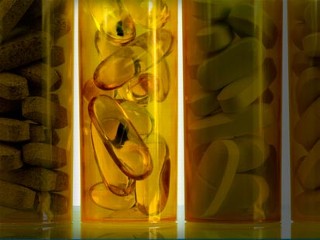
Fish oil appears to have withstood the test of both time and controlled trials; now some cardiologists say it is time for omega-3 polyunsaturated fatty acids to join others nutrients for which a daily recommended intake has been established.
(ABC News Photo Illustration)

By PEGGY PECK and DAN CHILDS
ABC News Medical Unit in Collaboration with MedPage Today

A new analysis could lead to heated debate among heart dictors over whether omega-3 polyunsaturated fatty acids deserves its own recommended daily intake levels.

Fish oil -- a centuries-old pharmacy shelf fixture -- has recently been the subject of much research to determine its heart-protecting properties. Now, some cardiologists say it is time for omega-3 polyunsaturated fatty acids to join others nutrients for which a daily recommended intake has been established.

Dr. Carl Lavie, medical director of Cardiac Rehabilitation and Prevention at the Ochsner Heart and Vascular Institute in New Orleans, is one such cardiologist. He says that healthy people should consume at least 500 mg per day of eicosapentaenoic acid (EPA) plus docosahexaenoic acid (DHA) in order to meet their daily needs for the nutrient.

Lavie and his colleagues made the recommendations in a paper released Monday in the Journal of the American College of Cardiology.

Those with known cardiovascular disease, the researchers added, should consume 800 to 1,000 mg per day of the nutrient.

Such recommendations, if widely established, could solidify omega-3's place in the pantheon of nutrients that diet experts recommend.

But other cardiologists were more measured in their assessment and at least one -- the oft-quoted contrarian Dr. Steven Nissen, director of cardiovascular medicine at the Cleveland Clinic -- said Lavie's conclusions are premature.

"I don't find the evidence for widespread usage of omega-3 particularly compelling," Nissen said.

Others, including Dr. Robert Bonow, past president of the American Heart Association and co-director of the Bluhm Cardiovascular Institute at Northwestern University in Chicago, attempted to temper the enthusiasm by pointing out that while advising patients to increase consumption of fish oil may be "good advice," it should be tempered by adding the caveat that the data are "strongest in those with established heart disease ... with the principal benefit being a reduction in serious rhythm problems.

"The other benefits do appear to be real, but there is less evidence -- and in some cases no evidence -- that these lead to better patient outcomes," Bonow added.

Lavie based his recommendation on a review of findings from four studies that, in total, looked at about 40,000 study participants -- ranging from healthy individuals to those who had experienced a heart attack or other cardiac problem.

Studies May Garner More Acceptance for Fish Oil Supplements

The studies revealed a number of potential advantages to taking in omega-3 fatty acids. One piece of research showed that in men who had recently experienced a heart attack, those who took omega-3-rich fish oil were 29 percent more likely to be alive after two years than their non-fish-oil-eating counterparts.

Even Lavie noted, however, that not all studies have been kind to omega-3s. In his study, he writes that one previous trial showed that patients who have experienced a form of heart-related chest pain known as angina who are treated with fish oil "seem to have a higher risk of [sudden cardiac death] than untreated control subjects." At least one other study has shown the benefits of omega-3 for those who have suffered a heart attack to be questionable.

This has not stopped some heart doctors from using omega-3 supplements in their patients, however. Dr. Melvyn Rubenfire, director of preventive cardiology at the University of Michigan in Ann Arbor, says he is currently using EPA + DHA supplements in patients with coronary artery disease because "available evidence supports it."

But Rubenfire added that he would like to see a "trial in the modern era in patients on other evidence-based treatments such as aspirin, [blood pressure] control, statin and non smoking" to confirm an omega-3 benefit on top of standard care.

And then there is the question of whether people who take commercially available supplements will be getting enough of the nutrient to make a difference. Rubenfire warned that the lack of regulation in the supplement industry means "that 1,000 mg of fish oil caplets may contain as little as 300 mg of EPA+DHA."

American Heart Association Already Backs Omega-3

The American Heart Association (AHA) appears to already be on board with omega-3 guidelines. The organization's current recommendation is that people with confirmed coronary heart disease should consume 1,000 mg daily of combined DHA + EPA. For healthy adults, the AHA recommends consuming 500 mg per day, which works out to consuming at least two servings of fatty fish a week.

But while it does promote heart healthy diets for all, the AHA remains wary about mercury contamination in fish and cautions that fish with the highest potential for contamination -- namely shark, swordfish, king mackerel or tilefish -- should be avoided.

Thursday, March 19, 2009

The 8 Healthiest Breakfast Cereals

By Brandon Guarneri

Like almost all food, finding a cereal that satisfies the palate and boosts your body is a challenge. Some taste good but aren't that good for you. Others are nutritious but taste like crap. So which bowls made our staff snap, crackle, and pop? We tried all the major healthy brands, then asked Elizabeth Ward, M.S., R.D, an MF nutrition adviser, to assess their true nutritional value. We picked the tastiest; Ward selected the healthiest. But which earned a spot on both lists?

Post Grape-Nuts Flakes
110 calories, 3 g protein, 24 g carbs, 1 g fat, 3 g fiber

Despite being super tiny, these flakes had a delicious wheat fl avor—nutty enough to seem healthy without being so overwhelming they screamed "health food." Be forewarned, though: The fl akes dissolve quickly, leaving a sort of whole-wheat mush on your tongue.

OUR EXPERT "The cereal claims to contain wholegrain wheat with barley, but there's nothing on the packaging or food label to show that it's actually much better for you than regular cereals. On the plus side, each serving does provide a decent dose of iron, B vitamins, and vitamin D."

TASTIEST

Honey Bunches of Oats with Real Strawberries
120 calories, 2 g protein, 26 g carbs, 1.5 g fat, 2 g fiber

Delicious. Staffers loved the variety of differently sized and fl avored fl akes, plus the ample freezedried strawberry slices and large chunks of granola. There were definite seconds. And thirds.

OUR EXPERT "Like your cereal sweet and highly processed? Pick this one. You'll get the equivalent of two teaspoons of sugar in every three-quarters cup of cereal and very little fi ber or protein."

Health Valley Granola Raisin Cinnamon
190 calories, 5 g protein, 42 g carbs,2 g fat, 5 g fiber

H.V. packs its raisins separately from the cereal, which we found weird. Even weirder? The speck-size pieces of granola, which looked like sand. Surprisingly, appearances to the contrary, the cereal itself was good—like an oatmeal cookie or perhaps the topping on a fruit cobbler, thanks to ample amounts of spices, including nutmeg and cinnamon.

OUR EXPERT "Granola is usually surrounded with an aura of healthfulness, so it pays to read labels. On the plus side, this cereal is low-sodium, and serves up fi ve grams each of protein and fi ber per serving. Problem is, the serving size is a mere twothirds cup. Eat twice as much, and you're in for 380 calories and a whopping five teaspoons of sugar."

BEST OVERALL

Special K Plus Protein
100 calories, 10 g protein, 14 g carbs, 3 g fat, 5 g fiber

Our big winner. We liked the nice big flakes, especially their thick, rich molasses taste. Less appealing, but easy enough to overlook: a somewhat potent smell, and overly processed aftertaste.

OUR EXPERT "Outstanding for its 10 grams of protein, five grams of fi ber, and only trace levels of sugar. Plus, one serving provides hefty doses of all major B vitamins, plus vitamins E and C, as well."

Kashi 7 Whole Grain Honey Puffs
120 calories, 3 g protein, 25 g carbs, 1 g fat, 2 g fiber

Kashi's puffs looked disappointing at first—sort of like rabbit food or the stuff you'd use to line a gerbil cage. The fl avor was better: lightly sweet, with an airy, popcorn-like texture and pleasant, lingering honey flavor.

OUR EXPERT "Whole grain isn't synonymous with high fi ber, so even though this cereal supplies just two grams of dietary fi ber, it delivers nearly half the whole grain you need in a day, with zero sodium to boot. It's a good choice."

Multi Grain Cheerios
110 calories, 2 g protein, 23 g carbs, 1 g fat, 3 g fiber

The familiar Cheerios shape reminded staffers of little doughnuts. And thanks to a light glaze, it didn't have the dry chalky taste many high-fi ber cereals possess. Instead, it's more like a decent quality multigrain bread. Decent, but not outstanding.

OUR EXPERT "'Multigrain' doesn't always mean a cereal's entirely whole grain, although this one guarantees at least 16 of the 48 grams of whole grain you need each day. And it saves you the multivitamin, since a serving contains 100% of your daily quota for B vitamins, iron, vitamin E, and zinc."

HEALTHIEST

Ezekiel 4:9 Sprouted Whole Grain Cereal, Golden Flax
180 calories, 8 g protein, 37 g carbs, 2.5 g fat, 6 g fiber

Not the most impressive cereal ever: Flakes are small and crumbly, and the cereal's smell is a tad musty—like a library or week-old cut grass. But tasters who loved wheat germ or more savory breakfast options were pleased... some surprisingly so.

OUR EXPERT "This cereal is a standout. Get past the name and you'll find a cereal that's made from whole grains, organic, completely lacking in added sugar, with six grams of fiber, eight grams of protein, and a nice balance of added vitamins and minerals that's not over the top. Unbeatable!"

Wheaties
100 calories, 3 g protein, 22 g carbs, 0.5 g fat, 3 g fiber

Tasters booed. Seriously. The box may draw top athletes, but these flakes are no winners—dry, gritty, and fi brous, like raisin bran without the raisins. Or maybe a big ol' bowl of brittle leaves.

OUR EXPERT "If you enjoy Wheaties, go ahead and eat them, but don't expect too much in the way of nutrition, with the exception of about half your daily B vitamins, iron, and zinc needs, and a marginal shot of vitamin D."

Wednesday, February 18, 2009

How to Order Healthy Chinese Take-Out

by Brandon Guarneri

Chinese food may be tasty, but more often than not it's an ab-killer. We asked Jim White, R.D., a Virginia-based dietician, to help us make some smarter choices.

LEARN THE LINGO
Anything steamed is obviously good, as is Jum (poached), Chu (broiled), Kow (roasted), Shu (barbecued), lightly stir-fried, dry stir-fried, or braised. Anything breaded, fried, or coated in flour is not.

USE THE RIGHT TOOLS
Chopsticks are your friend. "You're going to get less oil than you would with a fork," adds White.

GET SAUCED
Steer clear of thick gravy or sauces made from sugar, flour, or cornstarch (such as those found on General Tso's or Sweet and Sour Pork). They're loaded with corn syrup. Instead, White suggests hot mustard sauce, hoisin sauce, or oyster sauce. And no matter what, always make your order "half sauce." That way, you get half the sauce—and half the calories—of what they'd normally use in the dish.

GO VEGGIE
Here's an inside tip: Order your meal cooked in vegetable stock (a traditional Chinese style of cooking called "stock velveted") to reduce the calories in your dish by 150-300 and the fat by 15-30 grams. "Expect your protein to be a bit more moist and tender, with less crunch than usual," says White.

SKIP UNNECESSARY SIDES
A serving of crispy noodles can set you back as much as 200 calories and 14 grams of fat, and Lo Mein is even worse. That dark brown color in the noodles? It comes from soaking up all that oil. A large portion generally runs in the thousands of calories.

BROWN RICE vs. WHITE RICE
Fried rice is undeniably bad for you, setting you back 450 calories and 14 grams of fat. Brown rise is better, with only 215 calories and a generous 3.5 grams of fiber per cup. But even though it's trendy to avoid white rice because it's a high-glycemic carb, it's not so bad. "Calorie for calorie, they're about the same," says White. You do lose the fiber, though (only a gram in a serving), and you get hardly any vitamins at all. Still, it's definitely not as bad as it's been made out to be.