Zazzle Shop

Screen printing
Showing posts with label Disability. Show all posts

Monday, August 1, 2011

Apps, iPads help workers with disabilities

From: http://articles.sfgate.com/

Jonathan Avila uses his iPad in ways most people might not realize are possible: The device reads e-mail to him while he's traveling to work, tells him which way to walk when he is lost, and even lets him know if there's a sidewalk on the other side of the street. Avila needs these features because he's visually impaired.

"Work bought it as a testing device, but I've claimed it as my own since it makes me more efficient," says Avila, chief accessibility officer for SSB Bart Group, a firm that helps companies implement technology for people with disabilities.

advertisement | your ad here
Apple has added features that make the iPhone and iPad easily accessible, not only to visually impaired people, but also to those with hearing loss and other challenges. The iPhone 4 and the iPad 2, for example, come with VoiceOver, a screen reader for those who can't read print, as well as FaceTime, video-calling software for people who communicate using sign language. Apple has said that iOS 5 - due later this year - will contain improvements to VoiceOver and LED flash and custom vibration settings to let users see and feel when someone is calling.

A looming issue

More such devices will make their way into the workplace to assist people with physical challenges in the next five years. Disability and aging go hand in hand: As Baby Boomers work past age 65, companies will increasingly face this issue.

The incidence of disability in the workplace is 19.4 percent at age 45 and rises to about 50 percent by age 70, according to Jennifer Woodside, chief executive officer of the Disability Training Alliance. Those disabilities can include vision and hearing loss, issues with mobility and dexterity, and learning and cognitive challenges - as well as communications problems.

The global market for assistive technologies, including those used in the home, is projected to reach $40.9 billion in 2016, up from $30.5 billion this year, according to a report from BCC Research that's scheduled to be released this month. In addition to Apple, Microsoft, IBM, Google and Hewlett-Packard make workplace technologies that are accessible to people with a range of abilities.
"Boomers will demand products, services and workplaces that adapt to their needs and desires," says Rich Donovan, chief investment officer at WingSail Capital. Crossover technology such as the iPad, which works well both for people with disabilities and the broader consumer market, are the "holy grail" of business and disability efforts and will drive growth in disability-related capital spending, he says.

Donovan, who has cerebral palsy, just received his first iPad as a Father's Day gift. "I love it - it's simple to use, and it's the ideal accessible technology," he says.

advertisement | your ad here
Companies such as Apple are motivated, at least in part, to create products that work for people with disabilities because the population is aging, says Dorrie Rush, marketing director of accessible technology at Lighthouse International, a nonprofit organization dedicated to fighting vision loss.

Better technology

In the past two years, particularly since the release of the iPhone 3GS that came equipped with VoiceOver, Rush says she has noticed a vast improvement in the technology available to visually impaired users.

For people who need to read office memos or other printed materials, Freedom Scientific sells a scanning and reading appliance for $1,800. Alternatively, there's a free app called SayText that uses the camera from the iPhone 4 to take a photo of a document, prompting the app to read the text aloud. Similarly, ZoomReader, an app from Ai Squared that sells for about $20, reads the text in images from the iPhone 4 camera.

Identifying money can be a challenge for visually impaired people because a $1 bill comes in the same size and color as a $100 bill. Reizen sells a portable money reader on Amazon.com for $99.95. In March the LookTel Money Reader app was released for the iPhone, selling for just $1.99. In April the U.S. Bureau of Engraving and Printing released EyeNote, a free money reader.

Workers who find it difficult to speak because they have cerebral palsy or have suffered a stroke once needed to spend thousands of dollars on speech-generating devices. Instead of shelling out $3,000, they can now buy an iPad for $500 and an app called Proloquo2Go from AssistiveWare that sells for about $190, says Avila.

Market data provided by Bloomberg News

Friday, March 18, 2011

An iPhone App Helps the Blind Identify Currency

By NICK BILTON
From http://bits.blogs.nytimes.com/

For the millions of blind people living in the United States, paying for something in cash can pose major challenges because there is no difference between the size and shape of a $1 or $100 bill. To tackle this problem, many blind people set up systems to identify a bill’s value by folding the notes into different sizes and shapes, which then make them easily identifiable later.

A new application, the LookTel Money Reader, available for $2 on the Apple iOS platform, hopes to help solve this problem by taking advantage of the devices camera to “read money” and speak the value of the currency out loud.

According to the company’s Web site, LookTel recognizes all United States currency and can read $1, $2, $5, $10, $20, $50 and $100 bills aloud.

LookTel, which is made by the software company Ipplex, says the app can recognize currency denominations in real-time. This means that users can simply wave their phone in the direction of the currency and it will speak the bill’s value as it falls into view of the camera. The application does not require an Internet connection.

The currency reading software will soon be available on other platforms, LookTel said.

Identifying United States currency has long been a problem for the visually impaired. Other countries print currency on different sizes and shapes specifically to help people with sight problems identify the different denominations through touch.

Last year, a federal appellate court ruled that under the Rehabilitation Act of 1973, the Treasury Department must change the currency to make it more accessible to the visually impaired.

The iPhone’s software already offers a number of features to assist the visually impaired. Under the phone’s Settings menu, users can navigate to an Accessibility area, which enables them to enlarge the phone’s graphics and text. Apple also offers Voice Over, which speaks text aloud when the phone’s screen is touched.

Friday, January 28, 2011

Challenger Disaster, 25 Years Later: The Five Most Chilling Moments

NASA


Today is the 25th anniversary of the Challenger disaster, a news event that remains so vivid -- especially to Houstonians -- that most everyone can remember where they were when they learned of it or when they first saw a replay of that launch, embedded above.

That day and its aftermath triggered a wide range of emotions, from shock to anger to inspiration. There were five moments, though, that were chilling.

5. "Obviously a major malfunction."

For long seconds after the fireball erupted, and cameras simply showed the smoky trails, it was perhaps possible for people who paid no attention to the space program to think they'd seen the kind of booster separation that happens on launches. But stunned spokesman Steve Nesbitt, uttering the obvious because there was little else to say, cut off any such hope.

4. What? Cold Affects an O-Ring?

Richard Feynman was the thinking man's Carl Sagan, someone who could break down scientific concepts into easily digested information. He did it most memorably in the hearings investigating the disaster, when he showed that cold conditions can affect the o-rings that should never, ever be affected in that manner.

After he did, it was hard not to think, "Isn't that something NASA should have considered?"


3. Did they live for long on the way down?

Seeing the explosion (which wasn't technically an explosion, of course) offered only one, extremely slight, positive thought: At least they never knew what hit them.

Wrong, as it turns out. Evidence began to seep out eventually that the crew cabin had been thrown away from the flames, and that some safety procedures had been started. That brought out the ghouls -- a famous hoax transcript was believed to be true by some ("God -- the water! We're dead -- (screams in background)") -- but the actual evidence was just as eerie. Some emergency oxygen kits had been started and used. And safety switches had been toggled even though they had guards that meant a human -- and not the force of the explosion -- had moved them.

Most experts believe the astronauts survived, but almost immediately lost consciousness due to a lack of cabin pressure. A few disagree.

2. The plumes are seen


After the event, investigators studied every inch of video of the takeoff, examining it frame by frame for evidence of what happened. Soon enough they saw something: A plume of flame opening up on the rocket, where no plume should be. Knowing what happened, the plume was like the first sign of impending catastrophe.

shuttleplume.jpg


1. "Slipped the surly bonds of earth..."

We've never been the biggest fans of speechwriter Peggy Noonan's brand of treacle, but she -- and Ronald Reagan -- shone brilliantly on the day of the disaster. Reagan spoke from the Oval Office, paying tribute and assuring the space program would go on. He tended by memorably summoning up memories of the final few happy moments before the explosion when he quoted aviation poet John Magee:

The crew of the space shuttle Challenger honored us by the manner in which they lived their lives. We will never forget them, nor the last time we saw them, this morning, as they prepared for their journey and waved goodbye and "slipped the surly bonds of earth" to "touch the face of God."


Wednesday, September 1, 2010

Wii Balance Board-controlled robot a hit with toddlers in Ithaca

Wii Balance Board-controlled robot a hit with toddlers in Ithaca (video)

How could we resist a story involving robot-powered babies? The Ithaca College Tots on Bots project aims to mobilize infants with physical disabilities by setting them atop a "mobile robot" equipped with a Wii Balance Board to let the young operator steer by leaning -- which, it turns out, works pretty well. Additionally, the vehicle uses sonar to avoid nasty crashes and a remote control that an adult can use to take control. Further study has to be made before any long term developmental benefits can be ascertained, but in the meantime it does look like a lot of fun. See it in action after the break.


Monday, July 12, 2010

6 y/o Boy with NO Legs & 1 Arm Swims Better Than Most


blog.al.com There's really no other way to put this but "GABE IS THE MAN!"


click here for the amazing story: 6 y/o Boy with NO Legs & 1 Arm Swims Better Than Most

Monday, August 24, 2009

AMPSURF gets wounded veterans riding waves

Big Shots
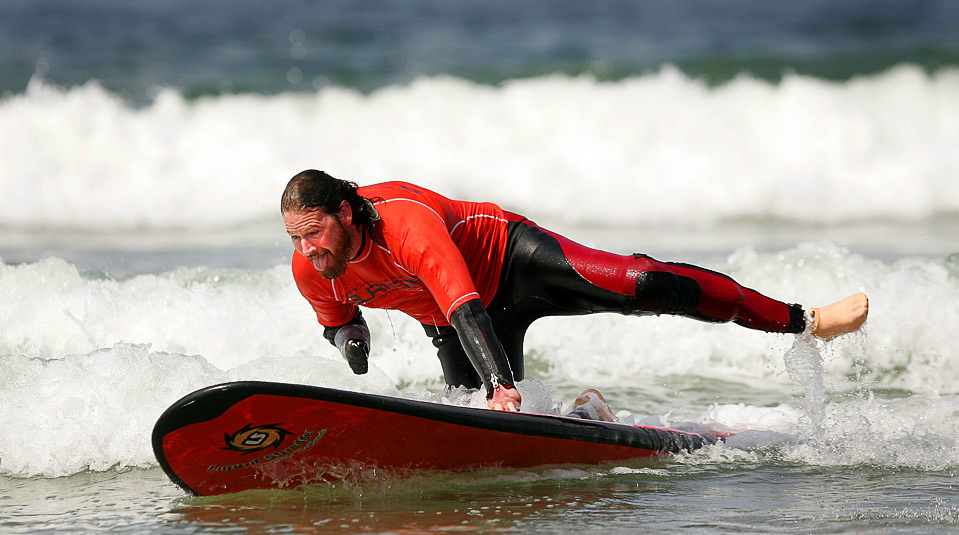
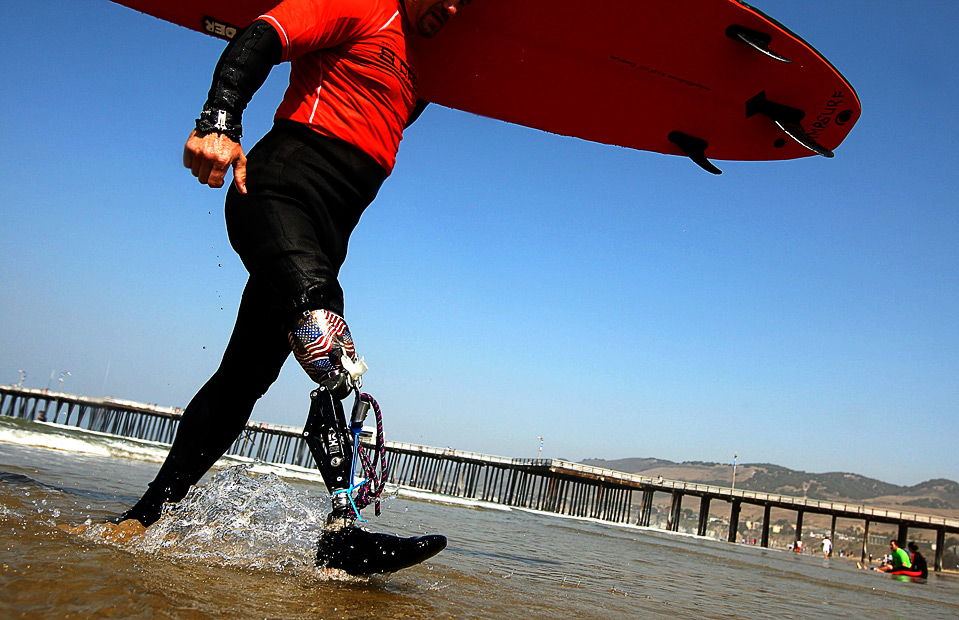
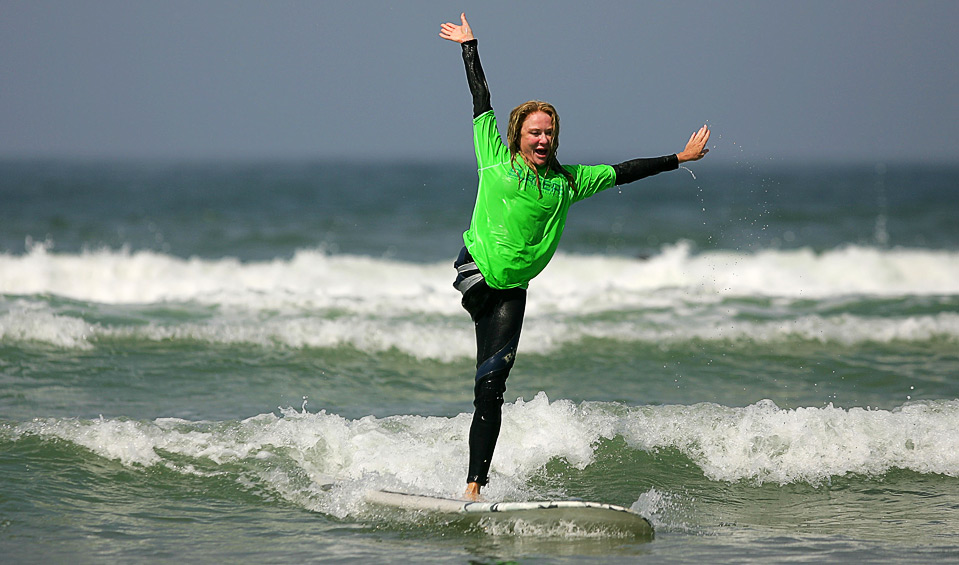
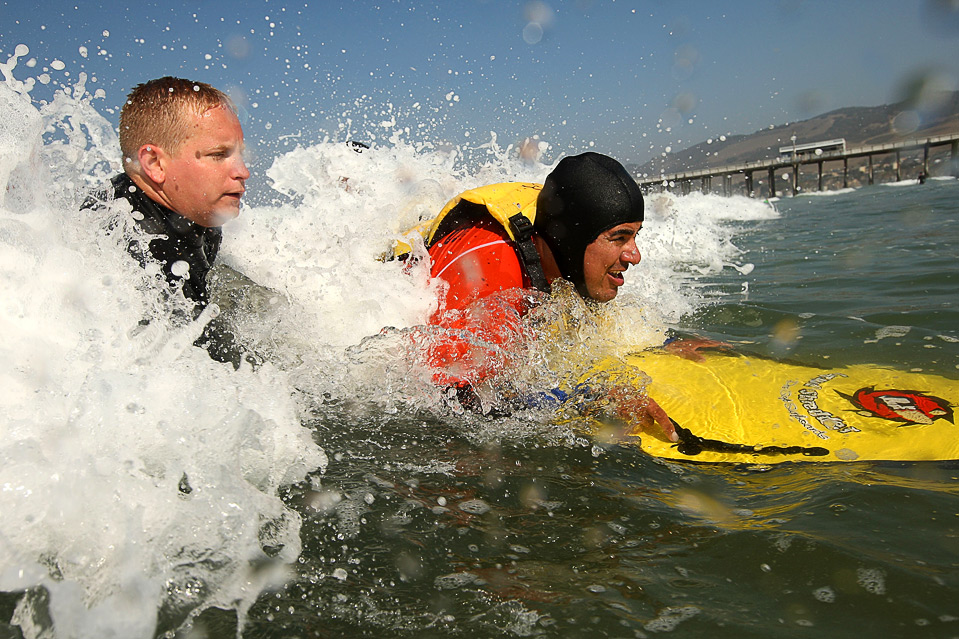
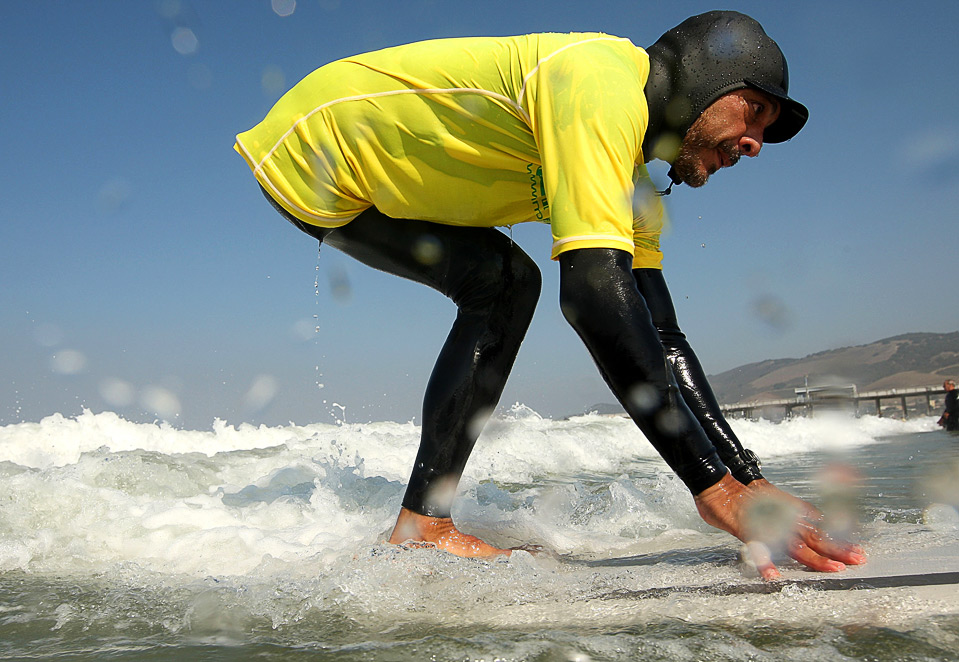
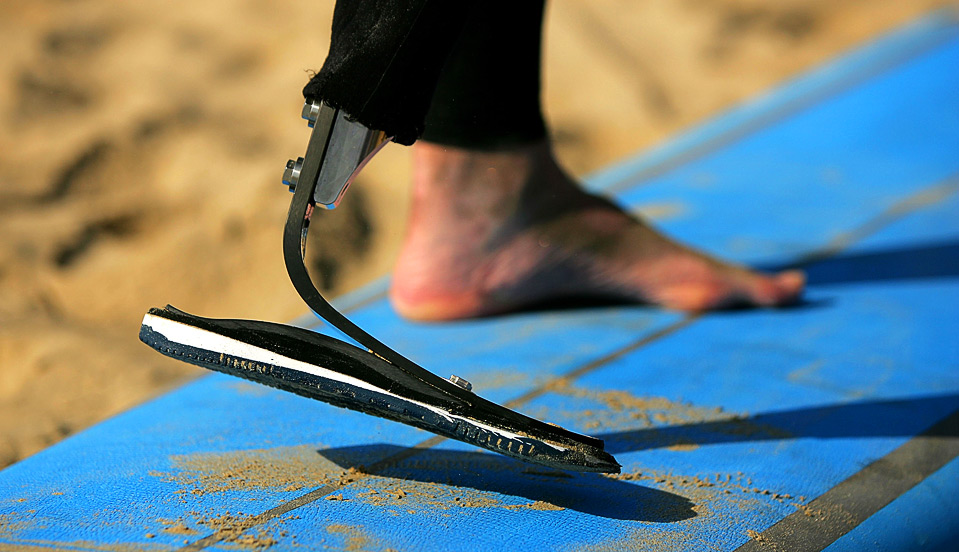
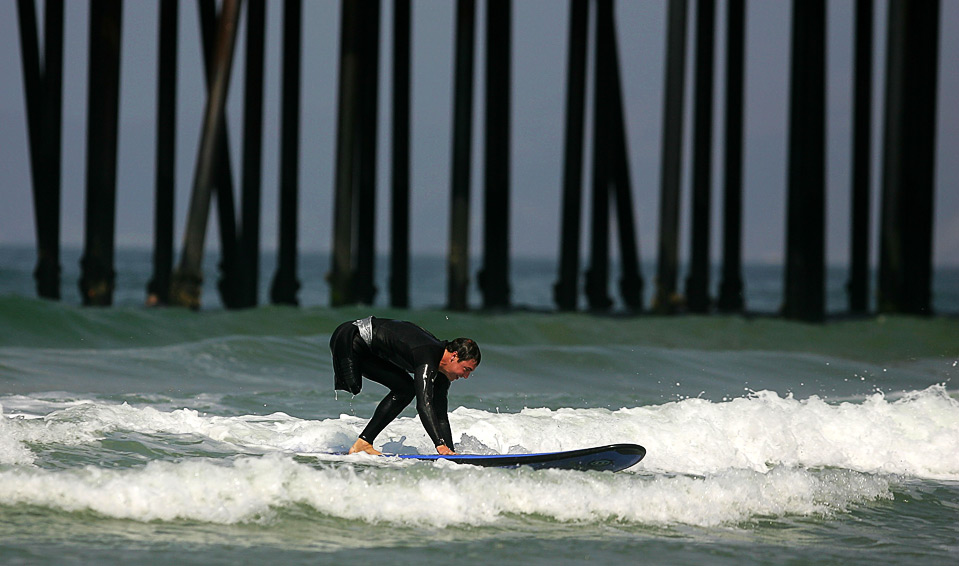
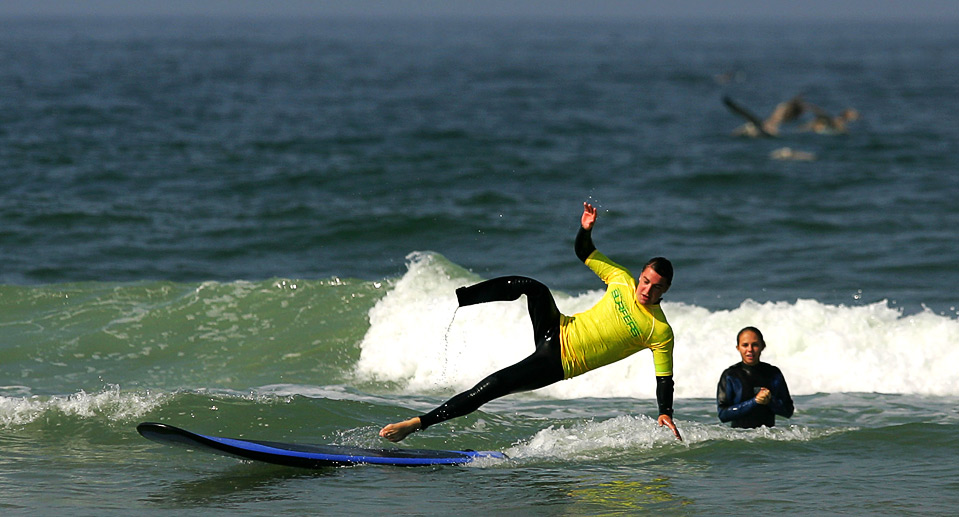
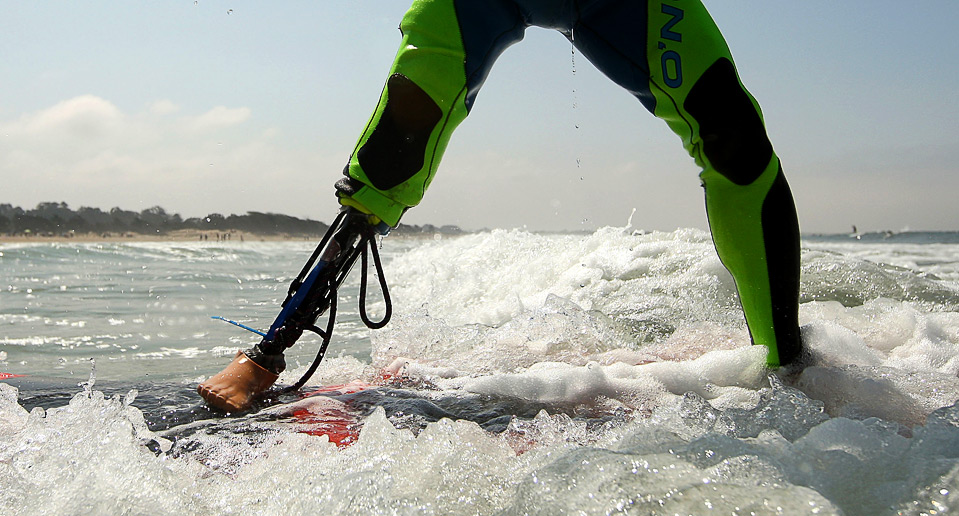
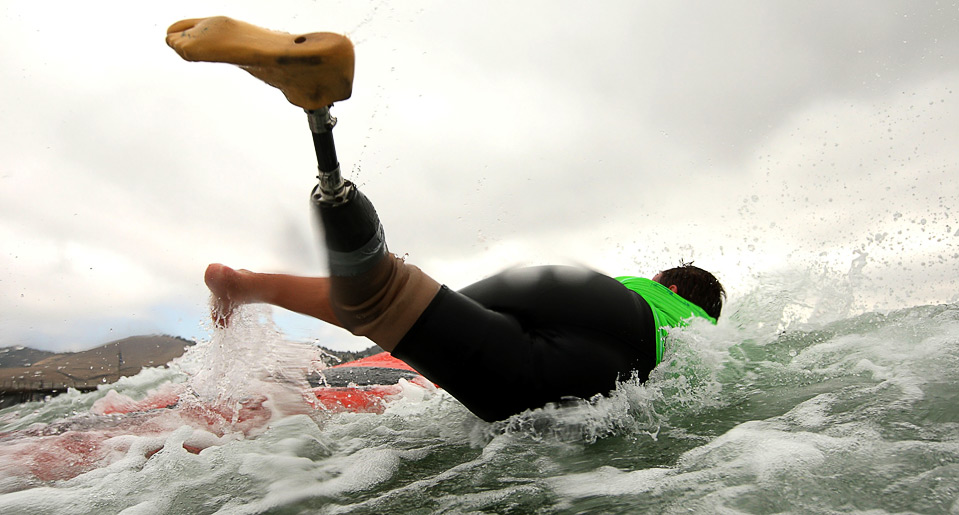
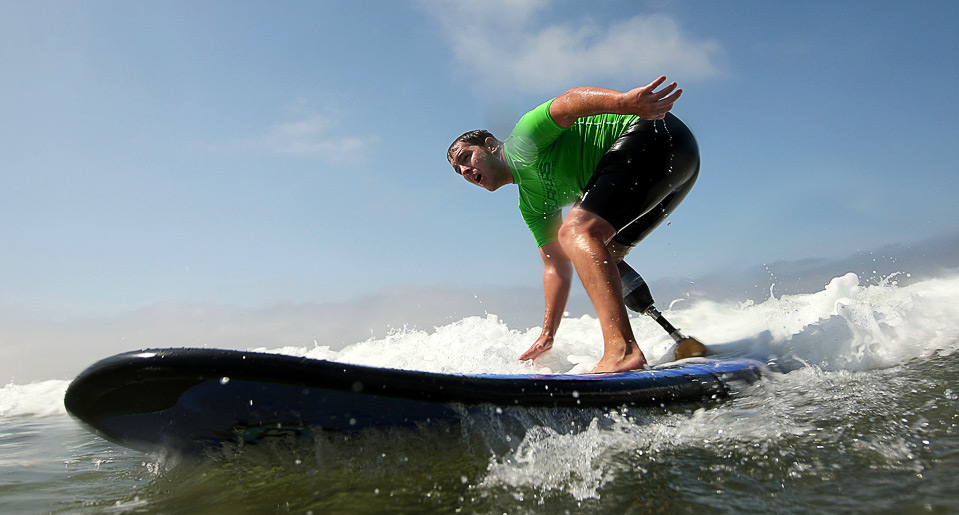
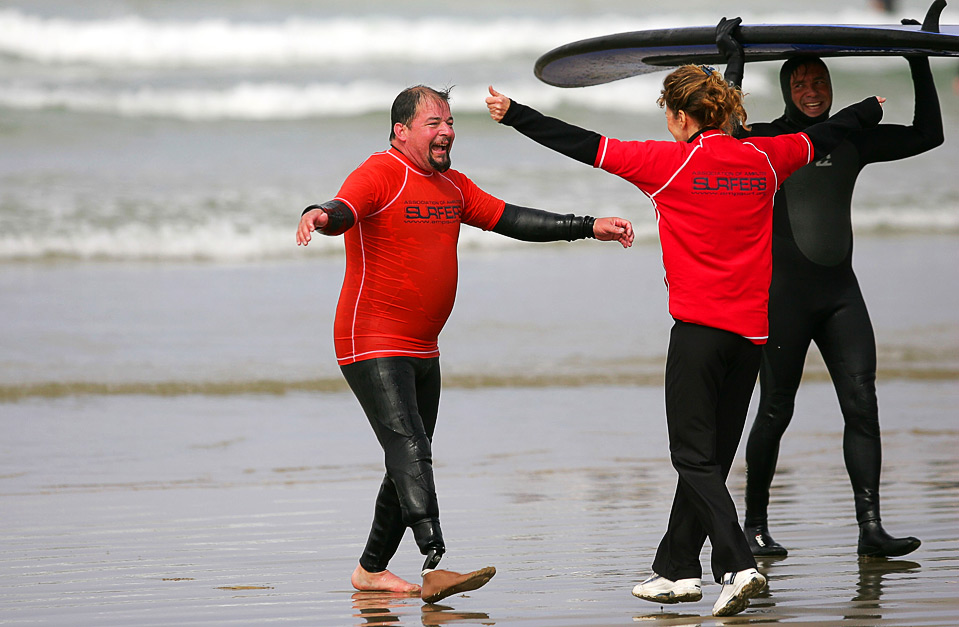
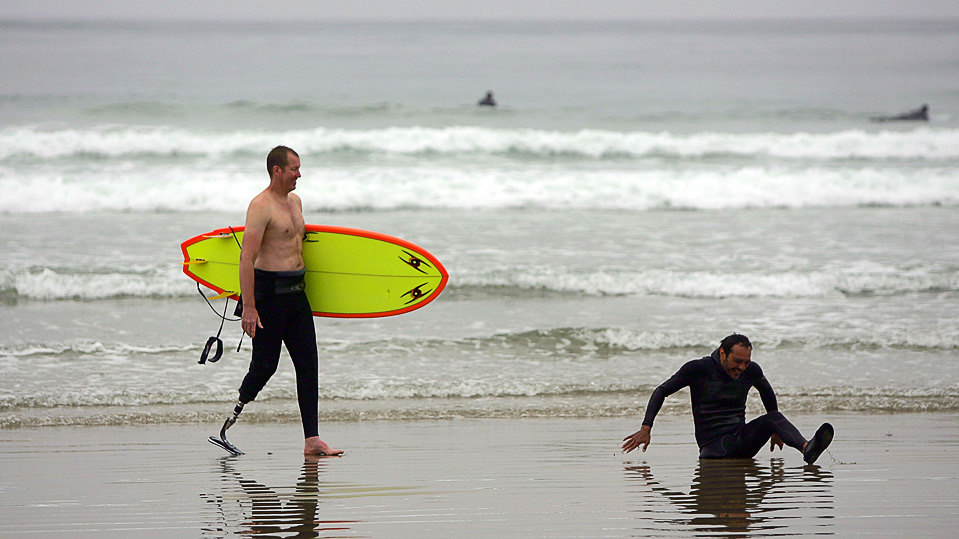
Operation Restoration IV, a learn to surf clinic hosted by The Association of Amputee Surfers, took to the surf on Pismo Beach, Calif. to ride the waves from August 13th - 20th. AMPSURF is an organzation set up to help disabled veterans and local disabled, along with wounded active duty servicemen, to learn adaptive surfing and feel the healing power of the ocean and the sport. Photographer Ezra Shaw shows us the triumphs and challenges of the event. Regular viewers of this blog will recognize Shaw's terrific photography, which frequently appears here. ( 18 photos total)

Triple amputee Jake Speed rides a wave during Operation Restoration IV August 15 in Pismo Beach, Calif. Speed lost the bottom portion of both his legs and his right arm from frostbite when he was caught out in a storm in Greenland for three days while on a research trip. He received his prosthetic legs just two weeks ago. (Ezra Shaw/Getty Images)

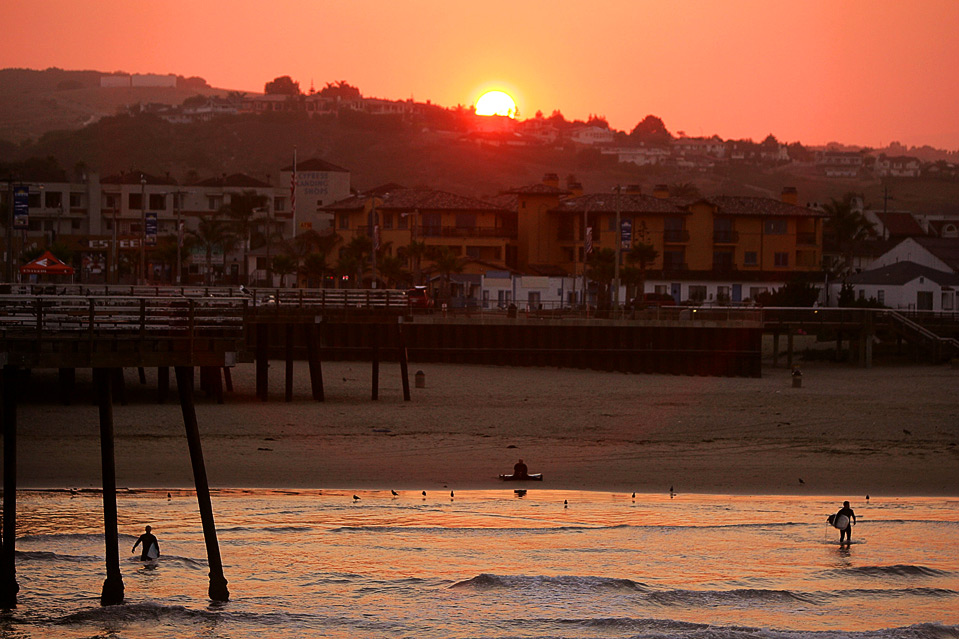
Local surfers walk in to the waves as the sun rises before the start of Operation Restoration IV on August 14. (Ezra Shaw/Getty Images) #

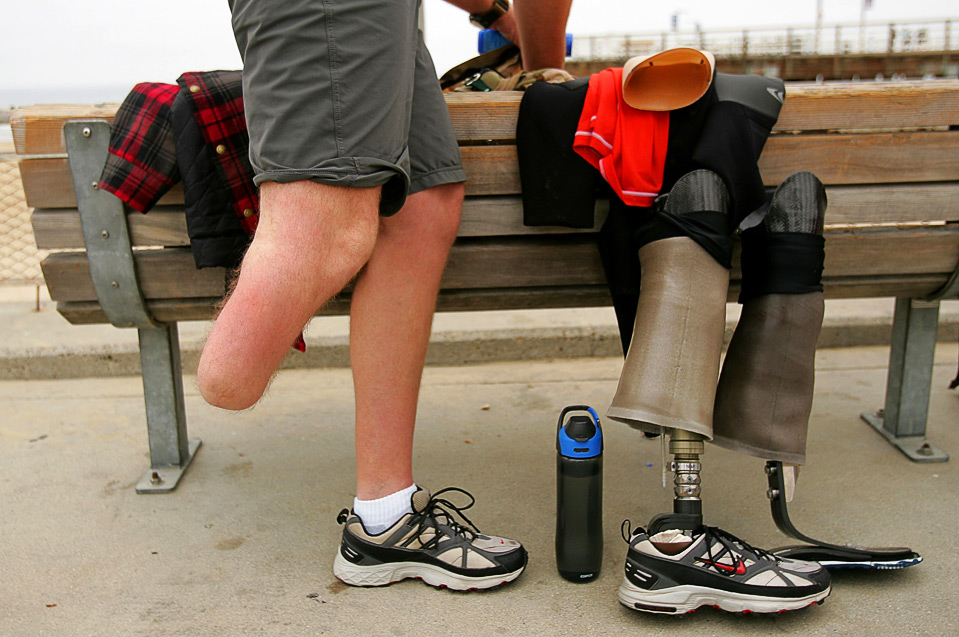
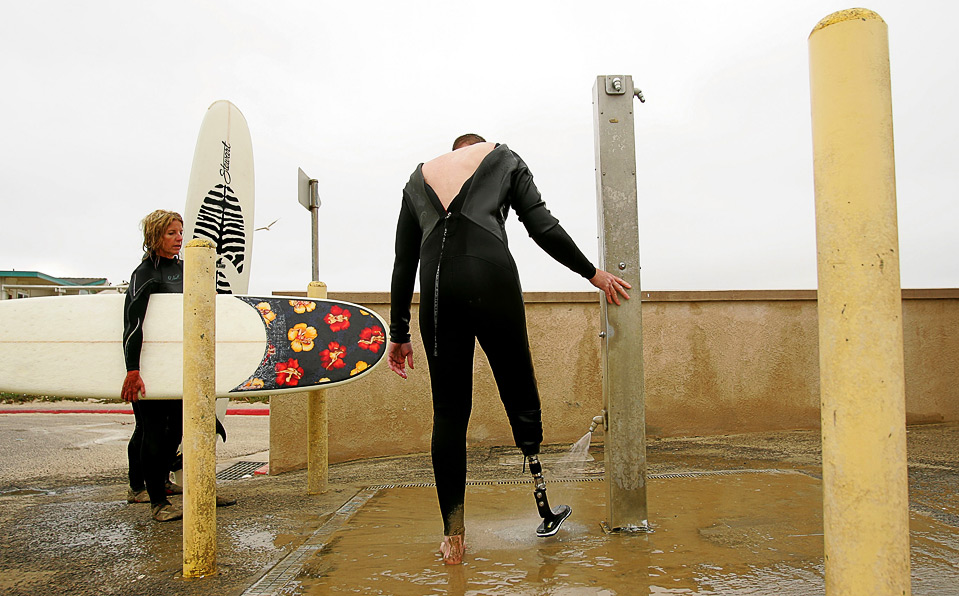
Amputee surfer Timothy Norton changes his prosthetic leg to a special prosthetic leg made for use in the water August 15. Norton was a Section Sergeant May 1, 2008 when his platoon was assigned to clear houses in Mezrah, Iraq, and he was shot and had to have his leg amputated. (Ezra Shaw/Getty Images) #

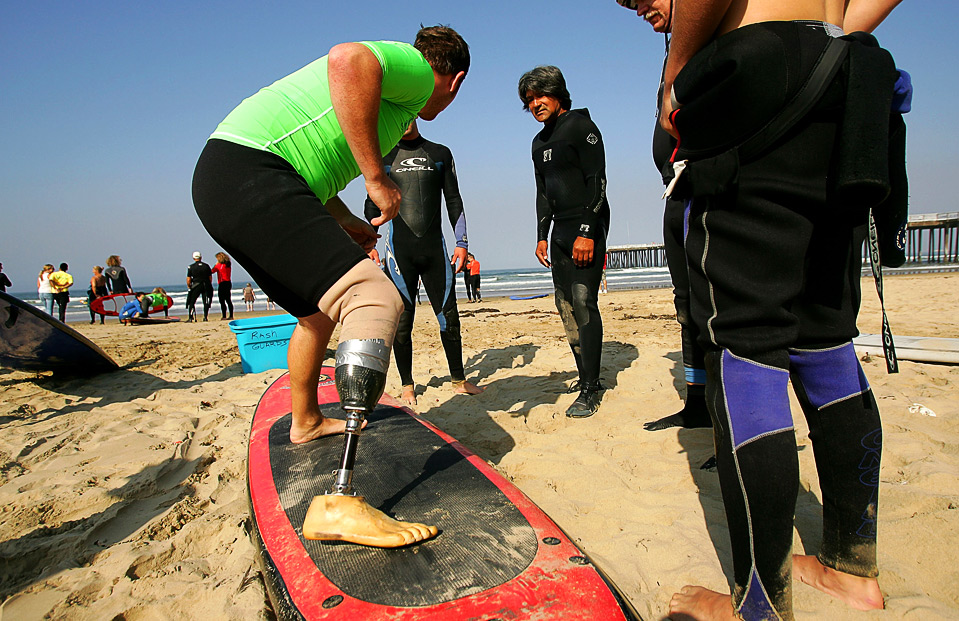
Amputee surfer Ryan West practices standing up on his board August 14. (Ezra Shaw/Getty Images) #

Amputee surfer Timothy Norton walks out of the water August 14. (Ezra Shaw/Getty Images) #

Former Army serviceman Karl Dorman from Washington DC carries his surfboard up the beach August 14. (Ezra Shaw/Getty Images) #

Amputee surfer Julie Carruthers, a.k.a. One-Legged-Joe, catches a wave August 14. (Ezra Shaw/Getty Images) #

Jose Sanchez catches a wave with a help of of local volunteer August 14. (Ezra Shaw/Getty Images) #

Amputee surfer Mario Rodriguez catches a wave August 14. Rodriguez, USAF Retired, suffered a disarticulation of the right hip while serving overseas. (Ezra Shaw/Getty Images) #

Amputee surfer Timothy Norton stands on his board August 14. (Ezra Shaw/Getty Images) #

Paralympian Mark Barr catches a wave August 14. Barr competed for the USA in swimming during the 2008 Paralympics in China. (Ezra Shaw/Getty Images) #

Paralympian Mark Barr falls off his board August 14. (Ezra Shaw/Getty Images) #

Former Army serviceman Karl Dorman from Washington DC rides a wave August 15. (Ezra Shaw/Getty Images) #

Former Army serviceman Karl Dorman from Washington DC rides a wave August 15. (Ezra Shaw/Getty Images) #

Amputee surfer Ryan West rides a wave August 15. (Ezra Shaw/Getty Images) #

Amputee surfer Greg Birkholz receives a hug from a volunteer after catching a wave August 15. Birkholz, who was one of the original founders of AMPSURF, lost his leg in a motorcycle accident. (Ezra Shaw/Getty Images) #

Timothy Norton (L) and Mario Rodriguez leave the water after a surfing session August 16. (Ezra Shaw/Getty Images) #

Amputee surfer Timothy Norton washes his prosthetic leg in the shower after a surfing session August 16. (Ezra Shaw/Getty Images) #