

Showing posts with label Dentist. Show all posts
Showing posts with label Dentist. Show all posts
Thursday, July 8, 2010
Tuesday, June 29, 2010
Tooth Regeneration Gel Could Replace Painful Fillings
Could this new gel be the biggest dental breakthrough since the introduction of fluoride?


Treating cavities without drilling could mean less apprehensive patients at the dentist's office. Click to enlarge this image.
Getty Images
Dentists could soon hang up their drills. A new peptide, embedded in a soft gel or a thin, flexible film and placed next to a cavity, encourages cells inside teeth to regenerate in about a month, according to a new study in the journal ACS Nano. This technology is the first of its kind.
The new gel or thin film could eliminate the need to fill painful cavities or drill deep into the root canal of an infected tooth.
"It's not like toothpaste," which prevent cavities, said Nadia Benkirane-Jessel, a scientist at the Institut National de la Sante et de la Recherche Medicale and a co-author of a recent paper. "Here we are really trying to control cavities (after they develop)."
Drilling teeth and filling them is safe and effective. Dentists fill millions of cavities each year across the United States. However, though dentists numb the tooth, many patients still rue the sound of that drill.
The new research could make a trip to the dentist's office more pleasant, said Berkirane-Jessel. Instead of a drill, a quick dab of gel or a thin film against an infected tooth could heal teeth from within.
Cavities are bacteria and pus-filled holes on or in teeth which can lead to discomfort, pain and even tooth loss. When people eat acidic foods, consume sugary snacks or simply don't maintain proper oral hygiene, bacteria begin to eat away at the protective enamel and other minerals inside teeth.
The causes of cavities are varied. But for most cavities, the treatment is the same: drilling into a tooth, removing the decay and filling in the hole to prevent further damage.
The gel or thin film contains a peptide known as MSH, or melanocyte-stimulating hormone. Previous experiments, reported in the Proceedings of the National Academy of Sciences, showed that MSH encourages bone regeneration.
Bone and teeth are fairly similar, so the French scientists reasoned that if the MSH were applied to teeth, it should help healing as well.
To test their theory, the French scientists applied either a film or gel, both of which contained MSH, to cavity-filled mice teeth. After about one month, the cavities had disappeared, said Benkirane-Jessel.
Benkirane-Jessel cautions that the MSH-containing films or gels only treat cavities; they don't prevent them. People will still need to brush, floss and use mouthwash to help prevent cavities from forming in the first place.
Treating cavities without drilling "would have its advantages," said Hom-Lay Wang, a dentist at the University of Michigan. Cavities and drilling can destroy the nerves and blood vessels inside a tooth, making it more brittle and likely to fracture. Regenerating a tooth could help avoid crowns after a cavity has been filled.
That said, regenerating a tooth from within would only be useful in a relatively small number of cases. Most cavities would still need to be drilled and filled.
In the meantime, patients can't slacken their oral hygiene either. Numerous clinical trials over several years will have to be completed before the MSH-containing gels or films are available to treat cavities in humans.
Friday, May 28, 2010
Body’s Own Stem Cells Can Lead to Tooth Regeneration
Work at Columbia University College of Dental Medicine Holds Promise for a Biological Substitute for Dental Implants, According to Latest Journal of Dental Research
NEW YORK (May 19, 2010) - A technique pioneered in the Tissue Engineering and Regenerative Medicine Laboratory of Dr. Jeremy Mao, the Edward V. Zegarelli Professor of Dental Medicine at Columbia University Medical Center, can orchestrate stem cells to migrate to a three-dimensional scaffold infused with growth factor, holding the translational potential to yield an anatomically correct tooth in as soon as nine weeks once implanted.
People who have lost some or all of their adult teeth typically look to dentures, or, more recently, dental implants to improve a toothless appearance that can have a host of unsettling psycho-social ramifications. Despite being the preferred (but generally painful and potentially protracted) treatment for missing teeth nowadays, dental implants can fail and are unable to “remodel” with surrounding jaw bone that undergoes necessary changes throughout a person’s life.
 |
Human molar scaffolding from the lab of Dr. Jeremy Mao |
An animal-model study has shown that by homing stem cells to a scaffold made of natural materials and integrated in surrounding tissue, there is no need to use harvested stem cell lines, or create an environment outside of the body (e.g., a Petri dish) where the tooth is grown and then implanted once it has matured. The tooth instead can be grown “orthotopically,” or in the socket where the tooth will integrate with surrounding tissue in ways that are impossible with hard metals or other materials.
"These findings represent the first report of regeneration of anatomically shaped tooth-like structures in vivo, and by cell homing without cell delivery,” Dr. Mao and his colleagues say in the paper. "The potency of cell homing is substantiated not only by cell recruitment into scaffold microchannels, but also by the regeneration of periodontal ligaments and newly formed alveolar bone."
This study is published in the most recent Journal of Dental Research, the top-rated, peer-reviewed scientific journal dedicated to the dissemination of new knowledge and information on all sciences relevant to dentistry, the oral cavity and associated structures in health and disease.
Dental implants usually consist of a cone-shaped titanium screw with a roughened or smooth surface and are placed in the jaw bone. While implant surgery may be performed as an outpatient procedure, healing times vary widely and successful implantation is a result of multiple visits to different clinicians, including general dentists, oral surgeons, prosthodontists and periodontists. Implant patients must allow two to six months for healing and if the implant is installed too soon, it is possible that the implant may fail. The subsequent time to heal, graft and eventually put into place a new implant may take up to 18 months.
The work of Dr. Mao and his laboratory, however, holds manifold promise: a more natural process, faster recovery times and a harnessing of the body’s own potential to re-grow tissue that will not give out and could ultimately last the patient’s lifetime.
 |
| Jeremy Mao, D.D.S., Ph.D. |
“A key consideration in tooth regeneration is finding a cost-effective approach that can translate into therapies for patients who cannot afford or who aren’t good candidates for dental implants,” Dr. Mao says. “Cell-homing-based tooth regeneration may provide a tangible pathway toward clinical translation.”
Dr. Ira B. Lamster, dean of the College of Dental Medicine, stated: “This research provides an example of what is achievable when today’s biology is applied to common clinical problems. Dr. Mao’s research is a look into the future of dental medicine.”
This research was supported by NIH ARRA Funding via 5RC2 DE020767 from the National Institute of Dental and Craniofacial Research. Columbia has filed patent applications relating to the engineered tooth and, through its technology transfer office, Columbia Technology Ventures, is actively seeking partners to help commercialize the technology.
###Monday, March 2, 2009
The Wisdom on Wisdom Teeth
Surgeons favor pre-emptive action; others might wait and see.
By Lindsay Lyon, U.S. News & World Report
"You know the old colloquialism, let sleeping dogs lie? Well these dogs are not sleeping," warns Richard Haug, executive associate dean at the University of Kentucky College of Dentistry, as he refers to wisdom teeth. An ongoing study links even pain-free wisdom teeth to early gum disease that worsens over time, sometimes causing havoc far beyond the mouth. Indeed, pregnant women with gum disease around their wisdom teeth appear to be much more likely to give birth prematurely than unaffected pregnant women. The latest data suggest that as many as 80 percent of people will develop problems with their wisdom teeth.
But controversy lingers about when to take action. Most experts no longer believe that crowding is a concern, but the American Association of Oral and Maxillofacial Surgeons typically recommends pre-emptive pulling in young adulthood, before symptoms arise, when roots haven't yet fully formed and surgical risks are lowest. "If you have to have them out when you're 45, you will not enjoy that," promises Tony Pogrel, chair of the department of oral and maxillofacial surgery at the University of California-San Francisco.
Andrew Ziolkowski, 59, can attest to that. A dental checkup a couple of years ago revealed that cysts had formed around his impacted wisdom teeth and damaged his jawbone—a surprise to Ziolkowski, who hadn't experienced any pain. The necessary surgery required that his jaw be wired shut for weeks afterward and resulted in some nerve damage, a rare complication. "To this day I have no sensation in my lower lip and chin," says the architect from Germantown, Md.
Nonsurgeons are less gung-ho about preventive pulling. "If they're not causing pain or infection, and they're coming in straight, I usually take a wait-and-see approach," says Cynthia Sherwood, a general dentist and national spokesperson for the Academy of General Dentistry. Those who wait are advised to have their wisdom teeth checked yearly, since they are tough to keep clean and may get infected or shift position. "You're committed to that treatment plan until you die," says Thomas Dodson, associate professor of oral and maxillofacial surgery at Massachusetts General Hospital.
Because wisdom teeth don't form until around age 5, Anthony Silvestri, director of dental anatomy and occlusion at Tufts University's dental school, foresees a day when lasers will be used to prevent that from happening. He and colleagues have had success in animals. "It doesn't make sense," he says, "that everyone should be having surgery for a useless tooth."
Friday, February 27, 2009
10 Secrets to Brighter, Whiter Teeth
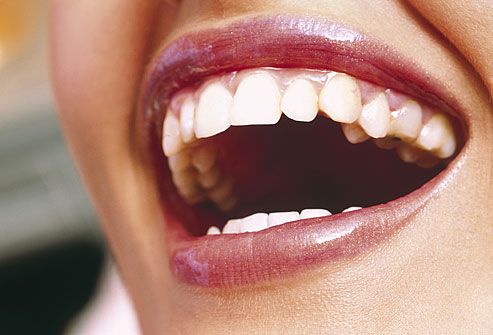
Want brighter, whiter teeth? Know what to do – and what to avoid.
read more | digg story
Wednesday, February 4, 2009
Kid's reaction after being drugged up at the dentist office
This is my 7 year old son who had an extra tooth removed last summer, 2008. I had the camera because he was so nervous before I wanted him to see before and after.
He was so out of it after, I had to carry him out of the office. The staff was laughing and I had tears it was so funny.
He is doing fine now and the teeth are great.
Best of all he is the best kid as his brother William. I couldnt have asked for two better sons!
2/3 Update: Video camera is a flip video. not bad for $150 bucks!
Subscribe to:
Posts (Atom)
 .
.

 Posts
Posts

