Zazzle Shop

Screen printing
Showing posts with label Alex Rodriguez. Show all posts

Tuesday, September 8, 2009

A-Rod At It Again In T.O., This Time Groping Female Officers

arod-grops-officer-11


Total Pro Sports - Toronto seems to be a hot spot for Alex Rodriguez. Last time he made headlines in the great Canadian city, it was for his extra-marital affairs with a hot blond at a local strip club. This time he stayed away from the titty bars, and even the hot blond (not Kate Hudson or Madonna), as it was a dark-haired Toronto police officer that he had his eyes on.

During last night's game between the Jays and the New York Yankees, a pop-up off the bat of Lyle Overbay was drifting towards the stands on the third base side. ARod made his way towards the area in an attempt to record the out.

Although he could not get a piece of the ball as it trailed off into the stands, he did manage to get himself a piece of something. That something was one of the city of Toronto's finest (cops, that is).

Reaching the warning track, he lunged, but missed the ball, unintentionally groping the female police officer sitting against the stands – not once but twice. For the first time in years, Alex Rodriguez was cheered good-naturedly at the Rogers Centre.

"I'm just glad she didn't read me my rights," Rodriguez said. "Only me. My God, how embarrassing." [Toronto Star]

Even more embarrassing than facing the fans after admitting to using steroids? We doubt that.

ARod and Johnny Damon would end up checking on the woman in uniform and she would be alright. No word yet, but it doesn't seem like Rodriguez took her out afterward for some drinks to celebrate the 10-5 victory at The Brass Rail (a fine Toronto strip club).

Here is how it all unfolded.


ARod grops female officer

ARod grops female officer

ARod grops female officer

ARod grops female officer

After the groping

After the groping

Hat Tip Pics - [Blitz Corner]...check them out for the rest of the pics.

Thursday, March 19, 2009

I'M SUCH A PRETTY BOY! - A-ROD MADLY IN LOVE WITH HIS MIRROR


Nothing gets between A-Rod and his mirror!

Troubled slugger Alex Rodriguez gets up close and personal - with himself - in a one-man love affair photographed and published in the upcoming Details magazine.

The mag captures A-Rod's essence, with pictures of him smooching his own reflection, stretching his toned muscles on a bare mattress and brooding seductively for the camera.

Rodriguez wore Calvin Klein T-shirts and tank tops for the spread, evocative of the designer's sexy, envelope-pushing ads.

Read the full story and see more photos at Details.com.

Despite being one of the most recognizable men in the city, A-Rod told Details - in an issue that hits newsstands a week from today - that he enjoys taking the subway to Yankee Stadium, usually on Fridays.

"For night games ... the day to do it is a Friday, because traffic is horrible," he said.

The $27-million-a-year slugger, who's sidelined for two months after having a cyst removed and undergoing labrum surgery on a bum hip, says he wears a hooded sweatshirt on the train.

Yet he's usually discovered by eagle-eyed fans who pummel him with questions.

"I get a kick out of it," he said. "We talk about who's pitching tonight, and what we need to do. It's like being on sports radio."

The flawed superstar was all over the headlines last summer for his alleged extra-inning play with Madonna, who, at 50, is 17 years his senior.

Rodriguez said he's "friends" with the pop princess, but Details didn't press him to address allegations by ex-wife Cynthia Rodriguez that the Material Mom is a homewrecker.

"Well, we're friends. She's an amazing entertainer," A-Rod said of Madonna. "And it's been amazing how she's been able to stay on top for three decades. I have a lot of respect for her."

Details writer Jason Gay noted that A-Rod frantically reached out to him after the interview to retract the revelation of his favorite Madonna song.

The meltdown seemed like an odd concern of A-Rod's, according to Gay, considering that the Bomber's chat with Details came after Sports Illustrated reported he had used banned substances, and days before he faced teammates and media in Tampa.

A-Rod told the writer he didn't want that particular Madonna song blaring at rival American League parks at every road game.

Rodriguez recounted how he quit baseball as a 12 year old, convinced he was going to be a basketball star.

The slugger's mom whipped out NBA rosters and challenged him to find one hoopster of Dominican heritage.

"I looked for 15 minutes and couldn't find one," he said. "Two weeks later, I was back at baseball."

david.li@nypost.com

Tuesday, February 10, 2009

Curt Schilling: Name all 104 positives not just A-Rod

NEW YORK -- A day after Alex Rodriguez was linked to steroids, another All-Star offered this suggestion: Make public the entire list of players who failed drug tests in 2003. "I'd be all for the 104 positives being named, and the game moving on if that is at all possible," former Boston ace Curt Schilling wrote on his blog Sunday, referring to the number of players who were tested but assured confidentiality. "In my opinion, if you don't do that, then the other 600-700 players are going to be guilty by association, forever," he wrote. "It appears that not only was it 104, but three of the greatest of our, or any, generation appear to be on top of this list."

Yankees teammate Derek Jeter, speaking from the club's spring training site in Tampa, Fla., on Monday, said Rodriguez should be given "the benefit of the doubt."

"My intitial reaction is let him respond" to the report, Jeter said, according to Newsday. "Give him the respect to respond to it before you pass judgment."

Rodriguez joined Barry Bonds and Roger Clemens on an ever-growing list of stars tainted by the steroids era scandal. Sports Illustrated reported Saturday the Yankees slugger, already dubbed "A-Roid" in the tabloids, tested positive for two steroids in 2003, when he played for the Texas Rangers.

Sources confirmed to ESPN that Rodriguez, now with the New York Yankees, was aware he tested positive. Rodriguez, the players' union and Major League Baseball were mum Sunday. "Alex has been out of the country. I expect him back later today and want to confer with my client before saying anything," agent Scott Boras said. One recently retired player wanted to know how Rodriguez's name got out. Sean Casey, who spent last season with the Red Sox, said he felt violated by the leak. "A little bit, because it was supposed to be a survey test and those results were supposed to be confidential," he said. "The only reason we opened up the collective bargaining agreement was on those terms." The list was compiled from 2003 tests, conducted by baseball to see whether the sport had a problem with drugs. No penalties were to be imposed for a positive test, and the results were supposed to remain anonymous. Many players seemed to believe the samples would be destroyed. Casey said he wouldn't be surprised if more names were revealed, "especially because of the witch hunt with Bonds and Clemens." Bob DuPuy, baseball's chief operating officer, said the purported disclosure shouldn't cause a loss of confidence in the program's confidentiality. "2003 tests were supposed to be confidential. For whatever reason test results were not destroyed as they were supposed to have," he said in an e-mail to The Associated Press. "Since then, positives have been identified. I am comfortable [the] program is operated currently as it should be." Baseball began suspensions for players who test positive for steroids for the first time in 2005. Players who test positive for amphetamines at least twice have been suspended since 2006. Rodriguez has always denied using performance-enhancing drugs. When he was approached by SI last week about the allegations, he said, "You'll have to talk to the union." Union head Donald Fehr declined comment Sunday. The Major League Baseball Players Association issued a statement Saturday afternoon: "Information and documents relating to the results of the 2003 MLB testing program are both confidential and under seal by court orders. We are prohibited from confirming or denying any allegation about the test results of any particular player[s] by the collective bargaining agreement and by court orders. Anyone with knowledge of such documents who discloses their contents may be in violation of those court orders."
[+] Enlarge
Alex Rodriguez
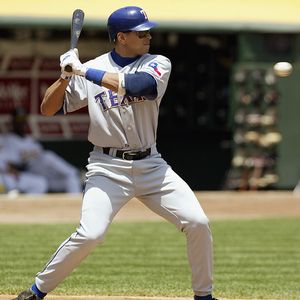
Jed Jacobsohn/Getty ImagesAlex Rodriguez, shown here in June 2003, finished that season first in the American League in home runs (47), runs (124) and slugging percentage (.600).
Major League Baseball said it was "disturbed" by the report, but did not elaborate because of player confidentiality. "Because the survey testing that took place in 2003 was intended to be nondisciplinary and anonymous, we cannot make any comment on the accuracy of this report as it pertains to the player named," MLB executive vice president Rob Manfred said. For a list that was to remain confidential, quite a few people have had access to the players' names, including 17 federal judges and dozens of lawyers, federal prosecutors and investigators. Federal investigators looking for data on 10 players connected to the Bay Area Laboratory Co-Operative first seized the list of 104 names in April 2004 during a raid on a private laboratory. Since then, three federal trial court judges and their staffs reviewed the lists in considering related legal actions filed by the players' union, which argued the 104 names were improperly seized because the original search warrant sought only the names of 10 players in the BALCO investigation. After those judges ruled in favor of the union, government lawyers successfully appealed their case to a three-judge panel of the 9th U.S. Circuit Court of Appeals, which said prosecutors had the right to the records of all players who tested positive. A full 11-judge panel of the 9th Circuit threw out the initial appellate decision that favored the government. The full panel heard the case in December and hasn't ruled. Spring training starts this week, now sure to open under a cloud of suspicion. Bonds is set for trial March 2, accused of lying to a grand jury when he said he never knowingly took performance-enhancing drugs, and a grand jury is investigating whether Clemens lied when he told a congressional committee under oath last year that he never knowingly used steroids or human growth hormone. Rodriguez is a three-time AL MVP and the highest-paid player in the majors. With 553 home runs at age 33, the New York third baseman is considered the most likely successor to Bonds' career homer record of 762. Many in baseball had hoped a "clean" Rodriguez would help push the steroids era further into the past by surpassing Bonds. Instead, Rodriguez finds himself swept up in the drug scandal. Fans were left to wonder: Would the allegations hurt Rodriguez's Hall of Fame chances, the same way they damaged Mark McGwire? "We can't be shocked by any names, any more," Schilling said in his blog. Information from The Associated Press was used in this report.

Monday, February 9, 2009

Alex Rodriguez tested positive for steroids in 2003

By Selena Roberts and David Epstein

In 2003, when he won the American League home run title and the AL Most Valuable Player award as a shortstop for the Texas Rangers, Alex Rodriguez tested positive for two anabolic steroids, four sources have independently told Sports Illustrated.

Rodriguez's name appears on a list of 104 players who tested positive for performance-enhancing drugs in Major League Baseball's '03 survey testing, SI's sources say. As part of a joint agreement with the MLB Players Association, the testing was conducted to determine if it was necessary to impose mandatory random drug testing across the major leagues in 2004.

When approached by an SI reporter on Thursday at a gym in Miami, Rodriguez declined to discuss his 2003 test results. "You'll have to talk to the union," said Rodriguez, the Yankees' third baseman since his trade to New York in February 2004. When asked if there was an explanation for his positive test, he said, "I'm not saying anything."

The MLBPA issued a statement on Saturday, saying "Information and documents relating to the results of the 2003 MLB testing program are both confidential and under seal by court orders. We are prohibited from confirming or denying any allegation about the test results of any particular player[s] by the collective bargaining agreement and by court orders. Anyone with knowledge of such documents who discloses their contents may be in violation of those court orders."

Rob Manfred, MLB's Executive Vice President of Labor Relations, also released a statement on Saturday, saying, "We are disturbed by the allegations contained in the Sports Illustrated news story which was posted online this morning. Because the survey testing that took place in 2003 was intended to be non-disciplinary and anonymous, we can not make any comment on the accuracy of this report as it pertains to the player named." (Click here for full statement)

Though MLB's drug policy has expressly prohibited the use of steroids without a valid prescription since 1991, there were no penalties for a positive test in 2003. The results of that year's survey testing of 1,198 players were meant to be anonymous under the agreement between the commissioner's office and the players association. Rodriguez's testing information was found, however, after federal agents, armed with search warrants, seized the '03 test results from Comprehensive Drug Testing, Inc., of Long Beach, Calif., one of two labs used by MLB in connection with that year's survey testing. The seizure took place in April 2004 as part of the government's investigation into 10 major league players linked to the BALCO scandal -- though Rodriguez himself has never been connected to BALCO.

The list of the 104 players whose urine samples tested positive is under seal in California. However, two sources familiar with the evidence that the government has gathered in its investigation of steroid use in baseball and two other sources with knowledge of the testing results have told Sports Illustrated that Rodriguez is one of the 104 players identified as having tested positive, in his case for testosterone and an anabolic steroid known by the brand name Primobolan. All four sources spoke on the condition of anonymity due to the sensitive nature of the evidence.

Primobolan, which is also known by the chemical name methenolone, is an injected or orally administered drug that is more expensive than most steroids. (A 12-week cycle can cost $500.) It improves strength and maintains lean muscle with minimal bulk development, according to steroid experts, and has relatively few side effects. Kirk Radomski, the former New York Mets clubhouse employee who in 2007 pleaded guilty to illegal distribution of steroids to numerous major league players, described in his recent book, Bases Loaded: The Inside Story of the Steroid Era in Baseball by the Central Figure in the Mitchell Report, how players increasingly turned to drugs such as Primobolan in 2003, in part to avoid detection in testing. Primobolan is detectable for a shorter period of time than the steroid previously favored by players, Deca-Durabolin. According to a search of FDA records, Primobolan is not an approved prescription drug in the United States, nor was it in 2003. (Testosterone can be taken legally with an appropriate medical prescription.)

Rodriguez finished the 2003 season by winning his third straight league home run title (with 47) and the first of his three MVP awards.

Because more than 5% of big leaguers had tested positive in 2003, baseball instituted a mandatory random-testing program, with penalties, in '04. According to the 2007 Mitchell Report on steroid use in baseball, in September 2004, Gene Orza, the chief operating officer of the players' union, violated an agreement with MLB by tipping off a player (not named in the report) about an upcoming, supposedly unannounced drug test. Three major league players who spoke to SI said that Rodriguez was also tipped by Orza in early September 2004 that he would be tested later that month. Rodriguez declined to respond on Thursday when asked about the warning Orza provided him.

When Orza was asked on Friday in the union's New York City office about the tipping allegations, he told a reporter, "I'm not interested in discussing this information with you."

In its statement on Saturday, the MLBPA said, "As we have explained previously, in detail and in public, there was no improper tipping of players in 2004 about the timing of drug tests. As set forth in our letter to Chairman Waxman of the House Government Reform Committee, in September 2004 MLBPA attorneys met with certain players, but we are not able to confirm or deny the names of any of the players with whom we met."

Anticipating that the 33-year-old Rodriguez, who has 553 career home runs, could become the game's alltime home run king, the Yankees signed him in November 2007 to a 10-year, incentive-laden deal that could be worth as much as $305 million. Rodriguez is reportedly guaranteed $275 million and could receive a $6 million bonus each time he ties one of the four players at the top of the list: Willie Mays (660), Babe Ruth (714), Hank Aaron (755) and Barry Bonds (762), and an additional $6 million for passing Bonds. In order to receive the incentive money, the contract reportedly requires Rodriguez to make extra promotional appearances and sign memorabilia for the Yankees as part of a marketing plan surrounding his pursuit of Bonds's record. Two sources familiar with Rodriguez's contract told SI that there is no language about steroids in the contract that would put Rodriguez at risk of losing money.

Arguments before an 11-judge panel in the U.S. Court of Appeals for the Ninth Circuit in Pasadena are ongoing between government prosecutors and the players' association over the government's seizure of the test results from the Long Beach lab. The agents who collected the material had a search warrant only for the results for the 10 BALCO-linked players. Attorneys from the union argue that the government is entitled only to the results for those players, not the entire list. If the court sides with the union, federal authorities may be barred from using the positive survey test results of non-BALCO players such as Rodriguez in their ongoing investigations.