Friday, September 5, 2008
Road to Snow Leopard: twice the RAM, half the price, 64-bits
Snow Leopard's across-the-board leap to 64-bits, from the kernel to all of its bundled apps, will do more than just make more memory available. It will also have a significant positive impact on performance system wide, even more than the same jump to 64-bits in Windows Vista. Here's why.
Road to Mac OS X Snow Leopard: 64-bits
Road to Mac OS X Snow Leopard: 64-bits, Santa Rosa and the great PC swindle
Road to Mac OS X Snow Leopard: Twice the RAM, half the price, 64-bits
Road to Mac OS X Snow Leopard: The Future of 64-bit Apps
System RAM vs App RAM
While the 4GB limit described earlier is only just beginning to affect mainstream users, there's another problem that prevents full use of the installed memory by any specific application. In fact, the real problem for RAM-starved apps is not how much RAM can be installed in a machine, but rather the limits on the amount of memory a single application or process can address itself.
The 32-bit versions of Windows, Linux, and Mac OS X handled their 4GB limit differently. That means their transitions to 64-bits offer varying levels of improvement to their users. In 32-bit versions of Linux and Mac OS X, the kernel maps out a 32-bit, 4GB virtual memory space for itself and one for each app (or process). The virtual memory system shuffles memory around as needed to take best advantage of however much RAM is installed. The more RAM the better, of course.
In 32-bit Windows, every app only gets a 2GB virtual address space; the 4GB space afforded by 32-bit addresses is split with the kernel. By default, the split is right down the middle, so the app gets 2GB to work in while the kernel reserves the other 2GB. With a special setting, Windows can be adjusted to a 3GB/1GB split to give the app a bit more room, but there's no way to approach a full 4GB address space in Windows. This impacts every app on the system that wants to use a lot of RAM.
The reason behind Windows' split memory allocation is performance. Windows system calls can address memory locations mapped to the application and to the kernel in the same breath, because the CPU can directly address the app's RAM and the kernel's RAM at the same time using a cached lookup table called the "translation lookaside buffer" or TLB.

With More RAM Comes More Accountability
In contrast, while 32-bit versions of Linux and Mac OS X give each application its own full 4GB of virtual memory, those addresses share (overlap with) those used by the kernel's own 4GB space. That means the CPU's TLB can't maintain its cached addresses because there's no way distinguish between the two.
Every time the virtual memory system moves between the two address spaces, it has to flush the CPU's TLB. Every 32-bit system call flushes the TLB twice, repeatedly setting the cache back to zero and negating any of the performance it was designed to enable. On Windows, this only happens when the system switches between applications, because each application splits its virtual memory space with the kernel (above).
Under the 64-bit Mac OS X Leopard, 64-bit apps get a massive virtual memory allocation that breaks out of the 4GB box. This allows 64-bit apps to occupy high address spaces while the kernel uses its own low addresses. Without any shared address overlap, the TLB doesn't need to be flushed and can therefore function as intended. That potential windfall isn't yet fully realized because Leopard's kernel and most Mac apps are still 32-bit (below left).
Snow Leopard will deliver both a 64-bit kernel and a full set of 64-bit bundled apps, erasing the entire TLB flush issue because the new kernel won't have to share any address space, even when running 32-bit apps (below right). This will benefit all 64-bit Mac users with a Core 2 CPU or better, even those lacking a Santa Rosa platform-style chipset, as being able to run 64-bit code and virtual memory is not tied to the amount of addressable system RAM.

More, Better, Faster
Today's 32-bit Mac apps have access to more memory than 32-bit Windows apps, but incur the TLB flush performance hit every time an app places a system call, rather than only when switching between apps. With 64-bit apps, Leopard offers better performance with virtually unlimited addressing.
In 64-bit Windows, apps finally break out of the 2GB limit (they now split the 16TB address space in half with the kernel), but there's no significant new performance advantage related to the TLB, because Windows wasn't dealing with that problem.
Both platforms will benefit from being able to take advantage of the additional registers on x64 that are so desperately missing from the 32-bit x86 architecture, as noted in the first segment in this series. That factor is also why PowerPC G5 users won't see much performance benefit from general purpose apps ported to 64-bits; 32-bit PowerPC apps already have plenty of registers. In many cases, they will actually get slightly slower due to the extra addressing overhead. That's also a key reason why Snow Leopard will be Intel only.
The dark side of 64-bit
There is also some additional overhead with handling 64-bit addressing on Intel, of course. There's also a "chicken and egg" problem related to developing a market for 64-bit apps before there's any significant installed base of 64-bit operating systems to run them. The mainstream Windows install is still 32-bit. Many 64-bit PCs are sold with and/or end up running 32-bit Windows, because Microsoft doesn't have one OS that runs all apps seamlessly.
Windows 64-bit users complain about many 32-bit apps, drivers, codecs, and utilities not ready or not working properly. That includes Microsoft's own Office Document Imaging tools, Silverlight, and Windows Media Player. And because 64-bit kernels and apps won't work with 32-bit drivers or plugins, the lack of 64-bit Silverlight or Flash prevent many users from running the 64-bit Internet Explorer. Additionally, the way Microsoft delivered 64-bit Windows causes problems for app developers, as simple changes or customizations to the system can hose everything, as Adobe has warned the beta users of 64-bit Photoshop CS4.
In contrast, all of Apple's Macs are now 64-bit and running a 64-bit OS, as there are no problems that prevent adoption of Apple's rather seamless 64-bit deployment. Except for, of course, a paucity of popular 64-bit Mac apps from everyone from Adobe to Apple itself. Apple will also need to provide 64-bit drivers and plugins for its kernel and apps, and get third parties to all do the same. The next article will look at the market for 64-bit apps, and how quickly Apple and third parties are going to be able to take advantage of the technical 64-bit lead on the Mac platform.
Posted by gjblass at 11:23 AM 0 comments
The Most Alien-Looking Place on Earth [PICS]
read more | digg story
Posted by gjblass at 10:54 AM 0 comments
Science Proves Exotic Cars Turn Women On
By Keith Barry
A study commissioned by a phallically named insurance company proves beyond all doubt that the unbridled roar of an Italian supercar turns women on but the soft purr of a fuel-efficient econobox doesn't stimulate anyone's MPG-spot.
David Moxon subjected 40 men and women to the sounds of a Maserati, Lamborghini and Ferrari, then measured the amount of testosterone in their saliva. He found everyone had higher levels of the stuff -- a measure of their arousal -- after hearing the revving exotics, but the amount the women had was off the charts.
The econobox, however, left everyone colder than a January day in Nome.
The study was commissioned by the ultra-exclusive British insurer Hiscox (we swear we're not making this up), which was curious to know how people respond to high-end luxury cars. "We knew owners of luxury cars felt a connection with the sound of their vehicles," says Steve Langan, managing director of the insurance company. "We have now scientifically proven the physical attraction people feel when it comes to cars."
To test the theory that high-performance cars get people hot, Moxon had 40 men and women listen to recordings of the three Italian exotics and a Volkswagen Polo. Everyone had significantly more testosterone after hearing the exotics, and all of the women were turned on by the Maserati. The guys, on the other hand, were drawn to the Lamborghini.
“We saw significant peaks in the amount of testosterone in the body, particularly in women," Maxon says, noting that even women who said they had no interest in cars were turned on. "Testosterone is indicative of positive arousal in the human body so we can confidently conclude from the results out today that the roar of a luxury car engine actually does cause a primeval physiological response.”
As for the Polo? Everyone had less testosterone after listening to it. That means the acceleratus interruptus of a Prius going all-electric in traffic is automotive equivalent of skin flicks starring previous secretaries of state, despite General Motors' claim that nearly nine out of 10 women would rather talk to a guy in a hybrid than a Porsche.
Don't buy it? Check out these videos of Maserati, Lamborghini and VW Polo exhaust notes and tell us how you feel afterward. Be forewarned, though -- we are not responsible for any primeval responses they cause.
Photo by Flickr user VOD Cars.
Posted by gjblass at 10:51 AM 0 comments
The First Bill Gates + Jerry Seinfeld Microsoft Ad Makes No Sense
Besides the slick and probably expensive editing designed to make Jerry Seinfeld look like the more awkward of the pair, there's not a whole lot of special effects in this clip. In fact, there's not really a whole lot of anything, including laughs, information or pimping of Vista. It's kinda like Seinfeld's really long, really rambling Superman ad for Amex he did a few years back. We hope the rest of the campaign is better.
They did get Bill Gates to use his mug shot somewhere in the spot (not spoiling it by saying where), but other than that we're underwhelmed. Here's what we took away from it: Bill Gates's jiggling ass is moist and tasty. Don't ask us now, watch the clip and you'll see.
Posted by gjblass at 10:46 AM 0 comments
Palin Attended 5 Colleges In 6 Years
POKANE, Wash. - Republican vice presidential candidate Sarah Palin attended five colleges in six years before graduating from the University of Idaho in 1987.
Federal privacy laws prohibit the schools from disclosing her grades, and none of the schools contacted by The Associated Press could say why she transferred. There was no indication any of them were contacted as part of the background investigation of Palin by presidential candidate John McCain's campaign.
"Our office was not contacted by anyone," said Tania Thompson, spokeswoman for the University of Idaho in Moscow.
Palin, the governor of Alaska, was born in Idaho. Her family moved when she was only a few months old to Alaska, where she was raised.
She began college at Hawaii Pacific University, a private, nonsectarian school in Honolulu. She attended only as a freshman during the fall of 1982, school spokeswoman Crystale Lopez said.
Then known as Sarah Louise Heath, she was in the business administration program as a full-time student, Lopez said.
"We're trying to track down someone who knew her," Lopez added.
From Hawaii Pacific, Palin transferred to North Idaho College, a two-year school in Coeur d'Alene, about 30 miles east of Spokane. She attended the college as a general studies major for two semesters, in spring 1983 and fall 1983, spokeswoman Stacy Hudson said.
"We were not able to track down club affiliations or anything," Hudson said.
The school identified one of her professors but he did not remember her, Hudson said.
Prior to her selection by McCain, the North Idaho College Alumni Association notified Palin in June she would be the recipient of its 2008-2009 Distinguished Alumni of the Year Award.
From North Idaho College, Palin transferred 70 miles south to the University of Idaho, the state's flagship institution. She majored in journalism with an emphasis in broadcast news. She attended Idaho, whose mascot is the Vandals, from fall 1984 to spring 1985.
She then returned to Alaska to attend Matanuska-Susitna College in Palmer in fall 1985.
Then she returned to Idaho, for spring 1986, fall 1986 and spring 1987, when she graduated. Despite her journalism degree, she does not appear to have worked for the college newspaper or campus television station, school officials said. She worked briefly as a sportscaster for KTUU in Anchorage after she graduated college.
The McCain campaign did not have an immediate comment on Palin's higher education record.
In a recent interview with the school's alumni magazine, before her selection to run on the GOP ticket, she explained that her curiosity and love of writing made journalism a natural choice.
"I was always asking everyone the questions, and I still am today," Palin told the magazine.
The University of Idaho is taking advantage of Palin's nomination. A prominent photograph of her is featured on the school's Web site.
Posted by gjblass at 10:37 AM 0 comments
Ferrari FX70 Spied
To maintain its standing as the indisputable leader of the go-fast world, Ferrari channels most of its energies into its highly successful F1 racing program, and then pumps out a couple thousand really fast road cars per year to sustain it. And every few years, Ferrari builds something that more or less blends both worlds together. These are the superstars of supercars with names like F40, F50, Enzo, the track-only FXX, and soon, the car you see (kind of) here: the FX70.
Underneath the clever camouflage—seemingly cobbled together from the front clip of an F430, the body and rear of a Scuderia, and the outer taillamps of the 599GTB Fiorano—is the chassis of Ferrari’s next big thing.
The massive FXX rear wheels give it away, placed further back in the body than they would be if this was a real Scuderia and, of course, looking far too big for the car—like a little kid wearing his dad’s shoes. Oh, and there’s a big, center-mounted tailpipe that recalls those of the Lamborghini LP640 Murciélago and Reventón.
What’s underneath all that? That’s unconfirmed at this point, but our spies say it sounded completely awesome as it rumbled by, amid rumors it houses either a twin-turbo V-12 of about 800 horsepower, or a more eco-sensitive (in adherence to Euro emissions requirements) twin-turbo V-8 of perhaps 700 horsepower. Either way, don’t expect to catch up to one unless you’re in an F-18 fighter jet.
What we don’t know is if this is the rumored Millechili (or whatever its name will be in production), or will exist in addition to the lightweight two-seater.
Production would be extremely limited and, in proper Ferrari tradition, the precious few will be offered first to the tycoons, royalty, and dictators currently nestled at the top of Ferrari’s VIP list who already own several of this car’s predecessors. And they can each expect to shell out at least a million bucks for one.
6 votes |
Posted by Chismillionaire at 10:33 AM 0 comments
Citroen Hypnos hybrid Crossover

PARIS — Citroën previewed its Hypnos hybrid crossover in advance of the 2008 Paris Auto Show, showing off a low-slung concept designed to take aim at the BMW X6 and Infiniti FX. Curiously, the Citroën Hypnos is named after a figure in Greek mythology who personified sleep and lived in a dark cave where the sun never shines, according to Wikipedia.
The Hypnos is anything but a snorer, however. It is characterized by exaggerated features, such as oversize doors and tires. The cabin gets jewel-like, faceted seats — not surprising given Citroën's track record in striving to attract attention on its home-turf auto show. "A powerful sensory experience awaits the driver and passengers, taking them into the realm of pure magic," said Citroën in a statement heavy with hyperbole.
Without giving away critical details — which will come when the crossover is unveiled on October 2 — Citroën said the hybrid gets a 200-horsepower engine with low fuel consumption and emissions.
No word on whether the Hypnos will ever see the light of day as a production vehicle.
What this means to you: Citroën shows its wild and crazy side with the Hypnos concept.
Posted by Chismillionaire at 10:21 AM 0 comments
Honda Insight ready to battle Prius

TORRANCE, California — Honda on Thursday lifted the veil of secrecy surrounding its new Prius fighter, saying the compact five-door hatchback — christened the Insight — will make its debut on October 2 at the 2008 Paris Auto Show. Honda said the Insight, which will undercut the price of the Toyota Prius, will go on sale in the U.S. next spring.
The new Honda Insight is expected to be priced from under $20,000 and is the first vehicle in Honda's ambitious hybrid strategy. In comparison, the 2009 Toyota Prius starts at $22,660, including a $660 destination charge.
Honda plans to roll out four new gas-electric models over the next four years as part of a broad global strategy to boost hybrid sales to 500,000 units by 2012 — which would represent more than 10 percent of its total worldwide annual automobile sales.
"Following the launch of the new Insight, Honda also plans to introduce another unique sporty hybrid vehicle based on the CR-Z, first shown at the 2007 Tokyo Motor Show," the automaker said in a statement.
Also in the pipeline is a replacement for the current Civic Hybrid, which is due out in late 2010, and a new hybrid edition of the Honda Fit in 2012.
The new Insight is a major leap from the original Insight, a cramped 70-mpg two-seater subcompact that was introduced in December 1999 as America's first gas-electric hybrid car. Honda took pains in its Thursday announcement to describe the new Insight as "roomy." It said the futuristic Insight Concept "shares styling cues with the Honda FCX Clarity fuel-cell vehicle and will provide an early look at the highly anticipated five-passenger hybrid vehicle."
Honda said it was able to hold down the price of the production Insight "by utilizing a more cost-efficient version of Honda's Integrated Motor Assist hybrid technology, resulting in a new level of affordability for hybrid customers worldwide." Although it provided few technical specifications, the Japanese automaker also said the production Insight will have "a function to assist customers in achieving more fuel-efficient driving habits." The new Insight will be built in Japan.
The Honda Insight is expected to have annual global sales of 200,000 units a year, with about 100,000 of those in North America.
What this means to you: A more affordable Prius fighter is on the way from Honda and could be in your driveway in just a few months.
Posted by Chismillionaire at 10:20 AM 0 comments
Thursday, September 4, 2008
Man Cures his own Cancer..
A cancer patient has made a full recovery after being injected with billions of his own immune cells in the first case of its kind, doctors have disclosed. The 52-year-old, who was suffering from advanced skin cancer, was free from tumours within eight weeks of undergoing the procedure. After two years he is still free from the disease which had spread to his lymph nodes and one of his lungs. Ed Yong, health information manager at Cancer Research UK, said: "It's very exciting to see a cancer patient being successfully treated using immune cells cloned from his own body. While it's always good news when anyone with cancer gets the all clear, this treatment will need to be tested in large clinical trials to work out how widely it could be used." However, the treatment could prove extremely expensive and scientists say that more research is needed to prove its effectiveness. Genetically altered white blood cells have been used before to treat cancer patients but this is the first study to show that simply growing vast numbers of the few immune cells in the body to attack a cancer can be safe and effective. Normally there are too few of the cells in a patient's body to effectively fight cancer. Dr Cassian Yee, who led the team at the Fred Hutchinson Cancer Research Centre in Seattle, said: "For this patient we were successful, but we would need to confirm the effectiveness of therapy in a larger study." The work raises hopes that this approach could not only offer a more effective treatment for skin cancer, or melanoma, which kills around 2,000 people in Britain alone, but be applied to other cancers too. The patient was one of nine with metastatic melanoma, that is skin cancer that has spread, who were being treated in a recently completed clinical trial to test bigger and bigger doses of their own white blood cells. Larger, more elaborate, trials are now under way. Almost 9,000 new cases of melanoma, the most serious form of skin cancer, are diagnosed every year in Britain, and nearly 2,000 patients die from the disease. Prof Peter Johnson, Cancer Research UK's chief clinician, said: "This is another interesting demonstration of the huge power of the immune system to fight some types of cancer. "Although the technique is complex and difficult to use for all but a few patients, the principle that someone's own immune cells can be expanded and made to work in this way is very encouraging for the work that Cancer Research UK and others are carrying out." Immunotherapy, in which a patients own immune cells are used to treat cancer, is a growing area of research that aims to develop less-toxic treatments than standard chemotherapy and radiation. Because cancer occurs when the body's own cells grow out of control, the immune system only responds weakly. The ability of the body's own defences to tackle cancer in this case is all the more remarkable because most deadly feature of the disease is its ability to colonise other parts of the body, when it becomes much more difficult to treat. A dramatic example of immunotherapy was reported two years ago by one pioneer of the field, Dr Steven Rosenberg of the US National Cancer Institute, who eradicated cancer from two dying men using genetically modified versions of their own cells. Both Mark Origer and "Thomas M" were suffering from advanced melanoma but the hope is that such methods could be customised to attack other common cancers, notably breast, colon and lung. Dr Rosenberg told The Daily Telegraph the new work is an "interesting study that helps to confirm the effectiveness of cell transfer immunotherapy for treating cancer patients. We have now treated 93 patients with metastatic melanoma using their own anti-tumour cells with response rates up to 72 per cent. Mark Origer remains disease free now over three years after treatment." Information appearing on telegraph.co.uk is the copyright of Telegraph Media Group Limited and must not be reproduced in any medium without licence. For the full copyright statement see Copyright
![]()
Cancer patient recovers after injection of immune cells
By Roger Highfield, Science Editor 
Doctors took cells from the man's own defence system that were found to attack the cancer cells best, cloned them and injected back into his body, in a process known as "immunotherapy".
Experts said that the case could mark a landmark in the treatment of cancer.
It raises hopes of a possible new way of fighting the disease, which claims 150,000 lives in Britain every year.
Posted by gjblass at 3:30 PM 17 comments
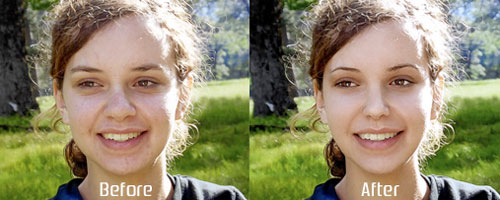
50+ Excellent Body Enhancement Photoshop Tutorials
read more | digg story
Posted by gjblass at 3:28 PM 0 comments
Dynolicious- the automotive performance Iphone app
We knew the Apple iPhone would allow for some really great automotive applications. Our pal Marty Padgett at The Car Connection even rounded up the best of the apps a few weeks ago, which we republished here . But what we were hoping for was something that completely leveraged the iPhone’s accelerometers to effectively create a VBox , just cheaper and smaller.
It seems that application has arrived. View the incredible Dynolicious, a $12.99 automotive app for your iPhone. Using the phone’s built-in accelerometers, the app samples data “as many as one hundred times per second.” It creates a tiny automotive genius in your pocket—good to measuring the performance of whatever vehicle you’re in (we suppose it would work for running, too). It can measure things such as:
- 0-60 MPH
- Other Speed Tests (0-10 MPH through 0-100 MPH in 10MPH increments)
- Quarter Mile Elapsed Time
- Quarter Mile Trap Speed
- Elapsed Time and Trap Speed for standard intervals (60', 330', 1/8 Mi, 1000')
- Lateral G's (current and peak)
- Braking G's (current and peak)
- Wheel Horsepower
- Estimated Engine Horsepower
When you’re done recording your run, the Dynolicous app will show you your results with a speedometer and graphs, a skidpad display, and also against saved information in the unit. Change settings on your car and compare the times in different saved settings. We can’t wait to download this and put it to use in some of our cars.
Posted by Chismillionaire at 3:11 PM 0 comments
HOT moms and SEXUAL imprinting
Guys: have you got a hot mom? Chances are your wife will be a looker, too. The same goes for daughters of hunky fathers.
Women tend to date guys that look like their fathers, and sons go for gals that look like their mothers, according to a new study of facial similarities between romantic partners and their parents. The paper is published this week in the Proceedings of the Royal Society B (DOI: 10.1098/rspb.2008.1021).
Tamas Bereczkei, a biologist at the University of Pecs, Hungary, and his colleagues mapped the faces of 67 young, long-term couples at their university, as well as each parent, measuring facial proportions such as the ratios of face length to width, nose length to face height, and mouth width to height.
Based on these numbers, Bereczkei's team found that, overall, the face of a woman's boyfriend's more closely resembles her father's than the faces of other males in the study. The correlation was most striking for measurements of the centre of the face, such as the ratios between nose length to face height and eye width to face height.
Men also dated women whose faces more closely resembled their mothers than other women in the study. But here, men seemed to focus on the lower part of the face. The ratios between jaw and face width and lip fullness (height) and width of their mothers and girlfriends tended to match.
These findings hint at a process well documented in animals - and only beginning to emerge from studies of humans - called sexual imprinting. Exposure to adults can bias young animals to pick future mates that resemble their parents.
This could be evolution's way of maintaining adaptations to local environments. Mating with someone too different from you and your parents could compromise such adaptations.
On the other hand, the same process might also dissuade animals from picking mates that look too similar to their parents and even siblings to hold onto a modicum genetic diversity, which could come in handy if environmental conditions change or disease erupts. This is called optimal inbreeding.
And while studies in animals have found the same kind of opposite sex imprinting, "we do not know the precise mechanism of imprinting-like phenomenon in humans," Bereczkei says.
Ewen Callaway, online reporter
Posted by gjblass at 1:57 PM 0 comments
Anti-invisibility cloak gives vision to the invisible
Theoretical physicists think they might have the makings of the world's first 'anti-invisibility cloak', a device which, when layered beneath an invisibility cloak, renders any object within visible again.
The 'anti-cloak' could overcome one major limitation of the invisibility cloaks being designed and built in physics laboratories across the world: when you're invisible from the outside, the outside is invisible to you.
An anti-cloak could allow a spy, whether man or machine, hidden inside a cloak to periodically peep out.
Invisible beginnings
Invisibility cloaks first came to the world's attention in 2006 when John Pendry at Imperial College London and colleagues including David Smith's team at Duke University in North Carolina, US, designed a cloak that could make an object invisible to microwaves.
Waves that would usually hit the cloaked object are carefully guided through the cloak and released at a point on the far side exactly equivalent to their point of entry. Any external observer sees through the cloak – and any objects hidden inside it – as if it were transparent.
Versions of that idea that worked in 2 dimensions for microwaves and later for visible light were built later in 2006, and this year physicists progressed towards making them in 3 dimensions.
But a perfect invisibility cloak guides rays so effectively that none reaches the object within, keeping it in total darkness – a disadvantage if invisibility cloaks are ever to be used to shield tanks, steer microwaves in space or hide humans.
Cloak begone
Now Huanyang Chen's team at Shanghai Jiao Tong University in China and colleagues at the Hong Kong University of Science and Technology have found a theoretical way to allow some light to penetrate through an invisibility cloak, so that anyone within can see out.
Their work shows that an "anti-cloak" can reverse the light-bending effects of an invisibility cloak if it has exactly the opposite refractive properties.
When pressed against the inner boundary of the invisibility cloak, the anti-cloak acts like a mirror. The path the light rays take through the anti-cloak is an exact reflection of their path through the invisibility cloak. In other words, the two cloaks cancel each other out, rendering the invisible visible (see image, right).
'Nice twist'
Sebastien Guenneau at the University of Liverpool, UK, thinks the idea is an interesting one.
"It's a nice twist on Pendry's work," he says. But he is quick to point out that the practicalities of making an anti-cloak mean it is unlikely to ever make it off the drawing board.
"The cloak needs to be anisotropic, heterogeneous and have a negative index of refraction," he says. In other words, it must treat light differently depending on the direction it is travelling in and which part of the anti-cloak it hits, as well as bending it the "wrong" way compared to all natural materials.
"That's an absolute killer combination in terms of metamaterial technology. It's very hard to make an invisibility cloak – it's going to be twice as hard to make an anti-cloak."
A paper on the anti-cloak will appear in a forthcoming issue of Optics Express. A pre-print is available online here.
Posted by gjblass at 1:54 PM 0 comments
The 75 Most Influential People of the 21st Century
Who are the seventy-five most influential people of the 21st century? Who made our register of the great and angry and inspired and obsessed -- famous, notorious, powerful, and not -- who will have something to say about the rest of our lives? This here, this is just a little hint.

Posted by gjblass at 1:49 PM 0 comments
More MPAA Troubles for Zack and Miri Make a Porno
Posted by Rob Hunter (rob@filmschoolrejects.com)
Kevin Smith may have won the war a few weeks ago when he successfully appealed his new film’s rating from an ‘NC-17′ to a commercially viable ‘R’, but he’s apparently lost the battle. The MPAA has officially rejected the new poster for Zack and Miri Make a Porno for its sexually suggestive imagery, and EW.com caught up with Smith to get his thoughts on the de facto ban. “When you’ve got the word ‘porno’ in the title, naturally, the marketing materials are gonna be scrutinized more closely by the MPAA,” says Smith. “I understand they’ve got a job to do, but c’mon… this image isn’t that dirty; they’re both fully clad.” Hide the children, cup your privates, and have a look for yourself…

As if being the most sexually repressed country in the Western world wasn’t bad enough, our frigid neighbors to the north get both the joke and the poster. They’ll be displaying it proudly without concern for the welfare of little Canadian children. “I’ve always loved Canada and Canadians for giving us hockey,” says Smith. “Now, I love ‘em just a little bit more. For allowing tufts of hair.” As an unrelated aside, I had a Canadian girlfriend once, and I fondly remember her tuft of hair (and no, you don’t know her.)
Do you feel dirtier now that you’ve seen the poster? Did you catch the “coming soon” zinger? Do either Seth Rogan’s or Elizabeth Banks’ expressions look familiar? If so, which one?
Posted by gjblass at 1:48 PM 0 comments
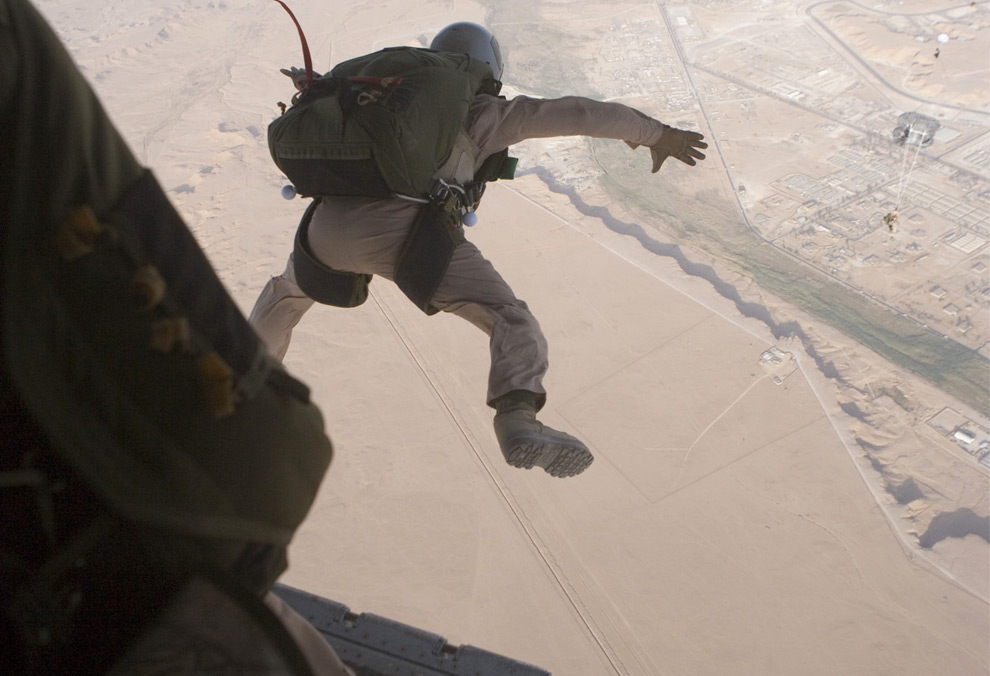
Scenes from Iraq [PICS]

Over five years since it began, the war in Iraq continues, but with some recent notable progress. Here are some scenes from around Iraq (and a couple from here in the U.S.) over the past several months. 15 Great High-Resolution Pictures
Click Here for the Pics| digg story
Posted by gjblass at 12:59 PM 0 comments