Zazzle Shop

Screen printing
Showing posts with label cellphone provider. Show all posts

Monday, March 21, 2011

AT&T Acquires T-Mobile, Rockets Up to More Than 130 Million U.S. Users

By David Murphy
From http://www.pcmag.com/

T-Mobile logo

Breaking news in the mobile world: AT&T has acquired competitor T-Mobile, shrinking the "big four" carriers in the U.S. to a mere three. But it's a mighty three. The $39 billion purchase now summons forth the largest combined carrier in the U.S., one which already has its own nickname mere minutes after the transaction was announced: "AT&T-Mobile."

In total, AT&T and T-Mobile's combined operations will carry roughly 130 million users. Or, in layman's terms, a heckuva lot more people than now-second place Verizon and its users numbering in the mid-90 million.

But what does that mean for consumers? According to PCMag.com's Sascha Segan, expect less competition in the mobile market to hit harder on the ol' bank account. Not to mention a greater lack of device diversity as a result of AT&T and T-Mobile creating a combined (and more efficient) product line.

AT&T's paying $25 billion in cash for the acquisition, with the rest of the $39 billion purchase price coming from shares of AT&T common stock. As part of the deal, T-Mobile parent company Deutsche Telekom will gain an eight percent ownership interest in AT&T, and a Deutsche Telekom representative will join AT&T's board of directors.

The also move creates a monopoly on U.S. GSM carriers: There's just one now, AT&T/T-Mobile, to serve as the sole rival against the CDMA networks of competitors Sprint and Verizon. The mash-up between AT&T and T-Mobile—a combination of the worst and second-worst U.S. carriers, as ranked by this year's Consumer Reports customer survey–will mash together their wireless spectrums as well. This should give AT&T a stronger footing to deploy and expand its own 4G LTE network, which the company intends to launch mid-year.

"This transaction represents a major commitment to strengthen and expand critical infrastructure for our nation's future," said Randall Stephenson, AT&T chairman and CEO, in today's press release. "It will improve network quality, and it will bring advanced LTE capabilities to more than 294 million people."

According the release, issued today, AT&T needs as much spectrum as it can get its hands on to fuel its growing wireless network. The company claims that its mobile data traffic has grown more than 8,000 percent since 2006, and the company expects its 2015 traffic to be eight to 10 times that of today's values.

"Put another way, all of the mobile traffic volume AT&T carried during 2010 is estimated to be carried in just the first six to seven weeks of 2015," reads the statement.

Doubling off of that, the T-Mobile acquisition comes at a time when AT&T is seeing good subscriber growth—the company announced in January a gain of 2.8 million subscribers in the fourth quarter of 2010, making for a total count of 8.9 million subscribers gained within the full fiscal year.

T-Mobile, on the other hand, has been bleeding its business as of late. The company lost more than 300,000 contract subscribers in its fourth quarter, down a net of 23,000 customers in total. That's quite a drop compared to the same time period in 2009, when T-Mobile was actually in the black by around 371,000 total customers.

A March report by Bloomberg's Tara Lachapelle and Rita Nazareth indicated that T-Mobile parent company Deutsche Telekom has been shopping around T-Mobile for some time now—especially since the $28.5 billion the company invested in the American carrier has since shed its value by approximately three-fifths. Deutsche Telekom was allegedly in talks with Sprint to pawn off T-Mobile, but whatever deal was possibly in the works clearly didn't come to pass.

But that's not necessarily bad for T-Mobile: Instead of shacking up with the third-place carrier, it's now teamed up with the big dog in the park.

For more information on the transaction, consumers can check out the new AT&T/T-Mobile information site at www.mobilizeeverything.com.

Tuesday, February 15, 2011

AT&T says thank you to iPhone users with 1000 bonus minutes


AT&T is continuing to say thank you to their iPhone users who are sticking with them. Last week was a 20% off an accessory coupon and this week is a free extra 1000 rollover minutes. Some readers have sent in screenshots of the above, let us know if you received one, too. Thanks, Vinod.
Update: We are hearing that if you did not recieve the text just send the word “yes” to the 11113020 number and you will recieve a text that says your account has been credited!  Anyone want to verify?
Update 2: Confirmed below!
Update 3: There was some concern it was a scam but we’ve now verified it with AT&T – It’s legit.

Monday, August 2, 2010

Hacker snoops on GSM cell phones in demo

Intercepts mobile-phone data on the GSM networks used by AT&T and T-Mobile

By Robert McMillan, IDG News Service
From: http://www.networkworld.com/

Despite concerns that federal authorities might fine or arrest him, hacker Chris Paget went ahead with a live demonstration of mobile phone interception at the Defcon hacking conference Saturday.

Using several thousand dollars worth of equipment, Paget was able to intercept mobile-phone data on the GSM (Global System for Mobile Communications) networks used by AT&T and T-Mobile. He did this using a home-made system he calls an IMSI (International Mobile Subscriber Identity) catcher.

Within minutes of activating his IMSI catcher in test mode, Paget had 30 phones connected to the system. Then, with a few keystrokes, he quickly configured the device to spoof an AT&T cell tower.

"As far as your cell phones are concerned I am now indistinguishable from AT&T," he said. He predicted that every AT&T device in the room would connect to his tower, within the next half hour.

Cell phone interception is illegal in the U.S. And while the U.S. Federal Communications Commission had raised questions about his talk, Paget believes that his demonstration was legal because his device was operating in the 900MHz band used by Ham radio devices. Coincidentally, that 900MHz band is used by GSM devices in Europe "As far as your cell pones are concerned I am a European radio transmitter."

Not all GSM devices will connect to Paget's IMSI catcher, however. Quad band phones will connect, but U.S. phones that do not support this 900MHz band will not, he said.

By the end of the demo, Paget actually had fewer phones connected to the network -- just 17 -- something he was at a loss to explain. He said that it was possible that he had mistyped the AT&T network ID and that phones were rejecting his system because of the typo.

Android and iPhone systems would connect, however, he said. "In my experience it's generally the iPhones that connect most easily," he said. "It's actually been the bane of my existence trying to keep the damned iPhones away."

People connected to Paget's system would get a warning message, but they could dial out as normal, but anyone trying to call them would go straight to voicemail.

Paget didn't record or play back any calls, but he could have. His IMSI catcher can get around cell phone encryption by simply telling the connecting phones to drop encryption. "If I decide not to enable encryption I just disable it," he said. "It's that simple."

Earlier this week, it wasn't clear that Paget's talk would go ahead. The U.S. Federal Communications Commission (FCC) got in touch with Paget Friday morning to express concern and inform him of relevant federal regulations, he said.

The agency raised concerns that Paget's device might transmit over licensed frequencies and that he might unlawfully intercept mobile-phone calls.

On Friday, FCC spokesman Eric Bash said the agency doesn't comment on the legality of specific matters until it fully investigates and takes enforcement action.

(Nancy Gohring in Seattle contributed to this report.)

Robert McMillan covers computer security and general technology breaking news for The IDG News Service. Follow Robert on Twitter at @bobmcmillan. Robert's e-mail address is robert_mcmillan@idg.com

Wednesday, April 14, 2010

Cell Phone Security

Posted by: admin
From: http://cellphones.org/

With the increased capabilities and conveniences of today’s cell phones comes the increased risk of viruses, malware and identity theft. While some mobile operating systems are more secure than others, the level of security can be easily increased when users take precautions such as downloading security software, being aware of cellphone scams and password protecting their cell phones.

CLICK TO ENLARGE

Wednesday, January 20, 2010

The Ultimate Cell Phone Plans Comparison


On Friday, Verizon Wireless announced pricing plan restructuring that would reduce the cost of voice usage. AT&T Wireless quickly followed suit and unveiled their updated cell phone plans as well. Today is the day that those changes go into effect.
While both carriers announced these changes as efforts to simplify plans, the real truth behind the story is that the profits are in the data: Verizon’s revenue is now up 24% (they reported $15.8 billion in Q309), with 17% coming from data services.
I think that there is still a long way to go before it gets to a point where picking a cell phone plan is simple, even after these various many attempts by the carriers in 2009. There are still way too many plan combination.
This is our best attempt to simplify all of the plan combination and it was painful, but here it is, The Ultimate Cell Phone Plans Comparison:

Click Image to Enlarge

The Ultimate Cell Phone Plan Comparison

BillShrink can help you find cell phone plans that save you money and fit your needs, without sifting through the madness!

Thursday, January 7, 2010

Current Crop of Smartphones: A Cost and Feature Comparison


Cost-comparison web site BillShrink hits it out of the park with a handy infographic comparing the cost and features of the current generation of smartphones: the Nexus One, the Palm Pre, the Motorola Droid, and the iPhone 3GS.
Looking at this you realize 1.) there's no clear winner in the bunch feature-wise and 2.) we all spend a ridiculous amount of money on mobile phones and service. My only nitpick with this chart is that the T-Mobile/Nexus One "Average Usage" plan should be listed at $79.99 a month, not $89.99 (unless they're counting taxes and fees). Click to enlarge the big picture to check it out.
Nexus One vs iPhone, Droid & Palm Pre
Smarterware is Lifehacker editor emeritus Gina Trapani's new home away from 'hacker. To get all of the latest from Smarterware, be sure to subscribe to the Smarterware RSS feed.

Contact information for this author is not available.

Tuesday, June 30, 2009

Germans Get Cheaper Cell Phone Service In Exchange for Ads

Stacey Higginbotham

AL_logo_205pxAlcatel-Lucent said today that it’s begun providing German carrier E-Plus with equipment that inserts advertisements onto mobile devices based on demographic information provided by a subsidiary of the carrier. Customers opt in to the service and in exchange get extra minutes or texts on their cell phone plans. Gettings, the E-Plus subsidiary collecting the information and delivering the ads, offers plans that send between 10-25 ads per week. When customers sign up for the program they are asked to indicate via a checklist topics that interest them so they are subsequently delivered relevant pitches.

Will this become a high-quality targeted advertising effort similar to the ads delivered by Google based on search, or will this sort of advertising instead remind users of the experience offered back in the late 90s when ISPs such as NetZero offered free dial-up in exchange for irritating pitches? If the experience is unobtrusive and the incentives are right, I can see plenty of younger subscribers signing up, and merely accepting ad-based mobile service as the way to do things, much like we do today for search. That could change the business model around low data-rate mobile services such as texting and voice calls, to one in which carriers offer them for free or at reduced rates to folks that accept ads.

As an opt-in program, presumably people will understand what exactly they are giving up, making this less underhanded than other planned mobile advertising schemes. However, it’s still an invasive form of advertising.

Friday, May 22, 2009

How to Email Text Messages to Any Phone

Do you feel like your cell phone's text message bill is getting higher every month? You're not alone. By some accounts, text messages cost more per megabyte to send than do messages from outer space to Earth. But you can email and Instant Message texts to phones for free. Here's how.


(Photograph by Tetra Images/Getty Images)

At roughly 20 cents a pop, text messages are expensive. But it takes a bit of perspective to realize just how pricey they really are.

Short-message-service messages (that’s the official name for text messages, often abbreviated to SMS) have a maximum of 160 bytes of data. Unless you purchase a bulk text-message package (which can cost as much as $20 per month), the 20 cents-per-message rate adds up to $1310.72 per megabyte. This is double the cost three years ago and, quite literally, astronomical: A space scientist at the University of Leicester in the U.K. did the math and discovered that this is several times as much as it costs to transmit data from the Hubble space telescope back to Earth. And most of this cost is pure profit for the phone companies, who are able to deliver text messages for nearly nothing by piggybacking them on other transmissions.

Thankfully, there are ways to bring your bill down to earth. The key is to use what are known as SMS gateways. These are backdoors that transform other (usually less expensive) types of communications, such as e-mail and instant messages, into text messages. The upshot: You can send all the texts you want without paying for the privilege.

All major mobile-phone carriers have e-mail addresses that feed into your SMS inbox (see our diagram for specific addresses). If you have a smartphone and an all-you-can-eat data plan, you can use your phone’s e-mail client to send as many texts as you want for no additional cost. Of course, this method has its limitations: In order to determine what address to send your message to, you first need to know what cellular provider your friends have. I suggest asking your most-texted contacts who their providers are. With that information, you can program the proper e-mail address next to their names in your phone’s address book.

Easier yet: Send your text message over AOL Instant Messenger (versions of which exist for most mobile phones). Instead of sending your message to a screen name, send it to “+1” followed by the area code and phone number. So if your friend’s number is 212-555-5555, sending an IM to “+12125555555” will ensure it pops up on his cellphone screen. If your phone has Web access, you can also send free texts through sites such as txtdrop.com.

Of course, you still have to pay to receive text messages from other people. If somebody replies to a text message that you sent as an IM or e-mail, his reply will come to you in the format you initially sent it in, and reading it won’t cost you a thing. You can cut your bill even further by asking your most-texted friends to program your e-mail address into their address books. Even if they insist on using SMS, sending a text message to your e-mail address will cause it to appear in your e-mail inbox. And as long as you have an e-mail program on your phone, it will be just as easy to retrieve.

Your target’s e-mail address depends on his mobile provider:

ProviderFormat
Sprintphonenumber@messaging.sprintpcs.com
Verizonphonenumber@vtext.com
T-Mobilephonenumber@tmomail.com
AT&Tphonenumber@txt.att.net
AIM+1phonenumber

Wednesday, September 24, 2008

Save Money on Your Cell Phone Bill and Credit Cards With BillShrink

Don’t know if you are getting the best deal with your current cell phone plan. Enter Billshrink, 100% free web service where you can instantly compare 100+ mobile plans and find the best plan for your cell phone. And it only takes about 3-4 minutes.

First you need to provide some information about your location and usage preferences/requirements (i.e. avgerage daily talk time, whether you need data plan, SMS usage, network coverage, average phone bill etc.). Then, BillShrink will list all available cell phone plans starting from the cheapest. Along with everything else it

also tells you how much you will be actually saving.

Features:

  • Find the best mobile contract for your needs.
  • Highly customizable: Considers factors such as which areas/networks you call often, daily talk time, data usage and so on.
  • Enter your phone usage details manually or (Optionally) import them directly from the phone bill.
  • Sort recommended results by monthly price, the amount it can save, overall rank, and signal strength.
  • Map with a visual representation of each carrier’s coverage/signal strength.
  • Set BillShrink to re-analyze your profile on a monthly basis and send you email alerts in case there are better deals.
  • Note: The service is quite new so once in a while some small things may not works as expected.


Update: Credit Card Service just added

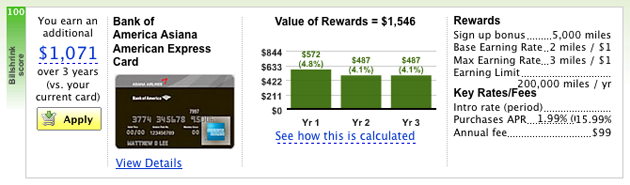
BillShrink, the startup that helps users cut costs on their phone bills, is expanding its automated advisor to an entirely new field: Credit Cards. The site’s recommendation engine will now include a database of over 200 major credit cards, helping users choose an ideal card after entering only a few basic criteria.

To begin using the system, users first decide if they’re interested in a card that will reward them for keeping their bills paid off, or one that will minimize the interest accrued on balances that are being paid off over time. Next, they’re asked to enter the amount of money the typically spend in a month, their current credit standing, and the places they spend the most money (for example, “groceries” or “airline tickets”).

Using this data BillShrink generates a listing of its highest matches, prominently displaying the overall monetary gains, along with a number of graphs that detail earning rates, fees, and limits. The site also includes an in-depth description of each card for further reference. Beyond basic numeric calculations, BillShrink also takes into account the previously entered spending preferences - for example, it will give preference to a card that accumulates “miles” quickly when someone is a frequent traveler.

BillShrink is headed by ex-Photobucket exec Peter Pham, and offers a similar comparison service for mobile phones which launched in beta last April. Using signal maps, plan rates, and usage habits, the site recommends what kind of service plan each user should be on, or if they should switch carriers entirely. While the service got off to a rocky start, it has made great strides and will be incorporating the revamped interface that launches today alongside the credit-card portion of the site.

Financial startup Mint also offers credit card recommendations, though these are not nearly as comprehensive as those seen on BillShrink.

Check out BillShrink @ www.billshrink.com