Zazzle Shop

Screen printing
Showing posts with label MUSTACHE. Show all posts

Wednesday, April 8, 2009

What a Mustache Says About A Man’s Profession

by Sean Percival

A lot can be told by a man’s mustache, and it seems certain professions have their own. For some it can be a small handlebar, and for others it can be a bushy chevron. The bottom line however, is that the hair on a man’s upper lip can rightfully be understood as a window into his soul. The following is a list of the most notable mustaches, and noteworthy stereotypes from the industries that championed each ’stache:

Private Investigator

mustache1

source

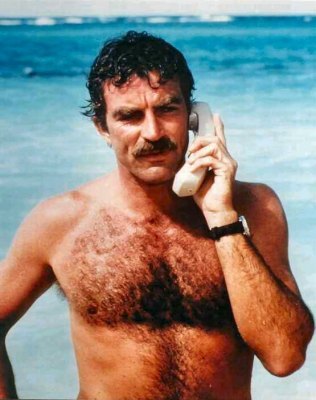
This is the type of mustache you should sport when you love your job just as much as your cocaine. Something of an industry staple, most private dicks rock this look because it helps them to believe that, “hey, I’m almost a real detective.”

Baseball Player

JOHNSON SUSPENDED

source

In the greater part of the twentieth century, facial hair was discouraged in professional baseball. But by the early 1970s, the Kansas City/Oakland A’s had brought the look back with such notables as Joe Rudi, Reggie Jackson and of course, Rollie Fingers. Ever since, it is not uncommon for dominating players to rock a bit of lip hair, mostly pitchers.

Painter

dali

source

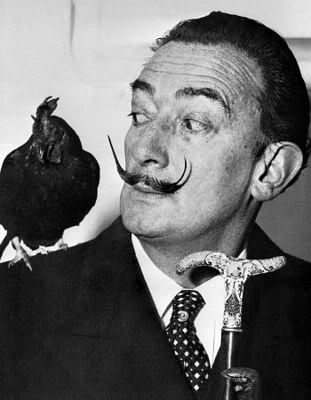
Lots of artistic people do eccentric things. One such example is Salvadore Dali, who made the look this look so famous, that it is now named after him. Also called a “spaghetti mustache”, the tips of this type of ‘stache can be used as brushes – in a pinch.

Dictator

mugabe

source

Although funny-man Charlie Chaplin wore this mustache during Hollywood’s silent era, it is perhaps most known as the mustache of choice among dictators. Most recently the ex-Zimbabwean ruler Robert Mugabe, and more famously Adolf Hitler – who, incidentally is Mugabe’s hero – have donned this look. It is alternatively known as the toothbrush mustache.

Eccentric

gg

source

Quite frankly, a mustache that includes the middle of one’s upper lip being shaved is reserved for eccentric individuals. The most famous example of this was GG Allin, the super weird, shock rocker that loved to defecate on-stage. It takes an individual that is willing to go out of his way to look more weird, to pull this look off – it is essentially, not a mustache that can be grown half assedly.

Biker

hulk

source

This mustache says you ride a bike (preferably a Harley) and you are something of a free spirit. Most importantly, however, it says that you like to kick ass. While not a requirement for being a full-time biker, it is not recommended to grow this type of mustache unless you are well-versed in wielding bar stools in fights, and loose women.

Martial Arts Enthusiast

fu-manchu

source

The most important aspect of this mustache is that it is grown from the upper lip, in a downward direction. All parts of the face lower than the mouth are shaved. This is the distinction between this and the handlebar (above). With that mentioned, it is no surprise that his mustache is typically only worn by individuals with tons of dedication, the same type of dedication typically employed by martial arts experts.

Diplomat

BE053216

source

Although this mustache is fairly rare these days, it was at point the lip warmer du jour, mostly in Europe. When worn appropriately, it can be the perfect compliment to any diplomatic endeavor, and communicates to lesser men that the wearer is relatively important.

Porn Star

ron-jeremy

source

This mustache basically tells people, “…yeah, I’m here for the gang bang.” It is a perfect mustache for the porn industry, because male co-stars typically act as cops, plumbers, or other mustached professions before the coitus begins. It makes every bit of the acting, that much more believable.

Director

waters

source

The director mustache is similar to the eccentric mustache, but is reserved specifically for connoisseurs of film. One popular theory regarding this mustache stems from a story about Waters wanting to replicate the elegance and grace of Orson Welles’ early work through facial hair management.

The Anchorman

anchorman

source

The chevron mustache and its wearer are the personification of panache. What better way to conduct journalistic affairs than by letting this tasteful representation of manhood precede a dramatic presentation of facts? That’s right, there is no way.

Mechanic

walrus

source

The walrus mustache is popular among blue collar workers, primarily those that work in service and repair. Many of these gentlemen are self-employed, and this type of prideful mustache represents that there is no holding down the caliber of men that help build this country. It also helps to increase the wearer’s credibility when quoting prices to housewives for dishwasher repair. It communicates others that the mustached man might not know the ins and out of fine art trading, but he is probably an expert when it comes to his profession

Nascar Driver

dale

source

In parts of America, Nascar drivers are heroes. And the bottom line is, most heroes have mustaches. But if nothing else, a bushy upper lip accessory such as this is the perfect compliment to a flame retardant suit, ball cap and sunglasses. Basically it is what made Dale Earnhardt, Dale Earnhardt.

Police Officer

police

source

Many people do not know this, but most police departments have regulations limiting officers’ facial hair to mustaches only. Typically in an effort to standardize the appearance and avoid any strange soul patches or goatees. It has since become a symbol of following the rules, and not expressing oneself in a way that might offend other citizens.

Rock God

frank-zappa

source

Rock and roll legends are known to be rather strange at times, and express themselves in entirely unique ways. However, George Harrison, Ted Nugent and Frank Zappa have agreed that a bad ass push broom is the way to go. Zappa accessoried his by a square patch, and his relatives trademarked the look once he passed away.

Sunday, January 11, 2009

Dress Codes - The Mustache Is Inching Its Way Back - NYTimes


Phil Bray/Focus Features

THE ‘MILK’ MUSTACHE James Franco’s ’70s ’stache, sexy but soulful, may persuade men it is worthy of revival. More Photos >


IN case you have been in a hole the last few years, stylish men have cast aside razors for electric clippers and taken to styling their face and body hair — a k a “manscaping” — with a zeal not seen since Edward Scissorhands. The beard, that onetime symbol of rural cluelessness, has become a badge of urban hipsterdom. This has grown to include a spectrum of variations, from a week’s slackerly growth to a handsome Czar Nicholas II beard to a full-blown Rutherford B. Hayes thicket.

But its upstairs neighbor, the mustache, has had a bumpier ride. It, like the beard, enjoyed its most widespread popularity between 1850 and 1900; John Wilkes Booth, it must be conceded, had a beaut. But today, the mustache cannot shake its ties to the sexy-yet-buffoonish machismo of the mid-1970s, epitomized by Burt Reynolds, Sam Elliott and the Village People, ’stache sporters all.

Lately, though, there are signs that the mustache is at long last shaking off the most unsavory of those associations. Exhibit A is, of course, Brad Pitt, who grew one just before the filming of Quentin Tarantino’s new World War II film, “Inglourious Basterds,” and flaunted it for the paparazzi over the holidays. Emanuel Millar, the head of the film’s hair department, said he was surprised when Mr. Pitt showed up to shoot avec mustache and insisted on keeping it despite the fact that it was not true to the period. Exhibit B is, of course, the “Milk” Mustache — that is, the one worn by the scene-stealing James Franco, playing Sean Penn’s long-suffering and dreamy boyfriend in “Milk.” While Mr. Penn’s performance is the most talked-about aspect of the film, Mr. Franco’s mustache has elicited plenty of admiration on its own.

Exhibit C is Jason Giambi, the Yankees first baseman whose summer comeback coincided with his sprouting a particularly fine-looking mustache, prompting many to recall the 1972 World Series, when a handlebar-wearing Rollie Fingers and the Oakland A’s took on the clean-shaven Cincinnati Reds in “the Hairs vs. the Squares.”

Despite these fetching examples, the fate of the mustache is uncertain. Unlike the beard, it still carries plenty of baggage, skewing either too old-school gay (see “Milk”) or too old-school straight (see John R. Bolton).

No one knows that fact better than the men who have grown one. Douglas Friedman, 36, a photographer, has endured many a jab since he grew a “porn-star ’stache,” as the basic mustache is now widely known, on a whim 10 years ago. “I get a lot of good-natured ribbing, but it’s usually derogatory,” he said. Once he was asked for a photo of himself for the contributor’s page of a major fashion magazine, only to have it dropped without explanation. Later, he found out why: the magazine’s editor hates mustaches.

Other editors are only too happy to use the image and all it implies.

Dov Charney, 39, the often controversial chief executive of American Apparel, known for its provocative ads, grew a ’70s-style mustache in 2004.

“I had it for seven months — eight months max,” Mr. Charney said. But over the next three years, whenever newspapers, magazines or bloggers ran stories about him, even after a photographer had come to take a current picture, most ended up using an old, mustached picture.

“People were really attached to that image,” he said. “In both positive articles, where they wanted to portray me as this sex-positive playboy, as well as the ones where they wanted to demonize me.”

The problem is, the men who look good in a mustache are vastly outnumbered by those using it for comedic effect (See “Anchorman” and “Borat”). Jason Lee does an admirable job straddling the fence as the star of the television series “My Name Is Earl.” Though his mustache looks good on him, in a ’76 Camaro kind of way, it also reads as an albatross of sorts — a token of his character’s lowlife nature for which he is forever making amends. You have to wonder if his mustache will magically fall off on the last episode.

Even the pro-mustache Movember movement is a double-edged razor. Originating in Australia in 2004, Movember challenges men to grow mustaches for the month of November to raise money for men’s health charities; an estimated 200,000 men worldwide participated in 2008. It brings the mustache back every fall, only to kill it off a few weeks later.

James Austin, 37, a currency salesman with a United States bank in London, participated with 12 colleagues and, by the end of the month, was torn about shaving. “It actually suits a lot of people,” Mr. Austin said. “There’s one guy in particular who doesn’t have much of a top lip, so he looks better.”

There was little hope that his own would last, though. “My wife put the kibosh on that,” he said.

Brandon Roberts, 28, a hotel executive assistant in New York, grew a mustache after seeing the re-release of “Cruising” two years ago, only to realize that, happily, he was now the spitting image of his father in the 1970s. “I think it’s easier to pull off a beard,” he said. “Having a mustache takes a certain something. You have to have it and own it and pull it off.”

Others take that notion a step further, likening the mustache to women’s re-embrace of overtly sexual tokens like stilettos and push-up bras. In 2006, irked that the new popularity of the beard had left the mustache eating dust, Jay Della Valle, 28, persuaded nine 20-something men to grow mustaches and document the experience in a film, “The Glorius Mustache Challenge.” (It was released on DVD last year.) He now hosts mustache parties and events like Movember and the ’Stache Bash in St. Louis. Like some cross between Robert Bly and Elmer Gantry, he kicks these off with an evangelical ceremony, invoking the transfiguring masculine power of the mustache.

“You got to wear it with this attitude,” Mr. Della Valle said. “Your mustache is always there, saying, ‘Yeah, I have a mustache, so bring it on.’ If you have a sense of humility connected to your mustache, it doesn’t look as good as it should.”

But for all its reclaimed machismo, he added, “The bottom line is this: The best response to the question, ‘Why the mustache?’ is, because it’s fun.”

In other words, why should you grow a mustache? Because it’s not there.