Zazzle Shop

Screen printing
Showing posts with label Gene therapy. Show all posts

Wednesday, March 17, 2010

Humans could regrow body parts like some amphibians

Regrowing amputated limbs, broken backs and even damaged brains could one day be a reality after scientists discovered a gene that is key to the almost magical ability.

Researchers have found that the gene p21 appears to block the healing power still enjoyed by some creatures including amphibians but lost through evolution to all other animals.

By turning off p21, the process can be miraculously switched back on.

Academics from The Wistar Institute in Philadelphia found that mice lacking the p21 gene gain the ability to regenerate lost or damaged tissue.

Unlike typical mammals, which heal wounds by forming a scar, these mice begin by forming a blastema, a structure associated with rapid cell growth.

According to the Wistar researchers, the loss of p21 causes the cells of these mice to behave more like regenerating embryonic stem cells rather than adult mammalian cells. This means they act as if they creating rather thane mending the body.

Their findings, published in the Proceedings of the National Academy of Sciences, provide solid evidence to link tissue regeneration to the control of cell division.

They turned off the gene in mice which had damaged ears and they regrew them. While they say it is early days, there is nothing theoretically different about applying the same process to humans.

Professor Ellen Heber-Katz, the lead scientist, said: "Much like a newt that has lost a limb, these mice will replace missing or damaged tissue with healthy tissue that lacks any sign of scarring.

"While we are just beginning to understand the repercussions of these findings, perhaps, one day we'll be able to accelerate healing in humans by temporarily inactivating the p21 gene.

"In normal cells, p21 acts like a brake to block cell cycle progression in the event of DNA damage, preventing the cells from dividing and potentially becoming cancerous.

"We propose that any future therapy would involve turning off p21 transiently during the healing process and only locally at the wound site. This might be done through locally applied drugs. This should minimise any side effects."

Wednesday, September 23, 2009

Paralyzed Rats Walk Again

Three-pronged treatment let their legs move, bear weight without brain signals

By Jennifer Thomas, HealthDay Reporter

Three-pronged treatment let their legs move, bear weight without brain signals.

SUNDAY, Sept. 20 (HealthDay News) -- A three-pronged approach to treating spinal cord injuries allowed paralyzed rats to walk without receiving signals from the brain, scientists report.

Spinal cord injuries result in paralysis when the nerve fibers that carry information to and from the brain are damaged or severed. Much of the focus of research into spinal cord injuries has been exploring ways of regenerating those nerve fibers and connections, which has so far met with limited success in people.

In the new study, rats were treated with a combination of drugs, electrical stimulation of the spinal cord and locomotor training, a rehabilitation technique. The combined treatment enabled the rats to walk with a near-normal gait on a treadmill, without the muscles receiving signals from the brain.

"The study demonstrates that the lower spinal cord has circuitry that is sufficient to support virtually normal, weight-bearing locomotion," said senior study author V. Reggie Edgerton, a professor of physiological sciences and neurobiology at the University of California, Los Angeles.

The study appears in the Sept. 20 online edition of Nature Neuroscience.

Previous research has been able to coax a stepping motion using one or two of those techniques, said Susan Howley, executive vice president of research for the Christopher & Dana Reeve Foundation, which provided some funding for the current research. But this is the first study to achieve actual weight-bearing walking, as opposed to the motions of walking.

"The thing that's very exciting about this is that for the first time they actually showed they can get these rats, with no input from the brain, to step near normally," Howley said. "On the treadmill, they were able to bear weight and step virtually as well as they had been prior to the injury. That's a remarkable achievement."

In the study, researchers put rats whose lower legs were paralyzed in a harness on a slow-moving treadmill and gave them a drug called quipazine, a serotonin agonist that enhances the function of the spinal nerve circuitry. The researchers then used an epidural to apply electrical currents to the dura of the spinal cord, the protective membrane that surrounds it, below the point of injury.

The combination of drugs and electrical stimulation caused the rats to begin walking. Several weeks of daily locomotor training on the treadmill enabled near-normal weight-bearing walking -- including backward, sideways and running.

Because the brain was still unable to direct the walking, the rats could only walk when hooked up to electrical stimulation on the treadmill.

Previous studies have shown that the nerve circuitry of the spinal cord is able to generate rhythmic activity that can direct leg muscles to step, the researchers said. With the right input, the nerves can learn to interpret sensory information from the stepping motion even without help from the brain.

"Previous research has shown the spinal cord can learn whatever task it's being trained to do," Edgerton said. "The spinal cord can interpret the sensory information associated with the stepping, respond to that sensory information and sustain the stepping based on the sensory information."

Locomotive training is a rehabilitation technique that uses that concept to retrain the spinal cord circuitry after injury. Widely used in some European countries, locomotor training involves placing people with spinal cord injuries in harnesses while physical therapists move their legs in a walking motion.

People who undergo locomotor training often see improvements in respiration, bladder function, blood sugar levels and circulation below the level of the lesion, which can help prevent the skin breakdown that can occur as a result of paralysis, Howley said. Others even recover trunk stability, which can enable them to move from a bed to a wheelchair, or a wheelchair to a car, without assistance.

Though a treatment using the three-pronged approach is at least several years away, the study suggests the potential of using neuroprosthetic devices to activate spinal cord rhythmic circuitry, said study author Gregoire Courtine, a professor in the department of neurology at the University of Zurich in Switzerland. His team is currently developing a device that they hope to begin testing in small clinical trials in three to four years.

About 5.6 million Americans, or one in 50, has some level of paralysis, according to a survey released in April of 33,000 U.S. households by the Christopher & Dana Reeve Foundation. About one-quarter of the nearly 2 percent of the U.S. population living with paralysis is due to a spinal cord injury.

More information

The Christopher & Dana Reeve Foundation has more on the latest spinal cord injury research.

SOURCES: Susan Howley, executive vice president, research, Christopher & Dana Reeve Foundation, Short Hills, N.J.; V. Reggie Edgerton, Ph.D., professor, physiological sciences and neurobiology, University of California, Los Angeles; Gregoire Courtine, professor, University of Zurich, Switzerland; Sept. 20, 2009, Nature Neuroscience, online

Copyright © 2009 ScoutNews, LLC. All rights reserved.

Tuesday, June 2, 2009

Gene Defect Corrected in Human Stem Cells

New research outlines a path toward new therapies with induced pluripotent stem cells.

For the first time, researchers have fixed the gene defect in cells from patients with an inherited disease, and then transformed the tissue into stem cells with the potential to reverse their condition. While scientists haven't yet tested the treatment in humans, the research could mark the beginning of a new age of curative treatments for many genetic disorders.

Correcting cells: Scientists corrected the genetic deficits in cells from patients with Fanconi anemia and then reprogrammed them into induced pluripotent stem cells. The cells can then be coaxed to differentiate into red blood cells. (Colonies of blood cells are shown at the bottom of the image.)
Credit: Juan Carlos Izpisua Belmonte

The proof of concept study, led by Juan Carlos Izpisua Belmonte at the Salk Institute for Biological Studies, in La Jolla, CA, focused on patients with a rare condition, Fanconi anemia, which causes skeletal problems and bone-marrow failure, and raises sufferers' risk of cancer.

Researchers took skin cells from six patients and used a virus to deliver a functional copy of one of the faulty genes responsible for the condition. The method had previously been shown to correct the gene defect in mice.

Next, researchers used cell programming techniques that have emerged in the past two years to transform the cells into stem cells capable of growing into any tissue type--including the healthy blood cells needed to correct the patients' inherited anemia. Known as induced pluripotent stem cell (iPS) reprogramming, this involves introducing four genes known to be active in the developing embryo, which in turn change the cells' pattern of gene expression to one that resembles an embryonic cell rather than an adult one.

"Our work demonstrates that it is possible to combine gene and cell therapy using iPS technology to generate disease-free cells," says Belmonte. The research was published online in the journal Natureon Sunday.

IPS cells are a particularly attractive medical tool for two key reasons. Unlike embryonic stem cells, iPS cells avoid the ethical controversy associated with harvesting human embryos. And because they come from the patient's own body, they will not be rejected by the immune system.

To test the therapy, scientists would need to grow blood progenitor cells from the genetically corrected iPS cells, and then transplant them back into patients, generating a supply of healthy blood cells. Belmonte notes, however, that the iPS cells that his team generated in the course of the study were not suitable for clinical use.

"Serious concerns need addressing before attempting any clinical trial with iPS-derived cells; perhaps the most important is that of tumor formation," says Belmonte. This is because the virally delivered genes used to reprogram the skin cells can remain embedded in the cell's DNA even after reprogramming. These genes are thought to become active during the cell-differentiation process, considerably raising the long-term risk of cancer.

In recent weeks, however, scientists have published two new methods of making iPS cells that do not involve viruses and thus may overcome this problem.

Experts say that the research is an important proof of concept. "This is an exciting bit of science," says Chris Mason, a professor of regenerative medicine at University College London, who was not directly involved in the research. "It's likely to be the first of a slew of similar papers that may offer hope for conditions where today there is no real therapy, let alone a cure."

So far, Belmonte's approach is applicable only to diseases in which the genetic defect that underlies the disease has been identified. "But there are quite a few of these--and the number will increase," says Mason. Blood disorders are likely to be the first targets for therapy because corrected cells can easily be transferred back to the patient via bone-marrow transplants.

Belmonte adds that in the future, the correction of more-complex genetic disorders might become possible, thereby significantly increasing the number of diseases that might be treated with altered iPS cells.

Saturday, February 28, 2009

Gene therapy gets closer to a 'cure'

Success stories, and fewer risks
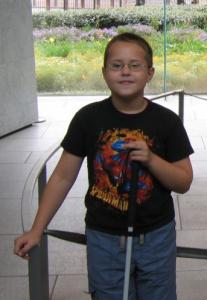
Gene therapy helped Corey Haas, 8, regain some sight. He has a rare disease that was causing him to go blind. Gene therapy helped Corey Haas, 8, regain some sight. He has a rare disease that was causing him to go blind. (COURTESY OF ETHAN HAAS)
By Carolyn Y. Johnson Globe Staff / February 28, 2009

Two decades ago, medicine seemed on the cusp of a revolution. Doctors would soon treat diseases at their very roots, inserting "good" genes to replace patients' faulty ones. Gene therapy was a seductively straightforward idea that offered promise for treating everything from cancer to sickle cell disease.

But only now, after overcoming unexpected scientific obstacles and the high-profile death of a teenage patient, is gene therapy racking up some clear-cut successes. Promising studies are sending ripples of excitement through the field. Some researchers are daring to use the word cure.

"Yes, we have endured a few more years of questions about gene therapy: Does it really work? Is it really safe?" said Savio Woo, a professor at Mount Sinai School of Medicine in New York and a past president of the American Society of Gene Therapy. "Now we can show it does work, and it's safe."

That doesn't mean that people will be lining up for gene therapy any time soon. No treatments have been approved yet. But researchers are finally pointing to a few inspiring successes, untainted by the kind of tragedy that cast a shadow on the field in the past.

Gene therapy started the year with a bang: Researchers reported in the New England Journal of Medicine that the technique cured eight of 10 children suffering from usually lethal "bubble boy disease," a lack of immunity that leaves children vulnerable to infections. After two to eight years, all the patients were alive, unlike a previous trial.

That came on top of an announcement last year that two groups of researchers independently used gene therapy to treat a form of hereditary blindness in a small number of patients, restoring some vision. The evidence, also published in the New England Journal, was presented at a scientific conference in April.

"I've never seen [such] a response. . . . The audience basically burst into applause, sustained applause, cheering even. It was just amazing," said Sam Wadsworth, group vice president of translational research for Genzyme Corp. in Cambridge, which has its own gene therapy program.

Two other studies this month add to the momentum. The journal Nature Medicine, reporting on a trial of 74 HIV patients, said gene therapy had modest but promising effects. A study in the journal Human Gene Therapy reported that two patients with rheumatoid arthritis saw a reduction in pain and swelling with gene therapy.

Eight-year-old Corey Haas of Hadley, N.Y., received gene therapy for a rare disease called Leber's congenital amaurosis, which was causing him to go blind. His family knew the treatment worked when, soon thereafter, Corey asked his parents when two of his friends changed their hair color. He could finally tell they were blonde, not brunettes.

Ethan Haas, Corey's father, said the treatment was worth it. "He'll be sitting in the back of the car and say, 'I can see the trees go by, and I couldn't see them before,' " Haas said.

The optimism generated by recent gene therapy advances is a far cry from just a few years ago.

"I reached a point I wouldn't even admit I was doing gene therapy," said Xandra Breakefield, a professor of neurology at Massachusetts General Hospital, describing the shadow cast on the field by the death of Jesse Gelsinger, 18, in 1999. He suffered from a genetic liver disease.

The idea of gene therapy emerged decades ago, as it became clear that scientists could isolate genes and insert them into cells. The first patient was treated with gene therapy in 1990 and since then, hundreds of trials have been conducted.

But with the simple idea of gene therapy came a slew of scientific challenges. Researchers use viruses, which can trigger the body's natural defenses, to deliver genes into cells. Viruses can also insert genes into the wrong place in the genome, potentially causing cancer.

Gelsinger died when the viruses used in the experiment triggered a massive immune response that led to his death. With his death came an outpouring of national concern. Some trials were suspended, a Senate hearing was held to examine the need for regulation, and it turned out some clinicians were not properly reporting adverse events.

Another shadow was cast beginning in 2002, when several children, part of a French trial treating "bubble boy disease," began to develop leukemia.

A sobered scientific community continued to work on the technology, but with more caution and without the hype.

Around the time Gelsinger died, Connie Burnett-West, diagnosed with fatal lung cancer and told she had seven months to live, enrolled in a gene therapy trial at the Mary Crowley Cancer Research Center, now in Dallas.

She is cancer-free today, something she credits to gene therapy. "It looks like to me, in my little nonscientific way, that this might be the wave of the future," said Burnett-West, 63.

What has changed since the days of doubt? Over the years, medical knowledge has improved. Researchers understand better how the immune system works and how to reduce the virus risk, in some cases by using a different virus. The tools doctors use are safer and more effective, said Dr. Jean Bennett, a professor of ophthalmology at the University of Pennsylvania, who treated hereditary blindness in Corey Haas and others.

Gene therapy "is now having results across different branches of medicine," said Dr. Fabio Candotti, a senior investigator with the National Human Genome Research Institute. "That's what makes you feel some things are beginning to work now."

Still, scientists proceed cautiously. Christopher Evans, a professor of orthopedic surgery at Harvard Medical School who worked on the arthritis trial, said it had been reduced from six patients to two because of an adverse event in an unrelated gene therapy trial.

A second planned trial, he said, has been set back a year because a patient died in a gene therapy arthritis trial led by a Seattle company in 2007, even though that death was not necessarily connected to the therapy.

Now one of the biggest challenges for the field may lie in the transition from basic science lab to clinic and eventually to the market.

"Because the medicine is so fundamentally different than what the pharmaceutical industry knows, it's been very difficult to engage the industry," said Richard Mulligan, director of the Harvard Gene Therapy Initiative. ". . . I think the technology is actually moving very nicely, but what's not been fixed is the interest of the industrial concerns that can really make the stuff happen."

Carolyn Y. Johnson can be reached at cjohnson@globe.com.