Zazzle Shop

Screen printing

Friday, November 2, 2007

25 Photographs Taken at the Exact Right Time

28

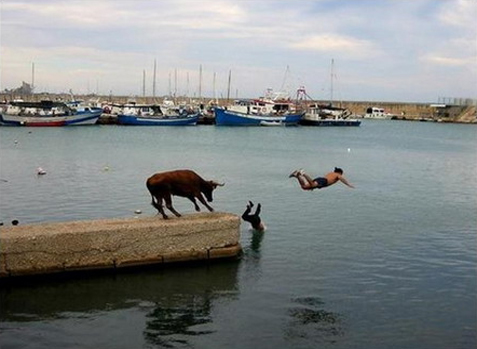
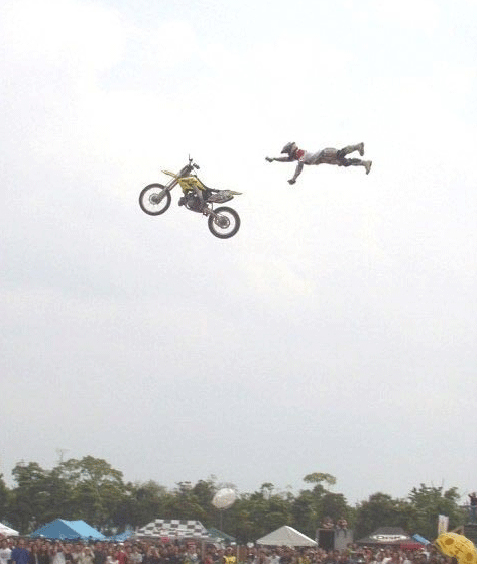
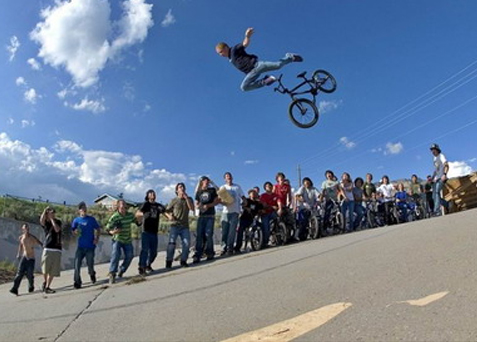
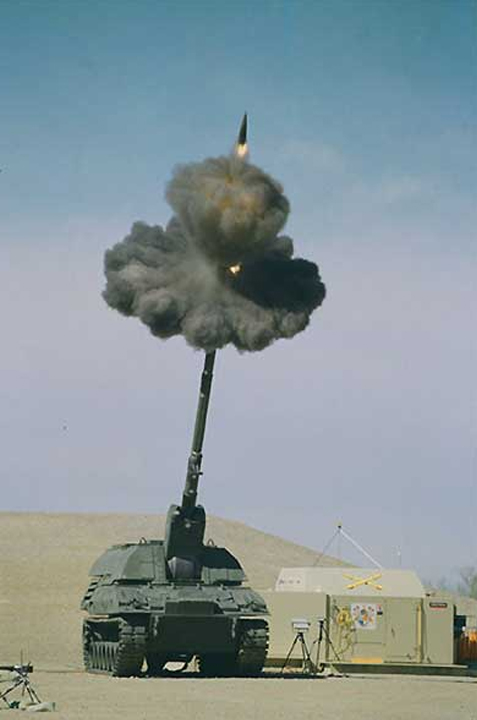
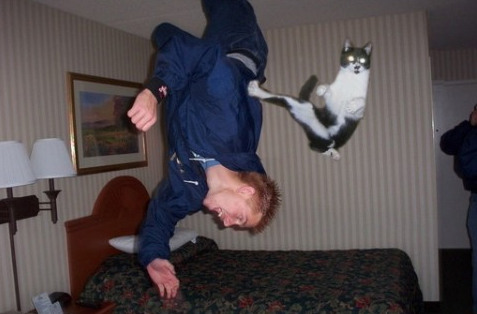
Timing is everything, particularly in the case of amazing photography. Sometimes that means waiting through a whole sports game and getting lucky to catch just the right shot. Other times than means trudging through nature for weeks to get the perfect environmental photograph. Here are 25 examples of perfectly timed images from around the world and in various genres.

26

25

24

11

20


18

16

With extreme sports it is the danger and challenge that tends to excite people. Often the most amazing and bizarre images are taken right at the moment when disaster strikes. Sometimes these are tragic and painful though some are just plain funny.

6

1

27

15

10

With conventional sports there is always the opportunity for comedy but also the potential for artful photography. The spray of sand during a long-jump or that moment before the splash when someone is diving both provide a moment of calm in a fast-paced sport that is normally impossible to see.

17

9

In war it is often hard to find or revel in humor or traditional beauty. Instead, it is often the images that capture grave or impressive moments in time that stir us most deeply. This can come in the form of a rocket frozen in space or the geometry of a cloud of smoke from a tank.

21

5

12

With people comedy tends to be the rule and other things the exception. Humans tend to be at their most interesting when they are at their funniest. Whether this means a young man falling into a fountain or an old woman riding a sled, it’s worth keeping your eyes open in public places for the perfect shot!

23

22

19

8

7

4

14

13

2

3

Nature images truly span the spectrum of artistic possibility. Sometimes animals are funny, sometimes scary, often tragic and sometimes downright strange. Whether they be shot in a conventional park or bedroom or taken deep in the wilds, environmental images taken at just the right time can provide unique insights into nature and the relationship of humans and animals.

Student finds baroque painting inside old sofa

Wed Oct 31, 9:17 AM ET

A Berlin student who bought a second-hand sofa bed at a flea market learned she had been sitting on a small fortune when she found a baroque painting hidden inside the couch.

The artwork fetched 19,200 euros ($27,660) in Hamburg after the student discovered it stashed between the folding sections of the couch she had paid 150 euros for last year, the auctioneers said Tuesday.

"She used the sofa bed for a while before realizing the painting was in there," said Michaela Derra, spokeswoman for the auction house Ketterer Kunst, adding she did not know how the oil painting had wound up inside the sofa.

The student got about 16,000 euros from the sale.

Experts believe the work, titled "Preparations for the flight to Egypt," was painted between 1605 and 1610 by an unknown artist with ties to Venetian painter Carlo Saraceni.

What the F - take 2 (watch it now while it lasts!)


Seriously - can anyone make out WTF she's supposed to be singing? To quote Mike Myers (as Mick Jagger) speaking to Mick Jagger (as Keith Richards):

"That wasn't English, [Amy]! I mean, you're talking in Esperanto, or some language twins teach each other! I mean, the King's English, man! I mean, throw us a bone [wo]man - alright!

Chris Angel - Mind Freak - in the SuperMarket

Coolest race of all time

Manualist plays Guns 'n' Roses - Sweet Child O' Mine!

Now this is raw talent:

Visit the "Body Farm!"

FAIR WARNING: The linked story is graphic in both detail and included pictures. NOT FOR THE SQUEAMISH.

Now that we have that out of the way, check out the link for a description of one of the country's only "Body Farms" where corpses are flung or placed (to recreate crime scenes) and then observed as they decay.

Used for FBI and Crime Scene Investigation training, the place (and the article) surely fit the title of the site I found this on: Damn Interesting.

Extremely Flexible - Wow!!


Title: Extremely Flexible

Up, up and away: Airships, the next generation

By James Snodgrass for CNN

LONDON, England (CNN)
-- "Oh, the humanity." When these three words were uttered by aghast radio journalist Herbert Morrison -- as the LZ129 Hindenburg airship crashed and burst into flames in New Jersey in 1937 -- it was seen as the end of airships. The other remaining Zeppelin-class dirigible, the Graf Zeppelin II, was destroyed by the Nazi administration who felt the materials could be put to better use with more conventional aircraft.

art.aeroscraft1.ac.jpg

The Aeroscraft ML866 is a prototype for future cargo vehicles that could have a payload of up to 60 tonnes


But, 70 years on, could the Hindenburg-style airship be experiencing a renaissance?

There are two types of craft that are commonly called "airships." The first is basically a balloon filled with a lighter-than-air gas, with an attached pod for the pilot and passengers, and tilting propellers to aid with descent and maneuvering. These are known as 'blimps' and are commonly used for promotional activities, for filming sporting events and by law enforcement agencies for surveillance. But their limited payload make them unsuitable for other purposes.

The other type of airship is the dirigible. Like a blimp, a dirigible airship is filled with lighter-than-air gas but it has an internal skeleton. This greater rigidity allows dirigible airships to carry larger payloads than blimps. Photo See pictures of airships through the ages. »

While the Hindenburg crash dented public confidence in the dirigible airship concept, the principal cause of the disaster wasn't bad design but propaganda. The Germans were desperate to show off their technical achievement. But the United States, the world's primary supplier of the inert gas helium (which was used to inflate and lift the airships), had imposed a military embargo on the gas. So the Hindenburg was filled with the massively explosive gas, hydrogen.

And it exploded. Massively.

In recent years the concept of the dirigible airship has been reevaluated because of the environmental need to find lower-carbon methods of freight transportation; and the military and humanitarian need to deliver supplies to remote locations not served by airports.

One failed attempt to resuscitate the airship content came from the German company Cargolifter AG in the mid 1990s. It planned a large airship, the CL160, to be used as a transporter for large and heavy loads. A giant hangar, one of the world's largest structures, was built in Brand, near Berlin in Germany, for storage and manufacture of these giant craft. But Cargolifter became insolvent in 2002. The hangar was sold for a fraction of its construction cost and now houses an indoor water park.

In 2005 the Aeros corporation of Montebello, CA. resurrected the airship concept. Responding to the Defense Advanced Research Projects Agency (DARPA)'s "Walrus" program the company was given a $3.2 million grant to develop: "a very large airlift vehicle concept designed to control lift in all stages of air or ground operations including the ability to off-load payload without taking on-board ballast other than surrounding air."

What distinguishes a "Walrus" craft from a Hindenberg-style airship is that it would not be lighter than air. Rather it would generate lift from a combination of aerodynamics, propellors and gas buoyancy. This would allow for a quicker descent without the expulsion of lift gas, for instance.

DARPA terminated the Walrus program but Aeros is continuing to develop the technology with a view to creating an enormous civil airship utilizing a glass-fiber and carbon-fibre semi-monocoque envelope structure.

The planned Aeroscraft ML866 could be the next generation of corporate transportation. With more than 465 square meters (5000 square feet) of interior floor space, the ML866's interior could house a floating boardroom or an opulent flying home. Because it would be flying at a lower altitude than a passenger jet (6,000 to 12,000 feet, as opposed to 25,000 to 35,000 feet) the cabin would not be pressurized.

The technological legacy of the Walrus program is the COSH (control of structural heaviness) system. By compressing and decompressing stored helium, the aircraft can become lighter for take-off and heavier for landing.

If Aeros secure funding to develop the ML866, it would be offered with a choice of turboprop engines (for either greater speed or heavier payload).

But could large airships supplement the role of large passenger aircraft? Flight International's technical reporter Rob Coppinger is skeptical:

"Whether it is cargo, corporate or mass transpiration I think the issues with airships are; can [airships] carry enough people/cargo between two popular destinations and do it fast enough to carry a sufficient volume of cargo/people to generate enough revenue to pay for the development, certification and running costs?

"I think if it were easy to financially justify, they would exist already."

Coppinger concedes, however, that airships could have potential military applications.

Aeros plans to begin testing a non-rigid airship, the Aeros 40D, in 2008 to demonstrate the helium compression and decompression system. Production of a prototype Aeroscraft ML866 has begun, with a test flight planned for 2010.


Van Damme Friday - isn't this nice

Thursday, November 1, 2007

Goonies for WII

The Goonies For Wii

Add to My Profile | More Videos

13 Amazing Jack-o-lanterns We're Too Lazy to Make

It's that time again--time to plop down a five spot and take home a pumpkin. Chances are you'll forget about it until it starts to rot and you begin to smell something unpleasant emanating from some neglected corner of your apartment.

To help inspire you in this time of need, we've put together a collection of 13 bad-ass jack-o-lanterns that will put anything you try to carve to shame. This way, you don't even need to try.

Put down that little saw-toothed knife and enjoy the work that other people have already done for you...


One
popular approach seems to be the gross-out. Pumpkins puking
pumpkin guts, nasty, mildewy pumpkin teeth, secreting orifices.
You know.


If you've
got a lot of time, are really bored, or have been blessed with
freakish pumpkin carving abilities, you can always go the intricate
route. These two are among the many mind-boggling ones you'll
find at
pumpkingutter.com
.


Maybe it's
because small pumpkins, squashes, and gourds are so abundant this
time of year, but cannibalism is always a popular theme.
Pumpkin on pumpkin crime. It's a shame.


If you're
feeling a little wild, you can always opt for something inspired by
the animal kingdom. The nation's number one threat? Bear
jackolanterns!


Finding
the traditional jack-o-lantern a little boring? Try for
something bizarre, like a disgustingly large burger or a beached
giant squid. Yum!


When all
else fails, simply tack on some appendages to your pumpkin.
Limbs on things without extremities are always entertaining.
We found these on

extremepumpkins.com
.


WOW - what would Lohan do if they install these in the USA

Vin Diesel - Breakdancin'

Fisker hybrid sedan


Like just about everything with a Fisker badge on it, this sedan is breathtaking to look at. But, surprisingly, there's much more to the story. This sedan is a plug-in hybrid that Fisker claims can travel up to 100 miles on a single gallon of gas.

Moreover, using a hybrid module co-developed with Quantum Technologies, it can travel up to 50 miles on battery power alone. Using its gasoline or diesel engine, the big sedan can travel up to 620 miles on a tank.

Under the beautiful skin is an all-new platform that allows the battery pack to be positioned at the center of the vehicle. This not only results in an aggressive-looking, long hood, but also helps improve handling and safety.

Fisker says the $80,000 sedan will make its debut at the 2008 Detroit Auto Show, but deliveries won't commence until the fourth quarter of 2009.

Wednesday, October 31, 2007

Amazing Hand Painting Art


Guido Daniele's amazing Hand Painting Art. Guido Daniele was born in Soverato (CZ - Italy) and now lives and works in Milan. Since 1964 until 1968 he attended Brera artistic High School and he graduated from Brera School of Arts (major in sculpturing) in 1972. In 1972 he started working as hyper-realistic illustrator, in co-operation with major editing and advertising companies, using and testing different painting techniques. In 1990 he added a new artistic experience to his previous ones: using the "body painting" technique he creates and paints models bodies for different situations such as advertising pictures and commercials, fashion events and exhibitions.
Official Home Page: guidodaniele.com