Zazzle Shop

Screen printing

Wednesday, September 24, 2008

Gilmour plays Pink Floyd tribute

By Ian Youngs
Music reporter, BBC News

David Gilmour on Later...
Richard Wright had been due to accompany David Gilmour on the show

Pink Floyd star David Gilmour has performed one of the band's early songs in tribute to the group's keyboardist Richard Wright, who died last week.

Gilmour gave a poignant rendition of Remember A Day, written by Wright, who died from cancer at the age of 65.

The song was on Pink Floyd's 1968 second album Saucerful of Secrets.

"He created a sound that glued the whole Pink Floyd thing together," Gilmour said on BBC Two music show Later... With Jools Holland.

"He was just a very self-effacing but very talented, lovely chap. We're incredibly sad to have lost him."

Wright had been due to accompany Gilmour on the TV show, but sent the guitarist a text message three weeks ago saying he would not be able to play.

After his death, Gilmour decided to play Remember A Day. It is thought that the song had not been performed live for many years.

Wright sang lead vocals on the original version, which was recorded just before Gilmour joined the group.

Gilmour recalled meeting Wright in 1965, when his first band supported Pink Floyd in "schools and big old youth clubs".

Pink Floyd reformed for Live 8 in 2005
Pink Floyd reformed for Live 8 in 2005, with Gilmour (left) and Wright (right)

Wright was "so shy and quiet", he told host Jools Holland.

Asked about Wright's contribution to Pink Floyd, he replied: "He brought a slightly more jazzy and ethereal element to it all.

"He had some elusive quality, let's call it soul, that glued the whole thing together. You notice it when it's missing."

One edition of Later... was broadcast on Tuesday, with a longer version to be aired on BBC Two on Friday.

For the Friday episode, Gilmour also performed The Blue, from his 2006 solo album On An Island.

The album version of that song featured Wright on backing vocals, and Wright had also accompanied Gilmour on tour.

The keyboardist was "revelling in what he was doing" in recent years, Gilmour said.

"He had so much joy in him."

The show also featured Mercury Prize winners Elbow, new US pop star Katy Perry and British hip-hop artist Roots Manuva.


David Gilmour - Remember a Day (live) Later... with Jools Holland is on BBC Two at 2335 BST on Friday.


The Original (
Pink Floyd goof around while miming "Remember a Day" on French TV in 1968. Updated audio. )

How to watch TV at work (without getting fired)

Get a new job


Ten ways to maximize your on-the-job TV watching (click on each image above)

By Michael O’Connell, Special to Metromix

Work is hard enough without the sweet comfort of your loving television set. But until the blessed day when some government mandate grants us all the freedom to watch loud and proud, the best most of us get is the promise of a full DVR when we finally make it back home.

But watching your favorite shows during office hours can be simple. Check out our list of gadgets, shortcuts and software that'll let you put the "Montel Williams" back in your workday.

Blogger girl looking for semen donor


Shes not looking for a source of child support or a baby-daddy in the sense that he should have any supportive role in the pregnancy or in raising the child, I just need some good, hearty seed.

read more | digg story

Beyond the DVR- Hulu is the new way to watch TV.

"To me, this is the way media always should have been," says Hulu CEO Jason Kilar.
Illustration: Todd Alan Breland

What's a hulu? In August 2007, this question ricocheted through the blogosphere to a chorus of derisive laughter. Fox and NBC were going to make the Internet safe for television! They were building a "YouTube killer"! And they were calling it Hulu! It was almost too perfect—an absurdist topper to the idea that two major broadcast networks could devise an Internet video service people would actually use. The name was even more delicious than the venture's placeholder moniker, NewCo., which the online world had changed to Clown Co. And now Hulu? It means "snoring" in Chinese, one blogger declared. "'Cease' and 'desist' in Swahili," Michael Arrington reported on TechCrunch. "Perhaps they should have just stuck with Clown Co.," he added.

Jason Kilar read these posts and winced. A 36-year-old ex-Amazon.com executive newly relocated to Los Angeles, Kilar had followed—even admired—many of these bloggers for years. Now he was Hulu's CEO, and their ridicule wasn't so funny.

What's a Hulu? Kilar had gotten the same question from Jeff Zucker, chief of NBC Universal, and Peter Chernin, president of News Corporation, Fox's corporate parent. In English it means nothing. In Mandarin, when pronounced another way, it means not snoring but "bottle gourd," which, in an old Chinese proverb, stands for a "holder of precious things." If you say so, they responded.

Even Kilar was starting to wonder whether he could make this thing work. Along with the new name, he had just announced that Hulu, which he had been running for only seven weeks, would launch in beta in two months—much later than expected but far too soon for a team that had barely gotten started. He was heading an operation of 20 people holed up in an office suite in West LA. To meet the deadline, he had turned the place into a bunker: Newspapers covered every window. People were sleeping on air mattresses on the floor. Half-eaten pizzas littered the empty cubicles. Fruit flies were the only visitors.

But Kilar would make it work. He and his crew would emerge from their dismal cave with the sleekest, easiest-to-use, most professional video site on the Internet. Not only would it deliver shows and movies from Fox and NBC Universal, it would take you to programs from every other major network and studio. Full-length episodes. Entire seasons. For free. Within months of that late-August announcement, Hulu would be among the top 10 US video sites in number of clips streamed. Om Malik, one of the bloggers who had ridiculed it from the start, would pronounce it "brilliant." TechCrunch readers would vote it best video startup of 2007. "Game Over. Hulu Wins," Arrington would declare in a conciliatory post. How did that happen?

Find out here:

The Lowdown on Android


Mobile move: T-Mobile’s G1 is the first phone that uses Google’s Android operating system.
Credit: Google/T-Mobile

At a press conference in New York yesterday, Google and T-Mobile showed off the long-anticipated G1, a powerful smartphone that runs Google's Android operating system for mobile devices.

The handset, priced at $179, will be available from T-Mobile on October 22. It boasts features to rank it at the top end of the smartphone market, and its software offers some neat surprises and tricks. At the same time, the G1 undoubtedly lacks the sparkle of the iPhone, probably its closest competitor. Furthermore, some experts question whether Google's scheme for delivering new applications for the phone--an online store called Android Market--could run into problems that slow down mass adoption.

As expected, the G1 has a touch screen and a pullout QWERTY keypad, which make it thicker than the iPhone and some other smartphones. It can make use of T-Mobile's faster 3G mobile network, and it has GPS and Wi-Fi capabilities built in. The G1 comes equipped with a 3.1 megapixel camera (but no video camera), an accelerometer to measure motion of the device and orientation of the screen, and a Bluetooth receiver for hands-free devices. The G1 also has one unusual hardware feature: a built-in compass that can determine the direction in which the phone is pointed.

While the G1's hardware doesn't make it stand out from the crowd, its software is already causing excitement. Android is designed to enable easy access to Google's Web applications--including its calendar, e-mail, and mapping services--and to instant messaging applications like Google Talk and AOL's Instant Messenger. The G1's Web browser, based on the same software used to make Google's recently released desktop browser, produces scaled-down Web pages that look, for the most part, as they do on a normal computer screen. And the phone's built-in compass has been integrated into Google Maps Street View to let users pan around a streetscape by moving the handset in the corresponding direction.

These applications come as standard, but Google and T-Mobile representatives say that third-party applications could take the device well beyond these basics. A slew of applications have already been released, and some have won funding via Google's Android Challenge, a competition to encourage software engineers to develop for the platform. Locale changes the phone's settings based on the time of day, the phone's location, and the owner's calendar, automatically turning the ringer off during meetings, for example. Another downloadable application, Shop Savvy, lets users take a picture of a product's barcode with the built-in camera and instantly compare prices from around the Web.

"Several years ago all phones were controlled by handset [makers] with requirements coming from carriers," says Rich Miner, vice president of mobile at Google. "First with Microsoft, then Apple, and now Google, you have people who really understand software and the user experience on these devices. You combine that with higher speed networks and better screen resolution, and all of a sudden, the mobile Internet is here."


Applications Galore: Owners of the G1 can download applications such as Locale and ShopSavvy for their phones. Locale (left three images) automatically changes the G1’s settings based on, for instance, the phone’s location, calendar events, and the time of day. ShopSavvy (right image) lets people compare prices of an item by scanning its bar code with the phone’s camera and checking other Web sources.
Credit: MIT/Big In Japan


Software apps will be available through Android Market, an online store that can be accessed via the phone. Android Market is similar to Apple's iPhone App Store, in that it is the main method of application distribution. But, crucially, Google will play no central role in vetting applications before they are posted. Instead, developers and users can vote and comment to let others know if an application works as promised or if it drains the phone's battery or makes it crash. According to some experts, this free-for-all approach might lead to quality-control issues in the near future.

"I'm totally cheering Android on," says Jonathan Zittrain, a professor of law at Harvard University. "But from what I can tell, [Android Market] is banking on a ratings/reputations systems and common sense for people to know what's okay and what's not."

Zittrain says the approach might even hinder Android's progress. "I think [Android Market] may work," he says, "but if there are a couple of well-publicized incidences of code run amok, that can really scare people away from the platform and into Apple's waiting arms."

Zittrain says a novel solution to quality control could come in the form of an application that warns users automatically. "I'd love to see an app that reports each phone's vital signs. We need some sense of a nervous system for this thing," he says, so that less tech-savvy people feel comfortable trying out different applications.

Miner is confident that the Android Market approach will pay off. "Look at YouTube," he says. "Good things bubble to the top, and if the apps are bad, they will float down to the bottom."

Miner adds that the Android platform has built-in security features to limit access to certain types of data and certain functions on the phone. "With Android, our philosophy was [to] make it easy for people to put apps up, but make it so when an app is on a platform, the user knows what functions it's going to be accessing."

The first Android phone may not surpass the iPhone in popularity, but its applications will play a vital role in the future of the platform. Within the next two years, says Zittrain, it should be clear whether or not Google's gamble has paid off.


The Portable DNA Detector


On-site CSI: After a blood sample is collected from the scene of a crime, this briefcase-sized device can be used to extract and analyze its DNA in six hours or less.
Credit: University of California, Berkeley

A new portable DNA analyzer performs real-time analysis of blood samples left at the scene of a crime. Researchers at the University of California, Berkeley, developed the device, which packs microfluidics, electronics, optics, and chemical detection technology into a single briefcase-sized unit. "While previous groups have developed lab-on-a-chip systems, none of them have succeeded in making a completely portable, robust system that can be used at a scene," says team leader Richard Mathies.

The new device can be used for short tandem repeat (STR) analysis, a technique that has become routine in modern forensic work since it was first applied in 1991, but one that normally takes place in the lab. The researchers carried out real-time STR profiling at a mock crime scene set up by the Palm Beach County Sheriff's Office. Blood stain samples were collected and DNA extraction and analysis were performed at the crime scene within six hours.

The researchers stress, however, that while their system is very reliable, it is not yet commercially available and can be used only to provide preliminary evidence for police investigations. "The advantage is that the police could now have almost immediate information on who the most likely criminal actually is," explains Mathies. "This enables them to find the person and get crucial evidence before he or she leaves the region or destroys evidence."

Mathies is the inventor of capillary electrophoresis arrays and energy-transfer fluorescent dye labels--two technologies commonly used in modern DNA sequencers. These technologies combine miniaturized chemical and biochemical analysis with high-sensitivity fluorescence detection.

After a sample is obtained at the scene of a crime, DNA strands are amplified and separated to detect a "signature." Inside the device, a DNA fragment is replicated within a 160-nanolitre polymerase chain reaction (PCR) reactor coupled with an on-chip heater and temperature sensor. The biological sample and PCR reagents are exposed to three distinct temperatures for a certain amount of time, and a seven-centimeter-long separation channel is used for analyzing DNA by capillary electrophoresis. Using the device, the researchers succeeded in producing reproducible STR profiles of DNA samples in as little as two-and-a-half hours.

The detector measures 30 by 25 by 10 centimeters and weighs 10 kilograms. It consumes 20 watts of power, which can be supplied by a car battery. "It can thus be easily carried in a suitcase and checked in as flight luggage," says team member Peng Liu.

One of the biggest challenges in designing a portable DNA sequencing device is controlling the flow of samples through the system. To overcome this issue, Mathies and coworkers built a multilayer plastic chip containing an intricate system of etched channels. This system was fabricated with using the same techniques used to manufacture computer chips.

Most U.S. states now collect DNA samples from suspects upon arrest. So the ability to quickly match crime scene samples with records from this database could dramatically speed up the identification of criminals, Mathies says.

The Berkeley team plans to improve the sensitivity and throughput of the device by integrating other analytical steps, such as post-PCR "cleanup." By integrating more units, it will be possible to analyze several DNA samples at the same time, explains Liu. The device could appear on the market in as little as three to five years, the researchers say.

"One of the barriers to developing lab-on-a-chip technology is systems and process integration, and it is this aspect of the new work that is really exciting," says Stephen Haswell of the University of Hull, UK, who is also working on crime-scene DNA matching. "The work is an important development for both the forensic community and those striving to develop truly lab-on-a-chip technology."

Cell Type Counts in Spinal Therapy


Starring role: A specific type of astrocyte--star-shaped support cells found in the central nervous system--may have healing effects for spinal cord injuries. Researchers grew astrocytes (green) from embryonic stem cells and found they improved motor function in rats with injured spinal cords.
Credit: Stephen Davies/University of Colorado

Small differences in the type of cells used for transplantation therapies can have a big impact on outcome. In experiments published in the current edition of the Journal of Biology, scientists from the University of Rochester and the University of Colorado found that transplanting a certain type of cell improved motor function in rats whose spinal cords had been severed. However, transplantation of a closely related cell type had little benefit and actually made the animals more sensitive to pain.

The findings illustrate the importance of differentiating stem cells before transplanting them into injured tissue, an issue that has been under great debate as stem cell-based therapies approach human testing. "This study demonstrates for the first time the dynamics of developmentally different populations of [cells], which we need to take into account," says Martin Marsala, a professor of anesthesiology who teaches at the University of San Diego and was not involved in the study.

Stem cells have the potential to grow into new neurons and other cell types, a property scientists aim to exploit to treat spinal cord injury. Transplanted cells might bridge severed nerves in the spinal cord or encourage recovery of existing cells. However, scientists working toward this goal have run into two main problems: stem cells transplanted into the spinal cord have a hard time forming lasting neurons, and these same cells tend to induce nerve-related pain.

One problem is that transplanting undifferentiated, or "naïve," stem cells into injured tissue cells tends to cause the formation of scar tissue, instead of regenerating healthy neurons, says Stephen Davies, associate professor of neurosurgery at the University of Colorado. "It might be that scars form to protect an injury site from infection, so the injured tissue goes into lockdown mode and will recruit whatever precursor cells are present to form scars," he says. The alternative is to differentiate cells into specific cell types before transplanting them.

Davies and his associates at the University of Rochester found that the right kind of cells for repairing spinal cord injuries may be a subtype of support cells found throughout the central nervous system, called astrocytes. These star-shaped cells have various forms and functions, but are largely involved in providing nutrients to the brain and repairing injury.

To test their healing potential, Davies' team grew two different kinds of astrocytes from the same line of embryonic stem cells by exposing them to different cocktails of signaling molecules--molecules that stimulate stem cells to grow into specific cells. One sample yielded astrocytes that were flat and broad, called GDAbmp. The other produced more elongated astrocytes, called GDAcntf.

The researchers then surgically severed rats' spinal cords at the base of the neck--a common location of spinal injury in humans--and injected the animals with naïve stem cells, stem cell-derived GDAbmp, and stem cell-derived GDAcntf.


Neuron bridge: Two different astrocyte populations grown from the same stem cell line have different effects when injected into the injured spinal cords of rats. Above, an injury site injected with one type of astrocyte (red) is full of new nerve fibers that successfully bridge the injury. Below, a similar injury site injected with a different type of astrocyte (red) shows fewer nerve fibers (green) that fail to bridge the gap.
Credit: Stephen Davies/University of Colorado

Every three days after surgery, the researchers tested the rats' ability to walk across a horizontal ladder. They found that the rats that received GDAbmp injections quickly recovered motor skills and were able to walk across the ladder as well as they could before the surgery. By contrast, the rats injected with GDAcntf showed much less recovery, and those with naïve stem cells exhibited none, similar to rats that received no injection at all.

Images of each injury site after cell injections showed that GDAbmp astrocytes successfully formed new neurons that bridged the injury site, while GDAcntf astrocytes and naïve stem cells were not able to regrow neurons.

In addition, Davies' colleague and wife Janette Davies discovered that rats with injected GDAcntf astrocytes were much more sensitive to pain than rats with GDAbmp astrocytes. Furthermore, in histological samples, the team found that rats with GDAcntf exhibited sprouting of nerve fibers associated with neuropathic pain, whereas rats with GDAbmp did not show such sprouting.

"So far, these [GDAbmp astrocytes] are the gold standard astrocytes that have been discovered," says Davies. "Not only do they not promote neuropathic pain, but they have robust regeneration of neurons, and [they lead to] locomotor recovery in two to three weeks."

Davies says manipulating stem cells before transplanting them into injured sites may have beneficial effects not just for repairing spinal cords, but also for treating injuries in other parts of the body. For now, he and his team are exploring methods to make GDAbmp for humans, either from embryonic stem cells or from adult stem cells, with a view toward transplanting these cells into humans in clinical trials in the next two or three years.

Conferencing in the Car

The latest innovation in talking while driving

Aura Mobile BT: Photo by Spracht

Driving around while seemingly talking to an imaginary friend in the front seat is no longer strange, and in California, it's the law. But "hands-free" can still be painful for the other half of the conversation, and the ear you choose to clip a gadget onto. The Aura Mobile BT from Spracht is a Bluetooth conference phone that works just as well in the car as it does in your hotel room-turned-office. On a three-hour trek through northern California driving 80 mph in a noisy car, we tested whether it's worth the $129.99 price tag.

Over the course of eight or so calls, there was universal agreement that the sound quality was better than putting a cell phone on speaker or the average Bluetooth headpiece. People on the other line could still tell it was on speaker, but the words didn't appear chopped and there was no need to repeat constantly. Several felt that there was less ambient noise. A few key technical specs from Spracht:

  • full-duplex (93%) operation for simultaneous two-way conversations without clipping
  • multiple acoustic profiles, which are automatically adjusted based on the type of communication.
  • full 3-wattamplifier
  • dual speakers generating 95 dB
  • noise-cancelling internal microphone at 44 db ± 4 dB
  • 4 hours talk time on a single charge, standby time 24 hours

No software is necessary to get started, and the cell phone connected quickly and easily. A slick embedded visor clip deploys out of the speaker bottom for use in the car, ensuring you won't lose some add-on accessory. The spring-loaded design collapses it back into the device for use on a table or desk. Placing calls still requires using the phone keypad, but maybe a voice-activated model will come next? Incoming calls ring quite loudly, but a slight disappointment was finding no ringer options. However, if the incoming call registers in your address book, the Aura Mobile will actually read out the name (so be careful with your nicknames). A car charger is included for long trips.

For corporate folks, the conference-room capability is also worth noting and probably justifies the cost. Putting a standard cell phone on speaker only works if everyone in the room is within six inches of the microphone. The Aura Mobile eliminates that need, and slips easily into your computer bag. It also functions with PCs or Macs for VoIP calls. So is it worth the $129.99? Tough to say, but it's still hanging on our visor.

A Water Lens for a Better Camera

New liquid lens technique could lead to cheaper, lighter and more energy-efficient cameras in a range of devices

See it Better: Rensselaer/Carlos A Lopez
The next time you take a trip to the water cooler, just think, what you're about to drink isn't just good for hydration; it makes for a very effective, energy-efficient lens, too. That's what researchers at the Rensselaer Polytechnic Institute have announced after designing and testing an adaptive liquid lens—comprised of a pair of water droplets—that captures 250 pictures per second.

Unlike existing techniques used in liquid lenses, the new version does not manipulate the size and shape of the surface area the liquid touches to get an image to focus. The latest imaging technology leaves the water at a constant on the surface area and uses high-frequency sound waves to vibrate the water droplets back and forth at a significant speed through a cylindrical hole. This in turn changes the focus of the lens. During this process, imaging software automatically captures streaming frames that are in focus and rejects those that are not. Rensselaer researchers say the method uses substantially less energy overall than present liquid lenses and could be the next step in a new generation of light-weight, low-cost cameras in cell phones, cars and even security equipment.

Planners Save, Hedonists Squander

How we treat time is key to happiness, say psychologists

Eat Now, Think Later: People stuck in the present tend to have poor impulse control, as demonstrated in the famous Stanford Marshmallow Study. Photo by www.istockphoto.com

Give a four-year-old a marshmallow, and she’ll eat it, no hesitation. Unless she’s promised a second if she waits 15 minutes before eating the first. Stanford psychologist Walter Mischel tested the ability of kids to delay gratification in this way in the 1960’s. Behind the one-way mirror, Mischel noticed that some kids—I’ll call them the planners—might squirm and sniff and squeeze the prize but ultimately managed to resist temptation. Others could not. They gobbled right away.

Follow-up studies of the same kids as teenagers revealed a remarkable divide. Those who could wait longer were far better off. The planners were more confident, attentive, respectful, trustworthy, and calm under pressure. They were more eager to learn and, in fact, earned SAT scores that were more than 200 points higher than those of the hedonistic gobblers.

The psychologist Philip Zimbardo, a colleague of Mischel’s, uses the elegant experiment as a hook for his new book, The Time Paradox: The New Psychology of Time That Will Change Your Life. Part research report, part self-help guide, Zimbardo and co-author John Boyd (a research manager at Google) explain what this all means for you. Your perspective on time, they say, can make or break your well-being.

I saw Zimbardo speak with zeal on the topic at the New York Academy of Sciences last week. If you’re a future-oriented person—able to wait for your marshmallows—you likely set goals and meet them, save money, and finish your work on time. For the gobblers among us, the present-oriented, well, I’m afraid the gobblers are a bit screwed. Pain, sickness, financial ruin, addiction, death, and hell. That’s verbatim from one of Zimbardo’s Power Point slides. Sorry—probable pain, sickness, financial ruin, addiction, death, and hell.

Hyperbole aside, Zimbardo has spent decades refining a way to quantify what he feels is an overlooked predictor of a person’s aptitude for long-term success. His tool to measure time perspective is called the ZTPI: the Zimbardo Time Perspective Inventory. The ZTPI will identify what level and shade of past-, present-, and future-oriented you are. You can then compare it to a so-called optimal profile, giving you a new excuse for why you haven’t accomplished what you wanted to this year.

So is it carpe diem or carpe annum for you? You can measure your personal ZTPI here. But never fear: Zimbardo says time perspective can be readjusted. To learn how, though, it seems you’ll have to buy the book.

Ghost Heart

Reanimating lifeless organs brings new hope for the millions on transplant waiting lists

Born to Beat: a rat heart fused with rat cells incubates in a bioreactor at the University of Minnesota: Photo by Courtesy Emily Jensen

In late 2005, cardiac researcher Doris Taylor revived the dead. She rinsed rat hearts with detergent until the cells washed away and all that remained was a skeleton of tissue translucent as wax paper—a ghost heart, as Taylor calls it. She injected the scaffold with fresh heart cells from newborn rats. Then she waited.

What she witnessed four days later, once the cells had a chance to make themselves at home, was astonishing. "We could see these little areas that were beginning to beat," says Taylor, director of the University of Minnesota's Center for Cardiovascular Repair. "By eight days, we could see the whole heart beating. The first time that happened, it was like ‘yes!' "

The experiment, which was reported this year in the journal Nature Medicine, marked a watershed moment: the first time scientists had created a functioning heart in the lab from biological tissue. For the 62 million people living with congestive heart failure, a condition in which the heart is no longer fit enough to pump blood through the body, drugs and heart-repair procedures frequently fall short; 60 percent of patients die within five years of diagnosis. A recellularized heart like Taylor's represents the first real hope for a cure—and she recently brought it one step closer to reality by devising a way to populate it with blood vessels. "There's a lot of smoke and mirrors in this field," says Todd McAllister, the CEO of Cytograft, a California-based tissue-engineering company. "Some people say they can grow a heart from scratch in 10 years, which is ridiculous. But Dr. Taylor's approach is more realistic because it's so simple and elegant. By using an existing heart, she's taken away all of the structural issues."

Taylor's system involves flushing animal hearts of cells using a cleanser, at which point only the extracellular matrix remains and "the hearts look almost clear," Taylor says. The next step is to infuse the hearts with a mix of mature and progenitor cardiac cells, which can come from a patient's own body to ensure compatibility. Incredibly, for reasons the team still doesn't understand, the cells seem to know how to divide and proliferate into cardiac tissue inside the empty-shell hearts.

This year, Taylor has continued to forge ahead toward her goal of creating transplantable, made-to-order human organs. Soon after she published her rat-heart results, she started working on making recellularized pig hearts—closer in size and shape to the human equivalent—that could pump blood and generate electrical impulses. "Our hope is that someday we'll be able to take a cadaver or pig organ, decellularize it, and transplant your own cells into the matrix to make an organ that matches your body," Taylor says.

Before a reliable human donor heart can be grown from a matrix, however, scientists must coax it to do more than just beat. "A heart isn't just a muscle. It also needs arteries and other tissues," explains cardiologist Robert Bonow of Northwestern University. "Doris Taylor has replaced the motor inside the chassis, so to speak, but she's got to find a way to get the other parts in there too."

She's working on it. Taylor's team has washed away the cells inside a rat aorta, for example, which is about the same size as a human coronary artery, and successfully seeded it with rat endothelial cells. The blood vessels grown in the lab are strong enough to withstand 19 pounds of pressure per square inch, a high enough performance threshold to make them viable in transplant hearts.

Taylor is focused on starting human clinical trials in the near future; she envisions a transplantable organ becoming available in "years, not decades." But she's also looking at the incredible number of other possible uses for her cell-seeding procedure. "The coolest thing is, it's not just about hearts—we could do this with kidneys, lungs and livers as well."

Face Of: G1 vs. Iphone

Android and Apple go head to head. Who will emerge victorious?

Save Money on Your Cell Phone Bill and Credit Cards With BillShrink

Don’t know if you are getting the best deal with your current cell phone plan. Enter Billshrink, 100% free web service where you can instantly compare 100+ mobile plans and find the best plan for your cell phone. And it only takes about 3-4 minutes.

First you need to provide some information about your location and usage preferences/requirements (i.e. avgerage daily talk time, whether you need data plan, SMS usage, network coverage, average phone bill etc.). Then, BillShrink will list all available cell phone plans starting from the cheapest. Along with everything else it

also tells you how much you will be actually saving.

Features:

  • Find the best mobile contract for your needs.
  • Highly customizable: Considers factors such as which areas/networks you call often, daily talk time, data usage and so on.
  • Enter your phone usage details manually or (Optionally) import them directly from the phone bill.
  • Sort recommended results by monthly price, the amount it can save, overall rank, and signal strength.
  • Map with a visual representation of each carrier’s coverage/signal strength.
  • Set BillShrink to re-analyze your profile on a monthly basis and send you email alerts in case there are better deals.
  • Note: The service is quite new so once in a while some small things may not works as expected.


Update: Credit Card Service just added

BillShrink, the startup that helps users cut costs on their phone bills, is expanding its automated advisor to an entirely new field: Credit Cards. The site’s recommendation engine will now include a database of over 200 major credit cards, helping users choose an ideal card after entering only a few basic criteria.

To begin using the system, users first decide if they’re interested in a card that will reward them for keeping their bills paid off, or one that will minimize the interest accrued on balances that are being paid off over time. Next, they’re asked to enter the amount of money the typically spend in a month, their current credit standing, and the places they spend the most money (for example, “groceries” or “airline tickets”).

Using this data BillShrink generates a listing of its highest matches, prominently displaying the overall monetary gains, along with a number of graphs that detail earning rates, fees, and limits. The site also includes an in-depth description of each card for further reference. Beyond basic numeric calculations, BillShrink also takes into account the previously entered spending preferences - for example, it will give preference to a card that accumulates “miles” quickly when someone is a frequent traveler.

BillShrink is headed by ex-Photobucket exec Peter Pham, and offers a similar comparison service for mobile phones which launched in beta last April. Using signal maps, plan rates, and usage habits, the site recommends what kind of service plan each user should be on, or if they should switch carriers entirely. While the service got off to a rocky start, it has made great strides and will be incorporating the revamped interface that launches today alongside the credit-card portion of the site.

Financial startup Mint also offers credit card recommendations, though these are not nearly as comprehensive as those seen on BillShrink.

Check out BillShrink @ www.billshrink.com

Inside the £800m Dubai hotel boasting a £13,000-a-night suite and dolphins flown in from the South Pacific

This is how Chismillionaire would do it right here:

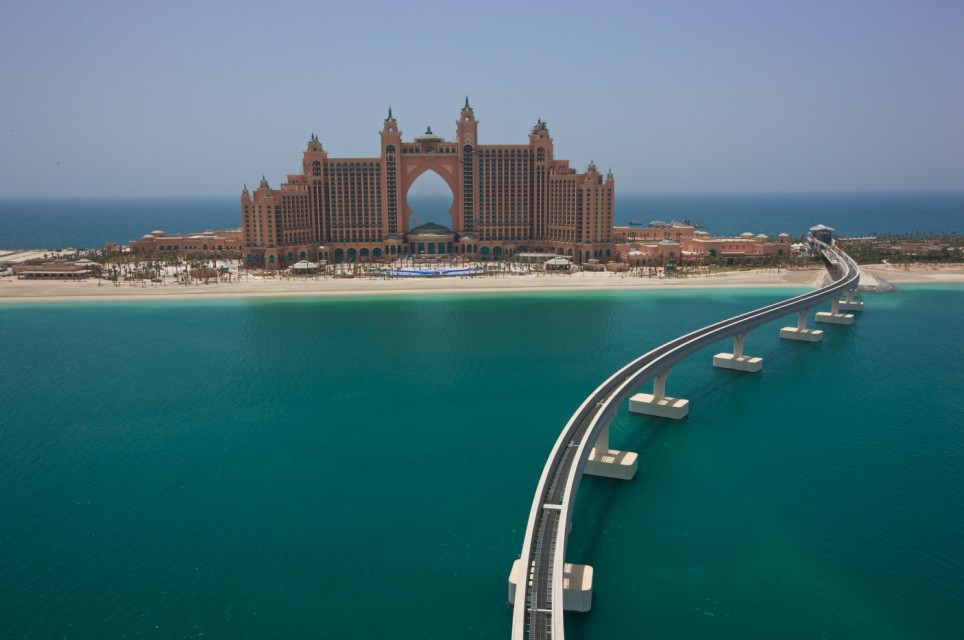
It's the latest word in Gulf excess - a sprawling £800million resort boasting a £13,000-a-night suite and dolphins flown in from the South Pacific, all atop a palm tree-shaped island.

Environmentalists have long criticised both the island and some of the features of the Atlantis hotel, set to open tomorrow.

Analysts wonder, separately, if global financial turmoil could someday crimp Dubai's big tourist dreams.

But Dubai is not blinking: the 113-acre resort on an artificial island off the Persian Gulf coast is among the city-state's biggest bets that tourism can help sustain its economy once regional oil profits stop flowing.

Enlarge Atlantis hotel, Dubai

Sea view: A bedroom looks onto the giant aquarium

Enlarge hotel dubai

Water pleasure: Journalists watch a stingray swimming in the aquarium at a press preview

Enlarge Atlantis hotel

Fantasy island: The Atlantis hotel has been built on an artificial island off the coast of Dubai

'You don't build a billion-and-a-half dollar project just anywhere in the world,' said Alan Leibman, president and managing director of Kerzner International, the hotel operator that teamed with Dubai developer Nakheel on the resort.

With its own oil reserves running dry, Dubai hopes to woo those eager to make money and those who know how to spend it - even as much of the global economy sours.

For years, the emirate - one of seven semi-independent states that make up the United Arab Emirates - has been feverishly building skyscrapers and luxury hotels.

Atlantis hotel, Dubai

A swirling glass sculpture by Dale Chihuly graces one of the lobbies

Enlarge Atlantis hotel, Dubai

Even the corridors are sumptuous

A key piece of the strategy has been to cultivate an image in the West as a sun-kissed tourist destination despite its soaring summer heat, conservative Muslim society and relative dearth of historic sites.

Fueling the interest are belief-defying projects such as an indoor ski slope, the as-yet-incomplete world's tallest skyscraper and a growing archipelago of man-made islands such as the Palm Jumeirah - the smallest of three such projects planned.

Much of the focus at Atlantis, modeled on a sister resort in the Bahamas, is on ocean-themed family entertainment.

Enlarge Atlantis hotel, Dubai

Bathtime - with water cascading from high up in the ceiling

Enlarge Atlantis hotel, Dubai

... Or you might prefer to soak up the splendours of the aquarium while you bathe

The resort contains a giant open-air tank with 65,000 fish, stingrays and other sea creatures and a dolphinarium with more than two dozen bottlenose dolphins flown in, amid controversy, from the Solomon Islands.

But the hotel's top floor aims squarely at the ultra-wealthy. A three-bedroom, three-bathroom suite complete with gold-leaf 18-seat dining table is on offer for £13,000 a night.

Dubai's development has long been criticized by environmental activists, who say the construction of artificial islands hurts coral reefs and even shifts water currents. They point to growing water and power consumption.

Enlarge Atlantis hotel, Dubai

Special guest: One of the dolphins flown in from the far-off Pacific

Enlarge Atlantis hotel, Dubai

A tourist takes a picture of her husband as he slides down the Leap of Faith chute at the Atlantis resort

Last year, environmental groups and some residents of the Solomon Islands protested the decision to sell the dolphins, plus the 30-hour plane flight needed to get them to Dubai.

Developers seem undaunted. For the moment, the resort shares the sprawling island only with rows of high-end houses and construction sites. But other international names are set to move in.

Donald Trump plans to open a hotel straddling the center of the palm, and the storied QE2 ocean liner will become a hotel and a tourist attraction docked alongside the island tree's 'trunk'.

Atlantis hotel, Dubai

Another hotel suite gives a more traditional view of the actual sea

Atlantis hotel, Dubai

The decor is uncluttered but exotic

An 1,800-seat theatre nearby will house a permanent Cirque du Soleil show beginning in summer 2011.

'Palm Jumeirah in and of itself will become one of Dubai's major tourist attractions,' said Joe Cita, chief executive of Nakheel's hotel division.

Boosting the number of attractions on the island will not only entice more visitors, he said, but also persuade them to spend more time and money in the city.

By 2010, Dubai aims to attract a staggering 10 million hotel visitors annually, up from about 7 million in 2007. Atlantis alone will increase the city's hotel capacity by 3 percent.

Enlarge Atlantis hotel, Dubai

Fish food: Diners can also gaze at the stunning sea life in the giant aquarium

Enlarge Atlantis hotel, Dubai

Colourful murals line the upper walls

So far, demand appears strong. The Middle East had the highest hotel occupancy rates in the world during the first half of the year, with Dubai leading the region at 85.3 percent, according to professional services firm Deloitte Touche Tohmatsu.

Dubai also had the highest room rates in the region, although revenue growth is slowing, Deloitte noted.

Atlantis' backers are optimistic they can fill its 1,539 rooms despite the economic uncertainty wracking some of the world's richest economies. Their focus is on well-heeled travelers from Europe, Russia, Asia and elsewhere in the Middle East.

Enlarge Atlantis hotel, Dubai

An eye-catching oven is the centrepiece of this restaurant area

Atlantis hotel, Dubai

An alcove gives onto a quiet, discreet dining room

'People will still take family holidays,' Leibman said. 'Dubai is still good value when you're paying in pounds, (or) you're paying in euros.'

Nakheel and Kerzner are both privately held companies and do not release sales data. Leibman said demand from tour groups looks strong well into the first part of next year.

Yet Marios Maratheftis, head of regional research for the Middle East, North Africa and Pakistan at Standard Chartered Bank in Dubai, said there is 'good reason' to be concerned that global financial problems could hit Dubai's tourism industry. Nevertheless, he said, the city's long-term outlook remains positive.

Atlantis hotel, Dubai

Another dining area provides a moody retreat

Enlarge Atlantis hotel, Dubai

The hi-tech entrance of Italian celebrity chef Giorgio Locatelli's restaurant at the hotel

Kerzner has grown increasingly close to Dubai in recent years. In 2006, the company took itself private in a £2 billion deal partially bankrolled by a division of Nakheel's state-owned parent, Dubai World. Nakheel retains a large stake in the company.

Meanwhile, Nakheel's hotel division has expanded rapidly. The company's holdings include New York's Mandarin Oriental, the Fontainebleau in Miami Beach, and the W Hotel in Washington.

Its parent also owns a minority stake in MGM Mirage Inc., and is teaming with the casino operator and Kerzner to build a massive multibillion-dollar casino on the Las Vegas Strip.

But don't expect to find roulette wheels at Dubai's Atlantis. Islamic prohibitions against gambling ensure casinos remain off-limits.

Enlarge hotel

Jumeira Palm Island seen from a helicopter. The Atlantis Hotel is in the distance

Enlarge hotel

Luxury on tap: A view of the seven star Burj Al Arab Hotel and Palm Island Jumeirah and the Atlantis Hotel in the background