Zazzle Shop

Screen printing

Wednesday, January 7, 2009

Skier Hangs Upside Down..Naked...for 15 minutes (SFW)


Man left dangling upside down, pantsless after Vail lift mishap

JANUARY 6--In a bizarre incident that will surely lead to litigation (or an out-of-court settlement), a skier at Colorado's ritzy Vail resort was left dangling upside down and pantsless from a chairlift last Thursday morning. The January 1 mishap apparently occurred after the male skier, 48, and a child boarded a high-speed lift in Vail's Blue Sky Basin. It appears that the chairlift's fold-down seat was somehow not in the lowered position, which caused the man to partially fall through the resulting gap. His right ski got jammed in the ascending chairlift, and that kept him upended since his boot never dislodged from its binding. As seen in the photos on the following pages (which were snapped by fellow skiers), the Skyline Express lift was stopped shortly after the pair's botched boarding resulted in the man dangling from the lift. The exposed skier was stuck for about 15 minutes before Vail personnel backed the lift up and successfully dislodged the unidentified man from the four-seat chair. The images on page four and five were taken by Marty Odom (who can be reached at martyodm@gmail.com if you're interested in licensing the photos). In a statement released this afternoon, Vail Resorts, which operates the ski area, reported that the skier was not injured after being "suspended for approximately seven minutes." The press release did not explain how the mishap occurred, only that "the man was caught on the chair."

Skype 2.8 for Mac to launch Tuesday

Posted by Rafe Needleman
Skype logo

Skype 2.8 for Mac will ship on Tuesday, with new features including screen sharing and an integrated Wi-Fi hot spot connector.

Available only for Mac OS X at first, the new version will add screen-sharing capabilities to the app's voice, video, and chat communications features. Skype spokespeople told me that users will be able to run all four channels at once with acceptable performance.

Screen sharing is useful in business settings (I get a lot of demos over apps like Webex, for example), but it has personal applications as well: People could share photographs, and presumably videos as well, using the feature.

Skype is also getting a feature that will allow users to access WiFi hotspots on the Boingo network for 19 cents a minute. The funds will be deducted from users' Skype accounts. Boingo has about 85,000 hot spots worldwide, a Boingo rep told me. TMobile, the primary Wi-Fi provider at U.S. airports, is on the Boingo network.

The Wi-Fi access feature makes Skype a more useful product for people who use the VoIP app from their Mac laptops, and the per-minute payment scheme makes sense for highly mobile users for whom buying access by the hour or month would leave a lot of unused credits behind.

Skype co-founder Nicklas Zennstrom also started a Wi-Fi network called Fon, but Skype 2.8 doesn't yet integrate with that system.

Disruptive Telephony covered other new features in Skype 2.8, including a new way to update your Skype "mood" and to follow users in a Twitter-like fashion, bigger Avatar images, and a new way to manage and prioritize chat windows.

Also, regarding Boingo: That company announced a new Apple product: A connector app for the iPhone and iPod Touch. For $7.95 a month, users of those devices can access the entire Boingo Wi-Fi network. For U.S.-based iPhone users on the AT&T network, this is not such a great product since AT&T-provided Wi-Fi is now free for them, but international users and travelers, and iPod Touch users (perhaps those who use TruPhone for VOIP calls) may find it a good deal.

Rafe Needleman writes about start-ups, new technologies, and Web 2.0 products, as editor of CNET's Webware. E-mail Rafe.

Seven Foods to Power Your Libido

Stay strong with these vittles for virility.

By Amy Levin-Epstein, Best Life

Healthy blood flow is the key to a strong erection, so it's natural that what prevents diabetes and stroke will also prevent erectile dysfunction. You know the drill: Fill up on fruits, vegetables, lean proteins, and whole grains ... and lay off the stuff that clogs your arteries. Beyond these basics, the foods below will help keep you going strong.

1. Pomegranate juice

A study in The Journal of Urology found that pomegranate juice slashed the risk of ED in rabbits. See the bartender at the Playboy Mansion for cocktail recipes.

2. Shrimp salad

Shrimp is full of zinc, and leafy green vegetables are full of folate. Together, they can boost sperm levels. Put another one on the barbie, and turn the heat up—way up.

3. Oatmeal

Oats produce a chemical that releases testosterone into the blood supply, increasing sex drive and orgasm strength. Mix in some honey (see number six on this list) for an added boost.

4. Spinach

Spinach is a potent source of magnesium, which helps dilate blood vessels, according to Japanese researchers. That means you can count on smooth blood flow and strong erections.

5. Citrus fruits

Men who consume at least 2,000 milligrams of vitamin C a day improve their sperm counts and motility. Vitamin C also keeps sperm from clumping, so they have a better chance of reaching their destination.

6. Honey

Honey's B vitamins aid the production of testosterone, and its boron content helps the body use estrogen, which is a key factor in proper blood flow and arousal. Sweet.

7. Blueberries

The soluble fiber in blueberries ushers cholesterol through your digestive tract before it chokes your arteries. The berries also contain compounds that improve circulation for a natural Viagra-like effect.

Does DNA Have Telepathic Properties?-A Galaxy Insight

Dna47_3_2 DNA has been found to have a bizarre ability to put itself together, even at a distance, when according to known science it shouldn't be able to. Explanation: None, at least not yet.

Scientists are reporting evidence that contrary to our current beliefs about what is possible, intact double-stranded DNA has the “amazing” ability to recognize similarities in other DNA strands from a distance. Somehow they are able to identify one another, and the tiny bits of genetic material tend to congregate with similar DNA. The recognition of similar sequences in DNA’s chemical subunits, occurs in a way unrecognized by science. There is no known reason why the DNA is able to combine the way it does, and from a current theoretical standpoint this feat should be chemically impossible.

Even so, the research published in ACS’ Journal of Physical Chemistry B, shows very clearly that homology recognition between sequences of several hundred nucleotides occurs without physical contact or presence of proteins. Double helixes of DNA can recognize matching molecules from a distance and then gather together, all seemingly without help from any other molecules or chemical signals.

In the study, scientists observed the behavior of fluorescently tagged DNA strands placed in water that contained no proteins or other material that could interfere with the experiment. Strands with identical nucleotide sequences were about twice as likely to gather together as DNA strands with different sequences. No one knows how individual DNA strands could possibly be communicating in this way, yet somehow they do. The “telepathic” effect is a source of wonder and amazement for scientists.

“Amazingly, the forces responsible for the sequence recognition can reach across more than one nanometer of water separating the surfaces of the nearest neighbor DNA,” said the authors Geoff S. Baldwin, Sergey Leikin, John M. Seddon, and Alexei A. Kornyshev and colleagues.

This recognition effect may help increase the accuracy and efficiency of the homologous recombination of genes, which is a process responsible for DNA repair, evolution, and genetic diversity. The new findings may also shed light on ways to avoid recombination errors, which are factors in cancer, aging, and other health issues.

Posted by Rebecca Sato.

Project Kahn Rolls-Royce Phantom Drophead Coupe


BRADFORD, England — Project Kahn's version of the Rolls-Royce Phantom Drophead Coupe has brought even more style and luxury to what was already one of the most luxurious cars in the world.

The Project Kahn Drophead rides on 22-inch wheels that are 9.5 inches wide and designed to accommodate Rolls-Royce's original center caps. The two styles are available in either dark mist or silver mist color. The Coupe also receives clear side markers and tinted privacy glass.

The largest change is inside, where Project Kahn trims the interior in Nappa leather to the customers taste. The company also offers a steering wheel finished in piano black or carbon fiber.

Project Kahn modifies the cars as they come from the factory and orders them with elm cluster veneer wood and lamb wool rugs. The coupes also feature iPod connectivity and the Rolls-Royce logo embossed in the front headrests.

Inside Line says: Rolls-Royces rarely leave the factory without some custom touch, and now Project Kahn is taking that luxury customization even further. — Eric Tingwall, Correspondent

Hyundai Equus VI


SEOUL, South Korea — Hyundai Motor has released sketches of its next-generation flagship sedan, just a month before its scheduled unveiling in the Korea market. Known internally as Project VI, the big rear-wheel-drive four-door shares its underpinnings with the Hyundai Genesis and will replace the Equus luxury sedan in Korea.

In the sketches, the new VI looks like a potential Mercedes fighter. It is described in Hyundai press materials as "elegant and dynamic." The VI is expected to share a version of the 4.6-liter V8 from the Genesis.

In the Korean domestic market, the Equus is used primarily by executives and livery services as a premium chauffeur-driven vehicle.

According to Hyundai-blog.com, the new VI could get a Hyundai-developed eight-speed automatic transmission, as well as such advanced technology as a lane-departure warning system and a second-generation stability management system.

So far, there are no immediate plans to sell the VI outside Korea.

Inside Line says: It looks like Hyundai is poised to make a serious move into Lexus and Mercedes territory. — Anita Lienert, Correspondent

Online Video-Sharing Sites Score Copyright Victory

Picture_17_2 Online video-sharing sites are scoring another major legal victory, as a federal judge is ruling that the Digital Millennium Copyright Act protects such sites from copyright violations if they abide by takedown notices as the DMCA prescribes.

The case was brought by Universal Music Group, which claimed that San Diego-based Veoh -- financially backed by Time Warner and Michael Eisner – engaged in wanton copyright infringement because it allowed users to upload and store the music concern's copyrighted videos. U.S. District Judge Howard Matz agreed with Veoh that its business model complied with the 1998 Digital Millennium Copyright Act's so-called safe harbor provisions.

The case is similar to other suits targeting YouTube, MySpace, MP3Tunes and others. And it marks just the second time that a federal judge has ruled the DMCA protects video-sharing sites – even user-generated sites like Veoh that transform user-uploaded content into flash-formatted videos that can later be accessed by users.

U.S. District Judge Howard Matz, citing the DMCA's language, ruled (.pdf) that copyright law precludes monetary liability on a service provider "for infringement of copyright by reason of the storage at the discretion of a user of material that resides on a system or network controlled or operated by or for the service provider."

Matz noted that in order to win immunity under the DMCA, the service provider, in this case Veoh, must not have "actual knowledge" of the infringing material and, among other things, "must expeditiously remove or disable access to material if it is notified that the material is infringing or is the subject of infringing activity."

Veoh scored its first victory in August, when a San Jose magistrate dismissed a lawsuit with similar allegations brought by porn company IO Group.

Both rulings are not binding on other judges, however. And neither the U.S. appellate courts nor the U.S. Supreme Court has directly addressed the issue.

Check out the Electronic Frontier Foundation's take by Fred von Lohmann on the topic.

Meade Telescope Sleepwalks through the Night Sky

Meade_telescope

LAS VEGAS -- Need a reason to go camping? Here's a great one. Meade Instruments showed off its new telescope at CES 2009, a 30-pound mean machine makes the night sky come alive. It's astronomy for dummies.

The ETX-LS telescope automatically aligns itself to major celestial objects. The device's built-in magnetic compass, GPS, level sensor and CCD camera means users just have to turn it on and let the telescope do its work to zero in on the starry night. The device offers a tour of the night sky based off the pre-loaded information in its database.

Want to see Saturn's rings? Just type the planet's name into the telescope's remote control, press the 'Go To' button and it will automatically locate the planet and align itself to the right position in the sky.

Users can also plug-in a pair of headphones and listen to some commentary, turn on the speakers or connect it to an external video monitor.

Despite its newbie-friendly features, the telescope is no lightweight. Unlike the Skyscout, a personal handheld planetarium, Meade's upcoming telescope can offer magnification ranging from 20x to 400x thanks to its 6-inch mirror aperture.

There's also plenty of sweet astro-imaging possibilities for Flickr addicts. The telescope lets users capture images of the objects and save it to a SD card.

What's not super-impressive is the battery life--it takes 8 'C' cell batteries in return for three to five hours of battery life.

The telescope will be available starting next month and is priced at $1300.

Stem Cells Undo Birth Defects


Repairing damage: Neural stem cells, tagged green with a fluorescent dye, have been transplanted among the brain cells (red) of a mouse born with brain damage after its mother was given heroin during pregnancy. Transplants like this one seemed to effectively reverse the cellular, biochemical, and behavioral defects suffered by heroin-damaged mice.
Credit: Joseph Yanai

By injecting stem cells directly into the brain, scientists have successfully reversed neural birth defects in mice whose mothers were given heroin during pregnancy. Even though most of the transplanted cells did not survive, they induced the brain's own cells to carry out extensive repairs.

Transplanted stem cells have previously shown promise in reversing brain damage caused by strokes, as well as by neurological diseases like Parkinson's, Alzheimer's, and Huntington's. But their use in treating birth defects is relatively new. In recent years, a handful of research teams have been developing stem-cell-based therapies for rodents with real or simulated birth defects in the brain.

Joseph Yanai, director of the Ross Laboratory for Studies in Neural Birth Defects at the Hebrew University-Hadassah Medical School, in Jerusalem, says that stem-cell therapies are ideal for treating birth defects where the mechanism of damage is multifaceted and poorly understood. "If you use neural stem cells," says Yanai, "they are your little doctors. They're looking for the defect, they're diagnosing it, and they're differentiating into what's needed to repair the defect. They are doing my job, in a way."

Yanai and his colleagues began with mice that had been exposed to heroin in the womb. These mice suffer from learning deficits; when placed in a tank of murky water, for instance, they take longer than normal mice to find their way back to a submerged platform. And in their hippocampus--an area of the brain associated with memory and navigation--critical biochemical pathways are disrupted, and fewer new cells are produced.

All of those problems are swiftly resolved when the researchers inject neural stem cells derived from embryonic mice into the brains of the heroin-exposed animals. When swimming, the treated mice caught up with their normal counterparts, and their cellular and biochemical deficits disappeared. Yanai announced these findings in 2007 and 2008.

Such dramatic results were surprising, considering that just a fraction of a percent of the transplanted stem cells survived inside the mice's brains. But they are consistent with an emerging consensus of how adult stem cells perform their many functions through so-called bystander or chaperone effects. Beyond simply generating replacements for damaged cells, stem cells seem to produce signals that spur other cells to carry out normal organ maintenance and initiate damage control.

"The chaperone effect is an important aspect of stem-cell biology that's simply been under-recognized," says Evan Snyder, who directs the Stem Cell Research Center at the Burnham Institute for Medical Research, in California, and whose research group coined the term in 2002. "That actually may be the low-hanging fruit in the stem-cell field--taking advantage of this, and not the cell-replacement aspect that we always thought would be the key to stem-cell biology in regenerative medicine."

Cesar Borlongan, a professor and vice chairman for research in the department of neurosurgery at the University of South Florida College of Medicine, uses a different model to explore the use of stem-cell treatment for brain-damaged infants. By deliberately restricting blood and oxygen flow to the brains of newborn rats, he and his colleagues simulate the effects of an infant stroke--a devastating event that causes untreatable brain injury in newborn humans.

Much like Yanai, Borlongan found that injecting stem cells into the compromised rats' brains reversed some of the behavioral deficits seen before treatment. For example, the treated rats could balance for longer time periods on a rotating rod.

To bring this kind of therapy closer to clinical tests in humans, Borlongan has experimented with administering the stem cells intravenously. Last July, in the online version of the Journal of Cerebral Blood Flow and Metabolism, he and his colleagues announced that transplanted stem cells produced the same result in rats regardless of whether they were given intravenously or injected directly into the brain.

Yanai has had similar success with intravenous administration in his heroin-exposure model, which he plans to announce at this year's annual meeting of the International Society for Stem Cell Research, in Barcelona.

The injected stem cells are able to migrate from the bloodstream to the brain for two reasons, says Borlongan. First, the injured brain sends out chemical signals that recruit the cells. And second, brain damage can compromise the blood-brain barrier, which normally regulates which substances can cross the threshold into the brain.

Not everyone is enthusiastic about the intravenous approach, however. Darwin Prockop, director of the Institute for Regenerative Medicine at Texas A&M Health Science Center College of Medicine, cautions that the injected cells can lodge in other organs--particularly the lungs--causing unwanted and even deadly side effects. And according to Evan Snyder, it may be unnecessary to go in through the bloodstream; his group has not seen any major risks associated with direct brain injection, a route that he considers to be clinically feasible in humans.

But all of these therapies involve introducing foreign cells into the body, and therefore, run the risk of provoking a potentially dangerous immune response. In most studies to date, the treated rodents are dosed with powerful immunosuppressants. Yanai is currently exploring personalized treatments to circumvent this issue: cells are extracted from the animal to be treated, coaxed to return to a stem-cell-like state, and then transplanted. Because they originate in the treated animal, the cells are recognized as "self" and ignored by the immune system.

Recently, Borlongan has found that immunosuppressants are unnecessary in the infant-stroke model. Because he treats the rodents at a very young age, their still-immature immune systems appear relatively unfazed by the transplanted stem cells. Borlongan notes that a low-level immune response may actually be useful: by cutting down on the number of cells that survive in the long term, it may reduce the chance that injected cells will reproduce uncontrollably and form tumors.

Nonetheless, according to Prockop, the risk of tumors is a serious concern with any stem-cell-based therapy. And while he is optimistic about the future of cell therapies for treating a wide variety of diseases, he urges caution and conscience when considering severe birth defects. "The big danger is that you can take a child who may be doomed to die in a few years, and make that child a lifelong invalid who needs continuing nursing care," he says. "So the prospects, if you think about them hard, are extremely worrisome. If you don't get a complete cure, you may be causing more harm than good."

Wireless HD That Works

The Gefen HDMI UWB Extender:

Like perfect cellphone reception, wireless HDMI is a radio technology that’s long been promised and has shown little sign of materializing. But finally, it’s here. Gefen’s HDMI UWB Extender is not the first high-def A/V streamer to hit the US. (Sony’s Bravia Wireless Link has that distinction). But it’s the first that can fully replace an HDMI cable by offering up to 1080 progressive HD video.

“Finally” is certainly the word for this product. Gefen announced it nearly two years ago and promised delivery in Autumn 2007. But it was worth the wait.

Better than Promised
Per Gefen’s list of preconditions in the product literature, I set up the system in a single room, with about a 30-foot gap between transmitter and receiver (the max they guarantee). And I left a clear line of site between them. Gefen is cautious in its claims because of an in inherent weakness in the ultra-wideband (UWB) technology the HDMI UWB Extender uses. UWB is great for transmitting large amounts of data because it utilizes a broad swath of frequencies. But to keep these data bursts from interfering with neighboring networks on the same frequencies, its power and range are kept very low.

I got virtually perfect reception both in an office conference room and in my living room (with the receiver sitting right next to a Wi-Fi router). The Extender worked not only when I followed Gefen’s guidelines but also while I broke all the rules, even standing in front of both the transmitter and receiver and even putting the transmitter in another room, behind a steel door. (In fact, only wrapping my hand fully around the antenna killed the transmission.) Most important, I had no problem when I stashed the receiver behind an LCD TV. After all, what’s the benefit of eliminating the unsightly cable if you can’t also hide its unsightly wireless replacement?

Hi-def streams from a Blu-ray player and an AppleTV looked perfect—without any fuzziness or stuttering. Colors were spot-on, and audio was crisp. To really test quality, I also hooked up a Sencore VP401 signal generator – which TV pros use to diagnose problems with sets. The Sencore produces pristine test patterns such as color bars, brightness gradients (from black to full white) and fine-grained patterns that will break up conspicuously if there is the slightest glitch in reception.

Though connecting the Extender to the Sencore didn't produce quite the same quality as an actual cable connection, I had to look closely to see the difference. For example, I noticed very slight ghosting (double images) where two color bars met, and a bit of shimmering on a screen jam-packed with fine text. (By comparison, Sony’s Bravia Wireless Link crashed while trying to display some of the more-intricate patterns.) It’s very doubtful that any of these weaknesses would produce perceptible errors when real video is playing. I certainly didn’t see anything with my HD test material. Gefen says that they have made some firmware improvements that may fix even the miniscule problems I saw.

My one complaint is noise. Both the transmitter and receiver have cooling fans that give off a perceptible whooshing sound. Crank up the volume even moderately, though, and the sound is drowned out.

Who Cares?
Now that we know the Extender works, we have to ask an important question: Does it matter? The kit sells for a whopping $999. Meanwhile, you can buy a high-quality 30-foot HDMI cable for about $40 online. (Never buy one in a store like Best Buy. The markup is huge.) The cable might not be pretty – especially if, say, you are running it up to a ceiling-mounted projector. But the $959 you save should be more than enough to hire a contractor to hide it behind the wall. (The $40 cable I mentioned is CL2 rated for in-wall installation.) Or you can try Flatwire’s upcoming tape-like HDMI cable that you stick to the wall and then cover with spackle and paint.

Of course Gefen's provides more flexibility. You can re-arrange the furniture without having to re-route cables. And you can use it in places where tearing into walls isn’t an option—such as a rental apartment. It’s also handy for temporary setups, such as in conference rooms.

And as wireless HDMI offerings (and competition) grow, prices will inevitably drop. We expect to see at least a few products from mainstream companies at the Consumer Electronics Show this week. They will likely use yet another radio technology called WirelessHD. Stay tuned.

MSI's MacBook Air Killer to Cost just $700

photo of MSI X320

LAS VEGAS -- MSI, a company best known for its critically-acclaimed line of netbooks, is showing a thin-and-light notebook here at CES 2009 that goes head to head with Apple's MacBook Air.

The MSI X-Slim Series X320 borrows unabashedly from the Air's design. It's extremely thin, with a maximum thickness of just 3/4 of an inch (1.98cm) and winglike profile that tapers down to a knifelike edge along the front. It weighs just 2.9 pounds (1.3kg) and has a 13-inch widescreen (16:9 aspect ratio) display, plus an extra-large touchpad. In short, it's an Air clone.

But the X320 will cost far less than the Air's $1,800 starting price: It will cost between $700 and $1,000, depending on options, when it goes on sale this spring, an MSI representative told Wired.com.

Naturally, such cost cutting doesn't come without compromises. The X320 has an attractive but chintzy-looking plastic housing. It was decidedly difficult to open (long fingernails might help in prying the clamlike halves of the shell apart). And instead of OS X, the X320 is running Windows Vista.

But beggars can't be choosers. If you want an ultralight computer and don't want to go with the dinky keyboards and tiny screens of the netbooks, the X320 looks like it will be an inexpensive alternative to the Air.

_g7i8200_660x

_g7i8212_660x

Photos: Jonathan Snyder / Wired.com

Job Report Jolts Wall Street

NEW YORK (CNNMoney.com) -- Stocks tumbled Wednesday morning after a pair of weak readings on employment raised the alarm ahead of Friday's bigger national labor market report.

Massive job cuts at Alcoa and warnings from Intel and Time Warner led the corporate news.

The Dow Jones industrial average (INDU), the Standard & Poor's 500 (SPX) index and the Nasdaq composite (COMP) all declined at least 1.5% in the early going.

Asian markets ended mixed, with Tokyo's Nikkei index up 1.7% and Hong Kong's Hang Seng down more than 3%. European stocks were down in afternoon trading. The London FTSE lost 2%.

The decline in futures and international stock indexes follows a relatively strong day on Wall Street. On Tuesday, the Dow Jones industrial average edged up about 0.7%, while the Nasdaq rose 1.5% and the S&P 500 rose about 0.8%.

Alcoa (AA, Fortune 500), a Dow component, said late Tuesday it will cut 13,500 jobs, or 13% of its global workforce, in a cost-saving move that will result in a between $900 million and $950 million hit to earnings for the quarter just ended.

Alcoa shares fell more than 9% in the early going.

"It's all about Alcoa this morning," said David Rovelli, managing director at Canaccord Adams. "They warned pretty badly [and announced] massive jobs cuts, with layoffs across the world."

Rovelli also said the markets were constrained by the minutes of the last Federal Reserve policy meeting, released Tuesday afternoon. The minutes revealed that unemployment would continue to rise into 2010.

Robert Brusca, chief economist at Fact and Opinion Economics, said Wall Street was reacting Wednesday to "the idea that this global malaise is getting worse."

In particular, Brusca said U.S. investors are worried about the weakness in European markets, fed by the shutoff of Russian gas supplies via Ukraine and the weaker employment picture in Germany.

Job reports: The number of announced job cuts in December fell 8.4% from a month earlier but were nearly four times the number announced one year ago, according to outplacement firm of Challenger, Gray and Christmas.

The firm said the 166,348 announced job cuts for December were the most for that month since the company began tracking data in 1993. The December total was down from November, when the company announced a seven-year high of 181,671 job cuts. But it was nearly four times the total from December 2007, which was 44,416.

Also on Wednesday, payroll processor ADP reported that private sector jobs plunged by 693,000 in December, which was much worse than expected.

Warnings: Intel (INTC, Fortune 500), the No. 1 chip maker and a Dow component, said fourth-quarter revenue will be weaker than expected, and that it expects to take a $950 million charge due to an investment loss. Intel shares fell 6% in early trading.

Time Warner (TMX), parent company of CNNMoney.com, lowered its 2008 forecast and now expects to report a net loss in the range of $1.04 to $1.07 per diluted share.

Shares fell 5.5% at the open.

The company had previously forecast that its 2008 adjusted operating income would increase 5% from 2007's $12.9 billion. Now the company expects adjusted operating income to edge up just 1%. The company is scheduled to release its 2008 results on Feb. 4.

Oil and money: Oil prices declined despite unrest in the Middle East and Russia's cutoff of gas supplies through Ukraine. Oil fell 73 cents to $47.85 a barrel on the New York Mercantile Exchange.

The dollar was down versus major international currencies, including the euro, the yen and the British pound. To top of page

Cigar Aficianado's Top 25 Cigars of 2008 (6-10)

Don't ask me why they reveal them this way because it is foolish and presumptuous in my opinion, but here are the top 6-10. 2-5 get revealed tomorrow and then the top stick on Friday. But if you want to see 11-25 you need to wait until 1/12??? IDIOTS!!

Why have a Countdown Sponsored by Bacardi 8 no less if you aren't going to release the whole list all at once. What a bunch of Douche bags over there at Shanken's Place.


Here are the results of that tournament of champions, starting with the top 10 in reverse order. On January 8 we will reveal cigars five through two, and on January 9 we will unveil the number one Cigar of the Year.

Ashton is one of the classic brands of the cigar industry. Created in the early 1980s by Robert Levin, the Dominican cigars now come in every conceivable variety, with a flavor profile built for every palate. They range from the mild and easygoing Ashton Classic to the peppery and bold Ashton VSG, with all types of flavors and strength profiles in between. Perhaps the sleeper of the storied brand is the Ashton Heritage Puro Sol.

As with all cigars bearing the Ashton name, the Puro Sols are produced by the Fuente family in Santiago, Dominican Republic. They are made with toothy, thin Cameroon wrappers grown by the Meerapfel family in the jungles of western Africa. The blend is best experienced in the robusto size, a beautifully made cigar with a rich chocolate flavor, along with notes of black cherry and spice before a toasty finish.


MADE BY: Tabacalera A. Fuente y Cia.
FACTORY LOCATION: Dom. Rep.
WRAPPER: Cameroon
BINDER: Dom. Rep.
FILLER: Dom. Rep.
PRICE: $8.60
RING GAUGE: 50
LENGTH: 5 1/2"
RATING: 92

If you smoked cigars in the early 1990s, buying a La Gloria Cubana was a challenge. The brand was the original hard-to-find smoke in the early days of the cigar boom. When La Gloria production was greatly expanded with the opening of cigar factories in the Dominican Republic, supply caught up with demand.

La Glorias were born on Calle Ocho, in Miami’s Little Havana, and cigarmaker Ernesto Perez-Carrillo has maintained that small cigar factory even while the vast majority of La Glorias are now rolled in the D.R. He recently created a new cigar in Miami to be rolled only in that factory, the La Gloria Cubana Artesanos de Miami. It’s the best La Gloria in years. Perez-Carrillo changed wrappers, moving from Ecuador Sumatra leaf to spicy Nicaraguan wrapper, and tipped the balance of filler, boosting the Nicaraguan quotient while dimming that of the Dominican tobacco inside. The result is a bolder, richer smoke. The best cigar in the five-size line is the Elegante. The Churchill-sized smoke is finished with a triple-seam cap, and brims with flavors of rich coffee and a nutty sweetness.


MADE BY: El Credito Cigar Factory (Swedish Match AB)
FACTORY LOCATION: U.S.A.
WRAPPER: Nicaragua
BINDER: Ecuador
FILLER: Nicaragua, Dom. Rep.
PRICE: $11.00
RING GAUGE: 49
LENGTH: 6 7/8"
RATING: 92

Lanceros, long revered by smokers of Cuban cigars, have lately become a hot size in the United States. Cigarmakers have responded with amazing thin smokes, none finer than the Don Pepin Garcia Lancero, made by Jose “Pepin” Garcia at his tiny El Rey de los Habanos factory in Miami. The fabrica is one of the world’s smallest, with all of a dozen rollers.

Garcia makes many brands for other companies; Don Pepin is one of his own, and his oldest—he began making it in 2003. The lancero is a new size for the line, introduced in May. The cigar is exquisitely crafted from a core of Nicaraguan tobacco and finished with a leaf from Ecuador. The cigar is ultra sweet from the first puff, tremendously rich and flavorful. Although his favorite size to smoke is a robusto, Garcia excels at the lancero format.


MADE BY: El Rey de los Habanos Inc.
FACTORY LOCATION: U.S.A.
WRAPPER: Ecuador
BINDER: Nicaragua
FILLER: Nicaragua
PRICE: $9.00
RING GAUGE: 38
LENGTH: 7 1/2"
RATING: 93

Large cigars have gone almost completely out of fashion. It’s not that their quality has diminished: they still deliver loads of flavor with a cool, refined character. The problem is that few people have the time to smoke such a large cigar as the Sir Winston—let alone such longer ones as double coronas. But aficionados who do opt for a large cigar usually puff on a Romeo y Julieta Churchill or a Cohiba Esplendido. Perhaps that’s why Cuba makes so few Sir Winstons, most of which are rolled in the new H. Upmann factory on the outskirts of Havana. Until the mid-1990s, the cigar came in a smart green lacquered box, but today it comes in a varnished cedar one with a clasp. The band, once the standard brown and white H. Upmann, is now gold, white and red.

Find some time if you are going to smoke this. It’s worth relaxing and contemplating what the Sir Winston has to offer. It’s so good to look at that you may not want to see it go up in smoke. The ones we smoked had beautiful silky, oily wrappers and excellent caps. The first puffs were immediately rich with leather and spice, then developed into woody, meaty undertones. This cigar has the richness and structure to age well. We think that Winston Churchill would have loved this cigar.


MADE BY: Habanos S.A.
FACTORY LOCATION: Cuba
WRAPPER: Cuba
BINDER: Cuba
FILLER: Cuba
PRICE: £21.00
RING GAUGE: 47
LENGTH: 7 "
RATING: 93

This is the second time that Romeo y Julieta’s robusto has shown up in our Top 25, following its debut in Cuba’s annual cigar festival in March 2006. We said then that the Short Churchill was “destined to be another classic,” and we were right. It’s one of those “go to” Cuban cigars that never disappoint, and it’s incredibly popular in the global market at the moment. It’s proving more popular than the RyJ Churchill, which had been an icon cigar for decades from Cuba. Production at the H. Upmann factory—the newest export factory on the island—is finally up to capacity, and the cigar seems to be getting better and better, even richer to our taste than on release. It also comes in tubes, which makes it convenient to throw in your pocket if you are going out for the night. The cigar traditionally comes with an almost claro, or light-brown, wrapper, and its red, white and gold livery. The cigar delivers full-bodied flavor yet remains balanced and refined. Leather, cocoa bean and wood abound, and are punctuated with an almost citrus element.

MADE BY: Habanos S.A.
FACTORY LOCATION: Cuba
WRAPPER: Cuba
BINDER: Cuba
FILLER: Cuba
PRICE: £12.00
RING GAUGE: 50
LENGTH: 4 7/8"
RATING: 94

Nine Stocks for 2009

Holding true to the optimism that only a New Year can bring, financial analysts across the country are sure to offer their "best picks for 2009" in the coming days. But before we get ahead of ourselves, let's remind everyone of just a few of the recommendations they made for 2008.


SymbolPriceChange
AFAM45.870.00
Chart for Almost Family Inc
POT83.870.00
Chart for POTASH CP SASKATCHEW

This time last year, a certain TV celebrity was calling for the Dow to hit 16,000 in 2008. Goldman Sachs said oil was on its way to $100, and they were right on - right before they pushed their luck and started calling for it to hit $200. Google (GOOG) was being upgraded by everyone on the Street, and I can even remember a few calls for a $1,000 print for Google's stock before 2008's end. Gold was supposed to go to $2,000. Apple (AAPL) was headed to $300, Potash (POT) was supposed to hit $400, and First Solar (FSLR) was going to be a $50-billion company.

You get the point - so now I'll make mine. It's difficult to know what awaits us in the stock market over the next week, let alone the next year. Sure, there are technical indicators and historical trends we can use as a guide - but if 2008 taught us anything, it was that we couldn't have predicted just how volatile the market would become.

All that being said, let me just caution you to tread lightly with those "Top Stocks for 2009" lists. Do your homework, and stay on top of company performance and company news as the year progresses.

As a financial advisor, I would be remiss if I didn't share some of the positions I have my eye on as we head into the new year. The following ideas are poised to move in 2009 - if the market cooperates. Yes, there's the rub: Remember, you need a market that's trending higher to buy and hold stocks, and we haven't had a market like that for some time now.

We may be getting close, though. If so, here are my 9 ideas for 2009.

Green Mountain Coffee Roasters (GMCR) distributes coffees and teas, single-cup brewers and single-cup portion packs to supermarkets and food stores. As consumers tighten their belts and stop paying $6 for a coffee at Starbucks (SBUX), they're moving toward Green Mountain; the stock is poised to become a household name by the end of 2009.

Greatbatch (GB) develops electrical and power sources for implantable medical devices, such as pacemakers and neurostimulators. Quality Systems (QSII) develops healthcare practice and electronic records management software applications for medical and dental practices. Almost Family (AFAM) provides in-home nursing services and personal custodial care for recuperating and disabled patients. With the Obama administration's attention to healthcare and the push for electronic medical records, all 3 of these companies stand to benefit from the incoming administration.

Oil prices have fallen over $100 a barrel over the last few months, and many have already forgotten about gas at $4 a gallon. Yet I continue to keep my eyes trained on 2 of my favorite alternative energy plays. Fuel Systems Solutions (FSYS) manufactures alternative-fuel components used in engines for the industrial, transportation and power-generation industries. Energy Conversion Devices (ENER) is engaged in the design, manufacturing and sale of photovoltaic products for alternative energy markets - and is my favorite play on alternative energy.

There will always be an asset bubble somewhere. Whether it's the tulip craze centuries ago, or internet stocks and real-estate prices more recently, people will always be in search of the next big idea. The next bandwagon may just be for those who facilitate life-settlement transactions worldwide, and my way of playing this trend will be to invest in Life Partners Holdings (LPHI), the architect of such life settlements.

We'll all die some day, and LPHI is finding a way to capitalize on this foolproof trend. It buys existing life insurance policies from people who are terminally ill or elderly and in need of cash. The price of the policy is negotiated at a discount on the face value, and LPHI is then paid in full under the policy upon that person's death.

ETF's have come a long way in helping the individual investor play certain trends, and a couple I've been watching include Proshares Ultra Financials (UYG) and Ishares Xinhua China (FXI). Our government has made it clear that they don't plan on allowing our financial system to fail, so I'll use UYG as my way to play Citigroup (C), JPMorgan (JPM), Wells Fargo (WFC) and the rest of the financials. FXI is my vehicle of choice to play a potential bottom in China.

The market is an ever-changing beast that gives and takes at will. Based on my experience and all of the technical information available, I believe these 9 ideas will make money as we cross the threshold into 2009.

But remember - it's impossible for me or anyone out there to see into the future. If one of these ideas strikes your fancy, invest - but make sure you have an exit plan in place, especially on the downside. Holding onto a losing position is what ultimately trips up both the professional and novice investor, so consider making managing your loses a New Year's resolution you plan to keep.

Nothing contained in this article is intended as a solicitation for business of any kind or for investment in the firm.

Top 5 Home Buying Blunders to Avoid This Year


With cheaper home prices, lower mortgage rates, and big discounts on foreclosures, buyers will have plenty of incentives to get into the real estate market in 2009. But anyone considering purchasing a house this year should proceed with caution. After all, the gloomy outlook for home prices, ongoing financial crisis, and potentially historic recession have created a number of possible pitfalls. In an effort to help buyers navigate the uncertain market, U.S. News recently spoke with some top real estate professionals and compiled a list of 2009's top five home-buying mistakes.


1) Buying for the short term: With home prices at the national level expected to continue declining throughout most of next year at least, 2009 won't be a good time to try to turn a quick buck in the real estate market. Many homes that are purchased in 2009 will lose value in the short term. And although they are likely to recover that value when the market rebounds, it remains unclear just when home prices will bounce back. "If you're not planning on living in that house for more than three to five years, I wouldn't buy anything right now," says Richard Green, director of the Lusk Center for Real Estate at the University of Southern California. "Nobody knows what is going to happen to prices over the next few years." So if you're going to buy real estate in 2009, you're better off buying a home that you plan to live in for a long time, rather than as a short-term investment property.

2) Not understanding what's happening in your local market: Although it's easy to get caught up in the gloomy national housing trends, prospective home-buyers should be paying more attention to what's going on in the market where they are considering purchasing property. After all, home prices in your local market could be moving in the direction opposite to the rest of the country. "Individual markets are not the national market," says Keith Gumbinger of HSH Associates. "[The real estate market] is tremendously individualized." Prospective home-buyers can obtain a solid understanding of the conditions in their market by talking to a real estate professional, reading the local newspaper's real estate section, or finding a good housing blog that covers the area.


3) Not scouring for deals: With the fall in home prices expected to continue for some time, this year will be a buyer's market. As such, people considering purchasing a home should understand that they are in the driver's seat and be on the lookout for deals. "It's definitely a buyer's market--there is no doubt about that," says Mark Hanson, a managing director who handles real estate and finance research at the Field Check Group. "Look for deals; go in there and low ball; look at foreclosures." But while haggling is healthy, be careful not to go overboard. Buyers who make insultingly low offers are likely to be considered "bottom feeders" and dismissed by sellers, Gumbinger says.

4) Purchasing a foreclosure just because it's cheap: While foreclosures can offer home-buyers big discounts, such properties sometimes come with a great deal of baggage. For example, the previous owners could have left the home in poor condition, requiring thousands of dollars of repairs, says Joshua Dorkin, the founder and CEO of BiggerPockets.com, a real estate networking and information site. "A pitfall for 2009 would be buying a foreclosure without knowing what you are getting into," Dorkin says. "Because that great deal may not be so good if you get inside and you find out that the floors are ripped up and the walls are destroyed." Before you decide to go foreclosed-home shopping, do your homework or contact a real estate professional with experience with such transactions.

5) Overly aggressive buying: Even if you've found the perfect property, make sure it is something you can reasonably afford. Many economists expect the current recession to be the nastiest in decades, with some projecting the unemployment rate to hit 9 percent. That means that 2009 won't be a good year to try to stretch your finances. "Just because a lender says you qualify for this much of a loan doesn't mean you should buy that much of a house, especially if that is 50 percent of your take-home pay," Hanson says. "What happens if you lose your job? We're going into a period of heavier unemployment, so buy conservatively."

by Luke Mullins
Thursday, January 1, 2009

Not All Bad- Monsanto Profit Doubles, Raises Outlook

NEW YORK (AP) -- Monsanto Co., the world's biggest seed maker, said Wednesday its fiscal first-quarter profit more than doubled on higher sales to Latin America, and raised its expectations for the year.


SymbolPriceChange
MON73.460.00
Chart for MONSANTO COMPANY

Its shares climbed more than 8 percent in premarket trading.

The St. Louis-based company said it earned $556 million, or $1 per share, in the three months ended Nov. 30. That compares with $256 million, or 46 cents per share, a year ago. Monsanto said it earned 98 cents per share excluding gains from discontinued operations.

Monsanto said revenue jumped 29 percent to $2.65 billion from $2.05 billion, as sales of Roundup and other herbicides and corn seeds and traits climbed more than 30 percent each.

Thomson Reuters said analysts it surveyed expected a profit of 59 cents per share and $2.44 billion in revenue.

Monsanto reported strong demand for its weed killers in Brazil, and total herbicide sales rose 35 percent to $1.36 billion. Revenue from the company's agricultural productivity unit increased 28 percent to $1.55 billion.

It also made gains in sales of genetically modified seeds. Monsanto said total seeds and genomics sales were up 31 percent, to $1.1 billion. That includes a 34 percent surge in corn seed and trait sales. Growing demand from Brazil and the U.S. pushed those sales to $628 million, Monsanto said.

Latin American sales make up the bulk of Monsanto's first-quarter revenue. Most of the company's revenue come from its U.S. business, where sales pick up in the second and third quarters.

Soybean seed and trait sales grew 31 percent to $212 million, which Monsanto credit to demand from early growers in the U.S.

The company also paid a lower tax rate in the first quarter.

Monsanto now forecasts an adjusted profit of $4.40 to $4.50 per share in fiscal 2009, up from $4.20 to $4.40 per share. The new outlook includes only results from ongoing operations, and does not include the effects of its purchase of a Brazilian sugar cane business.

In premarket trading Wednesday, Monsanto shares jumped $7.13, or 8.4 percent, to $79.35.

Private Sector Cuts 693,000 Jobs in December

NEW YORK (Reuters) - Private-sector employers shed 693,000 jobs in December, a private employment service said on Wednesday in a report that was far worse than expected and pointed to more ugly news from the government's jobs data due later this week.

The drop, much bigger than the revised 476,000 private sector jobs lost in November, is consistent with about a 670,000 fall in December non-farm payrolls, said Joel Prakken, chairman of Macroeconomic Advisers LLC, which jointly develops the private sector employment report with ADP Employer Services.

On Friday the government will release its non-farm payrolls report, considered the most authoritative gauge of the U.S. labor market.

After the ADP report, U.S. Treasury bonds regained some lost ground, the dollar extended its losses against the euro and the yen and U.S. stock futures slid.

The median of estimates from 20 economists surveyed by Reuters for the ADP Employer Services report was for a loss of 473,000 private-sector jobs in December.

The report for December was the first month the data was issued using a new methodology, which ADP said was designed to more closely predict the outcome of the government's non-farm payrolls report.

"It's obviously a terrible number, though everyone was expecting a terrible number," said Steven Butler, director of FX trading at Scotia Capital in Toronto.

"The initial shock is a big one...and should keep the dollar under pressure for the rest of the session," he said.

Track Tested: 2009 Porsche 911 Carrera 4S

09-porsche-911-c4s-555.JPG


Inside Line tests hundreds of vehicles a year, but not every one gets a full write-up. The numbers still tell a story, though, so we're introducing a new feature on Straightline called "IL Track Tested." It's a quick rundown of all the data we collected at the track, along with comments direct from the test drivers. Enjoy.

All-new for 2009, the Porsche 911's most distinguishing new feature is the new PDK double clutch transmission. It's a nice piece of work, and we found it quite impressive during our first test of the 2009 911 Carrera 2.

But Porsche still offers one of the best standard gearboxes around, so we sampled another 2009 911 with the six-speed manual transmission. And unlike the rear-wheel-drive cabriolet we tested the first time, this was an all-wheel-drive coupe. See how it matched up to the PDK after the jump.

Vehicle: 2009 Porsche 911 Carerra 4S
Odometer: 1234
Date: 12/16/08
Driver: Chris Walton

Specifications:
Drive Type: all wheel drive
Transmission Type: 6-speed Manual
Engine Type: flat6
Displacement (cc / cu-in): 3800cc (232cu-in)
Redline (rpm): 7,400
Horsepower (hp @ rpm): 385 @ 6500
Torque (lb-ft @ rpm): 310 @ 4400
Brake Type (front): ventilated disc
Brake Type (rear): ventilated disc
Steering System: speed-proportional power steering
Suspension Type (front): modified MacPherson strut
Suspension Type (rear): multi-link
Tire Size (front): 235/35ZR19 Z
Tire Size (rear): 305/30ZR19 Z
Tire Brand: Michelin
Tire Model: Pilot Sport PS2
Tire Type: performance
Wheel Size: 19 X 8.0 front - 19 X 11.0 rear
Wheel Material (front/rear): alloy
As tested Curb Weight (lb): 3,403

Test Results:

0 - 30 (sec): 1.5
0 - 45 (sec): 2.8
0 - 60 (sec): 4.2
0 - 75 (sec): 6.2
1/4 Mile (sec @ mph): 12.5 @ 110.9
0-60 with 1-ft Rollout (sec): 4.0
30 - 0 (ft): 26
60 - 0 (ft): 104
Braking Rating: Excellent
Slalom (mph): 70.7
Skid Pad Lateral acceleration (g): .98
Handling Rating: Very good
Db @ Idle: 48.5
Db @ Full Throttle: 86.5
Db @ 70 mph Cruise: 74.5

Acceleration Comments: Clutch must be snapped out quickly or it will slip against all this grip and power. As usual, awesome shifter and a blast to drive.

Braking Comments: No sign of fade, excellent progressive pedal pre-ABS, combined with "pick up my eyeballs" stopping once ABS is engaged. Distance is not as good as some other 911s.

Handling Comments: Awesome balance on the skid pad. Aggressive rotation with lift throttle followed by "hang it out" slip once back on the gas. Through the slalom, the all-wheel drive grip gives the C4S a better slalom number than the C2S. Nimble, sharp, responsive, intuitive, predictable, fun and fast.

2010 Lexus RX 350- The Same Only Better


First Impressions: Lexus builds us a slightly more refined, slightly higher-tech version of the most popular luxury SUV of the last decade.

We're lost in the 2010 Lexus RX 350. Napa Valley is a nice place to lose your bearings, but as the late afternoon sunlight turns the harvested Cabernet vines golden brown, we know we'd better find a road back to St. Helena.

Blame our confused state of affairs on winery traffic and the 2010 RX 350's all-new double-wishbone rear suspension. Finding Highway 29 jammed with tourists, we'd turned to the Remote Touch navigation system for a detour. Squiggly Spring Mountain Road looks good.

There's no way we'd drive Spring Mountain in any previous-generation RX crossover SUV. But the 2010 Lexus RX 350 can handle it. Though it looks the same, it acts different.

Navigating the Wine Country
Invariably, the Lexus RX 350 understeers through the tightest corners on Spring Mountain Road. Soon, though, we find our groove and the Volvo S40 that had been dogging us falls out of sight. There's less body roll than on last year's RX 350, and even with its extra inches and pounds, the 2010 Lexus RX 350 has a better feel for the road. The new electric-assist power steering is an upgrade, too, with a quicker ratio and better weighting than the old hydraulic-assist rack.

By now we're practically in Santa Rosa, so we try keying in our hotel on the navigation system with the Remote Touch mouse controller on the RX 350's center console. Yes, the traditional touchscreen for the Lexus navigation system is history.

Our experience with iDrive, COMAND and MMI tells us that Remote Touch will be more cumbersome than using a touchscreen. But between the ergonomic controller, a responsive QWERTY onscreen keyboard and our two decades of mousing experience, it's actually quicker — a lot quicker.

And, as the first example of a truly user-friendly remote-control interface, Remote Touch might be the most important innovation on the redesigned 2010 Lexus RX 350.

You Grew a Few Inches
Save for that Remote Touch mouse, you'll struggle to find physical evidence of a redesign on the 2010 Lexus RX 350. To the untrained eye, it appears to be exactly the same midsize luxury crossover SUV as the 2009 Lexus RX 350. Oh, the front and rear fascias are slightly different, and the wheels are larger, but the basic silhouette is intact.

Also intact is the RX's traditional five-passenger seating layout. "We certainly studied whether we wanted to add a third row," says Ben Mitchell, corporate manager of Lexus product planning. In talking to current RX owners, he says, "Keeping the right size was something we heard a lot of."

Accordingly, the RX 350 adds only an inch to its wheelbase, now 107.9 inches. That's enough for a 0.6-inch increase in front legroom but not much else.

The biggest dimensional change on the 2010 Lexus RX 350 is a 2.2-inch-wider track in front and a 2.6-inch increase in back. Rear shoulder room edges up slightly, but improved handling is the main reason for the wider stance.

Same goes for the switch from a strut-type rear suspension to the new double-wishbone design. If you're a current Lexus RX owner, though, we bet you'll be more impressed by the cargo bay. Without the intrusion of strut towers, the 2010 RX 350's bay is larger (40 cubic feet) and more usefully shaped.

Strangely enough, the cargo volume with the rear seats folded down drops more than 4 cubic feet to 80.3. Total interior volume holds steady at 140.9 cubic feet, so we're not sure where those extra cubes went. Maybe the rear seat cushions are thicker.

You Got Fat
We're also not exactly sure how the 2010 Lexus RX 350 put on so much weight in this redesign. The front-wheel-drive RX 350 now weighs in at 4,340 pounds, a gain of 470 pounds. The all-wheel-drive RX 350 weighs 4,510 pounds, a gain of 420 pounds.

Paul Williamsen, national manager of Lexus College (the sales training arm of the Lexus division of Toyota), tells us that the Lexus engineers have beefed up the RX 350's structure so it performs well in every conceivable test of crashworthiness. Usually, this requires a whole lot of extra steel.

"Every vehicle we make meets the strictest possible passenger car standards, even ones that do not apply in its primary market," Williamsen says. "As a result, the 2010 RX 350 might be overbuilt in some areas, depending on the market. We know our engineers worked their brains out cutting weight out of the car, but we're never going to have the lightest car in the class."

Of course, Lexus could have opted not to provide these heavier 18-inch wheels and P235/60R18 102V tires as standard quipment. Last year's RX had 17-inch wheels, and even with the slightly larger brakes on the 2010 RX 350, we're told 17s still would have fit.

"It's a customer preference issue," says Williamsen. We expect many customers will prefer the still heavier 19-inch wheel option with P235/55R19 101V tires. They're part of a sport package that features revised suspension dampers and bushings and sportier calibrations for the electric power steering.

Additional equipment likely accounts for the remaining pounds. Keyless start is standard this year, so that adds another computer to the vehicle. The Remote Touch nav system is optional, but with an anticipated 80 percent take rate, it's included when measuring curb weight.

Most RX crossovers end up with a hearty plate of options, so we suppose the 2010 Lexus RX 350 also rolled onto the scales with leather seat upholstery (in some magical dream world, there's a stripper RX with cloth seats), heated and ventilated seats, the 15-speaker Mark Levinson sound system and adaptive bi-xenon headlights.

Not Slower or Thirstier
Somehow the 2010 Lexus RX 350 carries all its extra pounds with grace. It's also just as quick as the 2009 RX 350 when you lay into the gas pedal. And fuel economy is actually a little better. Although the redesigned RX has a lower 0.33 coefficient of drag (compared to 0.35 in 2009), we're still amazed that the Lexus engineers pulled this off.

Last year's DOHC 3.5-liter V6 carries over and it's only rated for 5 horsepower more and 6 pound-feet of torque more than last year's version made at the same rpm. So that's 275 hp at 6,200 rpm and 257 lb-ft of torque at 4,700 rpm.

Yet the V6 features fairly significant changes, including new intake and exhaust manifolds, a new cylinder head design and revisions to its variable valve timing, which operates on both the intake and exhaust valves.

More help comes from the adoption of Toyota's excellent six-speed automatic transmission, which offers shifts that are as quick as they are smooth. Compared to the old five-speed, it adds an additional overdrive gear, of course, but has a shorter overall ratio thanks to an aggressive 4.398:1 final drive.

On all-wheel-drive RX 350s, the transmission drives all four wheels through a clutch-type coupling mounted just ahead of the rear differential. Lexus says it's 35 percent lighter than the previous AWD system, which had a true center differential with a viscous coupling.

Lexus says a front-drive RX 350 will hit 60 mph in 7.4 seconds and go through the quarter-mile in 15.7 seconds. Add an extra tenth if your RX 350 has AWD. That's quicker than an Acura MDX or Mercedes ML350.

The EPA rates the front-drive RX at 18 mpg city/25 mpg highway and the AWD RX 350 at 18/24. It's not much better than the 2009 RX 350, but among midsize luxury SUVs, only the diesel ML320 Bluetec is more efficient.

It Still Owns This Market
We hear that nobody's buying cars right now, but when the 2010 Lexus RX 350 goes on sale in late February, Lexus expects to come out slightly ahead of 2008 sales, which topped out around 80,000.

If you're a cynic, you might call this hopeless optimism. You'll point out that the redesigned RX 350 has put on all kinds of weight without getting much quicker or more fuel-efficient.

But we take a longer view. The RX crossover has been the best-selling luxury SUV, crossover or otherwise, since its introduction for 1998. It has never been the most attractive, best performing or most opulent SUV of its kind, yet its middle-of-the-road, perfect-for-five packaging will always be a strong draw.

Edmunds attended a manufacturer-sponsored event, to which selected members of the press were invited, to facilitate this report.


Hyundai Genesis Sedan named Best Upscale Sedan by Consumer Reports


YONKERS, New York — The Hyundai Genesis has dominated the latest test of upscale sedans by Consumer Reports, beating the Acura TL, Lincoln MKS, Nissan Maxima and Pontiac G8. At the same time, the Jaguar XF ranked near the bottom of a group of 12 luxury sedans that the consumer watchdog tested, it said.

The Genesis, which is also a finalist for the 2009 North American Car of the Year, was lauded for its affordability by Consumer Reports. The group said it tested a $36,000 Genesis with a 290-horsepower 3.8-liter V6.

"The Hyundai Genesis rivals high-end luxury sedans but costs considerably less," said David Champion, senior director of Consumer Reports' Auto Test Center. "Its luxurious and spacious interior and quietness far transcend its relatively modest price."

However, Consumer Reports said the Acura TL is the only vehicle in the test group that it is recommending. It said it doesn't have reliability data yet on the Genesis, MKS, Maxima, G8 or XF.

The Pontiac G8 was hailed as "a bargain sport sedan that can challenge the performance of models from BMW and Mercedes."

Separately, Consumer Reports said it tested a Toyota Prius that had been converted to a plug-in hybrid. The vehicle was equipped with a Hymotion L5 conversion kit sold by A123 Systems. The company said the conversion can yield more than 100 miles per gallon. But Consumer Reports remained unconvinced.

"Fuel economy in CR's converted Prius jumped from 42 to 67 mpg overall for the first 35 miles of driving," it noted. "At almost $11,000, the plug-in conversion clearly won't save consumers money overall. However, the technology itself proved viable."

Inside Line says: The Genesis reaps praise from what consumers have come to trust as an unbiased, reliable source. — Anita Lienert, Correspondent

The Asphalt Jungle- What you don't get in a Corvette ZR-1 for almost $120,000

The new Chevrolet Corvette ZR1 is a Krakatoa eruption encased in aluminum and carbon fiber, so powerful, so fast, so impatient along any horizontal axis to warp your precious pink guttiwuts into tofu, you almost don't know whether to dash for the driver's seat or the men's room. Recently, the ZR1 took on the world's sports-car elite -- Ferrari 599 GTB, Porsche GT2, Nissan GT-R -- and leaves them all choking in the gaseous offal of its supercharged humiliation foundry.


Yet while the ZR1's capacity for reducing test gear to tears may earn it the mantle "King of the Hill," in most driving situations it's more like a precocious prince. Kings are august. Their rough edges have been honed away by fastidious breeding, seemingly limitless monetary support, and time passed in the most privileged of corridors. Moreover, true kings walk, act, and talk like kings. Thus, it's not without cause that the Ferrari and the Porsche command such kingly sums-especially in comparison with the brash bolide from Bowling Green. The driving experience they offer is simply unmatched by the ZR1.

Part of it lies in the driver interface. To board the Ferrari is to immerse oneself in the come-hither aroma of hides from bovines obviously fed a steady diet of tagliolini con funghi and Chanel No5. Your eyes transfix on voluptuous ellipses of carbon fiber, on aluminum pedals drilled into modern art pieces, on a Formula 1-bred steering wheel that costs as much as a good motorcycle. The Porsche is more formal, more starched-business shirt, but no less evocative. A mere touch of the Alcantara-wrapped wheel or shift lever fires the word "special" deep into your cerebellum. The sport seats restrain you like a wise mentor. Pieces fit as if the entire cabin were milled from a single billet of good taste.

In contrast, the ZR1's cockpit smells like a glue factory. The leather radiates a mass-production gloss. The steering wheel: plucked straight from a pedestrian Chevy Malibu. None of this diminishes the ZR1's prowess; it merely highlights that the 599 and the GT2 offer something more.

Other, more-intangible virtues surface when you take Ferrari or Porsche for a run. There is no denying (or escaping) the aristocratic exceptionalness of these cars. Their engines-the 599's naturally aspirated V-12, the GT2's turbocharged flat-six-crackle and effervesce from idle to redline. Never for a moment do you forget you're piloting a special machine. In comparison, the ZR1's V-8 (and the GT-R's turbo-six, for that matter) rises out of the ordinary only at full-bore. Like the most charismatic of movie idols, Ferrari and Porsche own whatever space they enter, whenever they enter it. The spotlight they perform under never switches off.

By now, the haters are undoubtedly reaching for their crayons. "St. Antoine you ignerent snob! The ZR1 blows those crappy Euro weenies out of the water!!" Ah, clearly, this crowd wishes to wade into profound discussions of empiricism and methodology. What, that is to say, is the definition of "better?" Is rock band A better than rock band B because it plays louder? Is one teacher better than another because he can speak more quickly?

The ZR1 deserves its spot at the top of this month's comparison. Its staggering performance results and huge price advantage (compared with the supercar elites) cannot be ignored. Given a free choice of keys for the weekend, though, almost all of you would bolt for the 599 or the GT2.

And I wouldn't blame you. The ZR1 is a sensationally fast car. The Ferrari and the Porsche are crowning achievements.

2010 Ford Taurus SHO Spied


Ford’s big Taurus sedan has been in a sales ditch in comparison to the huge numbers it used to pull, but a major refresh is expected to bring some much-needed polish to the tarnished nameplate. Nothing adds polish, though, like a hopped-up performance variant, and Taurus history includes three storied letters that could start buffing the car’s rep later this year: SHO, for Super High Output.

Big dual exhausts, huge wheels, and fat, low-profile tires are the tip-off that the car in these pictures ain’t no ordinary Taurus, even though Ford hasn’t yet revealed what the ordinary Taurus will look like. Expect sporty accents to add flavor to the SHO’s interior and exterior. We anticipate that the SHO will use the same 340–350-hp, twin-turbocharged EcoBoost V-6 that will power the Lincoln MKS, likely paired with all-wheel drive.

Stay tuned for more details.

BY STEVE SILER, PHOTOGRAPHY BY BRIAN WILLIAMS/BRENDA PRIDDY & CO.
January 2009

Stogie Guys Tip - the Cigar Cutter to End All Cutters

Wednesday, January 7th, 2009

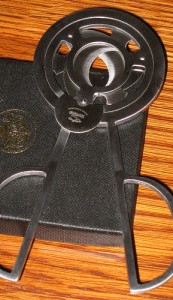
In addition to creating some of my favorite sticks, Cuban Crafters is also a purveyor of fine cigar accessories. Among their humidors, cases, lighters, and cutters, you can find the aptly titled Revolucion cigar scissors the on the Miami-based boutique manufacturer’s website.

Cuban Crafters Revolucion Cigar Scissor CutterNow before you dismiss this cutter as another useless cigar gadget that will drain your wallet and add little to your smoking enjoyment, consider that the Revolucion passes the three tests that every smoker should check when buying stogie accessories. First, it makes performing a very necessary, very frequent task easier.

With three self-sharpening blades, the Revolucion quickly and cleanly slices through any cigar head up to a 60 ring gauge. It’s almost impossible to tear, rip, or crush tobacco given that the stainless steel envelops each side of a cigar simultaneously and evenly. Cuban Crafters also throws in a handy little brush for removing the bits of filler tobacco that flake away.

Now, despite my praise, I’m not quite ready to throw out all my other cutting devices—especially since most of them work well and travel easily. But I often use the Revolucion at home, especially if I have company; its creative design is a real head-turner.

Second on my stogie accessories test list is price. Here the Revolucion also passes with flying colors. The pictured model only costs $20 and a black version of the same product sells for $25. Compare either price to what you have to pay for high-end double guillotine cutters that may not perform as well.

Finally, the Revolucion includes Cuban Crafters’ excellent service (easy to reach a human via phone, very customer friendly) and a lifetime guarantee. As the company says, “If it should ever break or fail to function as expected, simply return it and include a self-addressed stamped envelope. It will be replaced free of charge. You will never have to buy another one.”

For these reasons and more, the Revolucion is an easy recommendation for stogie enthusiasts who demand clean cuts and want to avoid the hazards presented by traditional cigar scissors. It can also serve as an interesting and unique gift for that smoker who has everything.

Even though Cuban Crafters debuted the technology at the RTDA back in 2006, I have yet to cross paths with another smoker who owns a Revolucion. While I’m not sure why that is, I’m certainly glad I have mine. This cutter certainly isn’t necessary for every smoker, but it works well, costs little, and looks damn cool.

-Patrick A