Zazzle Shop

Screen printing
Showing posts with label electric. Show all posts

Thursday, March 3, 2011

The Legend Returns, Electrified - VW Bus Concept in Geneva

by Christine Lepisto
from: http://www.treehugger.com/
The Legend Returns - Volkswagen Shows Concept Van with Electric Motor in Geneva photo
Image: VW Bulli
If the duration of the useful life of a product contributes significantly to a reduced ecological footprint, then the VW Bus is the model of sustainability. If the hours of joy accumulated by the people that spent time in a vehicle is a measure of value, then the VW Bus is a pearl of great price. But at some point the antiquated, fuel-guzzling, smoke-belching technology overtakes the environmental benefits of keeping that original VW Bus running. So it is with anticipation and great expectations that we await the serialization of Volkswagen's 2011 Geneva Auto Show concept car: a VW Bus reminiscent of the olden days but outfitted with promising modern technology.

The famous Transporter 1 (T1) has been dubbed the world's first van. Historians attribute the design to Dutch importer Ben Pon, who in 1947 sketched the idea for a boxed-in vehicle with front wheel drive and a rear engine after being inspired by a vehicle that VW workers had built for transport needs at the factory. The Bus went into production in 1950 and already by 1951 the iconic 23-window Samba bus was rolling off production lines. Since then, the van known as the "Microbus" to Americans, as "Bulli" to Germans, has entered millions of hearts, and will forever be associated with the Hippies although it carried an awful lot of ordinary families on vacations that linger in the memory years later.

But this time around, the "hippies" are lined up against combustion engines, even against the concept of personal transportation. How will the legendary bus make its mark on a new generation of people who are fighting a philosophical battle every bit as game-changing as that of the "flower children?"
The new VW Bus will have an electric engine option. The study envisions an 85kW (115 horsepower) engine, with lithium-ion batteries covering a 200km range. The retro bus will reach a top speed of 140 km/h (87 mph) with 0-100 in a modest 11.5 seconds. But could the new VW Bus take the greening of personal transport to even higher levels?

Wouldn't it be wonderful if the Microbus of the 21st Century goes down in history as the icon of a whole new model for personal transport? Can you imagine car-free masses reserving their electric bus at an agency like Zipcar for the occasions when they must step away from the public transportation infrastructure and venture on holiday to remote wilderness to commune with nature? Now, that would be electrifying.

Experts rate the chances of this concept car going into production extremely high, and if the Volkswagen webcam (click on concept car) is any indication, Volkswagen's four current people-carriers (Caddy, Touran, Sharan and Multivan) cannot stand in the way of the re-introduction of the retro freedom machine.

Friday, November 12, 2010

VW Unveils its Electric Car: Test Driving the Golf Blue E-Motion

by Brian Merchant


egolf-front-blur.jpg
Photos: Brian Merchant

You probably haven't heard much about Volkswagen's forays into the electric car realm -- frankly, until recently, there hasn't been much to talk about. But that's finally changing, as the world's second largest carmaker just unveiled its Golf Blue E-motion electric car. Slated for a 2014 release, the e-motion will essentially be an electrified version of the popular Golf ("the most successful car Europe has ever seen"). VW invited TreeHugger out to its HQ in Wolfsburg, Germany to take an early model of the Golf E-motion for a spin:

Until earlier this year, Volkswagen's electric strategy was vague, always seeming far off on the horizon. But earlier this year, it announced that it planned to roll out a hybrid Jetta in 2012, an electric version of its Up in Europe in 2013, and the electric Golf in the US by 2014. By 2018, VW is aiming to have electric cars comprise 3-5% of its fleet.

egolf-vw-front.png

The electric Golf will appear generally similar to the standard model that crowds European roadways everywhere (According to my unofficial calculations, about 83% of all cars in Europe are Golfs). The car we drove, in fact, was built with a standard Golf body. Essentially, the aim is to create an electric Golf that looks and feels like the version that the (non-US) world knows and welcomes. And I throw in that caveat because the Golf isn't terribly popular in the United States; it's far less present in the states than cousin Jetta.

egolf-gas-station-2.jpg

As with just about all electric cars, the e-Golf is loaded with torque. It's full of pep, and quick off the line. It handled reasonably well, and was genuinely fun to drive, though it was prone to seize up a bit with too much acceleration. Braking is also a work in progress, as the current brakes displayed too much of that all-too-familiar stickiness that often plagues regenerative systems.
However, that stickiness comes with an upside in this case -- by shifting between D and D3 (and in between) the driver can choose how active the regenerative brakes are, and decide how much kinetic energy will be recovered. In D3, the brakes are extremely sensitive, but you'll send the maximum amount of energy back to the battery. It's a cool innovation (and a technology that's hopefully explored further in the future), and the most revolutionary feature of the electric Golf.

egolf-back-lights.jpg

Driving the electric Golf looked and felt something like this:

The Golf gets around 150 kilometers (93 miles) on a charge, and uses a battery consisting of 180 lithium ion cells (holding a charge of 26.5 kWh). As for the rest of the stats, they look something like this:

eGolf-stats.jpg

An interface on the dash intuitively relays how much charge is left, and in the test drive model, all other features remained intact. A VW engineer explained how the instruments work, and outlined how to drive the electric Golf:

The no-frills experience of driving the e-Golf likely stemmed from the early version of the concept, yes, but also certainly from VW's approach to the electric car. Driving the Golf felt a lot like driving a comfortable, utilitarian sedan that you'd driven a million times before. VW isn't trying to create the most exciting, eyeball-grabbing EV on the market -- it's simply providing consumers with a solid, reliable option for its customers demanding electrification.
egolf-hood.jpg

Complaints aside, it was already a pleasure to drive the Golf, though it was certainly less polished than, say, the Volt, which provided a thoroughly smooth ride. Which makes sense -- the e-Golf has 3 or 4 years to go before its scheduled for production, and the VW engineer said they're still ironing out many of the kinks, the braking among them. But it's a very promising start, and come 2014, folks interested in electric cars can expect another highly practical (and likely reasonably priced) option to be on the market.

egolf-under-hood.jpg

eGolf-plug-backseat.jpg

egolf-foggy-window.jpg

egolf-dash-interior.jpg

Thursday, April 15, 2010

Researchers Find Electrical Current Stemming From Plants

From: http://techvert.com/

In an electrifying first, Stanford scientists have plugged in to algae cells and harnessed a tiny electric current. They found it at the very source of energy production – photosynthesis, a plant’s method of converting sunlight to chemical energy. It may be a first step toward generating “high efficiency” bioelectricity that doesn’t give off carbon dioxide as a byproduct, the researchers say.

“We believe we are the first to extract electrons out of living plant cells,” said WonHyoung Ryu, the lead author of the paper published in the March issue of Nano Letters. Ryu conducted the experiments while he was a research associate for mechanical engineering professor Fritz Prinz.

[photo via InfraNet Lab]

The Stanford research team developed a unique, ultra-sharp nanoelectrode made of gold, specially designed for probing inside cells. They gently pushed it through the algal cell membranes, which sealed around it, and the cell stayed alive. From the photosynthesizing cells, the electrode collected electrons that had been energized by light and the researchers generated a tiny electric current.

“We’re still in the scientific stages of the research,” said Ryu. “We were dealing with single cells to prove we can harvest the electrons.”

Plants use photosynthesis to convert light energy to chemical energy, which is stored in the bonds of sugars they use for food. The process takes place in chloroplasts, the cellular powerhouses that make sugars and give leaves and algae their green color. In the chloroplasts, water is split into oxygen, protons and electrons. Sunlight penetrates the chloroplast and zaps the electrons to a high energy level, and a protein promptly grabs them. The electrons are passed down a series of proteins, which successively capture more and more of the electrons’ energy to synthesize sugars until all the electron’s energy is spent.

[photo via Ohio State Lima]

In this experiment, the researchers intercepted the electrons just after they had been excited by light and were at their highest energy levels. They placed the gold electrodes in the chloroplasts of algae cells, and siphoned off the electrons to generate the tiny electrical current.

The result, the researchers say, is electricity production that doesn’t release carbon into the atmosphere. The only byproducts of photosynthesis are protons and oxygen.

“This is potentially one of the cleanest energy sources for energy generation,” Ryu said. “But the question is, is it economically feasible?”

Ryu said they were able to draw from each cell just one picoampere, an amount of electricity so tiny that they would need a trillion cells photosynthesizing for one hour just to equal the amount of energy stored in a AA battery. In addition, the cells die after an hour. Ryu said tiny leaks in the membrane around the electrode could be killing the cells, or they may be dying because they’re losing out on energy they would normally use for their own life processes. One of the next steps would be to tweak the design of the electrode to extend the life of the cell, Ryu said.

Harvesting electrons this way would be more efficient than burning biofuels, as most plants that are burned for fuel ultimately store only about 3 to 6 percent of available solar energy, Ryu said. His process bypasses the need for combustion, which only harnesses a portion of a plant’s stored energy. Electron harvesting in this study was about 20 percent efficient. Ryu said it could theoretically reach 100 percent efficiency one day. (Photovoltaic solar cells are currently about 20-40-percent efficient.)

Possible next steps would be to use a plant with larger chloroplasts for a larger collecting area, and a bigger electrode that could capture more electrons. With a longer-lived plant and better collecting ability, they could scale up the process, Ryu said. Ryu is now a professor at Yonsei University in Seoul, South Korea.

###

Other authors of the paper are Prinz, the senior author,; Seoung-Jai Bai, Tibor Fabian, Rainer J. Fasching, Joong Sun Park, and Zubin Huang, all researchers in the Rapid Protoyping Laboratory at Stanford University; and Jeffrey Moseley and Arthur Grossman, both researchers in the Department of Plant Biology at the Carnegie Institution and Department of Biological Sciences.

Source: Stanford University

Wednesday, March 10, 2010

S.Korea unveils 'recharging road' for eco-friendly buses

From: http://www.physorg.com/

March 9, 2010 The Online Electric Vehicle (OLEV), towing three buses, went into service at an amusement park in southern Seoul

Enlarge

The Online Electric Vehicle (OLEV), towing three carriages, runs along a blue line under which power strips are buried for recharging, at an amusement park in Gwacheon, south of Seoul. S.Korean researchers launched an environmentally-friendly public transport system using a "recharging road" -- with a vehicle sucking power magnetically from buried electric strips.

South Korean researchers Tuesday launched an environmentally friendly public transport system using a "recharging road" -- with a vehicle sucking power magnetically from buried electric strips.

The Online Electric Vehicle (OLEV), towing three buses, went into service at an amusement park in southern Seoul. If the prototype proves successful, there are plans to try it out on a bus route in the capital.

The Korea Advanced Institute of Science and Technology (KAIST), which developed the system, says OLEV needs a only one-fifth the size of conventional and eliminates the need for major recharging.

It also avoids the need for overhead wires used to conventional trams or trolley buses.

Guests including Seoul mayor Oh Se-Hoon and KAIST president Suh Nam-Pyo were given a 2.2-kilometre (1.4-mile) ride Tuesday around the zoo at Seoul Grand Park.

Recharging strips have been installed in four segments totalling some 400 metres along the route.

Pick-up equipment underneath OLEV collects power through non-contact magnetic charging from strips buried under the road surface. It then distributes the power either to drive the vehicle or for battery storage.

If the system is used on Seoul bus routes, underground power lines would have to be installed on only 20 percent of the route at places like stops, parking places and intersections, KAIST said in a statement.

The technology was first developed in a project involving the University of California (Berkeley) but KAIST said that produced no tangible results.

The state-funded institute says it has applied for more than 120 patents in connection with OLEV, which it describes as safe, clean and economical.

"Of all the world's electric vehicles, this is the most economical system," Suh told reporters, adding the operating cost is only about one-third of ordinary electric vehicles.

"The potential for application (of this technology to systems) is limitless. I dare say this is one of the most significant technical gains in the 21st century," Suh said.

Suh said KAIST plans to use OLEVs to shuttle delegates at the G20 summit which Seoul will host in November.

Project director Cho Song-Ho said technical breakthroughs included an improved way of transmitting power to the pick-up device on the vehicle chassis.

Cho said a gap of at least 11 centimetres (4.4 inches) was needed to take account of bumpy roads, while OLEV can suck power across a gap of up to 25 cm.

Given a normal gap, the vehicle can turn more than 70 percent of the charge into energy for the vehicle, he said.

(c) 2010 AFP

Monday, November 23, 2009

Scoot Coupe: Hot Holiday Gift Or Barely-Legal Nightmare?

Nelson Ireson By Nelson Ireson

November 20th, 2009 Is it a car? A scooter? A motorcycle? All of these questions are fair game when talking about three-wheeled cars, and the issue has even risen as high as the White House, with the Obama administration deciding they are in fact cars in the case of electric-powered three-wheelers like the Aptera 2e. But the legal status of the typical gasoline-powered, motorcycle-based vehicle is a lot more murky.

That's normally not a big problem, but interest in one model in particular, the Scoot Coupe, has seen a huge upwelling in public interest following an appearance on The Price Is Right game show's showcase prize. Now Google is getting hammered with searches for the vehicle, and towns are becoming wary of their "street legal" status.

At least one town has even gone so far as to ban them. Aside from the obvious addition of traffic to the roads, the issue is largely with their scooter-powered nature. Available in 50 cc and 150 cc displacements, the two-seater Scoot Coupe is the very definition of underpowered. Add to that minimal--if any--crash protection and you have what could potentially be a hugely problematic addition to the roadways.

Compounding the problem is the Scoot Coupe's bargain-basement price: just $6,299 for the 50 cc P50 model, and a mere $300 bump to $6,599 for the 150 cc P150. On the other hand, this isn't the first such vehicle and it's not the first time they've risen to the public spotlight, so perhaps all the "sky is falling" antics are precisely that. [Christian Science Monitor, Scoot Coupe]

Scoot Coupe

Scoot Coupe

Enlarge Photo
Scoot Coupe

Scoot Coupe

Enlarge Photo

Is it a car? A scooter? A motorcycle? All of these questions are fair game when talking about three-wheeled cars, and the issue has even risen as high as the White House, with the Obama administration deciding they are in fact cars in the case of electric-powered three-wheelers like the Aptera 2e. But the legal status of the typical gasoline-powered, motorcycle-based vehicle is a lot more murky.

That's normally not a big problem, but interest in one model in particular, the Scoot Coupe, has seen a huge upwelling in public interest following an appearance on The Price Is Right game show's showcase prize. Now Google is getting hammered with searches for the vehicle, and towns are becoming wary of their "street legal" status.

At least one town has even gone so far as to ban them. Aside from the obvious addition of traffic to the roads, the issue is largely with their scooter-powered nature. Available in 50 cc and 150 cc displacements, the two-seater Scoot Coupe is the very definition of underpowered. Add to that minimal--if any--crash protection and you have what could potentially be a hugely problematic addition to the roadways.

Compounding the problem is the Scoot Coupe's bargain-basement price: just $6,299 for the 50 cc P50 model, and a mere $300 bump to $6,599 for the 150 cc P150.

On the other hand, this isn't the first such vehicle and it's not the first time they've risen to the public spotlight, so perhaps all the "sky is falling" antics are precisely that.

[Christian Science Monitor, Scoot Coupe]

sc

Thursday, January 8, 2009

Modern Electrical Outlets and Power Strips

Modern Electrical Outlets and Power Strips

Modern electrical outlets and creative power strips from all over the world.

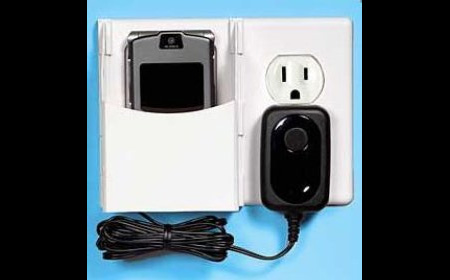
Socket Pocket

Creative phone-pocket for your electrical outlet. [link]

Socket Pocket

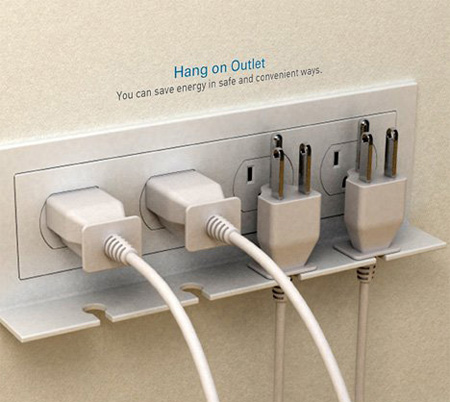
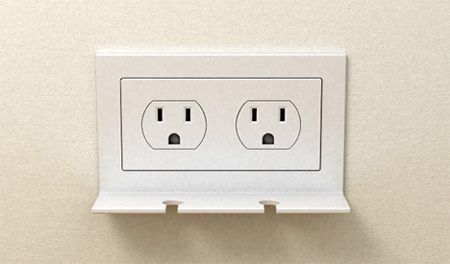
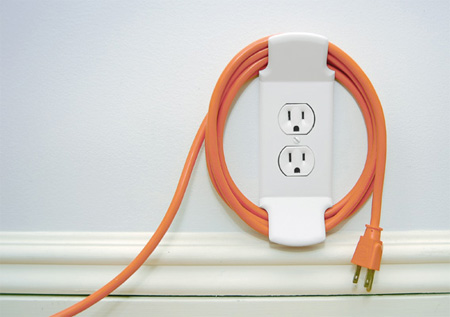
Hang On Outlet

It is a basic power outlet with a little extra lip to hold on to your lose plugs, keeping your power management neat and tidy. [link]

Hang On Outlet

Hang On Outlet 2

Hang On Outlet 3

Wall Cleats

What use is an electrical plug when you’re not plugged in? Two simple tabs on the ends of a standard cover plate increase its function. [link]

Wall Cleats

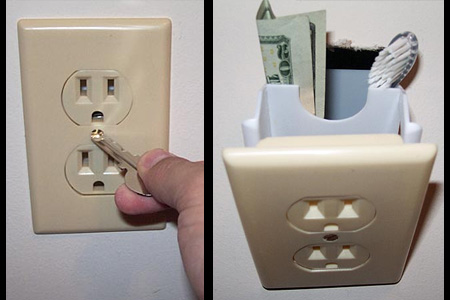
Hidden Wall Safe Electrical Outlet

These unique wall safes allow you to hide valuables inside one of many identical looking wall outlets you already have in your home, the last place someone is likely to look. [link]

Hidden Wall Safe Electrical Outlet

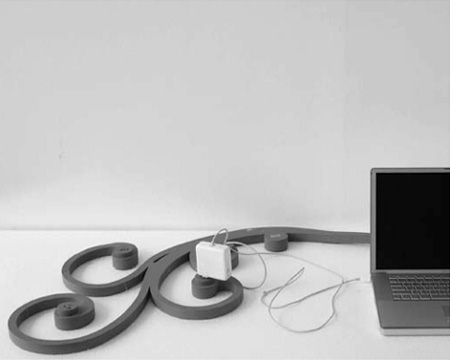
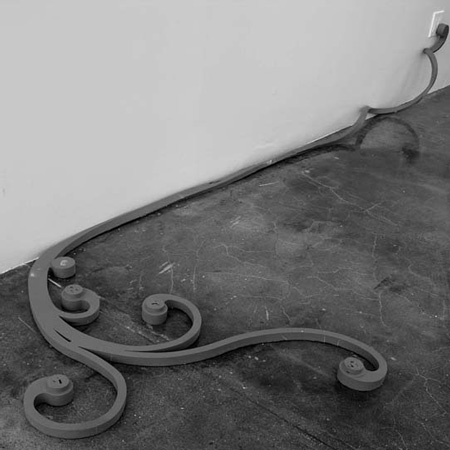
WirePod

Electrical “power pod” made of thermoplastic rubber and with four plug outlets is the first in a series of Artecnica products called Wiremore, which will make electrical cables more, rather than less, visible. [link]

WirePod

WirePod 2

Swivel Sockets

Swivel sockets rotate 90 degrees for compact use in tight spaces. [link]

Swivel Sockets

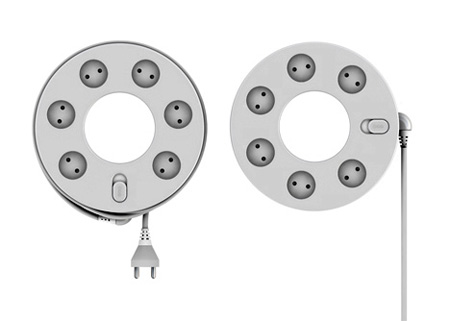
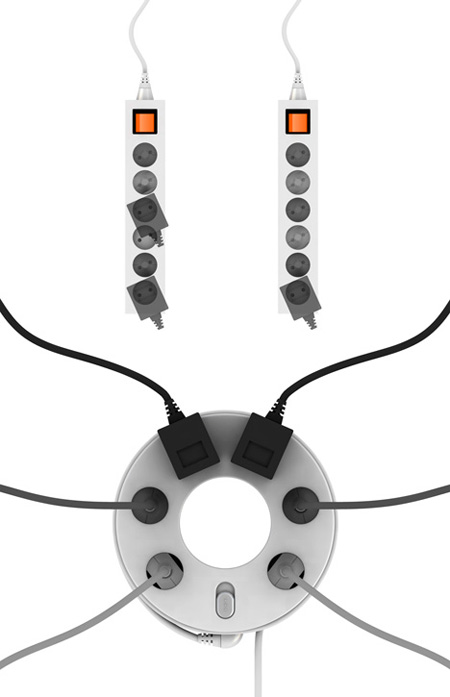
Donut Power Strip

Each outlet can spin inside its socket for the best fit. The donut shape also helps to keep cabling organized. [link]

Donut Power Strip

Donut Power Strip 2

E-Rope Power Strip

Power strip that allows users to add or subtract sockets as needed. [link]

E-Rope Power Strip

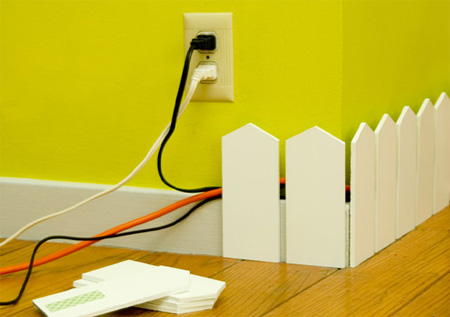
Picket Fence

The Picket Fence adapts to older homes and cleanly manages the electrical necessities of the occupants. [link]

Picket Fence

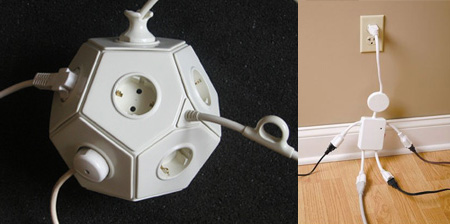
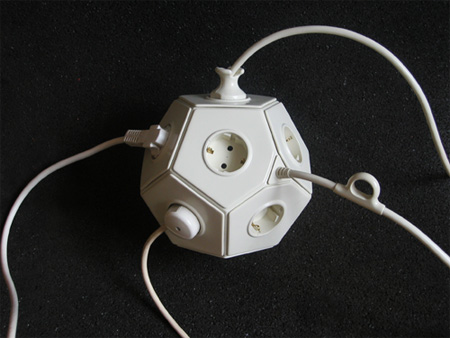
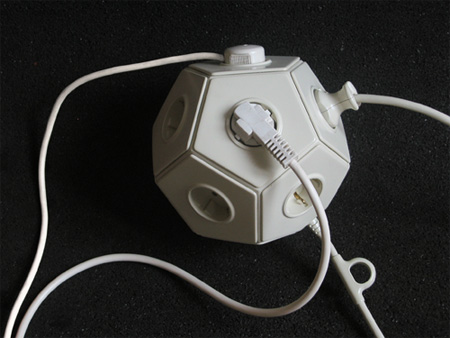
E-Ball Multiplug Connector

Modern power strip concept by MASHALLAH.DESIGN. [link]

E-Ball Multiplug Connector

E-Ball Multiplug Connector 2

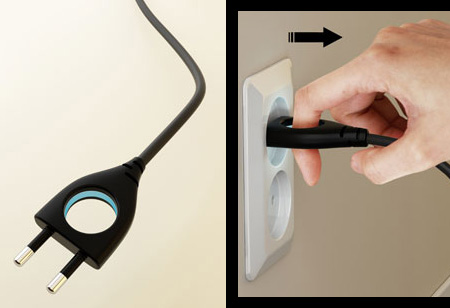
Plug with a Hole Concept

Pulling out a plug is not a hard work, but it is not always an easy task. Therefore, you need a better solution. This plug comes with a circular cut-out which can help you pull it out easily. [link]

Plug with a Hole Concept

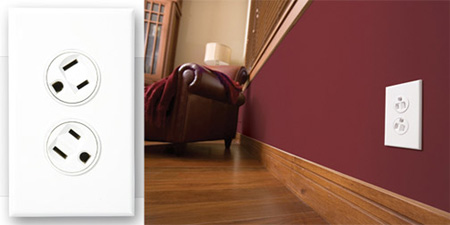
360 Electrical Outlet

360 Electrical is an electrical outlet plate where the two sockets spin 360 degrees to help manage bulky plugs. [link]

360 Electrical Outlet

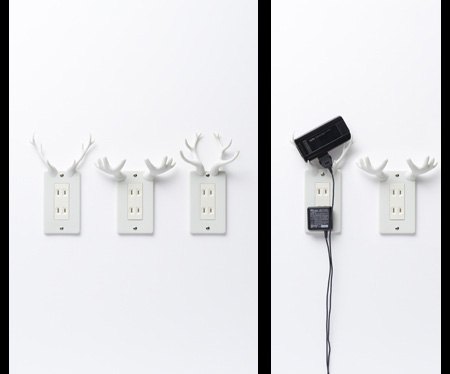
Socket Deer Outlet Cover

These electrical outlet covers let you put your mobile phone on the wall as it recharges. [link]

Socket Deer Outlet Cover

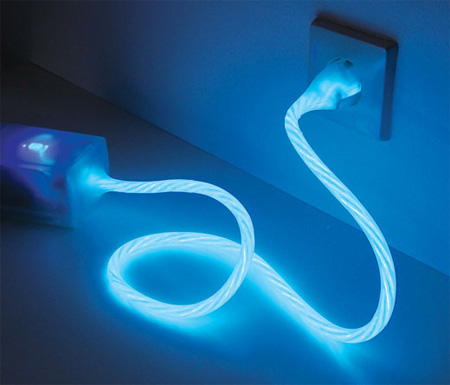
Power Aware Cord

Electrical power strip in which the cord is designed to visualize the energy rather than hiding it. The current use of electricity is represented through glowing pulses, flow, and intensity of light. [link]

Power Aware Cord

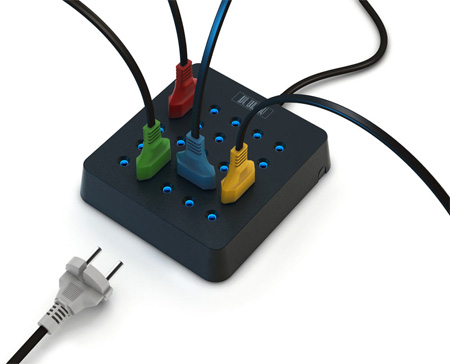
Rozetkus Power Strip

Power strip that gives you free choice of which way to plug. [link]

Rozetkus Power Strip

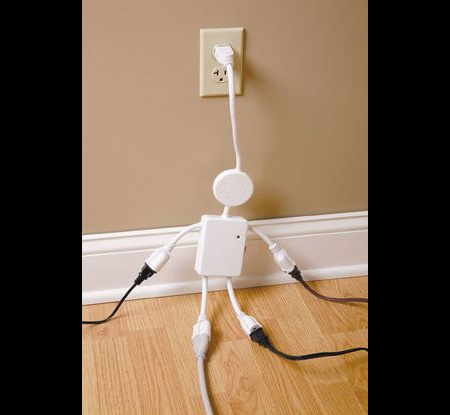
Electroman Surge Protector

Here he comes to save the day - especially if you have more plugs than outlets. [link]

Electroman Surge Protector

Monday, December 29, 2008

US Becomes Largest Wind Power Producer in the World


The United States has overtaken Germany to become the largest producer of wind energy in the world, generating enough capacity to eliminate the burning of 91 million barrels of oil per year.

According to the American Wind Energy Association (AWEA), US wind producers enjoyed another record year of growth in 2008—the third in a row. The country now has an installed wind power capacity well in excess of 21,000 megawatts (MW), enough to supply electricity to over 5.5 million American homes.

According to Randall Swisher, AWEA Executive DIrector, “Wind energy installations are well ahead of the curve for contributing 20% of the U.S. electric power supply by 2030 as envisioned by the U.S. Department of Energy.”

Amazingly, this rapid progress was achieved under a governing administration that to many seemed, at best, indifferent to the plight of the renewable energy industry. If the US wind power industry is capable of becoming a world-leader during such times, it seems quite likely that the picture could improve even further with a more sympathetic leader at the helm.

Image Credit - vaxomatic via flickr.com on a Creative Commons license

Friday, October 17, 2008

Chinese Company Unveils Solar-Powered Car for $5,560

The Zhejiang 001 Group has produced a tiny car powered entirely by the solar panels on its roof.

The panels can charge the battery enough for a 3-mile trip in just one hour. After a full charge of 30 hours in the sun, the car can travel up to 90 miles.

The vehicle was debuted at the 29th Zhejiang International Bicycles and Electric-powered Cars Exhibition last week. The panels are not integrated into the car’s design, but rather stand above the car much like a typical roof-rack attachment.

According to the company, the panels can absorb up to 95 percent of solar energy, but can only transform 14 to 17 percent to electricity.

Roof panels aside, the car is nearly identical to China’s popular economy vehicle, the Cherry QQ, which is pictured above. Only ten of the solar cars have been manufactured so far, but more production is planned. Unfortunately, you won’t have much luck finding one outside of China.

Photo Credit: Anuradha on Flickr under Creative Commons license.
Tags: