
Zazzle Shop

Screen printing
Showing posts with label The nano. Show all posts

Tuesday, February 15, 2011

Apple's iPhone Mini Rumors: Why They Now Make Sense

BY Kit Eaton
From http://www.fastcompany.com/


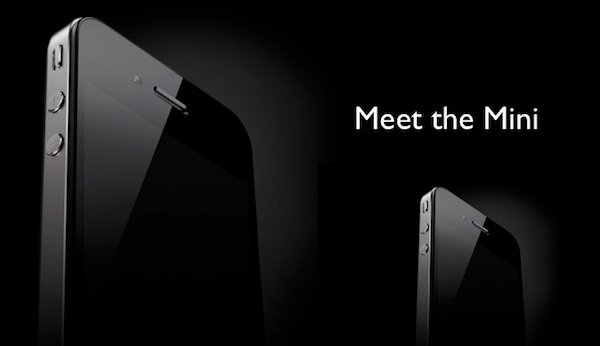
iPhone Mini

Numerous rumors have surfaced about Apple's future smartphone plans, and this time they have the ring of authority. If they prove true, an iPhone Mini really is inbound, and--among other news--this tells us Apple's success is only going to intensify, despite strong competition from Android.

We've heard many rumors about an iPhone Mini over the years, some from insiders who even claim to have seen the technology, but the actual device has never surfaced. Presumably that's because Steve Jobs, or someone else high up on Apple's team, decided that the technology (or the market) wasn't yet mature enough to support it. The rumors resurfaced and intensified recently--and peaked this weekend, with an article in the Wall Street Journal that unmistakably suggests a smaller, next-gen iPhone is really en route.

The reason these rumors make sense is clear: The WSJ's headline is all you need to see, really--"Apple Works on Line of Less-Expensive iPhones." Ever since it arrived the iPhone's high unit price has been problematic for many commenters and many consumers. Apple even got it hugely wrong at first in 2007, and had to quickly drop the price and offer a refund to some early adopters. That of course hasn't stopped the device from selling by the tens of millions--even in some overseas markets where its price isn't reduced by carrier subsidies.

But the tide of sales has begun to turn against Apple, and Android phones are now outselling it in many places, including the U.S. This trend is likely to continue because Apple keeps its ecosystem all to itself, whereas Google shares its OS for free to partner manufacturers, its business model relying on income from embedded mobile ads (and thus a broad-spread of devices is in Google's favor). Android phones are available in a diversity of designs and prices, and some even go for free--something Apple simply can't compete with. It's tried, by keeping the previous-gen iPhone alive at a low price while the next-gen one ships, but consumers are aware of Apple's software tricks, and know their cheap devices won't necessarily run the hottest and greatest of apps.

Hence the iPhone Mini (as we'll assume it's called, for now). The WSJ suggests it's about half the size of the iPhone 4, and will cost carriers about half as much--no doubt due to cost savings achieved in its production. This will mean an iPhone for 2011 on contract may be free, although you'll have to accept some limitations imposed by its smaller display compared to the "full size" unit. Assuming the device has all the same design cues that we're familiar with, and Apple doesn't underpower the unit to save a few extra dollars, it may even outsell the full-sized phone because it'll appeal to the masses to whom the iPhone's full price is a barrier. This is precisely the same business thinking that drives sales of the iPod Nano (and the Mini before it). A Mini iPhone would pitch Apple's device into direct competition with Google across the entire smartphone market, and possibly stem the flood of Android phones.

Meanwhile, the WSJ is also reporting Apple's planning a revamp of MobileMe--its cloud-based ecosystem behind the iPhone and iPad--that will make it free, and more powerful. By pulling off this trick, the WSJ suggests the iDevices won't need so much on-board memory, as they'll simply be able to save, share and view content from the cloud (over 3G or Wi-Fi). This could save on unit costs, keeping the price down, and step neatly around the fact that Android phones have expandable memories via SD cards, which appeals to some types of user. If this also implies wireless access to your iTunes library (which may leverage the skills of streaming service LaLa that Apple bought last year, and make use of Apple's enormous, mysterious North Carolina data center) it also transforms the iPhone into the true mobile media device it's always been intended to be, challenging Google, Amazon and the horde of streaming music services that have emerged as competition.

Some additional data on the cloud storage rumor suggests Apple may swap out all of the iPhone Mini's storage memory for cloud-based storage. Since it's the most expensive portion of the phone, and users now expect multiple-gigabytes of storage, this makes good sense, though it may limit the situations you try to use the phone in (in-flight, for one).

Other rumors hint at an improved screen on the new iPhones that has "edge-to-edge" display powers, allowing Apple to compete with some classes of Android phone that have huge displays, and turning it into a portable media consumption device that's much more future-friendly. Lastly there's also a hint that Apple's including voice recognition powers in the phone, competing with Google's technology, appealing to limited-accessibility users and enabling all sorts of advanced gaming and app powers too.

In other words, although Apple does not have a "revolutionary" new product on the table for 2011, it doesn't look like it will lose its smartphone crown any time soon.


Monday, March 23, 2009

The Nano, The World's Cheapest Car, Debuts in India

The Nano is tested at Tata's factory in Pune, India on March 15, 2009
Michael Rubenstein / Redux for TIME

In New Delhi in the early 1970s, my family traveled by scooter in the classic, death-defying Indian fashion. My father would drive, with me, a toddler, standing in front gripping the handlebars and my mother seated pillion, my infant sister in her arms. My father was a civil engineer and my mother a nurse, and in India at that time, cars for a young family were far out of reach.

More than 30 years later, I recently listened to Ratan Tata, chairman of one of India's largest companies, describe a family just like mine as the inspiration for the Nano, the ultra-cheap "people's car" that Tata Motors officially launches today. "What sparked it off was riding in a car and looking at them and saying, 'surely there's a safer way that these people can be transported,'" Tata recalls. (See the dozen most important cars of all time.)

That incident was the beginning of a six-year quest by Tata Motors, India's largest automaker, to develop a car for the common man costing less than Rs 100,000 (about $2,000), roughly the same price as a motorcycle. Many thought Tata was bound to fail, that a car so cheap wouldn't be much of a car at all. The Maruti 800, India's best-selling sub-compact, costs almost twice as much. The chairman of Suzuki Motor, Osaka Suzuki, once said: "Tata will not be able to make a one-lakh car." (Lakh is an Indian word for 100,000.)

The company has proven the doubters wrong. The Nano is going on sale at Tata's 470 outlets in India; the base model does indeed carry a sticker price of Rs 100,000. Now, with global car sales in the worst slump in decades — Tata Motors itself is experiencing financial difficulties — the battered automotive industry is looking to the debut of the world's cheapest car for clues to a future that could revolve around smaller, more fuel-efficient and more cheaply produced vehicles. (See the 50 worst cars of all time.)

In an exclusive March 5 interview with TIME, Tata downplayed the tough market conditions and the impact that sagging consumer demand could have on Nano sales. Although car loans are harder to come by in India due to the credit crisis, the country's economy is still growing. "If I had conceived a million-dollar supercar today, I think you'd have every reason to question whether that's the right product at the right time in the planet that we are living in today," Tata says. The Nano, he argues, is the right car for this difficult time. "What has happened in the changing economic situation globally reinforces, if nothing else, the fact that a low-cost car has a place."

Tata Motors engineers developed the Nano by redesigning every component to minimize cost and weight, while trying to maintain performance and comfort. To see how well they accomplished their mission, I was offered the chance to drive a Nano on a test track at Tata Motors' main plant in the western Indian city of Pune. (See pictures of the Nano.)

The first thing you notice is that the dashboard holds just two gauges: speedometer and fuel level. This is the basic model, and it's stripped down to the bare essentials. But driving the car is surprisingly easy. The gearshift is smooth, the car accelerates adequately and you never feel cramped or low to the ground. The Nano doesn't feel like a cheap, lightweight car that's going to tip over with the first sudden turn.

Outside the Tata Motors facility, our photographer got to drive a fully equipped, bright yellow Nano along the highways, cobbled avenues and side streets of Pune. This car had air conditioning, worth the extra money in India (optional-equipment costs had not been released at the time this was written), but running the aircon sapped some of the power of the tiny, two-cylinder engine. Other drawbacks of the car: The storage space is hard to access because the hatchback doesn't open, the brakes aren't progressive, and the car we drove pulled slightly to the left even though there were just 40 km on its odometer.

Those quibbles are unlikely to make a difference to potential buyers. The Nano's target customers are people riding two-wheelers, and for most of them, this is the only car they could hope to buy. Even without spending anything on marketing so far, Tata executives expect demand to far exceed their initial annual production capacity of 45,000 Nanos. Tata Motors had planned to build about 250,000 cars a year, but the company was forced to shut down its original Nano factory last fall after protests by people displaced by its construction turned violent. That disruption forced Tata Motors to relocate its main Nano production line and delayed the launch. Because plants in Pune and Pantnagar are now producing the car in reduced numbers, the company is bracing for long waiting lists and disappointed customers.

The lower volume means the Nano will do little for Tata Motors' revenue and profits, at least initially. Vaishali Jajoo, a senior automotive research analyst at Angel Broking, an investment firm in Mumbai, says that even at projected output of about 250,000 cars a year, she expects the Nano will add just 3% to annual sales. Because the profit margin on Nano sales is small, "It will take at least four to five years to break even" by recouping development costs, Jajoo says. Fully equipped Nanos have higher margins, but the company has not yet decided how many of those it will produce. A company spokesman declined to comment on analyst reports regarding the Nano's launch, calling them "speculative."

Initially, the Nano will be sold only in India. The company plans to begin selling a European version in 2011. It has no plans yet to export the Nano to the U.S., although that has not been ruled out.

The Nano's slow start comes at a time when Tata Motors is struggling financially due to slumping demand. The company in the quarter ending Dec. 31 reported a $58.5 million loss, its first loss in seven years. Loans for Tata Motor's $2.3 billion purchase of loss-making luxury car brands Jaguar and Land Rover from Ford Motor are coming due. "That's a major cash-flow crunch for them," Jajoo says. Jaguar and Land Rover sales have tanked. The company is pursuing several options to meet its obligations, including getting a bailout from the British government. (Vote for the 2009 TIME 100 Finalists.)

The Nano certainly won't solve Tata Motors' immediate problems. But Tata says he hopes the groundbreaking vehicle will in the long run help redefine not only how much cars cost, but also how they are made. The future of the car industry, he says, lies in design and marketing — not manufacturing, which involves high costs and increasingly can be farmed out to other companies. If the Nano really takes off, Tata Motors may try "distributed manufacturing" — selling Nano kits to be assembled and sold by independent dealers. This, says Tata, would be a step toward fully outsourced manufacturing. "What I tried to describe on the Nano is an attempt to look at that as a business model," Tata says. A new way of doing business may be something the beleaguered auto industry needs even more than a cheap new car.