Recycling doesn’t have to be limited to helping the environment: it can also be a challenge and opportunity to ingenious designers who work with materials most people would consider waste to create amazing things. Some of the following designs serve multiple purposes: illustrating the material possibilities of what most would consider trash while also maximizing the aesthetic potential of what would otherwise be considered waste objects. Clothes become rugs, airline trolleys become furniture, cardboard becomes bridges and sewage turns into building blocks!
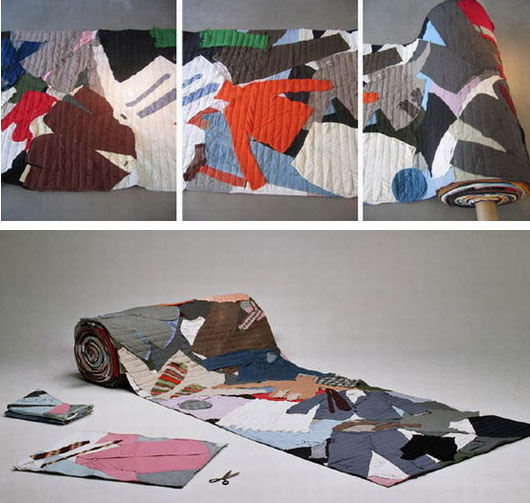
The Volksware designers have provided an interesting alternative way of recycling clothes that may not even bit fit for the Salvation Army. By stitching them and rolling them they have created a simple carpet system that can be cut to length and fit to a space. Something to think about the next time someone tells you to pick your clothes up off the floor!
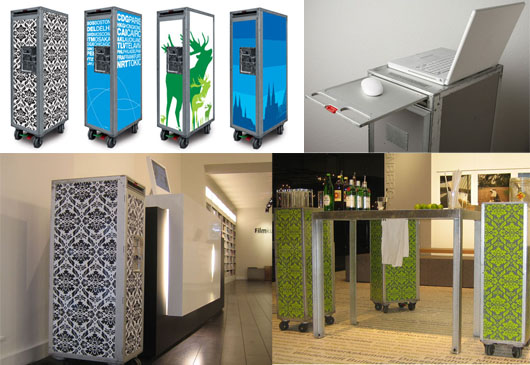
Ever wonder what happens to those oddly shaped airplane trolleys when the airlines are done using them? Well, so did Bordbar before they began appropriating and adding splashes of design to them and reselling them to the public as useful (if odd) multipurpose mobile furniture. These are highly customizable have have a surprising range of possible functions once they are recycled into use.
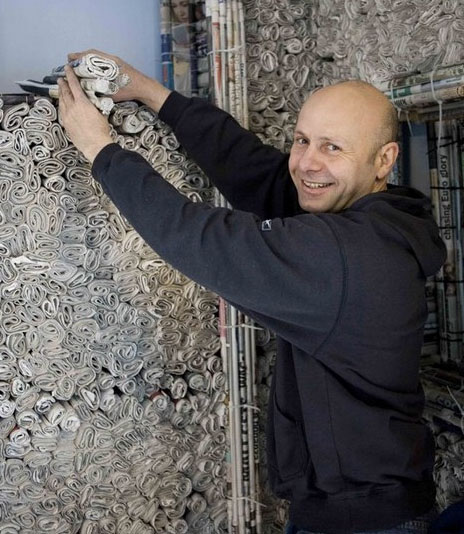
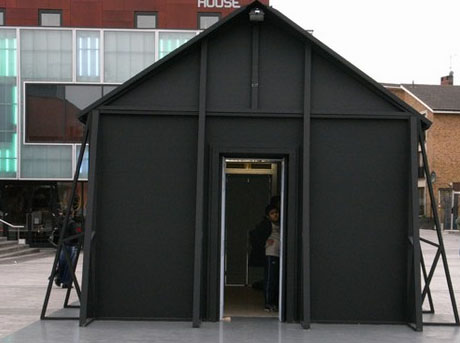
There are few things being produced as rapidly, regularly and in such volume as newspapers. Many of these are, of course, recycled by traditional means, but what if they could serve another purpose that didn’t require the some amount of reprocessing? Sumer Erek has been working on one such alternative: reusing newspaper as interior decoration and insulation in a house.
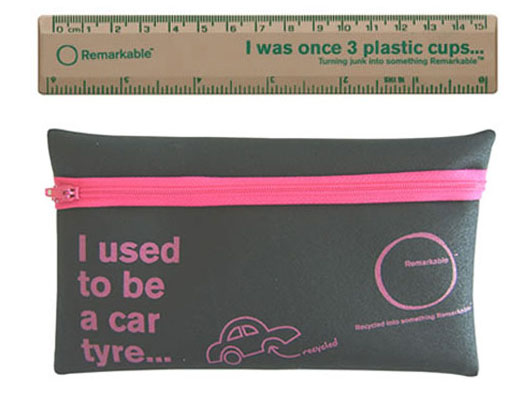
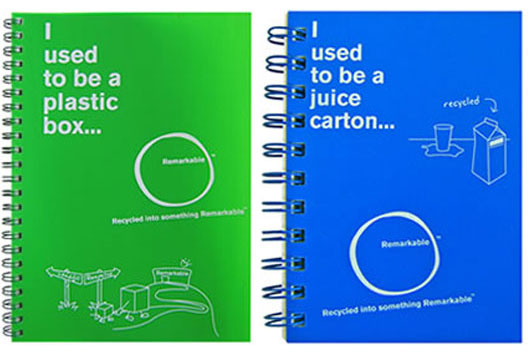
The Remarkable product design team has created a series of colorful and useful versions of traditional products made out of unusual recycled materials. Their approach is quite simple yet compelling: they brand individual products with information about their origins. This makes for conversation pieces but also raises awareness about the origins and potential of composite recycled materials.
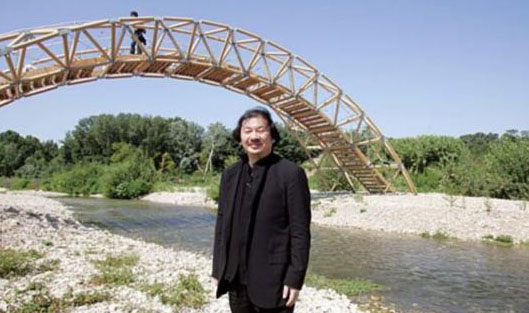
Architect Shigeru Ban is well known for a number of high-profile architectural designs but perhaps less so for his artistic and ecological side projects such as the cardboard bridge pictured above. This bridge is composed over over 250 recycled cardboard tubes with recycled paper and plastic comprising the stairs. Amazingly, this recycled bridge can hold up to 20 people at once!
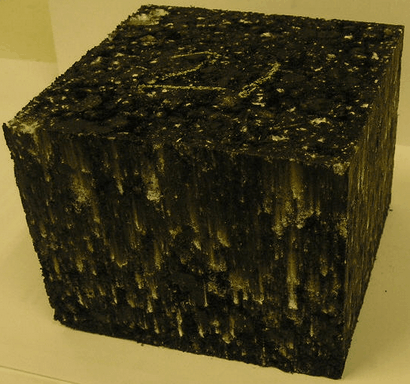
The BituBlock may interesting and almost artistic … until you realize it is made from post-consumer recycled products including ash, glass and, yes, sewage. Still, it doesn’t smell and ultimately it is an incredibly strong and durable building block that rivals other materials such as concrete that would be used in similar situations - and does so using almost entirely reused and recycled materials.
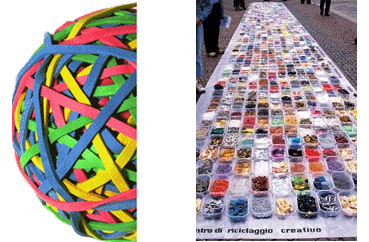
The Remida Center appropriates scrap materials from all kinds of local businesses in order to gain raw materials ranging from wood and metal to plexiglass and plastic that students can use in art projects. The idea is both to facilitate art but also to raise awareness about the origins of materials, essentially recycling otherwise unused materials and putting them toward the production of art.
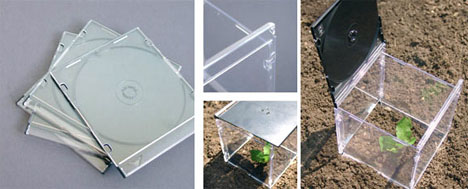
There are all kinds of approaches to garbage gardening that appropriate trash items and reuse them for decorative or practical purposes in gardens. The example shown above is just one of many including colorful mosaics from broken dishes and assorted other ideas. Not extreme enough? Try guerilla gardening instead!
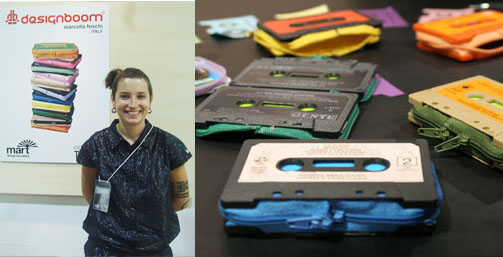
Italian designer Marcella Foschi has developed a quite clever way to recycle cassette tapes: a product material that exists in abundance but is associated with a dying (or dead) technology. Her coin purses are at least cute (if not collectible) and appropriate a material we all know, love and have stopped using.
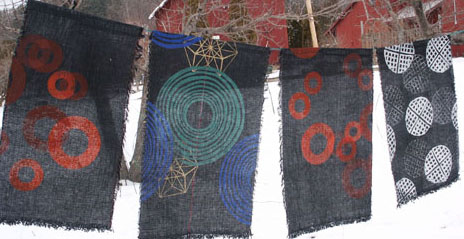
Marcella Foschi isn’t the only one with ideas on how to reuse audio tapes. Some clever designers have taken it to the next level and begun to weave sonic cloth from the actual tape within the cassettes.




 .
.

 Posts
Posts

