Machu Picchu a pilgrimage center connected to Andean vision of the cosmos
 | Machu Picchu may have been less of a city, than a spiritual destination for the Inca. New research argues the ceremonial path into the city was conceived as a replica of the path followed by the first Incas in cosmological myth. |
Giulio Magli |
|
Machu Picchu, the "lost city of the Incas," was not a true city but rather a pilgrimage center symbolically connected to the Andean vision of the cosmos, an Italian study has concluded.
According to Giulio Magli, professor of archaeoastronomy at Milan's Polytechnic University, Machu Picchu was the ideal counterpart of the Island of Sun, a rocky islet in the southern part of Lake Titicaca.
"This island had a very important sanctuary which was a destination of pilgrimage. An apparently insignificant rock was believed to be the place of birth of the sun, and therefore of the Inca civilization," Magli told Discovery News.
The Inca, who ruled the largest empire on Earth by the time their last emperor, Atahualpa, was garroted by Spanish conquistadors in 1533, believed that the sun god was their ancestor.
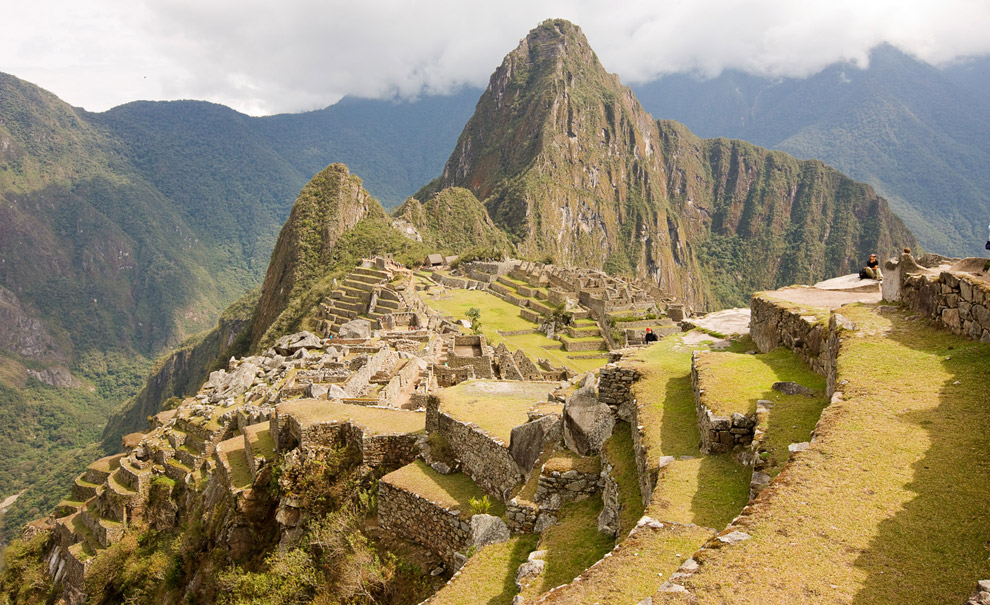
Surrounded on three sides by the gorges of the Urubamba River (also called the Vilcanota River), and tucked between two massive mountain peaks — the Huayna Picchu and the Machu Picchu — the Inca city features about 200 stone structures and was probably inhabited by no more than 750 people. It is perched some 8,000 feet in the clouds.
After its abandonment at the time of the Spanish conquest, it was lost to the jungle for nearly 500 years, and was then discovered by Hiram Bingham, an American explorer, in 1911 (although recent studies claim that it was actually discovered 40 years earlier by an obscure German entrepreneur).
Theories about the city's function abound. Machu Picchu has been wrongly identified as the traditional birthplace of the Inca people, their final stronghold, and a sacred center occupied by virgins devoted to the sun god.
Another recent interpretation, based on archival research published in the mid-1980s, and widely supported by scholars, suggests the spectacular site was a private estate of the emperor Pachacuti, who built it around 1460 A.D.
"Any interpretation is doomed to remain speculative. Machu Picchu remains a mystery. We do not know for sure what the Inca called it, we do not know when and why it was constructed, or why it was abandoned," Magli said.
Published on the Cornell University physics Web site arXiv.org, Magli's study examined Machu Picchu's urban layout, its ancient access ways, and the position of the site in relation with the cycles of celestial bodies during the Inca's reign. He then compared these aspects to a well-documented Inca pilgrimage site on Lake Titicaca, located on the border of Bolivia and Peru .
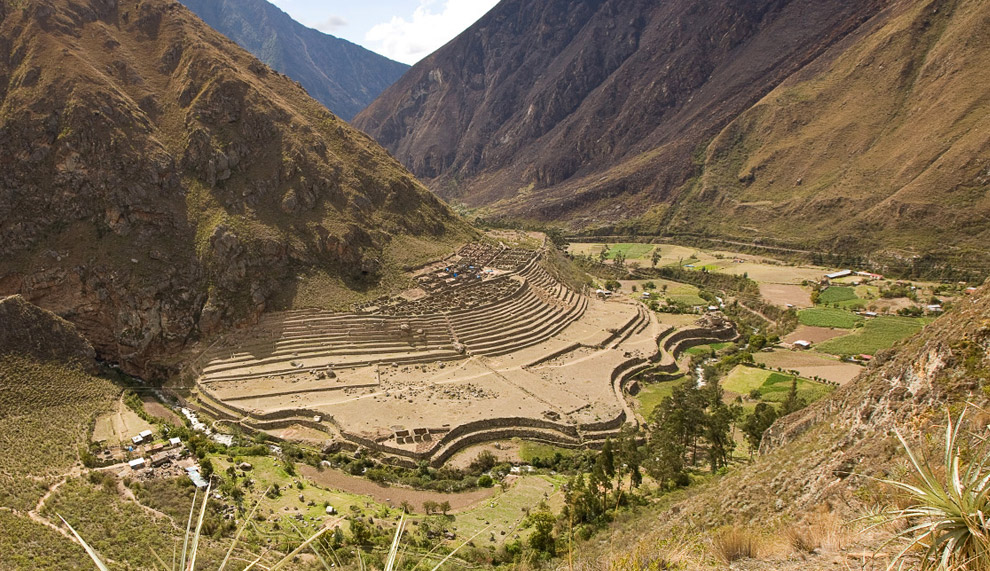
According to Magli, the pilgrimage to Machu Picchu avoided a much easier and faster route along the Urubamba River, instead ascending through the difficult and spectacular Inca trail, which ended at the gate of the town.
"The admitted visitors perhaps left their ritual offerings just near the entrance wall. Indeed, many peculiar stone pebbles, mainly of obsidian, have been recovered there," Magli said.
"The pilgrims were then confronted by the imposing view of the Huayna Picchu mountain. Most likely, this was their final destination. Indeed, the last part of the pilgrimage, oriented north, took place inside the town," Magli said.
The author of "Mysteries and Discoveries of Archaeoastronomy," Magli suggests that the ceremonial path into the city was conceived as a replica of the path followed by the first Incas in cosmological myth.
In their final leg, the pilgrims approached three important places: the so-called quarry, an area possibly connected with Mother Earth and the underground travel of the first Incas, the temple of the three windows (it was believed that the first Incas came out from one of the three windows), and the Intihuatana Pyramid, which resembled the sacred mountain Huayna Picchu, located at the end of the path.
According to Magli, the picture also fits with celestial cycles that appeared in the sky at the times of the Incas. These were dominated by the Milky Way, which was perceived as a "celestial river" having its terrestrial counterpart in the Urubamba River.
"Machu Picchu was located at the ideal, opposite crossroads between the terrestrial and the celestial rivers. It was the other end of the sun's path," Magli concluded.
According to Jean-Pierre Protzen, who teaches architecture at the University of California, Berkeley, the study brings an additional dimension to the site.
"Magli's argument that Machu Picchu was a pilgrimage site and not a royal estate is well worth considering, although it is in need of a much more substantial proof. There is no reason to believe that it could not have been both," Protzen, a leading expert on Inca architecture, told Discovery News.
© 2009 Discovery Channel




 .
.

 Posts
Posts

