Zazzle Shop

Screen printing
Showing posts with label ESA. Show all posts

Wednesday, October 21, 2009

Volunteers wanted for simulated 520-day Mars mission

Volunteers wanted for simulated 520-day Mars mission

Enlarge

The simulations will take place here on Earth inside a special facility in Moscow. A precursor 105-day study is scheduled to early 2009, possibly followed by another 105-day study, before the full 520-day study begins late 2009. Credits: ESA - S. Corvaja


(PhysOrg.com) -- Starting in 2010, an international crew of six will simulate a 520-day round-trip to Mars, including a 30-day stay on the martian surface. In reality, they will live and work in a sealed facility in Moscow, Russia, to investigate the psychological and medical aspects of a long-duration space mission. ESA is looking for European volunteers to take part.

Starting in 2010, an international crew of six will simulate a 520-day round-trip to Mars, including a 30-day stay on the martian surface. In reality, they will live and work in a sealed facility in Moscow, Russia, to investigate the psychological and medical aspects of a long-duration . ESA is looking for European volunteers to take part.

The ‘mission’ is part of the Mars500 programme being conducted by ESA and Russia’s Institute of Biomedical Problems (IBMP) to study human psychological, medical and physical capabilities and limitations in space through fundamental and operational research. ESA’s Directorate of Human is undertaking Mars500 as part of its European Programme for Life and Physical Sciences (ELIPS) to prepare for future human missions to the Moon and Mars.

Volunteers wanted for simulated 520-day Mars mission
Enlarge

The Mars500 study takes place in a special isolation facility at the Russian Institute of Biomedical Problems in Moscow. The purpose of the Mars500 study is to gather data, knowledge and experience to help prepare for a real mission to Mars one day. The participants are subjects in scientific investigations to assess the effect that isolation has on various psychological and physiological aspects, such as stress, hormone regulation and immunity, sleep quality, mood and the effectiveness of dietary supplements. Credits: ESA

Following on from the successful 105-day precursor study completed in July, ESA is now looking for two candidates and two backups for the full 520-day study, which is due to get underway before mid-2010 after four months of training.

The crew will follow a programme designed to simulate a 250-day journey to , a 30-day surface exploration phase and 240 days travelling back to Earth. For the ‘surface exploration’, half of the crew will move to the facility’s martian simulation module and the hatch to the rest of the facility will be closed.

Candidates should be aged 20-50, motivated, in good health and no taller than 185 cm. They should speak one of the working languages: English and Russian. Candidates must have a background and work experience in medicine, biology, life support systems engineering, computer engineering, electronic engineering or mechanical engineering.

Volunteers wanted for simulated 520-day Mars mission
Enlarge

Cyrille Fournier helps Oliver Knickel prepare for a nighttime EEG. Credits: ESA

Selection will be based on education, professional experience, medical fitness and social habits. Following an initial assessment, potential candidates will have to submit results from medical tests and will then be invited for interview, to be screened in a process similar to that used in astronaut selection.

The candidates’ nationality and residence is restricted to ESA Member States participating in ELIPS (Austria, Belgium, Switzerland, Czech Republic, Germany, Denmark, Spain, France, Greece, Italy, Ireland, Norway, The Netherlands, Sweden and Canada).

More information: The Call for Candidates and related documents are available on: http://www.esa.int/callmars500

Provided by European Space Agency (news : web)

Monday, August 24, 2009

Freak waves spotted from space


Wave, PA
Esa tasked two of its Earth-scanning satellites to monitor the oceans with their radar
The shady phenomenon of freak waves as tall as 10 storey buildings has finally been proved, the European Space Agency (Esa) said on Wednesday.

Sailors often whisper of monster waves when ships sink mysteriously but, until now, no one quite believed them.

As part of a project called MaxWave - which was set up to test the rumours - two Esa satellites surveyed the oceans.

During a three week period they detected 10 giant waves, all of which were over 25m (81ft) high.

Strange disappearances

Over the last two decades more than 200 super-carriers - cargo ships over 200m long - have been lost at sea. Eyewitness reports suggest many were sunk by high and violent walls of water that rose up out of calm seas.

But for years these tales of towering beasts were written off as fantasy; and many marine scientists clung to statistical models stating monstrous deviations from the normal sea state occur once every 1,000 years.

The waves exist in higher numbers than anyone expected
Wolfgang Rosenthal, GKSS Research Centre, Germany
"Two large ships sink every week on average," said Wolfgang Rosenthal, of the GKSS Research Centre in Geesthacht, Germany. "But the cause is never studied to the same detail as an air crash. It simply gets put down to 'bad weather'."

To prove the phenomenon or lay the rumours to rest, a consortium of 11 organisations from six EU countries founded MaxWave in December 2000.

As part of the project, Esa tasked two of its Earth-scanning satellites, ERS-1 and ERS-2, to monitor the oceans with their radar.

The radars sent back "imagettes" - pictures of the sea surface in a rectangle measuring 10 by 5km (6 by 2.5 miles), which were taken every 200km (120 miles).

Around 30,000 separate imagettes were produced by the two satellites during a three-week period in 2001 - and the data was mathematically analysed.

Esa says the survey revealed 10 massive waves - some nearly 30m (100 ft) high.

"The waves exist in higher numbers than anyone expected," said Dr Rosenthal.

Wave map

Ironically, while the MaxWave research was going on, two tourist liners endured terrifying ordeals. The Breman and the Caledonian Star cruisers had their bridge windows smashed by 30m waves in the South Atlantic.

Impression of a freak wave, BBC
Sailors often whisper of monster waves when ships sink mysteriously
The Bremen was left drifting for two hours after the encounter, with no navigation or propulsion.

Now that their existence is no longer in dispute, it is time to gain a better understanding of these rogues.

In the next phase of the research, a project called WaveAtlas will use two years' worth of imagettes to create a worldwide atlas of freak wave events.

The goal is to find out how these strange cataclysmic phenomena may be generated, and which regions of the seas are most at risk.

Dr Rosenthal concluded: "We know some of the reasons for the rogue waves, but we do not know them all."

Wednesday, February 18, 2009

European Space Agency hopes to clean up space junk


A computer-generated artists impression released by the European Space Agency (ESA) depicts the approximately 12,000 objects in orbit around the Earth.
By AFP/Getty Images
A computer-generated artists impression released by the European Space Agency (ESA) depicts the approximately 12,000 objects in orbit around the Earth.

DARMSTADT, Germany — Wary of the multitude of satellites in earth's orbit, the European Space Agency has begun a program to monitor space debris and set up uniform standards to prevent future collisions far above the planet, an official said Monday.

The $64 million program — dubbed Space Situational Awareness — aims to increase information for scientists on the ground about the estimated 13,000 satellites and other man-made bodies orbiting the planet, ESA space debris expert Jean-Francois Kaufeler told reporters.

The program was launched in January. On Feb. 10, the collision of two satellites generated space junk that could circle Earth and threaten other satellites for the next 10,000 years.

"What the last accident showed us is that we need to do much more. We need to be receiving much more precise data in order to prevent further collisions," Kaufeler said of the collision.

The smashup happened 500 miles (800 kilometers) over Siberia and involved a derelict Russian spacecraft designed for military communications and a working satellite owned by U.S.-based Iridium, which served commercial customers as well as the U.S. Defense Department.

A key element of the program is to increase the amount of information shared worldwide between the various space agencies, including NASA and Russia's Roscosmos, Kaufeler said.

Kaufeler also said that another aspect that must be examined is establishing international standards on how debris is described, tracked and, if needed, moved so as to prevent any collisions.

U.S. and Russian officials traded shots over who should be blamed for the collision that spewed speeding clouds of debris into space, threatening other unmanned spacecraft in nearby orbits.

No one has any idea yet how many pieces of space junk were generated by the collision or how big they might be. But the crash scattered space junk in orbits 300 to 800 miles (500 to 1,300 kilometers) above Earth, according to Maj. Gen. Alexander Yakushin, chief of staff for the Russian military's Space Forces.

Experts in space debris will meet later this week in Vienna at a U.N. seminar to come up with better ways to prevent future crashes, and the 5th European Conference on Space Debris in March at ESA.

"We need more precision in space," said Kaufeler. "The current measurements (of space debris) are not precise enough."

He noted that neither ESA nor NASA were able to predict last week's collision, although his scientists have been warning for two decades that such an accident could happen.

"The problem of space debris is unique," said Kaufeler. "We need to work together, we need to unify our forces if we are going to solve it."

Also this year, the Europeans plan to launch two new telescopes into space to study the far reaches of space. The Planck telescope will map background radiation that fills space, while the Herschel space telescope will give astronomers a view of far-infrared and sub-millimeter wavelengths.

Copyright 2009 The Associated Press. All rights reserved. This material may not be published, broadcast, rewritten or redistributed.

Wednesday, November 26, 2008

Shuttle Mission!!


pload.wikimedia.org — Backdropped by a colorful Earth, astronaut Robert L. Curbeam, Jr. (left) and European Space Agency (ESA) astronaut Christer Fuglesang, both STS-116 mission specialists, participate in the mission's first of three planned sessions of extravehicular activity (EVA) as construction resumes on the International Space Station.

Friday, October 10, 2008

Intermediate eXperimental Vehicle – new video

News
printer friendly page
ESA’s Intermediate eXperimental Vehicle
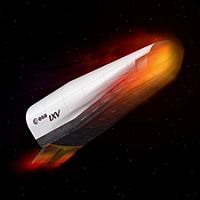
Intermediate eXperimental Vehicle (artist's impression)

Intermediate eXperimental Vehicle – new video
9 October 2008
In 2012, Vega will carry ESA’s Intermediate eXperimental Vehicle into space. The vehicle will then return to Earth to test a range of enabling systems and technologies for atmospheric re-entry. A new video with computer generated animations of the vehicle and its mission is now available.

Part of ESA’s Future Launchers Preparatory Programme has been devoted to optimising a long-term European roadmap for in-flight experimentation with atmospheric re-entry enabling systems and technologies. The Intermediate eXperimental Vehicle (IXV) project is the next core step of this effort.

The IXV project objectives are the design, development, manufacturing, and on-ground and in-flight verification of an autonomous European lifting and aerodynamically controlled re-entry system. Among the critical technologies of interest, special attention is being paid to:
  • advanced instrumentation for aerodynamics and aerothermodynamics
  • thermal protection and hot-structures solutions
  • guidance, navigation and flight control through a combination of jets and aerodynamic flaps
The project is particularly focussed on technology integration at the system level for in-flight verification.

As indicated by its name, the IXV is designed to be the ‘intermediate’ element of a technology-effective and cost-efficient European programme for in-flight verification of technologies necessary for future operational systems.

The IXV design activities are well under way, with the system preliminary design review planned for November 2008, which will allow the start of the full development (Phase-C/D) by the beginning of January 2009.

IXV will be launched in 2012 from Europe’s spaceport at Kourou, French Guiana, using the new Vega small launch vehicle. After re-entering the Earth’s atmosphere and being slowed down by air drag, IXV will descend by parachute and land in the Pacific Ocean to await recovery and post-flight analysis.