Zazzle Shop

Screen printing
Showing posts with label Dubai. Show all posts

Thursday, February 24, 2011

World's Most Outrageous Construction Projects

Shawn Conner | Image: Imre Solt
 
Dubai The World

Charting the world's construction projects with the biggest scope and the price tags to match.

From the great pyramids of Egypt to the temples of the Aztecs to the detoxification of Charlie Sheen, man has never shied away from undertaking huge, near-impossible projects.

In the still-young 21st century, this means taller, longer, and with more shopping.

The following list of the world’s largest construction projects was compiled based on environmental impact, cost, and sheer epic scope. Many were planned and started before the worldwide economic recession; some are paying the price, while others may not have been such a bright idea in the first place. If you don’t look too closely, a few of these massive undertakings even seem designed to benefit humanity.

One thing is for sure – they all seem like a massive headache for everyone concerned.
 

Image: Flickr / elqomri

9. Burj Khalifa: The Dubai Tower

HOW MUCH?
US$1.5 billion.
WHAT IS IT?
At 2,717 feet (828 metres) tall the Burj Khalifa, or Burj Dubai, is the world’s tallest building. Construction began in 2004 and ended last year; the skyscraper houses office space and residencies.
THE DOWNSIDE?
The Burj Khalifa’s construction coincided with the global financial crisis, and the government was forced to borrow from its neighbour Abu Dhabi. Like the Olympic Village in Vancouver, a majority of the residences remain vacant. 
 

Image: Flickr / Vincent Desjardins

8. New York City: One World Trade Center

HOW MUCH?
US$3.1 billion.
WHAT IS IT?
One World Trade Center is the tallest building in the U.S. and the main edifice of the new World Trade Center complex in Lower Manhattan. Construction on the new office building began in 2006 and is expected to be completed by 2012, and ready for occupancy the following year. As you might expect, nearly everything about this building, which is also a memorial to 9/11, has been controversial, including the name; some were referring to it as “the Freedom Tower” but it is now officially One World Trade Center.
THE DOWNSIDE?
Some might wonder whether another towering office building is what’s needed in the area. These people would be left-wing, bleeding-heart wimps.
 

Image: Flickr / stepnout

7. Dubai: Dubailand

HOW MUCH?
Dubai has collected US$6 billion from private investors . . . and that’s just for Phase I (four phases of development are planned).
WHAT IS IT?
Hey, Dubai! Quit showing off! We get it already, you’re an oil-rich country and you don’t know what to do with all that money. But would it kill you to be a little more discreet? At three billion square feet, this is the largest collection of theme parks in the world.
Dubailand is part of Dubai’s effort to diversity from an oil-based economy and expand its tourism industry. When – and if – it is ever completed, the project will include a Legoland, Dreamworks Studios Theme Park, Marvel Superheroes Theme Park and Tiger Woods Dubai (a proposed Tiger Woods-designed golf course and residential development), among other entertainment options.
THE DOWNSIDE?
North American comic-book fans will have to travel thousands of miles to get to the Marvel Superheroes Theme Park.
 

Image: Flickr / antonello_mangano

6. Italy: Strait of Messina Bridge

HOW MUCH?
US$8 billion, including cover charges, two-drink minimums, and “tips.”
WHAT IS IT?
A 3.3-kilometre bridge linking Sicily to the Italian mainland.
THE DOWNSIDE?
The on-again, off-again, on-again project has been plagued with controversy, including fears that much of the money would be diverted to the Sicilian and Calabrian mafias, which control most public works projects in the south of Italy. Prime Minister Berlusconi denies this is the case, saying that if any money is diverted it will be to the country’s population of 18-year-old nightclub dancers.
 

Image: Flickr / SheepGuardingLlama

5. Las Vegas: CityCenter

HOW MUCH?
US$9.2 billion.

WHAT IS IT?

At 16,797,000-square-feet, CityCenter is the largest privately funded construction project in U.S. history. This multi-use plaza ate up the last remaining real estate on the Las Vegas strip. MGM Resorts International began the project – described as “a city within a city” with its hotels, casinos, retail and dining and entertainment facilities – and investment fund Dubai World became an equal partner in an effort. Because the Vegas strip wasn’t gaudy enough.
THE DOWNSIDE?
Since construction began in 2006, six construction workers have died, making CityCenter one of the most lethal projects this side of Spider Man on Broadway.
 

Image: Flickr / Imre Solt

4. Dubai: The World

HOW MUCH?
US$18 billion, according to a 2005 estimate.
WHAT IS IT?
“The World” is a reproduction of the Earth made out of islands. But why make it? If you’re the ruler of Dubai the question is more like, “Why not?” It was Sheikh Mohammed bin Rashid al Maktoum’s idea to construct a rough shape of the world map using artificial islands, which would then be sold for development (resorts, etc.). The thing is, according to Wikipedia, The World is just “one of several artificial island developments in Dubai,” begging the question of just what it is they’re smoking over there.
THE DOWNSIDE?
As of last year, only a single island had any type of building on it – a show home. All the other projects having been cancelled or delayed either due to the 2008 financial crisis or people coming to their senses. And, while the developer and Dubai government deny it, a participant in a related lawsuit has alleged that the islands are also sinking back into the sea.
 

Image: Flickr / slumber.six

3. Soundouping, China: Three Gorges Dam

HOW MUCH?
Over US$22.5 billion by the time the last farmer is displaced.
WHAT IS IT?
The world’s largest hydroelectric power station. When completed in 2012, Three Gorges Dam will supply 10 per cent of China’s energy. The dam also increases the Yangtze River’s shipping capacity and reduces both coal consumption and the potential for flooding.
THE DOWNSIDE?
The dam flooded archaeological and cultural sites and displaced 1.3 million people. It is also causing significant ecological changes, including an increase in the risk of landslides. On the plus side, when the project is completed, workers making Gap clothing for 12 cents per hour will be able to see what they’re doing.
 

Image: Flickr / lee_in_the_sun

2. Abu Dhabi: Yas Island

HOW MUCH?
US$40 billion.
WHAT IS IT?
A 25-square-mile island resort with a Formula One racetrack, an arena, theme parks (Ferrari World, Warner Bros), three golf courses, polo fields, hotels (seven and counting) and just about anything else you care to name, including an IKEA.
The idea was announced in 2006, and developer Aldar Properties completed Phase I in 2008. Perhaps Aldar, an Abu Dhabi company, felt the need to compete with Dubai, Abu Dhabi’s showier neighbour to the north. There’s no end in sight for the entire project, though 2014 and 2018 have been suggested.

THE DOWNSIDE?

To protect the island’s surrounding ecosystem, Aldar has pledged “support to Emirates Wildlife Society,” plant mangroves and monitor water quality. And we all know how eco-friendly Formula One racetracks are.
 

Image: Flickr / NASAGoddard Photo & Video

1. Outer Space: ISS (International Space Station)

HOW MUCH?
Over $100 billion, making it the most expensive object ever constructed – after Michael Jackson’s nose.
WHAT IS IT?
A space station. Forget about earthbound construction projects and farmers schlepping dirt away to make canals. Sixteen nations have banded together in constructing the ISS in low-earth orbit, where teams of astronauts research cool stuff and eat food out of tubes. In-orbit construction on the ISS began in 1998 and completion is scheduled for the end of this year; it will remain operational until at least 2015.
THE DOWNSIDE?
Critics contend that the time and money spent on the ISS could be better spent on other projects, like robotic spacecraft missions, space exploration, or sending James Cameron to Mars.
Thursday, August 12, 2010

9 Truly Unique Sports Venues from Around the World

From: http://www.totalprosports.com/

9 Truly Unique Sports Venues from Around the World

When it comes to sports venues, it's usually pretty cut and dry. There's the field of play, the seats for spectators, some bathrooms, some concessions, and that's about it. Even venues that are considered to have character (Wrigley Field, Fenway, etc.) pretty much follow the same formula. But if you search hard enough, you’ll find there are some truly amazing venues that are worth of being called unique. Here are nine such examples.

9. “Janguito Malucelli” (Eco-Stadium) - Brazil

Home of the Brazilian football team Corinthians Paranaense, Brazil’s “Janguito Malucelli” is billed as the country’s first eco-stadium. The 6000 spectator seats are built straight into the hillside, and the entire stadium was built without the use of concrete. In order to minimize impact on the neighboring forest, all of the wood used in the structure was recycled.

8. Field of Dream - USA
field-of-dreams
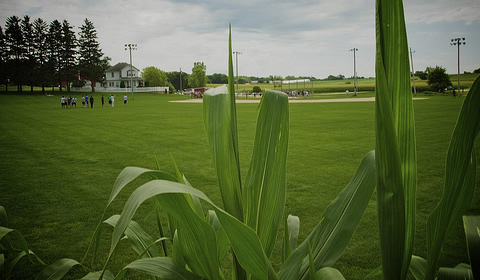
Is this heaven? No, it’s Iowa. And if this is your idea of heaven, you’ve got some problems.

However, the Field of Dreams in Dyersville, Iowa, is truly a unique setting. Originally built for the 1989 film of the same name, the field is right in the middle of an Iowa farm. Rows of cornstalks sit in place of an outfield wall, and the iconic farmhouse used in the film still stands. Visitors are encouraged to play in ongoing pickup games, and the field is occasionally used for reenactments with the “ghost players” from the film. If you build it, they will come.

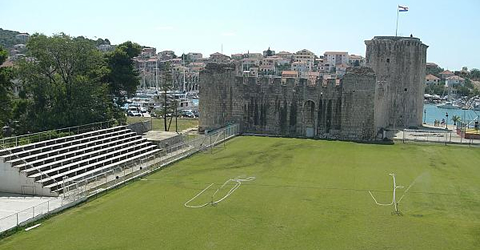
7. Igralište Batarija - Croatia
Igralište Batarija
In the U.S., a lot is made of the “historic” nature of stadiums such as Wrigley Field and Fenway Park, even though neither stadium has even hit the century mark. Granted, the fact that you can watch a game from atop the “Green Monster” at Fenway or from apartment rooftops at Wrigley is somewhat charming. But it doesn’t compare to watching the game from a fifteenth century castle. Fans of the HNK Trogir soccer club in Croatia can do just that. And if the castle is filled up, the stadium itself has 1000 extra seats.

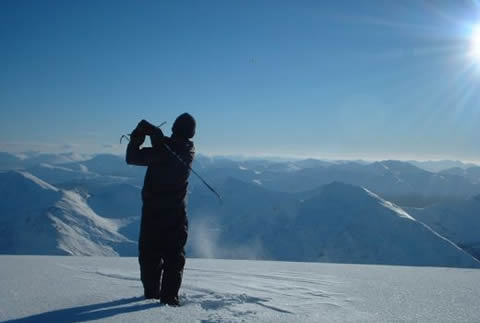
6. Uummannaq Ice Golf Course - Greenland
Uummannaq Ice Golf Course
While there are many stunning golf courses throughout the world, the “ice golf” course in Uummannaq, Greenland might take the cake. Home to the 2009 Ice Golf Championship, the course was set up and maintained by locals. It is 600 km north of the Arctic Circle, and only golfers with a handicap of 36 or better were allowed to take part.

5. Allianz Arena – Germany

While the giant, bean-like structure is interesting enough, what really makes this Munich soccer stadium unique is the fact that entire facade is able to change color. Aside from being a gimmick to draw publicity, it also serves a more practical purpose. Since the stadium is home to multiple teams, the color is updated to correspond with whatever club is playing on a particular day.

4. The Float at Marina Bay - Singapore

Many stadiums offer an ocean view. But how about a sports venue that’s actually on the Ocean.

The Float in Singapore is a multipurpose stadium that is literally floating on the water. Designed as a temporary stadium to be used until completion of permanent structure, the Float will be in service until at least 2011. While the stadium itself can hold up to 30,000 people, the actual floating field can only handle about 9000.

3. Estádio Municipal de Braga - Portugal

This stadium in Braga stands out because of its close proximity to a rock quarry. By close, I mean the structure is carved directly into the side of the rock. While one goal faces the rocky terrain, the other offers sweeping views of the city. Widely considered one of the mist beautiful stadiums in Europe, it won the Chicago Athenaeum International Architecture Award for the best new global design in 2006.

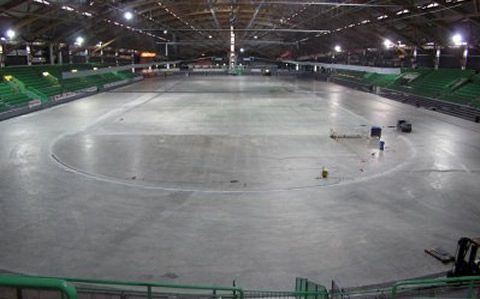
2. Gjøvik Olympic Mountain Hall - Norway
Gjøvik Olympic Mountain Hall
Built for the 1994 Winter Olympics, Gjøvik Olympic Mountain Hall is located in the mountains of Gjøvik, Norway. Literally. It’s completely inside of the god damn mountain. The stadium is used primarily for hockey, and can seat up to 6000 fans. It is considered the world’s largest cavern hall for public use.

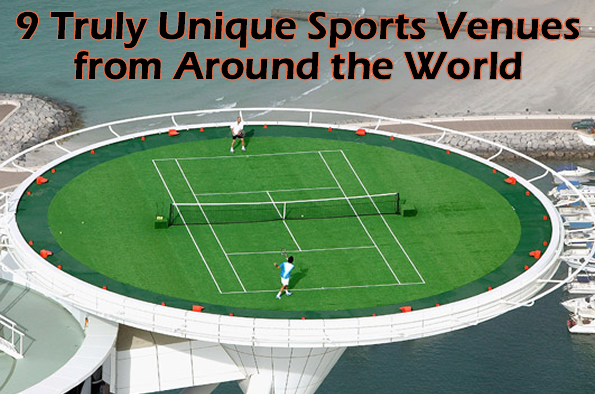
1. Burj Al Arab Hotel Helipad Tennis Court - Dubai

The Burj Al Arab Hotel converted their 321m high helipad into what must be the most fascinating, if not practical, tennis venue in the world. What it lacks in spectator seating it more than makes up for in 360 degree views of Dubai. While in town for the Dubia Championships, Roger Federer and Andre Agassi were lucky enough to play a friendly scrimmage here. More than a few tennis balls went over the side.

Tuesday, May 25, 2010

Just another day in Dubai traffic

from: http://www.autoblog.com/
A day on a Dubai highway – Click above to watch video after the jump

If Dubai ever needed a theme song, C&C Music Factory's "Things That Make You Go Hmmm" would fit the bill. Perhaps the only country in the world where you're driving down the highway, in traffic, and this happens. If you want to know what this is, follow the jump for the video – as with so many other things that come out of Dubai, ya just gotta see it.

[Source: YouTube via Clutch'd]


Thursday, May 13, 2010

Just You Try Hacking This Gold Bar-Dispensing ATM In Abu Dhabi

From: http://gizmodo.com/

Just You Try Hacking This Gold  Bar-Dispensing ATM In Abu DhabiIn these financially uncertain times it's not surprising people are turning to gold instead of cash, but I'd like to know how many 7-11s actually accept 24-carat gold bars these days?

The Emirates Palace hotel in Abu Dhabi has just revealed the gold ATM, which spits out 10-gram bars of 24-carat gold. Each bar can be custom-engraved for that extra reminder of your net worth. [Sky News via Born Rich]

Just You Try Hacking This Gold  Bar-Dispensing ATM In Abu Dhabi

Friday, January 22, 2010

First Pictures of Inside Burj Khalifa: World’s Tallest Tower

Burj Khalifa, formerly known as Burj Dubai, is a skyscraper in Dubai, United Arab Emirates, and the tallest man-made structure ever built, at 828 m.

The design incorporates ideas from traditional Islamic architecture, while the open petals of a desert flower were the inspiration for the tower’s base.

Burj Khalifa will be home to 1,044 luxury apartments, 49 floors of offices and eventually a 160-room Armani-branded hotel. Around 12,000 people are expected to live and work in the tower, which is part of a 500-acre development.

Here are some of the Inside Views of this great architecture.


Friday, January 8, 2010

View from the top of Burj Dubai tower


Video by: ebusdk

Video from the top of Burj Dubai tower - the tallest man-made structure ever built, at 818 m (2,684 ft). The video belongs to Tom, who send it to us at http://www.3leven.com - thanks mate

Burj Dubai tower is part of the 2 km2 (0.8 sq mi) center called "Downtown Burj Dubai" at the First Interchange along Sheikh Zayed Road, near Dubai's main business district.

The total budget for the Burj Dubai project is about US$4.1 billion, and for the entire new "Downtown Dubai", US$20 billion

Floor layout:
160-206 Mechanical
156-159 Transmission
155 Mechanical
139-154 Office
136-138 Mechanical
125-135 Office
124 Observatory
111-123 Office
109-110 Mechanical
76-108 Residential
73-75 Mechanical
43-72 Residential
40-42 Mechanical
19-39 Hotel
17-18 Mechanical
5-16 Hotel
4 Hotel, Mechanical
3 Hotel, restaurant
2 Hotel, lobby
1 Hotel, lobby, restaurant
Concourse Restaurant, lobby
B1-B2 Parking, Mechanical

Tuesday, January 5, 2010

World's Tallest Building Honors Sheik


World's Tallest Building Named after Leader of Abu Dhabi, the Shiekdom That Rescued Dubai During Economic Crisis


  • An Emirati man watches the city view at an observation point screen at the observation deck of the Burj Dubai tower, on Level 124 in Dubai, United Arab Emirates, Monday, Jan. 4, 2010. An Emirati man watches the city view at an observation point screen at the observation deck of the Burj Dubai tower, on Level 124 in Dubai, United Arab Emirates, Monday, Jan. 4, 2010.  (AP Photo/Kamran Jebreili)
  • Photo Essay Dubai's Vertical City The world's tallest building soars a half mile towards the sky
  • Photo Essay Dubai One of the emirates of the United Arab Emirates, home to a picturesque, modern metropolis.
(AP)  Dubai opened the world's tallest skyscraper Monday, and in a surprise move renamed the gleaming glass-and-metal tower Burj Khalifa in a nod to the leader of neighboring Abu Dhabi - the oil-rich sheikdom which came to its rescue during the financial meltdown.

A lavish presentation witnessed by Dubai's ruler and thousands of onlookers at the base of the tower said the building was 828 meters, or 2717 feet, tall.

Dubai is opening the tower in the midst of a deep financial crisis. Its oil rich neighbor Abu Dhabi has pumped billions of dollars in bailout funds into the emirate as it struggles to pay its debts.

Sheik Khalifa bin Zayed Al Nahyan is the ruler of Abu Dhabi and serves as the president of the United Arab Emirates, the federation of seven small emirates, including Dubai and Abu Dhabi.

Analysts have questioned what Dubai might need to offer in exchange for the financial support it has received from Abu Dhabi, which controls nearly all of the UAE's oil wealth. Abu Dhabi provided direct and indirect injections totaling $25 billion last year as Dubai's debt problems deepened.

Dubai's hereditary ruler, Sheik Mohammed bin Rashid Al Maktoum, in recent months has increasingly underscored the close relationship between the two emirates. Sheik Mohammed serves as vice president and prime minister of the UAE federation.

Photos: World's Tallest Building Opens

The developer of the newly opened tower said it cost about $1.5 billion to build the tapering metal-and-glass spire billed as a "vertical city" of luxury apartments and offices. It boasts four swimming pools, a private library and a hotel designed by Giorgio Armani.

The Burj's developers say they are confident in the safety of the tower, which is more than twice the height of New York's Empire State Building's roof.

Greg Sang, Emaar's director of projects, said the Burj has "refuge floors" at 25 to 30 story intervals that are more fire resistant and have separate air supplies in case of emergency. And its reinforced concrete structure, he said, makes it stronger than steel-frame skyscrapers.

"It's a lot more robust," he said. "A plane won't be able to slice through the Burj like it did through the steel columns of the World Trade Center."

Dubai was little more than a sleepy fishing village a generation ago but it boomed into the Middle East's commercial hub over the past two decades on the back of business-friendly trading policies, relative security, and vast amounts of overseas investment.

Then property prices in parts of sheikdom collapsed by nearly half over the past year. Now Dubai is mired in debt and many buildings sit largely empty - the result of overbuilding during a property bubble that has since burst.

Despite the past year of hardships, the tower's developer and other officials were in a festive mood, trying to bring the world's focus on Dubai's future potential rather than past mistakes.

"Crises come and go. And cities move on," Mohammed Alabbar, chairman of the tower's developer Emaar Properties, told reporters before the inauguration. "You have to move on. Because if you stop taking decisions, you stop growing."

Dubai, which has little oil of its own, relied on cheap loans to pump up its international clout during the frenzied boom years.

But like many overextended homeowners, the emirate and its state-backed companies borrowed too heavily and then struggled to keep up with payments as the financial crisis intensified and credit markets froze up.

Meanwhile, speculators who had fueled Dubai's property bubble disappeared along with the easy money, revealing a glut of brand-new but empty homes and crippling many of the emirate's property developers

The sheikdom shocked global markets late last year when it unexpectedly announced plans to reorganize its main state-run conglomerate Dubai World and sought new terms in repaying some $26 billion in debt.


(CBS/ AP)
It got some succor from a $10 billion bailout provided by its richer neighbor and UAE capital Abu Dhabi last month. That was on top of $15 billion in emergency funds provided by Abu Dhabi-based financiers earlier in the year.

Burj developer Emaar is itself partly owned by the Dubai government, but is not part of struggling Dubai World, which has investments ranging from Dubai's manmade islands and seaports to luxury retailer Barneys New York and the oceanliner Queen Elizabeth 2.

Emaar's Alabbar said the landmark Burj is 90 percent sold in a mix of residential units, offices and other space, offering a counterpoint to Dubai's financial woes.

The developer has only said the spire stands more than 2,625 feet tall. Alabbar said Dubai's ruler will announce the height at the inauguration ceremony.

At a reported height of 2,684 feet, the Burj Dubai long ago vanquished its nearest rival, the Taipei 101 in Taiwan.

But the tower's record-seeking developers didn't stop there.

The building boasts the most stories and highest occupied floor of any building in the world, and ranks as the world's tallest structure, beating out a television mast in North Dakota.

"We weren't sure how high we could go," said Bill Baker, the building's structural engineer, who is in Dubai for the inauguration. "It was kind of an exploration ... A learning experience"

Baker, of Chicago-based architecture and engineering firm Skidmore, Owings & Merrill, said early designs for the Burj had it edging out the world's previous record-holder, the Taipei 101, by about 33 feet. The Taiwan tower rises 1,667 feet.

Work on Burj Dubai began in 2004 and moved ahead rapidly. At times, new floors were being added almost every three days, reflecting Dubai's raging push to reshape itself into a cosmopolitan urban giant packed with skyscrapers.

During the busiest construction periods, some 12,000 workers labored at the tower each day, according to Emaar. Low-wage migrant workers from the Indian subcontinent provided much of the muscle for the Burj and many of Dubai's other building projects.

The tower is more than 50 stories higher than Chicago's Willis Tower, the tallest building in the U.S. formerly known as the Sears Tower.

At their peak, some apartments in the Burj were selling for more than $1,900 per square foot, though they now can go for less than half that, said Heather Wipperman Amiji, chief executive of Dubai real estate consultancy Investment Boutique.

She said some buyers may struggle to find tenants at going rates once the tower's expected high service charges are factored in.

"The investment community is quite divided," she said. "They're not sure how it's going to play out."

The Burj is the centerpiece of a 500-acre development that officials hope will become a new central residential and commercial district in this sprawling and often disconnected city. It is flanked by dozens of smaller but brand-new skyscrapers and the Middle East's largest shopping mall.

That layout - as the core of a lower-rise skyline - lets the Burj stand out prominently against the horizon. It is visible across dozens of miles of rolling sand dunes outside Dubai. From the air, the spire appears as an almost solitary, slender needle reaching high into the sky.

An observation deck on the 124th floor opens to the public Tuesday, with adult tickets starting at 100 dirhams, or just over $27 apiece. The ride to the top took just over a minute during a visit for journalists early Monday morning.

Dubai landmarks like the sail-shaped Burj al-Arab hotel and the manmade Palm Jumeirah island were visible through the haze.

The Burj itself cast a sundial-like shadow over low-rise houses and empty sand-covered lots stretching toward the azure Persian Gulf waters. And yes, Dubai is still open for business: there are gift shops at the base and the top.

© MMX, The Associated Press.

Monday, January 4, 2010

Burj Dubai sets records and makes profits

By Malcolm Borthwick
Editor, Middle East Business Report, BBC World, Dubai
From: http://news.bbc.co.uk/

Burj Dubai
Towering ambition: the Burj dwarfs its neighbours - and all other world towers

In recent years Dubai has grabbed the headlines with audacious offshore islands, rotating buildings and a seven star hotel. On Monday it opened the world's tallest building, Burj Dubai.

At more than 800m, Burj Dubai smashed the previous world record, which was held by Taiwan's 508m Taipei 101.

It's about twice the height of the Empire State Building, you can see its spire from 95km away and the exterior is covered in about 26,000 glass panels, which glisten in the midday desert sun.

The design of the building posed unprecedented technical and logistical challenges, not just because of its height, but also because Dubai is susceptible to high winds and is close to a geological fault line.

"You have the solutions for it but you always wonder how it will really work," Mohamed Ali Alabbar, chairman of Emaar, the developer behind Burj Dubai told the BBC.

"We have been hit with lightning twice, there was a big earthquake last year that came across from Iran, and we have had all types of wind which has hit us when we were building. The results have been good and I salute the designers and professionals who helped build it."

West to East shift

One of the companies behind the Burj was the Canadian-based wind engineering firm RWDI. Extreme wind speeds on the ground in Dubai can reach 50km an hour. At the top of the building it can be three times as fast.

Wayne Boulton, general manager of RWDI's wind engineering team in the Middle East, explains how they tested the building for wind resistance.

"We constructed a scale model and put it in a wind tunnel," he says. "In the wind tunnel we are able to test a number of different wind speeds and directions. We can test the pressure you would get on the surface of the building under normal conditions and also under more extreme events."

The last couple of decades have seen a shift in the building of skyscrapers from the West to the East. Four out of five of the world's tallest buildings are in Asia and the Middle East.

Burj Dubai amid the Dubai skyline

"It comes down to confidence," says Andrew Charlesworth from property consultants Jones Lang LaSalle. "A lot of these emerging economies see themselves as important players in the world and want to show they can deliver these sort of projects.

"The wealth of the world is shifting from the West to the East and emerging economies want to highlight their future expectations in terms of where they are gong to be positioning themselves globally."

White elephant?

Dubai is a city of superlatives, where everything has to be the biggest and the boldest. But like many of the world's past tallest buildings, Burj Dubai was planned and built during the boom years, and finished during a property crash. The Empire State Building was completed during the Great Depression in the 1930s and the Petronas Towers in Malaysia during the 1990s Asian financial crisis.

This has led many to question whether this latest record breaker is a white elephant. Though Mohamed Ali Alabbar argues it is anything but.

"As of today we have sold 90% of the building and we expect it to be 90%-occupied," he says. "We were lucky to make more than a 10% return. Originally we thought we'd be lucky to break even, because we can make so much money from the land around Burj Dubai which is a 500-acre site."

BURJ DUBAI IN NUMBERS
95: distance in km at which its spire can be seen
504: rise in metres of its main service lift
57: number of lifts
49: number of office floors
1,044: number of residential apartments
900: length in feet of the fountain at the foot of the tower, the world's tallest performing fountain
28,261: number of glass panels on the exterior of the tower

The fact that the developer has made a profit on its $1.5bn (£928m) investment has been helped by the fact that it bought the land with equity and not cash, and that it pre-sold most of the apartments and offices before the property crash.

Investors have already handed over 80% of the value of the apartments and offices, and will pay the remaining 20% on moving in. And in contrast to many unfinished developments in Dubai, the default rate among investors has been low.

But for investors, it has been a mixed picture. Fortunes have been won and lost on the Dubai property market, which has collapsed in spectacular fashion. Like many properties here, Burj Dubai was sold "off-plan" or before the building was completed. Offices and apartments went on sale in 2004 and most were snapped up by both local and international investors in just two days.

Mohamed Abdul Hadi is one local investor who made millions out of Burj Dubai long before the building was completed. "In 2007 we bought three floors on Burj Dubai," he told the BBC. "The first investor paid 2,500 UAE dirhams ($680; £420) per square foot. We bought at AED 3,500 and one year later we sold at around AED 5,000. Look at the profit, where else can you have this but Dubai? And with no taxes."

Oversupply

But those who invested late will be nursing large losses, according to Saud Masud, a real estate analyst at Swiss investment bank UBS. "Late stage investors may find this a lot more challenging because property prices in Dubai have come down by 50% and we think prices are likely to go down another 30%," he says.

Graphic comparing the world's tallest buildings

"We have an oversupply in the property market today. We think it will reach 25% to 30% vacancy rates for residential property in a year's time, and for commercial property it's already 40%. Burj Dubai is not immune to that."

The landscape of Dubai has changed dramatically over the last two decades. Sheikh Zayed Road is the 12-lane super-highway which runs through the city and is named after the UAE's founding father. Twenty years ago there were just a few tall buildings here, now there are hundreds, all jostling for space. But in the three years that I've been here, the frenzied pace of construction has slowed down and many cranes now stand idle.

Developers are holding back on new multi-billion dollar flagship projects and focusing on finishing existing projects instead. About $190bn worth of Dubai real estate projects are currently on hold, according to Middle East Economic Digest. As in many parts of the world, banks are reluctant to lend and investors are reluctant to spend. Burj Dubai could mark the end of an era for skyscrapers in the Gulf - at least in the short term.

Thursday, December 17, 2009

World's Largest Tower Flyby - Burj Dubai


World's Largest Tower Flyby - Watch more Funny Videos

Incredible footage of a plane flying by the Burj Dubai tower. This tower is the largest building ever constructed at 2684 feet and nearly 1000 feet taller than the Sears Tower.

Friday, October 30, 2009

Dubai's Technosphere Concept Would Fit Right Into a Disney Park


I think they ran out of weird building designs, because the centerpiece of Dubai's Technopark looks like it was copied from Epcot's Spaceship Earth. Whatever happened to architecture proposals for Dubai being completely nuts?

Granted, the resemblance to Spaceship Earth might be unavoidable when the Technosphere is meant to represent the state of Earth's ecosystem, now and in the future. But considering that everything in the building will be solar-powered with minimal waste due to water recycling, it's definitely a few steps ahead of the real thing though. [WAN]


Send an email to Rosa Golijan, the author of this post, at rgolijan@gizmodo.com.