Zazzle Shop

Screen printing
Showing posts with label Drug Czar. Show all posts

Thursday, July 23, 2009

Drug czar: Feds won't support legalized pot

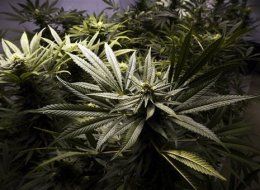
The federal government is not going to pull back on its efforts to curtail marijuana farming operations, Gil Kerlikowske, director of the White House's Office of National Drug Control Policy, said Wednesday in Fresno.

The nation's drug czar, who viewed a foothill marijuana farm on U.S. Forest Service land with state and local officials earlier Wednesday, said the federal government will not support legalizing marijuana.

"Legalization is not in the president's vocabulary, and it's not in mine," he said.

Kerlikowske said he can understand why legislators are talking about taxing marijuana cultivation to help cash-strapped government agencies in California. But the federal government views marijuana as a harmful and addictive drug, he said.

"Marijuana is dangerous and has no medicinal benefit," Kerlikowske said in downtown Fresno while discussing Operation SOS -- Save Our Sierra -- a multiagency effort to eradicate marijuana in eastern Fresno County.


Prepared for the worst
CRAIG KOHLRUSS / THE FRESNO BEE
A Fresno County Sheriff's department investigator stands with his AR-15 in front of an illegal marijuana garden found by officers on Monday, July 20, 2009. Officers moving in to shut down such gardens never know what they will be walking in on. Sometimes the suspects are armed and waiting. Other times, the sites are vacated upon arrival.

Marijuana plants valued at more than $1.26 billion have been confiscated and 82 people arrested over the past 10 days in Fresno County. The operation started last week and is continuing.

By comparison, Tulare County's leading commodity -- milk -- was valued at about $1.8 billion in 2008.

Officials say the marijuana-eradication operation will cost hundreds of thousands of dollars, but the exact amount won't be known until agencies can add up staffing, vehicle and other costs.

In Operation SOS, more than 314,000 plants were uprooted in 70 gardens -- numbers expected to rise as the enforcement action continues. Agents also seized $41,000 in cash, 26 firearms and three vehicles.

Planning for the operation began in February and focused on marijuana crops being backed by Mexican drug cartels, Fresno County Sheriff Margaret Mims said.

Mims said many cartels are involved, but she would not name any because the investigation is still under way. All but one person arrested was from Mexico, officials said.

One hundred growers may still be on the loose, said Fresno County sheriff's Lt. Rick Ko. Many may have gotten rides out of the area, but some could still be in the Sierra, Ko said.

Last year, Fresno County deputies seized 188,000 marijuana plants.

In just one week, nearly twice as many plants were seized, Mims said, "so you can imagine how many we were missing."

Statewide, more than 5.3 million plants were seized in 2008, or two of every three confiscated in the United States, said Bill Ruzzamenti, director of the Central Valley High Intensity Drug Trafficking Area.

"The amount of drugs out there scares most of us," he said.

Volunteers are going into the gardens to clean up trash, dead animals and pesticides to return the land as close to its original condition as possible. But it could take years for the land to recover, because little can be done once fertilizers and pesticides seep into the ground or stream beds.

"For every acre of marijuana grown, 10 acres are damaged," said George Anderson with the California Department of Justice.
The reporter can be reached at mbenjamin@fresnobee.com or (559) 441-6166.

Monday, June 1, 2009

Drug Czar's Pot-Potency Claims Go Up In Smoke

A newly released report about marijuana potency undermines previous claims by the Office of National Drug Control Policy (ONDCP) that the drug's potency has hit record highs.

In May, the media ran wild with stories of highly potent pot sweeping the nation, as the ONDCP announced that their testing showed average marijuana potency had topped 10 percent THC-level for the first time ever. THC is the active ingredient in marijuana.

"According to the latest data on marijuana samples analyzed to date, the average amount of THC in seized samples has reached a new high of 10.1 percent," reads the announcement by Gil Kerlikowske, the Drug Czar.

But the full report is now available and it shows that the 10-percent bar is only crossed by throwing hash into the equation. Without hash, the average potency was 8.52 percent. The average potency of hash was 20.76 percent.

The Marijuana Policy Project obtained the full report, which is produced by the Marijuana Potency Monitoring Project at the University of Mississippi.

Connoisseurs would enjoy reading the whole thing, which is available here, as it breaks seizures and potency-measurement into "Buds," "Kilobricks," "Loose leaf," "Loose other," "Thai Sticks" and other categories.

There is also debate over whether there is actually a problem with higher-potency marijuana, with advocates arguing that stronger pot means that users end up smoking less for the same effect, thus sparing their lungs.

If you find anything else noteworthy in the full report, let me know at ryan@huffingtonpost.com.

Read the report here (PDF).

Ryan Grim is the author of the forthcoming book This Is Your Country On Drugs: The Secret History of Getting High in America

Thursday, May 14, 2009

White House Czar Calls for End to 'War on Drugs'

Kerlikowske Says Analogy Is Counterproductive; Shift Aligns With Administration Preference for Treatment Over Incarceration


WASHINGTON -- The Obama administration's new drug czar says he wants to banish the idea that the U.S. is fighting "a war on drugs," a move that would underscore a shift favoring treatment over incarceration in trying to reduce illicit drug use.

In his first interview since being confirmed to head the White House Office of National Drug Control Policy, Gil Kerlikowske said Wednesday the bellicose analogy was a barrier to dealing with the nation's drug issues.

"Regardless of how you try to explain to people it's a 'war on drugs' or a 'war on a product,' people see a war as a war on them," he said. "We're not at war with people in this country."

Gil Kerlikowske, the new White House drug czar, signaled Wednesday his openness to rethinking the government's approach to fighting drug use.
Brendan Smialowski for The Wall Street Journal

Gil Kerlikowske, the new White House drug czar, signaled Wednesday his openness to rethinking the government's approach to fighting drug use.

Mr. Kerlikowske's comments are a signal that the Obama administration is set to follow a more moderate -- and likely more controversial -- stance on the nation's drug problems. Prior administrations talked about pushing treatment and reducing demand while continuing to focus primarily on a tough criminal-justice approach.

The Obama administration is likely to deal with drugs as a matter of public health rather than criminal justice alone, with treatment's role growing relative to incarceration, Mr. Kerlikowske said.

Already, the administration has called for an end to the disparity in how crimes involving crack cocaine and powder cocaine are dealt with. Critics of the law say it unfairly targeted African-American communities, where crack is more prevalent.

The administration also said federal authorities would no longer raid medical-marijuana dispensaries in the 13 states where voters have made medical marijuana legal. Agents had previously done so under federal law, which doesn't provide for any exceptions to its marijuana prohibition.

During the presidential campaign, President Barack Obama also talked about ending the federal ban on funding for needle-exchange programs, which are used to stem the spread of HIV among intravenous-drug users.

The drug czar doesn't have the power to enforce any of these changes himself, but Mr. Kerlikowske plans to work with Congress and other agencies to alter current policies. He said he hasn't yet focused on U.S. policy toward fighting drug-related crime in other countries.

Mr. Kerlikowske was most recently the police chief in Seattle, a city known for experimenting with drug programs. In 2003, voters there passed an initiative making the enforcement of simple marijuana violations a low priority. The city has long had a needle-exchange program and hosts Hempfest, which draws tens of thousands of hemp and marijuana advocates.

Seattle currently is considering setting up a project that would divert drug defendants to treatment programs.

Mr. Kerlikowske said he opposed the city's 2003 initiative on police priorities. His officers, however, say drug enforcement -- especially for pot crimes -- took a back seat, according to Sgt. Richard O'Neill, president of the Seattle Police Officers Guild. One result was an open-air drug market in the downtown business district, Mr. O'Neill said.

"The average rank-and-file officer is saying, 'He can't control two blocks of Seattle, how is he going to control the nation?' " Mr. O'Neill said.

Sen. Tom Coburn, the lone senator to vote against Mr. Kerlikowske, was concerned about the permissive attitude toward marijuana enforcement, a spokesman for the conservative Oklahoma Republican said.

[drug war]

Others said they are pleased by the way Seattle police balanced the available options. "I think he believes there is a place for using the criminal sanctions to address the drug-abuse problem, but he's more open to giving a hard look to solutions that look at the demand side of the equation," said Alison Holcomb, drug-policy director with the Washington state American Civil Liberties Union.

Mr. Kerlikowske said the issue was one of limited police resources, adding that he doesn't support efforts to legalize drugs. He also said he supports needle-exchange programs, calling them "part of a complete public-health model for dealing with addiction."

Mr. Kerlikowske's career began in St. Petersburg, Fla. He recalled one incident as a Florida undercover officer during the 1970s that spurred his thinking that arrests alone wouldn't fix matters.

"While we were sitting there, the guy we're buying from is smoking pot and his toddler comes over and he blows smoke in the toddler's face," Mr. Kerlikowske said. "You go home at night, and you think of your own kids and your own family and you realize" the depth of the problem.

Since then, he has run four police departments, as well as the Justice Department's Office of Community Policing during the Clinton administration.

Ethan Nadelmann of the Drug Policy Alliance, a group that supports legalization of medical marijuana, said he is "cautiously optimistic" about Mr. Kerlikowske. "The analogy we have is this is like turning around an ocean liner," he said. "What's important is the damn thing is beginning to turn."

James Pasco, executive director of the Fraternal Order of Police, the nation's largest law-enforcement labor organization, said that while he holds Mr. Kerlikowske in high regard, police officers are wary.

"While I don't necessarily disagree with Gil's focus on treatment and demand reduction, I don't want to see it at the expense of law enforcement. People need to understand that when they violate the law there are consequences."

Write to Gary Fields at gary.fields@wsj.com

Thursday, March 12, 2009

Obama To Name Drug Czar Whose Son Was Arrested For Drugs

By Chris Cillizza

Washington Post Staff Writer

President Obama will name Seattle Police Chief R. Gil Kerlikowske as the nation's drug czar today, ending a long search that was slowed as details of drug arrests involving Kerlikowske's son came to light.

The administration will remove the job's Cabinet designation -- reversing an elevation of the office under President George W. Bush -- although one senior official said that Kerlikowske would have "full access and a direct line to the president and the vice president." The source also noted that Vice President Biden was instrumental in the creation of the Office of National Drug Control Policy and would continue to be an outspoken advocate on the issue.

Kerlikowske has long been speculated to be the front-runner to serve as the drug czar. But revelations concerning the arrests of his son, Jeffrey, on drug-related charges complicated the process.

The White House acknowledged Jeffrey Kerlikowske's past drug use but offered no specifics or comment.

In his remarks today accepting the nomination, Kerlikowske is expected to reference his family struggles with drug abuse. "Our nation's drug problem is one of human suffering," according to his prepared remarks. "As a police officer, but also in my own family, I have experienced first-hand the devastating effects that drugs can have on our youth, our families and our communities."

In formally nominating Kerlikowske, Obama -- who admitted using cocaine as a teenager in his memoir "Dreams From My Father" -- offers a vote of confidence for a man who could face uncomfortable questions during his confirmation process. The position requires confirmation by the Senate.

Los Angeles Police Chief William Bratton praised the pick, saying, "As a City Police Chief, Gil sees every day the violence and tragedy that results from drug abuse in this country and will require no 'on-the-job training.' "

Historically, the White House's broad drug-control strategy has revolved around prevention, helping drug users and disrupting the market for illegal drugs. During the campaign, Obama supported prevention efforts as a way to combat not only drug abuse but also unemployment and crime.

Attorney General Eric H. Holder Jr. and Homeland Security Secretary Janet Napolitano have met in recent weeks with Mexican authorities to discuss the flow of drugs and violence across the border.

During the Bush years, the number of high-schoolers using drugs declined by more than 900,000, according to a January report issued by the White House Office of National Drug Control Policy. A separate national survey on drug use and health concluded, however, that nearly 7 million people in the United States show some signs of drug use or dependence, most often involving marijuana.

Kerlikowske served as police chief in two Florida cities, Fort Pierce and Port St. Lucie, before becoming police commissioner in Buffalo in 1994. He left that job after 4 1/2 years to work in the Clinton Justice Department as the director of the Office of Community Oriented Policing Services. During that time, he became close with Holder.

In his most recent stint, in Seattle, Kerlikowske drew national media attention in 2004 when, seeking to demonstrate the efficacy of the Taser stun gun, he allowed himself to be zapped with 50,000 volts of electricity in front of reporters and television cameras. He commanded less favorable media attention in 2001 when his department was criticized for its lack of aggressiveness in dealing with Mardi Gras riots that left one man dead and 70 injured.

In 2004, Kerlikowske's personal gun was stolen after he left it under the seat of his unmarked police car.

He currently serves as president of the Major Cities Chiefs Association.

Staff writer Carrie Johnson contributed to this report.

Friday, February 13, 2009

Obama's New Drug Czar: Good News for Marijuana Advocates

The Seattle Post-Intelligencer is reporting that Seattle Police Chief Gil Kerlikowske will likely be Obama’s nominee for director of the Office of National Drug Control Policy, commonly referred to as the drug czar. It appears that we may soon be faced with the most promising drug czar ever to occupy the position.

To be clear, Kerlikowske is not a friend of drug policy reform to any extent I’m aware of. What matters here is that I see no evidence that he is a vicious drug warrior of the sort commonly associated with the drug czar post. Given that ONDCP is mandated to oppose reform efforts and has typically embraced that role, a less confrontational and reefer madness-driven drug czar is really the best case scenario from a drug policy reform perspective.

Under Kerlikowske, Seattle has been a model for sensible marijuana policy, including the famous Seattle Hempfest at which the Seattle Police Department performs a public safety role while declining to make marijuana arrests. Following the passage of a 2004 lowest priority initiative, the city’s already-low rate of marijuana prosecutions fell even further, suggesting that Kerlikowske was responsive to the will of voters.

In that sense, he offers a dramatic departure from ONDCP’s shameful history of undermining state medical marijuana laws and inserting itself into state politics for the purpose of thwarting reform efforts. In an office typically run by military officials and political hacks, Kerlikowske would bring expertise in community policing and public relations.

As drug czar, I have no doubt that Gil Kerlikowske would oppose drug legalization and serve as our primary opponent on many issues. Nevertheless, at first glance, my gut instinct is that after several drug czars from hell, a guy from Seattle doesn’t sound so bad.

Update: I'd be remiss not to mention that Kerlikowske's immediate predecessor was Norm Stamper.