A Window Into the Past
Hoyo de Sanabe in the Dominican Republic is known for having some of the best rock art in all the Caribbean.
Hundreds of pictographs painted in black can be found in the cave with the majority located on the north wall within the first 50 meters of the east entrance. About one dozen petrogyphs are located inside the west entrance.
Many pictograph motifs seem largely to be associated with the themes of healing and childbirth as described by the early chroniclers of indigenous life, Fray Ramón Pané and Bartolomé de las Casas.
To explore this hi-definitionGigaPan, use the controls located at the left of the image, click-and-drag and scroll with your mouse, or use your keyboard's arrow keys to navigate left or right and the plus and minus keys to zoom in and out. Click "View All" to see the entire image. Click on individual snapshots to highlight specific scenes in the images and reveal fascinating information about the myths and meanings behind them.
Current research by Domingo Abreu and Daniel DuVall and photography by Robert Mark are bringing the ancient stories behind this art to the public like never before.
One of the pictograph panels seems to depict, in part, a myth described by Fray Ramón Pané of Deminán Caracaracol, his three brothers and their grandfather, Bayamanacoel, who spat a wad ofcohoba(a hallucinogenic agent prepared from the seeds ofAnadenathera peregrina) on the back of Deminán. This scene shows twin gods fighting to save the life of Deminán by cutting his back open to release a live turtle!
Other panels depict pairs of anthropomorphs carrying a third slung between them, perhaps to a site for healing or burial. Other motifs are of masks that were used by healing shamans to frighten away illnesses and still others show figures inhalingcohobawhich was also associated with healing practices. Also notable are depictions of anthropomorphs with swollen bellies, perhaps pregnant, and of turtles which were associated with fertility and motherhood in Taíno mythology.
The most prominent figure both in terms of its size and its position in the center of the 30 meter long panel appears to be of a dog. Dogs were present here in pre-Columbian times although it is not known that they were associated with any healing or fertility themes.
More exploration will continue to reveal rock art in the Dominican Republic, and more research will continue to reveal the possible meanings of these ancient yet still compelling scenes. Learn more on Daniel DuVall's personal website,danielduvall.com.
Hundreds of students enjoy their spring break in Acapulco, Mexico.
Claudio Vargas / AFP / Getty
It's that time of year again: the birds are beginning to return to snowbound northern cities, the first buds of spring are sprouting on trees and hordes of college students are descending on the beaches of Mexico, the Caribbean and the southern U.S., turning them into twisted cesspools of sunburn, margaritas and wet T shirt contests. Ah, spring break.
Blame the debauchery on those hedonistic ancient Greeks and Romans. The arrival of spring, the season of fertility and awakening, was historically celebrated in tandem with the veneration of Dionysus or Bacchus — the Greek and Roman gods of wine. More immediate responsibility, however, lies with a swimming coach at Colgate University, Sam Ingram, who brought his team down to Fort Lauderdale in 1936 to train at the Casino Pool — the first Olympic-size swimming pool in Florida. In 1938, sensing a marketing opportunity, the city hosted the first College Coaches' Swim Forum at the Casino Pool; according to one source, by 1938 more than 300 swimmers were competing at the event, and a bacchanal was born. The tradition of college swimmers traipsing to Florida in droves continued well into the swinging 60s. TIME first highlighted spring break in an April 1959 article titled "Beer & the Beach" ("It's not that we drink so much," noted one attendee, "it's that we drink all the time."). Two years later came the release of the spring break-themed hit movie Where the Boys Are starring a young, preternaturally tan George Hamilton. The Fort Lauderdale-set film spread the tale of collegiate men and women voyaging to the halcyon shores of Florida to find fun, sun — and maybe even true love — far and wide. (See how the recession is affecting spring break.)
By the free-loving '70s, Fort Lauderdale's fun and sun had become decidedly raunchier. With gratuitous PDA and "balcony-diving" — negotiating one's way from balcony to balcony to get to other floors or rooms, a practice typically performed in a drunken stupor and thus madly dangerous — the norm, many communities began questioning why the heck they had invited such unruly houseguests in the first place. By 1985, some 370,000 students were descending on Fort Lauderdale (or fondly, "Fort Liquordale") annually — prompting yet another exploitative film, Spring Break starring Tom Cruise and Shelley Long. But by the end of the '80s, the town had enough: stricter laws against public drinking were enacted and Mayor Robert Dressler went so far as to go on ABC's Good Morning America to tell students they were no longer welcome. As a result, spring breakers were pushed even farther south, and to destinations outside the U.S. where the sun was hotter and drinking ages lower. (See 50 authentic American travel experiences.)
Meanwhile, the spring break scene and its lusty young demographic was getting noticed. In 1986, MTV launched its first spring break special from Daytona Beach, Fla., a program which has continued from varying locales ever since. The images it broadcast only reinforced spring break's reputation for alcoholic and sexual excess. The American Medical Association began warning of the dangers of binge-drinking and risky sexual behavior; fingers have also been wagged at young women for prebreak "anorexic challenges" and documented promiscuity. Many universities have taken to distributing "safe break bags" to students — including sunscreen, condoms and a sexual-assault manual. Such shenanigans also became the metier of spring break's most controversial enthusiast: Joe Francis, the man behind the Girls Gone Wild video series. Francis' videos of topless coeds made a him fortune — quite literally off the backs (and especially fronts) of young women — until an ill-advised shoot in Panama City, Fla., in 2003 earned him an eleven-month prison sentence for videotaping underage girls.
While the dire economy has taken some of life out of the party — travel website Expedia estimates that flights to spring break destinations in the Caribbean are down as much as 20% this year — the collegiate rite of passage, which traditionally occurs between the first weekend in March and Easter Sunday in April, is still very much in full cry: according to student discount-travel agency STA Travel, the average spring breaker spends $1,100 for their seven-night trip (many of which they will be too drunk to remember). In Florida, while annual visitor numbers dropped for the first time in seven years, student bookings to Panama City Beach are up by more than 20%, according to studentcity.com. Meanwhile, the nature of spring break continues to evolve. Alternative trips include everything from tutoring migrant farm workers in Florida to registering voters in rural Mississippi. Break Away, an organization that trains and helps colleges across the United States promote alternative break programs, has projected 65,000 college students will participate in its 2009 programs, up from 48,000 in 2007. No bacchanal, perhaps, but at least you won't return to school with as many regrettable pictures on Facebook.
.
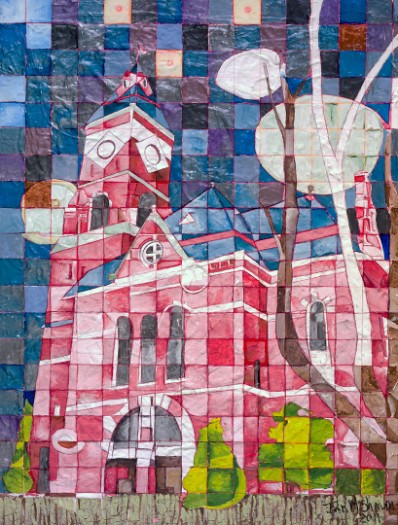
All you art collectors out there. Here is a chance to get a Giclee copy of some of Ian M Sherwin work. Ian is planning on doing a whole series of Marblehead, Massachusetts paintings. His work is amazing.




 .
.

 Posts
Posts

