Zazzle Shop

Screen printing

Monday, August 11, 2008

Isaac Hayes 1942 - 2008


And here are the lyrics to one of his other songs...


Two tablespoon's of cinnamon,
and two or three egg whites.
A half a stick of butter?. Melted?
stick it all in a bowl baby.
Stir it with a wooden spoon.
Mix in a cup of flour,
you'll be in heaven soon.

Say everybody have you seen my balls
they're big and salty and brown.
If you ever need a quick pick me up
just stick my balls in your mouth.

Oooo suck on my chocolate salted balls
stick em in your mouth, and suck em!
Suck on my chocolate salted balls,
they're packed full of vitamins, and good for you.
So suck on my balls.

Quarter cup of unsweeten chocolate,
and a half a cup of brandy.
You throw in a bag or two of sugar
and just a pinch of vanilla.
Grease up the cookie sheet.
Cause I hate when my balls stick.
Then preheat the oven to three fifty
and give that spoon a lick?

Say everybody have you seen my balls
they're big and salty and brown.
If you ever need a quick pick me up
just stick my balls in your mouth.

Suck on my chocolate salted balls.
Put em in your mouth, and suck em!
Suck on my chocolate salted balls,
there packed full of goodness, high on fiber.
Suck on my balls.

[sniff, sniff, sniff]
Hey, wait a minute.
What's that smell.
Smell like something burning.
Well that don't confront me none.
Long as I get my rent paid on Friday.
Baby you better get back in the kitchen.
Cause I got a sneak'n suspicion.
Oh man baby, baby!
You just burned my balls!
Help me, my balls on fire
????? baby
my balls are burning
give me some water!
Pour some water on me!
my balls are burning
oh my goodness,
I'm blow'n
I'm blow'n
do somethin

Oooo Suck on my chocolate salted balls.
Put em in your mouth, and suck em!
They'r on fire baby!
Suck on my chocolate salted balls,
put em out baby, blow
ohh
Suck on my balls baby
Suck on my, red hot, salted, chocolate balls
come on baby
woo, woo
suck on my balls.
[blow blow]

Phelps collects 2nd gold in relay


The Americans, led by Michael Phelps (left), shattered the world record set by their
The Americans, led by Michael Phelps (left), shattered the world record set by their "B" team on Sunday in the prelims.
AP

BEIJING (AP) -- With history about to slip away and Michael Phelps cheering him on, Jason Lezak pulled up next to the lane rope and set out after hulking Alain Bernard, like a NASCAR driver drafting down the backstretch at Daytona.

Only 25 meters to go, half the length of the pool. Every stroke brought Lezak a little closer, a little closer, a little closer, his body seemingly carried along by the Frenchman's massive wake. The two lunged for the wall together. When the result flashed on the board, Phelps was still on course for his record eight gold medals.

By a fingertip.

Lezak, the oldest man on the U.S. swimming team, pulled off one of the great comebacks in Olympic history Monday morning, hitting the wall just ahead of Bernard in the 400 freestyle relay, a race so fast it actually erased two world records.

Few sporting events live up to the hype -- this one exceeded it. The 32-year-old Lezak was nearly a body length behind Bernard as they made the final turn, but the American hugged the lane rope and stunningly overtook him on the very last stroke.

Wow!

"This has been happening my whole career," Lezak said. "People have gotten on my lane line and sucked off of me, so I figured this is the one opportunity in my whole career to do that."

Watching on deck, Phelps let out a resounding "Yeaaaaaah!" and thrust both arms toward the roof of the Water Cube. His quest to break Mark Spitz's record of seven gold medals had survived what will likely be its toughest test -- and almost certainly its most thrilling.

The Americans shattered the world record set by their "B" team the previous evening in the preliminaries, touching with a time of 3 minute, 8.24 seconds -- nearly 4 full seconds below the 15-hour-old mark of 3:12.23.

"Unbelievable," said Phelps, who swam the leadoff leg and then became the team's biggest cheerleader. "Jason finished that race better than we could even ask for. I was fired up. Going into that last 50, I was like, `Aw, this is going to be a close race.' Jason's last 10 or 15 meters were incredible."

The Americans won the relay at seven straight Olympics, but watched the Australians and South Africans take gold at the last two games.

"You could tell I was pretty excited," Phelps said. "I lost my voice and I was definitely pretty emotional out there."

Bernard was the world record holder in the 100, but he surrendered that mark as well. Australia's Eamon Sullivan broke the individual record by swimming the leadoff leg in 47.24 -- ahead of Bernard's mark of 47.50.

Oh, by the way, Phelps set an American record leading off, 47.51. But it was Lezak's anchor that everyone will remember. He got down and back in a staggering 46.06, the fastest relay leg in history though it doesn't count as an official record.

"A fingertip did the victory," said Amaury Leveaux, one of the French swimmers. "It is nothing."

Lezak looked at the scoreboard, then leaped out of the water with an emphatic fist pump.

"I knew I was going to have to swim out of my mind," Lezak said. "Still right now, I'm in disbelief."

Garrett Weber-Gale and Cullen Jones also did their parts on the middle legs of the relay, overcoming the enormous pressure of making sure they didn't mess up Phelps' attempt to take down the Holy Grail of Olympic records. Jones was the only holdover from the team that swam in the prelims.

Lezak should get a share of that $1 million bonus that Phelps has been promised if he goes on to beat Spitz's mark.

"I never lost hope," said Lezak, who trains alone but has been a longtime stalwart on the relay team. "I don't know how I was able to take it back that fast, because I've never been able to come anywhere near that for the last 50."

While the Americans whooped it up on deck, Bernard clung to the wall, his head down. The swimmer who had talked confidently of beating the Americans -- "smashing" them, some media reported -- was the last one to leave the pool.

"Alain is wounded. When you are the last swimmer in a relay and that you have the opportunity to bring a title of this importance to your country, you don't get out of this unhurt," said Claude Fauquet, France's team director. "But I don't think that Alain lost the race. It's Lezak who won it."

The French were second in 3:08.32 -- eight one-hundredths of a second behind. Australia took the bronze in 3:09.91. In fact, the top five all went below the record set Sunday.

"I felt I was in the lead," Bernard said. "I knew I had to accelerate, but it got harder."

The Americans also were on the losing end of a last-lap comeback.

Katie Hoff was again denied a gold medal when Rebecca Adlington of Britain rallied over the final 50 meters to overtake the 19-year-old, who had settled for a bronze the previous day in the 400 individual medley.

Adlington won in 4:03.22, while Hoff took the silver in 4:03.29. Adlington's teammate Joanne Jackson earned the bronze in 4:03.52. Defending champion Laure Manaudou finished last in the eight-woman final.

"I saw Katie and thought, 'Let's just try to catch her,"' Adlington said. "That's what I did."

Hoff still has three more individual events, plus a relay.

"I was a little disappointed I was so close," she said. "But I got a bronze yesterday and a silver this morning. If I keep climbing at this pace, I'll be happy."

President Bush was back at the Water Cube for the second day in a row, with wife Laura on one side, daughter Barbara on the other. Former Republican presidential candidate Mitt Romney and his wife were sitting in front of them, and Bill Gates was right behind.

Clearly, the swimming record book will need some heavy revisions by the time the Beijing Olympics are over.

Two more world marks fell Monday morning when Kosuke Kitajima of Japan finished off American Brendan Hansen's hopes of an individual medal, winning the 100 breaststroke in 58.91. Kitajima pounded the water defiantly and let out a scream after breaking Hansen's 2-year-old record of 59.13.

Hansen was left without a medal, fading to fourth behind silver medalist Alexander Dale Oen of Norway and Hugues Duboscq of France, who took bronze.

Kirsty Coventry didn't even bother waiting until a final to set a record in the 100 backstroke. The Zimbabwean won her semifinal heat in 58.77, taking down Natalie Coughlin's mark of 58.97 set at the U.S. trials last month.

They'll go head to head in Tuesday morning's final. Coughlin won her heat in 59.43 with a nice, comfortable swim.

Seven world records have been set through the first 21/2 days at the Water Cube.

Phelps had another race to care of, moving on to the final of the 200 free with the fourth-fastest time of the semis. Trying to save as much energy as possible for the leadoff leg of the relay, the American touched in 1:46.28 to finish behind teammate Peter Vanderkaay (1:45.76) and South Korea's Park Tae-hwan (1:45.99).

Jean Basson of South Africa also went faster in the other heat, winning in 1:46.13.

While Hansen still has a swim left in the medley relay, he'll go down as one of the major disappointments of the American team. A one-time world record holder in both the 100 and 200 breaststrokes, he didn't even qualify for the Olympics in the longer race.

Putting all his hopes of beating Kitajima in the 100, he wasn't close to the Japanese star, finishing 0.66 seconds behind.

"I've just had a really off year, on a really important year," Hansen said. "I just feel like that's not the last you're going to see of me. I'm going to bring it back and I won't be done until I at least have a legitimate shot at those world records again."

Hansen swam over to Kitajima's lane to congratulate the winner.

"That's a hell of a swim, and he is a true champion," he said.

Coventry put down quite a challenge to Coughlin. Then again, Coughlin has been known to rise to the challenge -- when Hayley McGregory broke her world record in the prelims at the U.S. trials, Coughlin came back in the very next heat to take it back.

Now, Coventry has it, and Coughlin can't be too happy about that.

"It's going to be a tight final," Coventry said. "Natalie's just so good at racing and planning out her races, so I just expect nothing but fast, fast swimming tomorrow morning."

Coughlin will be side-by-side with Coventry in the final.

"It went very well," she said. "It's exactly where I wanted to be going into the finals. I'm happy with that. I just need to recover and focus on my final."

Libby Trickett of Australia just missed another world record in the women's 100 butterfly, winning gold with a time of 56.73. American Christine Magnuson claimed the silver (57.10) and another Aussie, Jess Schipper, took the bronze (57.25).

Copyright 2008 Associated Press. All rights reserved. This material may not be published, broadcast, rewritten, or redistributed.

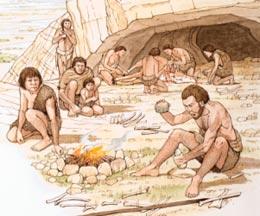
First complete Neanderthal genome sequenced

Full nuclear sequence, offering clues about our relatives' demise, expected within months.

The first complete genome of a Neanderthal — specifically, the mitochondrial DNA found in a 38,000-year-old bone — has been sequenced.

The highly accurate sequence contains clues that our relatives lived in small, isolated populations, and probably did not interbreed with their human neighbours. “This is the first ‘finished’ genome sequence of an extinct human relative,” says the study’s lead scientist, Ed Green, of the Max Planck Institute for Evolutionary Anthropology in Leipzig, Germany.

NeanderthalsCould genetics tell us why the Neanderthals died out?PUNCHSTOCK

Analysis of the DNA, taken from a bone fragment from the Vindija Cave in Croatia, puts the date of our last common ancestor at around 660,000 years ago, give or take 140,000 years. This is broadly in line with other estimates based on archaeology.

The research, published in Cell1, is a taster for the unveiling later this year of the complete Neanderthal nuclear genome sequence — which many hope will reveal the key genetic changes that propelled the evolution of human behaviour.

Mystery demise

Neanderthals lived across Europe and western Asia from a few hundred thousand years ago to around 30,000 years ago. Although a great deal is known about their physiology and social practices from archaeological and fossil evidence, the reason for their demise remains a mystery.

To date, there have been more than a dozen sequences of Neanderthal mitochondrial DNA published. “But for the first time, we've built a sequence from ancient DNA that is essentially without error,” says Green.

“Contamination has been a constant dark cloud hanging over the field of ancient DNA sequencing. It has tainted our work,” he says. “People have been too busy evaluating the accuracy of the Neanderthal sequences to really think about what these sequences actually mean if they are real.”

Two years ago, Green’s colleague Svante Pääbo began his project to map the entire Neanderthal genome, setting out to probe more than 60 museum specimens for traces of DNA. In an effort to eliminate contamination, the team have been generating DNA libraries in the same clean room where they do the DNA fossil extraction.

The scientists sequenced the Neanderthal mitochondrial genome 35 times, giving them enough data to compare it with the human genome and reliably identify which differences were caused by evolution, and which by sample degradation. The result is a genome sequence which was hailed as “extremely rigorous”, by Edwin Rubin, director of the Joint Genome Institute in Walnut Creek, California.

“The near complete absence of human contamination is enormously encouraging and bodes well for the Neanderthal nuclear genome sequences that have been generated from this sample,” says Rubin.

Genetic clues

The team found that of the 13 proteins encoded in the Neanderthal mitochondrial DNA, one in particular had experienced a significant number of amino acid changes in humans, since our separation from Neanderthals.

However, these changes did not have a significant effect on the functional domain of subunit 2 of cytochrome c oxidase (COX2), part of the mitochondrial electron transport chain.

Some scientists hope that genetic clues about why human rose to prominence and Neanderthals died out will be revealed in a few months, with the unveiling of the complete nuclear genome sequence. “We are on course to publish a complete one-fold coverage by later this year,” says Green.

But others are not convinced. “Whatever it was that sparked the emergence of human behaviour 30,000–40,000 years ago, I’m convinced it was not genetic,” says Erik Trinkaus a palaeontologist at Washington University in St Louis, Missouri.

“The genome sequence data may tell us something about the selection of a couple of proteins, but it tells us nothing about language or social behaviour,” says Trinkaus.

Dutch paving stones clean air pollution

A Dutch University will see if chemically tricked-out paving stones can clean the air.

The University of Twente (UT) has devised a concrete capable of converting the nitrogen oxide from car exhaust--the source of smog and acid rain--into a nitrate, another chemical that will wash away in the rain.

Green chemistry: how green bricks convert nitrogen oxide air pollution into nitrates with the sun.

(Credit: University of Twente)

When fertilizers are applied heavily, high levels of nitrates can enter the soil or water and be toxic to humans or livestock. The University of Twente said that the nitrate production from its paving stones will be "harmless."

The researchers came up with the air-purifying paving stones by tapping the properties of titanium dioxide, a chemical that catalyzes chemical reactions when exposed to light.

The top layer of the University of Twente paving stones contains the material mixed with concrete. So when sun shines, smog-producing pollutants will convert into nitrates and then wash away, keeping the stones surface clean in the process.

The university received a sustainability grant to test its invention in the municipality of Hengelo.

By the end of this year, researchers expect to complete construction of a road where one side is built with the specially coated paving stones. The other half will have tradition materials.

The results of how much the stones reduce air pollution should be ready by next year. If successful, the tests could be expanded further, the university said.

It's not the first time that the Dutch have been inventive with road construction. A civil engineering firm has devised a paving technique to absorb heat from asphalt to melt ice and heat neighboring buildings.

1936 Nazi Color Film: Berlin in the Year of the Olympics

Nazi propaganda complete color film from 1936. An outstanding portrait of everyday life in Berlin in this rare, well preserved film, with the magical feeling of the pastel colors of Agfachrome.

read more | digg story

Huge Ancient City Uncovered in Afghanistan (PIC)

Centuries-old shards of pottery mingle with spent ammunition rounds

Afghan workers are seen digging the baked earth on the heights of Cheshm-e-Shafa in the Balkh province. Centuries-old shards of pottery mingle with spent ammunition rounds on a wind-swept mountainside in northern Afghanistan where French archaeologists believe they have found a vast ancient city lost to historical record.


read more | digg story

iPhone: The Definitive Review For Lawyers

By Neil Squillante | Monday, August 20, 2007

TechnoScore: 4.7 out of 5

Iphonetop450

Lawyers love their BlackBerrys and to a lesser extent their Treos. But lawyers also love their iPods. The iPhone combines BlackBerry-like communications with an iPod plus other features not found on either.

Should you choose an iPhone for your next or first smartphone? Find out below in my review.

Don't Waste Your Time Reading This Review ...

If your law firm has already invested in the BlackBerry platform — and by this I mean BlackBerry Enterprise Server, not the devices themselves — you may not want to waste your time reading this review as no amount of begging and pleading will likely persuade the powers that be to switch to the iPhone or even support it. (Of course, you could buy an iPhone on your own dime, and synchronize it with your office computer on the sly — or with your home computer.)

RIM realized a long time ago that the secret to a law firm's heart lies in its Microsoft Exchange server. Theoretically, the iPhone is Exchange-compatible out of the box, but only if you configure your Exchange server to support IMAP, an email protocol. Even if you do that, the BlackBerry has the iPhone beat in one key area — "push" versus "pull" synchronization of your contacts, calendar, and most importantly, email.

For some, push versus pull is a distinction without a difference, but others consider it critically important so let me explain what it means.

Push works like a phone call — the BlackBerry alerts you as soon as email arrives on your firm's Exchange server. Plus the BlackBerry wirelessly synchronizes your calendar and contacts, again from your Exchange server.

Pull requires that you manually check your email or have your iPhone check it every few minutes. Also, synchronizing your calendar and contacts requires tethering your iPhone to your computer with a cable. If you use IMAP email, however, the email on your iPhone will exactly match the email on your computer, including sent mail, drafts, trash, and all other folders — instantaneously and wirelessly.

If you walk into a store and buy a BlackBerry, it will work like an iPhone (though you can sync via BlueTooth in addition to USB). Only BlackBerrys that connect via BlackBerry Enterprise Server have the push synchronization abilities noted above.

I have never used a BlackBerry or Treo so my iPhone is my first smartphone. If you switched from BlackBerry or Treo to iPhone, please supplement my review with your own.

Is That an iPhone in Your Pocket ...

Regarding physical form factor, the iPhone stands alone. It's the thinnest smartphone available. In fact, it's even thinner the the Razr, which is not even a smartphone. It's also thinner than the iPod.

Thinness enhances mobility. Apple understands this principle better than any other company. In fact, industrial design seems like an afterthought at many companies.

Look Ma, No Scratches ...

Unlike the iPod, the iPhone does not easily scratch thanks to its use of glass for the screen and metal for the body. You won't need to invest in a case, which in my opinion, would defeat the thinness factor.

Reach Out and Touch Me ...

The iPhone's touchscreen in conjunction with its interface sets it apart in an industry dominated by styli and thumbwheels. The iPhone contains only one button on its face, which takes you to the home screen. From there, you just press the application you want to use. You can run multiple applications simultaneously.

As a hunt and peck typist who uses 3 fingers, I can report that the much-debated (often by people who haven't used it) on-screen keyboard is a nonissue. Actually, it's a plus because it has virtually no learning curve. Most people start with their index finger and eventually graduate to their thumbs. I use both methods depending on the application.

For example, I use my thumbs when writing email, but my index finger when entering URLs, passwords, etc. in the Web browser. The latter is slower but more precise. The keyboard's "predictive text" technology has an uncanny ability to correct mistakes. As many others have said, just type and let the software worry about what you enter. Of course, this technology is useless for passwords or URLs (unless the URL is in your bookmarks), which explains why I use the more precise text entry method for these items.

I tested my typing speed using the iPhone Typing Test and scored 23 words per minute. That compares to a score of 35 wpm using a standard keyboard. I rarely type 35 wpm in real life because I don't use outlines. Instead, I write, think a little, write some more, etc.

The Big Four ...

Apple placed the four most prominent applications across the bottom of the iPhone — Phone, Mail, Safari, and iPod.

Phone

The phone is far superior to any mobile phone I've ever used. Thanks to "visual voicemail," you can randomly access voicemail messages like email, and even retrieve them after deletion.

The Phone's best feature, though is Favorites — people you frequently call. Thanks to an intuitive interface, adding people to this list from your address book requires no training.

When you place a call, an on-screen menu enables you to use the speaker, put the person on hold, conference in a third person, or mute your end of the call. The speakerphone volume varies between being just perfect or a little too low depending on whom you call. I have yet to use a BlueTooth headset, but plan to buy one soon—probably the BlueAnt Z9.

Mail

Email is a dream come true for this email addict. After many painstaking hours, I converted years of email from POP to IMAP. With IMAP, you store your email on a server, which means it's identical wherever you access it — Outlook, Webmail, BlackBerry, iPhone, etc. By contrast, POP stores your messages on your hard drive.

Traditionally, POP held a key advantage — the size of your mailbox is relatively unimportant because you download your new mail onto your hard drive. But the tide has turned thanks to Gmail, which began a revolution in mailbox size. Ironically, Gmail does not support IMAP, but thanks to its influence our email provider (Webmail.us) offers 1 GB mailboxes standard. We upgraded to 2 GB for a nominal fee. (In the next issue of TechnoGuide, I'll provide step-by-step instructions on how to switch from POP to IMAP.)

The iPhone's Mail application is robust. For example, it displays the HTML version of our newsletters perfectly. In fact, it's better than a desktop application in that you can set it to always download graphics rather than have to do it email by email. It lacks two features I regularly use — Resend and BCC. I suspect Apple will add BCC in a software update. I don't know about Resend.

Regarding attachments, you can read Word and PDF files, and view images such as photos. You can also forward attachments you receive, and email your own photos.

Safari

The Safari Web browser on iPhone is just like Safari on Mac (and now Windows) with two significant exceptions — it does not yet support Flash and it's unstable.

Flash is a nonissue since it will likely arrive via software update someday plus the iPhone comes with a YouTube application that actually works better than YouTube on the Web.

But the stability problems are a sore point. Some people seem to have better luck than others, which may stem from the Web sites you visit or whether your iPhone is a "5" or a "7". I have a "7" and inevitably experience a crash every session. One crash that everyone seems to experience occurs when you play the iPod and then try to surf. Fortunately, turning off the iPhone and rebooting seems to help. I'm confident that Apple will improve stability with a software update.

When it works, though, Safari is just as thrilling as Mail. For example, I checked an eBay auction while standing on the boardwalk on Coney Island two days ago. I don't have a dedicated computer at home because I like having everything in one laptop. Lately, I've left my laptop at work because the iPhone has everything I need at home — email, Web, and media — plus phone of course.

iPod

The iPod lacks a few features, but it's still "the best iPod ever" to quote Apple CEO Steve Jobs. Because of the touchscreen interface, you can more easily create On-the-Go playlists, rate songs, and scroll though a long list. Using these familiar functions with a different interface makes you realize the importance of user interface design.

If you use an iPod, you'll feel constrained by the 4 or 8 GB of memory (I have the 8 GB version), but if you use an iPod nano or an iPod shuffle you won't miss a beat.

The iPhone should work with your iPod accessories. It works with my iPod HiFi at home and my Kensington FM transmitter in my car. Other people have encountered problems.

The killer feature on the iPhone's iPod is its video implementation Large and razor sharp, the screen makes for compelling viewing. I should note that album art, photos, and text also look great on the screen.

The Other Apps ...

Regarding the other bundled applications:

SMS makes this form of communication simple to use, but it doesn't make up for the lack of a chat client. For the time being, I use Meebo's new Web-based iPhone chat client. Other options include BeeJive and FlickIM.

Calendar is extremely well-implemented. The List view gives you a quick run-down of your upcoming events.

Photos takes full advantage of the touchscreen interface. If you work with photos in your cases, it's an excellent way to review them without the need for a laptop.

Camera takes surprisingly good photos. I shot some nice aerials on the Wonder Wheel at Coney Island despite rocking back and forth. I've placed two of these photos below.

YouTube, as I noted above, works better on the iPhone than on the Web. The videos look better as well thanks to the superior QuickTime H.264 encoding.

Stocks works well. Those who use a Mac will find it familiar.

Weather also works like its Mac counterpart. It's more useful than you might think because it shows you what's happening right now (e.g., rain), which is great if you're in a window-less conference room.

Maps, like YouTube, provides a superior experience on the iPhone than on the Web. I've never gone to Coney Island. Hence, my last-minute trip before it closes for renovation. In the past, I would have printed directions from Google Maps. Instead, my friend simply read from the iPhone's screen while I drove (we still took one wrong turn, but that resulted from poor signage, not the iPhone).

Clock might not excite most people, but I'm a heavy user of my iPod's Alarm and Stopwatch. For example, we used the stopwatch to test printing speeds for the eBook we recently published, BlawgWorld 2007 with TechnoLawyer Problem/Solution Guide (PDF file). The iPhone's Stopwatch is better than the one on the iPod, but the Alarm is inferior because you cannot choose an iPod playlist, only a ringtone. I hope Apple adds this capability in a future update.

Calculator is what you would expect.

Notes is useful for jotting down a number that you don't want to enter into your address book. While the iPhone doesn't (yet) synchronize to your notes in Entourage or Outlook, you can email them to yourself or others—or even to Google Docs.

Legal Apps ...

No legal applications currently exist for the iPhone because Apple does not currently permit third-party software programs. Thus, you cannot directly synchronize your case management software with the iPhone.

But, the iPhone has a computer-grade Web browser. Therefore, Web-based legal software will work on the iPhone just as it does on your computer as long as it doesn't rely on Java or Flash.

In an article entitled, Legal Startup Has its Eye on the iPhone Bandwagon, the Houston Chronicle recently covered Advologix, an iPhone-compatible Web application that handles case management, time-billing, online marketing, and more.

We ourselves use a Web-based application called PeerViews Mail to operate TechnoLawyer. It works well on the iPhone except for one feature that requires Java. In fact, I plan to publish this newsletter using my iPhone.

Other Noteworthy Items ...

Activation

As an existing AT&T customer, I had no activation problems. It took less than 5 minutes in the comfort of my office. I plan to switch one of my landline numbers to the iPhone, but have not started the process yet.

Synchronization

If you've used an iPod, you will not have to learn anything new. Just fire up iTunes.

Earphones

I've always preferred in-ear sound-isolating earphones so instead using the earbuds that Apple includes I bought a pair of Shure's new SE210 earphones and accompanying Music Phone Adapter. With this combination, you can answer your phone and silence the iPod with a button on the cable. The cable also has a microphone. The new SE series has a modular design that enables you to integrate devices like the Music Phone Adapter without excess wire. Shure is way out in front of its competitors in this new product category.

Battery

The lack of a user-replaceable battery doesn't bother me. Like my iPod, I suspect my iPhone's battery will die long after I've upgraded to the next version of the iPhone. So far, the battery has taken me through en entire day and then some, including heavy iPod use and Web surfing.

Connectivity

The iPhone connects to the Internet using WiFi if available or AT&T's Edge network. WiFi works well, but don't expect it to rival your computer in terms of speed. AT&T's Edge network leaves much to be desired in New York. Your mileage may vary. I plan to swing by the Apple store to see how mine stacks up against a display model for an apples to apples comparison (ha) to make sure my iPhone does not have a defect. You can try these speed tests:

iPhone Speed Test

iPhone Network Test

My iVerdict ...

I overheard a lawyer discussing how he wanted an iPhone, but planned to wait for the next version. Life is short. If a smartphone would make you more productive now, buy one now.

If you place a high value on industrial design, user interface, tightly-integrated software, a real Web browser, and an integrated iPod, look no further than the iPhone. If you use a Mac, ditto.

If you place a high value on price, 3G data speeds, and third-party applications, consider the BlackBerry or Treo instead.

The one comparison I cannot provide concerns email. I like how the iPhone handles email, but don't know how it stacks up against the BlackBerry or Treo. However, please look below for some photos of the iPhone's Mail application in action from the perspective of a heavy email user.

Finally, and most importantly, if you buy an iPhone, BlackBerry Curve, Treo 750, or some other smartphone, please post your own review.

I used to say that once you use a laptop, there's no going back to a desktop. Similarly, once you use a smartphone, there's no going back to a cell phone.

Other Noteworthy iPhone Reviews

Finis Price, iPhone Review for Attorneys, TechnoEsq

Anonymous, My iPhone Experience, Briefly, Practical Lawyering

Ernest Svenson, iHeaven, Ernie the Attorney

iPhone in Action: Mail

Iphone1450

Iphone2450

Iphone3450


iPhone in Action: Safari

Iphoneblog450_2


iPhone in Action: Camera

Coney1450

Coney2500

About TechnoEditorials

A TechnoEditorial is the vehicle through which we opine and provide tips of interest to managing partners, law firm administrators, and others in the legal profession. TechnoEditorials appear first in TechnoGuide, and later here in TechnoLawyer Blog. TechnoGuide, which is free, also contains exclusive content. You can subscribe here.


Top 10 Hottest Female Athletes Of the 2008 Beijing Olympics

GIRLS

Top 10 Hottest Athletes


Unless you’ve been living under an especially large slab of rock recently, you’ll probably have noticed that this big sports day thing is coming up. The Olympics, they call it. In celebration of this wondrous event, we’ve collected together the sexiest female athletes on the planet. Enjoy!

10. Amanda Beard
Despite the unappealingly masculine name, Ms Beard is in fact an American Olympic swimmer and model. She’s not shy, either: in her time she’s appeared in Sports Illustrated, Playboy and good ol’ FHM. Which is nice.
9. Gretchen BleilerYou might not guess it to look at her, but young Gretchen is the big name in female snowboarding. When she’s not tearing up half-pipes, she likes looking pretty, playing with her hair, and mini-golf. At a guess, anyway.
8. Amy Taylor The archetypal image of a female footballer may leave you quivering under your Subbuteo-print bedsheets, but this one’s different: she’s pretty. She’s Australian. She could kick your arse at five-a-side – she’s the perfect woman.
7. Biba Golic
Table tennis is cool. That’s a fact. We know this because any sport that brings us a woman as hot as Biba has to be cool. Has to be.
6. Maria SharapovaMaria, Maria, Maria. Classier than Kournikova, prettier than Nadal, but still no match for Ivanovic in the hotness stakes. So near, and yet, so far.
5. Natalie GulbisIn such a refined and regal sport as golf, it may seem a touch vulgar to ask, but still – how does she swing the club so well with such ample breasts? It’s quite the conundrum…
4. Allison StokkeAt the age of just 17, Allison was pole-vaulted (boom boom) to stardom by being, well… hot. Swiftly becoming an internet phenomenon, she’s brought a new found respect to the stick-waggling profession. And by ‘respect’ we mean ‘lust’.
3. Nikki GudexHer name may make her sound like some kind of robotic seductress, but in reality she’s a world-class mountain biker. Her legs look long and sleek, but underneath lie pistons of steel. Our guess is she could probably beat the crap out of you too. Yes, we can tell.
2. Bia and Branca FeresThere are two of them! And they’re both stunning! And they do synchronised swimming! That means bikinis – yes it does.
1. Ana IvanovicWe’ve loved this racket-wielding siren for quite some time now. She’s just so damn beautiful – which is why we’ve m

Chinese Farmers Build Birds Nest Stadium Out of Bamboo


The Beijing National Stadium, nicknamed “The Bird's Nest,” has already become an icon in the country of 1.3 billion. But for some farmers close to Hangzhou (located in the southeast of China), the Herzog & de Meuron structure was just too darn far away... so in a fit of DIY ingenuity, they built their own replica out of bamboo. Steel's apparently kind of hard to get when you're living on a couple of dollars a day.

Altogether, it took ten bamboo sculptors roughly two weeks to put together the Bird's Nest (at a 1:20 scale of the Beijing original) out of 800 pieces of bamboo. The villagers say they plan to use the structure for local sports events. Hmmm... As cool as this DIY structure is, I'm not sure what kind of sport you'd be able to fit in it. Ping pong? [Shufa via Weird Asia News]

And just for comparison, the Beijing Stadium:

Lightning in the UK


Will Lightning Strike in the UK?
A native car company unveils a 700-horsepower electric supercar at the British Motor Show 2008 — but will it really work?
By Christopher Hubbard of MSN autos
Click to see more pictures The Lightning is all classic GT, with a long hood, low curving roofline, and massive multi-spoke alloy wheels.

Well here's a shock: a good looking British sports car (sorry Lotus). This is the Lightning GT, and instead of guzzling super unleaded it creates 700 horsepower using batteries.

Or so the Lightning Car Company claims. But we'll leave off being cynical for a moment (don't worry, it is only for a moment) and continue telling you just how good this thing looks. It is all classic GT: long hood, low curving roofline, and massive multi-spoke alloy wheels, complete with a major surprise.

View Pictures: Lightning GT

Those blue discs? They ain't the brakes — at least not in the traditional sense. The Lightning GT uses four hub-mounted electric motors, providing direct drive to the wheels. Combined with just 30 battery packs, these deliver the electric equivalent of "700 horsepower+" and each motor can be individually controlled.

This means the car can modify the speed of the wheels depending on steering angle and velocity, and presumably any other parameter the team can program into the system — suspension load, for example. This should lead to exceptionally dynamic handling — assuming all the computers are talking to each other.

Zero to 60 mph will, apparently, take less than four seconds — "when it's fully developed." This leads us to the more eyebrow-raising areas of the Lightning’s specifications. Having just 30 batteries is surprising enough (most electric supercars use far more than that), but the claim is these give the car a 300-km [186-mile] range — on just a 10-minute charge.

This is, quite frankly, unbelievable. That's not to say the Lightning Car Company hasn't achieved it — it does have video footage of the car moving under its own power displayed on the stand at the British Motor Show 2008 — but we would really like to see a full demonstration before even thinking about handing over any money.

Lightning officials say deliveries could start in 2010, but the company still requires investment to make that happen. It also claims "£20,000+ [US$40,000+] savings on annual running costs versus equivalent petrol sports car" — very bold. But if your biggest concern is the lack of an exciting engine note, fear not: the Lightning GT includes a “sound module.”

You can blast out the sound of a smooth V6 or throaty V12, or cruise along in serenity of silence. Make of that what you will. We love the concept of the Lightning GT — the look, the idea, the innovation, the British engineering. But my goodness, we need some convincing that the thing is really going to work.

Sunday, August 10, 2008

2009 Acura TL revealed

From some angles its fresh and new and from others, it's positively loathsome. The features package however promises to be cutting edge as well as a 307hp powerplant with SH AWD.


SANTA MONICA, California — Images and specifications of the 2009 Acura TL made their way onto the Web today, ahead of Acura's planned debut for next week. Acura had previously released only a front view and preliminary information for the all-new fourth-generation TL.

The 2009 TL will be offered in two versions: front-wheel drive and all-wheel drive. This is the first time Honda's Super-Handling all-wheel drive will be available on the midsize sedan. The front-wheel-drive version gets a 280-horsepower 3.5-liter SOHC V6 engine, and the TL SH-AWD will use a 305-hp 3.7-liter SOHC V6. Both engines are mated to a sequential sportshift five-speed automatic transmission with paddle shifters.

The 2009 TL also gets a completely revamped interior when it goes on sale this fall.

What this means to you: Mixed reactions from the press room here as we start to digest the TL's new look

Friday, August 8, 2008

Van Damme Friday


Looking old and feeble, I am amazed he can still get the babes. Too bad he is gay.

Thursday, August 7, 2008

5 Steps to building an emergency fund

1. Chart your expenses

To figure out how much you need to save, you first need to calculate how much you spend every month. As tedious as it may seem, it pays off to go over the past three months of bills to get a monthly average of your expenses. At a minimum, include:

  • Mortgage payments
  • Utilities, including bills for cable, Internet, landline and cell-phone service
  • Groceries
  • Insurance premiums, including home, auto and life. Add in at least $400 for individual health insurance - $1,000 for a family - in case the partner whose work provides it is the one to get laid off.
  • Other car expenses including gas and loan payments
  • Property tax (if not included in the mortgage payment)
  • Discretionary spending Allow yourself some fun money. And be realistic: While there are certainly things like dinners out that you can cut back on in a pinch, don't delude yourself into thinking you can slash spending drastically.

Lindsay and Patrick calculate that their expenses are $4,750 a month. With only $1,000 in a savings account and a $1,500 buffer in their checking account, "we'd be through our savings before the month was out if one of us lost a job," admits Lindsay.

2. Measure your need

The rule of thumb is that you should have three to six months of living expenses in the bank. But your personal target depends on how stable your income is, says Tim Maurer, a Baltimore financial planner. With two salaries - which Lindsay and Patrick have - a three-month emergency fund may be sufficient in good times.

When finding a new job is tough, as it is now, it's a good idea to push that up to six months. If your family depends on a single income or if one or both of you rely heavily on commissions or bonuses, shoot for a six-month fund in safe times. And daunting as it sounds, aim for a year in uncertain times.

You can reduce the fund if you are guaranteed a severance package, but never dip below three months of cash - a lost job isn't the only potential emergency. Also, keep in mind that your fund may not be just for you. If your parents or grown-up children are likely to call on you in a crisis, you might need to tap your savings to support their emergency in addition to yours.

3. Find a place to put it

Often, the safest accounts offer interest rates that don't even keep up with inflation. "But the emergency fund isn't about yield," says David Greene, a financial planner in Fairfax, Va. Above all, you need an account that won't tumble in value and that's as liquid as cash.

Taxable stock and mutual fund accounts, while relatively easy to get at, fail the first test. When the economy is in trouble, chances are stocks are as well, making it the worst time to cash out.

The past six months have shown that home equity fails the second test. Lindsay and Patrick's HELOC is still intact. (Condo prices in Massachusetts are down only 2.6% year over year.) But since lenders have been changing the rules on HELOC equity, the Heinekes shouldn't view their line as guaranteed.

For the best combination of access, safety and yield, you have three options: a bank money-market account, a high-yield savings account and a money-market mutual fund. The first two have the benefit of being FDIC-insured for up to $100,000. And while money-market mutual funds are not insured, no individual investor has ever lost money in one.

Among these ultrasafe categories, pick the one with the highest yield. Go to bankrate.com to compare rates.

4. Build it up

Starting from scratch? Save fast. You don't want to be one emergency away from debt. Halt retirement savings - except to get your employer's full 401(k) match - and extra payments on low-interest loans until you have the target amount in the bank, says Maurer. Then resume retirement contributions.

Today, Lindsay and Patrick put $2,000 a month toward their 6% HELOC (they used $19,000 of their $38,000 line for home improvements and wedding costs). They could divert most of that to an emergency fund - still making $300 minimum payments on the HELOC. Combined with the $1,000 in their savings account, they'd be able to build a decent three-month cushion of $15,000 in nine months.

5. Look but don't touch

Once you've got the fund built, revisit it once a year and consider upping the amount if life events - like a new baby, new house or new salary - have increased your spending. Resist the temptation to use the fund for anything other than unbudgeted necessary expenses.

Hearing the planners' advice has made Patrick and Lindsay realize that they weren't as secure as they'd thought. They've decided to split their extra cash between their emergency fund and the HELOC, and they plan to move their savings from a bank account yielding a low 0.2% to a high-yield money-market account. Says Lindsay: "We've really had our eyes opened to how much risk we've had all this time." To top of page

Buy more foreign stocks


(Money Magazine) -- Even in this century's darkest days of recession and war, U.S. households kept on spending. But one of the smartest investors on the planet says the American consumer is finally out of steam.

In his new book, "When Markets Collide: Investment Strategies for the Age of Global Economic Change," Mohamed El-Erian, co-CEO of bond-investing giant Pimco, argues that this development fundamentally changes the way to invest.

Question: Economists have been predicting the demise of consumer spending for years. Why should we believe it this time?

Answer: Because there are very few shock absorbers left for U.S. consumers. They are facing a credit crunch, a sharp slow-down in the economy that has triggered higher unemployment, and price shocks in energy and in food. On top of that, they can no longer use their houses as ATMs.

Q. If we can't count on the U.S. consumer, isn't the global economy doomed?

A. In the old days, if the U.S. economy contracted, the rest of the world would do even worse. But today, if the U.S. contracts, the rest of the world might contract by only half. That's a fundamental change. The wealth of the emerging middle class in countries like Brazil, India and China is becoming a force in itself.

Q. How should investors adjust to this new world order?

A. The typical U.S. investor tends to have about 80% of equities in the U.S. The world of tomorrow suggests a much greater exposure overseas. In general, you should consider holding a third of your equities in the U.S., a third in industrial countries outside the U.S. and a third in emerging markets.

Q. Don't the emerging economies of China, India and Latin America pose a risk?

A. Absolutely. The low-cost goods exported from emerging economies helped hold down prices in the rest of the world. But as wages in those countries rise, they'll cease to be a helpful force for disinflation and start to drive inflation higher.

Q. How can investors protect themselves from that?

A. This scenario is a classic argument for holding more commodities, real estate and inflation-protected bonds. In the long run, think about keeping 20% or so of your total portfolio in these assets.

Q. Aren't they expensive now?

A. Yes, but you can invest in inflation-protected bonds issued by other countries [Editor: for example, by investing in an ETF that contains these bonds]. And there will be entry points to buy real assets at lower prices in the future. Commodity prices, for example, are volatile and likely to get more so. Arriving at that 20% should be a long-term rather than a short-term goal. To top of page

4 Jobs you can do without the pros

(Money Magazine) -- Some tasks you definitely shouldn't tackle yourself. Laser eye surgery is out of the question, and so is pulling your own wisdom tooth. Even around the house, you're wise to hire a pro for jobs requiring highly technical expertise, such as adding skylights or boosting electrical service.

But plenty of home improvement projects look more intimidating than they really are. If you take them on yourself, you can cut the cost in half. The reason: "Materials generally account for 30% to 50% of a contractor's fee," explains Claude Minnich, owner of Clarke Hardware, a 102-year-old shop in Culpeper, Va. Unlike standard DIY fare - painting, tiling, planting - these four jobs aren't covered in classes at the home center. But if you're comfortable with the tools required and can follow a manufacturer's instructions, you'll be fine going solo.

Plumb some benefits

Replacing a sink, toilet or faucet is easy because you don't have to run new pipes or attach new fittings. Just remove the old item and put the new one in its place.

Potential savings: $100 to $300

Time required: One to two hours

What's involved: Shut the water main and open the house's lowest-lying faucet to drain the pipes. Then remove the old fixture (reverse the installation instructions). If a connection won't loosen, spray it with WD-40; use two wrenches, one to undo the nut and the other to hold the pipe steady, to prevent breakage.

What might drive you crazy: One slip of a wrench and you'll mar that gleaming new porcelain fixture. Protect finishes near your wrench with an old towel.

Tools needed: A basin wrench ($10) for removing and installing faucets; pipe joint compound ($3) or Teflon tape ($1) for watertight seals that can be reopened later

Stonewall - your yard

With a man-made faux-stone kit - it's really concrete (unilock.com) - anyone with a strong back can lay a retaining wall.

Potential savings: $1,000 to $3,000

Time required: One to five days, depending on the condition of the site and the size of the wall

What's involved: To create a base for the wall, you have to dig out a few inches of soil, lay down a bed of gravel, compact it, then lay down sand and compact that. Afterward, building the wall is a snap: You just set the "stones" in place one row at a time, applying a special glue between each row.

What might drive you crazy: Lugging around heavy chunks of cement

Tools needed: A masonry chisel ($15) and rubber mallet ($40) for cutting stones, plus a gas-powered plate compactor ($80 a day) to make quick work of laying the base

Lighten up

Your fear of electricity is well founded. Misguided DIYers can cause fires or even zap themselves. But you don't need an intimate knowledge of circuitry or voltage to replace a light fixture, change a wall switch for a dimmer or swap new outlets for old ones. If you can turn screws and twist a few wires together, you're good.

Potential savings: At least $100 (the minimum electricians charge for a visit)

Time required: 10 to 30 minutes for each electrical item

What's involved: First, turn off the power at the circuit breaker. (Tip: Throw the main switch for the whole house to be perfectly safe.) Then back out the screws holding the switch, fixture or outlet in place and loosen the screws or wire nuts (colorful plastic caps), attaching the item to the house wiring. Then you'll have to reconnect that wiring to the corresponding contacts on the new unit you're installing and fasten it in place.

What might drive you crazy: Deciphering the instructions, like figuring out which way to wrap wires around screws (answer: clockwise)

Tools needed: A noncontact voltage tester ($11) to confirm that power is off and a circuit tester to show whether you've wired an outlet correctly ($6). Then let there be light.

Hustle and floor

You already know about the kind of laminate flooring (such as Pergo) that snaps together without glue, but, says Gene Hamilton, author of "Home Improvement for Dummies," "there are now carpet, cork and linoleum products that are just as easy."

Potential savings: $300 to $1,000 (based on a typical charge of $2 to $7 a square foot by flooring installers)

Time required: Four to six hours for a large (12-foot-by-12-foot) room

What's involved: For cork or linoleum tiles, place the first row against one wall of the room and gradually move across to the other side, snapping the tile edges together, working right over the existing floor. With carpet tiles, start by measuring out and marking two guidelines that divide the room into even quadrants. You then lay the tiles against those lines and work toward the walls.

What might drive you crazy: You'll need to pry off baseboards before beginning the job and replace them at the end. Proceed slowly. If you break them, you'll have to cut new pieces later.

Tools needed: For tiles, you'll need a chalk line ($10) to mark those guidelines and a framing square ($10) to make sure they're straight. For linoleum or cork, use a handsaw ($15) or, even better, spring for a power circular saw ($50 to $150). To top of page

Small investors to get 100% of their money back from Citigroup, Merrill Lynch

NEW YORK (CNNMoney.com) -- If your bank contacts you about a bond-like investment you made some time ago, don't ignore it. You could benefit from an unusual settlement that will allow you to get back 100% of your investment's value.

Citigroup announced Thursday that by Nov. 5 it would buy back so-called auction-rate securities from individual investors, charities and businesses with assets of $10 million or less. Hours later, Merrill Lynch (ML) announced it too would buy back retail investors' auction-rate securities at par. Some 30,000 retail customers hold a total of $12 billion of these securities.

"Our clients have been caught in an unprecedented liquidity crisis," said John Thain, Merril's chief executive officer. "We are solving it by giving them the option of selling their positions to us."

The Citi agreement settles a legal dispute with New York Attorney General Andrew Cuomo, and calls for the investment bank to repurchase at full value all securities of this type sold before Feb. 11. Citigroup (C, Fortune 500) will also reimburse all retail investors who sold their securities at a discount after the market for them shut down.

Some 40,000 Citi customers, whose holdings are worth more than $7 billion, are expected to benefit. Citigroup plans to shell out about $500 million to make the investors whole.

"The people are getting their money back," Cuomo said at a press conference.

Merrill, which acknowledged in a press release Cuomo's efforts to resolve the auction-rate securities problem, said its clients would have a year, beginning on Jan. 15, in which to sell their securities to the firm.

While Wall Street is no stranger to securities fraud settlements, these deals differ considerably from class-action lawsuits or restitution funds set up by state and federal officials, experts said.

Those agreements usually reimburse investors only part of what they lost - at times only 30 cents on the dollar. If shareholders retrieved 70% of their original holdings, it would be considered an ample award.

"This is a most unusual sort of settlement," said Alan Bromberg, securities law professor at Dedman School of Law, Southern Methodist University in Dallas, referring to the Citi deal. "This would be very generous. You could hardly ask for more."

It's likely superior to what the auction-rate securities holders would have received had they won a class-action suit, said John Coffee, securities law professor at Columbia Law School.

In this case, Citigroup and other investment banks ran into trouble when the auction-rate securities market froze this past winter amidst the credit crunch.

Until then, advisers had marketed the investments as a safe, liquid place to stash cash. What many investors didn't fully realize is that the value of their holdings - and their access to it - depended on buyers snapping up the securities at auction. When buyers abandoned the market in February, many investors were unable to draw on their holdings or were forced to sell them at a loss.

The agreement with Citigroup, one of the largest issuers of auction-rate securities, is expected to pave the way for settlements with other companies even beyond Merrill. Cuomo, whose threats last week to sue Citigroup brought them to the negotiating table, has also filed a multi-billion suit against UBS (UBS) for falsely marketing the investments as equivalent to cash at a time when the market for these securities was under severe strain. In June, Massachusetts state securities regulators filed a civil suit against the firm.

In a separate action Thursday, Morgan Stanley (MS, Fortune 500) agreed to reimburse two Massachusetts municipalities $1.5 million for their auction-rate securities. In the New York case, Citigroup also agreed to reimburse all refinancing fees to any New York state municipality which issued auction-rate securities since Aug. 1, 2007.

"It wouldn't surprise me to see a good number of similar cases," Bromberg said. To top of page

2009 WRX priced under 25,000 -


Chismillionaire misses his punchy turbo boxer 4 he had before little Chismillionaire came along.

VANCOUVER, British Columbia — Subaru's new 2009 WRX will start below $25,000, Inside Line has learned. The current 2008 WRX starts at $24,995 including a $645 delivery charge.

For 2009, the WRX's 2.5-liter turbocharged four-cylinder engine's power rating will be increased to 265 horsepower. A five-speed manual is the only transmission option. Stiffer spring rates, larger antiroll bars, retuned dampers and upper strut mounts from the WRX STI, along with an STI grille and front and rear spoilers, add to the changes.

Subaru also told IL the 2009 Subaru Impreza GT, a new model that keeps the current WRX's 224-hp engine, will be priced near the 2009 WRX. The Impreza GT carries a comparable MSRP due to more standard equipment, including a four-speed automatic transmission and sunroof.

Subaru is expected to announce complete pricing for the 2009 Impreza lineup next week.

What this means to you: Relief for Subaru fans who anticipated a bigger price hike for the more powerful WRX.

Porsche No 1 at Pebble Beach


ATLANTA — The Porsche No. 1, revered by aficionados as the first real Porsche, will take center stage at the 2008 Pebble Beach Concours d'Elegance, Porsche said. The two-seater open roadster features a mid-mounted, Volkswagen air-cooled flat-4 engine that produces a modest 40 horsepower at best.

Porsche had originally tried to get the car to California in 1998 for an appearance at the Monterey Historic Automobile Races, but the car was damaged in transit. The one-of-a-kind Porsche was created by Ferdinand "Ferry" Porsche "after he searched and was unable to find the car of his dreams," according to the company.

The roadster weighs in at 1,290 pounds and has a top speed of between 84 and 87 mph. Most of the mechanicals are said to be derived from the Volkswagen Beetle, which was created by Ferry's father, Ferdinand. Interior details on the No. 1 include a bench seat to accommodate a third passenger, a dash with only a tachometer — a speedometer was added later — and a locking glovebox. The luggage compartment and fuel tank were located under the front hood.

Porsche said the No. 1 passed "through the hands of several owners." It was reacquired by the company and is set for display in the new museum next to the Porsche factory in Stuttgart-Zuffenhausen.

What this means to you: You get a chance for an up-close-and-personal look at one of the rarest Porsches of all time. —

The MOAB means business

The Basics

MOAB Deployment
You can view a video of the MOAB deployment as a Real Player media file. Here are some still images from the video:


Photo courtesy U.S. DOD
Here are the basic facts about the MOAB:
  • It is currently the largest conventional bomb (as opposed to a nuclear bomb) in the U.S. arsenal.
  • The bomb weighs 21,000 pounds (9,525 kg).
  • The bomb is 30 feet long and 40.5 inches in diameter.
  • It is satellite-guided, making it a very large "smart bomb."
  • It bursts about 6 feet (1.8 meters) above the ground.
The idea behind an "air burst" weapon, as opposed to a weapon that explodes on impact with the ground, is to increase its destructive range. A bomb that penetrates the ground and then bursts tends to send all of its energy either down into the ground or straight up into the air. An air burst weapon sends a great deal of its energy out to the side.

The MOAB will replace the BLU-82, also known as the Daisy Cutter, a 15,000-pound (6,800-kg) air-burst bomb developed during the Vietnam war. The Air Force could drop a Daisy Cutter to create an instant helicopter landing site. The explosive force would clear out trees in a 500-foot-diameter (152-meter) circle.

The MOAB is not the largest bomb ever created. In the 1950s the United States manufactured the T-12, a 43,600-pound (19,800-kg) bomb that could be dropped from the B-36.

Compared to a nuclear bomb, the MOAB produces a tiny explosion. The smallest known nuclear bomb -- the Davy Crockett fission bomb -- has a 10-ton yield. The difference is that a nuclear bomb that small weighs less than 100 pounds (45 kg) and produces significant amounts of lethal radiation when it detonates. For comparison, the nuclear bomb dropped on Hiroshima had a yield of 14,500 tons of TNT and weighed only 10,000 pounds (4,500 kg) -- half the weight of the MOAB. See How Nuclear Bombs Work for details.


The Delivery

Instead of being dropped from a bomber through the bomb bay doors, the MOAB is pushed out of the back of a cargo plane such as a C-130. The bomb rides on a pallet. A parachute pulls the pallet and bomb out of the plane and then the pallet separates so that the bomb can fall.


Photo courtesy U.S. Air Force
C-130 Hercules Aircraft

In this video, supplied by the U.S. Department of Defense, you can see the pallet and bomb come out of the back of the plane and then separate from one another within a few seconds. The bomb then accelerates rapidly to its terminal velocity.


Photo courtesy U.S. Department of Defense
When you watch this video, you can see the pallet and the bomb separate.

Once the bomb is falling, a guidance system based on the Global Positioning System takes over and directs the bomb to its target.

The Power Inside

The MOAB is built by Dynetics and contains approximately 18,000 pounds of tritonal. Tritonal is a mixture of TNT (80%) and aluminum powder (20%). The aluminum improves the brisance of the TNT -- the speed at which the explosive develops its maximum pressure. The addition of aluminum makes tritonal about 18% more powerful than TNT alone.


Photo courtesy U.S. Department of Defense
Air Force workers prepare the MOAB for testing. A GPS receiver uses the flaps shown here to change the direction of the bomb as it falls. Smart bombs like this can hit their targets very accurately.

A Daisy Cutter, by comparison, contains 12,600 pounds (5,700 kg) of ammonium nitrate, aluminum and polystyrene, a combination known as GSX (gelled slurry explosives). GSX is commonly used in mining and is a commercial high explosive that is inexpensive and easy to produce. TNT is a military high explosive.


Photo courtesy U.S. Department of Defense
Front and rear view of a BLU-82 free-fall bomb (Daisy Cutter)

For more information on MOAB and related topics, check out the links on the next page.