Zazzle Shop

Screen printing

Thursday, August 7, 2008

It could all be in the Cloud soon!


Credit: Technology Review

Last week, Intel, Yahoo, HP, and an international trio of research institutions announced a joint cloud-computing research initiative. The ambitious six-site project is aimed at developing an Internet-based computer infrastructure stable enough to host companies' most critical data-processing tasks. The project also holds an unusual promise for advances in fields as diverse as climate change modeling and molecular biology.

The new array of six linked data centers, one operated by each project sponsor, will be one of the largest experiments to date focusing on cloud computing--an umbrella term for moving complex computing tasks, such as data processing and storage, into a network-connected "cloud" of external data centers, which might perform similar tasks for multiple customers.

The project's large scope will allow researchers to test and develop security, networking, and infrastructure components on a large scale simulating an open Internet environment. But to test this infrastructure, academic researchers will also run real-world, data-intensive projects that, in their own right, could yield advances in fields as varied as data mining, context-sensitive Web search, and communication in virtual-reality environments.

"Making this marriage of substantial processing power, computing resources, and data resources work efficiently, seamlessly, and transparently is the challenge," says Michael Heath, interim head of the computer-science department at the University of Illinois at Urbana-Champaign, an institute that is part of the alliance. Heath says that for the project to be successful, the team, which also includes Germany's Karlsruhe Institute of Technology and Singapore's Infocomm Development Authority, needs "to be running realistic applications."

Much of the technology industry has recently focused on cloud computing as a next critical architectural advance, but even backers say that the model remains technologically immature.

Web-based software and the ability to "rent" processing power or data storage from outside companies are already common. The most ambitious visions of cloud computing expand on this, predicting that companies will ultimately use remotely hosted cloud services to perform even their most complex computing activities. However, creating an online environment where these complicated tasks are secure, fast, reliable, and simple still presents considerable challenges.

Virtually every big technology company, including Google, IBM, Microsoft, and AT&T, already has a cloud-computing initiative. Farthest along commercially may be Amazon, whose Web Services division already hosts computing, storage, databases, and other resources for some customers.

The new cloud-computing project will consist of six computing clusters, one housed with each founding member of the partnership, with each containing between 1,000 and 4,000 processors. Each of the companies involved has a specific set of research projects planned, with many broadly focusing on operational issues such as security, load balancing, managing parallel processes on a very large scale, and how to configure and secure virtual machines across different locations.

Researchers will be given unusually broad latitude to modify the project's architecture from top to bottom, developing and experimenting with ideas applying to hardware, software, networking functions, and applications. Project managers say that one goal is to see how changes at one technical level affect others.

"In the cloud, we have the opportunity for integrated design, where one entity can make design choices across an entire environment," says Russ Daniels, chief technology officer of HP's cloud-services division. "This way, we can understand the impact of design choices that we make at the infrastructure level, as well as the impact they have on higher-level systems."

HP, for example, will be focusing in part on an ongoing project called Cells as a Service, an effort to create secure virtual "containers" that are composed of virtual machines, virtual storage volumes, and virtual networks. The containers can be split between separate data centers but still treated by consumers as a traditional, real-world collection of hardware.

Among Yahoo's specific projects will be the development of Hadoop, an open-source software platform for creating large-scale data-processing and data-querying applications. Yahoo has already built one big cloud-computing facility called M45 that is operated in conjunction with Carnegie Mellon University. M45 will also be folded into this new project.

Running in parallel with this systems-level research will be the assortment of other research projects designed to test the cloud infrastructure.

Computer scientists at the Illinois facility have a handful of data- and processing-intensive projects under way that are likely to be ported to the cloud facilities. According to Heath, one key thrust will be "deep search" and information extraction, such as allowing a computer to understand the real-world context of the contents found in a Web page. For example, today's search engines have difficulty understanding that a phone number is in fact an active phone number, rather than just a series of digits. A project run by Urbana-Champaign professor Kevin Chang is exploring the idea of using the massive quantities of data collected by Web-wide search engines as a kind of cross-reference tool, so that the joint appearance of "555-1212" with "John Borland" multiple times online might identify the number as a phone number and associate it with that particular name.

Heath says that other projects might include experiments with tele-immersive communication--virtual-reality-type environments that let computers provide physical, or haptic, feedback to users as they communicate or engage in real-world activities controlled remotely over the Web.

In an e-mail, Intel Research vice president Andrew Chein said that other topics could include climate modeling, molecular biology, industrial design, and digital library research.

"By looking at what people are really doing, we will learn about what is really important from an infrastructure perspective," says Raghu Ramakrishnan, chief scientist for Yahoo's Cloud Computing and Data Infrastructure Group. "We already know enough to put forth systems that are usable today, but not enough that we can deliver on all the promise that people see in the paradigm."

A Spherical camera sensor- adapts aspects of the human eye


The eyes have it: This camera consists of a hemisphere-shaped array of photodetectors (white square with gold-colored dots) and a single lens atop a transparent globe. The curved shape of the photodetector array provides a wide field of view and high-quality images in a compact package.
Credit: Beckman Institute, University of Illinois

Today's digital cameras are remarkable devices, but even the most advanced cameras lack the simplicity and quality of the human eye. Now, researchers at the University of Illinois at Urbana-Champaign have built a spherical camera that follows the form and function of a human eye by building a circuit onto a curved surface.

The curved sensor has properties that are found in eyes, such as a wide field of view, that can't be produced in digital cameras without a lot of complexity, says John Rogers, lead researcher on the project. "One of the most prominent [features of the human eye] is that the detector surface of the retina is not planar like the digital chip in a camera," he says. "The consequence of that is [that] the optics are well suited to forming high-quality images even with simple imaging elements, such as the single lens of the cornea."

Electronic devices have been, for the most part, built on rigid, flat chips. But over the past decade, engineers have moved beyond stiff chips and built circuits on bendable sheets. More recently, researchers have gone a step beyond simple bendable electronics and put high-quality silicon circuits on stretchable, rubberlike surfaces. The advantage of a stretchable circuit, says Rogers, is that it can conform over curvy surfaces, whereas bendable devices can't.

The key to the spherical camera is a sensor array that can withstand a curve of about 50 percent of its original shape without breaking, allowing it to be removed from the stiff wafer on which it was originally fabricated and transferred to a rubberlike surface. "Doing that requires more than just making the detector flexible," says Rogers. "You can't just wrap a sphere with a sheet of paper. You need stretchability in order to do a geometry transformation."

The array, which consists of a collection of tiny squares of silicon photodetectors connected by thin ribbons of polymer and metal, is initially fabricated on a silicon wafer. It is then removed from the wafer with a chemical process and transferred to a piece of rubberlike material that was previously formed into a hemisphere shape. At the time of transfer, the rubber hemisphere is stretched out flat. Once the array has been successfully adhered to the rubber, the hemisphere is relaxed into its natural curved shape.

Because the ribbons that connect the tiny islands of silicon are so thin, they are able to bend easily without breaking, Rogers says. If two of the silicon squares are pressed closer together, the ribbons buckle, forming a bridge. "They can accommodate strain without inducing any stretching in the silicon," he says.

To complete the camera, the sensor array is connected to a circuit board that connects to a computer that controls the camera. The array is capped with a globelike cover fitted with a lens. In this setup, the sensor array mimics the retina of a human eye while the lens mimics the cornea.


Stretchable mesh: The square silicon photodetectors, connected by thin ribbons of metal and polymer, are mounted on a hemisphere-shaped rubber surface. The entire device is able to conform to any curvilinear shape due to the flexibility of the ribbons that connect the silicon islands.
Credit: Beckman Institute, University of Illinois

"This technology heralds the advent of a new class of imaging devices with wide-angle fields of view, low distortion, and compact size," says Takao Someya, a professor of engineering at the University of Tokyo, who was not involved in the research. "I believe this work is a real breakthrough in the field of stretchable electronics."

Rogers isn't the first to use the concept of a stretchable electronic mesh, but this work distinguishes itself in that it is not constrained to stretching in limited directions, like other stretchable electronic meshes. And importantly, his is the first stretchable mesh to be implemented in an artificial eye camera.

The camera's resolution is 256 pixels. At the moment, it's difficult to improve resolution due to the limitations of the fabrication facilities at the University of Illinois, says Rogers. "At some level, it's a little frustrating because you have this neat electronic eye and everything's pixelated," he says. But his team has sidestepped the problem by taking another cue from biology. The human eye dithers from side to side, constantly capturing snippets of images; the brain pieces the snippets together to form a complete picture. In the same way, Rogers's team runs a computer program that makes the images crisper by interpolating multiple images taken from different angles.

The most immediate application for these eyeball cameras, says Rogers, is most likely with the military. The simple, compact design could be used in imaging technology in the field, he suggests. And while the concept of an electronic eye conjures up images of eye implants, Rogers says that at this time he is not collaborating with other researchers to make these devices biocompatible. However, he's not ruling out the possibility in the future.


Compressing light for better throughput


Guiding light: Light can be compressed between a semiconductor nanowire and a smooth sheet of silver, depending on the nanowire’s diameter and its height above the metal surface. Here, light is confined in a 100-nanometer gap by a nanowire with a 200-nanometer diameter.
Credit: Rupert Oulton, UC Berkeley

A new way to compress light, designed by researchers at the University of California, Berkeley, could make optical communications on computer chips more practical. The researchers developed computer simulations that suggest that it is possible to confine infrared light to a space 10 nanometers wide. What's more, unlike other techniques for compressing light, the configuration will allow light to travel up to 150 microns without losing its energy, which is key for small optical systems.

Scaling down optical devices is important for future optical communications and computing. Light-based communications use wavelengths on the order of microns to carry information, and they are successful in large-scale applications such as optical fiber networks that span oceans. But to transmit data over short distances, like between circuit components on a microchip, long-wavelength light must be squeezed into tiny spaces.

Previously, scientists have effectively shrunk light by converting it into waves that travel along the surface of metals. But these waves lose their energy before they can successfully carry information useful distances. Optical fiber, on the other hand, carries light over several kilometers without energy loss, but it cannot be miniaturized less than half the size of the wavelength.

The Berkeley researchers combined these techniques to both compress the light and allow it to travel far enough to transmit information on computer chips. They place a semiconductor nanowire, such as gallium arsenide, within nanometers of a thin sheet of silver. Without the nanowire, light converted into surface waves would spread out over the silver sheet, and the light energy would be quickly dissipated. But with the nanowire present, charges pile up on both the silver and the nanowire surfaces, trapping light energy between them. The nanowire has the effect of confining and guiding surface waves, preventing them from spreading out over the metal and dissipating the light energy.

Using computer simulations to tune both the diameter of the nanowire and the distance between the nanowire and the metal, the researchers found an optimal arrangement that would allow light to be squeezed into the smallest space possible while still retaining a sufficient amount of energy: a nanowire with a 200-nanometer diameter placed 10 nanometers above the silver surface would give the best combination of results for communications wavelengths of about 1.5 microns.


Shape shifting: Light is confined to different parts of the waveguide when the diameter or height of the nanowire changes. From left to right: light travels inside a 400-nanometer nanowire placed 100 nanometers above the surface; some light begins to travel between the nanowire and the surface when the diameter is reduced to 200 nanometers; when the nanowire is just two nanometers above the surface, light is trapped in the tiny gap for both 200-nanometer and 400-nanometer nanowires.
Credit: Rupert Oulton, UC Berkeley

"This could truly enable a revolution in the [nanophotonics] field," says Marin Soljacic, a physics professor at MIT. For example, the resolutions of sensing and imaging techniques are limited by the wavelength of light they use to measure objects; anything beneath the resolution can't be seen. A device that confines light beyond its natural wavelength, however, could measure and return information about what lies beyond these limits.

The group is cautiously optimistic about its innovation. "This is probably our biggest breakthrough in the last seven or eight years," says Xiang Zhang, a professor of mechanical engineering at UC Berkeley, who led the research. "But we still have a long way to go." The researchers have already started to demonstrate in experimental devices the performance that their simulations predicted. However, they have only tested the devices with visible light frequencies, which are still hundreds of nanometers smaller than the infrared frequencies used in communications. And while a propagation distance of 150 microns is good, says Zhang, they want a distance of at least a millimeter for practical devices on integrated chips.

With continued refinement, the technique could play several roles in optical computing. The setup could be used to steer light through certain paths on chips. The group is even toying with the idea of using the device to produce an ultrasmall light source. Still, any practical devices are several years away. "They will have to master the fabrication," says Soljacic. "But the simulations seem convincing, and I have complete faith that it will work."


The new Magic Bus- boxy but good


Now that the 2009 Ford Flex has arrived, the Fourth of July celebration at the big campsite in Pinckney, Michigan, will never be the same.

There we'll be in the sticky summer heat with our sweaty, loose-fitting clothing, our unruly snot-nosed children, our ugly dogs, our half-broken camp chairs and our tired barbecue grilles, and behind us will sit the rocking, inner-city 2009 Ford Flex, as if a gathering of Scion United had inexplicably landed in the middle of a grassy field in a Michigan township. Will we love the Flex life? Will we play loud music? Will there be tattoos (washable, of course) for everyone?

Every generation has its signature people-moving automotive instrument. Consider the surf woody, the VistaCruiser station wagon, the Volkswagen microbus and the Boogie van. Now it appears we've moved beyond the minivan and found something new, and the 2009 Ford Flex is it.

Embrace the Box
For all the snarky things said about it, the one-box vehicle is always with us because nothing else moves a bunch of people with such effortless efficiency. As we learned in our comparison of a minivan, a crossover and an SUV, once you've had twin sliding doors, you can never go back. And yet no one has nice things to say about the box, maybe because no one wants to be seen at the wheel of a vehicle where the passengers are more important than the driver.

The Ford people have stomped on this wimpy, middle-class squeamishness about the box with the Flex, adapting design elements as wacky as character lines inspired by Streamline Moderne canister-type vacuum cleaners of the 1950s. Ford has cast aside the whiners who don't really want a box anyway and reached out instead to the kind of early adopters who eagerly anticipated something good from the 2001 VW Microbus concept (recently revived by those cowards at VW who initially cancelled production plans), and found delight in the fashionable utility of the Nissan Cube and Scion xB.

As soon as people saw us driving this 2009 Ford Flex, they asked, "What is it?" And you have to think that this is a good indication that the Flex has a look that breaks its bonds with traditional minivan culture of the recent past, and that's got to be a good thing.

Not Like McDonald's
When you open any kind of minivan door, you can't help but expect to find some kind of McDonald's fun zone, all kid-size hamster tunnels and a giant nest of multicolored plastic balls. But the Flex is an adult-rated utility vehicle, more like a Mercedes R-Class than your neighbor's grimy Windstar. This elaborately optioned interior of the Flex Limited looks utterly dramatic in its diamond-pattern leather upholstery and satin chrome accents, and it successfully expresses fine design in a way that represents a real breakthrough from the relentlessly stodgy Ford design studios.

More important, the Flex is a fine vehicle in which to be a passenger. The conventional doors open wide, the step-in height is low and there's a generous gap behind the front seats so even adults can easily take a seat. The sliding second-row seats afford 40.5 inches of legroom. The window glass is blacked out in every trim level, yet the windows are low and broad, so great visibility forestalls that terrible claustrophobia that only an 8-year-old can really appreciate. Those who get the privilege of the way-back third row will find a useful 38.7 inches of legroom when they get there.

Most important, the rear seats flip and fold to accommodate seven passengers or just you and your purchase from Home Depot. The Flex is not quite a box van — and indeed not as vast as a big GM crossover — but within its 201.8 inches of overall length, you'll be able to fit 20 cubic feet of cargo behind the third seat (there's a well beneath the load floor), 43.2 cubic feet of cargo behind the second row and 83.2 cubic feet behind the first row. When you add up all the space, you get 155.8 cubic feet of SAE-certified passenger volume.

The Car Experience
Despite that vast expanse, when you're in the Flex, you always feel like you're riding in a car, not a box. The seats feature deep cushions, just like the living-room furniture at your parents' house, while the whole environment has been wired for sound, just like your college dorm room. Aside from the customary optional rear-seat DVD display, there's also 5.1 Sony surround sound, while Ford's Sync interface makes it possible for even the driving-while-distracted to operate everything.

And nothing feels cheap or generally junky, which just hasn't been the case in recent products from the big green glass house in Dearborn. The Flex's shifter, for instance, doesn't feel like it can be torn from the console accidentally with a single muscle-bound shift into Drive.

With the Flex, Ford actually delivers a true luxury environment. Its interior is better designed and better appointed than anything else in the portfolio of Ford vehicles, plus it's more carlike than you'll find not only in a minivan but also in the world's current crop of crossovers.

We won't kid you; this thing certainly weighs as much as a bus, some 4,828 pounds on our scales (some 172 pounds of which comes from all-wheel-drive hardware). This compares with a fully equipped 2008 Buick Enclave's 4,865 pounds or a similarly fully equipped Honda Odyssey's 4,550 pounds. And all that weight plus a 117.9-inch wheelbase help deliver the poise of a luxury car, and the carefully damped ride motions recall something European instead of some kind of springy minivan that feels like its tires are overinflated.

We were surprised, too. Pleasantly so. Beneath the Flex, you'll find the revised platform of the old crossover-style Ford Freestyle (or was it the Taurus X?), itself derived from the Volvo XC90. Except the Flex doesn't drive like the usual thing that you find clogging up the big circular drive at the neighborhood pre-school.

Driving the Bus
When you're behind the wheel, the Flex feels low to the ground and comfortably sure-footed, kind of like a really big Ford Taurus, only good. The Ford engineers have done their best to ensure that the Flex maintains its carlike persona by calibrating the safety net of electronics to keep the speed down so nothing unfortunate should happen when you've got a load of passengers. So the Flex circles the skid pad without drama at 0.77g and then calmly carves through the slalom at 59.2 mph with the electronics intervening almost every step of the way.

Yet the Flex does betray its size and heft when it comes to braking. The travel of the brake pedal is fairly long, in keeping with Ford's preference for control feel that won't quickly lead to bad things in a panic situation, and the Limited's optional P255/45R20 Goodyear Eagle RS-A tires put enough rubber on the ground to help bring the vehicle to a halt in 128 feet. Yet perceptible brake fade sets in quickly, which makes you think twice when there are a bunch of passengers behind you.

Ford's familiar DOHC 3.5-liter V6 is on duty under the Flex's flat hood, yet it feels far more authoritative than you'd expect from its unimpressive output of 262 horsepower at 6,250 rpm and 248 pound-feet of torque at 4,500 rpm. The reason lies in the six-speed automatic transmission, which glides between ratios so smoothly in daily driving that the V6 seems far more capable than it should be.

Of course, the Flex is still pretty relaxed when it comes to acceleration, as it takes 8.8 seconds to find 60 mph (8.5 seconds with 1 foot of rollout like on a drag strip), and the quarter-mile eventually arrives in 16.5 seconds at 84.4 mph. Even so, this is as quick as the similarly powerful front-wheel-drive Honda Odyssey Touring, which is 278 pounds lighter.

The Flex Future
The 2009 Ford Flex drives like a car, not a crossover. Just as its appearance promises, it shatters your expectations about the whole people-moving paradigm and delivers a luxurious, adult-rated experience. It's both functional and artful, like one of those pieces of kitchenware on display at the Museum of Modern Art in New York. The Flex might just be the best thing with a Ford badge that you can buy.

Yet we'll have to see if the Flex is really the kind of utility vehicle that Americans really want. Do families really want so much style in the driveway? We're a plain people, and the reason you see so many crossovers, minivans and SUVs with insipidly designed interiors with slick, wears-like-iron interior materials is our cultural preference for the family room, where we can leave our dirty clothes, broken toys and spilled Cheerios without shame. Even in its plainest versions, the Ford Flex is more like the living room, and the failure of the Mercedes R-Class to attract a sizable audience with its similarly high-style presentation has to make you wonder about the Ford's future. It's a point underscored by the $42,390 price tag of this Flex, a pretty rarefied place for a Ford minivan (although it reminds you that a fully optioned minivan from Honda will take you to the same place).

So the Flex is really the most successful crossover yet, genuinely half car and half utility vehicle. But it will take some time to discover whether real Americans at the Fourth of July celebration in Pinckney are complimenting the Flex or criticizing it when they ask, "What is it?"

Wednesday, August 6, 2008

The Goonies 2: Will it be Funny to See a Fully-Grown Man Truffle Shuffling?

August 5th, 2008 at 11:30 by Ian Dransfield

goonies 2 confirmed? maybe, maybe not. corey feldman, chunk, sloth, spielberg - the whole gang! maybe.Do we really need to see a grown man truffle shuffle?

That’s the question that has been buzzing around in our heads for the past few hours after news that there’s a distinct chance that the Goonies 2 film, rumoured for so very long, is actually in the early stages of real, bona-fide production.

And if the sources are to be believed, this isn’t a case of The Lost Boys 2: Straight To DVD And Missing The Point Of The First Completely - this is something Warner Brothers want to actually try and get right.

So how do we feel about that? Well, I would say we have mixed emotions.

See, everyone remembers The Goonies - it’s one of those films that everyone claims as their own, or that everyone claims defined their childhood in some way.

Kind of like Stand By Me, but with less River Phoenix. It just had a huge effect on so many young lives, older lives, middling lives and lives that came about later on - it’s a timeless classic. We’ll admit to that. We will - see? We just did it.

The fact that there have been rumours floating about regarding the possibility of a Goonies sequel for so long is sure to get anyone’s hackles up and turn them into the defensive wall of fury, angrily denying that anything will come about from any of this.

And we would never take that away from you - please feel free to shout, scream and generally be twits in the comments section below.

But when you pick up on news that says Warner Brothers are pushing the sequel as a big-budget blockbuster (and remember, this is the studio that released The Dark Knight, officially the best film ever), you start to take notice.

In fact, a source close to the project has told Moviehole that a team of writers are already working on a script and that some of the actors from the original film will be involved.

So how do we feel about the real prospect of a Goonie sequel? Well, taking such a cherished childhood memory and giving it a massive makeover, bringing the sequel to a whole new audience and churning millions of dollars into it could just result in this situation: you sit in the cinema, the film starts, it’s one and a half hours comprising of nothing but a turd staring back at you, steaming away on screen and stinking up the theatre.

You cry.

Your heart is broken.

Your childhood is ruined.

You lose all respect for Corey Feldman… wait - is that possible?

Nevertheless, hecklerspray awaits with baited breath for any further news on the matter.

When the movie does eventually come about we’ll be sure to decry it, lambast it and generally rip on it. Because let’s be honest here - we want it to be good, but there’s little chance The Goonies 2 will be anything more than fecal matter on a stick.

Pirate Olympics: 5 Alternative Ways to Watch the Olympics Online

Countless sports fans will look for video coverage of the Olympic games online while trapped in their cubicles this week, and chances are at least some of them won’t head to NBC’s official web site but will try their luck elsewhere. In fact, NBC’s decision to delay the online video coverage of popular events for three hours is almost an invitation to waste a few hours of time on pirate sites and P2P TV forums.

The IOC is aware of this problem and is trying to address it by posting authorized videos on YouTube. Too bad these clips won’t be accessible to folks in the United States. So where will U.S. Olympians go? Hard to say, to be honest. There’s a plethora of options out there, ranging from Chinese P2P services to torrent sites. However, previous sports events, ranging from the recent Euro Cup soccer contest to your regular NBA game, can give us a first idea of what kind of pirate platforms might get the Beijing bump.

Here are five ways people will use to get their Olympics fix:

P2P Streaming. China is the motherland of P2P streaming, with almost a dozen vendors offering live TV transmissions. The leading Chinese P2P TV platform PPLive is officially licensed to show the games — but only to an audience within China. PPLive told us it will restrict the transmissions to IP addresses from within the country. Hardcore fans might want to try to access the transmissions through a Chinese proxy server, but the chances this will work for a bigger audience are rather slim. After all, people usually tend to use proxy servers to access web sites outside of the PRC. Of course, there are other companies that seem to care less about filters and licenses. Both soccer and NBA fans have previously reported success with PPStream, PPMate, Sopcast, TVUPlayer and TVKoo.

Live video sites. Move over, Chris Pirillo: Streaming video hosters like Ustream, Stickam and Justin.tv will see a bunch of people trying to relay TV coverage of the games. The sites will probably try to shut down some of these efforts, but there’s a good chance that some will fall through the cracks. Who knows, maybe we’ll even see new kinds of spot coverage coming right out of someone’s living room, Mystery Science Theater-style?

YouTube. Granted, the official Olympics coverage will not be available to visitors with States-based IP addresses. But that won’t stop users that access YouTube through a proxy server based in India or any of the other 76 countries that have access to the IOC channel. Users will also upload excerpts and highlights from the competitions on their own. Google will try to filter these submissions, but, as Liz already noted, those filters won’t catch everything.

Torrent sites. BitTorrent has long been a good option for time-shifting TV, with some shows even finding their way online between the East Coast and the West Coast premiere, so we’ll likely see quite a few Olympic TV moments on torrent sites as well. Torrents should pop up on major sites like Mininova and The Pirate Bay as well as specialized, invite-only communities like Sportbit.org within hours of the major competitions. Just don’t expect a cheerful Pirate Bay doodle. Site admin Peter Sunde aka Brokep has announced on his blog that he doesn’t want to help out the Chinese government by drawing attention to the games: “In my opinion the Olympics should never be held in a country like that.”

Foreign TV. The BBC is broadcasting the Olympics online — with up to seven live streams, no less — and broadcasters in other countries will offer their own coverage on the web as well, oftentimes using fewer technical hurdles than NBC. Granted, most of these streams will be protected by IP filters, but once again, proxy servers should be able to solve this problem. And I wouldn’t be too surprised if someone figures out a way to access a stream of some obscure Russian TV station without any proxy.

We’ll follow up on this list once the games get going.

DIY Batman Tumbler Is Nearly Perfect, Built With One Man's Bare Hands

Bob Dullam is a man possessed—by a lot of things, surely, but mainly by the drive to build this absolutely amazing working replica of Batman's current-gen Batmobile, the Tumbler. Our buddies over at Jalopnik have spotted it, and It's got it all—the afterburner, the huge honking double-barrel wheels, the stealth-toothiness on all of the edges—immaculate. Dullam threw it all together with nothing more than commonly available photos and the movies themselves, all custom welded, in his own garage by himself. And if you're assuming he's got a pretty impressive Batsuit to go with it, you're right.


Bob estimates when all is said and done, his labor of love will cost him anywhere from $50k-$70k. And even after repeated pleading on the Super Hero Hype forums where he's showing it off, he ain't sellin'. At least not until he needs to liquify some assets to work on a working Batpod, which he's setting his sights on next. Head to Jalopnik and the boards for more. [SuperHeroHype via Jalopnik]

uTorrent Developer Shares BitTorrent Speed Tips

Written by Ernesto on August 05, 2008

Configuring your BitTorrent client is essential if you want to enjoy optimal download speeds. In our quest to help users get the most out of BitTorrent, we asked one of the uTorrent developers how we can speed up our downloads.

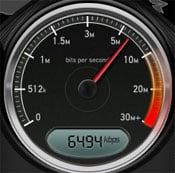
bittorrent speedAt TorrentFreak we have written quite a few speed guides, but we are not as knowledgeable as the people who work with BitTorrent clients daily. A few weeks ago we asked Olivier Chalouhi, developer and CTO of Vuze (formerly known as Azureus) to share some of his BitTorrent speed tips with us.

Today we continue our mission to help people get the most out of BitTorrent, by asking uTorrent developer Greg Hazel to give us his recommendations on how to optimize BitTorrent download speeds. Here are his three suggestions.

Cap the upload speed

Limiting your upload speed is by far the most important suggestion, and was also mention by Olivier Chalouhi in our previous BitTorrent speed guides. The rationale behind it is simple. Your connection is a tube (sort of), if you max out the upload capacity, the tube gets clogged.

Choose the correct maximum number of connections

Too much connections can actually slow down your torrents, instead of increasing the download speed. The uTorrent speed guide (Options > Speed Guide in uTorrent) automatically recommends the ideal settings. For users with a maximum upload speed of 256 kbit/sec, uTorrent suggests a maximum of 35 connections per torrent, and 60 in total.

Run as few torrents as possible

Less is more, sometimes at least. Running fewer torrents will guarantee that your connection can handle all the connections and requests properly. Since BitTorrent rewards people for uploading, the less torrents you run, the faster they will download. Again, the uTorrent speed guide will suggest the optimal settings, which is a maximum of 2 torrents for users with a maximum upload speed of 256 kbit/sec.

These three settings are the most important according to Greg, and configuring them correctly in your BitTorrent client, is the key to faster downloads.

High-tech Peeping Tom rigged laptop webcam to snap nude pics

When you see that little light turn on next to your webcam and you're not the one who did it, there reason for suspicion. A Florida woman recently discovered that a student who repaired her laptop installed software that allowed him to collect 20,000 photos of her in various states of undress.

read more | digg story

Stoner Cinema: 11 Movies for Marijuana Fans [PICS]


Hollywood hits a new high for pot movies in 2008 with Pineapple Express and The Wackness. Here are some of the other classics of the genre.

read more | digg story

Medical Marijuana Patient Fights For Right To Smoke Openly

A federally licensed Canadian medical marijuana user is fuming after receiving correspondence from his city councillor telling him to "Quit taking up taxpayers' dollars" with a "frivolous" human rights complaint. "I am not asking for anything special except the same rights that tobacco smokers have," he said. Cast your vote in the included poll.

read more | digg story

Orgasms 'at the touch of a button'


Courtesy of the Slightest Touch
The manufacturers say sales are about to hit the 4,000 mark
Women around the world are being told they can now have an orgasm at the touch of a button.

The makers of "Slightest Touch" say their device can give women longer, better and more intense orgasms.

They claim their device can trigger an orgasm without touching a woman's genital area.

According to the manufacturers, Slightest Touch works by stimulating the body's sexual nerve pathway.

'Turned on'

Women start by drinking an electrolyte sports drink 20 minutes before using the device.

They then apply two white electrode pads inside their ankles.

These pads are connected to the Slightest Touch device, which is about the size of a personal stereo.

If women feel they have problems with either sex or relationships, it's better to go and get professional advice about the possible causes, before spending a lot of money on a particular product
Family Planning Association spokeswoman
With the flick of a switch, women can literally get turned on.

The device stimulates the nerves sending gentle pulses up the woman's leg for between 10 and 30 minutes leaving women on the verge of climax.

"The Slightest Touch does not provide an orgasm," said Cherisse Davidson, the company's director of customer support.

"It gently stimulates the sexual nerve pathways taking the woman to a pre-orgasmic plateau where she dangles on the edge of orgasm for as long as she wants.

"From there, gentle stimulation can then effect the orgasm."

BBC News Online has been unable to get independent scientific verification that the product works.

But Ms Davidson, who first tested the device three years ago, insists it is effective.

"It can be of great benefit to many women," she told BBC News Online.

"I've been using mine for three years and I just love it."

She said the product can help women who simply want to improve their sex lives and those who have problems achieving orgasm.

However, the Slightest Touch, which sells for $139.95, is not suitable for everyone.

It is not recommended for women taking anti-depressants, those who are pregnant or those with some underlying medical conditions such as heart problems.

The product which was launched in the United States six months ago is now starting to getting attention in Europe.

Ms Davidson said the company had now sold almost 4,000 devices - some to customers in Britain.

However, the UK's FPA, formerly the Family Planning Association, urged women to get professional advice before spending their hard earned cash.

"If women feel they have problems with either sex or relationships, it's better to go and get professional advice about the possible causes, before spending a lot of money on a particular product," said a spokeswoman.

Michael Jordan: Me Vs. Kobe Not Even Close

July 31st, 2008 | by HG |

The Michael Jordan-Kobe Bryant comparisons have obviously gotten on MJ’s nerves. Michael wasn’t messing around, trying to get a rise out of the crowd. He was saying what he truly believes.. And he’s right. In their primes Michael Jordan is better than Kobe Bryant. Not even close.

Other than MJ setting the record straight the best part of the video is the kids in the background yelling for a 45-year-old Michael Jordan to dunk the ball. You can see Mike only wanted to shoot jumpers and layups, but he’s also a showman so he gave the people what they wanted.

Don't bogart that can...man! The best of "stoner comedies"

"Some illegal pastimes simply aren’t funny under any circumstances, but it’s safe to say smoking pot isn’t one of them. Let’s face it—anything that turns a perfectly sane person into a babbling, red-eyed zombie with a monstrous appetite can be easily mined for comedy gold. "

read more | digg story

Olympic gold medalist Amanda Beard bares all for PETA

Amandabeard_rathergonake

Olympian Amanda Beard strips off her swimsuit for a good cause.

The two-time Olympic gold medalist joins celebrities such as Alicia Silverstone and Eva Mendes who have also bared it all for PETA (People for the Ethical Treatment of Animals).

The new ad features Beard next to the tagline: "Be Comfortable in Your Own Skin. Don't Wear Fur." She's set to unveil the ad on Wednesday, just days before the kickoff of the Olympic Games in Beijing.

"[T]o see animals … slaughtered to be worn as fashion is awful to me, so I'm definitely against wearing fur," said Beard in a statement released by PETA.

So does she have any regrets about posing nude?

"No. I'd much rather go naked than ever put a dead animal on my body," Beard said.

can read more here

XGames in Dubai in December..Richest Xgames Event Yet


ESPN and Dubai Event Management Corporation (DEMC) have formed a five-year collaboration to host the world's richest singular, multi-sport, action sports event. There will be a 2.5 million dollar prize purse a record for X Games and the action sports industry—and X Games medals distributed to the athletes. Event Dates are December 11-13 2008

read more | digg story

Paris Hilton Responds to McCain Ad

See more funny videos at Funny or Die

Diesel from grass? It could be possible

Imagine a grass crop, grown on marginal, non-food bearing land without pesticides or much fertilizer, that, when harvested, produces an oil that needs almost no processing to be substituted for diesel fuel.

Copaifera langsdorffii Copaiba Oleoresin Diesel Tree Grass Switchgrass Fuel

Much attention has been given to producing ethanol from non-food crops like grasses, but the ability to produce something indistinguishable to diesel from grass could be a game-changer. It would require almost no infrastructure change and could fuel all of the existing long-haul trucks on the road without modification.

Chhandak Basu, a researcher at the University of Northern Colorado, has received a grant to study the feasibility of taking the oil-producing genes from the tropical copaiba tree, also known as the “diesel tree,” and inserting them into other types of plants, like grasses, to induce those plants to produce the diesel-like oleoresin.

“The agricultural aspects of oleoresin have been studied extensively, but not the molecular biology part, not the genes responsible for this type of synthesis,” Basu said.

Oleoresin has been known for a long time to be easily substituted for diesel fuel, and the copaiba tree produces copious amounts of these oleoresins — each tree producing 40 liters per year.

The problem is that trees grow relatively slowly and the copaiba tree requires a tropical environment to flourish. A wholesale shift of large portions of the tropics to growing monocultures of these trees could have a devastating effect on tropical habitats and global warming through deforestation.

To get around this, Mr. Basu suggests that genetically modifying other types of plants to do the same thing that copaiba trees do could be part of the solution to attaining energy independence.

“This can be a tool in the toolbox,” Basu said of his research. “There’s so much wealth in this country that we should find a homegrown solution to address energy concerns. And if I’m successful here, we can spread the technology to the developing nations.”

The whole idea of a grass that produces diesel fuel is pretty cool — enough so that I’m a bit skeptical. Right now it’s just an idea on paper, but after thinking it over, the basic concept seems feasible to me.

The real sticking point is not the actual genetic modification, but the potential for cross-contamination of other types of grasses and related plants through wind-blown pollen. Once that gene is out in the environment, there’s no getting it back into a contained state.

If this issue can be addressed, a whole host of other genetic modifications for increasing biofuel production from grasses could also be implemented in the future.

Source: UNCO press release

When They Were Dweebs: Celeb And Their High School Photos


Can you guess who the star is from their high school yearbook photo? Some are easy, some aren't and some make you realize even some stars were once dweebs.

read more | digg story

The MAG Lev Concept Car With Sexy Design And 3 Wheels

InhabitatAugust 5, 200

by Jorge Chapa

mag, magnetic vehicle, magnetic concept vehicle, MAG, green car, green vehicle, concept vehicle

While many green gear-heads argue whether electric vehicles are better than hybrids, Slovak designer Matúš Procháczka has brought the debate one step further. His innovative concept car foregoes these trifling 21st century technologies and fast-forwards straight to the future. Instead of an internal combustion engine, his vehicle is driven by an electric engine that generates a magnetic field capable of propelling the vehicle down the road!

Caveat first: the MAG car would require that all automotive infrastructure be magnetized in order for it to work, a task well-neigh impossible for any large-scale implementation. However such a system would tremendously reduce the energy required to propel the car, as it’s electromagnetic motor would be calibrated to reduce the car’s weight by 50%. The seats are created by two fabric nets which are adjustable to suit the occupant, and consume a minimum of materials.

The winner of the Unseen Technology Award at the Interior Motives Design Award 2007, the MAG is an extremely futuristic vehicle that requires technologies that are far away from being developed and deployed. Still, it presents a striking concept for future-foward transport that was too intriguing for us to resist.

Via thedesignblog.org

mag, magnetic vehicle, magnetic concept vehicle, MAG, green car, green vehicle, concept vehicle

mag, magnetic vehicle, magnetic concept vehicle, MAG, green car, green vehicle, concept vehicle

mag, magnetic vehicle, magnetic concept vehicle, MAG, green car, green vehicle, concept vehicle

mag, magnetic vehicle, magnetic concept vehicle, MAG, green car, green vehicle, concept vehicle