Zazzle Shop

Screen printing

Sunday, May 11, 2008

Inhaled Cannabis Reduces Central And Peripheral Neuropathic Pain, Study Says


May 8, 2008 - Davis, CA, USA

Davis, CA: Cannabis significantly reduces neuropathic pain compared to placebo and is well tolerated by patients with chronic pain conditions, according to clinical trial data to be published in The Journal of Pain.

Investigators at the University of California at Davis, in conjunction with the University of California Center for Medical Cannabis Research (CMCR), assessed the efficacy of inhaled cannabis on pain intensity among 38 patients with central and/or peripheral neuropathic pain in a randomized, placebo-controlled, crossover trial.

Researchers reported that smoking low-grade (3.5 percent THC) and mid-grade (7 percent THC) equally reduced patients’ perception of spontaneous pain.

“[A] significant … reduction in [a 100-point visual analog scale of] pain intensity per minute was noted from both 3.5 percent and 7 percent cannabis compared to placebo,” authors wrote. “Separate appraisals using the patient global score and multidimensional [eleven-point neuropathic pain scale also] revealed that both active agents alleviated pain compared with placebo.”

Investigators added: “[N]o participant withdrew because of tolerability issues. Subjects receiving active agent endorsed a ‘good drug effect’ more than a ‘bad drug effect.’”


They concluded: “In the present experiment, cannabis reduced pain intensity and unpleasantness equally. Thus, as with opioids, cannabis does not rely on a relaxing or tranquilizing effect, but rather reduces both the core component of nociception (nerve pain) and the emotional aspect of the pain experience to an equal degree.”

The study is the second clinical trial conducted by CMCR investigators to conclude that inhaled cannabis significantly reduces chronic neuropathy, a condition that is typically unresponsive to both opioids and non-steroidal anti-inflammatory drugs such as ibuprofen.

Commenting on the study’s the findings, NORML Deputy Director Paul Armentano said: “With the results of each published study it becomes increasingly apparent why the US government has tried consistently to stonewall clinical research on the therapeutic effects of inhaled cannabis. Each new trial the Feds approve provides additional evidence undermining the government’s ‘flat Earth’ position that cannabis is without medical value.”

For more information, please contact Paul Armentano, NORML Deputy Director, at: paul@norml.org

Full text of the study, “A randomized, placebo-controlled, crossover trial of cannabis cigarettes in neuropathic pain,” will appear in the Journal of Pain.

What Would Happen If Pot Were Legal for Adults?


BIG TRIAL BEGINS MONDAY N BOSTON!!!!!


What would happen if marijuana were legal? In the LA Times today, "This Bud's For You."

I always wondered what would happen if marijuana were legalized for anyone over 18. It seems it already has been, and nothing happened.

Except, people still get busted and go to jail.

Which reminds me, NORML founder Keith Stroup's trial for smoking a joint at a press conference in Boston begins Monday. Keith and his codefendant, High Times associate publisher Rick Cusick are challenging the constitutionality of the law criminalizing adult pot possession and use. They also requested a jury nullification instruction. [More...]

The defense will also file a separate motion requesting a special jury instruction to the effect that a juror has the legal right to refuse to convict an individual, even if he or she admits to the elements of a crime, if the juror believes the application of the law to that particular defendant would create an injustice.

If you're in Boston, head on over and show your support for Keith and Rick on Monday. Here's how to recognize them:

I hope they let Keith out in time for the NORML Aspen Legal Seminar June 6 and 7. It wouldn't be the same without him. We'll be spending one afternoon at Hunter Thompson's Owl Farm in Woody Creek again. If you're a criminal defense lawyer or if you're a medical pot user and want to hang with sympaticos, you're welcome to attend. Here's my video from our 2006 Owl Farm party and me interviewing Tommy Chong at Owl Farm in 2007. My topic this year: Crackadoodledoo! A New Dawn in Crack Cocaine Sentencing. Here's the full schedule.

Not in Boston? How about Minnesota? They're trying to get a compassionate law passed there and are running into trouble with false ads. The e-mail I received says:

We have a bill in the legislature that's already passed the full Senate and is pending a vote in the House any day now. Although it has had Republican support in the legislature form the start, Minnesota's Gov. Pawlenty has stated that he "stands with law enforcement" on the issue – meaning, presumably, in opposition to it and inclined to veto on the basis of a small but vocal group of prosecutors and law enforcement officials who have repeatedly testified against it through the committee process.

There's only one problem: these opponents – who so adamantly defend their right to arrest and jail the sick and dying for using marijuana with their doctor's recommendation – have made false claim after false claim, some of which have been outright lies.

They are looking for media attention -- the local press is ignoring it:

It's staggering that elected officials like County Attorneys and law enforcement officers are permitted to just lie about legislation and, when they're called on it, the media seems uninterested, no matter how well it's documented. I suppose this is in the interest of "balance" – and also why independent media and blogs like yours are so crucial.

Brad Pitt as Thor, Bruce Willis as Hannible in A-Team - YEP!

Date: May 10, 2008


The A-Team dies hard, while Marvel wants Achilles to become the Prince of Asgard!

El Mayimbe here with a quick and cool Friday night update.

A lot of bees buzzing in Hollywood so check it...

...from what I'm hearing, for John Singleton's upcoming remake of THE A-TEAM, they're looking at Bruce Willis for the role of Col. John "Hannibal" Smith, the leader of the A-TEAM. I love it when a plan comes together!


Meanwhile, over at Marvel, the name they are tossing around to pick up Thor's mighty hammer is Brad Pitt! A solid choice.

Keep in mind, NO OFFER HAS BEEN MADE TO PITT YET!

Mark Petrosevich wrote one hell of a draft which they are in the process of trimming down for budgetary reasons. Not for nothing, with the acting chops that Downey Jr brought over to Iron Man, it's understandable why Marvel wants to go after a reputable name like Pitt - they're gonna need someone who can act. I personally loved Pitt's bad ass characterization of Achilles in Troy, so I think Pitt could pull off Thor. Marvel is not going to be typical and go after the John Cenas, Chris Jerichos and Tyler Manes of the world. That would be corny.

Could Brad Pitt, like Johnny Depp and Robert Downey Jr before him, be feeling the mid life urge to act in a movie for his children to enjoy now that he is a dotting dad? Only time will tell, but first I think Marvel needs to lock down a director.


Stay tuned as more develops!

[PICS] 40 High-Res Photos from "The Dark Knight"


AKA "40 more reasons to get psyched about this movie."

read more | digg story

Narco subs pose new challenge for US coast guards

A narcotics smuggler is perched atop a mini-submarine carrying cocaine during an interception by US authorities in 2007


MIAMI (AFP) — The first time they found one, authorities dubbed it "Big Foot." They had heard rumors that such things existed, but nobody had actually seen one.

It was late 2006, and Big Foot was not lurking in a forest, but at sea, 90 miles (145 kilometers) southwest of Costa Rica. And it was not an ape-like creature, but a hulking, blue vessel resembling a submarine and carrying several tons of cocaine.

Nor was it a solitary beast.

Authorities say they are detecting more and more seacraft like Big Foot -- known as self-propelled semi-submersibles -- carrying larger and larger loads of drugs.

Chugging around the southern curve of Central America and up towards the United States, they have formed a kind of illicit fleet and become a major drug trafficking tool.

"It's significant. We believe they can carry upwards of eight or 10 tons of cocaine," said Rear Admiral Joseph Nimmich, director of the Joint Interagency Task Force South in Key West, Florida, where military and government agencies track drug shipments.

"It's in fact a logical progression," he added. "As we get better at interdiction, they move to try to counteract our success."

Experts estimate 25 to 40 semi-subs left South America last year laden with cocaine, and they expect that figure to double in 2008.

Nimmich said cartels started looking for alternative ways to transport their cargo several years ago, when drug enforcement officials cracked down on trafficking by fishing vessels.

One answer was the "go fast," a souped-up speed boat that blasts across the water so fast that authorities have to use helicopters to give chase. Another was the semi-sub.

US Coast Guard boats along with a US Customs and Border Protection helicopter during a drill off the coast of Florida


Unlike speedboats though, semi-subs have a low profile. They travel just beneath the ocean's surface, making them difficult to find on radar screens. Big Foot also had lead shielding to minimize its "heat signature" and throw off infrared sensors.

More recently, traffickers have started outfitting semi-subs with a scuttle valve so crews can quickly sink the vessels if authorities get close enough to board and collect evidence.

Zachary Mann, a spokesman for US Customs and Border Protection, said finding semi-subs involves a "layered" approach of high-tech monitoring and "good ole' fashion police investigative work."

In some cases, this means visually spotting them from the air, although they are painted blue and produce a wisp of a wake. Even here, the traffickers alter their methods, travelling more slowly during the day so their wake is smaller.

Hoping for a new weapon in their arsenal, the US Coast Guard is working with Congress to make it illegal even to be aboard an unflagged semi-sub in international waters, whether or not authorities find cocaine at the scene as evidence of wrongdoing. The crime would carry a 20-year prison term.

"This vessel has no purpose other than illicit trafficking," Nimmich said.

In the meantime, semi-subs have grown bigger, sturdier and faster. Some can cover up to 2,500 miles (4,000 kilometers) during a non-stop two-week voyage. They have crews of three or four men who share a tiny cylindrical capsule just four-feet high.

"This is another example of just how nimble drug traffickers are, mainly because of the profits that are available," said Adam Isacson, an expert on Colombia at the Center for International Policy in Washington.

The value of cocaine spikes once it arrives in the United States, he said, where 2007 figures put the price of a gram at 118 dollars.


US Customs and Border Protection officers searching a shipping container at the Port of Miami

Motivated by huge profit margins, drug traffickers have maintained a steady supply of cocaine to US consumers despite billions of dollars in US anti-narcotics aid to Colombia, where almost all cocaine is produced.

Other smuggling techniques involve stashing drugs in containers, or paying human "mules" to ingest them before travelling. Agents have found cocaine dissolved in diesel fuel, stashed inside fake plantains, stuffed inside lollipops, and even hidden in breast implants.

Despite difficulties interdicting semi-subs, the US Coast Guard seized a record 355,000 pounds (160,000 kilos) of cocaine in 2007, up two percent from the previous year.

The figure was boosted by the agency's largest cocaine bust ever -- a 42,845-pound (19,280-kilo) cargo -- stacked on the deck of a freighter.

A Tiny Fish Cleans the Pools of Foreclosed Homes

By MICHAEL CORKERY
May 9, 2008; Page A1

ANTIOCH, Calif. -- While lawmakers in Washington struggle to solve the nation's foreclosure crisis, officials here are using a small fish to clean up some of the mess.

The Gambusia affinis is commonly known as the "mosquito fish" because of its healthy appetite for the larvae of the irritating and disease-spreading insects. Lately, the fish is being pressed into service in California, Arizona, Florida and other areas struggling with a soaring number of foreclosures.

[Mosquito Fish]

The problem: swimming pools of abandoned homes have turned into mosquito breeding grounds.

"They are real heroes," says Josefa Cabada, a technician at the Contra Costa Mosquito & Vector Control District, a government agency. "I've never seen a mosquito in a pool with mosquito fish."

The mosquito fish is well suited for a prolonged housing slump. Hardy creatures with big appetites, they can survive in oxygen-depleted swimming pools for many months, eating up to 500 larvae a day and giving birth to 60 fry a month. That can save environmental crews from having to repeatedly spray pesticides in the pools while the houses grind through the foreclosure process.

Some local agencies, increasingly worried about mosquito-borne diseases like the West Nile Virus, are taking to the air to find problem swimming pools. The Turlock Abatement District, near Modesto, Calif., last month hired a plane to fly over 55 square miles, snapping pictures of pools from about 5,000 feet. On the ground, mosquito-control crews cross-referenced properties that had greenish-brown pools with a street map and a database of local foreclosed homes.

A significant threat to public health can be resolved through the use of a biological intervention. Learn more about the fish that eats mosquito larvae to reduce the threat of the west nile virus. WSJ's Michael Corkery reports. (May 8)

In the Turlock district alone, about 475 stagnant pools were identified on the flyover. Many of those will be filled with mosquito fish.

To deploy the fish, communities are turning to workers like Ms. Cabada, a former Navy sailor. She has raised pet fish since she was a girl and keeps a 55-gallon aquarium at home along with her five love birds, two dogs, two pet pigeons and a rooster. Many mornings, she collects hundreds of fish, housed in massive bubbling tanks at mosquito-control headquarters, and transports them to pools and other water sources in a cooler in the back of her pickup truck. In the sweltering heat, the fish ride up front.

"They're my buddies for the day,'' Ms. Cabada says.

After Hurricane Katrina

The fish have been used to keep mosquito populations down for many decades by farmers and environmental crews who stock them in cattle ponds, irrigation ditches and decorative ponds. In the aftermath of Hurricane Katrina, mosquito fish were stocked in the thousands of swimming pools abandoned around New Orleans in the storm.

[Josefa Cabada]

Native to the Gulf Coast states, the mosquito fish have mouths shaped to slurp larvae off the water's surface like noodles. The females can grow up to 3 inches long, and reproduce quickly. Technicians in Contra Costa typically release about 150 fish into each pool. Within weeks, the pools teem with a thousand of the scaly, gray predators.

When Ms. Cabada released fish into a pool behind a vacant home one recent day, they darted and dove through the water, which was the color of herbal tea. "It comforts you just to see them swimming around," she says.

Located along the delta where the Sacramento River meets the salt waters of the San Francisco Bay area, Contra Costa County's warm climate makes for prime mosquito country. The area is also struggling with foreclosures. Default notices more than doubled to 4,718 in the first quarter from the previous year, according to the research firm, DataQuick Information Systems.

[neighborhood]
Turlock Mosquito Abatement District

But like everything else about the housing crisis, the fish aren't a perfect fix. They baffle some bankers and agents hired by lenders to look after the vacant homes, says Carlos Sanabria, the Contra Costa mosquito control district's operations manager. "People think some trout-size thing is going to be swimming around in there clogging up the vents," he says. "I explain it's not something you are going to have for dinner."

Not everybody likes turning swimming pools into giant aquariums. "First you have fish, then you have birds that eat them" and then bird droppings, says Arnie Shal, a retired accountant, who lives next to several foreclosed houses with pools in Clearwater, Fla. "It's not really a healthy situation."

Mr. Shal, 71 years old, recently protested the use of mosquito fish in his posh development to the neighborhood association. He fears the fish will die in the Florida heat and allow mosquitoes to breed out of control. "This is trying to fix a serious health issue on the cheap," he says, "Everyone is under budgetary pressure, I understand. But they are going to leave us bug infested."

There are other concerns. A 1999 study showed that when biologists introduced mosquito fish to a pond containing tadpoles of the California red-legged frog, which is a threatened species, the fish harassed the tadpoles and harmed their growth. The frogs that emerged from the pond were 30% smaller than frogs raised in a pond without mosquito fish.

Stubby Tadpoles

"The Gambusia just keep taking bites out of the tadpoles, and the tadpoles end up kind of stubby," says the study's author, Sharon Lawler, a professor of entomology at University of California at Davis. She says well-intentioned buyers of foreclosed houses should be cautioned not to transfer the Gambusia from a pool into a pond containing the fragile tadpoles.

In addition to raising fish, Contra Costa scientists keep an indoor colony of mosquitoes for research. It falls to the district's entomologist, Steve Schutz, to provide the insects with their regular "blood meal," which he says the females need in order to reproduce. Every week or so, he sticks his arm into a screened cage containing more than a hundred mosquitoes in a hot and humid room called the "insectary."

He usually reads a book or works on a puzzle while the mosquitoes bite him for about 20 minutes. "I have been doing it so long that it doesn't even itch that much,'' he says. The district used to use a bobwhite quail for the blood meal, but Mr. Schutz says it's less hassle to offer up his arm.

'It's Organic'

It can take months after a defaulted homeowner leaves a house before the banks start caring for the property, Mr. Sanabria says. During that time, the fish can contain the mosquito problem, while a bank hires a caretaker to drain the pool or restart the filtration system. The fish are more environmentally friendly than constant spraying with pesticides. One problem with putting a cover on the pool is that the cover's exterior can collect water and breed mosquitoes, if left unchecked.

"This is how we are supposed to take care of things,'' says Robert Kloepping, who lives next to a vacant home with a pool containing mosquito fish in Antioch, Calif. "I think it's cool, man. It's organic."

The fish face a bleak future once they've done their job. Some begin eating each other after they run out of mosquito larvae. When the houses are sold, new owners can collect the fish and return them to the mosquito-control agency. In some cases, the environmental services department in Maricopa County, Arizona offers to come back and round up the fish it dumped in pools. But most fish will probably die as home owners drain the pools or begin treating them so they can swim in them.

"That's part of the program,'' says Chris Miller, a biologist at the Contra Costa mosquito and vector control district. "They are sacrificial."

Write to Michael Corkery at michael.corkery@wsj.com

Saturday, May 10, 2008

Star Wars Clone Wars trailer up on Starwars.com

In theaters 8-15-08

www.starwars.com

Chismillionaire agrees- stay the course with 401(K)

Don’t lose faith in your 401(k)

For Bernie's Red, a public service post!

Even when markets are headed south, a 401(k) is a great vehicle for retirement savings.

Question: Is it still a good idea to contribute to my 401(k) right now even though the economy isn’t doing too well? -JoAnna Jones, Bossier City, Louisiana

Answer: Let me see, how do I say this to get across just how strongly I feel about this answer? How about: Definitely. No question. Positively. Absolutely. Without a doubt.

Or, to put it another way: Yes.

I can understand why you might feel anxious about contributing to your 401(k) account at a time when the national mood is so gloomy. It’s hard not to let the travails of the moment color your long-term planning.

But the fact is, when you invest money in your 401(k), improving your retirement prospects over the long-term should be your focus.

When you’re contributing to your 401(k) early in your career - say, when you’re in your 20s or 30s - you know that this money is going to be invested at least another 20 to 40 years. So as long as you’re investing in a diversified mix of stock and bond funds, it doesn’t make much sense to get caught up in the short-term ups and downs of the market.

If you’re on the verge of retirement, then clearly you’ve got to give more consideration to what might happen to the value of your account over the next few years. You don’t want to see your 401(k)’s value decimated by market setbacks on the eve of retirement.

But even then the answer isn’t to stop contributing. Indeed, the money you invest in the last few years before you call it a career may very well turn out to be the funds that will sustain you in the later stages of a retirement that could last 30 or more years. Rather, the way to protect your nest egg as you approach retirement is to gradually shift more of your 401(k) portfolio from stocks to bonds.

I realize, however, that concern about the short-term can often blind us to long-term considerations. So I’d like to offer three more immediate reasons why you shouldn’t abandon your 401(k) now.

You’ll be giving up a tax break, and possibly free money. One of the nice little advantages of participating in a 401(k) is that you get to invest pre-tax dollars, which lowers your current tax bill. What’s more, the investment gains on your contributions - as well as the gains on your gains - grow without the drag of taxes. Yes, you do eventually pay tax on this money at withdrawal. But years of tax-deferred compounding allows you build a bigger nest egg than you could with taxable accounts alone, which in turn allows you to live a more comfy retirement.

And if your 401(k) plan is among the majority that provides employer matching contributions - typically 50 cents for every dollar you contribute up to 6% of salary - then bowing out of your plan now is like giving up free money.

Walking away from these and many other benefits of 401(k)s just makes no sense, even if the economic outlook at the moment appears tenuous.

You may be foregoing attractive returns. There are no guarantees when it comes to the financial markets. But there’s a good chance that the money you invest in your 401(k) when the markets are struggling will give you some of the highest returns you’ll earn over the long run.

This is a somewhat counterintuitive concept. People tend to feel most comfortable about investing after the markets have been on a roll and have racked up big gains. But the exuberance that naturally occurs during bull markets eventually leads investors to bid up share prices to blimpish levels. That diminishes the potential for future gains much the same way that overpaying for a house does.

When things are looking more bleak and investors are wary, on the other hand, share prices are generally lower relative to companies’ long-term earnings power. That translates to a greater potential for higher long-term returns than when things are going swimmingly.

I’m not suggesting that 401(k) investors should try to time their contributions to any particular market outlook. That would be foolish. But at times like today when pessimism is pervasive, it’s not a bad idea to remind yourself that the money you contribute when your fellow investors are most skittish often ends up racking up higher returns.

You might not resume contributing if you stop now. Another nice advantage of contributing to a 401(k) is that it forces you to live a bit below your means. Your contribution comes out of your paycheck before you get your hands on it, so your spending naturally conforms to what’s left - that is, your income after you’ve allowed for saving.

If you suspend your 401(k) contributions, however, you’ll be giving up this little psychological advantage. Your paycheck will be larger, thus freeing up more money for you to spend. Even if you plan on resuming your contributions when the economy improves, doing so may be more difficult than you think, especially after you’ve gotten used to having that extra money to throw around. It’s always harder to scale back your lifestyle than it is to ratchet it up. So I think there’s a real danger that what you intend as a temporary hiatus from your 401(k) could turn into a long-term absence that seriously impairs your retirement prospects.

Bottom line: It’s challenge enough to create a retirement nest egg these days even if you contribute faithfully to your 401(k) throughout your career. Start moving in and out of your plan based on how you feel about the economy and that challenge could become a mission impossible.

Filed under Uncategorized

Brewers adjust recipes due to Hop barley and rice prices

By David Kravets Email 05.10.08 | 1:00 PM
A brewer 21st Amendment Brewery in San Francisco shows a bucket of hop pellets.
Photo Jim Merithew/Wired.com

OAKLAND, California -- At Pacific Coast Brewing here, brewer Donald Gortemiller is reworking his recipes and altering his brewing styles like never before.

Gortemiller isn't acting on a spurt of creativity. He's coping with a worldwide shortage of hops -- the spice of beer. The dry cones of a particular flowering vine, hops are what give your favorite brew its flavor and aroma. Prices of the commodity are skyrocketing as hop supplies have plummeted, forcing smaller brewmasters around the United States to begin quietly tweaking their recipes, in ways that are easily discerned by serious imbibers.

The shortage -- caused by a dwindling number of hop growers worldwide, and exacerbated by a Yakima, Washington, warehouse fire -- has forced Gortemiller to use fewer and different hops than before, changing the flavor of his beer. He's also resorted to beer hacks, like "dry hopping," in which the hops are added late to the mix, consuming fewer hops and yielding a more consistent flavor.

"When hops were $2 a pound, compared to $20 or $30 a pound now, it didn't matter. We'd throw them into the boil at various times," Gortemiller says. "That was an inaccurate way of doing things. We're modifying recipes and using about 20 percent less hops."

Brewer Chuey Munkanta at the 21st Amendment Brewery pulls the grain out of the wash tun.
Photo Jim Merithew, Wired.com

The beer-brewing situation demonstrates how the global-commodity shortage is spilling over to affect diverse industries in unexpected ways. The hop shortage lives on the outer edges of a food crisis that's prompted riots across the planet, and last month led U.N. Secretary-General Ban-Ki Moon to implore the world's governments to increase food production to stave off a 40 percent jump in the cost of staples.

While nobody in the craft-beer industry is going hungry, they are being forced to adapt. There's no replacement for hops in beer -- they give the brew its flavor. But other key ingredients are in short supply, as well. Malt, which comes from sprouted barley, produces the alcohol and body of beer -- its prices have doubled along with hops. The price of rice, used by industrial brewers, has charted a similar course.

The larger commercial brewers are better off. Most have long-term contracts for hops, barley and rice, and are doing whatever is necessary not to tinker with their brand names.

"Coors Banquet has been tweaked very little since it was introduced in the 1800s," says Molson Coors spokeswoman Jenny Volanakis. "We don't play around with our beers."

Cadillac CTS V fastest sedan ever around the Nurburgring

NURBURG, Germany — Cadillac announced today that the 2009 Cadillac CTS-V has run a 7:59.32 lap of the NĂĽrburgring Nordschleife in the hands of GM Performance Division's John Heinricy. This is thought to be the fastest-ever lap time for a production sedan on this demanding 73-corner, 12.9-mile racetrack.

The redesigned CTS-V is no stranger to the Nordschleife, as it was here that spy photographers first spotted this car in heavy camouflage. The high-performance sedan is now in the final stages of development and testing, says Cadillac, and this particular CTS-V had no significant modifications over and above the production specification.

Although not confirmed as the fastest lap any sedan has ever run on the NĂĽrburgring, there's no denying the 2009 Cadillac CTS-V has the hardware to pull off such a feat. The power source in the CTS-V is GM's supercharged 6.2-liter LSA V8 and it's rated for an estimated 550 horsepower at 6,200 rpm and 550 pound-feet of torque. We'd guess this particular car also had the six-speed manual transmission, which will be offered as a hard-core alternative to the usual automatic.

Cadillac says it will post video footage of the record-setting lap on the Cadillac Drivers' Blog in the coming days.

What this means to you: If you own a BMW M5, it might mean trouble ahead. — Erin Riches, Senior Editor

This bud's for you, and you, and you too


How I got my hands on some marijuana -- the legal (and easy) way.
Joel Stein

May 9, 2008

Sometimes I can't believe how Californian California is. Women walk around half-naked, waiters call patrons "dude," and medical marijuana is legal. But I wondered just how legal. Could anyone buy it? Even me, who doesn't have cancer, AIDS, arthritis, glaucoma or even any previous pot-smoking experience?

Medical marijuana isn't really legal -- in 2005, the Supreme Court said federal anti-drug laws trump state laws -- but California and 11 other hippie states have been flipping off Washington for years.

Finding a medical marijuana distributor is shockingly easy, as Times columnist Sandy Banks noted in her recent columns on getting pot to treat arthritis. Sprinkled innocuously around L.A. County are more than 200 dispensaries that look like health food stores or pharmacies -- including three just at the intersection of Fairfax and Santa Monica. To shop at these places, though, you need a doctor's recommendation on an official form. Once you have that, no California cop can arrest you for holding up to eight ounces. That amount, I'm guessing, was based on conservative medical estimates of how much Snoop Dogg would need if he came down with glaucoma at the same time Animal Planet aired a "Meerkat Manor" marathon.

I made an appointment at a medical office recommended by Shirley Halperin, the coauthor of the new book, "Pot Culture: The A-Z to Stoner Language & Life." Halperin chose our particular clinic less for its medical expertise than the fact that it shared a parking lot with a pot dispensary. Stoners are very clearheaded when it comes to avoiding extra effort.

As I sat in the tiny waiting room, filling out my medical history and getting nervous, Halperin assured me that no one she knows had been rejected, which seemed convincing because the only people sitting near me were two healthy looking guys in their 20s. When I got called in, I entered a doctor's office different from any I'd ever been in. It contained only a tiny desk, two chairs, a small TV and two cans of Glade. Also, the doctor wore a Hawaiian shirt.

He took my blood pressure and asked what I was suffering from. "Anxiety," I said. And then "occasional insomnia." And even though he seemed to be moving on, I blurted something about headaches. The only malady that would have made me more similar to every human being throughout history would have been "these painful little pieces of skin that peel up next to my fingernails."

The doctor followed up on my insomnia, however, and asked if I was having work problems or relationship issues as he handed me a photocopy of a handwritten list of psychiatrists. He'd give me a recommendation for medical marijuana for six months, he said, and would extend it to one year if I saw a therapist. The whole thing took about four minutes.

I paid the receptionist $80 -- cash only -- and she gave me a filled-out form that states I am under medical care and supervision for the treatment of a "medical problem." I felt touched that the doctor hadn't just written I was suffering from "stuff."

At the dispensary, a Harley-riding bouncer checked my newly minted medical forms and driver's license and let us inside. The dispensary was like a really nice coffee shop, with paintings on the wall for sale, couches and a drum kit upstairs for live jazz.

A pretty woman behind the counter -- kind of a pot sommelier -- brought out a huge menu, divided into sativa (uppers) and indica (the downers all dealers sell) varieties, with names such as Bluedot Popcorn, Hindu Skunk and Purple Urkel. Like a high-end tea shop, she used chopsticks to procure the buds from glass jars -- all organic and grown in California -- which she had me smell and look at under a microscope. I settled on a gram of Sugar Kush, which sounded appealing until I wondered what kind of breakfast cereal would cure Sugar Kush munchies. Honey Bunches of Fudge? Frosted Mini Frosted Minis? Count Plaqula?
Hollywood OG Kush

Next, I took the advice of a fellow patient and went to buy some "edibles" at the Farmacy. This is the most famous of the L.A. dispensaries, with three locations, only two of which are right next to a Whole Foods. The Westwood branch is a sleek health food store that also sells vitamins and lots of Goji berries, and, unlike at the doctor's office, all the salespeople wear white lab coats. As a first-timer, I got to spin a wheel to determine my free gift medicine, which was a pot-infused lollipop. I also bought a vegan chocolate-chip cookie medicine and a chocolate bar medicine, and deeply considered the gelato medicine.

Wondering if I had an unusually easy time, I called High Times magazine's 2006 Stoner of the Year, Doug Benson, a comedian who just released "Super High Me," a documentary in which he stops smoking pot for 30 days and then, for his next month, is high every waking minute. As part of the documentary, he got his medical marijuana certificate. "I told my doctor I had a weak back. And when he said, 'How long?' I said, 'About a week back.' " He did not get rejected. As a patient or a comedian.

In fact, Benson buys all his pot from a dispensary now. Even with the sales tax, he pays the same price and, he said, gets more consistent quality than he did from a dealer. "I had a dealer who came by my house, but this is more convenient," he said. When I asked him how that could be, he explained: "I used to have to sit there and listen to his stories. Because dealers like to hang out."

I always wondered what would happen if marijuana were legalized for anyone over 18. It seems it already has been, and nothing happened.

jstein@latimescolumnists.com

Best Scenic Drives in the U.S

Posting for Jack Reno:

Rev your engines . . . and get ready to take on the open road this summer

By ShermansTravel Editorial Staff

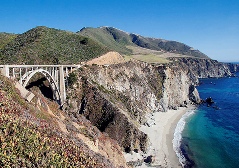
Photo: JBlaze B

It's hard to resist the lure of the open road when summer rolls around — and with our editors' favorite scenic drives across the United States, you'll know exactly where to point your car this year. We've listed our favorites from west to east — including everything from the obvious Highway 1 in California to the less-obvious — but brilliantly named — Going-to-the-Sun Road in Montana. We've picked routes for their history (U.S. Route 1 in New England and Million Dollar Highway in Colorado); for their natural scenery (Blue Ridge Parkway, Red Rock Scenic Byway, Highway 12); for their romantic appeal (routes through Sonoma and Napa); and for their remote wild beauty (Hana and Seward highways). Best of all, most of these routes make for splendid drives all year long, so you can get out and explore their bounty whenever the mood strikes. So rev your engines ... and hit the road.


Blue Ridge Parkway


Stretching some 469 miles along the Southern Appalachian Mountains and linking two eastern national parks — Virginia's Shenandoah National Park in Virginia and North Carolina's Great Smoky Mountains — the Blue Ridge Parkway has often been referred to as "America's Favorite Drive." It's certainly the country's first rural parkway — parts of it date back to 1930s (when construction began as a make-work project during the Depression) — and the longest, with breathtaking scenery and dozens of recreational opportunities to distract you when you need to stretch your legs.


Though some may argue that autumn is the best season to drive this stretch, as the brilliant fall foliage is in full effect, May is also a superb time to head this way, to witness the profusion of wildflowers in bloom along the elevated mountainsides. Also included in this scenic route is the impressive Skyline Drive, a 105-mile swath of road that cuts through Shenandoah National Park. Of course, no nature drive of this sort would be quite complete without wildlife sightings: Keep an eye out for resident whitetail deer and black bears.


Hana Highway


It's no wonder the aloha 'aina (love of the land) spirit is the bedrock of Hawaiian tradition. A drive on Maui's beloved Hana Highway (also called "the road to Hana") offers such an awe-inspiring display of natural beauty that you'll soon revel in the same sentiment. This serpentine trek starts off in Paia, famous for its surfer-swept shores, and zigzags east along the coast for more than 50 miles, all the while embracing 600 hairpin curves, 54 one-lane bridges, and some of the island's most spectacular sights. Indeed, Keanae Arboretum (an exotic botanical garden), Waikani Falls (a trio of crashing chutes), Ka'eleku Caverns (an ancient cavern system created from a lava flow thousands of years ago), and Waianapanapa State Park (home to a famous black-sand beach and fresh-water caves) are all in close proximity.


Your excursion will land you in the sleepy coastal village of Hana, where you can take up shack and relish the quiet countryside and local culture or, continue a tad further to Haleakala National Park where you can cool your jets in Oheo Gulch (aka the Seven Sacred Pools). Keep your windows down as you go and breathe in the sweet air infused with eucalyptus and ginger. To get the most out of the drive, pick up a "The Hana Road Self-Guided Drive" CD from the Shell gas station on Route 380 in Kahului; it narrates the journey and highlights all of the must-sees.


Highway 1


California's State Route 1 (a.k.a. Highway 1) skirts the Golden State's glorious Pacific coastline from "So Cal," near San Luis Obispo northwest to the forests of Monterey. While the twists and curves, and occasional precariously-perched cliff-top road, may prove challenging at times (one section has been ominously dubbed Devil's Slide, thanks to landslides and erosion that have occasionally made the road impassable), the magnificent vistas of ocean waves breaking on rocky sea-sculpted shores, windswept beaches dotted by frolicking otters or sea lions, and magnificent forests presiding above it all can rouse even the wariest of drivers behind the wheel.


Forays into charming little coastal towns, like Carmel-by-the-Sea and Laguna Beach, as well as into the trilogy of Californian cultural centers at Los Angeles, San Diego, and San Francisco, are met by attractions ranging from historic missions to magnificent mansions (don't miss San Simeon's mountaintop Hearst Castle). There are also endless opportunities for outdoor recreation, particularly around the Big Sur area, where you can hike through redwood forests, comb the beaches for shells and jade, and camp under the stars.


Highway 12


Windswept red-rock canyons, towering sandstone formations, pristine lakes, and pine- studded mountain ranges combine for an altogether over-the-top sensory experience in Southern Utah. The setting for several stunning national parks, this remarkable road connects those at Bryce Canyon and Capitol Reef, and offers unique beauty and seemingly limitless recreational opportunities on a stretch of land between the two parks' boundaries.


Utah Highway 12, also known as Highway 12 Scenic Byway, is one of only 27 nationally designated All-American Roads — the highest honor a road can get for attractive scenery. This spectacular route travels away from Bryce Canyon, through the Grand Staircase- Escalante National Monument, and over the forested Boulder Mountain and the Dixie National Forest, before winding down near the entrance to Capitol Reef. The scenery is unforgettable along the entire length of the road — especially during the brilliant red-rock sunsets that provide a glorious grand finale to a day's driving adventure here.


Going-to-the-Sun Road


This spectacular 52-mile drive is the best way to see the dramatic remnants and rugged path left by gargantuan glaciers in Montana's striking Glacier National Park. Only open from early-June to mid-October (or until first snowfall), the Going-to-the-Sun Road, aptly named for its ever-escalating sky-high stretch with switchbacks up and over the magnificent Continental Divide, traverses Glacier National Park from West Glacier to St. Mary and covers untapped wilderness, rugged mountains, glistening lakes, deep river gorges, glacial canyons, and the long Garden Wall. This sharp ridge forms the Continental Divide, the only place in the country where water flows to the Pacific, Gulf of Mexico, and Hudson Bay.


The road offers multiple lookout points, among them the 6646-foot-high Logan Pass, which ranks as one of the Divide's most impressive vantage points, and Jackson Glacier Overlook, 2 miles beyond Siyeh Bend, where remnants of the mammoth ice formations that carved the park's harsh terrain and contoured its valleys can still be seen. Indeed, the many jaw-dropping views and hiking opportunities along the way will have you making frequent stops to get out and explore; a few backcountry lodges, chalets, and campgrounds are available too, should you decide to prolong your trip by spending the night.


See More Best Scenic Drives in the U.S.

Biological Weapons To Control Cane Toad Invasion In Australia


New research on cane toads in Northern Australia has discovered a way to control the cane toad invasion using parasites and toad communication signals. (Credit: iStockphoto/Eric Delmar)


Professor Rick Shine from the University of Sydney has been studying the biology of cane toads, and will reveal his new research May 7 at the Academy of Science's peak annual event Science at the Shine Dome.

He says that controlling toads has been difficult as things that kill them will often kill frogs. Professor Shine and his team studied cane toads in Queensland that lagged behind the invasion front and found they were infected with a lungworm parasite which slows down adults and, in laboratory tests, kills around 30% of baby toads.

It was originally thought cane toads left their parasites behind when they came to Australia and that the lungworm parasite came from Australian frogs. This ruled out using the parasite for toad control due to potential frog impacts. However, DNA sequencing by Professor Shine's team has shown the parasite species came from the Amazon and is genetically different to those found in Australian frogs.

'The toads have brought with them a parasite that kills them and that doesn't attack Australian frogs, so this is a phenomenal opportunity for biological control' he said.

Professor Shine's team have also discovered pheromones used to communicate danger between toad tadpoles that have significant impacts on their size and survival. The 'alarm pheromones' are released into a pond when a tadpole is frightened or injured and warns other toad tadpoles to flee the area.

The signal stresses the toad tadpoles so much that in field trials around half of them died before they became adult toads, and those that become adults were half the size they should've been. The pheromones were also found to be different to those of Australian frogs and didn't affect them.

Using the lungworm parasite and the alarm pheromone together would be particularly powerful as the pheromone either kills or produces smaller 'toadlets', and the parasite is more effective at killing these smaller sized toads.

'...the combination of those two things start to suggest, I think, a pretty straightforward, pretty low risk, but probably pretty effective way to start controlling toads.'

Attractant pheromones have also been found by his team which can be used to lure toad tadpoles for catching and removal.

Professor Shine hopes to involve community groups in the use of these new control methods. He says that although there has been a huge effort to slow the toad front by communities in Western Australia and the Northern Territory, the toad front is progressing as fast as ever.

'We've got the toads moving across Australia faster and faster. They're widely seen as a major problem. In community surveys they're identified by many people as the worst invasive species we have.'

Previous methods for controlling cane toad numbers have included traps and fences but have mainly involved physically removing them from the environment, often by putting them in a plastic bag in the freezer.

'People have spent certainly well over $15 million on cane toads in Australia on research and control. Very little of that has actually been devoted to try to understand what toads are doing. Now that we've done that, it does seem that there are really encouraging avenues.

'By doing the detailed ecology and actually finding out about communication systems and where the parasite came from and things like this, we've got new ways to attack toads that haven't been thought of before'.

He says the main impact of the toad invasion has been on large predators such as goannas, quolls, king brown snakes and death adders. 'We've had, for example, probably 90% mortality of the big goannas and the big lizards in our study site. Its dramatic, and that has all sorts of flow on effects. You take out 90% of the big predators and that really changes the system.'

Professor Shine will present his work as winner of the Academy's Macfarlane Burnet Medal and Lecture at 9:30am Wednesday 9 May. Of the win he says: 'Its fantastic. Its one of these accolades from your peers that come along very rarely in any career and I'm just as excited as hell to be have been the fortunate recipient.'

Science at the Shine Dome is the Academy's annual celebration of science and runs from 7–9 May 2008 at the Shine Dome in Canberra.


Adapted from materials provided by Australian Academy of Science.

F.U. ....I am an AntEater

Stolen MacBook Victim Uses Screen Sharing and iSight to Bust Thieves

A White Plains, NY woman who was the victim of burglary, including her MacBook, used the Back To My Mac screen sharing feature to turn on her webcam and capture images of the unwitting culprits using the computer. As a result, police were able to arrest the thieves and recover most of the stolen goods, which included two laptops, two flat-screen televisions, two iPods, gaming consoles, DVDs and computer games.

This plan first launched into action when a co-worker of the nameless woman at the Apple Store noticed her computer online and notified the woman. She was then able to log into her computer and the rest is history. So the moral of the story is this: If you steal a MacBook, please be sure to cover the iSight with some tape. Otherwise, you could also be charged with a second degree felony. [Iohud via TUAW]

Friday, May 9, 2008

Massive Marijuana Research Compilation


Quite possibly the most comprehensive website covering research on marijuana that's ever existed.

read more | digg story

The Hottest Latina Moms (+PICS)


In honor of Mother’s Day we pick the sexiest madres.

read more | digg story

Is There A Constitutional Right To An Orgy?

Posted on 08 May 2008 by Brian Cuban

The city of Duncanville, Tx which is suburb of Dallas has been involved in its own little Jerry Falwell style bible belt battle with the owners of a private “swingers club” called “The Cherry Pit“. The Cherry PIt is a private residence tucked in away in an upscale Duncanville residential neighborhood. The Cherry Pit advertises on the internet and draws as many as 100 guests to a weekend gathering.

The Cherry Pit has been throwing adult-oriented parties where couples pay a fee for entry and can engage in pretty much any type of sexual activity they want on the premises. It is the position of the owners that this does not constitute a “business” as the entrance money is to cover the cost of food, soft drinks etc and not a fee for the privilege of engaging in sex from the tame to the “Pulp Fiction” apple in the mouth brand of entertainment…. It is rumored for an extra service charge they will even “bring out the gimp”….(just kidding)

The whole bru ha ha started back in November of 2007 when after several years of Cherry Pitt neighbors complaining about the crime, traffic and “unsavory element” “the pit” was bringing to the neighborhood, the City of Duncanville passed the following ordinance:

“the operation and maintenance of a sex club to be unlawful and a public nuisance. Violation of the new ordinance can result in a fine of up to $2,000.”

The city of Duncanville then decided that the gatherings at the Cherry Pit were more than just a gathering of “friends and family” looking for some fun and determined that it was in fact a sexually oriented business and subect to the ordinance. The response of Julie Norris, one of the owners of “The PIt” was as follows:

“I don’t know what their definition of a business is, but to my understanding a business is public - anyone can just walk into it and you must pay to get in and we are none of that,” Norris said. “I accept donations. Have you ever had your friends over for a barbecue and asked everyone to pitch in $5 or bring a dish? That is exactly what we do. The only requirement to get into my home is that you call and let me know that you are coming and you are on my reservation list.”

Ms Norris went on to state that she believed that the ordinance is a guise to attack their lifestyles and beliefs and that the ordinance regulating the club violated their First Amendment Rights to Privacy.

“It boils down to people want to put their morality into my private home and I am going to stand against that,” Norris said. “That is not what the Constitution allows.”

The owners of the Cherry PIt subsequently counter sued the city claiming the ordinance banning sex clubs violates their privacy and due process rights. They are basically using the same argument under which a right to privacy was found under Roe v. Wade. They have to use this method in making the right to privacy argument because there is in fact no right to personal privacy spelled out in the Constitution.

The Cherry Pit’s attorney, Ed Klein, said the city is trying to regulate private acts in a private home using the public nuisance law as a “pretext” to do so….

The Cherry Pitt has remained open while all the legal wrangling has taken place… Just today the City of Duncanville broadened the ordinance designed to shut the club down by making the definition of a sex club more general and add a local appeal process for sex clubs that the city orders to close.

So what you do think? Should private citizens be allowed to “swap pits” at the Pitt without the government getting its’ rocks off?

My initial gut reaction is to always have a problem when big brother enters my home and says you can’t do this or you can’t do that. My gut however has to take a back seat to the fact that this is done all the time.

You can’t do cocaine in the privacy of your home….. You can’t shoot up heroin in the privacy of your home, You cant run a gambling operation in the privacy of your home and guess what? You can not charge people for the privilege of having indiscriminate, anonymous sex in your home. Just like taking a cut of the house makes your little gambling gathering illegal, taking profits at the Cherry Pit makes you the equivalent of the D.C. Madam

Here is the problem as I see it. Whatever law passes constitutional muster can not be based on counting soft drink and pretzels receipts. If you break even its a gathering of friends. if you come out five bucks ahead your running a sex shop…. A law enforced by accountants….

What would you do?

New High Resolution WALL-E Photos Released

WALL-E


Disney has released a batch of new super high resolution images from Pixar’s WALL-E. By Super high resolution, I mean… SUPER high resolution. I had to compress the images down to 2500px wide due to file size reasons. Click on the images above and below to see them in all their glory. WALL-E hits theaters on June 27th 2008.

WALL-E

WALL-E

WALL-E

WALL-E

WALL-E

WALL-E

New NFL Rule Will Force Players To Have One Of Three Appropriate Haircuts

NEW YORK—Hoping to address the issue of long hair obscuring players' names and numbers, NFL owners passed a new rule wherein players would be restricted to one of three league-approved hairstyles. "People don't come to games to watch tufts of hair make tackles and score touchdowns; they come to watch the colorful uniforms do it," said 49ers coach Mike Nolan of the new rule, which will limit players to No. 2 grade buzz cuts, No. 1 grade "high-and-tight" cuts, and Johnny Unitas-style flattops. "These three haircuts embody the class, dignity, and discipline that has always been associated with NFL football players. Frankly, I thought three was too many; buzz cuts hint at a sense of individuality that has absolutely no place in football." NFL owners will next vote on a rule proposal that would strike names from players' uniforms, contracts, and birth certificates.