Zazzle Shop

Screen printing

Tuesday, January 22, 2008

Pick the Perfect Smartphone

01.22.08


Here's how to choose a platform and a phone that will keep you content and connected on the go.

At the risk of starting a flame war, here's what we hope is a balanced overview of each of the four major smartphone operating systems to help you choose the right device with features that best suit your needs. And be sure to check out our recent reviews of the hottest phones in each category below.

BlackBerry OS 4.3

Pros: BlackBerrys have always been sublime e-mail handlers, but now they're no longer the exclusive province of executives and stockbrokers. RIM's latest models sport attractive styling, quality cameras, built-in GPS, and even 3.5mm headphone jacks that accept high-end stereo earbuds. They offer sleek styling, svelte proportions, and several popular keyboard configurations. Plus, the software platform is finally catching up with the hardware, with lots of top-name vendors pitching everything from mobile TV to social networking clients.

Cons: BlackBerrys still require their own expensive data plans, which are separate from the ones offered on all other smartphones. It also costs more to integrate BlackBerrys into an existing corporate network than other solutions such as Windows Mobile or Symbian devices. Most BlackBerrys still have sub-par Web browsers; the Pearl 8130 is the first version to be competitive in this regard. (For other models, download the free Opera Mini 4.) And even if the third-party software market for BlackBerrys is catching up, it still pales in comparison to the other three platforms—notably in document editing.

Palm OS 5.4

Pros: This was my favorite handheld OS a decade ago, back when Palm busted out onto the scene with its innovative PDAs and made everyone want one. Even today, Palm OS responds instantly and makes quick work of everyday tasks, thanks to smart design decisions made years ago. Pick up a 755p and it's like visiting an old friend—that's because it essentially is the same old friend. All Palm OS devices include a high-resolution, 320 by 320-pixel touch screen LCD and a stylus. Often third-party apps, which number in the tens of thousands, are better on Palm OS than they are on the other platforms. DataViz Documents To Go, in particular, is amazing.

Cons: Palm hasn't updated the OS kernel in years. That doesn't mean today's handhelds are defective—rather, you won't get contemporary features such as stereo Bluetooth, Bluetooth voice dialing, up-to-date Web browsers, GPS, built-in video playback, or flashier interface graphics. Aside from the cramped though budget-friendly Centro, Palm OS handsets are larger and heavier than their competitors, and none of the latest hardware designs (such as sliders or dual-keyboards) are represented. Plus, Palm OS handhelds are notorious for crashing, though part of that reputation is thanks to third-party apps and doesn't necessarily apply to a clean out-of-the-box handset.

Symbian Series 60 3rd Edition

Pros: Symbian handsets also have a slick—though different—interface design and tremendous third-party application support. Many Symbian devices are available unlocked, freeing you from unnecessary carrier restrictions. They're a great business choice, too, due to built-in enterprise networking, comprehensive e-mail connectivity, and available third-party solutions such as DataViz RoadSync for Microsoft Exchange synchronization. Some Symbian devices, such as the Nokia N95 and E90 Communicator are downright technological showcases.

Cons: Your only carrier choices are AT&T and T-Mobile; there are no CDMA (read: Verizon or Sprint) Symbian devices available. There also aren't many 3G-capable Symbian handsets, and the ones that are have poor battery life. Despite their robust enterprise compatibility, Symbian devices have less of a corporate presence in the U.S. than the other three platforms, and may be a tough sell to management purely on the basis of name recognition. Plus, there are also no carrier-backed mobile TV services available on Symbian yet.

Windows Mobile 6.0

Pros: Windows Mobile 6 handsets integrate seamlessly with Microsoft Outlook; if that's your e-mail app, choosing a WM6 device is a no-brainer. Windows Mobile handsets often come in slim, lightweight form factors. Two varieties are available—with touchscreen (Professional) and without (Standard). They're capable e-mail handlers, include robust music and video support, and mimic Windows desktop conventions closely enough that you'll likely have little problem navigating the devices. They even view and edit Microsoft Office documents out of the box, and the third-party app market is now booming.

Cons: Although numerous enhancements in Windows Mobile 6 alleviate this somewhat, the OS still gives the impression it was designed by committee and not actually tested along the way. Navigation often takes too many key presses and dialog boxes, even for basic tasks such as locking the keyboard or turning the ringer on and off. On all but the fastest handhelds, WM6 feels sluggish, with frequent screen redraw delays and hiccups when playing full screen video files. And even built-in apps can cause the OS to crash.

In This Roundup:

BlackBerry OS 4.3

RIM Blackberry 8820RIM BlackBerry 8820
The BlackBerry 8820 pumps up the businesslike BlackBerry 8800 with largely useless Wi-Fi. We'd rather have had 3G, but, hey, we're not going to turn down free Wi-Fi, and neither should you.


BlackBerry Curve 8310RIM BlackBerry Curve 8310
Research in Motion takes the already excellent BlackBerry Curve 8300 and adds GPS. It's still one of the best smartphones out there despite a lack of fast data options.


FrontRIM BlackBerry Curve 8320
Unlimited Wi-Fi calling pushes this already excellent BlackBerry ahead of the pack.


ColorsRIM BlackBerry Pearl 8130
The 8130 gets some of the latest technology, including a 2-megapixel camera, GPS, and 3G data speeds, while keeping all of the original Pearl's virtues intact.

Palm OS 5.4

Palm CentroPalm Centro
Call it "My First Smartphone." With the Palm Centro—basically a Treo 755p crammed into a smaller case—price is its best selling point. This is the most smartphone you can get for $99 with a service contract.


Palm Treo 755pPalm Treo 755p (Sprint)
Palm's latest Treo, the 755p is really a sawed-off Treo 700p. Because the Treo 700p was a great PDA/phone, that will be plenty for most people, but there's absolutely nothing cutting-edge about this device.


FrontPalm Treo 755p (Verizon)
Verizon's version of the Treo 755p is much like the Sprint model before it: decent but outdated, even on its first day on the market.


Symbian Series 60 3rd Edition

Nokia E61iNokia E61i
Nokia ups the ante with a welcome refresh to the well-liked E62 smartphone. We like it so much, it's our Editors' Choice for best unlocked keyboarded device.


Nokia E90 ClosedNokia E90
The E90 is a hulking, top-notch, all-business smart device for those with deep (and large) enough pockets.


Nokia N95Nokia N95 (U.S.)
The U.S. version of the Nokia N95 is a top-quality smartphone that justifies its high price, although poor battery life and a noisy earpiece detract from the overall package.


Windows Mobile 6.0

Closed AngleAT&T Tilt / HTC 8925
This brawny, do-it-all device integrates seamlessly with Microsoft apps to create the perfect mobile office for Windows users, while plenty of multimedia features, along with a nifty tilting screen, keep you entertained on the road.

Motorola Q9hMotorola Q9h
If you're looking for a good voice phone with first-rate mobile productivity capabilities, the Q9h is a sure bet.


FrontSamsung BlackJack II
A sleek update to the popular original, the BlackJack II adds TeleNav GPS, AT&T Video Share, and more—while still keeping the price affordable.

DOG vs. BALLOONS

Simon exacts his revenge on 74 evil latex orbs in a mere 57 seconds!

Israel launches advanced satellite into space

Israeli space program marks another successful launch, as TECSAR joins other Israeli intelligence, observation and commercial satellites hovering in orbit
Hanan Greenberg

Photo: Defense Ministry Up, up and away. Ofek-7 (archives) Photo: Defense Ministry

The Indian Space Agency launched an Israeli satellite into orbit Monday.

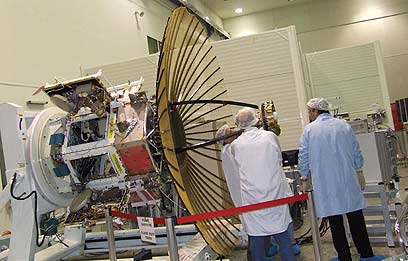
The satellite – TECSAR – is a commercial intelligence satellite, designed for collecting intelligence and footage from space. The 772lbs satellite was sent into orbit atop an Indian missile.


TECSAR is said to have enhanced footage technology, which will allow it to transmit clearer images regardless of daytime and weather conditions, and is considered Israel's most advances satellite in orbit to date.

The satellite was launched at 5:45 am (GMT) from east India, with both Israeli and Indian space engineers commanding the process. Some 80 minutes after the launch, the Israel Aerospace Industries' (IAI) ground station began receiving TECSAR's first signals.


Satellite examined before launch (Photo: IAI)

"This successful launch is another example of the IAI's leading capabilities as far as the Israeli space program is concerned," IAI CEO Itzhak Nissan told Ynet.

Eyes in the Sky

TECSAR joins several other Israeli satellites, both military and civilian, hovering in orbit; Israel launched its last satellite, Ofek-7, in June of 2007. Its predecessor, Ofek-6 failed to enter orbit and crashed into the ocean.

Ofek-7 joined the defense establishment's Ofek-5, which has been in orbit since 2002. Israel's first intelligence satellite, Ofek-1, was launched in 1988, with Ofek-2 debuting two years later, and Ofek-3 in 1995.

The attempted launch of the next satellite, Ofek-4, in 1998 failed; prompting the defense establishment to launch Eros-A – a commercial observation satellite, still in orbit. In April of 2006, the next observation satellite, Eros-B, joined Israel's eyes in the sky.


Israel also has two commercial communication satellites in orbit, Amos-1 and Amos-2.

TECSAR is scheduled to send its first images from space in a fortnight.

Real Ufo Sighting in Salem., MA 1952


Background Information / Description:

Project Blue Book case 1501:

SALEM, JULY 16, 1952

The case occurred on July 16, 1952, at Salem in Massachusetts, USA.

At 09:35 A.M., the witness, Shell Alpert, took this picture of four roughly elliptical blobs of light in formation through the window of his photographic laboratory. Alpert was a Coast Guard seaman assigned to the base in nearby Salem, MA. This photo has appeared numerous times in the Salem (MA) Evening News.

The first analysis by US Air Force's Project Blue Book concluded it was "probably" a double exposure hoax.

A second analysis by Blue Book concluded that it was "probably" reflections of street lamps on a window.

Finally, the case was considered "unexplained" by Project Blue Book.

REFERENCES:

The photograph is at the NARA, the National Administration for Records and Archives, www.nara.gov Washington DC, where the complete declassified USAF Project Blue Book files are available to researchers in NARA's microfilm reading room. You can view the image in a better quality and read the corresponding Blue Book case documentation.

The reference for this picture at NARA is National Archives Record Group 341, Project Blue Book Case No. 1501.

This photograph has also been published in the book "Secrets of the Unknown, the UFOs," Time Life Books, ISBN 90-6182-993-3.

Source / Credit: UFOs at Close Sight (Patrick Gross)

Lots more nfo here: http://www.ufoevidence.org/welcome.asp

Arcologists Dream: 7 Proposed Futuristic Sky Cities


Arcologies


As the world’s population continues to boom so does density in major conurbations. This increase in density is actually increasing around the world as an influx of people move to the cities in search of jobs and the (often hollow) promise of a better life. The shift from oil to biofuels is augmenting the problem because land that may have been used for development will be required to grow the crops needed for energy production in the future.

This leaves the world’s major cities with a conundrum: how do you accommodate more people in the same space? For many the answer lies in the architectural philosophies of Paolo Soleri, an Italian-American visionary accredited as the father of arcology. If you have ever played Sim City 2000 you may or may not already be acquainted with the arcology, a structure of mammoth proportions created to accommodate large populations in sync with the surrounding environment.

If you thought that Dubai had a monopoly on the biggest developments and architectural oddities, think again! Here are some of the best proposed arcology-inspired sky / vertical cities from around the world to feast your eyes on.

Shimizu TRY 2004 Mega-City Pyramid, Tokyo

Shimizu TRY 2004 Mega-City Pyramid

Shimizu TRY 2004 Mega-City Pyramid: The dimensions of this sky city are nothing short of staggering. If ever completed the Shimizu TRY 2004 Mega-City Pyramid will stand 12 times higher than the Great Pyramid of Giza in Egypt at 6,574ft tall with an area of 3 square miles at the base. The structure would consist of 8 layers stacked on top of each other which would have a total area of 34 square miles. Each layer will consist of smaller pyramids each roughly the size of the Luxor Hotel in Las Vegas with layers 1 through 4 devoted for mixed residential and commercial usage and layers 5 through 8 for leisure and social facilities. There will be accommodation for 750,000 people, or 1/16th of Tokyo’s 12 million strong population. Getting that many people around will be a challenge met by a zero carbon, personalised rapid transit system and a network of accelerated walkways and elevators that connect the city via 55 strategically located nodes. The exterior facade of the proposed hyperstructure will be sprayed with a photovoltaic coating to convert sunlight into electricity for a greener city.

X-Seed 4000, Tokyo

X-Seed 4000

X-Seed 4000: Note: X-Seed 4000 is an architectural dream, a proposal that was originally drafted in 1995 with the sole intention of drawing attention to the designers who came up with the masterplan. Nevertheless we think the X-Seed 4000 is awesomely cool, even if it is permanently consigned to the drawing board. At 13,123ft tall the X-Seed 400 would eclipse even Mount Fuji whose iconic shape has been attributed by the architects as their inspiration. The $1 trillion teepee-like, self-contained hyperstructure would be supported by a frame of pillars, each habitable. There would be 800 floors with 26 square miles of space capable of housing anywhere between 500,000 - 1 million people. Of course all sorts of technology would need to be developed to make such a gigantic project work including next generation rapid transit networks, high speed elevators and a system capable of moderating huge fluctuations in temperature, wind speed and air pressure throughout the building. X-Seed 4000 would be powered entirely by the sun, although it is unclear whether this would involve covering the facade with photovoltaic panels or next generation thin film solar panels. The interior of the building does appear to adhere to the Soleri’s ideology of humans in coexistence with nature; as seen above there is no shortage in terms of indoor foliage. The question remains: who would want to live in the shadow of a 2.5 mile tall building? Mental.

Sky City 1000, Tokyo

Sky City 1000

Sky City 1000: Sky City 1000 is an ambitious 3,280ft tall self-contained city first proposed by Takenaka Corporation in 1989 to help restore green space to Tokyo’s urban congestion. If Takenaka’s vision of an answer to Tokyo’s problems gets the green light we’ll see a city that fulfills Soleri’s visions. Sky City 1000 will consist of 14 glass-protected plateaus with a total floor area of 3.1 square miles that would be home to vast green spaces. The mixed use building will house 36,000 permanent residents with space for a further 100,000 workers as well as schools, shops, theatres and other social facilities. Next generation, triple-deck high-speed elevators are currently in development that will form the backbone of Sky City 1000’s transport system, allowing people to get from the ground floor to the top in just over 2 minutes flat. Each plateau will also have a monorail system which will help move people laterally. In theory Sky City 1000 will help reduce the high temperatures often seen in Tokyo by freeing up more land that can be reclaimed and turned into green space. This project is still at the proposal stage but authorities in Tokyo actually take it seriously; Sky City 1000 may turn out to be the world’s first arcology.

Millennium Tower, Tokyo

Millennium Tower

Millennium Tower: The cone-shaped, 2,755ft tall Millennium Tower was first proposed in 1989 by Foster + Partners to address the acute shortage of development land and overpopulation in Tokyo. The tower will be constructed 1.2 miles offshore in Tokyo Bay and stand 170 storeys high with 0.4 square miles of floor space for mixed residential and commercial use. Millennium Tower will be capable of sustaining a community of 60,000 residents who will move vertically and horizontally throughout the arcology using a high-speed metro network in cars that can hold up to 160 people at a time. This system will stop at transportation hubs available on every 13th floor where passengers may disembark and continue their journey via lifts, escalators and moving walkways. The Millennium Tower will use wind turbines and solar arrays installed in the upper floors to provide sustainable energy for the entire building, making this one of the greenest arcologies presently envisioned.

Crystal Island, Moscow

Crystal Island

Crystal Island: Foster + Partners’ Crystal Island was recently granted preliminary planning permission for construction on Nagatino Peninsula, just 4.5 miles from the Kremlin. Crystal Island is a self-contained city that will soar 1,500ft tall with 0.96 square miles of floor space for mixed use, that’s 4 times the floor area of the Pentagon. This megastructure will accommodate up to 30,000 residents in 900 apartments but will also boast 3,000 hotel rooms, a cinema, theatre, museum, shopping malls, sports complex and an international school for 500 pupils. Panoramic views of the city skyline will be available on huge viewing platforms 980ft above the streets of Moscow. When completed Crystal Island will have one of the largest atriums in the world, which can be opened in the summer to regulate the temperature of the 500ft high public space inside.

Ultima Tower, San Francisco

Ultima Tower

Ultima Tower: Eugene Tsui is known for his enthusiasm for futuristic megastructures. His design for the 2 mile tall Ultima Tower in San Francisco is a response to increasing population density in San Francisco where space comes at a premium. The proposed Ultima Tower will have a 6,000ft base diameter with 500 storeys shaped like a giant cone that encloses 53 square miles of space. Tsui’s plans reveal a space capable of housing 1 million residents in a vertical city that meets and exceeds anything previously conceived. Ultima Tower will be a sustainable building powered by facade-mounted arrays of solar panels, wind turbines and a technique called Atmospheric Energy Conversion that will use the difference in pressure between peak and base to generate electricity. If ever constructed the Ultima Tower will have a unique stacked design with entire floors devoted to green space complete with 100ft - 165ft ’skies’ for an open and non-claustrophobic feeling. One interesting thing to note: given the height of the building the journey from the ground floor to top would take just under 10 minutes travelling at 3 miles per hour in an elevator.

Bionic Tower, Shanghai / Hong Kong

Ultima Tower

Bionic Tower: The Bionic Tower is a proposed vertical city that has piqued the interest of Shanghai and Hong Kong, both cities with notoriously high population densities. If the project was to get the green light from either city it would reach 3,950ft tall consisting of 300 storeys with a total internal enclosed area of 0.8 square miles. The tower would be constructed on a 0.4 square mile artificial island connected to the mainland to allow the 100,000 inhabitants access. The cost of all this, in one of the most populous areas in the world? $15 billion.

7 ft. 7 in. basketball player

i think his name is kenny george...currently plays for the University of North Carolina

'24' star Sutherland out of jail after 48 days

LOS ANGELES, California (AP) -- Kiefer Sutherland has been released from jail after serving 48 days on a drunken driving charge, according to a police official.

Sutherland

Kiefer Sutherland served time for a drunken driving charge.

Two police spokesmen did not return phone calls seeking confirmation of a story on People magazine's Web site saying the 41-year-old actor walked out of jail at 12:05 a.m. Monday, hours earlier than had been expected.

But a police official who spoke on condition of anonymity and wasn't authorized to speak publicly confirmed that Sutherland had been released.

People quoted police Officer John Balian as saying, "(Kiefer) looked like he was glad to be out," and that Sutherland was wearing a shirt and jeans when he left the facility.

Sutherland -- the star of Fox television's drama, "24" -- has spent his sentence cleaning sheets, pillowcases and blankets on laundry duty, Balian told The Associated Press on Friday.

"He was very humble, never complained," Balian said. "He didn't give us any problems at all."

Sutherland pleaded no contest in October to driving with a blood-alcohol level above the legal limit of 0.08 percent. He was sentenced to 30 days, as well as 18 days for violating probation stemming from a 2004 drunken-driving arrest.

After entering his plea last fall, Sutherland issued a statement saying he was "very disappointed in myself for the poor judgment I exhibited recently, and I'm deeply sorry for the disappointment and distress this has caused my family, friends and co-workers."

He was granted a request to serve his time in suburban Glendale's city jail rather than in the overcrowded downtown Los Angeles County jail. The trade-off was that he could not shave any time off his sentence for good behavior or early release because of overcrowding.

The actor must also serve five years probation and complete an 18-month alcohol education program and attend weekly therapy sessions for six months.

5 Famous Christmas Songs Written by Jewish Songwriters

by David - December 16, 2007 - 10:19 PM

bloghead_onmusic1.gif

1. “White Christmas” - While there are more than five Christmas carols written by Jewish songwriters, I thought I’d just cover my favorites, starting with not only the most famous Christmas song written in modern times, but according to the Guinness Book of World Records, the best-selling single of all-time.

irving_berlin.jpgWritten by: Irving Berlin in 1940

Actually written by: Israel Isidore Baline (Irving’s real name)

Written while: seated poolside at the Arizona Biltmore Resort and Spa in Phoenix, Arizona (talk about your White Christmas!)

Made famous by: Bing Crosby in the movie Holiday Inn

Cool Irving Berlin fact: Refusing to make money off his deep-seated patriotism, Berlin donated all the royalties from “God Bless America” (just another little ditty he penned!) to the Boy Scouts, Girl Scouts and Campfire Girls

jmarks.gif2. “Rudolph, the Red-Nosed Reindeer”

Written by: Johnny Marks in 1949

Based on: a poem/story penned by Marks’ brother-in-law, who invented Rudolph

Made famous by: Gene Autry, whose recording sold over 2 million copies in the first year alone

Famous Rudolph mondegreen: “Olive, the other reindeer” (see my post on mondegreens if you don’t know what they are)

Cool Johnny Marks fact: He is the great-uncle of economist Steven Levitt, co-author of one of my favorite books of all time, Freakonomics

styne_j_pic2.jpg3. “Let It Snow! Let It Snow! Let It Snow!”

Written by: composer Jule Styne in 1945 with lyrics by Sammy Cahn

Actually written by: Julius Kerwin Stein and Samuel Cohen (real names)

Made Famous by: Vaughn Monroe, hitting #1 on Billboard in ’46

Curious “Let it Snow” fact: the lyric never once mentions Christmas

Cool Jule Styne fact: he also wrote the music for the musicals Gypsy and Funny Girl

livingston_evans2.jpg4. “Silver Bells”

Written by: Jay Livingston and Ray Evans in 1951

Actually written by: Jacob Harold Levison and Raymond Bernard Evans (real names)

Introduced by: Bob Hope and Marilyn Maxwell in the movie The Lemon Drop Kid

Made Famous by: Bing Crosby and Carol Richards

Cool “Silver Bells” fact: the song was inspired by the silver bells of the Salvation Army bell ringers, thus making it one of the few Christmas carols about the city, as opposed to the usual rural countryside setting

ahague1.gif5. “You’re a Mean One, Mr. Grinch”

Written by: Albert Hague in 1966 (with words/lyrics by Dr. Seuss, of course)

Actually written by: Albert Marcuse, who was born in Berlin, but his family raised him Lutheran with the last name Hague in order to avoid the raging anti-Semitism in the 1920/30s (He got out of Europe just in time, landing in America in 1939)

Made Famous by: Thurl Arthur Ravenscroft, who made a name for himself singing and doing voice-overs for Disney


Curious Albert Hague fact:
He was also an actor! You can see him in both the movie and TV series, Fame, playing the role of Shorofsky

Digg This!

See All Our Great Lists >>

just regular fast vs insane fast

Cadillac CTS Coupe a GO for 2010


If the Cadillac CTS Coupe concept that debuted at the 2008 Detroit Auto Show made your heart beat faster, then here's something that might make it explode. GM will put this dramatic display of its Art and Science design language into production in 18 months' time.

While Ed Welburn, GM's vice president of Global Design, told reporters at the CTS coupe's press conference "this vehicle really wasn't supposed to exist," the new luxury coupe has been part of GM's plan since at least the middle of 2006. Code-named GMX226, the 2010 Cadillac coupe will start rolling down the assembly line at the Lansing Grand River plant in early June of 2009. Annual production is expected to be in the range of 15,000 to 20,000 units.

Don't expect the production model to differ much from the concept. In back, the very short rear deck lid, angular taillights and sculpted sheet metal will appear on the real coupe. One thing the production model will have, that the concept does not, is a lip spoiler with an integrated middle brake light. The center-mounted exhaust will also be swapped out for a more conventional setup.

In the front, we're expecting a moderately toned down lower fascia and a pair of headlights with a few less LEDs. The side skirts may not make the transition to production and a hood with fewer creases will also be in order.

It's still too early to say exactly what GM will call this car; however, "CTC" was the logical guess floating around the Detroit show floor.

What this means to you: If you long for a two-door Cadillac without the XLR's hefty price tag, your dream becomes reality next summer. — Kelly Toepke, News Editor

Production numbers announced for 2008 Challenger SRT8

Chrysler has announced that it will build 6,400 2008 Dodge Challenger SRT8 coupes for the United States, with a few more slated for Mexico and Canada.

In October 2007, it was reported that Chrysler intended to produce a limited run of just 5,000 units of the 425-horsepower, 6.1-liter Hemi V8-powered Challenger, while just three weeks ago, Chrysler told Inside Line that it had already received more than 9,000 orders for the 2008 model.

Dodge has priced the Challenger SRT8 at $37,995, including a $675 destination fee. However, with what has become an issue of supply and demand, expect real-world sales transactions to skyrocket.

What this means to you: If you're not already at the top of the 2008 list, better look to next year. — Kelly Toepke, News Editor

Chismillionare's Magic Math of the Day

111,111,111 x 111,111,111 = 12,345,678,987,654,321

Chismillionaires Deal of the Week - Mac Mini $549


Apple MA723LL/A Mac mini Desktop Computer - Apple is known around the world for its innovative computer design, and with the Mac mini they give you a powerful desktop computer in a case that's roughly the size of a lunchbox. But this is the best looking lunchbox you've ever seen, with its sleek, anodized aluminum enclosure, slot-loading optical drive and an array of ports on the rear section that makes cable management a breeze. Inside the Mac mini, you'll find a powerful Intel Core Duo Processor 1.83GHz, 512MB of PC2-5300 DDR2 SDRAM, a 80GB SATA Hard Drive, and much more. 80GB 5400RPM SATA HDD Slot-Loading DVD-ROM/CD-RW Combo Drive - (write speeds) up to 2.4x DL DVD+R, 8x DVD-R, 8x DVD+R, 4x DVD-RW, 4x DVD+RW, 24x CD-R, & 16x CD-RW Slot-Loading DVD-ROM/CD-RW Combo Drive - (read speeds) up to 8x DVD-ROM & 24x CD-ROM Intel GMA 950 graphics processor with 64MB of shared memory (memory is shared with the main system) Ports - 10/100/1000 Gigabit Ethernet, 1 FireWire 400, 4 USB 2.0, 1 DVI Out, 1 VGA Out (w/ included adapter), 1 S-Video and Composite Video Out, combined Optical Digital Audio In/Audio Line In, and Combined Optical Digital Audio Out/Headphone Out Built-in Speakers Built-in AirPort Extreme 802.11g Wi-Fi Wireless Network Adapter Built-in Bluetooth 2.0+EDR (Enhanced Data Rate) module Unit Dimensions - 2 (h) x 6.5 (w) x 6.5 (d) Unit Weight - 2.9 lbs.

Monday, January 21, 2008

France Showcases World's Fastest Rail Train

Star Wars Coming to America

Someone has brilliantly mashed up Star Wars and the Eddie Murphy movie Coming To America, which also stars James Earl Jones. If youve seen both movies youll like this A HA!
Star Wars Coming to America - Watch more free videos

3RD TYNES A CHARM!!! - N.Y. Giants head to the SuperBowl

KICKER CAPS SUPER BOWL RUN WITH OT KICK

By PAUL SCHWARTZ

SIGHTS AND SOUNDS OF A SUPER SUNDAY:Eli Manning, Antonio Pierce...

January 21, 2008 -- GREEN BAY - Nothing deters these Giants.

Nothing stops these Giants.

Huge Giants Photo Gallery

Not unholy cold. Not the mystique of sacred Lambeau Field or the presence of future Hall of Fame quarterback Brett Favre or yet another road game they were supposed to lose or more than 60 minutes of what seemed to be dominating play that was headed toward to nothing but heartache.

Chill Is Gone, Baby

Talk About It On The Giants Blog

And certainly not the need for retribution on a historic night when heroes and villains intermingled until finally, ultimately, a kicker named Lawrence Tynes who had caused so much angst allowed the Giants to erupt in jubilation and exultation with a boot that somehow, some way, sends them to a truly improbable trip to the Super Bowl.

This is the stuff of dreams.

“Not in this weather, not from that distance and not at Lambeau Field," Tynes exclaimed afterward.

It was Tynes who on the final play of regulation in the NFC Championship Game against the favored Packers could not recover from the high snap of rookie Jay Alford and sent a potential game-winning 36-yard field goal attempt knuckling wide left. And then, after an interception of Favre by a cornerback named Corey Webster - thirsting for retribution after a blown play earlier in the night - who set Tynes up again, this time with a tough 47-yard field goal just 2:35 into overtime. Tynes thrust himself into Giants lore with a kick that was straight and true and then sprinted for the tunnel, knowing the Giants had beaten the Packers 23-20 and were on their way to sunny Glendale, Ariz. for a Super Bowl XLII date with the mighty and unbeaten Patriots.

Of course, the Giants are 13-point underdogs.

“It was beautiful - Ice Bowl II, with a different ending," linebacker Antonio Pierce said. “A New York ending! Beautiful."

It was the longest postseason field goal ever at Lambeau and Tynes' right foot was black and blue from the strain of striking a frozen football. Time will likely judge this game fondly, as it was contested in the most bitter of conditions (minus-one degree on the thermometer, minus-23 wind chill factor), the second-coldest game at Lambeau.

“I can't describe how bad it was," Toomer said. “Breathing in the air would burn your lungs and it was just ridiculous."

Incredibly, these teams battled through the elements and produced an electrifying game that ebbed back and forth, with the Giants dominating everything in terms of total yardage and time of possession but unable to build any real lead. Eli Manning outplayed Favre, Plaxico Burress (11-154) overwhelmed cornerback Al Harris and the Giants (13-6) continued their uncanny ability to send opposing fans home miserable with their 10th consecutive road victory, their third in this wild playoff run.

The Giants squandered chances in the red zone and took a 6-0 lead on a pair of Tynes field goals but Favre on one play got the Packers (14-4) on top, as Webster slipped and Donald Driver raced with a 90-yard catch-and-run touchdown pass play. The Packers led 10-6 at halftime. Four Green Bay penalties helped a drive that ended with a Brandon Jacobs scoring burst to put the Giants ahead 13-10. A personal foul penalty on Sam Madison led to a touchdown grab for Donald Lee to put the Packers up 17-13. Back and forth it went, a battle in the tundra.

A 33-yard kickoff return by Domenik Hixon paved the way for a four-yard touchdown scamper by rookie Ahmad Bradshaw, putting the Giants up 20-17 late in the third quarter. Cornerback R.W. McQuarters intercepted Favre but fumbled on the return and Mason Crosby hit a field goal to tie the game at 20.

Tynes with 6:49 left in regulation missed on a 43-yard field goal try and the bundled crowd roared in approval. Bradshaw ran 48 yards for an apparent touchdown but it was called back by a holding penalty on guard Chris Snee. Manning got Tynes in position for the game-winner but he missed.

Then came overtime, the Giants lost the toss and Favre got the ball.

“That's what we wanted, trust me," Pierce said.

Soon enough, the defense got the ball back to Manning and Manning gave Tynes another shot and his kick sent the Giants to the Super Bowl.

“That was some game," said Tom Coughlin, his face red from the bitter cold but unable to contain a wide smile as he heads to his first Super Bowl. “I think the thing I am most proud of about this team is the way they hang together, the way they played hard."

paul.schwartz@nypost.com

18-0 Pats going to the SuperBowl

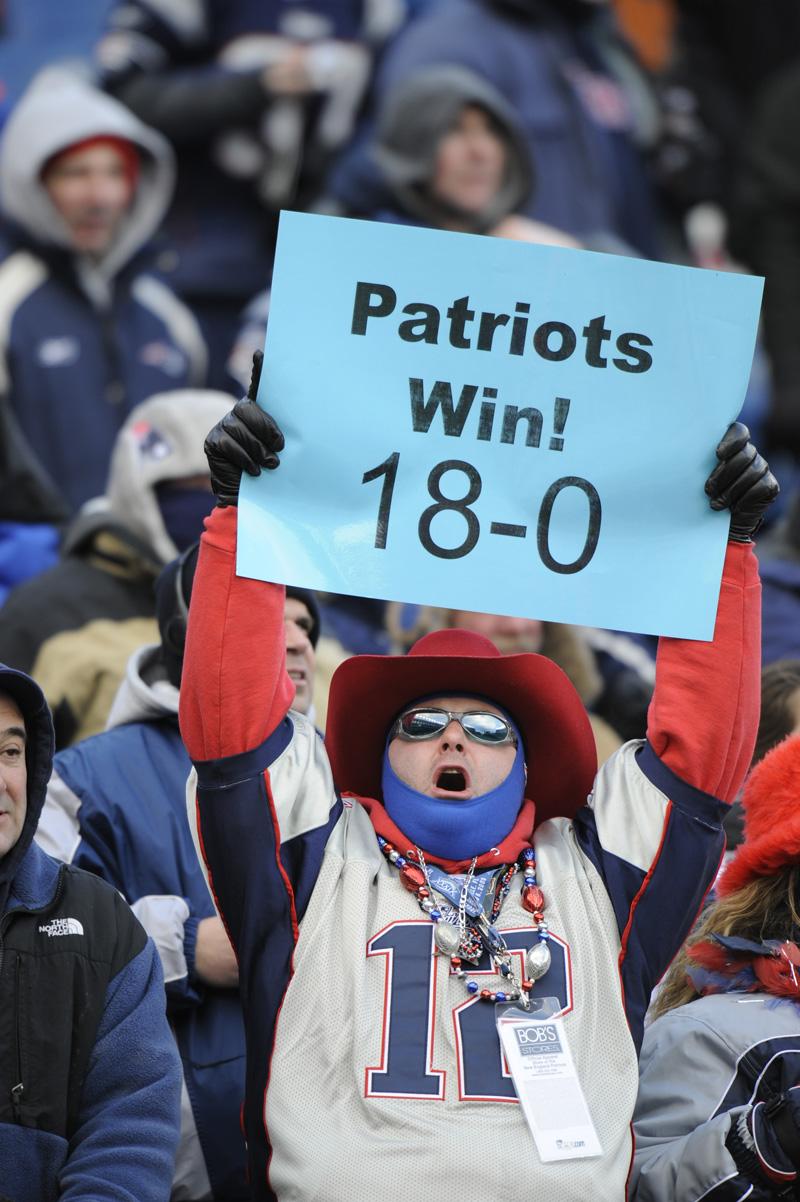
Fans celebrate the Patriots win
Patriots fans celebrate New England's 21-12 win over the San
Diego Chargers for the AFC Championship at Gillette Stadium
on January 20, 2008. David Silverman


Brady holds up the Lamar Hunt trophy


Bill Belichick holds the AFC Championship trophy


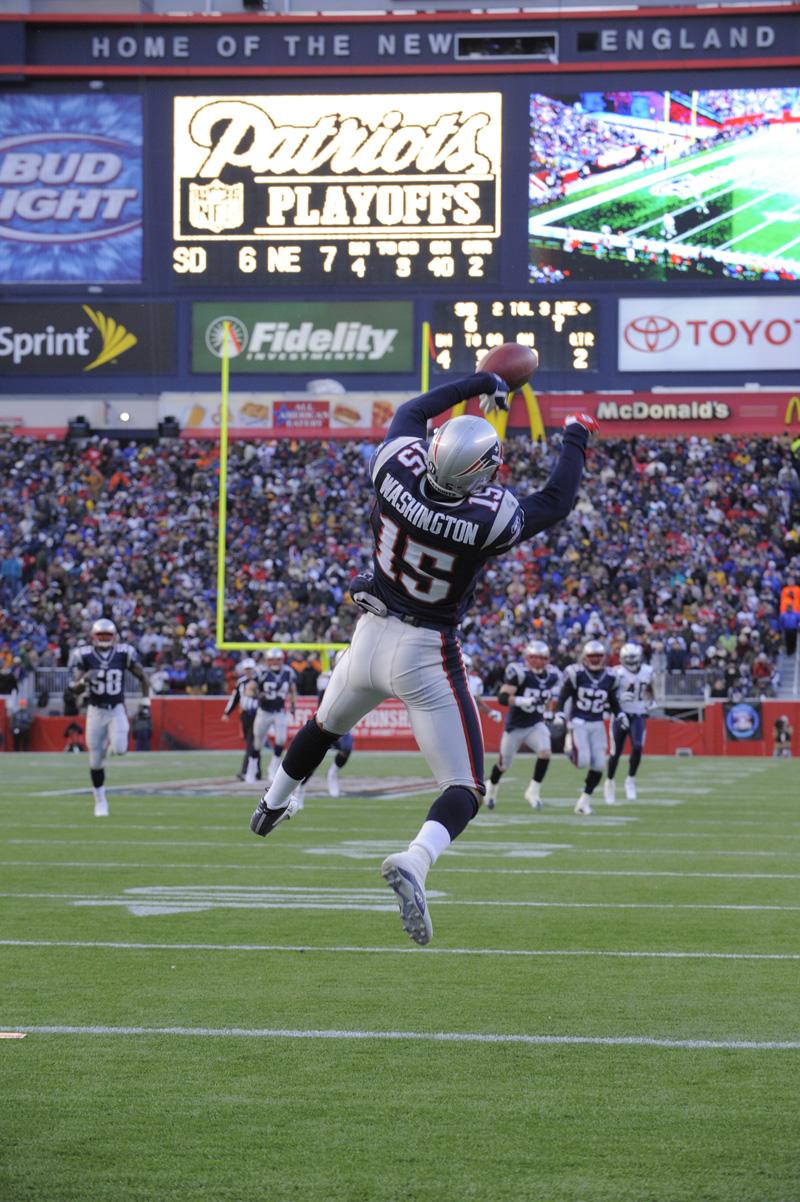
Kelly Washington vs. San Diego Chargers
Patriots wide receiver Kelly Washington (15) knock the ball
out of the endzone where it was downed by running back Kyle
Eckel at the 4-yard line on a kickoff in the second quarter
of New England's AFC Championship game against the
San Diego Chargers at Gillette Stadium
on January 20, 2008 David Silverman

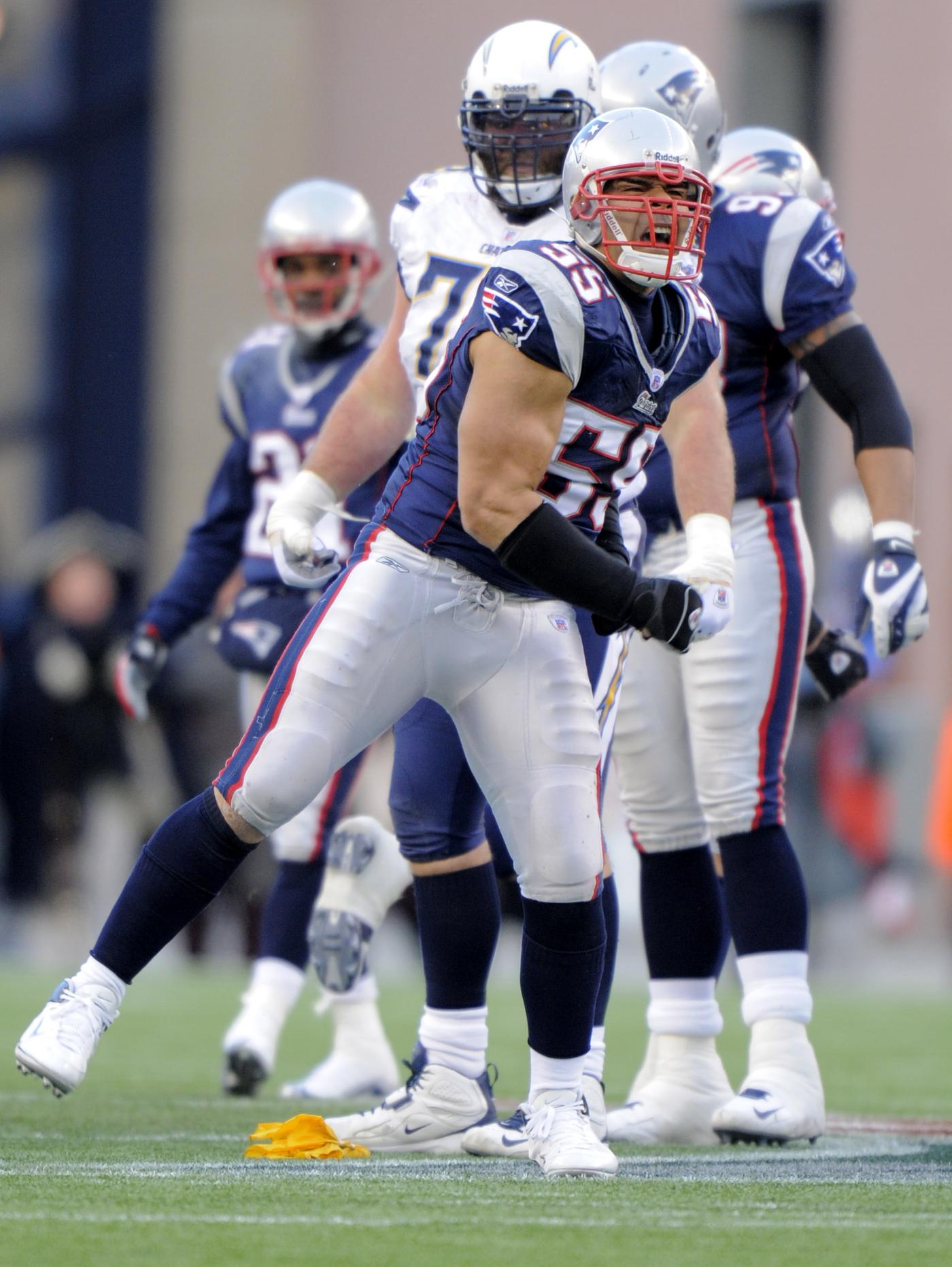
Junior Seau vs. San Diego Chargers
Patriots' LB Junior Seau reacts after sacking Charger's
QB Phil Rivers during the AFC Championship game
at Gillette Stadium on January 20,2008.
Keith Nordstrom